A Brief Overview of The 2023 Specialty Coffee Transaction Guide

The eagerly awaited 2023 edition of the Specialty Coffee Transaction Guide (SCTG) has officially been unveiled, offering a robust data-driven resource for participants across the coffee supply chain to navigate the intricacies of green coffee price discovery.

Available for download in both English and Spanish, the comprehensive guide delves into the dynamics of the global specialty coffee market. Noteworthy findings from the 2023 Specialty Coffee Transaction Guide reveal a 3% decrease in the median FOB (free on board) price for specialty coffee contracts in the 2022/23 period, settling at $3.40 per pound, down from $3.50 per pound in the previous year.

In stark contrast, the New York C Price for arabica coffee, established through commodities contract trading on the Intercontinental Exchange, witnessed a substantial 23% decline from an average of $2.25 to $1.73 during the same timeframe.

A significant highlight from the 2023 edition is the ongoing trend indicating that average coffee prices at the highest quality spectrum seem to be less susceptible to the fluctuations of the commodities market. This resilience stands in contrast to the broader specialty market, as observed over the three-year research period covered in the guide.

Originally launched in 2017 by a dedicated team at Emory University in Atlanta and supported by data contributors including traders and roasters, the Specialty Coffee Transaction Guide continues to serve as a valuable free third-party resource for professionals in the green coffee industry. Positioned as a data-driven alternative to traditional price-discovery tools, the guide aims to provide timely and insightful pricing information.

Peter Roberts, the founder of SCTG and Professor of Organization & Management at Emory University, remarked, “With each additional year of data, we are able to provide more timely pricing insights for the people who sell and buy specialty coffees.”

Drawing from anonymized data contributed by 115 companies worldwide, including importers, exporters, and roasters, the 2023 guide presents a summary of more than 50 billion contracts covering nearly 1 billion pounds of green coffee, valued at almost $2.5 billion.

Key parameters such as quality score, purchase volume, and country of origin continue to guide the presentation of contract data in the 2023 guide. Notable trends emerge, shedding light on how the specialty market responded to the downturn in the 2022/2023 average C price, which decreased by 52 cents from the previous year.

Introducing a novel feature, this year’s guide allows users to calculate an appropriate indicator for coffees by applying differentials based on cup score, location, and/or volume to a median price.

It’s crucial to note that the Specialty Coffee Transaction Guide, while illuminating industry trends, does not encompass the entire specialty market. The median prices provided are emphasized as not representing mandatory, correct, or universally appropriate prices. Instead, the guide serves as a valuable tool for stakeholders to understand prevailing prices, assess justifiability, and establish or interpret prices based on historical precedents. As Karl Wienhold, 2023 Specialty Coffee Transaction Guide Research Associate, affirmed, “It’s a tool to let everyone along the chain know what prices are being paid for what types of coffee, whether those prices are justifiable or not, and to know how to set or interpret prices based on precedent.”
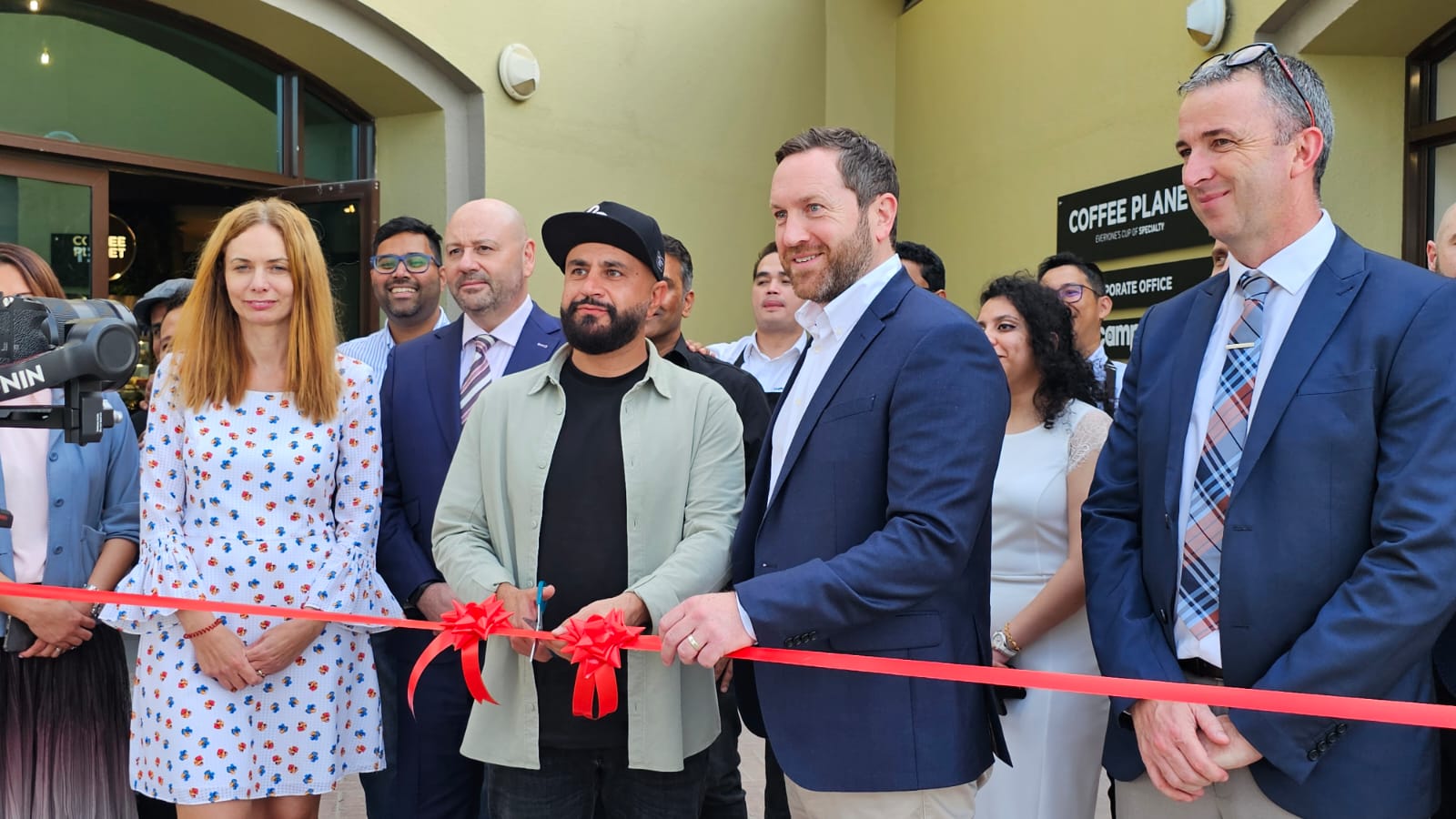

 

Coffee Planet’s Grand Entrance: A Conversation with Jamie Brown on Abu Dhabi Expansion, Market Potential, and Sustainable Initiatives

Abu Dhabi, February 02, 2024(QW): In a momentous occasion on Thursday, Mr. Jamie Brown, the CEO of Ludlow Group, officially inaugurated the inaugural branch of the internationally acclaimed “Coffee Planet” in the heart of Abu Dhabi. The ceremony, attended by a distinguished gathering of executives, both local and international experts, and fervent coffee enthusiasts, marked a significant step for the renowned brand in creating an unparalleled coffee experience.

Nestled in the strategically selected “Etihad Plaza,” the newly established facility encompasses a versatile facility housing the company’s offices, a chic café, an innovative showroom, and a cutting-edge service and training center. Positioned in close proximity to the local community and essential facilities, this choice underscores Coffee Planet’s commitment to accessibility and community engagement.

In an exclusive interaction with the “Qahwa World” website, Mr. Jamie Brown shared his excitement about the opening of the Abu Dhabi branch. Inviting coffee aficionados in Abu Dhabi and the Emirates to explore the new facility, savor their favorite brew, and partake in expert-led training courses at the company’s training center, Mr. Brown reiterated Coffee Planet’s dedication to fortifying its presence in the capital.

Here are the key highlights from the conversation:

Celebrating Abu Dhabi’s Coffee Culture

Mr. Jamie Brown expressed deep satisfaction at realizing the long-standing ambition of establishing a presence in Abu Dhabi after 18 years of serving the capital. The opening of the branch signifies a pivotal moment for the brand, bringing it closer to its patrons.

Market Potential in the UAE

Recognizing the growing demand for specialty coffee in the UAE, Mr. Brown emphasized the brand’s role in educating people about the background, story, and origins of specialty coffee. Coffee Planet aims to bring this unique experience to the masses, aligning with its strategy of being everyone’s cup of specialty.

Future Plans for Abu Dhabi and Beyond

While Coffee Planet’s heart remains in the UAE, Mr. Brown unveiled plans to support the Emirates and expand the brand’s international presence. Collaborations with global partners are in progress to share the Coffee Planet vision on a broader scale.

Regional Expansion into GCC

Highlighting the success of a recent partnership in Saudi Arabia, Mr. Brown revealed plans to establish a presence in each GCC market. The expansion strategy is meticulous and structured to ensure a successful foray into new territories.

Challenges in the Coffee Chain

Acknowledging the challenges in the coffee supply chain, particularly with export and import, Mr. Brown assured stakeholders of the company’s resilience. Coffee Planet is well-positioned with stock holdings of green beans in the country to navigate current challenges, and collaboration within the industry is deemed crucial for maintaining a consistent supply chain.

Commitment to Sustainability

Sustainability takes center stage in Coffee Planet’s agenda, with the establishment of a dedicated green team. The brand started its journey towards achieving 100% traceale coffee in 2023, a milestone et to be achieved in 2024. Initiatives covering recycling, reducing coffee ground waste, and various sustainability campaigns are integral to Coffee Planet’s commitment to a greener future.

About Coffee Planet:
Coffee Planet was born in the UAE in 2005. Over the years, their loyal customers and partners have benefited from their expanding product and service offerings. Today, their coffee is served at leading 5-star hotels, airlines, offices, restaurants, and more.  It can also be purchased in over 700 retail outlets and through numerous online channels.

Providing everything to support their products, Coffee Planet distributes a range of market-leading coffee equipment and coffee-related consumables. They keep their clients and consumers caffeinated through their various products via a dedicated team of qualified coffee professionals on hand, 24/7, for full service and maintenance.

Above all, their commitment to creating a sustainable world is realised at each step of production and by providing a range of sustainable coffee products to waste management as well as initiatives and programs that are developed to reduce the impact of their actions on the environment.


Good News for Coffee Lovers: Drinking More Coffee May Lower Risk of Metabolic Syndrome in Young Adults

Dubai,January 23, 2024 (QW) : If you love your daily cup of coffee, here’s some good news for you! A recent study conducted in Taiwan, focusing on young adults, has found that moderate or greater daily coffee consumption is linked to a lower incidence of metabolic syndrome (MetS).

Metabolic syndrome is a cluster of health issues like high blood pressure and high blood sugar that often occur together. While previous studies showed that moderate coffee intake is associated with a lower risk of specific health problems, this study aimed to understand if it also plays a role in preventing metabolic syndrome.

The research followed 2,890 military personnel, aged 18-39 years, who were initially free of metabolic syndrome. They were tracked from 2014 to the end of 2020. The participants were divided into two groups: those who consumed at least three cups or 600 mL of coffee daily (considered moderate or more) and those who didn’t.

Here’s the interesting part – during the 6-year follow-up, 673 cases of metabolic syndrome were identified. Among those who drank three or more cups of coffee daily, there was a significantly lower risk of developing metabolic syndrome compared to those who consumed less coffee or none at all [hazard ratio (HR): 0.69 (95% confidence interval: 0.48, 0.99)].

This study suggests that sticking to the recommended moderate or greater daily coffee consumption, as per guidelines, might not just be good for a caffeine boost but could also have health advantages. For young adults, it appears that enjoying your daily coffee could be a simple and tasty way to help prevent the development of metabolic syndrome. So, go ahead and savor that cup of joe!


Second Cup Celebrates Remarkable Growth in Egypt and Significant Regional Expansion

Dubai, January 19, 2024 (QW): The Second Cup Coffee Company Inc. (“Second Cup”), A global leading specialty coffee retailer, is thrilled to announce its extraordinary growth and expansion in Egypt. With a strong commitment to delivering exceptional coffee experiences, The Second Cup has successfully established itself as a beloved brand in the Egyptian coffee market.

Over the past year, Second Cup has experienced unprecedented success in Egypt, with a significant increase in customer demand and an expanding customer base. This remarkable growth can be attributed to Second Cup’s dedication to providing high-quality coffee, innovative menu offerings, and a warm and inviting café atmosphere.

Second Cup’s expansion throughout Egypt has been strategically planned to bring the brand’s exceptional coffee and outstanding service to coffee & tea lovers in various cities and neighborhoods. The company has opened multiple locations in key areas, including Cairo, New Cairo, Giza, and Tanta, with plans for further expansion in the very near future.

“We are absolutely thrilled with the remarkable growth and success we have achieved in Egypt,” said Jim Ragas, CEO of The Second Cup Coffee Company Inc. “Our expansion in this vibrant market is a testament to the strong appeal of our brand, the quality of our coffee, and the dedication of our team led by our Master Franchise (Maximum Stores) CEO Yahya Ghamdan and their COO Hany Said. We are excited to continue serving our valued customers in Egypt and introducing more coffee lovers to The Second Cup experience.”

Second Cup is renowned for its commitment to sourcing the finest arabica coffee beans from around the world and organic teas, ensuring exceptional quality and taste in every cup. With a wide range of premium coffees, teas, specialty beverages, and delectable baked goods, Second Cup offers a diverse menu that caters to the unique preferences of café enthusiasts.

In addition to its exceptional coffee offerings, Second Cup is deeply committed to corporate social responsibility and sustainability. The company actively supports local communities and initiatives, while also prioritizing environmental stewardship through sustainable sourcing practices and eco-friendly packaging.

Second Cup’s growth in Egypt is a testament to the brand’s ability to captivate coffee lovers with its unparalleled coffee expertise, warm ambiance, and commitment to excellence. As the company continues to expand its presence in Egypt, it remains steadfast in its mission to deliver extraordinary coffee café experiences that create lasting memories for its valued customers.

About The Second Cup Coffee Company Inc.
Founded in 1975, The Second Cup Coffee Company Inc. originated in Canada and has cafes in 22 countries and is a leading specialty café chain, offering premium arabica coffee, organic teas specialty beverages, all-natural frozen yogurt, and delicious baked goods. With a commitment to quality, sustainability, and exceptional customer service, The Second Cup has become a beloved destination around the world.

Brewing Coffee with the Origami: A Unique Experience

In today’s market, an abundance of manual coffee brewers awaits enthusiasts, each vying for attention. Among the aesthetically pleasing options, the Origami stands out, gaining widespread popularity after its use by Du Jianing, the 2019 World Brewers Cup Champion. Her victory marked a significant moment as the first Chinese competitor to secure the title.

What sets the Origami apart is its visually appealing design, accommodating both conical and flat bottom paper filters for diverse extraction possibilities. Featuring 20 folded inner ribs, this brewer minimizes clogging, resulting in a cleaner and more flavorful cup.

To delve into the art of brewing with the Origami, insights were sought from industry experts: Sherry Hsu, the 2022 World Brewers Cup Champion, Elysia Tan, co-founder of Homeground Coffee Roasters, and Nozomu Kanenaka, Sales and Marketing Manager at Origami.

Origami Brewer: A Fusion of Design and Functionality

Inspired by the Japanese art of paper folding, Origami’s design and name draw from this creative practice. Crafted by Yasuo Suzuki and Kiyohito Tanaka, founders of Trunk Coffee in Japan, the Origami dripper is made from Mino porcelain, handcrafted at a Gifu prefecture factory. This region’s blend of craftsmanship and technology consistently produces high-quality, durable products.

The 20 evenly-spaced ribs come into play when using conical paper filters, creating space for a faster flow rate and encouraging quicker extraction. On the other hand, Kalita Wave paper filters seamlessly fit into the ribs, transforming it into a flat-bottom brewer. Nozomu highlights additional benefits, emphasizing the continuous refinement process with over 20 revisions since the inception of the dripper.

Origami vs. Other Pour Over Brewers: Uniqueness Explored

While the Origami shares a conical shape with drippers like the Hario V60, it boasts distinct features that set it apart. Sherry Hsu, a seasoned competitor and coffee consultant, appreciates its flexibility, allowing her to alter the brew bed’s shape with different paper filters. Elysia Tan, co-founder of Homeground Coffee Roasters, values the diversity in brewing methods based on the characteristics of different coffees, emphasizing the importance of understanding and leveraging the brewer’s design.

Brewing with the Origami: A Creative Journey

Choosing between porcelain and plastic drippers is the initial decision in the brewing process. Nozomu highlights the heat conductivity difference, favoring plastic for efficiency in competitions where multiple coffees need simultaneous brewing.

The paper filter choice further influences the final brew. Conical paper filters create space for a faster flow rate, while flat bottom filters lead to a slower flow rate due to snug grooves. Sherry emphasizes how these choices impact the brew bed’s shape, affecting the extraction process.

Recommended Recipes: A Glimpse into Expertise

Sherry and Elysia share their Origami recipes, revealing the intricate details behind a successful brew. From water temperature to brew ratio and pouring stages, each step contributes to a unique and flavorful cup.

Tips and Advice for Using the Origami: Navigating the Journey

For beginners, Sherry recommends starting with the Origami Air and a flat-bottomed paper filter for a foolproof and consistent result. Stressing the importance of a faster flow rate, she encourages experimenting with grind size and dose to customize the brewing experience.

The Origami, with its captivating design and innovative features, offers a distinctive manual brewing experience. As users explore its nuances, they can unlock a world of creative possibilities in pursuit of the perfect cup of coffee.

Antonio Orria Joins Simonelli Group Middle East as Coffee & Beverages Community Expert

Dubai, January 15, 2024(QW) – Simonelli Group Middle East is thrilled to announce the latest addition to its team, as Antonio Orria assumes the role of Coffee & Beverages Community Expert.
This strategic move underscores Simonelli Group’s commitment to enhancing customer engagement and expanding its influence within the local Coffee & Beverages community.

Antonio Orria brings a wealth of experience as a coffee consultant and accredited Specialty Coffee Association (SCA) trainer.
With an international mindset, he has successfully navigated various aspects of the coffee industry, from hands-on barista roles to managerial positions and business development.

Antonio commenced his coffee journey in 2013 as a Barista in London, swiftly progressing to the role of Head Barista at Taylor St Baristas. Subsequently, he assumed the position of General Manager at the British Library site for Origin Coffee Roasters in 2017, honing his organizational and interpersonal skills.

In 2019, Antonio took on the role of Head of Coffee at The Gentlemen Baristas, overseeing responsibilities such as coffee quality control, media development, customer tastings, new drink development, staff training, and home barista classes. His career further advanced as he transitioned to the position of Project Manager, overseeing the opening of new sites in Mayfair, Covent Garden, and Piccadilly.

Becoming an Authorized Specialty Coffee Association Trainer in 2021 marked a significant milestone for Antonio, enabling him to freelance across the UK and Europe. Leveraging his extensive hospitality industry background and profound coffee knowledge, Antonio Orria is poised to be a central figure for the Middle Eastern coffee community.

Based in Dubai, Antonio will play a pivotal role in enhancing Simonelli Group’s presence in the Middle East market. His expertise will contribute significantly to trade fairs, events, training programs, and sales activities, fostering stronger connections with customers.

“We are excited to welcome Antonio Orria to the Simonelli Group family. His diverse experience and passion for coffee will undoubtedly elevate our engagement with the Middle Eastern coffee community,” said Marco Feliziani , CEO Simonelli Group.


In Collaboration with “Victoria Arduino” and “Toddy,” Mokha 1450 Hosts an Evening of Coffee Excellence

Dubai, January 13, 2024(QW) – Mokha 1450, the pioneer in luxurious specialty coffee in Dubai, is set to organize an unforgettable evening aimed at igniting the senses and celebrating the world of coffee. In close collaboration with industry giants “Victoria Arduino” and “Toddy,” Mokha 1450 invites coffee enthusiasts to join them for an exclusive event filled with discussions and innovations.

Highlights of the Event:

Open Discussion with Panama’s Most Innovative Coffee Producers:

Mokha 1450 will host an open dialogue with some of Panama’s most innovative coffee producers, providing valuable insights into the world of coffee cultivation and production. Discover the passion and dedication behind crafting the perfect cup.

Cold Brew Presentation and Open Discussion with the “Toddy” Team:

Immerse yourself in the art of cold brew with an engaging presentation by the Mokha 1450 team, followed by a panel discussion with the Toddy team, known for their commitment to delivering a high-quality cold brew experience. Engage in an open discussion about the finer details of cold brew preparation and the secrets behind its exceptional flavor.

Premiere of Mokha 1450’s Custom-Designed “Black Eagle Maverick” with Pure Brew Technology:

Be the first to witness the unveiling of Mokha 1450’s latest masterpiece, the custom-designed “Black Eagle Maverick,” featuring Pure Brew Technology. Enjoy a symphony of flavors in every sip as Mokha 1450 continues to redefine luxury in the world of specialty coffee.

Event Details:

Venue: Mokha 1450 Coffee Lounge, Golden Mile Galleria 8, Palm Jumeirah
Date: January 22, 2024
Time: 8:00 PM
Mokha 1450 welcomes all coffee enthusiasts to be part of this exceptional evening, where passion, innovation, and luxury converge to create an unforgettable experience. Mark your calendar for January 22, 2024, at 8:00 PM, and join us in celebrating the rich and diverse world of specialty coffee.

CEO of “Coffee Island,” Konstantinos Konstantinopoulos, Reviews Challenges and Opportunities Shaping the Coffee Industry in 2024

In an exclusive interview with the Global Coffee Report (GCR), Mr. Konstantinos Konstantinopoulos, the CEO of Coffee Island, delves into the challenges and opportunities that define the coffee industry in 2024. The discussion spans from artificial intelligence to contemporary geopolitical instability and supply chain disruptions.

Mr. Konstantinopoulos notes that Coffee Island’s ambitious commitment in 2024 is centered on solidifying its presence in current markets and enhancing international expansion through strategic partnerships and diverse business models. He expresses their dedication to providing unparalleled coffee experiences while carefully selecting key international markets to introduce these unique experiences to new audiences.

He explains that the coffee industry is undergoing a significant transformation due to digital advancements, impacting various stages of the supply chain. Smart farming practices empower coffee farmers with data on soil conditions, weather patterns, and crop health to enhance cultivation methods and increase sustainability.

Regarding artificial intelligence, Mr. Konstantinopoulos highlights its rapid transformational impact on various industries, emphasizing its promise in delivering enhanced efficiency, quality, and personalized experiences within the coffee sector.

He underscores that as environmental issues and challenges in agriculture worsen, they will increasingly top the industry’s agenda, affecting farmers and the production industry. Plastic waste, primarily from packaging, poses a growing threat to nature and the environment, necessitating a greener, circular economy based on waste avoidance and recycling.

Mr. Konstantinopoulos acknowledges the diverse challenges and opportunities facing the coffee industry, citing contemporary geopolitical instability, supply chain disruptions, and the impacts of climate change. He emphasizes that rising commodity prices and evolving consumer behaviors complicate the landscape, requiring innovative approaches to deliver value.

With rising energy costs and stricter environmental standards, the industry is urged to implement sustainable practices. He emphasizes the growing demand for responsible and ethical business operations, stressing the industry’s role in contributing to sustainable development and social solidarity.

In conclusion, Mr. Konstantinopoulos expresses optimism that, by recognizing challenges and adopting initiatives, the coffee industry can become a model for positive business change in a dynamic world. Together, they aim to build a better and more beautiful world for future generations. Coffee Island, founded in 1999 in Patras, continues its journey in the world of specialty coffee, marked by innovation and dedication to providing a unique coffee experience. It currently operates in the Swiss market and Dubai in the United Arab Emirates.

Coffee Farmers Ongoing Struggle for Working Capital

In the intricate landscape of coffee production, the seasonal nature of harvesting sets forth a unique challenge for coffee farmers. Typically receiving payment once a year during the harvest season, these farmers are entrusted with managing this lump sum throughout the year. However, the unpredictability of yields, unforeseen expenses, and the ever-changing market dynamics often propel them into a constant search for financial solutions.

Smallholder Farmers Caught in the Cycle:

For smallholder coffee farmers, particularly those who rely on each harvest for sustenance, the challenges are magnified. Living harvest to harvest, they often lack the financial cushion to navigate the rest of the year. The absence of substantial profits and limited collateral further complicates their ability to secure loans with favorable interest rates, rendering credit either unattainable or economically burdensome.

Co-operatives as a Beacon of Hope:

In an attempt to alleviate these challenges, some smallholders opt to join co-operatives. These collaborative ventures not only help in sharing the costs of inputs like fertilizers and pesticides but also make it more likely for lenders to extend financial support to larger groups of producers. However, the reality is that not all smallholder farmers can readily find solace in joining a co-operative, and the barriers persist.

Barriers to Finance Access:

Accessing finance is no straightforward feat for coffee farmers, particularly those residing in rural areas. A significant stumbling block is the pervasive issue of financial literacy. Camilo Enciso, the general manager of ASOPEP in Planadas, Colombia, notes the difficulty faced by unorganized producers in receiving financial support. In regions where the sale of wet coffee is predominant, the lack of market assessments and traceability further compounds the problem.

Additionally, many smallholder farmers lack the basic financial literacy required for borrowing, and their absence of credit history leaves banks without a reliable basis for risk assessment. Land ownership documentation, a prerequisite for many financial transactions, is often missing, exacerbated by social issues such as gender-related restrictions on land ownership.

The Crucial Role of Financial Literacy Programs:

To address these challenges, the implementation of financial literacy programs and the establishment of effective documentation management practices are imperative. Co-operatives, as intermediaries between farmers and lenders, play a vital role in supporting farmers in gathering and organizing the necessary documentation and data for loan applications.

Challenges on the Ground:

While co-operatives are seen as potential sources of data on previous harvests for individual farmers seeking loans, the reality is far from simple. Farmers often face resistance when requesting such information from previous lenders within co-operatives, potentially compromising their positions as lenders themselves. Some producing communities have resorted to a system of mutual borrowing and lending, fostering interdependence among farmers.

This collaborative system, however, comes with its own set of complexities. Farmers supporting each other through loans during both off-seasons and harvests establishes a delicate balance that intertwines economic conditions with social implications. Introducing external financing mechanisms could potentially disrupt these longstanding collaborative systems.

Market Volatility and Climate Change:

The coffee industry is not immune to broader economic and environmental challenges. Market volatility in recent years has injected increased uncertainty into the income projections for coffee farmers, affecting their perceived risk to lenders. Concurrently, the escalating impact of climate change, evident in rising instances of pests, diseases, and erratic weather patterns, has made lenders more cautious about financing coffee farming, often attaching prohibitively high-interest rates.

Supply Chain Challenges:

Farmers, grappling with delayed payments and soaring costs, sometimes turn to supply chain partners for assistance. However, the challenges faced by roasters, such as global inflation and delayed payments, as well as traders dealing with record-high interest rates and falling coffee prices, have created a precarious financial environment. This has diminished the capacity of supply chain partners to provide the financial support that farmers once relied on.

Questioning the Dependency on Loans:

Zooming out to a broader perspective, it becomes pertinent to question why loans have become an inherent part of the coffee industry. Taya, a coffee production researcher, raises a crucial point: “If the system that you live in is dependent on getting a loan and you can’t get one, then that really is a problem.”

There’s a need to scrutinize whether the coffee industry, in its current state, perpetuates a cycle of dependence on external finance. Taya challenges the assumption that farmers should always need a loan, suggesting that a fundamental reevaluation of the system may be in order.

Striving for Systemic Change:

While the long-term goal may be to improve financial education and reduce dependence on external finance, the immediacy of the issue necessitates short-term strategies. The focus should be on creating strategies that improve the accessibility of finance in rural areas, acknowledging that change of such magnitude is a slow process, and farmers often require immediate access to working capital.

In conclusion, the ongoing struggles of coffee farmers to access working capital underscore the need for holistic and nuanced solutions. From financial literacy programs to addressing systemic issues within the industry, a collaborative effort is essential to create a more resilient and equitable coffee sector that empowers those at the heart of the supply chain.


World Coffee Research CEO, Vern Long, provides an overview of the global robusta breeding program

Vern Long, the CEO of the World Coffee Research organization (WCR), has presented a brief overview of the global robusta breeding program led by the organization, along with her expectations for the coffee industry in the year 2024.

In a conversation with the “Global Coffee Report” about what can be anticipated for the coffee industry in 2024, Vern Long stated, “At the World Coffee Research organization (WCR), we believe that innovation in variety diversity – better plants reaching more farmers – will shape the future of coffee.” She emphasized that improved coffee varieties contribute to increased productivity for farmers, forest protection, and the creation of new experiences for consumers.

Vern Long explained that during the past year of 2023, the Innovea Global Coffee Breeding Network, a part of the World Coffee Research organization (WCR), successfully distributed 5000 genetically distinct Arabica coffee seeds to national coffee institutes worldwide. This marks the beginning of the next generation of coffee varieties aimed at supporting farmers, satisfying coffee enthusiasts, and ensuring future supply.

Revealing some plans for the current year 2024, Vern Long stated that WCR will initiate the first crosses in the newly established global robusta breeding program to guarantee a bright and secure future for robusta coffee.

She further explained that in 2024, the organization will conduct the initial crosses in a new global robusta breeding program to ensure that the future of robusta is bright and secure.

Vern Long highlighted that economists from Michigan State University measured the extent of the innovation crisis in the coffee industry during the past year of 2023. They revealed an investment gap in agricultural research and development for coffee amounting to approximately $452 million annually. She emphasized that this investment gap significantly contributes to the uncertainty faced by the industry regarding when and where future supply disruptions may occur.

To strengthen the industry in the coming years, Vern Long mentioned that WCR’s member companies, in collaboration with trade association partners, will continue to promote increased investment in agricultural innovation for coffee with the governments of coffee-consuming countries. This investment aims to provide the necessary support to enhance technical capabilities within research institutions in key coffee-producing countries, improving agricultural innovation systems to enhance productivity for farmers and reduce risks for the industry.

In conclusion, she expressed her hope and expectation that more companies will join the industry’s global efforts during the year 2024 to protect our favorite crop and our ability to enjoy our favorite beverage.

Ludlow Coffee CEO, Jamie Brown, Maps Out Visionary Growth Strategies for 2024

Ludlow Coffee’s CEO, Jamie Brown, reflects on the triumphs of 2023 and outlines ambitious plans for the year ahead in a conversation with Global Coffee Report.

In the wake of a stellar year, Ludlow Coffee has solidified its standing through strategic restructuring, introducing Coffee Planet as a leading 360 coffee solution business and unveiling the global roasting brand, Jigsaw Coffee Company. Brown emphasizes the importance of prioritizing and executing unique business goals for each brand within the Ludlow Coffee Group.

Celebrating achievements at Coffee Planet, the company takes pride in innovative offerings such as the SCA-accredited educational institute, Campus by Coffee Planet, Cold Brew products, and more under its new brand positioning.

Building on the success of the previous year, Ludlow Coffee is set to expand the Coffee Planet and Jigsaw brands, with a keen focus on the thriving Cold Brew and ready-to-drink market. Ongoing innovation, particularly in Cold Brew, is seen as instrumental in achieving commercial and international goals across various channels – HORECA, food services, retail, workplace, on-the-go, and private label.

Brown anticipates that sustainability will take center stage in 2024, fueled by Ludlow Coffee’s commitment after participating in COP28 in Dubai. The company aims to further its dedication to the planet, its people, and the entire value chain. This includes achieving 100% traceable beans, responsible waste management, and ongoing development of sustainable products, such as fully home compostable capsules.

Ludlow Coffee Group remains dedicated to elevating coffee experiences and inspiring generations to strive for excellence from crop to cup. The new brand identity for Coffee Planet reflects the aspiration to be “everyone’s cup of specialty.” The overarching goal is to collaborate across the industry, fostering support for every company, partner, consumer, and country.

Nestlé Pours $100 Million into Expanding Packaged Coffee Output in Vietnam

Nestlé Vietnam is set to invest $100 million to enhance the processing capabilities of its Tri An coffee facility in Dong Nai, effectively doubling its production capacity. This move brings Nestlé’s total investment in the location to over $500 million. The augmentation of the Tri An production site aims to meet the rising local demand for premium coffee brands such as Nescafé, Nespresso, Starbucks, and Blue Bottle. Simultaneously, it reinforces Vietnam’s position as a high-value coffee production and supply hub on the global stage.

According to a Nestlé press release, the investment underscores the company’s commitment to long-term engagement in Vietnam. The expansion is expected to enable the factory to cater to domestic consumer needs while tapping into export potential, transforming Vietnam into a prominent supplier of high-value coffee worldwide. The Tri An production site currently ships packaged coffee products to more than 29 countries, emphasizing its global reach.

Jacob Binu, General Director of Nestlé Vietnam, expressed confidence that the project, once operational, would double the factory’s capacity, satisfying local market demands and effectively leveraging export opportunities. Nestlé, which initiated operations in Vietnam in 1993 with a representative office in Ho Chi Minh City, launched the Tri An site in 2013, including a Nescafé Dolce Gusto capsule production line in 2018.

Nestlé, headquartered in Vevey, has invested nearly $830 million in its Vietnamese ventures to date. The company operates four production sites, with three located in Dong Nai, and manages two distribution centers.