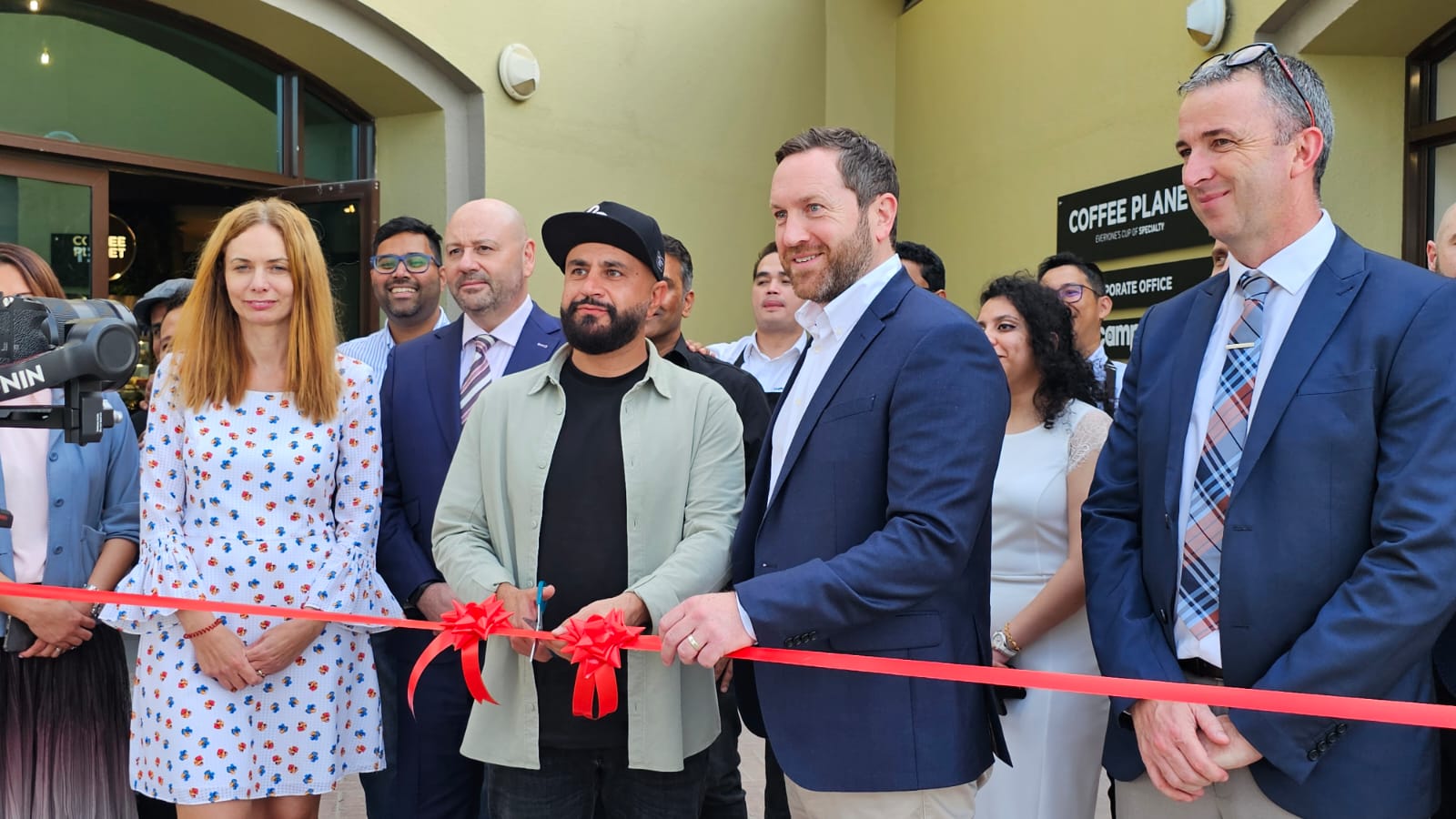
Coffee Planet’s Grand Entrance: A Conversation with Jamie Brown on Abu Dhabi Expansion, Market Potential, and Sustainable Initiatives

Abu Dhabi, February 02, 2024(QW): In a momentous occasion on Thursday, Mr. Jamie Brown, the CEO of Ludlow Group, officially inaugurated the inaugural branch of the internationally acclaimed “Coffee Planet” in the heart of Abu Dhabi. The ceremony, attended by a distinguished gathering of executives, both local and international experts, and fervent coffee enthusiasts, marked a significant step for the renowned brand in creating an unparalleled coffee experience.

Nestled in the strategically selected “Etihad Plaza,” the newly established facility encompasses a versatile facility housing the company’s offices, a chic café, an innovative showroom, and a cutting-edge service and training center. Positioned in close proximity to the local community and essential facilities, this choice underscores Coffee Planet’s commitment to accessibility and community engagement.

In an exclusive interaction with the “Qahwa World” website, Mr. Jamie Brown shared his excitement about the opening of the Abu Dhabi branch. Inviting coffee aficionados in Abu Dhabi and the Emirates to explore the new facility, savor their favorite brew, and partake in expert-led training courses at the company’s training center, Mr. Brown reiterated Coffee Planet’s dedication to fortifying its presence in the capital.

Here are the key highlights from the conversation:

Celebrating Abu Dhabi’s Coffee Culture

Mr. Jamie Brown expressed deep satisfaction at realizing the long-standing ambition of establishing a presence in Abu Dhabi after 18 years of serving the capital. The opening of the branch signifies a pivotal moment for the brand, bringing it closer to its patrons.

Market Potential in the UAE

Recognizing the growing demand for specialty coffee in the UAE, Mr. Brown emphasized the brand’s role in educating people about the background, story, and origins of specialty coffee. Coffee Planet aims to bring this unique experience to the masses, aligning with its strategy of being everyone’s cup of specialty.

Future Plans for Abu Dhabi and Beyond

While Coffee Planet’s heart remains in the UAE, Mr. Brown unveiled plans to support the Emirates and expand the brand’s international presence. Collaborations with global partners are in progress to share the Coffee Planet vision on a broader scale.

Regional Expansion into GCC

Highlighting the success of a recent partnership in Saudi Arabia, Mr. Brown revealed plans to establish a presence in each GCC market. The expansion strategy is meticulous and structured to ensure a successful foray into new territories.

Challenges in the Coffee Chain

Acknowledging the challenges in the coffee supply chain, particularly with export and import, Mr. Brown assured stakeholders of the company’s resilience. Coffee Planet is well-positioned with stock holdings of green beans in the country to navigate current challenges, and collaboration within the industry is deemed crucial for maintaining a consistent supply chain.

Commitment to Sustainability

Sustainability takes center stage in Coffee Planet’s agenda, with the establishment of a dedicated green team. The brand started its journey towards achieving 100% traceale coffee in 2023, a milestone et to be achieved in 2024. Initiatives covering recycling, reducing coffee ground waste, and various sustainability campaigns are integral to Coffee Planet’s commitment to a greener future.

About Coffee Planet:
Coffee Planet was born in the UAE in 2005. Over the years, their loyal customers and partners have benefited from their expanding product and service offerings. Today, their coffee is served at leading 5-star hotels, airlines, offices, restaurants, and more.  It can also be purchased in over 700 retail outlets and through numerous online channels.

Providing everything to support their products, Coffee Planet distributes a range of market-leading coffee equipment and coffee-related consumables. They keep their clients and consumers caffeinated through their various products via a dedicated team of qualified coffee professionals on hand, 24/7, for full service and maintenance.

Above all, their commitment to creating a sustainable world is realised at each step of production and by providing a range of sustainable coffee products to waste management as well as initiatives and programs that are developed to reduce the impact of their actions on the environment.


Lameen Abdul-Malik writes: I was at the World of Coffee, Dubai 2024

Dubai, 31 January 2024(QW): I wasn’t sure what to expect from the third edition of the World of Coffee Dubai, which took place from 21-23 January in Dubai, under the auspices of the Specialty Coffee Association (SCA). Sure. I’d been to the previous two and this year promised more excitement with a slightly bigger offering.

Featuring much as before, with experts, coffee roasters, gadgets, coffee farmers, espresso machine and coffee roasting manufacturers and more, I thought I’d go, meet fellow coffee nerds, drink lots of coffee and attend a few lectures. Well, I did most of that and more, but sadly wasn’t able to attend any of the lectures, BUT, all was not lost, as I learnt a lot on the one day that I attended.

So, here’s a quick summary;

First stop was at Harvest Belt, where I learnt about the Link small batch coffee roasting machine that you can programme to roast espresso, filter, etc and even fine tune it for different coffee processes like natural, washed, etc. If I was going to start roasting, I think I’d get this machine.

Just next to them was one of my fave Dubai roasters, Grandmother (I still don’t know where that name comes from ), but their head roaster, Freddie, offered me a delectable Ethiopian anaebroic espresso – it really filled my lips – yum.

Then I was now on the hunt for my first milk based coffee of the day and when I saw Uber Milk, I thought what better place to stop than here. I had already witnessed their ultra automated machine when I visited Rosslyn Coffee in London in January 2023 and just wanted to enquire about their business in the GCC, as most cafe are not as busy as a typical central London coffee shop. Sure enough one cafe in Dubai has it but they have a few of them in Saudi already.

In conversation, I noticed this guy pouring beautiful latte art and they said, that’s the head of coffee at WatchHouse – startled, I walked over and placed an order for a cortado – incidentally, it was Ethiopian beans again.

Never one to miss out on an opportunity to learn from an expert, I chatted with Flavius for about 20 minutes and this is what I learnt;

➡️Brew Ethiopian beans at a higher temperature for both filter and espresso – so much so that for espresso, try 97C – the reason Ethiopian beans have a a higher density.
➡️Store your coffee beans in the freezer in dose batches – so store 18g of beans for your espresso, etc, as opposed to just storing the whole bag to avoid moisture.
➡️WatchHouse shop at Hanover Square (which I wrote about a few months back) is their flagship store for experimentation, so much so that the head barista won a recent competition.
➡️In 2020, the UK Brewers champion was Matteo D’Ottavio and he was head barista at their spitalfields branch and WatchHouse use his winning recipe, which for using 15g of coffee and 250ml water is;

50ml, wait 30 seconds, bloom
50ml, wait 30 seconds, pour

Walking around I saw the famous Dritan Asela – of instagram fame – had a brief chat with his wife.

I noticed that he was at a stand, Toga Coffee of Sharjah that were offering this delicious coconut balls wrapped around white chocolate and fresh raspberries – I boldly asked for 3 and the owner was so kind and hospitable he duly obliged. However, I noticed their strange description of coffee beans with hints of coconut and asked for a piccolo.

wow! even before I drank the coffee I could smell the coconut (one of my fave fruits). I met the roaster, Pirates of Coffee, all the way from Canada and asked where I could buy a bag – he said here and he only had one bag left – destined for me I guess, praise God.

After lunch, I saw the that the Nordic Approach were hosting a coffee tasting session, so off I went.

There were lots of exciting coffees and I must confess I can’t remember which one stood out – was it the Panama Geisha or the Kenyan ? In any case, Nordic Approach are famous for their lighter roots and the tables were set top across continents, Africa, the Americas and Asia.

Still up for more tasting, I passed by quickly to Janson Farms – another famous coffee farm from Panama – saw they were brewing their coffees on a Hario V60 and thought why not – during my experience I bumped into the Indonesian barista champion.

Where to next?

I had heard that my new coffee friend, Antonio Orria, whom I had met in Dubai airport in September, had just joined Victoria Arduino in Dubai and was showcasing their latest espresso machine, the Black Eagle Maverick, so off I went. Lucky for me, he was by himself and I got a quick demo about the machine, which in essence brews both espresso and wait for it….. filter coffee on their Pure Brew system. To quote them,

“PureBrew technology is a revolutionary, three phase, extraction method that uses pulsating frequencies of water pressure to release the purest flavour from your coffee bean according to its freshness, region and type.”

In essence they have a different basket for filter, with a cone shape and for which Antonio kindly brewed for me using 12g of coffee – I can see the advantage for playing around with different brew recipes and of course reducing the time for a barista in a busy coffee shop. It can also brew tea. I’m looking forward to visiting their newly opened outlet to learn more.

I was already having an Ethiopia coffee bean filled day, so why not go over to Boon Coffee, headed by the friendly Orit Mohammed. She got her head baristi to brew me an espresso, using Ethiopian beans of course and very kindly gave me a bag of their premium blend to try at home.

No more coffee!

Well, not quite. I stopped over at Three Coffee, one of my fave Dubai coffee roasters and couldn’t say no, when they offered me an espresso using Yemeni coffee beans.

Then I bumped into my fellow coffee geek friend Shehzeen and she roped me into a latte art competition, which she won with some help but which one do you think was the best?

Incidentally the UAE BARISTA CHAMPIONSHIP was won by Michaela of Typica coffee (one of my faves) again for the fourth time I think.

Before I left I popped over to the SCA stand and bumped into an old acquaintance, Stephen Morrissey, Deputy Chief Commercial and Community Experience Officer (plus WBC 2008) like I did last year, had a brief chat about the state of coffee in the UK and perhaps globally – in short, he shared my concern that many coffee roasters tend to roast quite light these days. Don’t get me wrong I like medium light roasting for filter based coffees but for espresso…. NO!

I still reminisce about espresso coffee from like 10 years ago. It was such that whether you had an espresso or flat white the body wrapped around your tongue with chocolate and dark berries, caramel and nuts and the taste lingered for an hour – not to mention the latte art contrast with milk that was delectable to look at, but nowadays, I think espresso is too bright and in milk, it is almost like flavoured milk. I’m not sure what your thoughts are, but when I launched my coffee brand two years ago, I tried to bring that back.

Also, we felt that the customer experience is beginning to diminish. Again, I recall when I was in London recently, not naming any cafes, I felt like the baristi were not that approachable like the ones in Dubai. I recall trying to film a barista pouring latte art and she abruptly told me to stop. I know that as specialty coffee has grown, you will loose the essence of that coffee nerdy experience, when I used to got to a cafe and just chat with the baristi about the coffee and the art of coffee making, but I miss those days and with so many companies investing in specialty coffee now, perhaps those days may never come back.

But you know what, I still dream about having another cafe in the future and perhaps I will be able to make a difference in bringing that back as after all this is…

By: Lameen Abdul-Malik

“L’ETO” opens a new café in Dubai Festival City Mall

Dubai – January 31, 2024 — Maxime Tsui, Regional Director  for L’ETO Middle East, announced the opening of the new L’ETO café in Dubai Festival City Mall.

This branch is the 11th branch of “LETO” in the United Arab Emirates and the 35th in the world for this famous international brand.

This branch in Dubai Festival City Mall is an important step for L’ETO as it introduces the new design concept by offering a unique and rich dining experience to visitors.

The café was carefully located on the ground floor near the central square of Dubai Festival City, which is an ideal attraction for residents and visitors alike. Dubai Festival City provides an ideal environment for the famous brand to showcase its culinary skills in a lively and central place.

Maxime Tsoi expressed his enthusiasm, saying: “We are excited to bring the island concept to Dubai, and Dubai Festival City Mall is the perfect place for this innovative introduction. This represents an important stop for L’ETO in the region, and we are confident that residents and visitors of Dubai will eagerly embrace the experience.” Unique dining that we designed.”

L’ETO’s commitment to offering a diverse menu that includes artisanal pastries, delicious desserts and a range of delicious foods is expected to be welcomed by Dubai’s gourmands.

The grand opening of L’ETO Café at Dubai Festival City Mall adds a new touch to its upscale portfolio, strengthening its position as a global leader in the culinary arts. Visitors can now enjoy a world of delicious flavors and exceptional ambiance at L’ETO’s newest island-themed café in Dubai.

Colombian Coffee Chain “Juan Valdez” Strengthens Presence in the Middle East and Asia Through Dubai

Dubai, January 30, 2024 (QW): The renowned Colombian coffee chain “Juan Valdez,” headquartered in Bogotá, has unveiled its new strategy to enhance its presence in the Middle East and Asia through Dubai. This comes with the opening of its first café in the Jumeirah Beach area in Dubai. The café, currently in a “preliminary opening” phase, is scheduled for an official launch on February 22, 2024.

Sebastián Mejía, Vice President of Juan Valdez International, considers the high tourist demand in the United Arab Emirates and its strong economy as key factors making it an ideal base for the coffee chain’s broader expansion strategy in the Middle East.

Juan Valdez plans to establish more company-owned and franchised stores in the UAE while also focusing on developing its online and horeca (hospitality and catering) channels within the country.

The debut of “Juan Valdez” in Dubai marks the beginning of the company’s extensive expansion plans across the Middle East and Asia. Mejía emphasized the strategic importance of Dubai, stating, “This key and strategic market represent a great opportunity for Juan Valdez’s expansion in the Middle East. Dubai, with its tourism levels and dynamic economy, is the perfect place to showcase our coffee.”

Currently operating around 560 stores globally, including 200 in 17 international markets, Juan Valdez, originating from Bogotá, entered the Middle East market for the first time with a store in Kuwait in 2013, followed by expansions into Qatar in April 2022 and Egypt in October 2023.

The United Arab Emirates, being the second-largest market for branded coffee shops in the Middle East, has become an attractive hub for international coffee operators. Major brands such as Starbucks, Costa Coffee, Tim Hortons, Dunkin’, and Caribou Coffee have significantly expanded their presence in the UAE in recent years.

In 2024, the UAE is set to welcome more international coffee brands, including the UK’s Black Sheep Coffee, the boutique label Ralph’s Coffee, California’s Reborn Coffee, the South Korean bakery cafe chain Paris Baguette, London-based specialty coffee group Grind, and the Brazilian small-format concept The Coffee, alongside the bubble tea giant Gong cha. Many of these brands have either signed or are actively seeking franchise agreements to establish their presence in the country.

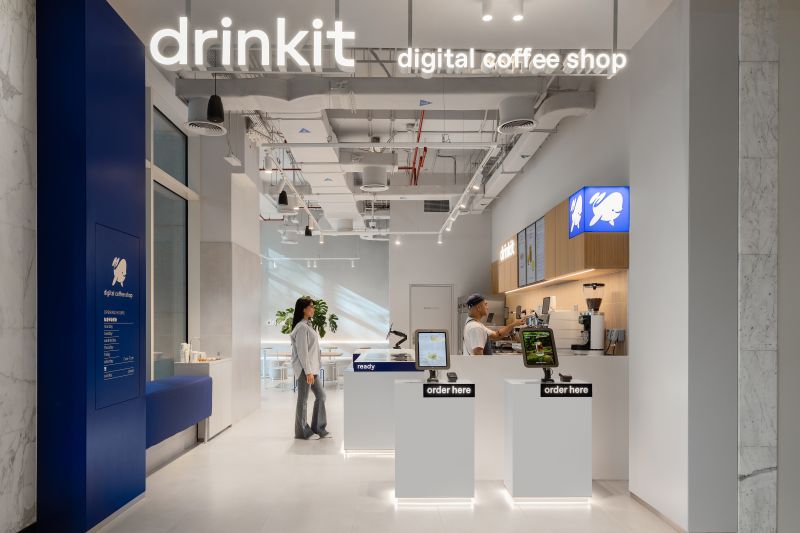
DrinkIt UAE Café Chain Achieves Impressive Debut Performance in Emaar Square, Dubai

Dubai, January 30, 2024 (QW): In an exciting announcement on her LinkedIn account, Katerina Borodich, the CEO of “Drinkit UAE,” shared the remarkable results achieved during the first month of operations at the cafe located in the business center of Emaar Square, Dubai.

Under the title “Drinkit UAE’s Digital-First Coffee Shop Chain Makes a Strong Debut in Emaar Square, Dubai,” Katerina Borodich highlighted the key outcomes and future plans for the thriving coffee brand.

She announced that 95% of orders were received through online channels, indicating a positive response to the innovative ordering methods via kiosks and the app in Dubai. Despite starting with 50 daily transactions, the café is now approaching 200, a noteworthy achievement for a relatively unknown brand in a competitive area.

Borodich acknowledged the challenge posed by major brands like Starbucks and Costa Coffee, emphasizing strong consumer loyalty. Nevertheless, she expressed confidence in changing the game by simplifying the ordering process and introducing specialty coffee to the mass market.

Katerina Borodich revealed plans for another location launch and expanding the team, affirming the brand’s commitment to growth and success.

In conclusion, she stated, “The start is good, and winning in the market won’t be easy, but I believe we can change the game by making the ordering process easier and bringing specialty coffee to the mass market. We are working on another location launch and expanding the team, so stay tuned!”

With this exciting news, Drinkit UAE aims to solidify its position in the competitive coffee industry, leveraging digital strategies and a commitment to providing top-notch services and products.

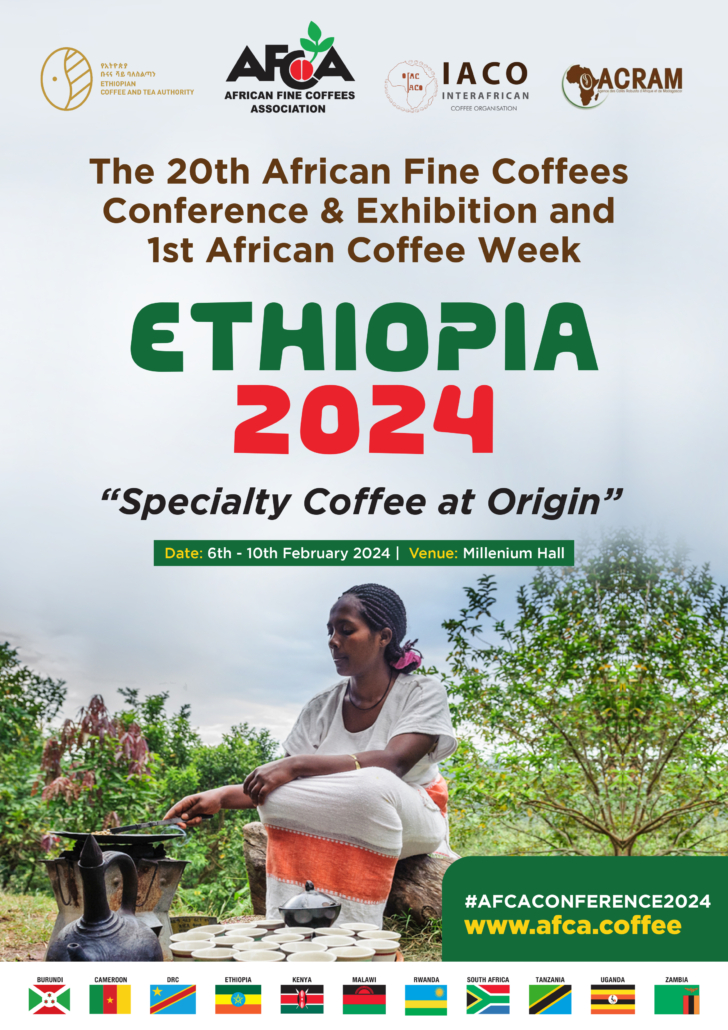
Addis Ababa is preparing to host the 20th African Fine Coffee Conference and Exhibition and the first African Coffee Week

Addis Ababa, January 30, 2024(QW): The Ethiopian capital, Addis Ababa, is set to host the grandeur of the 20th African Fine Coffees Conference & Exhibition (AFCC&E) and the inaugural African Coffee Week from February 6th to 10th, 2024. The prestigious event, taking place at the Millennium Hall, is the continent’s largest coffee trade platform, attracting over 2,000 coffee professionals, including producers, traders, and roasters from both regional and international domains.

This year marks a special collaboration between AFCC&E, the Inter-African Coffee Organization (IACO), the Robusta Coffee Agency of Africa and Madagascar (ACRAM), and the Ethiopian Coffee and Tea Authority (ECTA). The theme, “Specialty Coffee at Origin,” aims to highlight the exceptional quality of coffees produced in their country of origin, inviting attendees to explore Ethiopia, known as the ‘land of origins.’

The 20th edition boasts an impressive lineup of international and regional speakers, a sprawling exhibition hall, engaging workshops, exclusive B2B cupping sessions, and vibrant social events. Notable highlights include the Africa Youth Barista Championship and the regional Taste of Harvest Competition.

Official Conference Program Highlights:

Day 1: Tuesday, February 6, 2024

  • Registration opens from 8:00 AM to 5:00 PM.
  • Horra Trading Day Trip from 9:00 AM to 2:00 PM.
  • Opening Cocktail from 6:00 PM onwards.

Day 2: Wednesday, February 7, 2024

  • Registration and Barista Competition Training from 8:00 AM to 5:00 PM.
  • Opening Ceremony and Algrano Direct Trade Workshop from 9:00 AM to 1:00 PM.
  • Moyee Coffee Break, Exhibition Hall Opens, and B2B Cupping Sessions throughout the day.
  • Exclusive workshops on Risk Management and Understanding Futures & Options.
  • High-Level Policy Forum: Transforming the African Coffee Sector Through Value Addition.

Day 3: Thursday, February 8, 2024

  • Sustainability Day by Rainforest Alliance, African Farmer Day, and Taste of Harvest Regional Competition.
  • Exhibition Hall Open from 9:00 AM to 5:00 PM.
  • African Barista Competition Day 1.
  • B2B Cupping Sessions, Moyee Coffee Break, and engaging panels throughout the day.

Day 4: Friday, February 9, 2024

  • IWCA Breakfast and Taste of Harvest Regional Competition.
  • Exhibition Hall Open from 8:00 AM to 5:00 PM.
  • African Barista Competition Day 2.
  • Insightful presentations, panels, and B2B Cupping Sessions.
  • A special focus on market outlook, market access strategies, and sustainability.

Day 5: Saturday, February 10, 2024

  • Exhibition Hall Open from 9:00 AM to 5:00 PM.
  • Panels on the innovative contributions of African women and coffee rejuvenation.
  • IACO Annual General Assembly and Acorn’s hands-on workshop.
  • AFCA Annual General Meeting with a closing dinner and award ceremony at 7:00 PM.

The AFCC&E promises an enriching experience, providing a platform for networking, knowledge exchange, and the celebration of the rich coffee heritage that Ethiopia brings to the world. The event aims to propel the African coffee sector forward, fostering sustainability, and enhancing the global presence of African coffee.

New Study Highlights Coffee’s Heart-Healthy Benefits for Type 2 Diabetes Patients

Exciting findings from a recent study by the Rhealth Institute bring good news for those with Type 2 Diabetes. Led by K. Zhu, the study, published on January 29, 2024, emphasizes the positive impact of coffee consumption on heart health in individuals managing Type 2 Diabetes.

What the Study Revealed: Researchers closely examined the habits of 7315 people with Type 2 Diabetes over approximately 6 years. The standout discovery was that individuals who included coffee in their daily routine had a lower risk of heart problems compared to those who consumed sugary drinks, diet drinks, or natural juices.

In simple terms, the study found that coffee could be a heart-healthy choice for people with Type 2 Diabetes. The risk of heart issues was notably reduced for coffee drinkers, showcasing a promising outcome for those looking to protect their heart health.

Why This Matters: For individuals with Type 2 Diabetes, choosing coffee over other beverages like sugary drinks could be a positive step for their heart. Coffee, when consumed in moderation, seems to offer a protective effect against heart problems, which is particularly significant given that heart concerns are common among those with diabetes.

This study encourages a shift towards healthier choices, with a comforting cup of coffee potentially serving as a heart-friendly alternative. So, for individuals managing diabetes, the next time you reach for a beverage, consider reaching for that cup of coffee—it could be a simple and enjoyable way to promote your heart’s well-being.


Groundbreaking Insights Revealed in New Narrative Review: “Coffee and Microbiota”

Dubai 202 January (QW): In a comprehensive narrative review, researchers delve into the intricate relationship between coffee consumption and the gut microbiota, shedding light on potential implications for human health. This pioneering study, conducted by the coffee Rhealth Institute for Scientific Information on Coffee, explores the multifaceted aspects of coffee’s impact on the body, particularly through its interaction with the gut microbiota.

The gut microbiota, a diverse community of microorganisms residing in the gastrointestinal tract, plays a pivotal role in maintaining overall health. Dysbiosis, an imbalance in this microbial community, has been linked to the onset of various diseases, making understanding this complex ecosystem crucial for developing innovative therapeutic strategies.

The narrative review meticulously explores a plethora of studies, zeroing in on the impact of coffee consumption on the gut microbiota and its subsequent effects on human health. The researchers sifted through an array of influential articles to present the latest evidence and insights into this captivating interplay.

Studies conducted on both human subjects and animal models consistently highlight a correlation between coffee consumption and alterations in the gut microbiota. These changes, though identified, warrant further exploration to unravel the intricacies of this association and its broader ramifications for the entire organism.

The implications of this research extend beyond the realm of coffee enthusiasts. The findings suggest that the effects of coffee on the gut microbiota may hold keys to understanding and potentially preventing certain diseases. As researchers call for additional studies to deepen our understanding of this intricate relationship, the narrative review, conducted by the coffee Rhealth Institute for Scientific Information on Coffee, serves as a crucial milestone in advancing our knowledge of the interplay between coffee, gut microbiota, and human health.

In a world where coffee is not just a morning ritual but a global phenomenon, this narrative review offers a compelling narrative that extends beyond the aroma and taste, into the very fabric of our microbial world, uncovering potential health implications that may redefine how we view our daily cup of coffee.

Malindo Utama Gayo’s Journey Towards Quality Coffee, Sustainability, and Community Flourish

In the heart of the lush Gayo Highlands in Central Aceh, Indonesia, a cooperative is making waves in the coffee industry – Malindo Utama Gayo. Renowned for its commitment to quality, sustainability, and community development, the cooperative has emerged as a leading producer of exceptional Arabica coffee beans. In this exclusive interview, Shafuan Iqbal, the Marketing Manager at Malindo Utama Gayo, provides a glimpse into the cooperative’s origins, practices, and aspirations. Join us as we explore the unique journey of Malindo Utama Gayo, where the pursuit of excellence meets a deep dedication to environmental responsibility and community empowerment.

Can you tell us about your role as the Marketing Manager at Malindo Utama Gayo, and how did you get involved with the cooperative?

Let me introduce myself, my name is Shafuan Iqbal, here I act as a marketing manager at the Malindo Utama Gayo producer cooperative. My role here as a manager is to determine the target market, segment the market, and determine the best way to market Gayo Arabica coffee products with the best quality that we can guarantee and also ensure that consumers are satisfied with the products we offer, so that this continues to be sustainable.

What inspired the founding members to establish Malindo Utama Gayo, and what challenges did they aim to address in the coffee production industry?

The inspiration of the founder of the Malindo Utama Gayo Producer Cooperative was:

  1. Farmer Empowerment: here our aim is to improve the economic and social conditions of coffee farmers and provide opportunities for a better economy for local farmers in the Takengon region, Central Aceh.
  2. Sustainability: here we are Determined to ensure that our coffee production meets sustainability standards and we are committed to adopting sustainable farming practices, ensuring that farmers receive fair prices, and supporting sustainability initiatives in the coffee supply chain.
  3. Quality Maintenance: Our inspiration here is to maintain and improve the quality of coffee, we want to bring superior Arabica coffee from the Gayo area to the global market, promoting the unique taste, aroma and characteristics of Gayo Arabica coffee in the Gayo highland area.
  4. Innovation and Differentiation: here we bring innovation to the coffee production industry by processing coffee beans from the plantation to ready for export in the Takengon area so that there is no mixing of products with other coffee and we can guarantee the authenticity of Gayo Arabica coffee from our cooperative.

The challenges we usually face in the coffee industry are price fluctuations, climate change which can affect crop yields, global competition.

How does Malindo Utama Gayo strive to achieve its vision of becoming a leading coffee producer?

Our efforts to achieve our vision are to become a leading coffee producer, producing high quality coffee beans, prioritizing environmental sustainability, and providing social and economic benefits to cooperative members and the surrounding community.

Can you elaborate on the cooperative’s mission to produce exceptional coffee, prioritize environmental sustainability, and provide social and economic benefits to members and the community?

We are committed to producing the best coffee beans by maintaining product quality, cleanliness and freshness. We apply good cultivation practices and pay attention to every stage of production to produce coffee with a rich taste, attractive aroma and distinctive taste.

Could you explain the unique processing methods used for the original Gayo Arabica coffee, and how they contribute to its high quality?

Post-harvest coffee processing is a series of steps carried out after the coffee beans are harvested from the coffee tree. The aim of this processing is to remove the layers surrounding the coffee beans, such as the skin, mucus and pulp, and to dry the coffee beans. This process is very crucial in producing coffee beans that are ready to be ground, roasted and brewed into a delicious cup of coffee. Here are some general steps in post-harvest processing of coffee:

  1. Depulping: The first step in the post-harvest process is removing the outer skin of the coffee beans. There are two general methods used for depulping. The wet method involves soaking the coffee beans in water to soften the skin, followed by mechanical depulping using a depulping machine. The dry method is to dry the coffee beans in the skin, then break the skin or rub it to remove the coffee beans.
  2. Fermentation: After depulping, the coffee beans will undergo a wet fermentation stage. This process involves soaking the coffee beans in water to remove any remaining mucus and fruit pulp stuck to the beans. Fermentation can also have an impact on the taste and characteristics of the coffee produced.
  3. Washing: After fermentation, the coffee beans go through further washing. The coffee beans are washed and sifted to remove any remaining layers such as mucus or thin membranes that are still attached to the beans.
  4. Drying: After cleaning, coffee beans need to be dried. The drying method can be done naturally or using a dryer. In natural drying, coffee beans are spread thinly on an open surface and left exposed to sunlight or air dried. In drying using equipment, the coffee beans are transferred to a drying machine which regulates the temperature and humidity so that the coffee beans can be dried quickly and evenly.
  5. Final processing: After the coffee beans are dry, they go through the final processing stage. This involves removing the husks or skins remaining after drying, as well as selecting and sorting the coffee beans based on size, shape and best quality, then the coffee that is ready for export will be packed in new jute bags.

What are the key cultivation practices employed by the cooperative to ensure the best quality coffee beans?

The cooperative focuses on coffee quality by implementing sustainable agricultural practices and focusing on environmental sustainability and farmer welfare. Use of organic and sustainable methods in coffee cultivation

How does Malindo Utama Gayo implement environmentally friendly farming practices, and what specific steps are taken to promote organic and sustainable agricultural methods?

Here we use organic farming practices so that there is no environmental pollution and coincidentally we follow organic and Rainforest Alliance standards so that environmental sustainability can be maintained.

 In what ways does the cooperative address responsible waste management in its coffee production process?

For coffee plantations, we prohibit farmers from throwing rubbish carelessly, so we encourage farmers to collect waste from their plantations to be thrown into rubbish bins provided by the local government and for processing sites, we provide septic tanks so that waste produced from the coffee process is not thrown into canals or rivers.

How does Malindo Utama Gayo empower its members through training, knowledge-sharing, and access to resources?

We provide updated training and knowledge to members regularly and provide information openly

Can you discuss the cooperative’s commitment to fair and transparent practices, ensuring members receive a fair share of the profits?

Here we use practices that are fair and transparent to members and we hold member meetings to discuss how to use the profits we obtain

What social and educational initiatives does the cooperative support in the local community?

Cooperatives provide social support in the form of social assistance in the form of providing basic necessities to all farmer members and providing donations to educational institutions in the local community of our farmer member areas.

How does Malindo Utama Gayo collaborate with other coffee farmers and establish partnerships to enhance its positive influence in the coffee industry?

We openly accept and partner with other coffee farmers so that these farmers have a positive impact on each other

Could you provide more details about the range of high-quality coffees offered by Malindo Utama Gayo, including any or single-origin options?

Single origin coffee is coffee that comes from one source, namely coffee of the same type, which comes from the same region, the same region, or even the same plant because the average varieties of Gayo coffee are Catimour, Bourboun and P88.

We apologize, this is an error in the information listed on the website and we will correct it.

For customers interested in brewing their own coffee, what options does the cooperative provide in terms of raw coffee beans?

Semi Wash Sumatera Gayo Mandheling Arabica Coffee TP (Triple Pick ), Semi Wash Sumatera Gayo Gegarang Arabica Coffee Grade 1, Gayo Arabica Grade 5 and Sumatera Coffee Arabica Gayo Luwak.

How does the unique geographic location of Gayo Highland contribute to the ideal conditions for cultivating high-quality coffee?

Malindo Utama Gayo Cooperative is located in the fertile hilly area of ​​the Gayo Highlands, Central Aceh, Indonesia. This area is famous for its ideal geographical conditions for cultivating high-quality coffee. The Gayo plateau is located in Aceh, at an altitude of approximately 1,200 meters above sea level.

Can you share more about the cooperative’s relationship with the local community and any positive impacts it has had?

The Malindo Utama Gayo Cooperative is committed to producing extraordinary coffee while still prioritizing sustainability and providing a positive impact on its members and the local community by providing training and knowledge about coffee and simultaneously preserving the environment and the cooperative providing donations to educational institutions so that farmers’ children are prosperous.

What are Malindo Utama Gayo’s future plans for expanding its reach and impact in the coffee industry?

Our goal is mutual prosperity between farmers and cooperatives and we are trying to prevent global warming by reforesting forests and we hope that buyers will provide a suitable price so that our future plans can run smoothly.

Are there any upcoming projects or initiatives that the cooperative is particularly excited about?

We have collaborated with Indonesian Geographical Indications to preserve the environment and remind the public to prevent pollution of the environment and protected animals, and we are trying to carry out reforestation of deforested forests or where natural disasters in the form of landslides occur.


Australia’s Richest Barista Competition Returns at MICE2024 with a $40,000 Prize Pool

In an eagerly awaited event for coffee enthusiasts, MICE2024 (

Error: Contact form not found.

) is set to host the prestigious Australia’s Richest Barista competition. With a whopping prize pool of $40,000, the competition aims to showcase the exceptional talent of baristas to both the public and the broader coffee industry.

The Richest Barista competition will unfold over three action-packed days during MICE2024. Contestants will engage in a knock-out style format across three rounds, each presenting unique challenges to test their skills and creativity.

Round One: BARISTA Battle In the initial round, baristas will compete by pouring a total of eight drinks in just 12 minutes. This includes two milk beverages, two alternative milk beverages, two mocktails, and two signature beverages. Precision, speed, and creativity will be key factors as competitors strive to impress judges and advance to the next stage.

Round Two: LATTE ART Showdown The second round focuses on the artistry of coffee-making. Contestants will participate in a latte art competition, tasked with pouring six drinks in 10 minutes. This includes two traditional lattes, two free pour lattes, and two designer lattes, showcasing their finesse in creating visually stunning coffee masterpieces.

Round Three: CUP TASTING Challenge The final round introduces a cup tasting competition, where participants must identify the odd one out among the beverages presented. This round adds a unique twist to the competition, requiring a refined palate and a keen sense of taste.

For those in the coffee industry looking to play a pivotal role, the opportunity to become a judge is open. Industry experts are encouraged to fill out the form, and the organizing team will be in touch shortly.

To catch the coffee extravaganza at its best, attendees are urged to take advantage of the early bird rate, which concludes on Friday, January 31. Secure your tickets today to witness the battle for the title of Australia’s Richest Barista.

Sponsorship Opportunities: Elevate Your Brand Limited sponsorship opportunities are available for the Richest Barista competition, offering a prime platform to showcase brands to the global coffee industry and coffee aficionados. Companies keen on maximizing their visibility should complete the form to express interest, ensuring they don’t miss the chance to be part of the most thrilling barista competition of the year.

As MICE2024 gears up for this caffeine-fueled spectacle, the coffee community eagerly anticipates discovering who will emerge as the 2024 Australia’s Richest Barista.

Fatima Abdul Khabeer: Inspirational Journey of a Yemeni Woman from Rural Taiz in Coffee Farming and Production

Dubai, January 27, 2024 (QW): In the rugged terrains of Yemen, where societal constraints often hinder women from pursuing entrepreneurial endeavors, a story of flexibility, wisdom, and determination has emerged. This is the inspirational journey of Fatima AbdulKhabeer, a Yemeni woman hailing from highly conservative rural areas, who defied social norms and founded a pioneering women’s agricultural association in the famous Sabr Mountain in Taiz Province, Yemen.

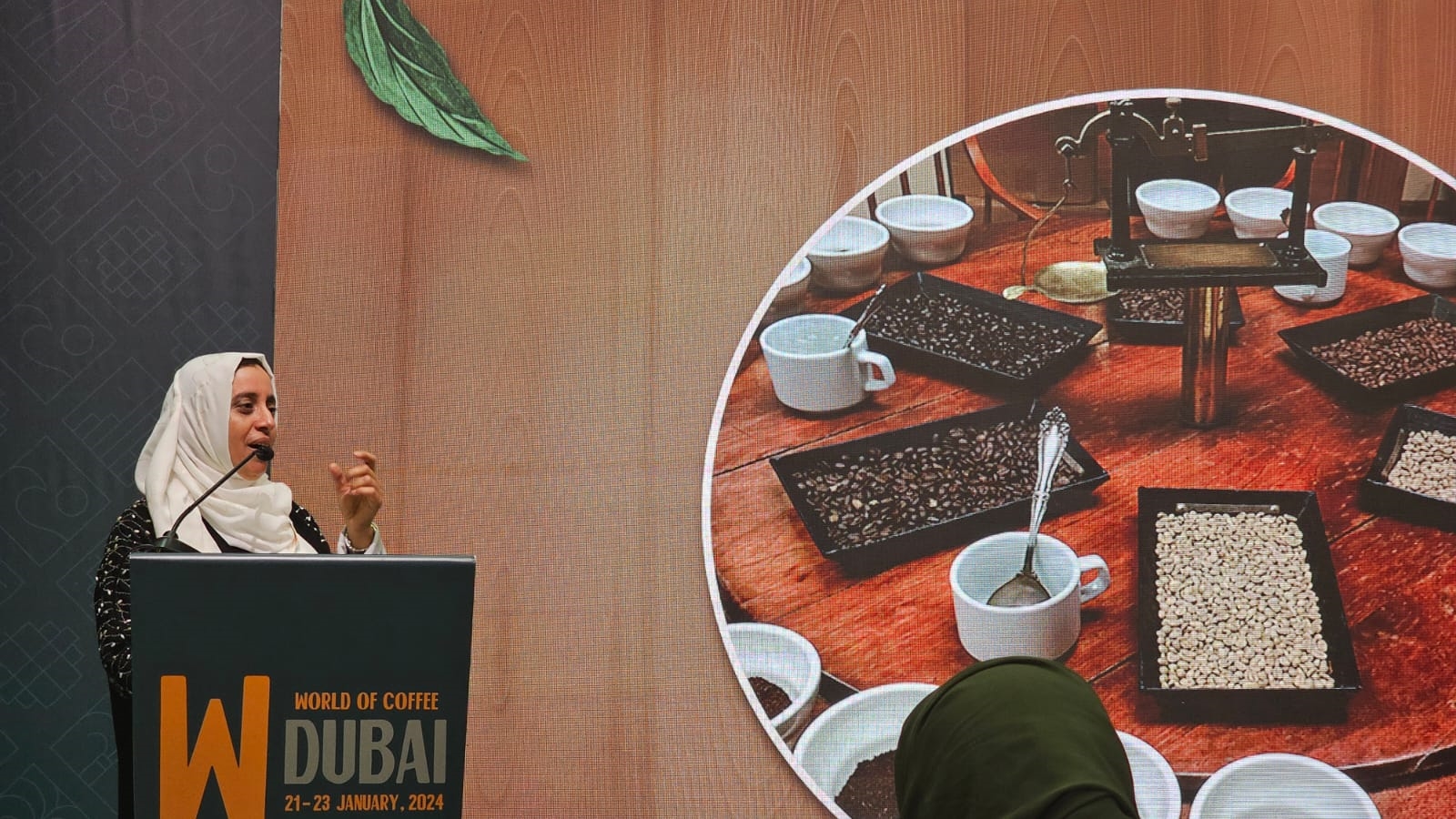
Fatima Abdul Khabeer’s remarkable journey garnered significant attention at the World of Coffee Dubai 2024, where she shared her journey from the inception of the association to its accomplishments up to the present.

Foundation Years   

In 2001, the “Talouq Feminine Association” was established, and over the years, the association grew to include 70 members engaged in coffee cultivation and production.

The association successfully implemented various projects, including a post-harvest coffee technology project funded by the French Embassy, amounting to approximately 250,000 USD. Additionally, they constructed 45 rainwater harvesting tanks and provided specialized training for over 400 farmers.

In 2009, Fatima Abdul Khabeer traveled to Germany, a journey that facilitated connections with foreign companies and marked a qualitative leap in understanding the importance of coffee quality, flavors, tasting techniques, and different aromas.

In 2010, she participated in the Second International Coffee Conference in Yemen, showcasing Talouq Valley’s coffee products and establishing partnerships, notably with “Mokha 1450,” a pivotal collaboration that began in 2013.

In 2014, Fatima embarked on a second journey to Ethiopia with the aim of exchanging experiences with Ethiopian coffee farmers and specialized associations.

Things were progressing well until 2015 when a dramatic shift occurred. Political conflicts intensified in Yemen, escalating into a war, bringing work to a complete halt. However, Fatima’s journey did not stop. Since 2017, she has led trips and visits to share experiences and transfer knowledge to farmers from various regions.

In 2022, the impact of climate change on farms became noticeable, prompting the association to monitor and track changes in coffee production caused by climate variations.

In 2023, the association received training from theSpecialty Coffee Association, initiating the peeling and cleaning operations for farmers from different regions with the goal of supporting exports.

At the Dubai Coffee World Exhibition 2024, Fatima AbdulKhabeer highlighted the current challenges facing Yemeni coffee farmers, including armed conflicts, climate change impacts, limited funding and support for farmers’ needs, export and marketing difficulties, and unfair competition from local traders.

She also outlined the stages of obtaining specialty coffee in Yemen:

  1. Pre-Harvest: Monitoring fruits in farms, protecting them from pests and nutritional deficiencies.
  2. Harvest: Careful selection and harvesting of ripe coffee beans.
  3. Drying: Sun-drying coffee beans on beds while controlling temperature and humidity to maintain quality.
  4. Storage: Appropriate storage conditions to preserve flavors and aromas, avoiding excessive heat, moisture, and odors.

Fatima AbdulKhabeer proudly stopped at some success stations in her career, as in 2017 she achieved third place in UAE Ibrik Championship , and in 2017 she achieved first place in the same tournament and fourth place in 2018.

Fatima AbdulKhabeer concluded her presentation by providing an overview of the current status of specialty coffee in Yemen, emphasizing that Yemen lacks sufficient expertise in preparing specialty coffee. Nevertheless, some regions have initiated serious efforts by training farmers, purchasing their crops, and selling them to external companies specializing in coffee.

Mervat Haider Explores Challenges of Yemeni Specialty Coffee Exports at World of Coffee Dubai 2024

Dubai, 27 January 2024 (QW): As part of the events at the World of Coffee Dubai2024, held last week, Ms. Mervat Haider, Director of the Yemeni Center for Specialty Coffee, delivered a captivating lecture titled “The Journey of Coffee,” where she examined the intricate path of Yemeni specialty coffee.

In her presentation before a diverse audience of coffee experts, industry professionals, and stakeholders from regional and international coffee sectors, Ms. Mervat Haider succinctly outlined the challenges faced by the Yemeni coffee industry, providing a comprehensive overview of obstacles encountered at every stage of the coffee export process.

Export Needs:

Ms. Mervat Haider emphasized the critical elements essential for successful coffee exports, shedding light on the necessity for strong product quality, efficient transportation, accurate documentation, and a stable financial framework.

Technical Issues:

Various technical challenges were discussed, including the impact of water scarcity, variations in coffee seed types across regions, climate changes, and the conflict between traditional and modern agricultural practices.


Legal and Regulatory Problems:

Ms. Mervat Haider highlighted that Yemeni coffee exports face legal complications due to the presence of multiple authorities and the absence of specialized laws and regulations. Geopolitical situations exacerbate challenges in goods transportation within Yemen and seeking international assistance.

Logistic Infrastructure:

Ms. Mervat Haider underscored the conditions of inadequate and unsafe roads, contributing to increased transportation costs within Yemen. The political situation, including heightened taxes and custom duties, poses additional obstacles to internal transportation and international shipping lines.

Ports Dilemma:

Ms. Mervat Haider addressed the problems faced by Yemeni ports, leading to increased costs and difficulties in international shipping. She emphasized the impact on shipping lines since 2011, hindering the global reach of Yemeni specialty coffee.

Despite these challenges, Ms. Mervat Haider concluded her lecture with a positive outlook, expressing the unwavering commitment of the Yemeni Center for Specialty Coffee and other Yemeni coffee producers. She highlighted their dedication to serving coffee to global consumers with love and passion, overcoming adversities to bring the unique flavors of Yemeni specialty coffee to tables worldwide.