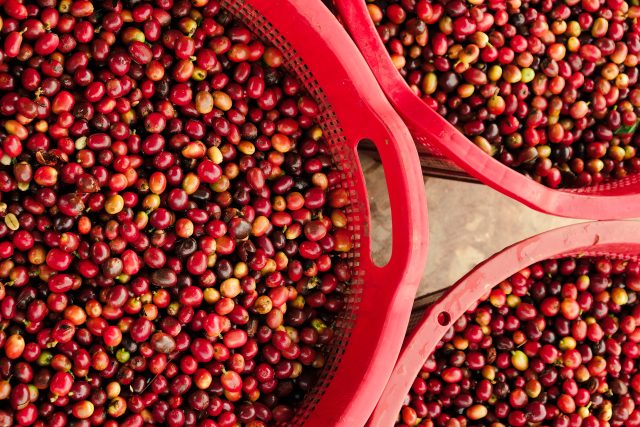
The New Frontier of Flavor: Co-Fermentation and the Ethics of “Infused” Coffee

Dubai – Qahwa World

The specialty coffee sector is undergoing a radical transformation in post-harvest processing. The emergence of co-fermentation—the practice of introducing non-coffee organic substrates during fermentation—has created a new category of flavor profiles. This article explores the mechanics of this method, the regulatory challenges regarding allergens and labeling, and the philosophical debate defining the future of coffee authenticity.

  • 1. Defining the Terms: From Inoculation to Co-Fermentation

To understand the controversy, industry professionals must first distinguish between the varying levels of fermentation intervention. The terminology is often used interchangeably, which leads to market confusion.

Standard Fermentation: The natural microbial breakdown of mucilage by native yeast and bacteria found in the environment.

Controlled Inoculation: The introduction of specific, lab-grown strains of yeast (e.g., Saccharomyces or Lactobacillus) to guide the flavor profile towards consistency. This is widely accepted as an agronomic best practice.

Co-Fermentation (Additive Fermentation): The addition of foreign organic material—such as fruits, spices, hops, or essential oils—into the fermentation tank. The goal is to provide specific nutrients (substrates) for the microbes to metabolize, creating esters and aldehydes that bond with the coffee seed’s cellular structure.

  • 2. The Science of Substrates and “Mossto”

The mechanism behind co-fermentation is not merely “flavoring” in the traditional sense; it is metabolic engineering.

When a producer introduces a substrate like passion fruit or cinnamon, they are introducing simple sugars and specific acids. The microbial culture consumes these sugars and produces byproducts (flavor compounds). Because the coffee bean is porous and undergoing osmotic changes during fermentation, these compounds penetrate the green bean.

  • The Role of “Mossto”

A critical technique in this field, utilized by innovators like Edwin Noreña of Finca Campo Hermoso in Colombia, is the use of Mossto.

Definition: Mossto is the “must” or juice collected from a previous fermentation batch, rich in active enzymes and acclimatized microbes.

Application: Producers cultivate this starter culture and then add secondary ingredients (e.g., galaxy hops or dehydrated fruits). Noreña argues that this does not “mask” the coffee but amplifies existing precursors. For example, using a citric-heavy Mossto to enhance a varietal that already possesses citric notes.

  • 3. The Regulatory Vacuum: Allergens and Labeling

The most significant friction point in co-fermentation is not flavor, but safety and legality. Currently, the regulatory framework lags behind innovation.

  • The FDA and the “Kill Step”

In the United States, green coffee is a raw agricultural product. The FDA generally views the roasting process (which exceeds 400°F/200°C) as a validated “kill step” for pathogens like Salmonella. However, roasting does not reliably denature all allergenic proteins.

The Risk: If a producer co-ferments coffee with lactose, soy, or nuts to create a creamy mouthfeel, and fails to disclose this on the export documents, a consumer with a severe allergy is at risk.

The Labeling Gap: Current regulations do not strictly require “green coffee” bags to list ingredients other than coffee. This breaks the chain of custody, often leaving importers and roasters unaware of the additives used at the farm level.

  • 4. The Debate: Authenticity vs. Evolution

The industry is currently split into two philosophical camps regarding how these coffees should be categorized.

The Purist Argument: Critics argue that co-fermentation risks homogenizing coffee. If a producer can make a mediocre Castillo varietal taste like a top-tier Geisha by adding floral extracts during fermentation, it distorts the value of the genetic material and terroir. They demand these coffees be labeled as “Infused” or “Processed with Adjuvants” rather than “Specialty Coffee.”

The Innovator Argument: Proponents argue that coffee processing borrows from wine and beer (cider) traditions, where adjuncts are common. They view the fermentation tank as a canvas and argue that as long as the base material is coffee, the processing method is simply a tool for creativity and differentiation in a saturated market.

  • 5. Conclusion: The Path Forward

Co-fermentation is unlikely to disappear; the market demand for exotic, high-intensity fruit profiles is too strong. However, for the industry to mature, it must embrace Radical Transparency.

  • The future of high-end coffee likely involves a bifurcation:

Traditional Specialty: Focused on terroir, genetics, and low-intervention processing.

Engineered Specialty: Focused on co-fermentation, sensory design, and creative processing.

Both have a place on the shelf, provided the consumer knows exactly what is in the cup.
Coffee Processing Methods.. what we know about?!

Dubai, January 16, 2024(QW)- Coffee processing is a crucial step in the journey of the coffee berry. Different methods unveil distinct flavors, take varying durations, and involve different efforts. In this article, we explore the primary processing methods: natural, washed, honey, and wet-hull.

Initially, coffee processing was merely about extracting beans from cherries. Manufacturers chose methods suitable for their climate without much thought to taste. However, it became clear that processing greatly impacts the cup’s taste. For instance, under similar conditions, washed coffee tends to be more acidic than natural coffee. Understanding these differences is the focus of this article.

Methods for Processing Coffee Berries

The coffee berry comprises six layers: skin, pulp, gluten, parchment shell (parchment), silver skin (silverskin), and grain. Each layer serves a distinct purpose in protection and nutrition. During processing, the first four layers undergo changes, leading to four basic processing methods:

  1. Drying in the Berry (Natural Processing):
    • The entire berry is dried, also known as the natural or dry method.
    • Suitable for dry and hot climates like Ethiopia, Yemen, and Brazil due to low cost or limited water availability.
  2. Drying in Gluten (Honey and Semi-Washed Processing):
    • Involves drying the berry without skin, with variations like honey, palp-natural, semi-washed, or semi-dry.
    • Offers diverse flavors but requires expensive demucilator equipment.
  3. Drying in Parchment (Washed Processing):
    • The skin, pulp, and gluten are removed, and the grain is dried in parchment.
    • Developed in humid climates by Europeans in the 1850s for faster and controlled processing.
  4. Drying Grain (Wet-Hull Processing):
    • Removes skin, pulp, and patches from the berry, drying grains faster.
    • Yields ready-to-export green beans with a higher risk of defects and faster aging during storage.

Natural Processing: Why Coffee Turns Sweeter

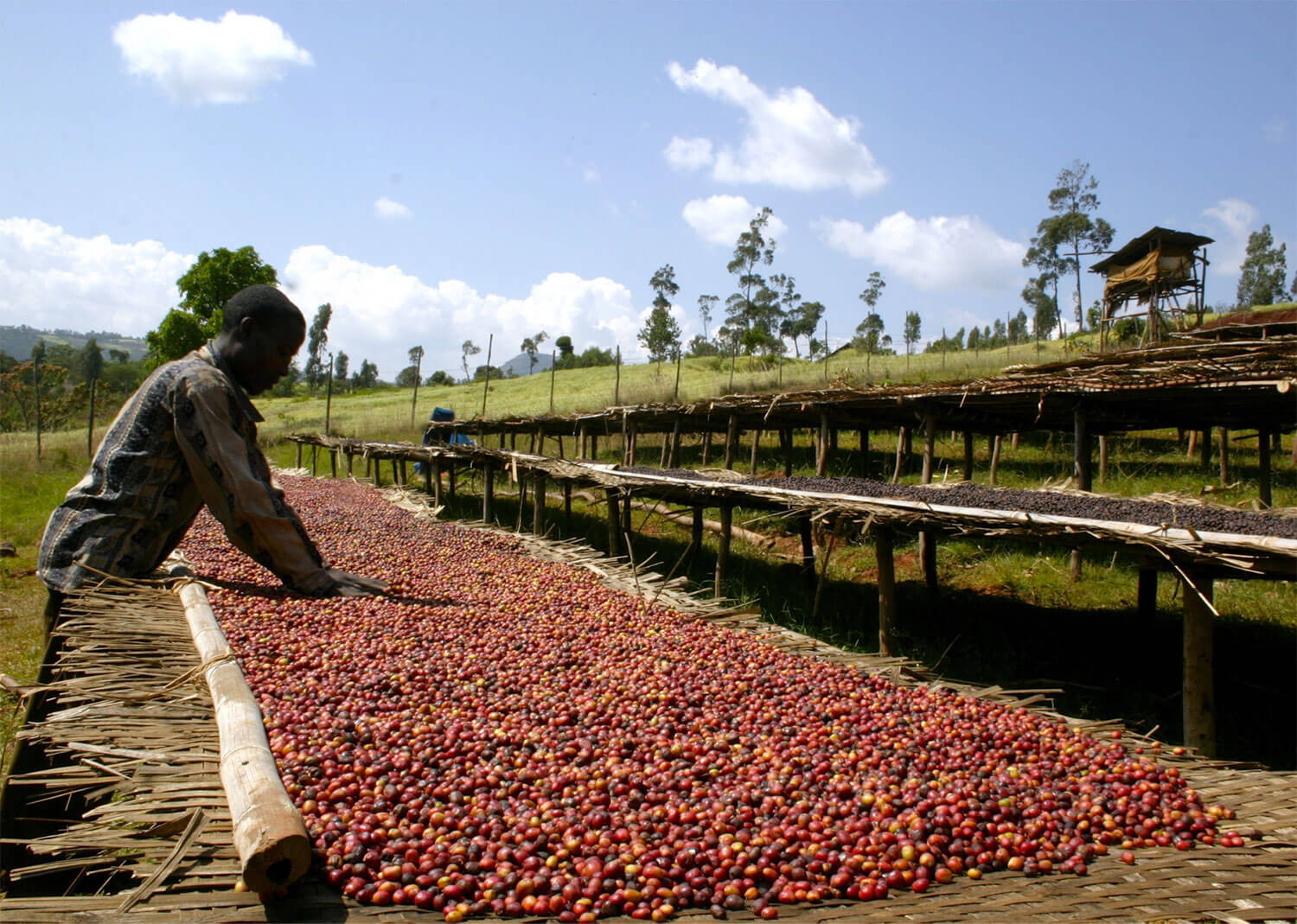
Natural processing, a classic method originating from dry climates like Ethiopia and Yemen, involves drying coffee berries on patios or African beds. This process takes up to four weeks, resulting in fuller-bodied, sweeter coffee. While once associated with cheap coffee, it has regained popularity in the specialty coffee industry for its bold flavors.

Advantages:

  • Bright taste.
  • Cost-effective in dry climates.
  • Leaves no wastewater.

Flaws:

  • Requires careful separation of unripe berries.
  • Frequent stirring during drying.
  • Not suitable for countries with humid climates.

Other names for natural processing: natural, dry, unwashed, fruit dried, sun-dried.

Drying in Gluten (Honey and Semi-Washed Processing): Why is the Pulp Removed?

Drying in gluten, categorized into honey and semi-washed methods, involves removing the skin and some pulp. Honey processing results in sticky, honey-colored beans, while semi-washed utilizes a demucilator for faster drying.

Advantages:

  • Faster drying.
  • Greater variety of flavors.
  • Less biological waste and wastewater.
  • The remaining pulp can be used as fertilizer.

Flaws:

  • Increased risk of defects from mechanical stress.
  • Semi-washed processing requires expensive demucilator equipment.

Other names for honey and semi-washed processing: honey, palp-natural, pulp natural, semi-dry, semi-dried, semi-washed.

Drying in Parchment (Washed Processing): Why It Was Considered Better Than Natural

Washed processing, developed in humid climates by the British in their colonies, involves peeling and depulping coffee berries. Fermentation and washing follow to achieve a cleaner and more acidic taste, replacing natural processing over time.

Advantages:

  • Reduced drying time.
  • Requires less processing space.
  • Cleaner and more acidic taste.

Flaws:

  • Generates a large amount of wastewater.

Other names for washed processing: washed, completely washed, fully washed, wet processing.

Drying Grain Without Parchment (Wet-Hull): Which Helps Dry Grains Even Faster

In wet-hull processing, the skin, pulp, and patches are removed, and the still-wet grains undergo hulling. This method results in immediate export-ready green beans but carries a higher risk of defects and faster aging during storage.

Advantages:

  • The fastest way to dry grain.
  • Immediate export readiness.

Flaws:

  • High risk of defects.
  • Faster aging during storage.

Other names for wet-hull processing: wet-hull, giling-basah.

Why Is It Important to Know How Grain Is Processed?

Different processing methods yield different tastes, emphasizing the importance of understanding them. However, it’s crucial to remember that coffee taste is influenced by various factors, including terroir, coffee type, roasting, grinding quality, and water characteristics.

Embark on this flavorful expedition through the realms of coffee processing, where every step contributes to the symphony of tastes that elevate your coffee experience.