Jane Aldridge from Nestlé Elected Chair of the British Coffee Association

The British Coffee Association (BCA) has confirmed the election of Jane Aldridge, Managing Director (Coffee) at Nestle UK&I, as the Association’s new Chair.

Jane brings extensive expertise in the coffee industry focused on the manufacturing sector.

She has spent more than twenty-five years at Nestlé where she now leads the in-home coffee business for the UK & Ireland.

Jane’s experience in marketing and sales includes notable achievements, such as the launch of NESCAFÉ Azera and the co-development of the NESCAFÉ PLAN, which was one of the first
initiatives to deliver responsibly sourced coffee.

Jane’s professional journey has also taken her to the Czech Republic, where she gained valuable international experience.

As BCA’s Chair Jane will use her experience to support the UK coffee industry at a critical juncture as we deal with new regulatory requirements – including on deforestation, packaging and labelling – and work for improvements to the sustainability and
environmental footprint of the industry.
The UK Government continues to develop its approach to international trade, tariffs, and labour movement post-Brexit, and BCA will represent our sector as these areas evolve.

Research published by the BCA shows that the UK has a flourishing coffee industry – the nation drinks approximately 98 million cups of coffee every day, with the industry creating over 210,000 UK jobs. The BCA is the voice of the UK coffee industry.

Jane Aldridge, Chair of the British Coffee Association, said:
“I am truly delighted to be elected Chair of the British Coffee Association and I’m keen to support the Association’s mission – to represent, promote and support all aspects of the UK coffee trade and industry.

“I have had the privilege to work in this industry for over twenty-five years, and so this appointment is a proud moment for me. Directly and indirectly, I have been involved with the BCA since the 1990s, when of course our UK coffee industry looked very different and it is truly satisfying to see us in good shape today.


Skipping Coffee Is the Latest Humblebrag: The New Power Move for A-Listers and Executives

In an unexpected shift, skipping coffee has emerged as the latest humblebrag among high-powered professionals and celebrities. What was once considered an essential fuel for the day is now being consciously avoided by A-listers and top executives, who claim they achieve greater productivity without their daily caffeine fix. This new trend emphasizes holistic well-being and natural energy over reliance on stimulants.

Celebrities and CEOs are increasingly sharing their coffee-free routines on social media, turning it into a badge of honor. This shift is seen as a testament to self-discipline and mastery over one’s natural rhythms. Instead of coffee, these individuals are turning to rigorous morning workouts, meditation, strict sleep schedules, and proper hydration to maintain their energy levels throughout the day.

The trend has been highlighted by various sources, indicating a growing movement towards mindful and balanced approaches to productivity. According to Coffee Affection, health-conscious trends in coffee consumption are evolving, with a significant focus on wellness and sustainability. This aligns with the new coffee-free movement where the emphasis is on overall health rather than just a quick energy boost.

Proponents of skipping coffee argue that reducing caffeine intake can lead to better long-term health outcomes. Caffeine, while providing a temporary boost, can also lead to dependency, sleep disturbances, and increased anxiety. By avoiding coffee, individuals report more stable energy levels, improved sleep quality, and reduced anxiety.

This perspective is supported by various health experts who suggest that natural methods of maintaining energy, such as proper nutrition and regular exercise, are more beneficial in the long run. Moreover, the trend ties into broader health-conscious movements where individuals seek to optimize their lifestyles for better physical and mental well-being.

However, this trend is not without its critics. Some argue that it represents a form of elitism, as not everyone has the luxury to perfect their sleep hygiene or incorporate extensive wellness routines into their daily lives. For many, coffee is a practical and necessary part of their day, providing a quick and effective way to boost energy and focus.

Additionally, there are economic implications to consider. The coffee industry is a significant economic engine, supporting millions of jobs worldwide, from farmers to baristas. A widespread shift away from coffee consumption could have economic repercussions, particularly in coffee-producing regions.

Coffee has long been more than just a beverage; it is a cultural and social experience. From morning rituals to social gatherings, coffee plays a central role in daily life for many people. Skipping coffee as a status symbol could potentially change these cultural dynamics, influencing how social interactions and daily routines are structured.

Economically, the coffee industry is vast, with a global market value expected to reach $155.64 billion by 2026. Major coffee-producing countries like Brazil, Vietnam, and Colombia rely heavily on coffee exports. A decline in coffee consumption among influential demographics could impact global demand, potentially affecting these economies.

Whether this trend will catch on with the general public remains to be seen. For now, skipping coffee has become a new power move among the elite, signaling a shift towards more mindful and balanced approaches to productivity. As more celebrities and executives adopt coffee-free lifestyles, the trend could inspire a broader reevaluation of how we approach our daily energy needs.

For more detailed insights into this trend and its implications, you can read the full articles on Coffee Affection and Morningstar (Coffee Affection)​​ (Morningstar)​.

Center for Circular Economy in Coffee (C4CEC)

The Center for Circular Economy in Coffee (C4CEC) is revolutionizing the coffee industry by promoting sustainability through circular economy practices. As the first precompetitive platform of its kind, C4CEC brings together international partners to implement innovative solutions, pilot projects, and share valuable knowledge across the coffee value chain—from farming to consumption and disposal.

Who Are C4CEC ?

The Center for Circular Economy in Coffee (C4CEC) is the first precompetitive platform dedicated to enhancing the circular economy within the coffee sector. Located in Turin, Italy, and supported by international partners, its mission is to implement circular economy practices, pilot innovations, advance research, and disseminate best practices, solutions, case studies, and practical information across the entire coffee value chain—from farming to consumption and disposal.

The Scientific Board leverages cutting-edge research from universities and academic centers, building on transformative approaches from Slow Food and the Sys-Systemic Design Lab. The ITC’s Coffee Guide Network Circular Economy Working Group, in close partnership with ICO and UNIDO, serves as a multi-stakeholder forum to shape the direction of circular economy in the coffee sector. Their work and findings are shared through C4CEC, inviting interested individuals to participate and contribute.

What C4CEC Do?

C4CEC aims to make circularity know-how accessible to a diverse group of stakeholders, including companies, associations, universities, institutions, small and medium enterprises, local communities, and other coffee stakeholders. Through a collaborative approach, they enhance the environmental, social, cultural, and economic sustainability of the coffee value circle. They support stakeholders through knowledge transfer and resource mobilization for adapting and implementing circular solutions, while promoting the acceleration of circular economy practices in the coffee sector.

C4CEC Initiatives

  • Improve and Promote Circular Economy Culture: C4CEC organizes courses, provides resources, and creates learning pathways to share best practices, research, studies, and practical information on circular economy in the coffee value chain.
  • Project Platform: C4CEC convenes a multi-stakeholder knowledge-sharing network to develop and disseminate evidence-based best practices in the coffee sector. Initiatives are approved by the Scientific Board.
  • Pilot Projects and Research: C4CEC offers customized member support for developing ideas, pilot projects, and know-how related to circularity. They assist entities in developing ideas or sharing knowledge about sustainability projects in the coffee sector.
  • Marketplace Platform (In Development): An online tool to connect entities involved in the circular economy of coffee, facilitating matchmaking between companies that produce waste, those that recover it, those that transport it, and those that reintroduce it into new production cycles.

Founders

  • Lavazza Foundation: Founded in 2004 to promote and implement economic, social, and environmental sustainability projects, supporting coffee-producing communities worldwide through partnerships with public and private bodies, international organizations, and NGOs.
  • Politecnico di Torino: Established in 1859, it is Italy’s first engineering school and a leading institution for training engineers, architects, designers, and urban planners with rigorous standards.
  • University of Gastronomic Sciences: Founded in 2004 by Slow Food and Italian regions, this private non-profit institution focuses on renewing farming methods, protecting biodiversity, and creating a relationship between gastronomy and agricultural science.

Strategic Partners

  • International Coffee Organization (ICO): Established in 1963, ICO is the only intergovernmental organization for coffee, representing 93% of world coffee production and 63% of world consumption.
  • International Trade Centre (ITC): A joint agency of the World Trade Organization and the United Nations, dedicated to supporting the internationalization of micro, small, and medium-sized enterprises through partnerships for sustainable food systems.
  • UNIDO: A specialized agency of the United Nations that promotes inclusive and sustainable industrial development, contributing to all the Sustainable Development Goals (SDGs) through technical cooperation, research, policy-advisory services, and fostering partnerships for knowledge and technology transfer.

For more information or to participate in their initiatives, contact [email protected].

Five Mistakes That Can Spoil the Taste of Your Coffee

For many people, coffee is not just a beverage but an essential part of starting their day, providing energy throughout the day. Studies show that coffee drinks, especially pure filtered coffee or classic espresso, can lower cholesterol levels, have anti-inflammatory effects, and even reduce the risk of developing type 2 diabetes. However, to enjoy all these benefits, it is important to prepare coffee correctly.

What are the common mistakes made in coffee preparation?

  1. Storing in the refrigerator: Many people believe that the refrigerator is the best place to store coffee because it supposedly preserves the aroma. However, this is not the case, as coffee easily absorbs odors from other products in the refrigerator. It is best to store coffee away from other odors and light.
  2. Open packaging: If you rarely drink coffee, it is used much slower than by those who drink it more often. However, do not leave coffee in an open package for too long, as this can lead to a loss of taste and even bitterness.
  3. Grinding all the coffee at once: Pre-ground coffee is convenient, but its aroma quickly dissipates if not used within a few weeks. If you prefer a rich aromatic coffee, it is better to grind the beans just before brewing.
  4. Pouring with boiling water: Hot water is harmful to the taste of coffee as it releases bitter compounds and quickly evaporates the aroma. It is recommended to brew coffee with water heated to 90-95 degrees Celsius, or let boiled water cool for a few minutes before using it to brew coffee.
  5. Using low-quality water: The taste of coffee often depends on the quality of the water used. If tap water is too hard, you can use mineral water instead. It is also important to avoid water that is too soft, as it can quickly strip coffee of its flavor.

Coffee Etiquette: 11 Tips for Café Visitors

The 1960s and 1970s marked the rise of the “specialty coffee era,” where values of quality and excellence in coffee preparation came to the forefront, along with diverse flavors and aromas. Lattes, espressos, and cappuccinos are among the popular beverages, and their fame extends across thousands of modern cafés equipped with advanced techniques for roasting and brewing coffee worldwide.

In these contemporary cafés, professional coffee makers, known as “baristas,” stand out for their expertise, warmth, and unique coffee presentations. They constantly innovate to enhance coffee quality. When visiting a café, it’s essential to adhere to certain etiquettes or “coffee etiquette” to ensure an enjoyable experience for everyone. Polite customers are always preferred by coffee makers.

Here are 11 guidelines for refined behavior in cafés:

  1. Check the Menu: Upon arriving at the café, review the menu to avoid surprises if your favorite drink isn’t available.
  2. Eye Contact: When ordering coffee, remember that you’re interacting with a real person. Speak clearly and respectfully, avoiding distractions from your phone.
  3. Specify Preferences: Be clear about your order, including details like milk type, drink size, and temperature.
  4. Avoid Changing Your Order at the Wrong Time: Try not to alter your order after it’s been placed, especially during peak hours.
  5. Trust Matters: Have confidence in the barista’s skills and avoid asking about decaffeinated options if you’re not interested, as it may be considered bothersome.
  6. Respect Time: Don’t linger at a table; leave promptly after finishing your coffee to allow others a chance to sit.
  7. Moderate Jokes: Refrain from making repetitive jokes during busy hours; the barista might be occupied.
  8. No Coffee Lectures: Avoid showcasing your coffee knowledge to a barista who may not be interested.
  9. Kindness Pays: Remember that tips contribute significantly to a barista’s income, so be generous.
  10. Avoid Selfish Behavior: Don’t monopolize large tables with your devices or loud conversations.
  11. Dispose of Coffee Waste Thoughtfully: Hand over coffee remnants to café staff instead of tossing them in the trash.

By following these tips, you can enjoy a coffee experience in cafés with courteous and considerate behavior, ensuring the comfort and happiness of both customers and coffee makers.

Coffee Etiquette: 11 Tips for Café Visitors

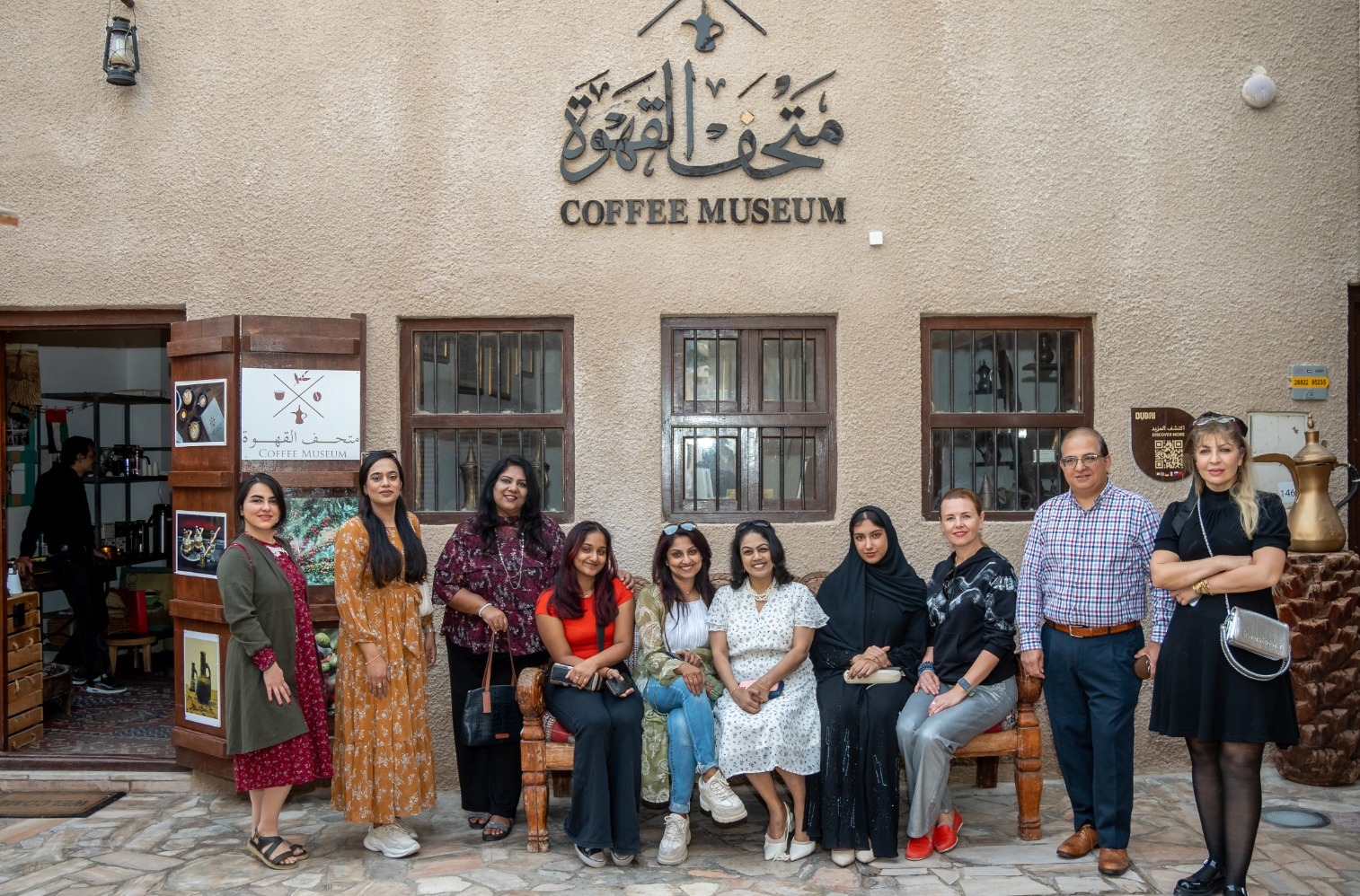
Inside Dubai’s Coffee Museum: A Journey Through History, Culture, and Flavor

By: Jesno Jackson

In a world where coffee has become more than just a beverage but a cultural phenomenon, a visit to a coffee museum offers an immersive and enriching experience for enthusiasts and curious minds alike. Journey with us as we explore the captivating narrative of coffee’s history, culture, and artistry through our visit to a renowned coffee museum.

History and Cultural Significance:

Our team exploration began with a deep dive into the origins and historical significance of coffee. From its discovery in ancient coffee forests to its role in social rituals across different societies, we traced the journey of this beloved beverage that has captured hearts worldwide.

Cultivation, Processing, and Roasting:

The museum provided valuable insights into the meticulous cultivation and harvesting of coffee beans, as well as the various methods of processing, including drying, roasting, and grinding. We discovered the art and science behind coffee roasting, exploring vintage and modern roasting equipment and learning how different techniques influence the flavor profiles of coffee.

Brewing Techniques and Coffee Culture:

A highlight of our visit was the exploration of different coffee brewing methods, from traditional to modern. The museum showcased a variety of machines, each contributing to the diverse and rich coffee culture celebrated globally. We also delved into the artistic expressions of coffee through paintings, photography, and literature, witnessing its profound impact on art and culture.

Tasting Sessions and Interactive Exhibits:

Participating in coffee tasting sessions was a sensory delight, where we sampled a range of coffees with distinct flavors and aromas. The interactive exhibits allowed us to engage with the world of coffee through touch, smell, and experiential learning, enhancing our understanding and appreciation for this versatile beverage.

Café Experience:

Our journey concluded at the museum’s on-site café, where we savored freshly brewed coffee while reflecting on the enriching experience of our visit. The café provided a serene and relaxing environment to savor the flavors discussed during our exploration, completing our immersion into the world of coffee.

Conclusion:

A visit to a coffee museum was both educational and enjoyable, offering a comprehensive look into the world of coffee from bean to cup. In addition to serving as physical reminders of the skill and cultural significance infused into each cup of this much-loved beverage, they exhibit’s pots, brass relics, and other items illustrate the progression of coffee preparation. An intriguing look into the development of coffee processing was found in the coffee museum’s collection of vintage roasting machines. These exquisitely preserved artifacts, showcased the skill and creativity involved in roasting coffee beans, transport viewers to a bygone period with their elaborate patterns and historical relevance. There was a literature room occupied with books on coffee and History of Coffee and Coffee World.

It was a cozy heritage space exploring roasting & brewing styles from around the world, plus displays of antiques. We had our guide Andres from Colombia, who was a professional coffee taster with more than 20yrs of experience. Attendees included Alia Amin, Neetu George, Anahita Ansaripour, Shakiba Rabiei, Alzbeta Znamenska, Aliyeh Mohammad, Mahum Shoaib, Nigam, Aimee George, Maria Komal Abie, Jesno Jackson, Vasilisa Eliseeva, Murali Kuttappan, Shehab Shoukry and Apurbo DXB24live.

Visiting a coffee museum is not just a tour but a journey that deepens one’s connection to coffee’s rich heritage and cultural significance. It’s an experience that tantalizes the senses, broadens knowledge, and fosters a profound appreciation for the artistry and complexities behind every cup of coffee. Whether you’re a coffee enthusiast, a history buff, or simply curious about the world of coffee, a visit to a coffee museum promises an unforgettable and enlightening experience.

The timeless tradition of coffee: a journey through Ramadan and Eid

By: Medina Ilyas

Ah, the allure of Arabic coffee! It’s not just a drink; it’s a cultural voyage that captivates the senses and warms the soul.

My fascination with this aromatic brew began 16 years ago, with a single cup of Arabic coffee with cardamom offered by my future mother-in-law.

Since then, I’ve been immersed in the world of Arabic coffee – qahwa, delighting in every aspect of its rich tradition.

Join me on a journey through the heartwarming rituals that surround Arabic coffee with spices, especially during the holy month of Ramadan and the festive celebration of Eid.

Ramadan, a time of fasting and reflection, is also a time for community and connection.

As the sun sets, families gather to break their fast with iftar, where qahwa takes center stage.

During Ramadan, every house I come to the first thing that people are offering are qahwa from the Arabic traditional coffee pot – dalla and dates and this is how people are breaking the fast. It was such a surprising experience to me.

Arabic coffee isn’t just a drink during these occasions; it’s a symbol of hospitality and welcome.

The act of preparing and serving qahwa is a gesture of generosity, inviting guests to partake in a shared experience.

The aroma of freshly brewing methods of qahwa signals all to come together, fostering conversations that transcend boundaries.

In the Arab world, refusing a cup of coffee can be equivalent to refusing friendship.

Accepting this gesture is more than just accepting a drink; it’s accepting an invitation into someone’s life.

During Ramadan and Eid gatherings, conversations flow freely, fueled by the warmth of qahwa and the spirit of togetherness.

In my own family, qahwa has always been at the heart of our iftar gatherings.

The daily ritual of brewing qahwa for my loved ones is a cherished tradition, filling our home with its rich aroma and bringing us closer together.

As Ramadan draws to a close, the celebration of Eid al-Fitr begins.

Qahwa continues to play a central role in these festivities, symbolizing gratitude and togetherness. The preparation of coffee becomes a communal activity, with each cup poured symbolizing hospitality and warmth.

As we celebrate Eid al-Fitr, let’s remember the timeless tradition of qahwa.

Let’s savor its flavors and aromas, cherishing the moments of connection and joy it brings.

Join us on this aromatic journey, as we share stories, honor traditions, and embrace warmth—one sip at a time.

Eid Mubarak to all!


5 Trends Shaping the UK Branded Coffee Shop Market in 2024

In 2023, the UK branded coffee shop market soared to £5.3bn ($6.6bn), surpassing 10,000 outlets for the first time and experiencing remarkable sales growth. However, amidst ongoing economic challenges and shifting consumer behaviors, operators tread cautiously. Exclusive insights from the Project Café UK 2024 report unveil the pivotal dynamics shaping Europe’s largest branded coffee shop market.

  1. Navigating Economic Headwinds: Despite resilient growth, operators face constraints from a challenging economy. High inflation and decreased footfall at prime locations have compelled brands to reassess strategies, with notable shifts observed in consumer spending habits and outlet expansion plans.
  2. Franchising for Expansion: To mitigate risks amidst rising costs and stiff competition, UK operators increasingly turn to franchising for expansion. Notable brands like Costa Coffee and Greggs are leveraging this model to penetrate diverse markets and capitalize on local expertise.
  3. Rise of Boutique Operators: The specialty coffee segment witnesses unprecedented growth, with boutique operators like WatchHouse and Grind expanding their footprint and diversifying offerings. The market’s maturity is evident as specialty operators thrive beyond London.
  4. Oat’s Dominance in Non-Dairy Choices: Oat emerges as the preferred non-dairy option in UK coffee shops, gaining traction at the expense of other alternatives. Despite this, challenges persist, signaling that dairy still holds sway over consumer preferences.
  5. Diversification and Competition: Non-coffee-focused branded cafés are intensifying competition, offering handcrafted beverages and indulgent experiences. From bubble tea to premium drinking chocolate, these establishments seek to captivate younger consumers and tap into evolving tastes.

The UK branded coffee shop market of 2024 is characterized by resilience, innovation, and adaptation. As operators navigate economic uncertainties and changing consumer preferences, strategic maneuvers and diversification efforts emerge as key drivers of success in this dynamic landscape.

How we inadvertently gatekeep specialty coffee from new consumers!

By: Estella Zuleta Carmona
Head of Coffee and Trainer

Ever wonder why regardless of how much we try to engange with consumers and share all things coffee with customers, friends and even our family somehow specialty coffee consumers doesnt seem to go in a raise? And big chains continue to expand and reach broaders audiences

Perhaps the reason lies in the way we are communicating specialty coffee, a field and expertise that want it or not has a complex nature and that many of us, coffee professionals, want it to be valued and appreciated for its value, worth, and all the deep and hard labour behind it, regardless, we forget that in the same way we appreciate some things and ignore others, we cannot force people to enjoy the same hobbies or pleasures that we do.

We need to make it approachable, simple and easy to enjoy, but how can we achieve this out of an expertise that implies so many variables and complexities?

Maybe, the reason why its so difficult for regular consumers to engage with high quality specialty coffee is the result of us, the professionals constantly giving a greater importance to techniques, brewing styles, equipments and all the buzzing and confusing terms that newcomers barely understand, and that, contrarily, might aswell make them feel not involved, interested or fall for the intimidation of the snobbism that this brings along. Perhaps we are oversharing, overcomplicating the simpleness of drinking and enjoying good quality coffee with unnecessary details and this way gatekeeping the joys of the world of coffee for the enthusiasts and the coffee lovers.

I still remember an anecdote from a post i read sometime ago in a forum: there was a person explaining his mother was visiting him for vacations and was staying at his place. As a coffee professional he had all sort of tools and at first encounter his mother was incredibly surprised with all the equipments and toys in his kitchen.

One morning his mother asked him if he wanted some coffee and as he sat on the living room he could hear his mother doing different tasks, one of them, grinding coffee in his automatic machine but to his realization he forgot he never taught her how to operate it.

His mother started talking from the distance and complimenting him about how amazing was the coffee he had in his shelves, explaining how she ground a full cup of coffee and then filled the basket and pressed the button up to 4 times till she filled the entirety of the cups she was preparing for the both of them.

It was the best coffee she ever had, regardless of preparation, fancy techniques, knowledge or recipes. Just water and coffee.

Sometimes we forget that in the end, coffee is just coffee, and everybody display a different set of preferences and inclination towards specific flavours or sensations aswell as not everyone is capable of sensing and perceiving as many complexities we do in coffee, not even us professionals can perceive the different qualities of coffee at the same level, some of us display greater skills while others have it more complicated.

But something is certain, we need to make it simple, and perhaps, the best way we can approach to simplify the complex is by actually trying to understand it deeply, moving away from the snobbism and trying to enjoy all the different qualities of specialty coffee that origin has to offer us.

The greater we understand about it, the better we will be able to simplify, share and make it approachableWe should probably start with the flavours we can find in coffee, where does flavour originate? What influences flavour?

Understand the different degrees of enjoyable and non-ejoyable flavours.

Last week i held a class consisting on the defects that we can find in green coffee, most of us in the industry know theoretically and in practice how most of these can impart sensations and affect the quality of the coffee we drink. More specifically we spoke about the primary and the secondary groups of defects. The practice consisted of tasting these defects, becoming familiar with them. What are the predominant notes on a coffee presenting partial blacks, sours, insect damage or quakers?

Does any of these defect truly make the cup undesirable? Do we think other consumers could find these cups enjoyable? As the kids of the washed arabica standards we were taught standards when it comes to green quality standards, we were taught about defects and how green coffee should look like in order to present pleasant sensations. But in my personal experience i have encounter coffees that physically look bad, rugged, and sometimes even showcase partial or “pseudo quakers” regardless, sometimes the most ugly coffee is the tastiest on the table.

Sometimes we as professionals are bias and forget most of what we like and think is “correct” in coffee comes from learning standards, training and calibrating our palate with other professionals that, redundantly, were also taught standards on what taste good and what tastes bad.

So, the question that arises is: Are defects truly unplesant or we find them unpleasant because we were taught that way? Chances are, consumers and ours friends will probably not notice or even more, enjoy them.

On another hand, then we also have roasting and how this changes and transform the flavours we can find in our coffee. Overdevelopment? Underdevelopment, Fast roasts? Slow roast? Light, Medium, Dark roast? Colour? Humidity? Weightloss? Caramelisation? Highly complex or chemically simple coffees?

Understanding this can help us comprehend the result in our cups instead of blaming it on the method, the equipment, the extraction or any other variables, we might be capable of assessing and even appreciating the actual potential and quality of what we have in our hands while ignoring all the other factors that could have gone wrong, Just like a non professional or a regular consumer could enjoy a coffee without comprehension of all these peculiarities, they can perceive that the coffee they are drinking simply its better than any others.

Once we hace analysed and understood everything that has happened from seed and all the processes that were applied to the beans until the moment we got them in our cup, once we understood the quality of our green, once we understood all the processes going on during the roasting and how the flavours were modulated. Once we have moved away from our snobbism, judgement and learned preferences, theres only one thing left to do:Sip, share and enjoy.

Fueling Growth: 6 Tips for Coffee Businesses

​Türkiye and UAE are at the edge of booming the economical ties.

Our common issue is simple coffee.

We start the day with coffee and offer our guests Delicious Turkish coffee…

Now let’s look further:

Looking to take your coffee business to the next level?

We have some suggestions…

Here are six tried-and-true tips for success:​

Let’s start now.

Quality is Key: Elevate your offerings with premium beans and top-notch equipment for a consistently exceptional brew.​

​Your team is the point…

Service with a Smile: Make every visit memorable with warm, knowledgeable service that keeps customers coming back.​

​Cousy places make them talk.

Atmosphere Matters: Craft a cozy, inviting space that reflects your brand and keeps customers lingering a little longer.​

Diversify Your Menu: Offer a variety of specialty drinks and treats to appeal to every palate and keep things fresh.​

Embrace Tech: Utilize cutting-edge tech solutions to streamline operations and enhance the customer experience.​

Community is Everything: Engage with your local community, both online and offline, to build strong relationships and foster loyalty.​

Ready to brew up some success?

Come on, let’s have a coffee and talk on the future…

Serkan Oral

Erna Knutsen: The Unsung Heroine of Specialty Coffee

Atoni Lucien I name her the mother of specialty coffee.

Our lives, all of them, are lived in versions.

I have a version of my life, my parents have another, my siblings another, and for every person I count as a friend or acquaintance, there are yet more versions of my life.

This is not news to anyone.

Famous people famously have many biographies written about them, many different versions of who they were and what they did or didn’t do.

Erna Knutsen was not a famous person, generally. She was a famous person, specifically.

The regular world, the world that is not engrossed and consumed by, obsessed and beset by coffee, that world may not know who Erna Knutsen was.

The coffee world—and not just the specialty coffee world—knows who Erna Knutsen was, though we may not agree on any one version of her story. But I think we might all agree, or most of us, on a version of the person.

She was generous, if not to a fault, then beyond normal, with her time, knowledge, and understanding.

For years before the Specialty Coffee Association of America (now the SCA) hired its first professional staff person, Erna was the unofficial spokesperson for the industry, speaking to reporters about the new fad known as specialty coffee.

Perhaps because her story can be understood as something of an underdog story, she loved to see people succeed against the expectations if not the odds; and while she was not at all shy of the spotlight, she was likely to drag someone else into the spotlight with her to share it.

She had a guffaw that bordered on a cackle and yet was thoroughly charming because it was so genuine, and often surprising, because if anyone could find humor in unexpected places, it was Erna Knutsen.

“During the discussion after one cupping session, Erna had scored a particular sample much higher than the rest of the jury, so Paul asked her to explain what she liked so much about that coffee.

She put on her reading glasses, perused her cupping sheet for a few seconds, then looked up and replied, ‘Oh… I’m sleeping with the farmer!’” -career coffee professional Stephen Vick, talking about the Cup of Excellence jury in Nicaragua, 2006 .

Erna died in June 2018. At 96, she was well past the age when we ask what it was that caused her death. Enough was enough. She had already lived more than one life by any measure and for those of us who claim coffee as a living, it was her second life that meant the most, her coffee life.

Erna’s father, Edwin, died just three months before his 100th birthday.

Long life was in her blood, is one way to put it. Another way would be to say that long life was in her spirit, and her spirit was needed to launch an industry.

To give away the ending, that is what Erna Knutsen did.


By:Atoni Lucien (Lucio) Ngeh

International Specialty Coffee and Roastry Manager at SADDLE CAFE and Feels Juice Bar. Specialty Coffee Consultant

Medina Qahwa: Crafting Coffee with a Human Touch

I first laid eyes on her at the World of coffee Dubai 2024. Despite her bustling pace through the exhibition halls, I couldn’t seize the opportunity to converse with her. Fortunately, my daughter struck up a conversation and obtained her contact details. Our inaugural encounter unfolded post-exhibition at ALSercal Avenue, where we exchanged dialogue over a steaming cup of matcha tea.

Unfamiliar with Medina Ilyas, the name of her coffee enterprise, “Medina Coffee,” intrigued me. “Who are you?” I inquired. “I’m a woman from Kazakhstan who married an Omani man and relocated to Oman,” she replied. Following the eruption of conflict in Yemen, a neighboring nation to Oman, I received inquiries from acquaintances about the situation there. Unaware of the circumstances, I was enlightened by their accounts of the war’s dire toll on children, some succumbing to starvation. This prompted me to contemplate ways to extend aid. Upon researching Yemen, I unearthed its pivotal role in coffee’s history, igniting within me a desire to support its populace through coffee cultivation and commerce.

Medina initiated a humanitarian forum in Muscat, convening women to strategize aid efforts for Yemen. We amassed considerable funds and dispatched them promptly. This initiative sparked the inception of a commercial endeavor aimed at providing sustainable assistance – thus, “Medina Coffee” came into being. It represents not just a business venture but a humanitarian endeavor.

Embarking on a journey across the Arabian Peninsula, Medina delved into the realm of coffee, amassing over 700 Arab coffee recipes, 10 of which were published in a tome titled “The Art of Arab Coffee” In this opus, Medina Elias, a coffee aficionado and founder of Medina Coffee Company, delves into the opulent cultural heritage of authentic Arab coffee.

The cultivation, roasting, and preparation of Arab coffee were originally pioneered and perfected in the Arabian Peninsula. Arab coffee transcends mere refreshment; it embodies a cultural ethos and serves as a cornerstone of Middle Eastern hospitality. With roots tracing back centuries in the Middle East, its traditions have endured across generations.

Medina divulges her secrets of coffee preparation, featuring unique recipes incorporating cardamom, frankincense, or saffron, resulting in exquisitely rich and flavorful Arab coffee. “The Art of Arab Coffee” encompasses a succinct history of Arab coffee, offering insights into Arab culture and hospitality, alongside key revelations about the world of Arab coffee and its profound health benefits.

Enriched with captivating anecdotes, the book unveils the origins of coffee, from an Ethiopian goatherd named Kaldi to Sufi monks in Yemen who imbibed it to maintain wakefulness during nocturnal meditations. Presently, Medina endeavors to inaugurate her inaugural coffee shop in Dubai and expand her commercial footprint across the UAE and beyond.