Saudi’s Barn’s Plans to Open 1000 Stores in the Kingdom and Globally by 2030

The Saudi coffee chain, Barn’s, a drive-thru coffee chain, has announced plans to open 1000 branches in Saudi Arabia and around the world.

Barn’s achieved a significant milestone by reaching 700 stores across Saudi Arabia, with the opening of a new location in the vibrant commercial area of Town Square in Jeddah.

This achievement marks a significant turning point for the Al Amjaad Group-owned brand, which aims to expand its presence to 800 stores by the end of 2024 and ultimately reach 1000 stores worldwide by 2030.

In addition to strengthening its presence in Saudi Arabia, known as the largest market for branded coffee shops in the Middle East, Barn’s is preparing to embark on its international journey.

Following its expected debut in Bahrain in the first quarter of 2024, the coffee chain looks forward to global expansion across at least 10 markets.

Thanks to a recent Memorandum of Understanding (MoU) with Chain Consulting Oman, Barn’s is preparing to enter the Omani market while actively exploring opportunities in Egypt and the UAE.

Furthermore, a strategic franchise agreement with Premier Fine Foods in Malaysia indicates ambitious plans for Barn’s to launch 300 stores across Southeast Asia over the next decade.

At the same time, anticipation is building for Barn’s entry into the United States and Europe.

The MoU signed with Abu Dhabi-based UrbanTrade International in August 2023 paved the way for the brand’s launch in the US, with New York emerging as a potential flagship location.

In Europe, the UK is considered a key market for Barn’s global expansion plans, with the brand initially aiming to open 10 stores in London, while the broader European market is seen as fertile ground for growth, as highlighted during the Paris Franchise Expo in March 2024.

Ethiopian Cup of Excellence Makes Triumphant Return to Addis Ababa After Record-Breaking Year

The prestigious Ethiopian Cup of Excellence is set to make a triumphant return to Addis Ababa in mid-July following a one-year break, as announced by the Cup of Excellence (CoE).

“Ethiopia, renowned as the birthplace of arabica coffee, witnessed record-breaking moments during the Cup of Excellence in 2022,” stated Erwin Mierisch, Executive Director of both CoE and Alliance for Coffee Excellence. “The winning farmers shattered records, with the highest-scoring coffee fetching an unprecedented $400.50 per pound (approximately US$498.54), marking the highest price ever paid for Ethiopian coffee.”

With over 600 samples already housed in regional warehouses and notifications recently dispatched to farmers, anticipation is high for this year’s competition. The event will showcase both natural and washed process coffees, resulting in two distinct sets of winners. International jurors will conduct the final week of judging from 8 to 12 July.

Dr. Hussein Ambro PhD, President of Ethiopian National Coffee Association, underscored the transformative impact of the CoE competition on farmers’ lives. “Cup of Excellence competitions serve as a catalyst for farmers to strive for top-tier micro-lots, fetching prices up to 50 times higher than the market average. This not only elevates coffee production standards but also has the potential to alleviate farm debts and enhance livelihoods significantly.”

Moreover, the CoE competition amplifies awareness among Ethiopian smallholder coffee farmers regarding the value of their produce, leading to better market prices and improved living conditions.

Unlike previous years, Ethiopia’s winning samples will remain distinct from the Alliance for Coffee Excellence sample packages. Additionally, due to higher shipping costs from Africa, these samples are expected to be pricier. Given the anticipated high demand, early registration for sample sets is strongly recommended.

Genomic research reveals ancient Ethiopian coffee origins

In the midst of our daily rituals, whether we call it a cup of Joe, java, or simply our morning brew, coffee stands as a cornerstone of global culture. Particularly, the esteemed Arabica bean holds a special place among coffee aficionados.

Recently, researchers delved into the genetic makeup of the Arabica species, unraveling a remarkable journey that began in the lush forests of Ethiopia. Through meticulous genome sequencing of 39 Arabica varieties, including a relic from the 18th century, they unveiled the oldest chapters of coffee’s history, dating back an astonishing 610,000 to one million years.

Led by plant evolutionary biologist Victor Albert from the University at Buffalo, the study published in Nature Genetics sheds light on Arabica’s resilience and significance. It emerges as not merely a commodity crop but an integral part of local economies and traditions, sustaining livelihoods across generations.

The genomic analysis revealed Arabica’s dynamic relationship with climate fluctuations over millennia, tracing its cultivation back to Ethiopian and Yemeni origins before its global dissemination. However, despite its widespread presence, Arabica faces challenges due to its low genetic diversity, stemming from historical inbreeding and population constraints.

Patrick Descombes, a genomics expert from Nestlé Research and EPFL, emphasizes the study’s implications for future coffee cultivation. By identifying key genomic regions linked to disease resistance and flavor profiles, the research paves the way for innovative breeding strategies to enhance Arabica’s resilience to environmental stressors and evolving consumer preferences.

Arabica’s story intertwines with that of its parent species, Coffea canephora (Robusta) and Coffea eugenioides, showcasing nature’s ingenuity in creating a beverage cherished worldwide. While Robusta boasts robustness against pests and diseases, Arabica captivates with its nuanced flavors and smoothness, embodying a delicate balance between heritage and innovation.

As we savor our daily cup, let us ponder the ancient roots of coffee, where the whispers of Ethiopia’s forests echo through each aromatic sip, connecting us to a timeless tradition that transcends borders and epochs.

Eight Coffee Facts That Turned Out to Be Myths

Coffee – the most popular beverage in the world, surpassing even tea in production volumes: more than 9 million tons per year compared to 6 million for tea. It’s no wonder that coffee is attributed with many properties, some of which turn out to be myths upon closer examination. Let’s break down which facts can be believed, which cannot, and which are partially true.

Coffee Sobers You Up

One of the most common and dangerous myths is that caffeine helps sober up. Unfortunately, no caffeinated beverage can neutralize alcohol that has entered the body or reduce its effects. However, coffee can briefly invigorate, provide a short burst of energy, and increase concentration. And therein lies the danger: a person may feel sober enough, for example, to drive. However, the only way to deal with intoxication is to sleep or wait for at least 12 hours.

Coffee Dehydrates You

It is believed that caffeine acts as a diuretic and can therefore dehydrate the body. However, there is no scientific evidence to support this fact. It is only assumed that people not accustomed to caffeine may react with increased fluid excretion compared to usual. However, this does not lead to dehydration, and the body easily adapts to this effect within four to five days. Moreover, since coffee is still a liquid, it is quite capable of compensating for fluid loss. However, if you feel thirsty after a cup of espresso, don’t deny yourself a glass of water.

Coffee Causes Insomnia

Not necessarily. The body not only absorbs caffeine quickly but also eliminates it just as quickly. On average, the liver eliminates up to 50% of the ingested caffeine within five to seven hours, and up to 75% within eight to ten hours. So, if you drink your last cup of coffee at 4:00 PM, by the time you need to go to sleep, there will be almost no caffeine left in your system. However, individual reactions to caffeine should be taken into account: some people are more sensitive to it than others. This is influenced by a person’s age, weight, health, mental state, and so on. Additionally, tolerance to caffeine can develop (and for some, it is innate), and then its stimulating effects may hardly be felt at all. Just to be on the safe side, avoid drinking coffee before bedtime to avoid potential insomnia.

Coffee Helps You Lose Weight

Oh, if only. As usual, it can’t be done without additional efforts – proper nutrition and exercise. Only in this case can caffeine and polyphenols in coffee temporarily accelerate metabolism by two to three hours. Scientists recommend using this time wisely – for example, going to the gym or going for a run, which significantly enhances the fat-burning effect of caffeine. Of course, coffee should be consumed without additions like sugar, cream, and sweet pastries. Coffee also suppresses appetite quite well. So here you can count on its help in fighting excess weight: you’ll eat less and not overdo it with calories.

Coffee is Harmful for the Heart

In healthy individuals, caffeine may cause a temporary increase in heart rate and a slight increase in blood pressure. However, in most cases, this will go unnoticed. On the other hand, people with cardiovascular diseases should indeed limit the amount of coffee in their diet. On the flip side, some scientists believe that moderate coffee consumption (about two cups a day) may, on the contrary, protect against heart failure.

If you don’t want to deprive yourself of an espresso or an Americano but are concerned about your health, drink filtered coffee, i.e., brewed in a drip coffee maker or with a paper filter (drip coffee is also an excellent option). Scientists have concluded that this is the healthiest brewing method: the paper filter not only retains the sediment but also cafestol and kahweol – substances that cause an increase in “bad” cholesterol, which leads to vascular and heart diseases.

Coffee Causes Addiction

Not entirely. If someone says they can’t live without coffee, know that this person is exaggerating a bit. Unlike alcohol or tobacco, caffeine does not cause any specific addiction. Yes, there is a so-called withdrawal syndrome when a person may experience fatigue, headaches, scatterbrainedness, and irritability for several days after giving up coffee, but they quickly disappear. Essentially, this is the body’s adaptation to new conditions, and it has nothing to do with “caffeine withdrawal.” If you want to reduce your caffeine intake and avoid unpleasant sensations, simply cut back on the number of cups you drink per day. And in the case where you drink coffee to wake up quickly, we can advise you to go to bed earlier and get enough sleep, then espresso will be a pleasure rather than a rescue.

The WHO did include caffeine dependence (caffeineism) in the ICD-11 a year ago and even assigned it separate codes, equating it with mental disorders. However, most scientists equate caffeine dependence not with narcotic but with psychological dependence.

You Can’t Drink Coffee During Pregnancy

Doctors recommend limiting but not excluding coffee during pregnancy. Of course, it’s not about the beverage itself but about caffeine, which can narrow blood vessels in the uterus and placenta. However, one or two cups of coffee will not have a significant impact on the expectant mother’s body. So you just need to remember moderation and monitor the intake of caffeine from chocolate, cola, cocoa, to avoid overdoing it with its quantity. Healthy pregnant women with low blood pressure can definitely afford a cup of weak coffee. And if you dilute the drink with milk, it will become another source of calcium needed for the baby. But remember, milk does not reduce the caffeine content, let alone neutralize it!

There’s More Caffeine in Dark Roast Beans

The degree of roasting practically does not affect the caffeine content: in any cup of coffee (200 ml), there is about 100 mg of caffeine. Of course, coffee from dark roast beans is richer and stronger, but caffeine has nothing to do with it. The fact is that when coffee beans are roasted, they increase in volume but lose weight due to evaporation of water (up to 90%) and other chemical substances. So it’s logical that if you measure coffee by weight (which everyone does), then a drink from dark roast beans will contain slightly more caffeine.

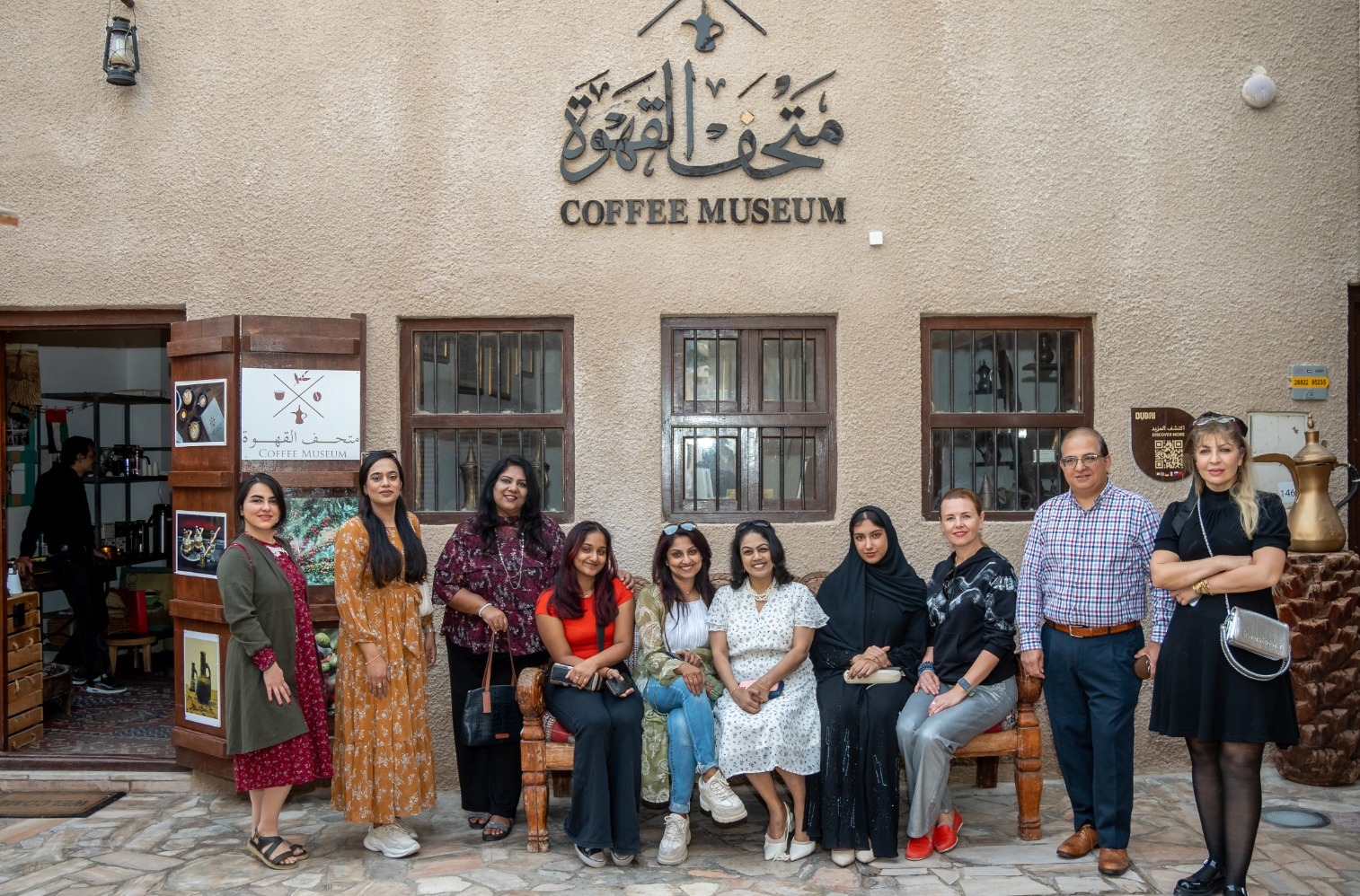
Inside Dubai’s Coffee Museum: A Journey Through History, Culture, and Flavor

By: Jesno Jackson

In a world where coffee has become more than just a beverage but a cultural phenomenon, a visit to a coffee museum offers an immersive and enriching experience for enthusiasts and curious minds alike. Journey with us as we explore the captivating narrative of coffee’s history, culture, and artistry through our visit to a renowned coffee museum.

History and Cultural Significance:

Our team exploration began with a deep dive into the origins and historical significance of coffee. From its discovery in ancient coffee forests to its role in social rituals across different societies, we traced the journey of this beloved beverage that has captured hearts worldwide.

Cultivation, Processing, and Roasting:

The museum provided valuable insights into the meticulous cultivation and harvesting of coffee beans, as well as the various methods of processing, including drying, roasting, and grinding. We discovered the art and science behind coffee roasting, exploring vintage and modern roasting equipment and learning how different techniques influence the flavor profiles of coffee.

Brewing Techniques and Coffee Culture:

A highlight of our visit was the exploration of different coffee brewing methods, from traditional to modern. The museum showcased a variety of machines, each contributing to the diverse and rich coffee culture celebrated globally. We also delved into the artistic expressions of coffee through paintings, photography, and literature, witnessing its profound impact on art and culture.

Tasting Sessions and Interactive Exhibits:

Participating in coffee tasting sessions was a sensory delight, where we sampled a range of coffees with distinct flavors and aromas. The interactive exhibits allowed us to engage with the world of coffee through touch, smell, and experiential learning, enhancing our understanding and appreciation for this versatile beverage.

Café Experience:

Our journey concluded at the museum’s on-site café, where we savored freshly brewed coffee while reflecting on the enriching experience of our visit. The café provided a serene and relaxing environment to savor the flavors discussed during our exploration, completing our immersion into the world of coffee.

Conclusion:

A visit to a coffee museum was both educational and enjoyable, offering a comprehensive look into the world of coffee from bean to cup. In addition to serving as physical reminders of the skill and cultural significance infused into each cup of this much-loved beverage, they exhibit’s pots, brass relics, and other items illustrate the progression of coffee preparation. An intriguing look into the development of coffee processing was found in the coffee museum’s collection of vintage roasting machines. These exquisitely preserved artifacts, showcased the skill and creativity involved in roasting coffee beans, transport viewers to a bygone period with their elaborate patterns and historical relevance. There was a literature room occupied with books on coffee and History of Coffee and Coffee World.

It was a cozy heritage space exploring roasting & brewing styles from around the world, plus displays of antiques. We had our guide Andres from Colombia, who was a professional coffee taster with more than 20yrs of experience. Attendees included Alia Amin, Neetu George, Anahita Ansaripour, Shakiba Rabiei, Alzbeta Znamenska, Aliyeh Mohammad, Mahum Shoaib, Nigam, Aimee George, Maria Komal Abie, Jesno Jackson, Vasilisa Eliseeva, Murali Kuttappan, Shehab Shoukry and Apurbo DXB24live.

Visiting a coffee museum is not just a tour but a journey that deepens one’s connection to coffee’s rich heritage and cultural significance. It’s an experience that tantalizes the senses, broadens knowledge, and fosters a profound appreciation for the artistry and complexities behind every cup of coffee. Whether you’re a coffee enthusiast, a history buff, or simply curious about the world of coffee, a visit to a coffee museum promises an unforgettable and enlightening experience.

Top 10 countries in coffee production and consumption

Coffee has become a part of the daily life of hundreds of millions of people around the world for mood and health purposes. Knowing the top coffee-producing and consuming countries in the world may be something new for many.

Before we begin, it might be helpful to mention that there are two types of coffee: Arabica and Robusta. So, what is the difference between Arabica and Robusta?

A report published by “The Roasters Pack,” a coffee news website, highlighted the differences between Arabica and Robusta as follows:

Taste: Robusta coffee has a bitter taste due to its higher caffeine content and chlorogenic acid compared to Arabica coffee, which has a more moderate taste.

Caffeine: Robusta beans contain up to 2.7% caffeine compared to only 1.5% in Arabica beans.

Fat and Sugar: Arabica coffee contains 60% more fat than Robusta, and about double the amount of sugar. This might be one of the factors why many people prefer the taste of Arabica.

Price: The price of Robusta coffee is about half that of Arabica coffee in the markets.

Yield: The higher caffeine level in Robusta coffee makes it more tolerant and resistant to pests on the farm, reducing the cost of cultivating Robusta compared to Arabica.

Shape: Arabica beans are oval-shaped, while Robusta beans are round. This is because the Arabica tree is shorter than the Robusta, resulting in oval-shaped beans.

Tree Height: Arabica trees reach between 2.5 and 4.5 meters, while Robusta trees range from 4.5 to 6 meters in height.

Chlorogenic Acid: The percentage of this acid plays a crucial role in the taste of coffee. It ranges from 7% to 10% in Robusta compared to 5.5% to 8% in Arabica, explaining the bitter taste of the former.

Production: The total coffee production in the world is divided into 75% Arabica and 25% Robusta.

Top Coffee-Producing Countries: In December of last year, the U.S. Department of Agriculture published a detailed report ranking the top coffee-producing countries by both Arabica and Robusta types.

Here is the ranking of the world’s top Arabica coffee-producing countries in the 2022/23 season according to the U.S. Department of Agriculture:

  1. Brazil: 39.8 million bags (1 bag = 60 kilograms)
  2. Colombia: 10.7 million bags
  3. Ethiopia: 7.3 million bags
  4. Honduras: 5.7 million bags
  5. Peru: 3.4 million bags
  6. Guatemala: 3.15 million bags
  7. Mexico: 3 million bags
  8. Nicaragua: 2.5 million bags
  9. India: 1.667 million bags
  10. China: 1.6 million bags

The ranking of the world’s top Robusta coffee-producing countries in the 2022/2023 season according to the U.S. Department of Agriculture is as follows:

  1. Vietnam: 26.3 million bags
  2. Brazil: 22.8 million bags
  3. Indonesia: 10.5 million bags
  4. Uganda: 5.575 million bags
  5. India: 4.2 million bags
  6. Malaysia: 1 million bags
  7. Ivory Coast: 1.050 million bags
  8. Thailand: 700 thousand bags
  9. Mexico: 545 thousand bags
  10. Tanzania: 520 thousand bags

The ranking of the world’s top coffee-producing countries (Arabica and Robusta) in the 2022/23 season according to the U.S. Department of Agriculture is as follows:

  1. Brazil: 62.6 million bags
  2. Vietnam: 27.2 million bags
  3. Indonesia: 11.85 million bags
  4. Colombia: 10.7 million bags
  5. Ethiopia: 7.3 million bags
  6. Uganda: 6.565 million bags
  7. India: 5.867 million bags
  8. Honduras: 5.7 million bags
  9. Mexico: 3.545 million bags
  10. Peru: 3.4 million bags

Production Outlook for 2024: The report predicts that the total coffee production, for both types, will reach 171.425 million bags by December 2024, with Brazil leading the list of producing countries with a total of 66.3 million bags, followed by Vietnam with 27.5 million bags, and then Colombia with 11.5 million bags.

The Top Coffee-Exporting Countries by Value:

The famous American statistics website “Statista” published a list of the top coffee-exporting countries in 2023 as follows:

  1. Brazil: $7.4 billion
  2. Switzerland: $3.6 billion
  3. Germany: $3.5 billion
  4. Netherlands: $1.199 billion
  5. United States: $1.193 billion
  6. Canada: $763 million
  7. Poland: $538 million
  8. Mexico: $433 million
  9. United Kingdom: $234 million
  10. Canada: $228 million

The World’s Top Coffee-Consuming Nations:

The statistics website “World of Statistics” posted a list of the world’s top coffee-consuming nations in 2023 on its official Twitter page as follows:

  1. Finland: Average annual coffee consumption per person is 9.6 kilograms.
  2. Norway: 7.2 kilograms
  3. Netherlands: 6.7 kilograms
  4. Sweden: 6.5 kilograms
  5. Slovenia: 6.1 kilograms
  6. Australia: 5.5 kilograms
  7. Serbia: 5.4 kilograms
  8. Denmark: 5.3 kilograms
  9. Germany: 5.2 kilograms
  10. Belgium: 4.9 kilograms

Top Coffee-Consuming Arab Countries: According to the 2020/2021 statistics released by the International Coffee Organization, the ranking of the top coffee-consuming Arab countries is as follows:

• Algeria: 2.13 million bags. • Egypt: 1.27 million bags. • Saudi Arabia: 1.25 million bags. • Morocco: 780 thousand bags. • Sudan: 702 thousand bags. • Lebanon: 452 thousand bags.

Rapid Growth of Independent Coffee Shops in the UK

Independent coffee shops in the United Kingdom are rapidly increasing in number, reaching around 12,212 cafes. Thanks to the growing demand for high-quality coffee and exceptional service, the market witnessed a 4.1% growth to achieve sales of £4.6 billion during the past year.

World Coffee Portal forecasts indicate that the number of independent cafes in the UK is expected to surpass 12,400 cafes in the coming year, with sales growth of 4.1% to reach £4.8 billion by 2025.

Factors such as beverage quality and personalized service are considered key drivers of consumer attraction to independent cafes. However, some studies suggest that the importance of specialty coffee has decreased among consumers in the UK compared to previous years.

Despite economic challenges, experts expect this sector to continue growing in the future, reflecting consumers’ desire to support local cafes during these difficult times.

This report highlights the developments in the independent coffee shop market in the United Kingdom, including market size, consumer research, industry consultations, and strategic analysis of the latest industry dynamics.

Researchers: The age of coffee is more than half a million years

The cup of coffee you drank this morning might trace its roots back 600,000 years.

A new study published in Nature Genetics on April 15, 2024, has revealed that Coffea arabica—the world’s most popular coffee species—emerged through natural crossbreeding between two other species long before human cultivation.

Researchers from the University at Buffalo and Nestlé examined genetic data from coffee plants around the world to construct a comprehensive family tree of Coffea arabica. Their findings indicate that the species originated approximately 600,000 years ago, when Coffea canephora (robusta) and Coffea eugenioides hybridized naturally in the wild.

“In other words, this occurred long before any human intervention,” said Victor Albert, a biologist at the University at Buffalo and co-lead author of the study.

The wild ancestors of arabica first appeared in the highlands of Ethiopia, but it was in Yemen, during the 1400s, that the beans were first roasted and brewed—marking the beginning of coffee culture as we know it today.

By the 1600s, legend has it that Indian monk Baba Budan smuggled seven coffee beans from Yemen to India, laying the foundation for global coffee cultivation.

Today, arabica accounts for 60–70% of the world’s coffee production, prized for its smooth, mildly sweet flavor. It forms the backbone of beverages served by leading brands such as Starbucks, Tim Hortons, and Dunkin’.

The remaining 30–40% of the market comes from Coffea canephora—commonly known as robusta—a stronger and more bitter relative of arabica.

To uncover arabica’s genetic history, the team analyzed the genomes of C. canephora, C. eugenioides, and more than 30 arabica samples, including an 18th-century specimen preserved in the Natural History Museum in London. This very sample was once studied by Swedish botanist Carl Linnaeus when he officially classified the species.

The study shows that arabica’s population has fluctuated greatly over millennia—thriving during warm and wet periods, but shrinking during dry epochs. These “population bottlenecks” left arabica with low genetic diversity, making it highly vulnerable to diseases such as coffee leaf rust, which costs the global coffee industry billions each year.

Researchers also examined a rust-resistant arabica variety to identify genetic markers that could help breeders develop hardier plants. These insights, scientists say, could be key to safeguarding the species against the growing threats of pests and climate change.

“This study not only clarifies arabica’s evolutionary history but also provides crucial clues for protecting one of the world’s most valuable crops,” said Fabian Echeverria, adviser at the Center for Coffee Research and Education at Texas A&M University, who was not involved in the research.

By retracing arabica’s ancient lineage, scientists hope to ensure a sustainable future for coffee cultivation—keeping plants healthy, farmers resilient, and morning cups full for generations to come.

World Coffee Championship Announces Semi-Finalists in Chicago

In an exciting start to the ongoing World Brewers Cup Championship at the Specialty Coffee Expo Chicago 2024, the Specialty Coffee Association has announced the names of the qualifiers for the semi-final, totaling 12 individuals representing the United Arab Emirates, Australia, Sweden, Romania, South Korea, Taiwan, the Czech Republic, France, Austria, the United Kingdom, Indonesia, and Japan.

The association stated, “The World Brewers Cup Championship kicked off with enthusiasm in Chicago, as 41 talented competitors from around the world showcased their coffee brewing skills on the global stage. Amidst the aroma of freshly ground beans and the hum of espresso machines, the competition was fierce, but the spirit of sportsmanship filled the air.”

The association added, “After an exhilarating first day of competition, the following skilled competitors emerged victorious and will advance to the semi-final round:

  • Tom Hutchins from Australia
  • Patrik Rolf proudly representing Sweden
  • Alex Niculae representing Romania
  • Dongmin Kim from South Korea
  • Erik Liao showcasing skills from Taiwan
  • Frederick Bejo representing the United Arab Emirates
  • Jackie Tran representing the Czech Republic
  • Charity Cheung bringing French elegance to the table
  • Martin Wölfl representing Austria
  • Luca Croce displaying expertise from the United Kingdom
  • Ryan Wibawa representing Indonesia
  • Wataru Iidaka from Japan.

They have captivated audiences with their unique brewing techniques and dedication to the craft.”

“The stage is set for an exciting Semi-Final round, where they will face new challenges and push the boundaries of excellence in the world of coffee even further,” the association stated.

The association invited the public to join and follow the global event, saying, “Join us to watch the Semi-Final round this evening starting at 1:38 PM Central Time. You can witness the action firsthand at the Specialty Coffee Expo in Chicago or tune in to the live stream at chicago.wcc.coffee to catch every thrilling moment. Don’t miss out on the excitement as the world’s finest brewers compete for the World Brewers Cup Championship title!”


Coffee V60: Its Story and How It’s Made

In the constantly evolving scene of coffee preparation, one name reigns supreme: V60 coffee. Its prominent brewing method, born from the fusion of innovation and tradition, has made V60 synonymous with the art of pour-over coffee. Join us as we explore the rich history, practical techniques, and sensory delight of the V60 experience.

Origins of V60

The story of V60 began with the pioneering spirit of its creator, Hario. Founded in Japan in the early 20th century, Hario quickly became a leader in glassware and coffee equipment. Drawing inspiration from traditional pour-over coffee methods and modern design principles, Hario set out to create a brewer that would redefine the coffee brewing experience.

After years of research and development, V60 was born. Its unique conical shape and spiral ribs were meticulously crafted to ensure optimal extraction and unparalleled clarity of flavor. From its elegant lines to its iron handle, every aspect of V60 was made with precision and purpose.

Rise of V60

V60 was introduced to the market in 2005 and quickly captured the hearts and minds of coffee enthusiasts worldwide. Its intuitive design and ability to consistently produce delicious coffee made it an essential part of both coffee shops and home kitchens alike, as well as competitions.

But the success of V60 was not only due to its innovative design – it was also a testament to the growing popularity of specialty coffee. As consumers began to prefer high-quality coffee, they started looking for brewing methods that would allow them to appreciate the diverse flavors of premium coffee. With its focus on precision and control, V60 became the perfect tool for this.

How to Make V60 Coffee: Step-by-Step Brewing Guide

  1. Gather Your Materials: You’ll need a V60, filters, freshly ground coffee, a kettle, and a scale.
  2. Prepare Your Equipment: Place the filter in the V60 and rinse it with hot water to remove any paper taste. Preheat the brewing vessel and the cup you’ll be using.
  3. Measure and Grind: Weigh out the desired amount of coffee according to your preferred coffee-to-water ratio (usually around 15-17 grams of coffee per 250 ml of water). Grind the coffee to a medium consistency, similar to sea salt.
  4. Bloom: Place the V60 on the brewing vessel and add the ground coffee. Start the timer and pour enough hot water (about twice the weight of the coffee) to evenly saturate it. Allow the coffee to bloom for 30-45 seconds.
  5. Pour: After blooming, slowly pour hot water in a circular motion, starting from the center and moving outward. Your goal is to maintain the water level slightly below the top edge of the filter to ensure even extraction.
  6. Enjoy: Once all the water has passed through the coffee grounds, lift the V60 and remove the filter. Stir the coffee briskly to ensure even extraction, then pour it into the preheated cup and savor every drop.

Beyond Brewing with V60

The journey with V60 extends beyond the brewing process itself – it’s a sensory experience that engages all the senses. From the rich aroma of freshly ground beans to the subtle flavors dancing on your palate, each cup of V60 coffee tells a story of craftsmanship, quality, and passion.

So whether you’re an experienced coffee lover or a newcomer to the world of specialty coffee, let V60 be your guide. With its elegant design, precise brewing technique, and unparalleled clarity of flavor, V60 is the perfect companion for anyone looking to explore the true potential of coffee.


View this post on Instagram


A post shared by عالم القهوة (@qahwaworld)

Revealing the Benefits of Drinking Coffee Before a Nap!

Drinking coffee before a nap may be the secret to waking up refreshed, according to experts, even though this may seem unconventional.

James Wilson, a sleep expert at Mattress Online, said: “Caffeine takes about 30 minutes to be metabolized, and when you wake up, you can get a double benefit of refreshing activity thanks to the nap and caffeine alertness.

For example, a study conducted in 2010 found that taking a nap after drinking a cup of coffee could enhance the brain’s ability to absorb caffeine.

Although coffee may seem to prevent sleep, caffeine takes a long time to affect the brain.

Experts explain that drinking coffee just before sleep and then enjoying a nap for about 20 minutes is the optimal way to benefit from a comfortable nap, according to Healthline.

Sleeping for more than 30 minutes should be avoided to prevent feeling drowsy, as one may enter a deep sleep stage.

To improve your nighttime sleep, avoid drinking coffee within 6 hours before bedtime.

The ideal amount of caffeine to consume before sleep for increased alertness is two cups of coffee or 200 mg of caffeine.

However, it should be noted that drinking coffee before a nap may not be suitable for everyone, as sleep has various health benefits, especially for those who suffer from sleep deprivation.

A nap can provide a boost in alertness and productivity and may be helpful if you experience sleep disturbances at night.

In general, experts recommend a minimum of six hours between a nap and bedtime, as a general rule.

U.S. coffee chain “BlueStone Lane”is developing coffee from date seeds for coffee sustainability

U.S. coffee chain Bluestone Lane will start in August selling an espresso coffee made from farm foods such as date seeds, guava and sunflower, seen by some as a more sustainable option than coffee beans.

The beanless coffee, to be sold in all 58 Bluestone’s U.S. stores, will be supplied by Seattle-based startup Atomo Coffee, which said it has replicated the molecular structure of conventional coffee using raw materials that otherwise would go to waste. The company said it wants to offer a more sustainable alternative to coffee.

With concerns growing about climate change, there has been more scrutiny around the carbon footprint of agriculture.

Coffee farmers are now using regenerative techniques to reduce or even eliminate carbon emissions. Coffee trees, like other plants, absorb carbon dioxide form the atmosphere, but chemicals such as nitrogen fertilizers are heavy on emissions.

“This presents an opportunity for our customers to enjoy an innovative coffee option that maintains our high standards for quality and taste while aligning with our commitment to environmental stewardship,” said Nicholas Stone, CEO of Bluestone Lane in a statement.