Coffee Processing Methods.. what we know about?!

Dubai, January 16, 2024(QW)- Coffee processing is a crucial step in the journey of the coffee berry. Different methods unveil distinct flavors, take varying durations, and involve different efforts. In this article, we explore the primary processing methods: natural, washed, honey, and wet-hull.

Initially, coffee processing was merely about extracting beans from cherries. Manufacturers chose methods suitable for their climate without much thought to taste. However, it became clear that processing greatly impacts the cup’s taste. For instance, under similar conditions, washed coffee tends to be more acidic than natural coffee. Understanding these differences is the focus of this article.

Methods for Processing Coffee Berries

The coffee berry comprises six layers: skin, pulp, gluten, parchment shell (parchment), silver skin (silverskin), and grain. Each layer serves a distinct purpose in protection and nutrition. During processing, the first four layers undergo changes, leading to four basic processing methods:

  1. Drying in the Berry (Natural Processing):
    • The entire berry is dried, also known as the natural or dry method.
    • Suitable for dry and hot climates like Ethiopia, Yemen, and Brazil due to low cost or limited water availability.
  2. Drying in Gluten (Honey and Semi-Washed Processing):
    • Involves drying the berry without skin, with variations like honey, palp-natural, semi-washed, or semi-dry.
    • Offers diverse flavors but requires expensive demucilator equipment.
  3. Drying in Parchment (Washed Processing):
    • The skin, pulp, and gluten are removed, and the grain is dried in parchment.
    • Developed in humid climates by Europeans in the 1850s for faster and controlled processing.
  4. Drying Grain (Wet-Hull Processing):
    • Removes skin, pulp, and patches from the berry, drying grains faster.
    • Yields ready-to-export green beans with a higher risk of defects and faster aging during storage.

Natural Processing: Why Coffee Turns Sweeter

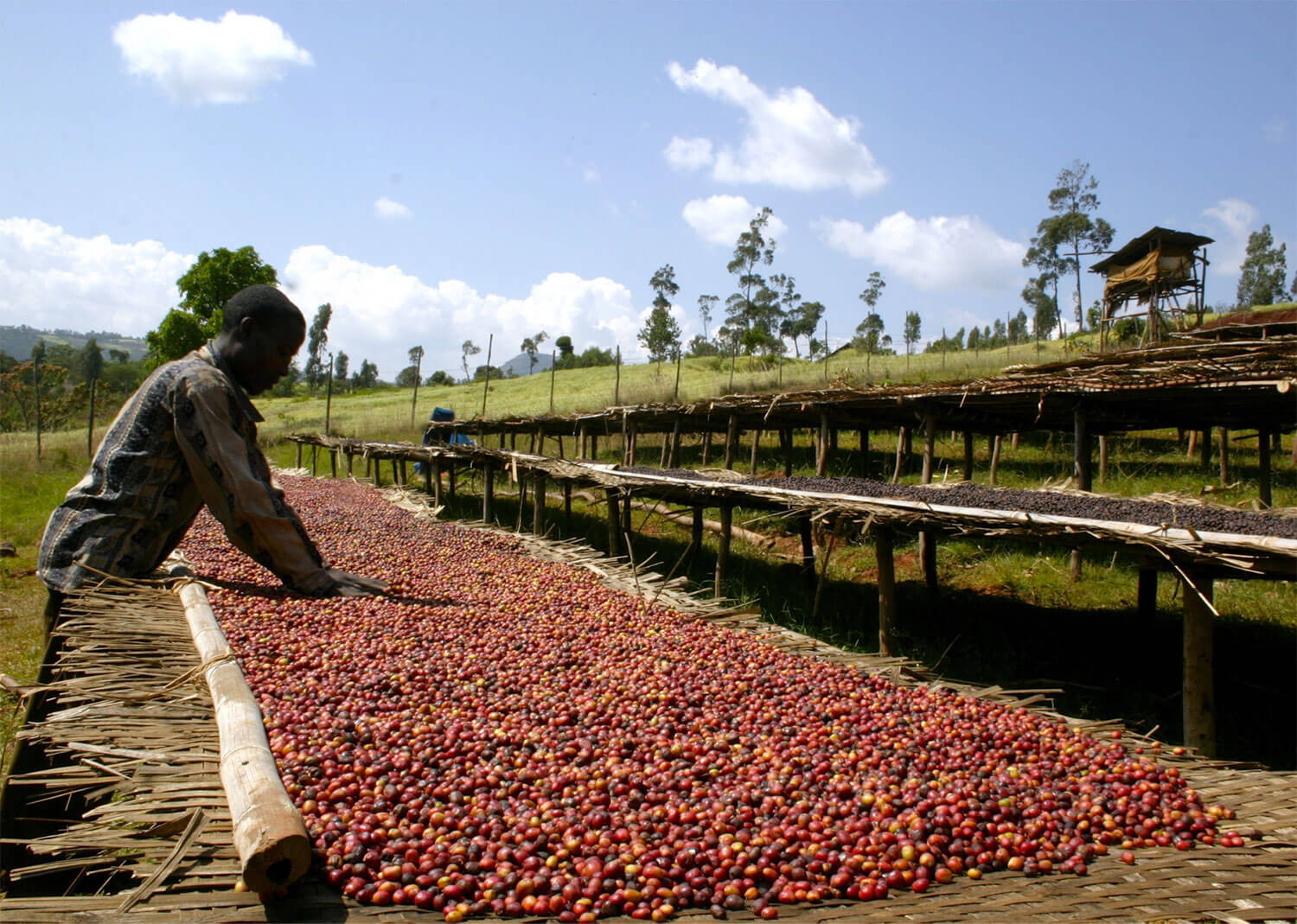
Natural processing, a classic method originating from dry climates like Ethiopia and Yemen, involves drying coffee berries on patios or African beds. This process takes up to four weeks, resulting in fuller-bodied, sweeter coffee. While once associated with cheap coffee, it has regained popularity in the specialty coffee industry for its bold flavors.

Advantages:

  • Bright taste.
  • Cost-effective in dry climates.
  • Leaves no wastewater.

Flaws:

  • Requires careful separation of unripe berries.
  • Frequent stirring during drying.
  • Not suitable for countries with humid climates.

Other names for natural processing: natural, dry, unwashed, fruit dried, sun-dried.

Drying in Gluten (Honey and Semi-Washed Processing): Why is the Pulp Removed?

Drying in gluten, categorized into honey and semi-washed methods, involves removing the skin and some pulp. Honey processing results in sticky, honey-colored beans, while semi-washed utilizes a demucilator for faster drying.

Advantages:

  • Faster drying.
  • Greater variety of flavors.
  • Less biological waste and wastewater.
  • The remaining pulp can be used as fertilizer.

Flaws:

  • Increased risk of defects from mechanical stress.
  • Semi-washed processing requires expensive demucilator equipment.

Other names for honey and semi-washed processing: honey, palp-natural, pulp natural, semi-dry, semi-dried, semi-washed.

Drying in Parchment (Washed Processing): Why It Was Considered Better Than Natural

Washed processing, developed in humid climates by the British in their colonies, involves peeling and depulping coffee berries. Fermentation and washing follow to achieve a cleaner and more acidic taste, replacing natural processing over time.

Advantages:

  • Reduced drying time.
  • Requires less processing space.
  • Cleaner and more acidic taste.

Flaws:

  • Generates a large amount of wastewater.

Other names for washed processing: washed, completely washed, fully washed, wet processing.

Drying Grain Without Parchment (Wet-Hull): Which Helps Dry Grains Even Faster

In wet-hull processing, the skin, pulp, and patches are removed, and the still-wet grains undergo hulling. This method results in immediate export-ready green beans but carries a higher risk of defects and faster aging during storage.

Advantages:

  • The fastest way to dry grain.
  • Immediate export readiness.

Flaws:

  • High risk of defects.
  • Faster aging during storage.

Other names for wet-hull processing: wet-hull, giling-basah.

Why Is It Important to Know How Grain Is Processed?

Different processing methods yield different tastes, emphasizing the importance of understanding them. However, it’s crucial to remember that coffee taste is influenced by various factors, including terroir, coffee type, roasting, grinding quality, and water characteristics.

Embark on this flavorful expedition through the realms of coffee processing, where every step contributes to the symphony of tastes that elevate your coffee experience.

Antonio Orria Joins Simonelli Group Middle East as Coffee & Beverages Community Expert

Dubai, January 15, 2024(QW) – Simonelli Group Middle East is thrilled to announce the latest addition to its team, as Antonio Orria assumes the role of Coffee & Beverages Community Expert.
This strategic move underscores Simonelli Group’s commitment to enhancing customer engagement and expanding its influence within the local Coffee & Beverages community.

Antonio Orria brings a wealth of experience as a coffee consultant and accredited Specialty Coffee Association (SCA) trainer.
With an international mindset, he has successfully navigated various aspects of the coffee industry, from hands-on barista roles to managerial positions and business development.

Antonio commenced his coffee journey in 2013 as a Barista in London, swiftly progressing to the role of Head Barista at Taylor St Baristas. Subsequently, he assumed the position of General Manager at the British Library site for Origin Coffee Roasters in 2017, honing his organizational and interpersonal skills.

In 2019, Antonio took on the role of Head of Coffee at The Gentlemen Baristas, overseeing responsibilities such as coffee quality control, media development, customer tastings, new drink development, staff training, and home barista classes. His career further advanced as he transitioned to the position of Project Manager, overseeing the opening of new sites in Mayfair, Covent Garden, and Piccadilly.

Becoming an Authorized Specialty Coffee Association Trainer in 2021 marked a significant milestone for Antonio, enabling him to freelance across the UK and Europe. Leveraging his extensive hospitality industry background and profound coffee knowledge, Antonio Orria is poised to be a central figure for the Middle Eastern coffee community.

Based in Dubai, Antonio will play a pivotal role in enhancing Simonelli Group’s presence in the Middle East market. His expertise will contribute significantly to trade fairs, events, training programs, and sales activities, fostering stronger connections with customers.

“We are excited to welcome Antonio Orria to the Simonelli Group family. His diverse experience and passion for coffee will undoubtedly elevate our engagement with the Middle Eastern coffee community,” said Marco Feliziani , CEO Simonelli Group.


“Stronghold” Named Official Production Sponsor for the 2024-2027 World Coffee Roasting Championship

The Specialty Coffee Association (SCA) proudly announces the selection of “Stronghold” as the Official Production Roaster Sponsor for the 2024-2027 World Coffee Roasting Championship (WCRC), providing the Stronghold SX9 machine for the 2024 WCRC. The production roaster is a crucial component of WCRC equipment, utilized by national champions in their practice and production roasting for both single-origin coffees and blends.

The WCRC is the annual event of the World Coffee Championship (WCC) that recognizes excellence in coffee roasting, evaluating competitors based on their coffee assessment, preparation, blending, and overall skills in practice, sample, and production roasts. The competition has experienced significant growth in recent years, with 130 competitors participating in the eight editions since its inception in 2013.

The World Coffee Championships (WCC) thrive thanks to the support and dedication of a diverse array of organizations and individuals. Qualified sponsors, the manufacturers providing the equipment used by competitors on stage, are integral to this support. In addition to supporting broader SCA programming, qualified sponsors sign multi-year agreements to foster the strategic growth of the competitions and dedicate time and resources to ensure that every world championship competitor uses the same high-quality equipment.

“Stronghold is a fantastic partner, and we are delighted to welcome them as the official production roaster for the 2024-2027 World Coffee Roasting Championships as we see this competition grow,” said Yannis Apostolopoulos, SCA Chief Executive Officer. “Stronghold has been an excellent partner in several other SCA initiatives and events of the past few years, and we couldn’t be more delighted to enter this long-term partnership with them.”

“At Stronghold, we are dedicated to pushing the boundaries of roasting technology, with our environmental and sustainability goals in mind,” said Jason Woo, Stronghold Chief Executive Officer. “As we usher in the era of all-electric commercial roasting, we are thrilled that our efforts have been acknowledged, being selected as the official production equipment for the prestigious World Coffee Roasting Championship. This marks a significant step forward for us, challenging the industry norm and bringing an economically and environmentally sustainable future to the global stage.”

Stronghold will support the World Coffee Roasting Championship as the official production roaster sponsor, starting with the 2024 event hosted at World of Coffee Copenhagen, Denmark, in June. We look forward to an exciting partnership over the coming years.

Optimizing Your Caffeine Intake: How Much, When, and Why It Matters According to Experts”

Many individuals rely on caffeine to power through the day, but striking the right balance is crucial to avoid sleep disturbances and jitteriness. The FDA recommends a daily caffeine limit of 400 milligrams for adults, approximately equivalent to four cups of coffee. However, experts suggest that the optimal amount may be less than you think.

Astrid Nehlig, an emeritus research director at the French National Institute of Health and Medical Research, recommends an intake of around 100 to 150 milligrams, roughly equivalent to one or one and a half cups of coffee, for a healthy boost. Effects begin about five minutes after consumption, reaching their peak between 15 minutes and two hours later, depending on factors like eating and metabolism speed. Exceeding this amount, as shown in a study published in the New England Journal of Medicine, can result in sleeping an average of 30 minutes less.

Your body’s ability to metabolize caffeine plays a crucial role in its impact on sleep. Genetic differences mean some people metabolize it slowly or quickly. Slow metabolizers may experience nearly an hour less sleep when consuming coffee, while fast metabolizers see no change.

To maximize the energizing benefits and avoid jitters, experts recommend delaying the first cup until 9:30 am to 11 am. Cortisol levels, the main stress hormone, peak in the morning, and having coffee too early can heighten these levels, leading to unnecessary stress responses.

If you find yourself reaching for tea in the afternoon, be mindful of its caffeine content, about a quarter of coffee’s. However, consuming caffeine too close to bedtime can disrupt sleep by blocking receptors for hormones like adenosine and melatonin. Experts suggest cutting off caffeine six hours before bed, with some proposing an even earlier cutoff for a restful night’s sleep.

Dr. Dierdre Conroy, a sleep expert at Michigan University, recommends eliminating all caffeinated products eight hours before bedtime, emphasizing the varying sensitivities individuals may have to caffeine.

In conclusion, optimizing your caffeine intake involves not only monitoring the quantity but also the timing. Understanding how caffeine affects your body and adjusting your consumption accordingly can contribute to better sleep and overall health, as insufficient sleep has been linked to various health issues. The Centers for Disease Control and Prevention recommends eight hours of sleep per night, a goal that one in three adults reportedly falls short of achieving.

Simonelli Group Opens Branch in Dubai, ushering in a New Era in the Middle East

Dubai, January 15, 2024(QW) – Simonelli Group, a global leader in coffee equipment and technology, takes a significant step towards international expansion with the inauguration of its new branch office in Dubai. The Middle East branch, strategically positioned as a hub for sales, technical, and educational services, is poised to play a pivotal role in catering to the dynamic coffee market in the region.

The unveiling of the Simonelli Group Middle East office, located at Warehouse #1 Building, SMARK 3 Umm Suqeim Rd.East-near Mall of Emirates-Al Goze IndustrialThird–Dubai, comes with the added feature of an experience lab. This state-of-the-art experiential space is designed to allow visitors to engage hands-on with the latest innovations from the brands Nuova Simonelli and Victoria Arduino.

The Middle East team is set to make its debut at the World of Coffee Dubai (WOC Dubai), taking place from January 21st to 23rd at stand Z6-F40. This platform will serve as the stage for showcasing the cutting-edge products and technologies that Simonelli Group has to offer.

Marco Feliziani, CEO of Simonelli Group, expressed his enthusiasm for the company’s latest strategic move, stating, “New scenarios need new strategies that allow us to be dynamic and reactive towards our clients’ requests, especially when distributing to more than 100 countries worldwide. The decision to open in Dubai, after the openings in Melbourne, London, Lyon, Singapore, and Seattle, is based on our human-oriented relationship with the market.”

Feliziani continued, “Branch offices allow the company to respond rapidly to the constant and fast-paced changes the market throws in our direction. I wish Federico Ortile, General Manager of Simonelli Group Middle East, and his entire team, a great start to continue contributing to the growth of the coffee industry with our innovations, educational approaches, and sustainable ways.”

Simonelli Group’s expansion into Dubai reflects its commitment to providing localized support and services to its clientele in the Middle East while fostering innovation and growth in the coffee industry. The newly established Middle East branch is poised to play a key role in shaping the future of coffee experiences in the region.

Specialty Coffee Association UAE Unveils Competitors for 2024 Emirates National Barista and Latte Art Championships at ‘World of Coffee Dubai’

DUBAI, January 14, 2024(QW) – The Specialty Coffee Association UAE proudly announces the official list of competitors for the highly anticipated 2024 Emirates National Barista and Latte Art Championships, set to Converge at the ‘World of Coffee Dubai’ event from January 21st to 23rd, 2024, at DWTC – Zabeel Hall 5.

2024 UAE National Barista Championship – Top 10 Competitors:

  1. KEMAL RISYAD – ARCHERS COFFEE
  2. AJIT TAMANG – REFILL ROASTERY
  3. YANETH MARTINEZ – NOLU’S
  4. MICHAELA ANNE RUAZOL – TYPICA CAFE
  5. HIBATUL WAFI – ROAST STORY
  6. MARIAM ERIN PINZA – COSMIC GARDEN COFFEE ROASTERY
  7. NOORAN ALBANNAY – COFFEE ARCHITECTURE
  8. SONAM SHERPA – KRANTI ROASTERS LLC
  9. ALDY NUGROHO – THE ESPRESSO LAB
  10. LEIDY LORENA RUBIO VéLEZ – COLNAGO CAFFE

2024 UAE National Latte Art Championship – Top 11 Competitors:

  1. MONDRICK ALPAS – GOLDBOX ROASTERY DUBAI
  2. ANGELO LAGATA – NUMBER FIVE CAFE
  3. ZEESHAN HAIDER – SPILL THE BEANS
  4. JOHN PAUL DALE – DOPPIO ROASTERS
  5. RAJU TAMANG – CHAPTER BY RIBBONAIRA
  6. KENNETH MARK DAGUYAM – FORM ROASTERY
  7. JULFIKLY RAYMOND AMPUAN – DRVN BY PORSCHE
  8. BILAL SAEED – VINE COMMUNITIES CAFé
  9. BILAWAL KHAN BILAL – NOWBL SPECIALITY COFFEE BOUTIQUE
  10. VINCENT SALINGAY – DARK DOOR
  11. MILAN THAPA MAGAR – LAMARZ

The Specialty Coffee Association UAE extends heartfelt gratitude to its sponsors for their invaluable contribution and continuous support:

Championship Sponsors:

  • Victoria Arduino
  • Brewing Gadgets
  • Toddy
  • Arjmst
  • Azzaalqubaisi
  • Oatly

Brew Bar Sponsors:

  • Victoria Arduinoofficial
  • Brewing Gadgets
  • GoldenPaper Cup UAE
  • Oatly

Volunteers are invited to register and be part of this successful event. The UAE Coffee Community is also encouraged to participate. Entry tickets are available on the World of Coffee Dubai website.

For further information, please contact: [email protected]

Join us for an exceptional celebration of coffee craftsmanship at the 2024 Emirates National Barista and Latte Art Championships!

In Collaboration with “Victoria Arduino” and “Toddy,” Mokha 1450 Hosts an Evening of Coffee Excellence

Dubai, January 13, 2024(QW) – Mokha 1450, the pioneer in luxurious specialty coffee in Dubai, is set to organize an unforgettable evening aimed at igniting the senses and celebrating the world of coffee. In close collaboration with industry giants “Victoria Arduino” and “Toddy,” Mokha 1450 invites coffee enthusiasts to join them for an exclusive event filled with discussions and innovations.

Highlights of the Event:

Open Discussion with Panama’s Most Innovative Coffee Producers:

Mokha 1450 will host an open dialogue with some of Panama’s most innovative coffee producers, providing valuable insights into the world of coffee cultivation and production. Discover the passion and dedication behind crafting the perfect cup.

Cold Brew Presentation and Open Discussion with the “Toddy” Team:

Immerse yourself in the art of cold brew with an engaging presentation by the Mokha 1450 team, followed by a panel discussion with the Toddy team, known for their commitment to delivering a high-quality cold brew experience. Engage in an open discussion about the finer details of cold brew preparation and the secrets behind its exceptional flavor.

Premiere of Mokha 1450’s Custom-Designed “Black Eagle Maverick” with Pure Brew Technology:

Be the first to witness the unveiling of Mokha 1450’s latest masterpiece, the custom-designed “Black Eagle Maverick,” featuring Pure Brew Technology. Enjoy a symphony of flavors in every sip as Mokha 1450 continues to redefine luxury in the world of specialty coffee.

Event Details:

Venue: Mokha 1450 Coffee Lounge, Golden Mile Galleria 8, Palm Jumeirah
Date: January 22, 2024
Time: 8:00 PM
Mokha 1450 welcomes all coffee enthusiasts to be part of this exceptional evening, where passion, innovation, and luxury converge to create an unforgettable experience. Mark your calendar for January 22, 2024, at 8:00 PM, and join us in celebrating the rich and diverse world of specialty coffee.

CEO of “Coffee Island,” Konstantinos Konstantinopoulos, Reviews Challenges and Opportunities Shaping the Coffee Industry in 2024

In an exclusive interview with the Global Coffee Report (GCR), Mr. Konstantinos Konstantinopoulos, the CEO of Coffee Island, delves into the challenges and opportunities that define the coffee industry in 2024. The discussion spans from artificial intelligence to contemporary geopolitical instability and supply chain disruptions.

Mr. Konstantinopoulos notes that Coffee Island’s ambitious commitment in 2024 is centered on solidifying its presence in current markets and enhancing international expansion through strategic partnerships and diverse business models. He expresses their dedication to providing unparalleled coffee experiences while carefully selecting key international markets to introduce these unique experiences to new audiences.

He explains that the coffee industry is undergoing a significant transformation due to digital advancements, impacting various stages of the supply chain. Smart farming practices empower coffee farmers with data on soil conditions, weather patterns, and crop health to enhance cultivation methods and increase sustainability.

Regarding artificial intelligence, Mr. Konstantinopoulos highlights its rapid transformational impact on various industries, emphasizing its promise in delivering enhanced efficiency, quality, and personalized experiences within the coffee sector.

He underscores that as environmental issues and challenges in agriculture worsen, they will increasingly top the industry’s agenda, affecting farmers and the production industry. Plastic waste, primarily from packaging, poses a growing threat to nature and the environment, necessitating a greener, circular economy based on waste avoidance and recycling.

Mr. Konstantinopoulos acknowledges the diverse challenges and opportunities facing the coffee industry, citing contemporary geopolitical instability, supply chain disruptions, and the impacts of climate change. He emphasizes that rising commodity prices and evolving consumer behaviors complicate the landscape, requiring innovative approaches to deliver value.

With rising energy costs and stricter environmental standards, the industry is urged to implement sustainable practices. He emphasizes the growing demand for responsible and ethical business operations, stressing the industry’s role in contributing to sustainable development and social solidarity.

In conclusion, Mr. Konstantinopoulos expresses optimism that, by recognizing challenges and adopting initiatives, the coffee industry can become a model for positive business change in a dynamic world. Together, they aim to build a better and more beautiful world for future generations. Coffee Island, founded in 1999 in Patras, continues its journey in the world of specialty coffee, marked by innovation and dedication to providing a unique coffee experience. It currently operates in the Swiss market and Dubai in the United Arab Emirates.

“Reborn Coffee” allocates one million dollars for global expansion with entry into the markets of the UAE and Korea

California-based “Reborn Coffee” has announced a one million US dollar investment commitment from its Chairman, Farooq Arjomand, to expand globally, with plans to open stores in the UAE and South Korea.

This investment from the company’s chairman is considered a “significant endorsement,” expressing appreciation for the company’s current value and growth opportunities. Following the successful opening of its first international store in Kuala Lumpur, Malaysia, in November 2023, “Reborn Coffee” aims for further expansion into the United Arab Emirates and South Korea.

Farooq Arjomand expressed his confidence in the company’s mission and vision, stating, “My commitment to Reborn Coffee is more than just a financial decision; it’s confirmation of my belief in our mission and vision for the future. The coffee market is evolving rapidly, and I am confident that Reborn Coffee will continue to lead the way with its innovative approaches and dedication to quality.”

It is expected that this announcement will be followed by additional expansion into Singapore and Indonesia, as well as the opening of a store in Dubai, UAE, and Daejeon, South Korea.

“Reborn Coffee” currently operates 14 stores in California and one location in Malaysia. The company plans to open two flagship stores in California cities, San Francisco and San Diego, this year, alongside its first locations outside the state in Texas and Missouri.

In July 2023, “Reborn Coffee” secured a one million dollar credit facility from real estate development firm DRE Inc. to accelerate company initiatives, including new products, outlet expansion, and e-commerce operations. Dennis Egidi, Founder of DRE Inc., serves as Vice Chairman on Reborn Coffee’s Board of Directors.

As part of its international expansion plans, in October 2023, “Reborn Coffee” entered into a strategic partnership with Millennium Hotel in Abu Dhabi, aiming to open a store in the hotel this year and approximately 10 stores in the UAE within five years. This strategic alliance aims to bring “Reborn Coffee’s” unparalleled quality, innovation, and sustainability to the UAE.

Millennium Hotels and Resorts, a subsidiary of the Singapore-listed global real estate company City Developments Limited (CDL), manages 29 premium hotels across the UAE and has a strong presence in Saudi Arabia, Oman, Qatar, and Kuwait.

This partnership marks another significant step for “Reborn Coffee” towards opening its first international stores. The specialty coffee roaster and café group completed a $7.2 million IPO in August 2022 and, in December of the same year, acquired a coffee shop, roastery, and R&D facility in Daejeon, South Korea, intending to house its first international store, expected to open before the end of 2023.

Founded in 2015 by Jay Kim, “Reborn Coffee” posted net revenues of $2.6 million and a net loss of $2.3 million for the six months ending on June 30, 2023. Despite the net loss, the company remains optimistic about its future, supported by its commitment to quality and its strategic vision for global success.

Victoria Arduino and Nuova Simonelli Prepare to Inaugurate an Experience Lab in Dubai

The pioneers of espresso machines, Victoria Arduino and Nuova Simonelli, are gearing up for the grand opening of their dedicated Experience Lab in Dubai. This event, exclusive to coffee enthusiasts and industry professionals, will take place on Sunday, January 21, from 7:00 PM to 9:00 PM at Shed 1, Smark 3 Building, Al-Quoz, Dubai, United Arab Emirates.

The Experience Lab aims to redefine the coffee scene in Dubai by bringing together the finest innovations in coffee, design, and flavor. Federico Ortile, Managing Director at Simonelli Middle East, and Antonio Orria, Coffee & Beverages Community Expert, are thrilled to invite coffee lovers, industry experts, and a select audience, making it a must-visit for those who appreciate the art of coffee.

To attend this exclusive unveiling, ensure you accept the official invitation and register promptly. Be among the first to witness the cutting-edge technology, passion, and creativity that Victoria Arduino and Nuova Simonelli bring to the world of coffee.

Exciting Updates Revealed: Release of Rules and Regulations for the 2024 Copenhagen World Coffee Championships

The Specialty Coffee Association is releasing updated rules & regulations for the 2024 Copenhagen World Coffee Championships; including the World Latte Art Championship (WLAC), World Coffee in Good Spirits Championship (WCIGS), World Coffee Roasting Championship (WCRC), and Cezve/Ibrik Championship (CIC).

These four world championships take place at World of Coffee Copenhagen, Denmark, June 27-29.

Updates to the rules & regulations are overseen by the WCC Competitions Strategic Committee, a volunteer leadership group that meets regularly to work on strategic initiatives, including rules updates, that foster the competition community and keep the competitions moving forward.

The WLAC Art Bar portion has been moved from Round One to Semifinals, and competitors are now required to title their Art Bar design. An additional one minute of performance time has been added to the stage portion of the Semifinals and Final round, and new 0-3 scoring scale has been added.

The provided espresso machine has been expanded to include semi-automatic and fully-automatic espresso machines, better reflecting the wide range of equipment available in the coffee industry. WLAC scoresheets have also been updated.

In the WCRC, the sweetness section of the coffee evaluation procedure has been updated with more details, to reflect ongoing SCA research on the topic, and to help judges to evaluate this element. The temperature evaluation scale has been relaxed, procedures in the production roast evaluation section are more detailed to improve the blind cupping procedure, and a new head judge scoresheet to track accuracy information has been created.

Station dimensions for the CIC have been increased and the WCIGS evaluation section has been reworded with added details and for clarity. The WCRC, WCIGS, and CIC all have minor general updates for consistency and clarity across the World Coffee Championships.

2024 WLAC World Latte Art Championships Rules

2024 WCIGS World Coffee Championships in Good Spirit Rules

2024 WCRC World Coffee Roasting Championship Rules

CIC Rules 2024

Coffee Farmers Ongoing Struggle for Working Capital

In the intricate landscape of coffee production, the seasonal nature of harvesting sets forth a unique challenge for coffee farmers. Typically receiving payment once a year during the harvest season, these farmers are entrusted with managing this lump sum throughout the year. However, the unpredictability of yields, unforeseen expenses, and the ever-changing market dynamics often propel them into a constant search for financial solutions.

Smallholder Farmers Caught in the Cycle:

For smallholder coffee farmers, particularly those who rely on each harvest for sustenance, the challenges are magnified. Living harvest to harvest, they often lack the financial cushion to navigate the rest of the year. The absence of substantial profits and limited collateral further complicates their ability to secure loans with favorable interest rates, rendering credit either unattainable or economically burdensome.

Co-operatives as a Beacon of Hope:

In an attempt to alleviate these challenges, some smallholders opt to join co-operatives. These collaborative ventures not only help in sharing the costs of inputs like fertilizers and pesticides but also make it more likely for lenders to extend financial support to larger groups of producers. However, the reality is that not all smallholder farmers can readily find solace in joining a co-operative, and the barriers persist.

Barriers to Finance Access:

Accessing finance is no straightforward feat for coffee farmers, particularly those residing in rural areas. A significant stumbling block is the pervasive issue of financial literacy. Camilo Enciso, the general manager of ASOPEP in Planadas, Colombia, notes the difficulty faced by unorganized producers in receiving financial support. In regions where the sale of wet coffee is predominant, the lack of market assessments and traceability further compounds the problem.

Additionally, many smallholder farmers lack the basic financial literacy required for borrowing, and their absence of credit history leaves banks without a reliable basis for risk assessment. Land ownership documentation, a prerequisite for many financial transactions, is often missing, exacerbated by social issues such as gender-related restrictions on land ownership.

The Crucial Role of Financial Literacy Programs:

To address these challenges, the implementation of financial literacy programs and the establishment of effective documentation management practices are imperative. Co-operatives, as intermediaries between farmers and lenders, play a vital role in supporting farmers in gathering and organizing the necessary documentation and data for loan applications.

Challenges on the Ground:

While co-operatives are seen as potential sources of data on previous harvests for individual farmers seeking loans, the reality is far from simple. Farmers often face resistance when requesting such information from previous lenders within co-operatives, potentially compromising their positions as lenders themselves. Some producing communities have resorted to a system of mutual borrowing and lending, fostering interdependence among farmers.

This collaborative system, however, comes with its own set of complexities. Farmers supporting each other through loans during both off-seasons and harvests establishes a delicate balance that intertwines economic conditions with social implications. Introducing external financing mechanisms could potentially disrupt these longstanding collaborative systems.

Market Volatility and Climate Change:

The coffee industry is not immune to broader economic and environmental challenges. Market volatility in recent years has injected increased uncertainty into the income projections for coffee farmers, affecting their perceived risk to lenders. Concurrently, the escalating impact of climate change, evident in rising instances of pests, diseases, and erratic weather patterns, has made lenders more cautious about financing coffee farming, often attaching prohibitively high-interest rates.

Supply Chain Challenges:

Farmers, grappling with delayed payments and soaring costs, sometimes turn to supply chain partners for assistance. However, the challenges faced by roasters, such as global inflation and delayed payments, as well as traders dealing with record-high interest rates and falling coffee prices, have created a precarious financial environment. This has diminished the capacity of supply chain partners to provide the financial support that farmers once relied on.

Questioning the Dependency on Loans:

Zooming out to a broader perspective, it becomes pertinent to question why loans have become an inherent part of the coffee industry. Taya, a coffee production researcher, raises a crucial point: “If the system that you live in is dependent on getting a loan and you can’t get one, then that really is a problem.”

There’s a need to scrutinize whether the coffee industry, in its current state, perpetuates a cycle of dependence on external finance. Taya challenges the assumption that farmers should always need a loan, suggesting that a fundamental reevaluation of the system may be in order.

Striving for Systemic Change:

While the long-term goal may be to improve financial education and reduce dependence on external finance, the immediacy of the issue necessitates short-term strategies. The focus should be on creating strategies that improve the accessibility of finance in rural areas, acknowledging that change of such magnitude is a slow process, and farmers often require immediate access to working capital.

In conclusion, the ongoing struggles of coffee farmers to access working capital underscore the need for holistic and nuanced solutions. From financial literacy programs to addressing systemic issues within the industry, a collaborative effort is essential to create a more resilient and equitable coffee sector that empowers those at the heart of the supply chain.