The history of coffee: to whom do we owe the most beloved drink of our time?

Coffee is not loved except by someone who has never tasted a real high-quality drink. Good coffee should not be bitter, and has its own wonderful taste without the addition of sugar and syrups – this is the drink that true gourmets have preferred for more than a thousand years.

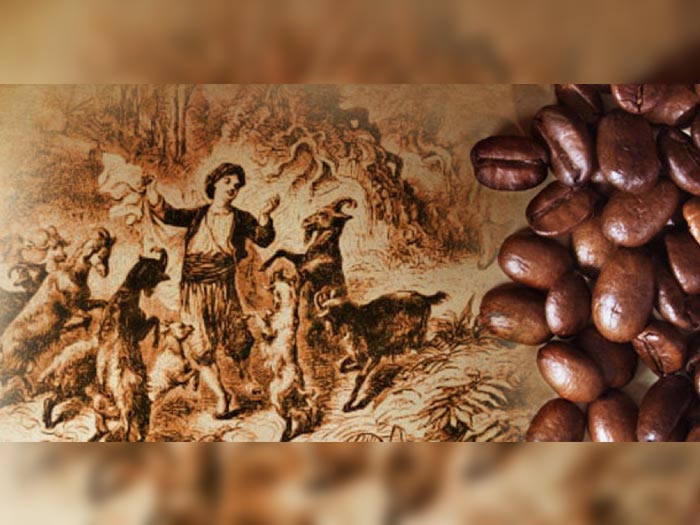
The history of coffee is multifaceted and mysterious: the first historical mentions of it date back to the XV century, but colorful legends testify to the appearance of the drink at least six centuries earlier. The most popular story tells about the Ethiopian shepherd Kaldim from Kaffa, who noticed an interesting fact: his goats, after chewing the oily leaves of a plant with red berries, become very frisky and excited. The shepherd decided to boil this plant and, after drinking the decoction, noticed a surge of strength and vigor in himself, which he hurried to share with relatives and neighbors. So, by word of mouth, this unusual way to cheer up reached the missionary monks, who began to use it before long night prayers.

Another legend tells about the outstanding physician of his time, Omar, who studied the beneficial properties of plants. In the course of his research, he revealed the unique effect of the fruits of the coffee tree – the plant cured headaches and promoted the work of the stomach. The drink that the doctor offered to the sick very quickly eliminated ailments and seemed to the people a real miracle.

A thousand years ago, coffee was used not only for medicinal purposes – its “discoverers” noticed the unique property of the coffee aroma to be absorbed into the skin, “penetrating the whole body.” Thanks to this quality of coffee fruits, people who did not have the opportunity to take a bath regularly used the plant as an effective deodorant.

Coffee distribution in the Arab world, Europe and America

The history of coffee as a delicious and aromatic drink, ideal for relaxation and sincere conversations, began in the Middle East. So, the coffee shops that are popular today are the invention of Yemeni and Turkish Arabs, who decided that you can make good money on brewing and selling a coffee drink. Initially, the shell of coffee beans was dried and brewed, then it was fried on coals. Today, Arabica – coffee, the birthplace of which is the Arabian region – remains the most popular variety.

The first Arab coffee shops are a unique historical phenomenon. Initially, these establishments were intended for highly spiritual reflections, but over time they turned into a place for leisure: citizens came here to relax and socialize, sitting on cozy sofas surrounded by luxurious interiors. Later, business meetings and political debates began to be held in coffee houses – everything that you can easily meet in any modern coffee shop.

The Arabs loved coffee so much that they did not allow the plant to be exported to other regions for a long time. Despite the fact that individual plantations appeared in Indonesia, Holland and Sri Lanka much earlier, the active spread of coffee in Europe and Asia began in the XVII century. The drink quickly won the hearts of Europeans and together with the colonizers went to the American continent.

The South American climate appealed to the coffee tree, and today this region is one of the leaders in world coffee production, offering coffee lovers a unique variety of Arabica coffee – maragodzhil. How and when coffee appeared in Africa is not known for certain, but this continent has been pleasing gourmets with an original coffee variety called robusta for quite a long time.

The history of coffee: ups and downs

Throughout its development, the coffee drink incredibly quickly won the hearts of ordinary citizens. It was loved for its rich tart taste, rich aroma, pleasant warmth and tonic effect. Over a “cup of coffee”, Muslims forgot about prayer, and Europeans made plans to develop a new profitable business.

Such a huge popularity of coffee did not like the then monarchs, brewers and winemakers, depriving them of the desired profit, so the church undertook to stop the rapid spread of the drink, recognizing coffee as “unchristian”. High taxes and severe punishments were provided for its distribution and sale, and only decades later coffee finally received well-deserved recognition – the people did not give up and continued to brew the drink underground, ignoring the prohibitions of the state, and as a result the latter had to give up, allowing the citizens to freely enjoy the exquisite aroma of an invigorating drink.

In Russia, coffee enjoyed the attention of only the ruling dynasty, while the peasants treated the drink with distrust. This is probably why coffee has not suffered a decline here, and the consumption of the fragrant drink has been increasing every year.

Today, coffee is one of the most beloved drinks of the whole world, which has occupied its niche in modern production and restaurant business. Interest in it not only does not fade, but also constantly develops, forming a completely new, unusual and interesting coffee culture.

True coffee connoisseurs are still working on growing new varieties, creating unique blends and reviving unusual ways of making a drink. The history of the development of numerous varieties of coffee is no less interesting and fascinating – you can learn about the secrets of Arabica, liberica, excelsa and robusta from our next publication.


source :

https://www.coffeedom.ru/post/history/istorija-kofe-komu-my-objazany-samym-ljubimym-napitkom-sovremennosti

Coffee in Russia – history and modernity

In one of the previous publications, we turned to the history of the origin of coffee and its cultivation in the East and the further migration of this delicious drink to Europe and other parts of the world. Today it’s time to talk about the history of coffee in Russia from the moment of its first appearance to the culture of coffee and its drinking today.

The first sprouts of coffee beans – the early history of coffee in Russia

Perhaps even people who are far from both the history of Russia and the history of coffee, when asked who is the most famous Russian innovator and initiator of countless innovations in all spheres of ancient Russian life, there will be one answer. Of course, this is the great tsar Peter Alekseevich, a huge lover of European culture, traditions, fashion and technical achievements.

So it is Peter the Great who also has the most direct relation to the spread of coffee in Russia. Although it is fair to say that the history of coffee in Russia still began a little earlier.

Back in the pre-Petrine era, during the reign of the father of the future emperor Alexei Mikhailovich, the court physician prescribed an unprecedented decoction of coffee beans to the tsar as a remedy for headaches and other ailments. But it was under Peter that coffee began to spread everywhere. The tsar personally tasted and appreciated this amazing drink during one of his visits to his beloved country, the “ship Mecca” of those times – Holland. Having appreciated the taste and invigorating properties of coffee, the tsar, according to his custom, began not just to recommend it for use, but in fact to plant it.

It was quite in the spirit of the first emperor of Russia – in the same way he planted “beards to shave”, and “potatoes to eat”, and much more. And, as has happened more than once in history, Peter’s passion for coffee in his native Russia was not greeted warmly and joyfully. Neither the boyars, nor the merchants, nor even the royal nobles from among the inner circle wanted to drink coffee. However, the tsar did not like objections and introduced the order to drink not only vodka, but also coffee, at his legendary assemblies, where the most notable people of Russia gathered – and not always of their own free will.

But as time went on, coffee gradually ceased to be called a “satanic drink”, and the number of its fans gradually grew. The first coffee shop (more precisely, then this institution was called a coffee house) was organized in the Russian capital under Anna Ioannovna. And, perhaps, this is almost the only achievement of the inglorious ruler in general, for which descendants can be grateful to her.

By the way, many great representatives of Russian culture and not only who left a noticeable mark in the history of our country were great coffee lovers later. These are Belinsky, Herzen, Ostrovsky, and other prominent writers, politicians, artists and composers.

From the time of the first open coffee shop to the present day, the culture of coffee and its popularity, first in Russia and then in the USSR, has been constantly growing, and rapidly. And by the time Russia once again became an independent and independent state, in terms of coffee consumption, our country was already confidently among the top ten leaders in annual coffee consumption.

Simple statistical data will be eloquent and convincing – in just a couple of decades, from the end of the XIX to the beginning of the XX century, coffee imports to the territory of Russia increased by almost half.

  • Coffee culture nowadays

The culture of coffee in modern Russia is fit to be called not even a culture, but in many ways a cult. The free market, which allowed Russians to forget about the shortage of products and get, among other things, access to really high-quality coffee, gave rise to an army of genuine connoisseurs and even fans of this drink in our country. Surely everyone reading these lines has friends who sometimes say something like this – there may not be bread in the house, but there must be good coffee!

And they are easy to understand. After all, a morning started over a cup of fragrant and properly prepared coffee is the key to a great mood and a good day for millions of Russians. And a cup or two of a fragrant drink during breaks in work also helps us to cheer up and get a few minutes of enjoyment and pleasure.

A brief history of coffee in Russia

For the first time, our compatriots tasted coffee during the reign of Alexei Mikhailovich … and were dissatisfied! Loved by many nowadays, the drink was drunk reluctantly four centuries ago, like a bitter medicine. A European doctor prescribed coffee for the tsar “from the main disease”, and the miraculous decoction, apparently, helped to cope with severe migraine.

Coffee versus vodka

The first Russian ruler who “tasted” coffee was Peter the Great. During the opening of the Kunstkammer in 1714, he ordered “… not only to let everyone here for free, but if anyone comes with a company to see rarities, then treat them to a cup of coffee or a glass of vodka at my expense…”. Alas, it is not known for certain which of the visitors chose the “white”, and who – a foreign drink. The sovereign himself became addicted to coffee during the Great Embassy, when he was visiting the Mayor of Amsterdam Nicolaas Witsen. By the end of the XVII century, the Dutch owned coffee plantations in their colonies in Java, Sumatra and Ceylon. That is why throughout the XVIII century coffee came to Russia from Holland. Peter I liked to shock his entourage by suddenly appearing at their house with a demand to urgently pour him a cup of hot coffee, but not everyone could please the sovereign. The first coffee houses in St. Petersburg opened already at the end of Peter’s reign. In 1724, by decree of the emperor, fifteen taverns appeared in the capital, whose visitors (mostly foreigners) were served coffee.

В каирской кофейне. Художник К. Маковский

In the era of palace coups, coffee became the drink of the Russian aristocracy. The attitude towards him, however, was still ambiguous. The poet Antiochus Cantemir, for example, called coffee “the swill that India sends”, but at the same time he understood the varieties of “swill” well: “We all know that that vegetable, fried, finely ground and boiled in water, serves instead of breakfast, and whimsical and fun after lunch. The best coffee comes from Arabia, but in all the Indies that vegetable is abundant.” By “Indies” Cantemir meant the East and West Indies (Brazil). By the way, Europeans in those years also treated the drink in two ways: the British, French and Dutch enjoyed its taste, and the Germans banned consumption – sometimes even legally.

Interestingly, Sophia Augusta Frederica of Anhalt-Zerbst, who arrived from Prussian Stettin (she is the future Catherine II) unlike her fellow countrymen, she adored coffee and could drink up to five cups in the morning. The empress brewed the drink on her own – contemporaries claimed that a rare person would have liked such strong coffee. During the reign of Catherine the Great, fortune-telling on coffee grounds became a popular entertainment of the aristocracy.

A delight for the nobility

Throughout the XVIII century, coffee remained a drink “for the elite”. In 1791, when signing the Iasi Peace, the Russian delegation received a diplomatic gift from the Turks: 37 pounds of coffee and jewelry. The vast majority of the inhabitants of the Russian Empire at that time did not even know about coffee. The drink did not “go out” for a long time beyond the noble salons and a few restaurants. Everything changed during the Napoleonic Wars. When in 1805 the Russian troops were in Austria, the soldiers saw that the local population was consuming an unknown drink. The standard-bearer of the 2nd Moscow Musketeer Regiment, Ivan Butovsky, said that the soldiers nicknamed Austrian coffee “kava” and slurped it with a spoon from large plates – just like cabbage soup.

Дореволюционная реклама кофе

In the Russian Empire of the XIX century, the most expensive Arabian coffee cost 30 rubles per pood, and cheap Brazilian coffee cost about 17 rubles. He did not make a serious competition for tea. At the beginning of the twentieth century, imports between these drinks differed tenfold. Coffee did not become a popular drink, but it fell in love with representatives of the nobility and creative intelligentsia. Opera singer Fyodor Chaliapin recalled that he tried coffee at the age of 16, when he worked as a scribe in court: “Here for the first time I experienced the pleasure of drinking coffee – a drink unknown to me until that time. They gave coffee with cream for a nickel per glass. I received a salary of 15 rubles and, of course, could not enjoy coffee every day…”.

Difficult times

A year before the outbreak of the First World War, coffee imports to Russia amounted to 12 thousand tons per year. The drink became more affordable – one cup in a coffee shop cost two kopecks. However, the war dramatically changed the situation. The government imposes increased duties on luxury, and the elite drink is among the highly taxed products. After the February Revolution, 30 kopecks were already asked for a cup of coffee, and during the Civil War, the drink was almost forgotten altogether. However, there is a cheap alternative – the so-called coffee from acorns. To prepare the drink, the acorns were peeled, sliced, dried on the stove, poured with boiling water, and then fried over low heat. The resulting substance was ground with a coffee grinder and “seasoned” with a pinch of real scarce coffee – for the smell.

Реклама кофе «Богатырь». Конец XIX – начало XX века

Imported coffee returned to Russia during the NEP years, but it was quite expensive. By the 1930s, the cost of a kilogram of grains was eleven rubles, and during the war, the drink again became scarce. A curious episode occurred on the eve of the Victory Day Parade on June 24, 1945. Soviet soldiers recalled that on the night before the parade they were picked up and handed each a glass of coffee for cheerfulness.

The heyday of coffee consumption in the Soviet Union occurred during the Brezhnev period. The Secretary General himself was not averse to starting the morning with a cup of coffee diluted with milk. Then the popularity of the drink increased by one and a half times. Most of the goods came from Brazil, India was in second place, and since 1972, the production of its own instant coffee began in the USSR. Coffee drinks had different names – “Summer”, “Baltic”, “News” – but the composition was about the same. In addition to the coffee beans themselves, they contained chicory, barley and soy. In addition, coffee was sold by weight in grains, packed in paper bags. To date, coffee in our country has defeated tea in the struggle for popularity: a 2019 study showed that Russians choose it almost one and a half times more often.

source :

https://histrf.ru/read/articles/kratkaya-istoriya-kofe-v-rossii-ot-lekarstva-protiv-golovnoy-boli-do-narodnogo-napitka

The history of coffee in Russia

In 1665, the court doctor prescribed to Tsar Alexei Mikhailovich “a medicine against over-moods, runny noses and glavobolenii.”

Peter I, during his “internship” abroad, visited Holland in 1697 and, after living in the house of a merchant and burgomaster of Amsterdam, became addicted to coffee. The drink was then sold in pharmacies. He was credited with amazing medicinal properties: “… drains any runny nose and cures colds, relieves winds, strengthens the liver; an excellent remedy against scabies and blood spoilage; relieves the heart and vital beating of such, brings relief to sufferers of stomach pains and lack of appetite,” etc. Returning back to his homeland, Peter issued a special decree ordering all subjects to drink coffee both privately and at official assemblies. Later, it was even offered to visitors of the Kunstkamera. Of course, such drastic measures provoked a severe rebuke from the most conservative part of the population, in particular, from the patriarch and other representatives of the clergy. Tea also fell into the same disfavor: “Tea is cursed at three cathedrals, and coffee at seven,” “Whoever drinks tea despairs of God, whoever drinks coffee imposes a coven on Christ.” Such arguments have become part of the general criticism of the transition to the European way of life, hidden from the official authorities.

Extravagant in his actions, Peter liked to shock the courtiers with unexpected appearances at their home with the demand to pour him a cup of coffee. The nobles were ready to do everything to please the obstinate sovereign. They went to special coffee houses to buy coffee. The first of them, of course, appeared in the capital St. Petersburg. In 1724, by decree of Peter I, 15 taverns were opened here for foreigners accustomed to the coffee tradition. Anna Ioannovna was a passionate fan of this drink: every morning she certainly started with a cup of coffee served directly to bed. At the same time, all drinking establishments were regulated, including coffee shops, in which it was allowed to serve “one coffee, tea, shekolad and tobacco”. The first coffee shop of this kind was Dominic Ritz Aport’s tavern on Nevsky Prospekt, located in the building of the Lutheran Church of Peter and Paul.

Кофейня. Источник: Pinterest

Catherine II was even more fond of coffee, and the drink had to be especially strong: she drank up to 5 cups every morning, which took about 400 grams of ground grains, but then the Empress felt cheerful and energetic throughout the day. A funny case is known when her secretary Yakov Kozmin came to the Empress with a report. It was very cold, and the queen, wanting to help her subject warm up, offered him a cup of strong coffee. However, the effect was the opposite: the poor fellow became so ill that he almost died from a strong heartbeat.

At the same time, divination on coffee grounds becomes a popular entertainment, the first mention of which dates back to 1747. Unlike other witchcraft methods, this type of divination was considered less reprehensible, and by the 1760s even printed books with instructions for divination appeared. In Novikov’s famous satirical magazine, The Painter, it was reported about the ease with which “a whole sheet of ladies, girls and men can be presented, which, in case of accidents, are sent for coffee pots.” Specially trained women were called “Coffee makers” who, “looking at the different features and types of boiled coffee stuck to the sides of the cup, make different guesses to satisfy the superstitious on their demands or explanations.” There is another legend that in 1799 Emperor Paul I hosted a gypsy woman who allegedly guessed his imminent demise.

Трапеза. Источник: Pinterest

At the beginning of the 19th century, the most famous coffee house was the “Confectionary of Wolf and Beranger”, which was a real center of intellectual St. Petersburg. Legend has it that Pushkin was the last to visit her before his fatal duel with Georges Dantes. The international horticulture exhibition, held in 1884 in St. Petersburg, played a special role in the history of Russian coffee. The exhibition was visited by Brazilian farmers who brought the best samples of varietal coffee, which surprised local coffee lovers a lot and significantly replenished their wallets — a huge number of contracts for the supply of Brazilian coffee were concluded. After this exhibition, the import of coffee to Russia has almost doubled — from 8 to 12 tons.

With the beginning of the revolution, the coffee culture was somewhat lost due to the high cost. Only with the flourishing of trade during the NEP years was it possible to partially restore the former love for this drink. “Coffee”, as it was then called, became a necessary attribute of the daily life of the Soviet bourgeois-napman, although the common people treated this drink with distrust. And even the series of stories “Lenin and coffee” (by analogy with “Lenin and the children”) did not save the “dew of cheerfulness”. The post-war Khrushchev “thaw” returned coffee to the mass consumer, allowing its free sale – though not for long. Like tea, it soon became a very scarce product, and cheaper chicory or such specific drinks as acorn or barley coffee became its substitute. After the Soviet consumer got bored with coffee substitutes, by 1991 instant coffee of Colombian or Brazilian production appeared on sale. This trend persists in everyday popular culture to this day.

Реклама кофе в журнале «Огонек». Источник: Pinterest

It is worth focusing on the traditional Russian ways of making coffee. Like tea, coffee was brewed in a special samovar, which was a cylindrical vessel, the lower part of which was decorated with a figured lattice (an opening for air circulation), a crane with a figured burdock, and inside a removable frame was put on the brazier pipe, to which a canvas bag for ground coffee beans was suspended. At the turn of the century, new appliances for making tea and coffee were borrowed from Europe (from the French. bouillotte — a small kettle, a hot water bottle). These were vessels with a tap on a stand with an alcohol lamp, designed for 1-2 liters of the finished drink.

Традиционный русский «самовар» для кофе. Источник: Pinterest

In conclusion, here is a recipe for traditional “Russian coffee” published in 1900 by the court cook Yu. Mikhailov in his book “Healthy home table”.

“In a non-tinned red copper coffee pot, 3 tablespoons of roasted ground coffee and ½ teaspoon of chicory are placed on 5 glasses. Brewed with boiling water and then boiled. Several times the coffee boiled in this way is put for 5 minutes away from the fire to allow it to settle thicker. The grounds are deposited very well if you throw hot coal into the coffee pot itself. Then the coffee is carefully poured so as not to shake the grounds.”

source:

https://diletant.media/articles/36577000/

List of the 15 largest coffee companies in the world in 2021

In this article we will take a look at the 15 largest coffee companies in the world in 2021. You can skip our detailed analysis of these companies’ outlook for 2021 and some of the major growth catalysts for coffee stocks and go directly to the 5 Largest Coffee Companies in the World in 2021.

Coffee is undoubtedly one of the most popular beverages in the world today. Produced from two main types of beans, Arabica and Robusta, coffee is becoming more of a lifestyle rather than an average drink. Whether it’s an early morning work call, inviting guests over, or conducting a small meeting, coffee has always been a go-to drink for every situation. Not only that, but coffee is also responsible for the livelihoods of over 125 million people. According to Fairtrade Foundation, coffee is one of the most widely traded tropical agricultural products, and 80% of the coffee is produced by 25 million smallholders. The largest coffee companies in the world also cater to the needs of their customers by constantly evolving their menus. The U.S. is the world’s leading consumer of coffee with the consumption of 400 million cups per day.

The onset of the novel Covid-19 has affected the coffee market as well. From daily consumption to exports, the pandemic has created a significant difference in numbers compared to the previous years. The report by World Coffee Portal showed that the U.S. branded café segment suffered a $11.5 billion sales decline in the past 12 months and is valued at $36 billion. Even though the production of coffee is estimated to rise by 0.5% to 169.6 million bags, world consumption is projected to remain 2% below the total production in the coffee year 2020/21. Moreover, coffee exports also fell by 5.3% in 2020.

To overcome this loss, coffee shops are already planning to bounce back with drive-thrus, digital integration, and new trading formats. Some of the largest coffee companies in the world like Starbucks Corporation (NASDAQ: SBUX) and Dunkin Brands Group, Inc. (NASDAQ: DNKN) are focusing more on the drive-thru or ‘pickup’ facilities, shifting from the usual sit-in restaurants. Coffee was already a leading ecommerce grocery product even before 2020 and the closure of restaurants around the world also boosted online sales at various restaurants. Starbucks Corporation (NASDAQ: SBUX) is encouraging the customers to order through the app and reported that its mobile orders reached a record 22% of transactions in 2020. These trends have certainly increased coffee sales at some of the largest coffee companies in the world.

The trend of making coffee at home also increased during this time. Various social media platforms offered tutorials of making ‘Dalgona Coffee’ at home without having to visit the coffee shop. Various stores like Amazon.com, Inc. (NASDAQ: AMZN) and Walmart Inc. (NYSE: WMT) are selling coffee pods of the biggest coffee companies in the world like Keurig Dr Pepper Inc. (NASDAQ: KDP). The coffee pod maker Nespresso announced to expand the production due to this rising trend of at-home coffee. According to the World Coffee Portal, the swiss company announced a $170.5 million expansion of the production facility in Switzerland.

The Global Coffee Market was valued at $465.9 billion in 2020 and is growing in 2021 as well. According to Coffee Market Report by International Coffee Organization ICO, world consumption for coffee is projected at 166.3 million bags in 2021, an increase of 1.3% compared to 164.2 million bags in 2020. Brazil, being the largest producer of coffee, had the best year on record with an output of 67.9 million bags of coffee. Also, in Italy, coffee grocery sales increased by 23% in 2020.

Due to this increased coffee consumption around the world, we have made the list of the 15 biggest coffee companies in the world. The list is based on the number of locations and revenues generated by the companies.

With this context and industry outlook in mind, let’s start our list of the 15 largest coffee companies in the world in 2021.

Largest Coffee Companies in the World in 2021

15. Tully’s Coffee; Owned by Keurig Dr Pepper Inc. (NASDAQ: KDP)

Tully’s Coffee is an American specialty coffee manufacturing brand, founded in 1992. The main focus of this company was to serve hand-crafted coffee in its local Seattle area retail coffee shops. Along with specialty coffee, Keurig Dr Pepper Inc. (NASDAQ: KDP)’s Tully’s also serves baked goods, pastries, and coffee-related supplies. It is one of the largest coffee companies in the world with franchises and grocery stores in the U.S. and Asia.

14. The Coffee Bean & Tea Leaf

The Coffee Bean & Tea Leaf is an American coffee chain founded in 1963 and owned by Jollibee Foods Corporation. It is one of the largest coffee companies in the world with 1,200 stores located in Malaysia, Singapore, Arizona, and California. The coffee served at the stores is made from the top 1% of Arabica beans from the world’s best growing regions in East Africa, Latin America, and the Pacific.

The company also has a roasting facility in Camarillo, CA. Just like its coffee, the company’s tea is also sourced by cultivating the best tea leaves from Sri Lanka, China, Thailand, Japan, and India, which is later on hand-blended locally for maximum taste and freshness.

13. Caffe Ritazza, Owned by SSP Group

Caffe Ritazza is a British multinational coffee chain located in over 21 countries which makes it one of the largest coffee companies in the world. The company was mainly established to cater to the travel market as the outlets are found in airports, railways, etc. It is famous for its four blends; Sorrento, Napoli, Capri, and Firenze. It also serves Buonissimo, the bespoke blend from Segafredo which is Italy’s favorite coffee. Caffe Ritazza suffered the adverse effects of the pandemic as the chain had to cut 5,000 jobs across its chain as a part of restructuring the company. But it, along with other companies like Starbucks Corporation (NASDAQ: SBUX), Keurig Dr Pepper Inc. (NASDAQ: KDP), Amazon.com, Inc. (NASDAQ: AMZN), Walmart Inc. (NYSE: WMT) and Dunkin Brands Group, Inc. (NASDAQ: DNKN), is expected to see a huge recovery in the coming months.

12. Coffee Beanery

Coffee Beanery was first opened in the U.S. in 1976 and now has over 100 locations across the country and 20 locations internationally. The company is recognized as an industry leader for its unique family business approach and commitment to quality. The coffee chain is known for its flavorful coffee, tea, and smoothies, and offers high-quality coffee beans roasted at the right temperature. This Michigan-based coffee company has coffee shops operating in the U.S., Europe, and Asia, which makes it one of the largest coffee companies in the world.

11. Caffe Nero

Caffe Nero is next on our list of the most famous coffee companies in the world. The company has over 700 outlets located in the U.S., Ireland, Poland, Cyprus, Sweden, the UK, etc. with headquarters in London, England. The company was founded in 1997 with the original idea of selling Italian-styled British coffee to its customers.

It opened its own coffee roastery in 2009, which supplies the coffee to all its coffeehouses worldwide. Though Caffe Nero is Italian for black coffee, the company also serves various drinks such as tea, espresso, frappe, etc. The chain generated over $518 million in revenues in 2020.

As coffee consumption increases, Nero is expected to see a growth in sales, just like Starbucks Corporation (NASDAQ: SBUX), Keurig Dr Pepper Inc. (NASDAQ: KDP), Amazon.com, Inc. (NASDAQ: AMZN), Walmart Inc. (NYSE: WMT) and Dunkin Brands Group, Inc. (NASDAQ: DNKN).

10. Caribou Coffee

Caribou Coffee was founded in 1992 in Edina, Minnesota. The coffee company is one of the fastest-growing companies in the world, with over 600 outlets located worldwide. The brand specializes in offering lightly roasted coffees and fruity flavors to its customers.

Caribou Coffee is owned by JAB Holding Company at the moment, which is one of the biggest German companies. The company generated over $480 million in revenue in 2020 which saves its spot as one of the largest coffee companies in the world among the likes of Starbucks Corporation (NASDAQ: SBUX), Keurig Dr Pepper Inc. (NASDAQ: KDP), Amazon.com, Inc. (NASDAQ: AMZN), Walmart Inc. (NYSE: WMT) and Dunkin Brands Group, Inc. (NASDAQ: DNKN).

9. Dutch Bros. Coffee

Dutch Bros. Coffee is one of the largest drive-thru coffee chains, mainly located in the U.S. The company was founded in 1992 and has over 421 locations across the country. The coffee chain serves a variety of coffees, tea, energy drinks, hot cocoa, etc. Dutch Bros. Coffee is widely expanding on the western side of the country, especially California, Arizona, and Washington. Even during the pandemic, the company managed to open over 85 new outlets in 2021.

Though the chain has some sit-down coffee houses, its quick expansion was due to the strong reliance on drive-thru sales, which are 97% of its business. From the very beginning, the company has not targeted metropolitan areas, but the suburban locations where people tend to move towards drive-thru coffee. It generated over $567 million in revenues in 2020.

8. Peet’s Coffee

Peet’s Coffee was founded in 1966 which makes it one of the oldest coffee companies in the world. For the first time in the United States, the company introduced its Arabica coffee in blends and offers freshly roasted beans, brewed coffee, and espresso to its customers.

The coffee chain has over 240 outlets and is sold in around 14,000 stores across the U.S. In 2020, a Dutch company called Jacobs Douwe Egberts (JDE) raised $2.5 billion and explored an initial public offering IPO. This deal valued the company at $17.3 billion, making it the largest IPO in Europe in the first five months of 2020. Its revenue was $933 million in 2020. The company is growing amid a strong recovery which is also expected to boost the stock prices of food and retail companies like Starbucks Corporation (NASDAQ: SBUX), Keurig Dr Pepper Inc. (NASDAQ: KDP), Amazon.com, Inc. (NASDAQ: AMZN), Walmart Inc. (NYSE: WMT) and Dunkin Brands Group, Inc. (NASDAQ: DNKN) in the coming months.

7. Lavazza

Lavazza is a family-owned Italian manufacturer of coffee products. It is one of the major coffee companies in the world with offices and outlets in over 140 countries. Moreover, its industrial system is divided into six manufacturing plants based in Italy, France, India, and Brazil.

The company was founded in 1895 and used to operate from a small grocery store initially. Due to the pandemic, its sales dropped by 13% at $2.5 billion, compared to $2.68 billion in 2019. However, the Lavazza family expects the revenue to rebound this year, reaching the previous levels. The company has also allocated the amount of 50 million euros to reduce the carbon footprint and achieve carbon neutrality by 2050. It generated over $2.54 billion in revenues in 2020.

6. Gloria Jean’s Coffees

Founded in 1979 in Australia, Gloria Jean’s Coffees is one of the biggest coffee companies in the world. It was purchased by Retail Food Group Limited (RFG) in 2014 for AU$163.5 million. The company has over 1,000 stores located worldwide with some 460 operating in Australia. The quality cup of coffee at Gloria Jean’s started with the purchase of the hand-picked Arabica beans, which are then hand-roasted at the company’s own roasting facility.

According to the annual report of RFG, the coffee company generated $31.5 million in the U.S. only, with 21.8 million cups sold annually in 2020. In Europe, it opened over 137 new outlets and generated $38.8 million in net sales. The company is set to thrive amid an economic recovery that is also helping major companies like Starbucks Corporation (NASDAQ: SBUX), Keurig Dr Pepper Inc. (NASDAQ: KDP), Amazon.com, Inc. (NASDAQ: AMZN), Walmart Inc. (NYSE: WMT) and Dunkin Brands Group, Inc. (NASDAQ: DNKN).

5. McCafe; Owned by McDonald’s Corporation (NYSE: MCD)

McCafe was founded in 1993 in Melbourne, Australia, and is a coffeehouse-style food and beverage chain. The company reflects a consumer trend towards espresso coffee. It saves its spot as one of the largest coffee companies in the world with over 15,000 stores located worldwide. McCafe became famous soon after its inception, as in 2003, the company generated 15% more revenue than its parent company McDonald’s Corporation (NYSE: MCD). McCafe uses coffee beans supplied by Rainforest Alliance Farms to brew and blend the coffee. It is widely loved across the world due to its affordable prices and favorable taste.

4. Costa Coffee; Owned by The Coca-Cola Company (NYSE: KO)

Costa coffee is a British coffee company with headquarters in Dunstable, England. It was founded in 1971 by two brothers, who initially wanted to sell roasted coffee to caterers and specialist Italian coffee shops. The coffeehouse is located in 31 countries, with over 3,100 stores. In 2019, Costa Coffee became the subsidiary of The Coca-Cola Company (NYSE: KO) after being sold for worth 3.9 billion euros. According to World Coffee Portal, the company managed to open around 56 stores in the UK in 2020 and retained a 29% share of the UK’s total branded coffee chain market. Recently, Costa Coffee has introduced its signature-flavored canned coffee sold in several stores across the UK, including Sainsbury’s and Asda. Its revenue of $2.07 billion in 2020 makes it one of the largest coffee companies in the world.

3. Tim Hortons; Owned by Restaurant Brands International Inc. (NYSE: QSR)

This Canadian coffee company was founded in 1964 and has over 4,949 outlets spread over 14 countries. Though the company started with just coffee and doughnuts, it now has expanded its menu to a wide range of beverages, soups, sandwiches, etc. Tim Hortons is the customers’ first choice as a more affordable company than Starbucks Corporation (NASDAQ: SBUX). The company also suffered the adverse effects of the pandemic. The official reports stated weaker Q1 results, with its comparable-store sales declining by 2.3% due to Covid-19 restrictions. However, it is clawing back by modernizing its drive-thru experience and improving the core menu to win over the customers. In 2020, its revenue stood at $2.81 billion. The coffee chain is the subsidiary of Restaurant Brands International Inc. (NYSE: QSR).

2. Dunkin’ Donuts; Owned by Inspire Brands

Dunkin’ Donuts was founded in 1948 as ‘Open Kettle’ and is run by Dunkin Brands Group, Inc. (NASDAQ: DNKN). It is one of the largest coffee companies in the world with over 11,300 outlets located in 36 countries. The U.S. remains its biggest market with 8,500 stores. The company originally started with coffee and doughnuts on its menu, but later expanded to a number of items, including bagels, sandwiches, and salads. Dunkin’ Donuts saw a decline in sales due to the pandemic and generated $1.3 billion in revenues. To overcome the loss, the company modernized its menu and introduced ‘Charli drink’ which resulted in a 57% increase in its app downloads. Dunkin’ Donuts is the largest drive-thru operator in the U.S. with over 6,300 sites and control 65% of the U.S. market along with Starbucks Corporation (NASDAQ: SBUX).

1. Starbucks Corporation (NASDAQ: SBUX)

Starbucks Corporation is one of the largest coffee companies in the world with over 32,943 outlets. The company is known for selling hot and cold beverages and coffee in personalized coffee mugs. Apart from operating retail stores throughout the world, the company also sells at-home coffee pods through various channels including Walmart Inc. (NYSE: WMT) and Amazon.com. Inc, (NASDAQ: AMZN). In 2020, the annual revenue of Starbucks Corporation (NASDAQ: SBUX) dropped 27.7% owing to the pandemic-induced lockdown.

However, the Q2 reports show the growth in global store sales by 15% as well as the opening of 5 new stores. According to the official reports, 70% of its revenue comes from America, while the international stores account for 22%. In 2020, it generated a revenue of $19.16 billion. The company has headquarters in Seattle, Washington.

https://finance.yahoo.com/news/15-largest-coffee-companies-world-122455780.html
Coffee throughout history .. Quick overview

Coffee in Arabic means wine, and it also comes from the verb kaha because it is a coffee-go – appetite by eating. Some of them said they came from the kava region Kaffa in Ethiopia. The word turned from coffee in Arabic to cave in Turkish Kahva, and in Italian they called it Caffè . Then she entered the English language in the history of 1582 through the German language.

With a number of myths centered around the discovery of coffee, the way it was discovered is still different, perhaps the story of Khalidi “ Shepherd of the sheep” is the most famous, who noticed that his sheep became active and did not sleep at night after eating a particular plant .

Some of them said that it was discovered from Yemen by Omar al-Shazli(Abu al-Hassan al-Shazli) of the Sufis, who became famous as a healer in the Yemeni village of Al-Mukha, before being a healer was exiled from the Yemeni village of Al-Mukha and when he was hungry, he found near Wahab in Yemen cherries and began to eat them and found them once, he decided to Homs it became harsh, then tried to boil it to soften but it took out a brown liquid with an aromatic smell.

He drank from it and felt energy and health for days, and the story of the “magic drink” reached the village of Mukha, they allowed him to return and made him an elder. For this reason you may see some up to the present day call it “chadliya”.

XV century

The first export of coffee was from Ethiopia to Yemen, where the first cultivation of the coffee plant took place in Yemen. Yemen was also considered in that era the main center of coffee production in the world, and was the first documented evidence of the emergence of coffee in Yemen among Sufis so coffee was associated with Islam and is considered “Islamic drink” because the Sufis use it to strengthen them in worship, there was the first process of hummus and preparation of coffee.In the year of the Holy Quran, coffee arrived in Mecca and became known there due to being the Islamic alternative to wine.

Opening of cafes

Where Islam spread, coffee spread at the turn of the fifteenth century and reached Egypt and the Levant, where coffee shops were opened in Cairo around Al-Azhar University and in Syria and Mecca (there are no documented dates for the simultaneous opening of coffee shops in this period).In the era of the Ottoman Empire in Turkey opened the first cafe “historically recorded”, which was opened by two Syrians, one from Aleppo and the other from Damascus.

Cafes became a place for the exchange of science between imams and students and also where poems spread and began to grow in popularity and spread. Note that the first appearance of cafes in history was in Mecca, and issued fatwas from different sheikhs launched from Mecca to different places prohibiting coffee in 1511 ad due to its effect on the body and likening it to alcohol, but coffee lovers fought the decision and after the men of Science confirmed that it does not miss the mind was issued fatwas to dissolve it later.

In the Ottoman era, a new way of preparing coffee “ Turkish coffee “ was discovered and admired by the ruler and soon spread in the Ottoman state and became served in cafes and the person attending it was named kahfji .

Sixteenth century

It was in this era that coffee began to move to Europe via the Ottoman Empire and through Yemen directly from the port of Mokha, which is pronounced in English Moka RIA .

Important information: the name Mocha was named from the Yemeni port of mocharr ” Mocha means a strain of coffee, not a drink”.

In 1657, he  following his tour of the Middle East by taking coffee beans and teaching the French how to prepare coffee . This was the first acquaintance of the French with coffee.

The first appearance of coffee cultivation in India in the history of 1670 ad, through Baba Budan, who stole 7 beans from the port of Mokha while he spent the Hajj and was returning to his country and planted them in the hills of shikmaglor.

Coffee spread in Austria after the loss of the Muslims in the Battle of Vienna in 1683, where the Austrians seized the spoils of the Muslims, which included Turkish coffee pots and coffee bags they believed to be food for camels until one of the warriorsr LR Lu DL NL spent two years in captivity with the Turks so he knew what the bags were and took them. It is from the spoils that the first cafe was opened in Vienna . It is disputed whether the kulchiki were the first to open a cafe in Vienna or the Armenian مقهى but what we know for sure is that the Austrian tradition of adding milk to coffee to drink coffee dates back tou vczycki .

XVII century

The Dutch grew some of the coffee, which was purchased from the port of Mokha in 1719 and was grown in the colony of Java in Indonesia, so we have a coffee called Java.

Coffee arrived in the United States in 1720 by captainrrlll who was sent by the French King Louis to the Caribbean island of Martinique, and spread to Haiti, Mexico, and elsewhere. In 1727, the king of Portugal sentr toأخذ to take coffee beans from the French and in his own ways he was able to acquire them and grow them in Brazil. Brazil is now the world’s largest exporter of coffee .

Espresso story

In 1884, Angelo morindol LR LR was the first Innovator of the espresso machine, unlike the espresso machines used now, the tool was large and did not bring the espresso in the desired face. After 17 years the Luigi Bezzera add after modifications such as steam pressure, and took a patent on them 1901 under the title of” Innovations in the machinery to prepare and immediately serve coffee beverage” the invention of the machine is quick to prepare draft coffee . In 1905, the Italian bought the Patent and began to manufacture it commercially .

Instant coffee

It was invented in 1881 by a Al Al Al in France . In 1890 m in need the David Strang patented it and started selling it under the name Strang’s Coffee was on the patented “Dry Hot-Air”, also have been attributed to the world Japanese Satori Kato in 1901 m which was presented in Buffalo, New York in an exhibition . George constant Louis Washington developed his own instant coffee and began selling it commercially in 1910 . In 1938, the Swiss company Nestle created “Nescafe” as a trademark and began selling it commercially in Switzerland, Nescafe found when the Brazilian government contacted Nestle to find a solution to its coffee surplus.

The first coffee wave

I focused on mass production and sacrificed taste and quality for profitability . It was pioneered by Nescafe as Nestle, Nescafe Maxwell House Maxwell House and for Folgers where he was a product of this wave is instant coffee .

Second coffee wave

In 1966, the pioneers of this wave were starbucksrrr and Coffee House بيت ‘ الموجة, the second wave contributed to the introduction of espresso to the world and the spread of drinks such as latte, cappuccino, Americano, Mocha and others.Starbucks was the leader in the second wave, with many around the world following the steps of Starbucks as a structural project, where it focuses on the expansion side by increasing the number of branches, which leads to a decrease in the ability to control the quality of coffee, resulting in a lack of quality and continuity in taste.

The third coffee wave

In 2002 the third wave was mentioned. It is a movement to raise the quality of coffee that includes the quality of cultivation, production, harvesting, processing, freshness of roasting, preparation of coffee with high standards of quality. Transparency is an important aspect of competent coffee where the barista can give you information such as: the history of the chickpeas, from which region, and the method of processing. The third wave is called competent coffee because the coffee is rated above 80 out of 100 by an ICO-certified evaluator. It uses different methods such as drawing tools, distillation tools such as Chemex, وال 60 and others.

To this day, coffee still hybridizes with new hands and in different ways .. See what’s next

This is how coffee Changed Britain forever

Coffeehouses helped spread modern democracy, spur the Enlightenment and birth periodical literature. So why did King Charles II’s cronies try to ban them?

This story is adapted from the In Our Time radio programme episode Coffee, produced by Simon Tillotson. Listen to more episodes of In Our Time from BBC Radio 4 here.

Passers-by would be forgiven to miss the Pasqua Rosee plaque, tucked in an alley off the City of London’s historical Cornhill ward.

But if you walk past the cobbled streets of Leadenhall Market up to Cornhill and head into the alley behind the bank-turned-pub The Crosse Keys, you might spot a small framed sign heralding the arrival of a drink that forever changed Britain.

Story continues below

It’s easy to miss the small sign marking the arrival of a drink that forever changed England (Credit: Nathaniel Noir/Alamy)

“Here stood the first London coffeehouse at the sign of Pasqua Rosee’s head, 1652,” it reads. The commemorative ceramic tablet lies just outside the walls of the Victorian Jamaica Wine House in the heart of the labyrinthine St Michael’s Alley.

Pasqua Rosee was an Armenian-born servant of a British merchant named Daniel Edwards employed by the Levant Company, which once monopolised England’s trade with the Ottoman Empire. In 1652, Rosee opened a coffee-serving stall in St Michael’s churchyard to entertain Edwards’ guests. Edwards had grown weary of hosting guests in his home, and so Rosee’s shed, conveniently located near the Royal Exchange centre of commerce, became the go-to hub where London’s merchants congregated each day. Within a year or two, Rosee had earned enough revenue from selling his energy-inducing drink to upgrade from a stall to a store across the alley.

Coffee began to spread as a way for religious devotees to remain alert and worship until the early hours of the morning

Coffee’s long journey to London started hundreds years earlier in the hills of north-east Africa. According to Jeanette M Fregulia’s book, A Rich and Tantalizing Brew: A History of How Coffee Connected the World, in the 9th Century, an Ethiopian goatherder named Kaldi noticed his animals became particularly frolicsome once they’d nibbled on a certain berry bush, so he decided to try it himself. Once Kaldi tasted the plant, legend has it “poetry and song spilled out of him.”

Coffee is believed to have spread from Ethiopia, where it helped religious devotees pray long into the night (Credit: Sergi Reboredo/Alamy)

Coffee is believed to have spread from Ethiopia, where it helped religious devotees pray long into the night (Credit: Sergi Reboredo/Alamy)

According to Judith Hawley, professor of 18th-Century literature at Royal Holloway, University of London, other variants of the tale describe an imam or monk coming across Kaldi after he’d eaten the berries, and noticing the plant’s stimulating effects. After sampling the berries himself, the religious man stayed up and prayed long into the night. Soon, coffee began to spread as a way for religious devotees to remain alert and worship until the early hours of the morning.

“This was particularly important for Sufism, the very mystic strand of Islam… coffee is what made the dervishes whirl,” Hawley explained.

By the 16th Century, coffee had reached Constantinople and became a staple in the Ottoman Empire’s culture of hospitality, where the earliest coffeehouses developed as a space for men to meet and relax in the afternoons. One of the earliest non-alcoholic sociable drinks in the Ottoman Empire, coffee was served wherever men negotiated and traded, and the practice of consuming it communally gradually spread west. Decades later, when coffee first arrived in Eastern Europe, Italy and later in England, it was used as a medicinal ailment for a range of maladies, from gout to kidney stones, said Jonathan Morris, a modern history professor at the University of Hertfordshire.

Coffeehouses were a staple in the Ottoman Empire, where they developed as spaces for men to meet, relax and trade (Credit: Historic Collection/Alamy)

According to Morris, the coffee initially consumed in England in the 17th Century was likely akin to modern-day Turkish coffee, albeit using stale coffee grounds given the long journey from the plant’s production hubs in Mocha, modern-day Yemen. Despite the bitter taste, early British drinkers widely praised coffee’s reviving effect, with one account reported in Morris’ book, Coffee: A Global History, describing it as “a Turkish-kind of drink… somewhat hot and unpleasant [but with] a good after relish”.

The explosion of coffeehouses across London coincided with the build-up to the early Enlightenment period

Rosee’s business experienced quick success, in part because it was situated in the city’s budding commercial and financial centre. Morris’ book explains how neighbouring tavern-keepers claimed Rosee was stealing their business, as merchants gathered to sip the stimulating drink under the awning of his stall, and later, inside his wood-panelled store.

London’s coffee-drinking culture soon spread beyond St Michael’s Alley, as coffeehouses replaced taverns as spaces for businessmen to socialise. By 1663, less than a decade after Pasqua Rosee’s stall first opened, there were 83 coffeehouses in London. These early coffeehouses had an almost exclusively male clientele.

The first coffee sold in London was from stalls, which eventually transformed into indoor cafes (Credit: duncan 1890/Getty Images)

“I think [this emerged from] a desire for men to talk business – whether their business was law or trade or the new science,” said Hawley. “Coffeehouses provided a number of things that taverns didn’t.”

In a uniquely egalitarian model of sociability, men gathered around a long table at most coffeehouses to talk business, but also to discuss news, politics and ideas. The explosion of coffeehouses across London coincided with the build-up to the early Enlightenment period, and coffeehouses played a key role in that.

The king feared that coffee may provoke instigation or the plotting of violence against the throne

“That mixture of news reading, discussion, sharing of ideas [was] absolutely crucial to the rapid spread of the coffeehouse during a period of rapid rise of knowledge,” Hawley explained. It was also the birthplace of periodical literature in England, whereby Hawley said “the coffeehouse was put on paper” in the form of essays. The periodicals Tatler and The Spectator were founded in 1709 and 1711, respectively, through collecting stories from the coffeeshops, which further forged them as the foremost place to learn the latest news.

England’s early coffeehouses helped usher in the Enlightenment and birthed periodical literature (Credit: CPA Media Pte Ltd/Alamy)

However, some thought this open sharing of news and political ideas was a threat to the monarchy. In 1675, King Charles II’s ministers attempted to suppress and close down coffeehouses on the grounds of their “evil and dangerous effects”. The king feared that coffee may provoke instigation or the plotting of violence against the throne and ordered the “close of coffee-houses altogether”, although he later withdrew the ban two days before it was to be put into effect, Brian Cowan writes in The Social Life of Coffee: The Emergence of the British Coffeehouse.

You may also be interested in:

  • A food revolution in the Falklands
  • The oldest coffee in the world?
  • The most expensive coffee on Earth

Beyond London, coffeehouses proliferated in port cities like Bristol, York and Norwich, where a burgeoning culture of reading and writing within coffeehouses flourished. According to Cowan, coffeehouses became an essential part of the mise-en-scène for understanding the post-Restoration “urban renaissance” in England, as public debate pivotally influenced the development of modern democratic culture and civility. Coffeehouse patrons honed their politeness, as it was believed that gentlemanly conduct facilitated the capacity for the scientific argument. This “bourgeois revolution,” Cowan explained, coincided with a “commercial revolution” and uptick in overseas trade.

They gossiped like women and then when they came home… [were] no good for anything… coffee houses made men impotent

However, in addition to coffee’s perceived political threat, it was also believed to be a threat to British masculinity, as some thought coffeehouses made men more effeminate. “They gossiped like women and then when they came home… [were] no good for anything… coffee houses made men impotent,” explained Hawley of the prevailing perception at the time. According to Cowan, some critics even argued that coffeehouses condoned feminine mannerisms among men – a sentiment that lingered for decades to come.

The British established coffee plantations in modern-day Sri Lanka, Kenya, Guyana and elsewhere (Credit: Universal Images Group North America LLC/Alamy)

As coffee continued its spread across Europe in the 17th Century, imperialist countries established coffee plantations in their colonies to meet growing demand back home. According to Morris, France became one of the largest producers, planting coffee across Saint-Domingue (modern-day Haiti). By the 1760s, enslaved people on Saint-Domingue produced more than half the world’s coffee. As Enlightenment ideas reached Saint-Domingue, enslaved people began calling for their rights, leading to the Haitian revolution and the young, black-majority country’s independence in 1804.

The emancipation of Haiti’s former enslaved people was a turning point for coffee around the world. With 1,000 plantations destroyed, Haiti’s coffee industry collapsed, according to Morris. Coffee drinking subsequently declined in Britain, particularly as tea drinking became more widespread. The early 19th Century saw Britain expanding coffee production in Ceylon (Sri Lanka) and India, but an outbreak of rust caused by the fungus Hemileia vastatrix destroyed coffee plantations in both colonies over the course of a decade. The plantations were thereby converted to tea growing, cementing the leaf’s role as the drink of choice in Britain.

As drinking fads shifted in Britain during the second half of the 18th and early 19th Centuries, so too did coffeehouses, which became more exclusive. Some, such as those around St James’ in London, evolved into elite, members-only institutions associated with gambling.

Over time, many of England’s early coffeehouses started catering to elite clientele, such as Mol’s in Exeter (Credit: travelbild/Alamy)

“People accused [coffee] of wasting their time, when they should have been working. People also accused it of being an exotic luxury, wasting the nation’s hard currency for product which has no nutritional value. This sort of connection between physiological fear of the effects that coffee was having on British masculinity [became] a vector for hostility to coffeehouses,” said Markman Ellis, a professor of 18th Century studies at Queen Mary University of London.

The dramatic decline of coffee consumption in 19th-Century Britain happened just as coffee took off in North America, with Brazil’s rise as a crucial coffee producer on the backs of African slave labour. According to Hawley, in Britain “[coffee has] never fully recovered” to the pivotal place it held at its introduction in the 17th-Century British Isles.

While England and its empire largely become tea-drinking societies by the 1820s, the re-emergence of coffee and coffeehouse culture in the UK is undeniable in recent decades.

Today, it seems like every city centre in Britain is filled with international coffee chains (Credit: SOPA Images/Getty Images)

Today, it seems like every British town has an international coffee chain and Instagram-friendly espresso bars are popping up faster than you can say “third-wave coffee”. The popularity of Italian-style British cafes has led to espressos, cappuccinos and lattes becoming commonplace British drinks. In the past decade, many pubs have even started serving coffee in the daytime to compete in this relatively novel market.

Coffeeshops are opening as more pubs are closing

“We can date the contemporary coffeehouse moment back to the mid-1990s, that’s the moment when it really takes off,” Morris explained of the rebirth of the UK’s coffeeshop culture, when chains like Costa Coffee and Caffè Nero formed in the UK. “Coffeeshops are opening as more pubs are closing; the number of pubs has gone down, year-on-year-on-year, [while] the number of coffeeshops has gone up. In effect, the coffeeshop has sort of taken over as a social space from the traditional pub.”

More than 350 years after Pasqua Rosee set up his humble stall in London, it seems that coffeeshops are once again reclaiming their original role as the go-to space for Britons to socialise, spread news and share new ideas.

Join more than three million BBC Travel fans by liking us on Facebook, or follow us on Twitter and Instagram.

If you liked this story, sign up for the weekly bbc.com features newsletter called “The Essential List”. A handpicked selection of stories from BBC Future, Culture, Worklife and Travel, delivered to your inbox every Friday.

By Yasmin El-Beih BBC

https://www.bbc.com/travel/article/20201119-how-coffee-forever-changed-britain?referer=https%3A%2F%2Fwww.bbc.com%2Ffuture%2F%3Freferer%3Dhttps%253A%252F%252Fwww.google.com%252F


What is the secret of the global passion for coffee?

Coffee was once a little-known delicacy used to aid religious rituals.

But once it had begun its global expansion, it became an unstoppable force.

It’s a rich dark liquid that flows across the world and greases the wheels of our economies. It’s one of the most traded commodities. And there are fears that, with a seemingly irrepressible demand, we may one day run dry.

No, I’m not talking about oil, but coffee. More than two billion “cups of joe” are drunk every day and for many, working life would feel impossible without it. As traditionally tea-drinking countries like China are seduced by coffee’s charms, it may soon become the world’s favourite drink.

What is driving this insatiable thirst, and how has the beverage come to conquer the world? Is it the abrasive but aromatic flavours, its psychoactive effects or its social currency? And how can its farmers overcome the challenges created by human-made climate change?

Coffee’s story starts in the lush highlands of Ethiopia, the natural homeland of the delicate Coffea arabica plant. Although they are called “coffee beans”, the plant is not a legume, and the fruits of the coffee tree look more like cherries when they are first picked. The seeds inside are extracted and dried before the process of roasting turns them into the hard, nutty nodules we feed into our grinders.

The Oromo people from this region are thought to have been the first to have noticed the stimulating effects of these “beans”, and coffee still remains an important element of their traditional cuisine. Exactly how and when it spread beyond Ethiopia is still the subject of many legends, but the available historic records suggest that the Sufis of Yemen were the first truly devoted drinkers outside Africa in the Middle Ages – where it was intimately connected with their mystic rituals.

“Never was a religious ceremony performed without coffee being drunk,” writes the food writer and cultural anthropologist Claudia Roden. Its caffeine helped them to continue their practices late into the night, while the roasting of the bean was apparently taken as an analogy for the transcendence of the human soul.

Coffee houses soon spread across the Middle East and the Ottoman Empire, where they caught the attention of Western traders, who took the beguiling drink back to their home countries in the 17th Century. The early drinkers were firm believers in its medicinal properties. Roden quotes one newspaper advert in 1657 that described the drink as “having many excellent virtues, closes the orifice of the stomack, fortifies the heart within, helpeth dijestion, quickneth the spirits…”

These observations have been born out by recent studies, which suggest that coffee can offer some protection from certain common diseases. A recent review of the evidence by Susanna Larsson at the Karolinska Institute in Sweden found that each cup of coffee per day is associated with a 6% reduction in the risk of type 2 diabetes. Laura Van Dongen at Wageningen University in the Netherlands, meanwhile, has found that regular coffee drinkers were at least 20% less likely to die from heart disease.

Besides providing this reportedly life-enhancing drink, the early European coffee houses also became popular meeting places for businessmen – and some even birthed the financial institutions we still turn to today. The insurance company Lloyds of London, for instance, emerged from the Lloyds Coffee Shop in the 18th Century, where sailors and merchants would meet to discuss their affairs.

European settlers would also come to introduce the plant to their colonies in Asia and South America: Portugal brought coffee to Brazil, France to Vietnam, and Spain to Colombia. The sale of coffee was intimately linked with the slave trade, which was not abolished until the 1850s in Colombia and the 1880s in Brazil.

Coffee still remains vital for these countries’ economies, and Brazil, Vietnam and Colombia are today the three biggest producers of the raw coffee bean, while the United States, Germany and France are the biggest importers.

A delicate balance

Even with today’s agricultural technologies, coffee is a notoriously difficult crop to grow.

The plants that produce Arabica coffee beans – the most aromatic kind favoured by the majority of drinkers – are very sensitive to the climate: they thrive in a narrow temperature band of 15-24C and require plenty of rainfall. And just as the quality of wine depends on the terroir of grapes, the taste of each coffee blend will be shaped by the conditions in which the beans are grown.

The state of Minas Gerais in Brazil provides almost perfect conditions. At one of the state’s farms, called Daterra, chief agronomist João Reis explains how the seeds are first planted in bags filled with nutrient-rich manure and compost. The farm’s location – 1,000m above sea level – offers the perfect wet and cool climate for the seeds to germinate. Even so, the young leaves are made of such delicate tissue that they have to be kept under shade to avoid too much direct sunlight.

After six months, the small trees are ready to be planted – but they still require meticulous care to ensure they receive enough water. Once they reach maturity, the plants will begin to blossom with white flowers that will eventually fall away to reveal the cherries that contain the beans. Overall, it takes around two and a half years until the first crop can be harvested – meaning a long lag before the farmer can see a return on his or her investment. The plants are biennial, meaning that they will only produce a full yield every couple of years after that point.

The harvest only begins after a quality control manager has tasted the beans to ensure they are of optimum quality. Once they are taken from the trees, they are sorted, washed and graded and then laid out on a vast patio to dry. They are then vacuum-packed and loaded onto trucks, ready for transit.

Worldwide, the cultivation and production of coffee supports more than 120 million workers and their families, many of whom feel extremely passionate about their profession, including Suely Di Souza at the Daterra farm.

Her husband had been working on the farm for seven years before her, she says. “I looked through the window, while raising my children, and my dream was to be in the middle of the coffee beans.” When her daughter went to college, she finally took the opportunity to work there. With the other 300 workers on the farm, the job has provided a sense of community for De Souza Paiva that she would otherwise have been missing.

A recipe for growth

Cultivation is only one part of the story – before they can be drunk, the raw beans must be cooked. In countries such as Italy, with a long history of coffee culture dating to the 16th Century, the blending and roasting of the beans is considered an almost supernatural craft. “I’m like an alchemist because my process is magic,” says Leonardo Lelli, an artisan in Bologna.

Lelli says that during roasting, he pays attention to tiny changes from second to second. “I hear the cracks, and I watch the colour, and I smell the aromas, and only when it all feels right, I take out and cool the coffee.” And he tastes each batch before delivering it to his customers.

Italy’s coffee culture is also famous for its enviable espresso machines that extract more flavour from the grinds. Unlike a typical filter coffee, an espresso is brewed by forcing a lower volume of steaming water through the ground beans at high pressure. This results in a higher concentration drink, with the characteristic honey-coloured “crema” that floats at the top of the cup.

Espresso coffees can now be found in thousands of cities across the world. This is thanks, in part, to Howard Schultz, a manager at a little known coffee shop in Seattle, who fell in love with Italian espresso during a business trip to Milan. He would later buy out the owners and launch an aggressive expansion campaign that would lead his company – Starbucks – to become one of the most recognisable brands in the world.

It wasn’t just the flavour that had caught his attention, though: it was also the community that he saw within the coffee bars themselves. It represented a “third place” – between home and work – where people could enjoy a luxurious snack while they gather and gossip. Unlike a pub, say, the coffee bar was a suitable meeting place at any time of the day, for any age group.

“The Italians had created the theatre, romance, art and magic of experiencing espresso,” Schultz later said. “I was overwhelmed with a gut instinct that this is what we should be doing.” He wanted to recreate a similar kind of relaxing, hospitable environment in his own chain.

Whether or not Starbucks has succeeded in recreating the Italian experience is of course a matter of debate. But the popularity of artisanal coffee shops today certainly owes a lot to the recognition that coffee can be more than a simple caffeine kick. Today people care much more about the origins of the drink, its unique flavours, and the environment in which they drink it than ever before. And they see it as a way of connecting to others around them.

It is this celebration of the experience, rather than the beverage alone, that has driven coffee’s global success, says José Sette, the executive director of the International Coffee Organization. “Coffee is as popular as it is because it is a social currency,” he says. “It brings people together.”

This attitude, of course, dates right back to the start of coffee culture among the Sufis in the Middle East, where it remains central to many social rituals. “In this proverbially hospitable area, coffee is the symbol of hospitality,” wrote the cultural anthropologist Claudia Roden in her study of coffee. In the US and UK we may have forgotten those connections with our perfunctory consumption of instant coffee in the 50s, 60s and 70s, but we are now coming back full circle.

The challenge ahead

Today, even countries such as China – which have traditionally favoured tea – are now coming to appreciate coffee’s allure. As a sign of its growth, consider this: Starbucks opened their first store in Beijing 1999. Today, they open a new store in China every 15 hours.

Whereas most people had drunk instant coffee at home in the past, younger Chinese people are increasingly buying into its social appeal, as well as developing more refined tastes for artisan blends in speciality coffee shops. Sally Wu, the founder of Seesaw coffee, a chain of 22 speciality coffee shops, argues that the drink is now being appreciated in China like “fine wine”.

Between 1992 and 2017, there has been a 6% year-on-year growth in demand for coffee in Asia as a whole – which is around three times as fast as the rest of the world. “It’s a very exciting market,” says Sette. Even so, the demand in Asia is still very far behind that of more established coffee-drinking regions: in 2017, Japan was the largest consumer in Asia, drinking 4.5% of the world’s coffee, while South Korea, imported 2% and China and Hong Kong lagging at just 0.76% each. The USA, in contrast, imported 20%, and Germany 11%.

But there are obstacles to this growing thirst, the foremost being climate change. Remember that the Arabica plant is incredibly sensitive to heat and rainfall – meaning that rising global temperatures and more irregular weather spell trouble for its long-term survival.

One simulation by Oriana Ovalle-Rivera at the International Center for Tropical Agriculture in Colombia, for instance, predicts that Brazil will lose 25% of its suitable land for cultivating Arabica by 2050. At Daterra, the managers have already noticed that maintaining a high quality of bean, at a high yield, has become more challenging over the last 10 years, a fact that they put down to climate change.

Aaron Davis, a researcher at Kew Gardens, London, agrees that this is a serious problem. Since coffee plants are slow to develop, any unusual fluctuation in the climate could influence growth years later, he says. “So you only need a few or even one perturbation to have a have a big impact.”

Davis points out that in some countries, such as Ethiopia, areas at higher altitudes that were previously too chilly to grow the crop might become more suitable for coffee farms as temperatures shift. But that will cause huge disruptions. “It’ll be a situation that farmers growing coffee for generations won’t be growing coffee, and others will steadily find that they can,” he says. This is already happening in some areas, he says. “People are growing coffee at elevations where they weren’t growing and where it was grown, now not suitable… Coffee is moving.”

There may be other options. There are many species of coffee plant, besides Arabica – some of which are hardier. The most well-known, Coffea robusta, is already used for some drinks – including instant blends – though it is generally considered too bitter for most coffee aficionados. But other varieties may be more suitable. Using selective breeding, it may one day be possible to produce crops that are hardier than existing Arabica plants, but equally appealing in flavour. Farms like Daterra are already experimenting with different crops to try to achieve the best yield even in unstable climates.

For the millions of people currently involved in coffee’s cultivation and production, and indeed for any of us who enjoy a morning espresso to kickstart the day, let’s hope they succeed.

Image credits: Lion TV, Getty Images

Graphics sources: Oriana Ovalle-Rivera et al., Observatory for Economic Complexity

—

The world’s trading routes have been crafted over centuries and yet remain in a constant state of flux. Made on Earth looks at eight everyday products – from bicycles to whisky, spices to semiconductors – and explores the people, countries and intricate global networks that go into making and bringing these goods to market.

BY DAVID ROBSON BBC

https://www.bbc.com/future/bespoke/made-on-earth/how-the-world-came-to-run-on-coffee/

World’s Most Famous Coffee Museums to Visit

Coffee is not just a drink. This is the history, culture and tradition of many different peoples. Coffee museums help to understand them.

Dubai Coffee Museum


Here you will learn how drinks prepared according to national recipes differ. You will see the first devices for sorting, grinding, roasting and grinding.
In addition to specific utensils, the museum has an impressive library. A valuable treasure is the world’s oldest book about coffee. You can taste an unforgettable drink in a truly oriental cafe.

Kaffee Museum – in Vienna, Austria


Founded by Edmund Mayr in 2003 from a personal collection. Now it presents more than a thousand exhibits related to coffee and Viennese coffee traditions:
* Serving dishes;
* Roasters for roasting grains;
* Manual coffee grinders;
* Coffee makers of various types;
* Advertising leaflets and posters.

You will be shown an old English coffee maker, which was used by Ludwig Van Beethoven himself. It still works!

Bramach Tea and Coffee Museum in London


It was founded in 1992 by the merchant and collector E. Bramakh. The exhibition tells about the coffee and tea history in the UK, the origin of national rituals. In the cafe-pastry shop you can enjoy great samples of drinks.

Jens Burg Coffee Museum, Hamburg, Germany


3000 exhibits are able to satisfy the curiosity of the most demanding visitors. These are old coffee grinders, unusual varieties of the drink, a unique bagging machine, the first coffee filters that appeared in 1920. And also accompanying spices, sweets, jams. Guided tours and seminars are held.

Coffee Museum in St. Petersburg


It was opened in 2008 and became the first such institution in Russia. The complex has an exhibition exposition, a tasting room, a demonstration area and a coffee terrace with a view of the Neva River. You will be introduced to the history of the drink, the subtleties of cultivation, the peculiarities of varieties from different regions of the planet. Master classes, fairs, festivals are held here.
If you love coffee, visit one of these museums. And everything is better!

Coffee Museum, São Paulo, Brazil

Bolsa de Café, or Palácio da Bolsa Oficial do Café, is a museum located at Rua XV de Novembro, in the historic center of the municipality of Santos, state of São Paulo, Brazil. After a restoration in 1998, the palace was reopened as the Coffee Museum.

First installed in a rented hall in the city center, Bolsa do Café moved in 1922 to the palace, built especially for its activities, which operated until the late 1970s, when it was abandoned.

Created by federal decree, it began its activities in 1917 in a small office on Rua XV de Novembro with Rua do Comércio, in the city center. The place had functional rooms that differed little from the internal environment of Commissioners or Exporters of the time.

With the increase in the volume of negotiations, the construction of its own headquarters became a priority issue. And, from a small office to a palace, the story of the new headquarters of the Official Coffee Exchange architecturally reflects the symbolic construction of the space to be occupied by coffee in Brazil and abroad.

Overview

Museu do Café, in addition of being one of main institutions responsible for preservation of coffee history in Brazil, is a reference of quality in commercializing this product by its coffee shop. With daily flow of 600 people and sales of about 450 cups of coffee per day, Cafeteria do Museu is awarded by Associação Brasileira da Indústria de Café (Abic) with Premium status, in national scope program Quality Coffee Circle. It also received by sequential seven years (2007 – 2013) the title of best Coffee Shop in Santos by Veja magazine.

For these and many other reasons, Cafeteria do Museu is a mandatory stop for tourists and residents who pass at Centro Historic Center of Santos. Place in downstairs of Bolsa Oficial de Café building, Cafeteria do Museu offers a pleasant and comfortable environment, perfect to taste a good coffee. Its menu goes beyond than the traditional espresso. There’re several options of hot and cold drinks, beverages and coffee sweets, sandwiches and salty dishes in addition to most variable producing regions of coffee to taste for here or to go it.

Bolsa Oficial de Café, space where Museu do Café is installed, is an exclusive architecture building. Richness of details inside and outside of palace reflects power of coffee economy to the time of its construction.

Museu do Café is reference to relate grain course in Brazil and in the world. Its expositions approach details from plantation to cup, passing by market and curiosities about product.

History

In April 1986, São Paulo State government, by decree 24,961, took actions for extinction of Bolsa Oficial de Café, which had been ceased its activities in 1960’s. All furniture, workers and own building, from that moment on, was Department of Finance’s responsibility. But, occupied only partly and without due conditions for its preservation, the building went through by degradation process, which resulted in threat of tower falling in 1996. A committee was created to analyze this situation and was found that such damages are not restricted only for tower, and a huge intervention in the building was required.

This situation was taken to governor and, by decree # 40,822, in May, 10th 1996, a work group was established, made by public bodies and private companies to study the availability of creation of a Museu do Café in Bolsa Oficial de Café building.

At first instance, and emergency feature, the group aimed to “save” Bolsa tower. Associação Comercial de Santos President, José Moreira da Silva, and Associação Centro Vivo President, Eduardo Carvalhaes Filho, highlighted the need of structure recovering of building by State Government and creation of a Museu do Café with support from private initiative.

The restoration was approved and project chosen was from Oficina R, by architect Samuel Kruschin, begun in 1997. In the next year, in March 12th, was created the Associação dos Amigos do Museu do Café Brasileiro.

In the beginning, the Museum offered visits only at a room named Auction Room, in addition to receiving temporary exhibitions and events. In 1999, Centro de Preparação do Café (CPC) was created with technical support by Sindicato da Indústria do Café no Estado de São Paulo (Sindicafe). CPC still have a great importance for education of baristas and recognition of this job.For economic availability of Museum and to contribute for disclosure of Brazilian coffee to visitors, mainly gourmet coffee, Museum Coffee Shop was opened in the following year.Which offers coffee from different Brazilian regions, in addition to sophisticated drinks. Its implementation was only possible with Funcafe budget and with support from Sindicafe and Abic.

Other mark for Museum was in 2005, where long-term exhibition A trajetória do café no Brasil was opened. Assembled with own collection from Museum, acquired in a campaign for collection poll, and some lent pieces, it occupied part of downstairs and first floor of building.In 2008, the Association qualified as Social Culture Organization, assigning an agreement with State Secretariat of Culture in Sao Paulo. This transformation enabled a growth to Coffee Museum, extending its technical staff and his activities, reinforcing as reference among museums in the State and in Brazil.

Architecture

The construction of the Palace, in an eclectic style, is considered the most important work of the period, having been the first building of the style to be listed by the National Historical and Artistic Heritage Institute (IPHAN), in 2009. With copper domes, large sculptures, stained glass, marbles, the work of foreign craftsmen and works of art built the discourse that related the coffee elite to the first pioneers as pioneer builders of a nation captained by São Paulo.

The panels and stained glass by Benedito Calixto, in the portentous trading room, are of fundamental importance in the visual translation of this speech: in the triptych, the painter imagines the scene of the reading of the Vila de Santos charter by Braz Cubas; on the side panels, the representation of Vila de Santos in 1822 compared to the city in 1922; and, finally, the stained glass window that creates – with pennants, agriculture, the port, and coffee – a mythology of the nation.

This complex and dense set of information, combined with several Masonic symbols – such as the six-pointed star on the floor of the trading floor, the organization of the chair and the columns – send a clear message of the strength of the presence of coffee in the wealth of Brazil.

The building

Bolsa Oficial de Café building is known by its eclectic architect, resulting from combination of different architectonic movements in a single work without producing new stile. Neoclassic and Baroque stiles are predominated at building.

Stained Glass Entry

In entry of Museum, a small stained glass above the doors with symbol of “United States of Brazil”, name of the country in the opening this building, was observed and it remained there until 1967. Brazil Coat of Arms was also observed, composed by two branches: one of coffee and another of smoke, which represented two most important crops for Brazil in Proclamation of Republic in 1889.

Auction Room

Place where deals were performed which determined daily quotes of coffee bags. Tradings were performed in 1922 Auction Room by the end of 1950’s. Composed by 81 chairs (including the president one), Auction Room also has one stained glass and three paintings from Sao Paulo-Benedicto Calixto painter. Currently, due to stateliness and beauty, it’s one of main attractions of Museum.

Clocktower

Located in the corner of Tuiuti Street, Clocktower has about 40 meters, i.e., double of height of Bolsa Oficial de Café. At the top, four sculptures are placed, which represent agriculture, commerce, industry and Sailor.

Previously, notion of time was made by church bells. It’s believed that when clocks arrived, a meaningful change in population routine was observed, and Bolsa was used as reference of time in people everyday.

Jacinto

There’s few information about this coffee baggage man. Jacinto was a coffee baggage man who piled up to 5 bags of 132.28lb each, summarizing about 661lb in this back: then, he became a legend. Some of them said he was from Portugal; others said he participated in strength contest at pier and he received the nickname “Samson of pier”.

The only real information received was postcards dated in the first decade of 20th century, where his picture appears. Today dockworkers and baggers agree that the maximum weight supported by a person is about 264lb (two bags): due to this fact, some of them doubt if that bag weighted, indeed, about 132lb.

Old placements

This space where today is Preservation, Research, and Reference Center, in downstairs floor, was Cash Settlement, where securities negotiated in trading were realized and then paid.

Coffee barons watched trading sessions in mezzanine. The remaining floor was divided into rooms where Cash Settlement, Union Camber of Public Funds, and headquarters of companies were located.

The large rating room at old Bolsa Oficial de Café was placed in an insulator place on second floor and it was linked to secretariat by special elevator for coffee samples. The remaining floor was particularly designated to headquarters of exporter companies.

The third floor was specially projected for intermediator offices. More than 30 compartments were available.

In current exhibition room “Coffee and Work”, in the past, was “Secretariat of Bolsa”, whose communication for exterior was done by entrance under tower, where deliveries of coffee samples to be classified in rating offices were performed on second floor.

The third floor was used until 1970s as Clube da Bolsa. This place had library, play rooms and a restaurant, which was opened for partners and their visitors.

Coffee Museum

One of the main tourist spots in the city of Santos, the Coffee Museum was created in 1998 with the aim of preserving and disseminating the historic relationship between coffee and the country. Among objects and documents that make up its collection, it is possible to see how the evolution of coffee growing and the political, economic and cultural development of the country are closely linked.

The close relationship between coffee growing and the development of Brazil is recorded in the long-term exhibition “The trajectory of coffee in Brazil”. Divided into three modules – Coffee and work, Coffee and new routes and Santos and the port – the exhibition allows visitors a real journey through time. The tour through history begins with the arrival of the first seedlings of the plant in the country, goes through the professionalization of plantations and labor, the arrival of Japanese and European immigrants to work in the fields and helps to contextualize, through panels and models, wealth and progress driven by coffee, such as the expansion of the railway network in the State of São Paulo and the development of the port of Santos, for example.

The Coffee Museum also regularly holds temporary exhibitions that contemplate periods and specific aspects of the history of coffee in Brazil. In its facilities, the Coffee Museum also has an Information and Documentation Center – which has in its collection several publications and documents about coffee and its history and is open to the public for free visitation – and the Coffee Preparation Center, which offers courses related to knowledge and preparation of the drink.

More than the main responsible for preserving the history of coffee, the Coffee Museum is also a reference in the commercialization of the product through its cafeteria. Inaugurated in 2000, the Cafeteria do Museu has on its menu several beverage options that have coffee as their main ingredient. It also has a wide variety of grains, produced in different regions of Brazil, available to visitors to enjoy on the spot or take home. Currently the Museum Cafeteria works with Cerrado de Minas, Sul de Minas, Alta Mogiana, Chapadão do Ferro, Cafeteria Blend, Orgânico, Vale da Grama, and Jacu Bird Coffee. The latter is the most expensive and rare coffee in Brazil, obtained from the beans expelled by the bird Jacu, which feeds on the fruits of coffee.

Education of Museu do Café is the dialog connection of institution with visitors, going beyond offering exhibitions. The main objective is to transmit the rich history of coffee in simple and ludic way for public, perform an excellent service and make the Museum as an acknowledged reference place in learning propagation.

The sector prepares activities which develop perception and stimulate public to deepen even more in coffee history in Brazil and in the world. Different options of programs of attending are offered, contemplating guided and thematic visits, in addition to interactive dynamics for school public and other visitors of Museum.

Coffee goes global..Developing major new supply chains from Dubai

The Middle East’s love of coffee has long been central to its history and culture of warm hospitality. Today, DMCC is driving a major initiative to position Dubai at the heart of the world’s leading coffee supply chains. Building on the region’s historic trade links, we have launched a series of ambitious developments to expand Dubai’s resources, expertise and influence in the world of coffee.

DMCC Coffee Centre

Our state-of-the-art DMCC Coffee Centre offers world-class infrastructure and services for green bean storage, processing, roasting, packing and delivery of coffee to precise specifications. Bringing a fully dedicated, temperature-controlled coffee storage to the Middle East region for the first time, will benefit a wide range of stakeholders including coffee farmers, exporters, traders, roasters and retailers.

Creating new trade routes

By connecting growers and exporters with global markets, the DMCC Coffee Centre has created new trading opportunities for all stakeholders in the coffee value chain. To date, the Centre has enabled the trade of 100+ coffee varieties from major growing regions such as Central and South America, Africa and Asia. This large global coffee sourcing footprint has made the Centre an attractive hub for businesses.

DMCC Coffee Centre Opens

DMCC – the world’s flagship Free Zone and Government of Dubai Authority on commodities trade and enterprise – inaugurated the ‘DMCC Coffee Centre’ 18 February 2019 , a state-of-the-art 7,500m² temperature-controlled facility, and the first of its kind in the Middle East. The Centre launched during Dubai’s Gulfood event, the world’s largest annual food and beverage trade exhibition.

From crop to cup, the Centre offers cost-effective logistical support and services that connect producers to buyers. Core services include warehousing, logistics, green coffee cleaning, contract roasting and packing, as well as more specialised offerings for re-bagging of green coffee, sample evaluation and training.

The Centre houses a coffee quality laboratory, cupping labs and a Specialty Coffee Association (SCA) Premier Training Campus, in addition to a range of commercial office space. Projected to handle up to 20,000 tonnes of green coffee bean annually – with an estimated annual trade value of around AED 367 million (USD 100 million) – the Centre is set to attract new trade flows to Dubai and boost the national economy.

A number of senior delegates including  H.E. Sultan Ahmed bin Sulayem, Group Chairman and CEO of DP World; H.E. Hamad Buamim, President and CEO Dubai Chamber of Commerce and Industry; H.E. Ahmed Mahboob Musabih, Director of Dubai Customs; H.E. Salem Rashid Al Owais, Ambassador of the UAE to Columbia; H.E. Eduardo Fonseca, Ambassador of Panama to the UAE; and H.E. Ridwan Hassan, Consul General of Indonesia to the UAE attended the official launch in Dubai, and joined a tour of the facility located adjacent to the DMCC Tea Centre in the Jebel Ali Free Zone (Jafza).

“Today represents a significant milestone, and one that places Dubai firmly at the heart of the global coffee trade. First conceptualised in 2016, it is promising to see our vision to serve the market in an entirely different way become a reality,” said Ahmed Bin Sulayem, Executive Chairman, DMCC.

“Dubai is uniquely positioned to serve the significant emerging markets trade corridor of the Middle East, North Africa and South Asia, and well connected to the coffee-producing regions of Africa, China, India, Latin America and South East Asia. The DMCC Coffee Centre will connect international coffee traders with sophisticated logistics, and a host of value-add services, providing operational excellence to meet growing global demand. Until now, the region simply did not have the capacity, equipment or expertise to facilitate global coffee trade on this scale, and we look forward to seeing the impact of our Centre on the industry going forward,” he added.

Dubai’s strategic geographic location offers connectivity between the fast-growing and high-value consumer markets in the Middle East and Europe, to some of the world’s major coffee producing nations such as Ethiopia, India, Indonesia, Uganda and Vietnam. Operational since November 2018, the Centre is set to become the preferred hub for speciality coffee buyers, traders, roasters and producers.

Other services offered by the DMCC Coffee Centre include: three fully outfitted cupping rooms with water to SCA standards; a coffee quality laboratory; a sample (Probat and Ikawa) and small batch (Diedrich) roasters – to assist customers in quality assessment, and shipments of roast and green coffee samples to buyers –; and two Brambati production roasters (30kg and 60kg) – which can accommodate specialty and commercial coffee roasting.

Coffee is one of the world’s most widely consumed hot beverages. The global coffee industry is worth an estimated AED 367.3 billion (USD 100 billion), with the industry in the Middle East expected to climb to AED 16.2 billion (USD 4.4 billion) by 2021, according to Euromonitor.