Historic Surge in Coffee Prices in Russia: Causes and Future Prospects


For the first time in many years, coffee prices in Russia and globally are witnessing an unprecedented surge. Experts predict that prices in the Russian market will increase by 30-40%, with some categories, such as instant coffee, expected to see a rise of up to 60%.

Causes of Rising Prices

Ramaz Chanturia, head of the Roschaikofe Association, attributed this unprecedented increase in coffee prices to a combination of key factors:

  1. Rising Cost of Raw Materials: The prices of Arabica and Robusta coffee have simultaneously reached record highs, a rare occurrence in global markets.
  2. Currency Exchange Rate Fluctuations: Since Russia relies entirely on coffee imports, price changes are significantly influenced by the exchange rate of the ruble against the US dollar and the euro.
  3. Higher Loan Interest Rates: Increased borrowing costs have led to higher production expenses, directly impacting the final product’s price.

Global Context

The rise in coffee prices is also linked to global factors. Major coffee-producing countries, such as Brazil, are facing severe weather conditions, including droughts and frosts, which have negatively impacted coffee yields. At the same time, global demand for coffee is growing, particularly in Asian countries like China and South Korea, adding pressure on the supply chain.

Impact on Russian Consumers

These price increases are already changing consumer habits in Russia. Many are opting for less expensive coffee types or exploring alternatives like tea. Premium coffee has become unaffordable for a significant number of consumers, potentially leading to a decline in overall sales. Retailers report a growing demand for smaller packaging as a way to adapt to the rising prices.

Industry Response to Challenges

Companies and distributors in Russia are taking measures to adapt to the new reality:

  1. Some companies are offering products in smaller packages to maintain consumer affordability.
  2. Sales of mid-range coffee, which provides a balance between cost and quality, are increasing.
  3. The local market is witnessing a rise in demand for alternatives like chicory, adding further pressure to imported coffee.

Historical Comparison

This surge in coffee prices is unique compared to previous years. Coffee prices have reached levels not seen since 1977. However, unlike in the past, this increase is driven by multiple factors, including climate conditions, economic challenges, and rising global demand. These factors make the current situation more complex and raise concerns in the market.

Regional Price Differences

Coffee prices in Russia vary significantly across regions. In major cities like Moscow and St. Petersburg, consumers tend to favor premium brands, driving up average prices. In regions with lower purchasing power, consumers are leaning toward economical brands or local alternatives. These disparities create a fragmented market and require flexible pricing strategies from companies.

Future Prospects

Experts anticipate slight market stabilization by late January 2025, provided Brazil’s harvest meets positive expectations. However, any price reduction is likely to be minimal, with the upward trend continuing. Consumers are advised to prepare for new challenges, while the industry seeks solutions to minimize the negative impact on buyers.

Arabica coffee prices continue to hit record levels, while statistics indicate that prices in Russia have risen by 13% over the past year. The average price of instant coffee is 345 rubles, ground coffee 844 rubles, and capsule coffee 588 rubles. Despite a challenging year ahead, experts assure there is no risk of a coffee shortage.
EU Delays the Deforestation Regulation (EUDR) to December 2025

On 17 December, the European Union gave final approval to postpone the implementation of the European Union Deforestation Regulation (EUDR) by 12 months. The EUDR, a landmark policy designed to tackle global deforestation linked to agricultural commodities, will now come into effect in December 2025. Originally scheduled to begin this month, the delay allows more time for stakeholders to comply with its stringent requirements.

What is the EUDR?

The EUDR aims to curb deforestation by ensuring that key commodities, including coffee, cocoa, soy, palm oil, and wood, entering the EU market are deforestation-free. The regulation requires companies to trace their supply chains, verify their products’ origins, and ensure that they are not linked to deforestation or forest degradation after December 31, 2020.

Under the regulation, the EU will categorize countries as low-, medium-, or high-risk based on their deforestation rates. This categorization will determine the level of scrutiny customs authorities apply to imported goods. Countries or companies in high-risk regions will face stricter documentation and compliance requirements.

Why Was the Delay Approved?

The postponement reflects concerns raised by companies and trading partners about the complexity and cost of compliance. For businesses in the coffee industry, particularly those sourcing from countries with medium to high deforestation risks, meeting the EUDR requirements poses significant logistical and financial challenges.

The EU’s decision to delay the start date to December 2025 offers businesses more time to establish robust traceability systems and prepare for rigorous customs checks. This extension is especially critical for the coffee sector, where supply chains often span multiple countries and smallholder farms, making compliance a daunting task.

Impact on the Coffee Industry

For coffee traders and roasters, the delay in EUDR enforcement comes amid rising arabica and robusta futures, which are already tightening profit margins. The added costs of ensuring compliance—such as implementing traceability technologies, obtaining certifications, and conducting audits—have sparked discussions about passing these expenses onto consumers. Many media outlets have highlighted how coffee drinkers may face higher prices as a result.

Moreover, as the regulation takes shape, coffee-producing countries like Brazil, Vietnam, and Ethiopia may face added scrutiny. Producers in these regions will need to adapt their practices to meet EU standards, including providing proof of sustainable farming methods and avoiding deforestation-linked practices.

Challenges Ahead

Although the delay eases immediate pressures, it underscores the importance of transparency and consumer communication. Roasters and traders must prepare to explain the complexities of the EUDR and how compliance impacts coffee prices. Simplifying these details for consumers can foster trust and loyalty—essential in navigating the uncertain road ahead.

For the EU, ensuring that the EUDR achieves its environmental goals without disproportionately burdening small producers will be critical. Balancing the regulation’s enforcement with supportive measures for farmers and businesses could determine its long-term success.

Conclusion

The EUDR represents a bold step in combating global deforestation and promoting sustainable practices. While the 12-month delay provides a temporary reprieve for businesses, it also highlights the challenges of implementing such a sweeping policy. As the December 2025 deadline approaches, the coffee industry will need to adapt quickly to align with these new sustainability standards.

Arabica Coffee Trades Higher on Below-Average Rain in Brazil

Arabica coffee prices are seeing support today from below-average rain in Brazil, the world’s largest producer of arabica coffee. March arabica coffee (KCH25) is up +2.85 (+0.88%), while January ICE robusta coffee (RMF25) is down -10 (-0.20%).

Somar Meteorologia reported today that Minas Gerais, Brazil’s largest arabica coffee-growing region, received 43.6 mm of rain last week, which is only 83% of the historical average. The persistent dry conditions in this crucial region continue to weigh on production forecasts.

Coffee prices showed mixed trends on Friday, supported by a weaker dollar. However, today’s decline in the Brazilian real (^USDBRL) by -1.2% has added bearish pressure on prices. A weaker real typically incentivizes Brazilian coffee producers to increase exports, which can weigh on global coffee prices.

Adding to the bearish factors, ICE-monitored arabica coffee inventories climbed to a 2.5-year high of 985,990 bags last Friday. Similarly, robusta coffee inventories rose to a two-month high of 3,996 lots, rebounding from a 7.5-month low of 3,672 lots earlier in the week.

The outlook for Brazil’s coffee crop remains a significant driver of market sentiment. Last Friday, consultancy group Safras & Mercado estimated Brazil’s 2025/26 coffee crop at 62.45 million bags, down 5% year-on-year. The drop is attributed to drought conditions, with arabica output projected to fall 15% to 38.35 million bags.

Last Tuesday, Volcafe slashed its estimate for Brazil’s 2025/26 arabica production to 34.4 million bags, a sharp reduction of 11 million bags from its September forecast. This adjustment came after a crop tour revealed the severe impact of prolonged drought during Brazil’s critical flowering stage. Volcafe also projected a global arabica coffee deficit of 8.5 million bags for 2025/26, widening from the 5.5 million bag deficit in 2024/25, marking the fifth consecutive year of deficits.

The USDA’s bi-annual coffee report released last Wednesday offered mixed implications for the market. The Foreign Agriculture Service (FAS) projected global coffee production for 2024/25 to rise by 4% year-on-year to 174.855 million bags. Arabica production is expected to grow 1.5% to 97.845 million bags, while robusta production is forecasted to increase by 7.5% to 77.01 million bags.

However, the USDA also forecasted a significant tightening of ending stocks, projecting a decline of 6.6% year-on-year to a 24-year low of 20.867 million bags. The FAS also revised Brazil’s 2024/25 coffee production to 66.4 million metric tons, down from its previous forecast of 69.9 million metric tons. Ending inventories in Brazil are expected to fall 26% year-on-year to 1.2 million bags by June 2025.

Robusta coffee prices are underpinned by supply concerns in Vietnam, the world’s largest robusta producer. The Vietnam General Department of Customs reported last Wednesday that November coffee exports plunged 47% year-on-year to 63,019 metric tons. Year-to-date exports through November were down 14% to 1.22 million metric tons. Heavy rains in Vietnam delayed harvesting, contributing to the reduced export figures.

Vietnam’s coffee production for the 2023/24 crop year dropped 20% to 1.472 million metric tons due to drought, marking the smallest crop in four years. The USDA FAS projects Vietnam’s robusta production for 2024/25 to dip slightly to 27.9 million bags, down from 28 million bags in the previous season. Conversely, the Vietnam Coffee and Cocoa Association recently raised its 2024/25 production estimate to 28 million bags, up from its October forecast of 27 million bags.

The International Coffee Organization (ICO) recently reported a 15.1% year-on-year rise in global coffee exports for October 2024, marking a strong start to the 2024/25 season with shipments totaling 11.13 million bags. For the 2023/24 season, global exports rose 11.7% year-on-year to 137.27 million bags.

Brazil also set a record for green coffee exports in the 2023/24 season, shipping 47.3 million bags, a 33% increase year-on-year, according to Cecafe. However, the ICO warned that global coffee production for 2023/24 climbed 5.8% year-on-year to a record 178 million bags, while consumption grew only 2.2% to 177 million bags, resulting in a surplus of 1 million bags.

The dry weather induced by El Nino earlier this year may have lasting effects on coffee crops in South and Central America. Brazil has experienced below-average rainfall since April, damaging coffee trees during the crucial flowering stage for the 2025/26 crop. According to Brazil’s natural disaster monitoring center, Cemaden, the country is enduring its driest conditions since 1981.

Colombia, the second-largest arabica producer, continues to recover from drought conditions earlier this year, further adding to the complexity of the global coffee supply outlook.

As the market approaches the new year, the interplay between adverse weather, fluctuating inventories, and shifting production estimates will remain central to shaping coffee prices.

“Figure2” Robot Secures a Job Making Coffee and Enhances the Future of Automation


The robotics company Figure, supported by OpenAI’s advanced AI technologies, announced the launch of its new humanoid robot “Figure2” to commercial customers. This advanced robot, designed to perform tasks independently, recently secured an official role making coffee in commercial factories, marking a new step forward in intelligent automation.

This development is a significant milestone for Figure, placing it among the few elite companies deploying humanoid robots for operational use in warehouses and factories with paying clients, as reported by “Interesting Engineering”. Last month, the company, in collaboration with BMW, unveiled major upgrades to “Figure2,” which increased production efficiency by 400% and boosted success rates by seven times compared to the previous model. These enhancements come less than a year after the launch of the first multi-purpose humanoid robot, “Figure1”, demonstrating the rapid progress the company is making in the field of humanoid robotics.

“Figure2” features a cutting-edge design that allows flexible movements in the shoulders, elbows, hips, and knees, with computing capabilities tripled compared to its predecessor. This advancement enables it to execute tasks fully autonomously, supported by sophisticated AI technology that adapts to various work environments. The robot is equipped with six RGB cameras and a vision system enhanced by a language model, giving it advanced perception, obstacle avoidance, and precise hand-eye coordination.

The robot can lift weights of up to 25 kg (55 lbs) and mimics the dexterity of human hands through integrated sensors and actuators in each finger. Additionally, its wrist design allows precise, human-like movement. “Figure2” is also capable of vocal interaction via built-in microphones and speakers, enhancing communication with users. Customized AI models developed with OpenAI enable it to respond intelligently and seamlessly to everyday tasks.

“Figure2” represents a significant leap forward in the development of humanoid robots, showcasing their potential to perform vital roles with skill and efficiency in industrial environments, opening new horizons for the future of AI in diverse industries.

Baitna Café: A New Destination for Coffee Lovers in the Skies of Sharjah


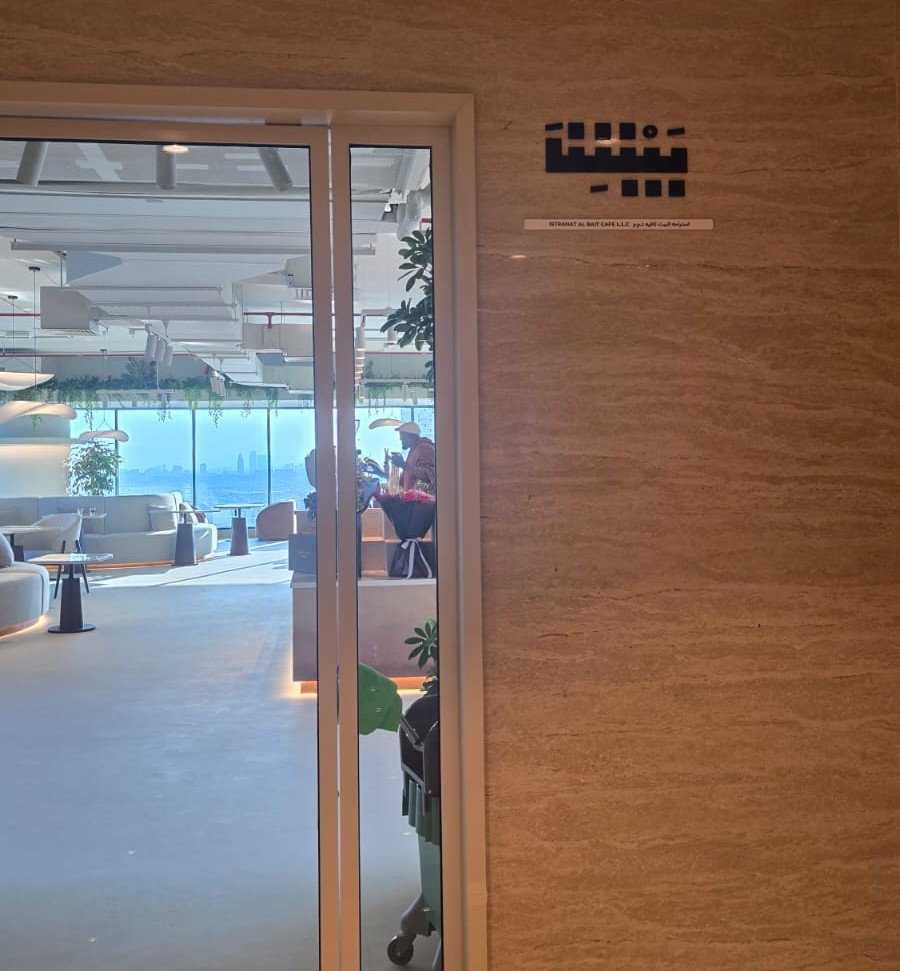
In a remarkable event showcasing creativity and innovation, young entrepreneurs Hanan Al Haddad and Abduljawad Al Qaisi have inaugurated “Baitna Café,” the highest specialty coffee café in Sharjah. Located on the 30th floor of Tabarak Tower in the Al Mamzar area, the café offers visitors a unique experience blending breathtaking views with the charm of exceptional coffee.

Baitna Café stands out for its exceptional location and stunning vistas, allowing visitors to enjoy a panoramic view of Dubai’s skyline, including iconic landmarks such as the Burj Khalifa and Burj Al Arab, as well as the beauty of Sharjah. These captivating views make the café a perfect destination for coffee enthusiasts and those seeking relaxation, adding a distinctive touch to business meetings and casual gatherings.

The café also provides an unparalleled opportunity to watch the sunset from a towering height, offering guests serene moments of reflection and tranquility away from the hustle and bustle of daily life.

Baitna Café is not just a café; it is a journey into the finest realms of specialty coffee. It offers a carefully curated selection of premium Colombian and Ethiopian coffee beans, along with innovative beverages designed to delight coffee lovers of all tastes.

The team is led by the renowned barista and coffee expert Samson Kiabonga, who brings his magical touch to the café experience. “Our goal is to deliver an unforgettable coffee journey where every visitor feels that ‘Baitna’ truly is their second home,” says Samson.

From the moment visitors step into Baitna Café, they are embraced by a warm and welcoming atmosphere that reflects the café’s name, meaning “Our Home.” Co-founder Abduljawad Al Qaisi affirms, “What sets us apart is being the highest specialty coffee café in Sharjah. We’re here to create a space where everyone can enjoy coffee and beautiful surroundings. We invite coffee lovers to visit their ‘new home’.”

The opening of Baitna Café comes at a perfect time as the New Year’s celebrations approach, offering guests a unique opportunity to savor their favorite drinks while watching spectacular fireworks displays lighting up the skies of Dubai and Sharjah.

Hanan Al Haddad, the co-founder, invited coffee enthusiasts to visit Baitna Café, stating, “We aim to provide a complete and exceptional coffee experience that combines the quality of our drinks with the beauty of the venue. We are here to create unforgettable memories for our guests.”

Baitna Café is more than just a place to enjoy coffee; it is a window into a world of creativity and renewal. Offering an extraordinary experience that blends the elegance of coffee with the magic of heights, it has become a distinctive and beloved destination for coffee lovers in the UAE.

Green Building Certification: Elevating Sustainable Coffee Preparation with Black Eagle Maverick

Coffee remains one of the world’s most consumed beverages, with annual growth rates of 2% to 2.5%. As the coffee industry flourishes economically, the focus on sustainability has become equally significant. From sourcing beans to serving the perfect cup, the aim is to reduce environmental and social impacts.

A key player in this mission is the espresso machine, central to sustainable coffee service. The Black Eagle Maverick by Victoria Arduino has emerged as a frontrunner in this arena. Recently listed on the Ongreening portal, the Black Eagle Maverick complies with the major environmental standards in the construction sector, including LEED, BREEAM, WELL, and Estidama.

The Black Eagle Maverick boasts an impressive 37% reduction in energy consumption compared to its predecessor, the VA388 Black Eagle. This achievement is powered by the T3 Genius technology, an evolution of the T3 system. By optimizing stainless steel boiler volumes, enhancing electronics, and utilizing waste energy for preheating water, the Maverick maximizes efficiency without compromising performance. The Thermal Energy Recovery System (T.E.R.S.) captures waste energy from the motor and dispensing processes, reducing energy consumption by 6% and 8% respectively for every coffee prepared. A comprehensive Life Cycle Assessment (LCA) revealed a 23% reduction in the Maverick’s environmental impact in terms of CO2 emissions compared to the previous model. By employing sustainable design and materials, the machine sets a new standard for eco-friendly coffee preparation.

The Black Eagle Maverick also addresses water conservation with its Autopurge system. This automatic group cleaning mechanism ensures precise water usage, maintaining operational efficiency while minimizing waste. Beyond environmental benefits, the Black Eagle Maverick enhances the barista’s experience. Its ergonomic design and lower profile promote interaction with customers while easing the physical strain of prolonged use. The machine’s design reflects Victoria Arduino’s dedication to both operator well-being and customer satisfaction.

By aligning with the highest sustainability standards in the building industry, the Black Eagle Maverick not only supports sustainable coffee preparation but also contributes to broader environmental goals. Whether it’s in specialty coffee shops or bustling cafes, this machine exemplifies how innovation can drive positive change in the coffee industry.

For the latest updates on Victoria Arduino and their groundbreaking products, visit victoriaarduino.com or follow them on Instagram at @victoriaarduinoofficial.

Brazil’s Coffee Crisis Deepens: Dwindling Stocks and Mounting Losses Paint a Grim Picture for 2025

Global journalist and coffee expert Maja Wallengren continues her field reporting from Southern Minas, Brazil, shedding light on an escalating crisis threatening the world’s coffee supply chain. Reporting from the massive Japy warehouse complex, part of Cooxupé, the world’s largest coffee cooperative, Wallengren revealed a sharp decline in coffee stocks and catastrophic losses that are weakening the industry and pushing it to the brink of collapse.

Wallengren, writing on her platform Spilling The Bean, highlighted the worsening situation. In 2024, Brazil produced approximately 9 million bags of coffee, of which more than 5.5 million were exported, while most of the remaining stock was sold in the domestic market. However, only about one million bags remain, and they are expected to be sold and shipped entirely by May 2025, reflecting an unprecedented crisis in coffee availability.

Reports indicate that Brazilian farmers are facing immense difficulties in sustaining their livelihoods. With small agricultural plots averaging between 0.5 and 0.7 hectares, estimates suggest that 60-70% of Brazil’s primary coffee-producing regions are now partially or fully abandoned. At the same time, 85-90% of coffee-growing areas are suffering from severe climatic disasters, leading to global losses estimated at 20-22 million bags for the 2024-2025 season, with further losses of 18-20 million bags projected for the 2025-2026 harvest.

Wallengren’s tour of Southern Minas, Brazil’s traditional coffee heartland, unveiled the severity of the situation. Even in regions that typically perform well, Cooxupé reports losses ranging between 10-15% at best, while most farms face losses between 30-50% or higher. Wallengren described the coffee trees as “visibly weak and struggling,” highlighting the magnitude of the disaster.

During visits to municipalities such as Nova Resende, one of the top three Arabica-producing regions, farmers expressed unprecedented despair. An 82-year-old farmer stated, “In my lifetime, I have never seen the crop in such a poor state.” Wallengren noted that farmers are now using new terminology to describe the 2025 harvest, such as “bad” and “completely disastrous,” reflecting the prevailing sense of hopelessness among producers.

Wallengren warns that the best-case scenario for Brazil’s Arabica crop in 2025 points to a maximum production of 28 million bags, with more realistic estimates ranging between 24-26 million bags. Total production of Arabica and Robusta is expected to remain below 38-40 million bags. These figures represent a sharp decline, with no hope of full recovery before 2028-2030, placing Brazil, the world’s largest coffee producer, in a challenging position.

She explained that the coffee supply chain is in a state of “free-fall collapse,” with stocks depleting faster than anticipated. The challenges are exacerbated by climate change, the small size of agricultural plots, and economic pressures that deepen the crisis. Wallengren emphasized that the crisis extends beyond Brazil, with its impact felt worldwide, as approximately 50 million families globally depend on coffee farming.

“The world is facing a severe coffee shortage,” Wallengren stated. She added that the crisis underscores the urgent need for sustainable practices, innovation, and global collaboration to ensure the continuity of an industry that supports millions of families and is enjoyed by billions of people daily.

In conclusion, Wallengren remarked, “So far, the disaster does not fully capture the scale of the problem. Farmers are bracing for the worst and praying to mitigate the damage in the coming months.”

Can Vietnam and Indonesia Compensate for Brazil’s Decline in Coffee Production?


As coffee enthusiasts around the world watch with concern the decline in Brazil’s coffee production this year—and with projections suggesting that next year’s output could be the lowest in decades—news from Vietnam and Indonesia has come to ease some of these worries.

The U.S. Department of Agriculture (USDA) in its latest semi-annual report predicted a significant increase in global coffee production for the 2024-2025 season, driven by a recovery in production in Vietnam and Indonesia. Global output is expected to reach 174.9 million 60-kg bags, an increase of 6.9 million bags compared to the previous season. However, rising global coffee consumption is likely to reduce ending stocks, adding further pressure to supply.

Vietnam, the world’s second-largest coffee producer, is projected to produce around 30.1 million bags, an increase of 2.6 million bags compared to the previous season. Despite this improvement, production remains below the record set in the 2021-2022 season. With greater supplies available, Vietnam’s coffee bean exports are expected to rise by 1.8 million bags, reaching 24.4 million bags.

Nguyen Nam Hai, Chairman of the Vietnam Coffee and Cocoa Association, noted that rising global coffee prices have also pushed domestic prices to unprecedented levels. In regions like Dak Lak, Lam Dong, and Dak Nong, coffee prices ranged between 121,800 and 122,700 Vietnamese dong per kilogram (approximately $4.81–$4.84), reflecting an increase of up to 11,000 dong per kilogram compared to earlier this month.

In Indonesia, coffee production is expected to recover by approximately 2.8 million bags, reaching 10.9 million bags, thanks to favorable agricultural conditions in regions like South Sumatra and Java. Robusta production is projected to account for approximately 9.5 million bags of the total, while Arabica contributes 1.4 million bags. This increase in production translates to a rise in exports by 2.2 million bags, totaling 6.5 million bags annually.

Meanwhile, Brazil, the world’s largest coffee producer, is expected to see only a slight increase in production, reaching 66.4 million bags. Arabica production is forecast to rise by 500,000 bags to 45.4 million bags, while Robusta production is expected to decline by 400,000 bags to 21 million bags. Adverse weather conditions, such as drought and high temperatures, have negatively impacted productivity. Consequently, Brazil’s coffee exports are forecast to decline by 2.6 million bags, totaling 40.5 million bags, mainly due to depleted stocks from the previous season.

Global coffee consumption is expected to rise by 5.1 million bags, reaching 168.1 million bags, with the largest increases in the European Union, the United States, and China. Despite the rise in production, global ending stocks are forecast to decline by 1.5 million bags, reaching 20.9 million bags.

In parallel, Vietnam’s coffee export revenues are projected to reach a record $5.6 billion in 2024. This growth comes as global coffee prices surge, offsetting a 13.5% decline in export volumes. Between January and November 2024, Vietnam exported approximately 1.2 million tons of coffee, generating nearly $5 billion in revenue—an increase of 38.1% compared to the same period last year.

As the new harvest season begins, farmers and traders are closely monitoring price fluctuations. Many farmers are deliberating whether to sell their coffee stock immediately or hold onto it in anticipation of further price increases, especially given the limited supply from other coffee-producing countries.

These developments highlight the dynamic nature of the global coffee market. As production and demand both rise, the question remains: Can Vietnam and Indonesia bridge the gap created by Brazil’s challenges? The coming months will reveal more.

Vietnam Launches a System to Comply with EUDR to Support Coffee Producers


Vietnam’s Ministry of Agriculture and Rural Development has launched a database system for coffee-growing areas in the country to verify that farmers comply with the European Union Deforestation Regulation (EUDR).

The ministry stated that the system, developed in partnership with a Dutch trade platform and a coffee and tea group (JDE Peet’s), aims to enable smallholder coffee farmers and exporters to comply with the EUDR, ensure continued access to European markets, and achieve long-term sustainability goals.

According to the ministry, the “Database System for Forests and Coffee Growing Areas” will provide a mechanism to track farming practices and forest management with precision. The system relies on detailed data such as land-use planning maps, cadastral maps, and production area details, allowing for accurate monitoring of forest management on coffee farms. It also offers reliable data for exporters and trading companies to expedite customs processes and reduce delays.

In a press release, the ministry emphasized that the new system focuses on aligning production with the EU’s strict traceability requirements under the EUDR, addressing short-term compliance and achieving long-term sustainability objectives.

Nguyen Do Anh Tuan, Director General of the International Collaboration Department at the ministry, said: “This system represents a significant milestone in Vietnam’s efforts to comply with the EUDR. The ministry is committed to playing a key role in expanding, updating, and maintaining the system to ensure it supports the coffee sector in meeting international standards.”

Vietnam is the world’s second-largest coffee producer, exporting approximately 1.45 million tons of coffee in the 12 months ending in September 2024, according to the Vietnam Coffee-Cocoa Association. The European Union is Vietnam’s largest coffee export market, accounting for 38% of export volume and 37% of export value, amounting to around $2 billion.

The EUDR requires companies importing products into the European Union, including coffee, cocoa, palm oil, paper, and wood, to submit due diligence reports confirming that imports have not contributed to deforestation anywhere in the world after December 31, 2020.

The regulations were initially set to take effect on December 30, 2024, but the European Parliament granted a 12-month extension to provide farmers with additional time to comply.

Kaj van de Vorstenbosch, a climate official at the Dutch Ministry of Foreign Affairs, stated: “The effective implementation of the EUDR in Vietnam is crucial to ensuring access to European markets while promoting sustainable, deforestation-free production. Developing the database system is a vital step in this process, offering a comprehensive solution that supports transparency, smallholder inclusion, and cost-effective compliance.”

Although the system was initially developed for the coffee industry, Vietnam’s Ministry of Agriculture and Rural Development plans to utilize its flexibility to expand its coverage to other commodities, such as rubber, pepper, and cocoa, in the future.

Abu Dhabi Coffee Festival 2025: A Celebration of the Bean Scene

The Abu Dhabi Coffee Festival 2025 is set to be a landmark event, celebrating coffee culture and offering an immersive experience for enthusiasts and industry professionals alike. Held at the prestigious Zayed Heritage Festival from January 10 to 19, 2025, this 10-day festival promises a unique journey “from bean to cup.”

A Diverse Experience for Coffee Lovers

Visitors of all ages can explore the world of coffee through a gamified experience that rewards participants with coffee-themed incentives. The festival offers an array of workshops, tasting sessions, and artistic activities, making it an engaging destination for families and coffee aficionados.

Workshops and Activities

The event boasts an impressive lineup of workshops:

  • Coffee Tasting Workshop: Explore nuanced coffee profiles with expert guidance.
  • Latte Art Workshop: Learn to craft stunning latte designs.
  • Sustainability Workshop: Discover ways to repurpose coffee grounds into eco-friendly products.
  • Candle Making: Blend coffee culture with crafting to create scented candles.
  • Matcha Workshop: Learn the art of combining matcha with coffee for innovative flavors.

Interactive activities include:

  • Caffeinated Calligraphy: Create Arabic calligraphy using coffee as ink.
  • Photo Booth: Capture memories with customizable props and backdrops.
  • Bean Blends and Mosaics: Express creativity with coffee-bean art.
  • Games and Competitions: Participate in family-friendly games like Bean Toss and Cups Up Tower Contest.

Partnership and Sponsorship Opportunities

The festival offers extensive sponsorship packages tailored to diverse business interests:

  • Platinum Sponsor: AED 300,000
  • Gold Sponsor: AED 200,000
  • Silver Sponsor: AED 100,000
  • Specialized sponsorship options include segments like workshops, competitions, or branded experiences.

Exhibitor Opportunities

With customizable booth spaces starting at AED 1,200 per square meter, exhibitors can showcase their brands in creative and impactful ways. Options range from 5x5m open spaces to retail kiosks equipped with essential utilities.

A Homage to Coffee Culture

The event’s design and brand language reflect a deep appreciation for coffee’s role in our daily lives, celebrating its cultural and sensory richness. Whether you’re a seasoned coffee connoisseur, an adventurous taster, or a casual visitor, the festival promises a “latte love letter” to the bean scene.

For more information, visit @coffeefestmiddleeast or contact Celina Pérez at [email protected].

Mark your calendar and join this exceptional celebration of coffee in Abu Dhabi!

The World Faces a Coffee Crisis: Brazil’s 2025 Arabica Harvest Could Be the Smallest in Decades

A global coffee expert has issued an urgent warning to the coffee industry, stating that the world may face a significant coffee crisis in 2025.

Journalist Maja Wallengren revealed that Brazil’s 2025 Arabica coffee crop is on track to become one of the smallest in the past two decades.

Through her X account and platform Spilling The Bean, Wallengren confirmed that farmers in Minas Gerais, Brazil’s largest coffee-producing state, are preparing for catastrophic losses, averaging between 20-30%.

Wallengren underscored the severity of the situation with a video posted on December 19, filmed at a farm in Nova Resende, Southern Minas. The footage showed visibly weak coffee trees struggling to produce cherries, even in areas that usually benefit from optimal agricultural conditions.

During her tour of key coffee-producing regions, such as Cabo Verde and Divisa Nova, Wallengren highlighted the growing concerns among farmers.

“No farmer or farm has reported losses below 30%,” she stated. “Many are estimating losses as high as 40-50%.”

In her blunt assessment, Wallengren declared, “The world is facing a severe coffee shortage.”

If these grim predictions materialize, the 2025 harvest could mark a historic turning point for Brazil, the world’s largest coffee producer, potentially disrupting global markets and driving up coffee prices for consumers worldwide.

CQI Reflects on a Landmark Year and Sets Ambitious Plans for 2025

As the Coffee Quality Institute (CQI) concludes 2024, CEO Michael Sheridan shares reflections on a remarkable year for the organization and its global coffee community. Marking the 20th anniversary of the Q Grader program, CQI celebrated the milestone with podcasts, social media campaigns, and in-person events that underscored the legacy of the industry’s premier coffee cupping credential.

The Q Grader community, which now boasts nearly 10,000 members, saw significant growth this year, alongside the expansion of CQI’s Processing Professionals and Instructor networks. Sheridan welcomed three new team members, including T.J. Ryan, who has taken on the role of Director of Mission Engagement. “Welcoming T.J. was like bringing family home,” Sheridan noted. Ryan will spearhead CQI’s project initiatives and the evolving Global Fund, an area poised for greater impact in the coming year.

Global Fund Expansion: Empowering Coffee Communities Worldwide

In its second year of operation, the CQI Global Fund provided nearly $90,000 in cash and in-kind support to seven initiatives across four continents. Highlights include:

  • Mexico: Two grants supported nearly 100 participants, with post-harvest process training and scholarships empowering smallholder farmers and quality control managers. Collaborations included CAFECOL and the International Women’s Coffee Alliance.
  • Ethiopia: CQI worked with women-led companies to certify seven new Q Graders through the Q Combo course.
  • Latin America: The innovative Girlsplaining initiative, led by Assistant Instructor Camila Khalifé, delivered specialized training to women in coffee.
  • United States: Support for NKG PACE program partners included cupping courses and introductory post-harvest processing classes.

Looking ahead, CQI plans to unveil a comprehensive vision for the Global Fund’s future at its 25th Annual Luncheon in April 2025 in Houston.

Celebrating Dedication: Honoring Outgoing Trustees

As 2024 draws to a close, CQI honors the commitment of outgoing trustees who collectively dedicated 96 years of service to the organization. From Ellen Jordan’s 26-year legacy to the fresh perspective of Liz Caselli-Mechael’s two-year tenure, CQI’s success owes much to these visionaries.

A Message of Growth and Gratitude

Sheridan’s year-end message also highlighted plans for 2025, including expanded coffee events, new courses, and continued certification projects, such as the impressive five-fold increase in certified Q Graders in Burundi. As CQI looks to the future, it remains deeply committed to improving coffee quality and the lives of those who produce it.

With deep gratitude for the past and ambitious goals for the future, CQI enters 2025 with renewed energy to strengthen its impact in the global coffee community.