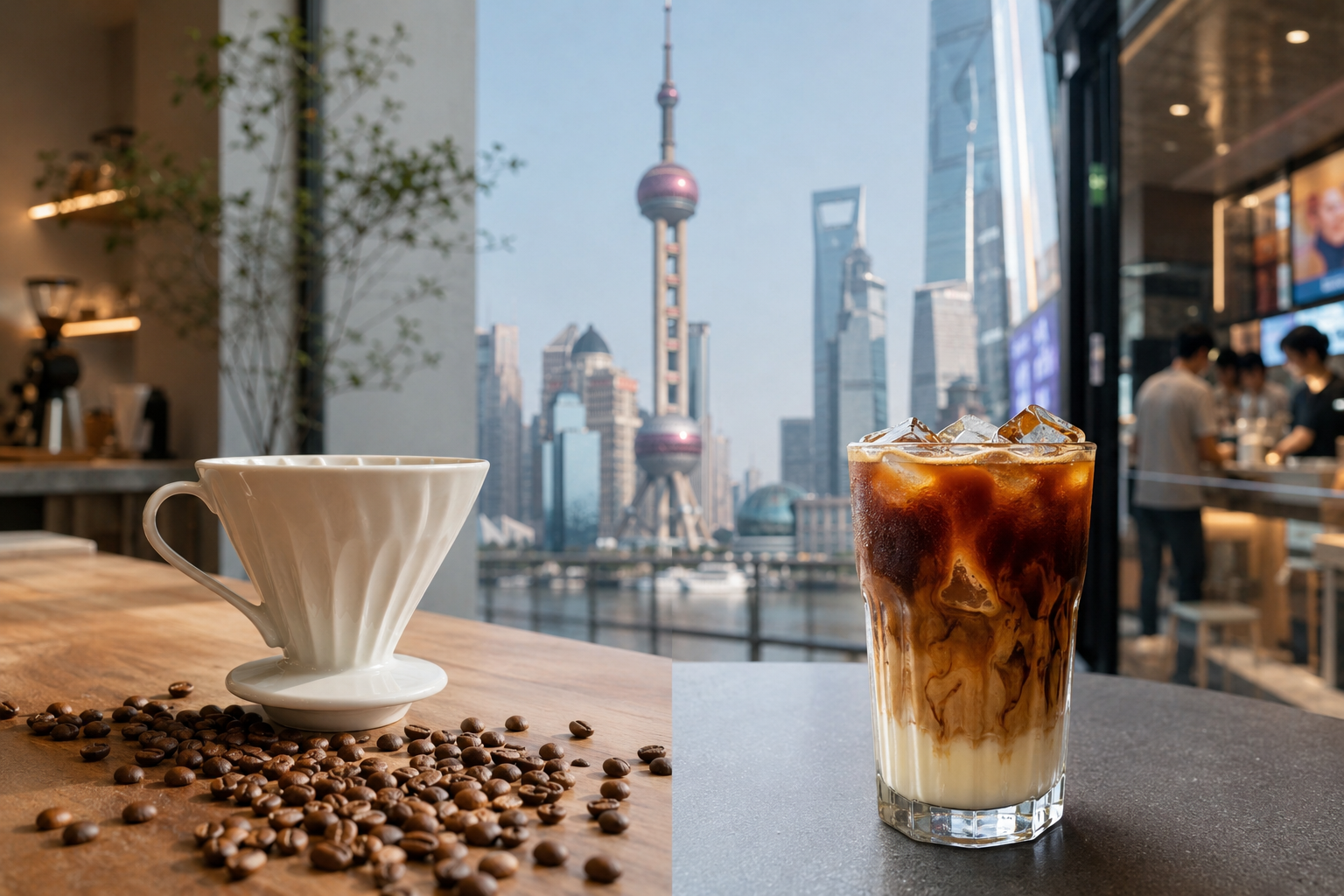
Shanghai Overtakes New York as Global Coffee Capital as Ethiopia and Vietnam Compete in China

Author: Sahl Maryam Jabra Madhin
Source: ECTA, GACC, ICO
Date: May 21, 2026

Executive Summary:

  • Shanghai now hosts over 9,115 cafes, making it the world’s leading coffee city, double New York and five times Paris.
  • China’s coffee consumption has grown 15 percent annually over the past three years.
  • Ethiopia ranks second as a coffee supplier to China after Brazil, with premium specialty coffee at $6,310 per ton.
  • Vietnam ranks third, offering robusta at $4,176 per ton, benefiting from geographic proximity (4-6 days shipping).
  • China’s zero tariff policy for Ethiopian products has boosted Ethiopian coffee exports, moving Ethiopia from 33rd to 3rd place in five years.
  • In the first ten months of the 2018 budget year, Ethiopia exported 37,711 tons of coffee to China worth $270.73 million.

For many years, the global coffee industry had its eyes fixed on New York, Milan, and Paris. Today, the new growth center of the coffee industry has shifted to Asia. Shanghai now hosts over 9,115 cafes, making it the world’s leading coffee city. This is double the number in New York and approximately five times that of Paris.

Beyond the numbers, the key story is that China’s coffee consumption has grown 15 percent annually over the past three years. This has created a major shift in the global coffee supply chain. While many businesses still focus only on Western markets, China is quietly becoming a major destination and opportunity gateway for Ethiopian and Vietnamese coffee.

Ethiopia vs Vietnam in Shanghai (2025-2026)

Indicator Ethiopia Vietnam
Import rank in China 2nd (after Brazil) 3rd
Supply volume ~50,000 tons ~36,000 tons
Price per ton $6,310 (premium) $4,176 (mid-range)
Growth rate +79.1% revenue +65.8% supply
Key advantage Zero tariff, natural varieties, specialty quality Proximity (4-6 days), lower price

How Each Coffee is Perceived in Shanghai

Ethiopia: The Quality Standard
In Shanghai’s 9,000 cafes, Ethiopian coffee is viewed like fine wine. It is mostly found in specialty coffee shops and premium chains like Blue Bottle. It is preferred for pour-over black coffee. Young Shanghai coffee enthusiasts see Ethiopian coffee as the peak of complexity, with notes of wine, chocolate, spice, fruit, or citrus. Despite its higher price, it remains highly sought after.

Vietnam: The Reliable Workhorse
Once known only for instant coffee, Vietnam has rebranded itself by producing high quality robusta. Vietnamese coffee is commonly found in large chains like Luckin or Cotti, as well as popular cafes in the Jing’an district. It is known for its strong, nutty, chocolatey flavor and is seen as a reliable, affordable option, often mixed with milk.

Zero Tariff Policy and Ethiopia’s Rise

In 2025, a major change occurred: China’s zero tariff policy for Ethiopian products. This duty free access, along with growing strategic cooperation in agriculture, technology transfer, e-commerce links, and Shanghai’s role as a trading hub, has made Ethiopian coffee more price competitive in China.

Five years ago, China was the 33rd destination for Ethiopian coffee exports. By 2017, it rose to 4th place. In the first ten months of the 2018 budget year, Ethiopia exported 37,711 tons of coffee to China, worth $270.73 million, moving up to 3rd place. This demonstrates the rapid growth of Ethiopia’s presence in the Chinese market.

Frequently Asked Questions (FAQ)

1. How many cafes does Shanghai have?

Shanghai has over 9,115 cafes, more than double New York and about five times Paris.

2. How fast is China’s coffee consumption growing?

China’s coffee consumption has grown 15 percent annually over the past three years.

3. Which countries are the top coffee suppliers to China?

Brazil ranks first, followed by Ethiopia (second) and Vietnam (third).

4. What is the price difference between Ethiopian and Vietnamese coffee?

Ethiopian coffee averages $6,310 per ton, while Vietnamese coffee averages $4,176 per ton.

5. What is the zero tariff policy?

China granted duty free access to Ethiopian products in 2025, boosting Ethiopian coffee’s price competitiveness.

6. How much coffee did Ethiopia export to China in 2018?

In the first ten months of the 2018 budget year, Ethiopia exported 37,711 tons of coffee to China, worth $270.73 million.

Sahl Maryam Jabra Madhin – Based on reports from ECTA, GACC, ICO, and Allegra World Coffee Portal.
Published: May 21, 2026

Shanghai: The New Global Capital of Coffee

Shanghai – Qahwa World

Shanghai is no longer just a financial giant or a global trade hub — it has become the beating heart of Asia’s coffee revolution. In this city, coffee is not merely a beverage but a cultural experience, a sensory journey, and a form of art that mirrors the city’s energy and sophistication.

According to Dao Insights, Shanghai had over 9,115 cafés in 2024 — more than any other city in the world. Meanwhile, coffee consumption in China has surged by 150% over the past decade, reaching 6.3 million 60-kg bags, as reported by the U.S. Department of Agriculture. This exponential growth has positioned Shanghai at the center of China’s rapidly evolving coffee landscape.

A New Coffee Culture

In Shanghai, cafés are not just places to sit; they are creative spaces where art, science, and culture meet. Each café tells a story — some focus on visual aesthetics, pouring coffee in delicate, layered forms, while others emphasize scientific precision, measuring temperature to show how heat transforms flavor.

The city has become a living laboratory for coffee innovation, where craftsmanship and curiosity coexist.

Boundless Imagination

Shanghai’s coffee scene is defined by its fearlessness. Here, one can find orange-infused Americanos, latte served in green bell peppers, or espresso blended with durian. What might seem eccentric elsewhere has become a signature of the city’s inventive spirit.

Local chains have embraced fruit-based coffee drinks, offering seasonal flavors like apricot, pineapple, and watermelon. This trend reflects Shanghai’s creative confidence — redefining coffee on its own cultural and sensory terms.

The Afternoon Ritual

Unlike Western cities that start their mornings with coffee, Shanghai comes alive in the afternoon. Between 3:00 p.m. and 5:00 p.m., cafés are filled with professionals, students, and artists seeking focus or inspiration.

Most cafés open around nine in the morning and stay active late into the evening, reflecting the city’s dynamic rhythm. Coffee here is not a wake-up drink — it’s a pause, a conversation, and a source of renewal.

From Cup to Knowledge

High-end cafés like Coffee Spot and Spot Table offer an “All-in-One” experience — one coffee served three ways: black, with milk, and as a signature creation. Inspired by World Brewers Cup competitions, this concept invites guests to discover coffee as both science and art.

Each serving comes with an information card detailing origin, processing, and temperature, turning a simple tasting into an educational experience.

Coffee as Visual and Emotional Art

Shanghai’s cafés are built around design as much as taste. From concrete walls and soft lighting to carefully placed cups and textures, every detail adds to the experience. Coffee is not a commodity here; it is culture itself.

Some cafés accompany drinks with flavor charts and temperature notes, while others treat every cup as a moment of meditation — a meeting point between beauty, aroma, and emotion.

The Festival of Coffee and Creativity

Every year, the Shanghai Coffee Culture Festival takes place in Jing’an District, attracting over 50,000 visitors from across China and abroad. The event showcases daring creations such as coffee infused with aged vinegar from Shanxi Province or brews inspired by traditional Chinese medicine, featuring dandelion, licorice, and Sichuan pepper.

The festival has become a true reflection of Shanghai’s identity — a blend of tradition and innovation, experimentation and respect for flavor.

A City Connected by Coffee

Coffee has woven itself into the fabric of Shanghai’s society. In small alleys and glass towers alike, cafés have become meeting points for designers, entrepreneurs, and students. Independent micro-roasters sit beside luxury lounges, together shaping a vibrant community built on creativity.

Among the most influential names are Yunnan Dehong Dehome, which promotes locally grown Chinese coffee from Yunnan Province — once overlooked, now celebrated for its delicate sweetness and cocoa-like finish.

From a Cup to a Culture

Coffee in Shanghai is more than a drink — it is a reflection of the city’s soul: its speed, precision, and openness to the world. From street kiosks to coffee palaces spanning 9,000 square meters, the city lives and breathes coffee every day.

No longer a borrowed tradition, coffee has become a distinctly Chinese expression — a symbol of modern life, creativity, and identity. And at the heart of it all stands Shanghai, the new global capital of coffee, where every cup tells a story of progress, passion, and imagination.