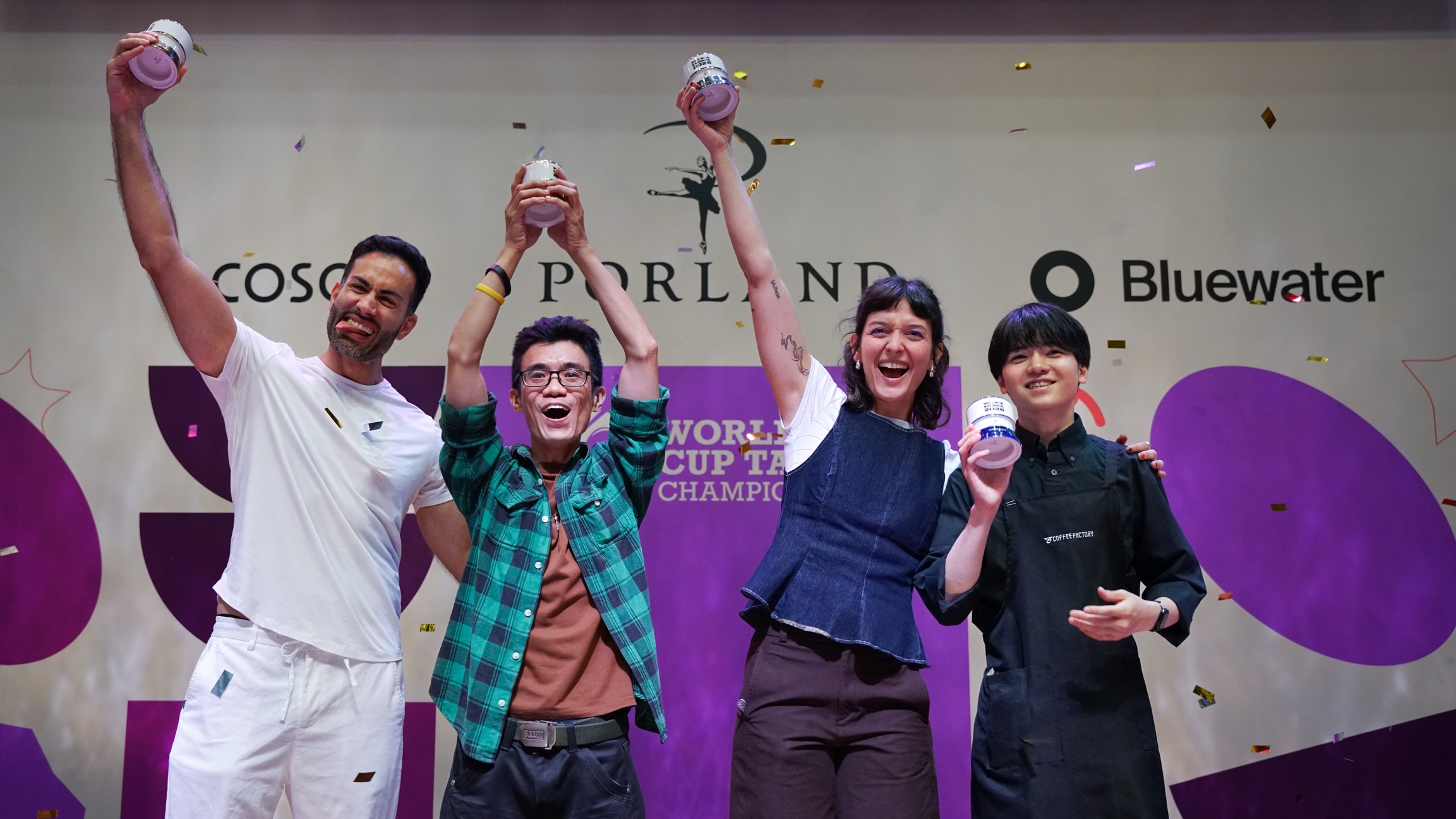
Le Quang Cuong (Nicky) of Vietnam Wins 2026 World Cup Tasters Championship

By Ali Al Zakary – Dubai | Source: World Coffee Championships Official Website | May 10, 2026 | 2 min read

Le Quang Cuong (Nicky) of Vietnam Wins 2026 World Cup Tasters Championship

Final rankings: Vietnam first, Switzerland second, United States third, Japan fourth

The World Coffee Championships have announced Le Quang Cuong (known as Nicky), representing Vietnam, as the 2026 World Cup Tasters Champion, following two days of relentless focus, split-second decisions, and world-class sensory skill.

Catherine Queiroz of Switzerland secured second place, Mehmet Sogan of the United States finished third, and Mizuki Tagami of Japan placed fourth.

The championship praised all competitors who took the stage, stating that the level of precision, composure, and passion on display was remarkable, and that they have raised the bar for the entire community.

The championship extended its thanks to its sponsors: Title Sponsor Porland, Qualified Water Sponsor Bluewater Globe, as well as Cosori, Kranti Coffee, Option O Coffee, Cold Perk, Nobletree Irhea, and Femobook Grinder.

Final Rankings – 2026 World Cup Tasters Championship

Rank Name Country
1 Le Quang Cuong (Nicky) Vietnam
2 Catherine Queiroz Switzerland
3 Mehmet Sogan United States
4 Mizuki Tagami Japan

Sponsors

  • Title Sponsor: Porland
  • Qualified Water Sponsor: Bluewater Globe
  • Cosori
  • Kranti Coffee
  • Option O Coffee
  • Cold Perk
  • Nobletree Irhea
  • Femobook Grinder

Frequently Asked Questions

Q: Who won the 2026 World Cup Tasters Championship?
A: Le Quang Cuong (Nicky) representing Vietnam.

Q: What were the final rankings?
A: Vietnam first, Switzerland second, United States third, Japan fourth.

Q: How long did the competition last?
A: Two days.

Q: Who are the main sponsors?
A: Porland (Title Sponsor) and Bluewater Globe (Qualified Water Sponsor).


✍️ About the author: Ali Al Zakary – Journalist specializing in World Coffee Championships coverage and industry news.

Source: World Coffee Championships Official Website, May 2026.

Japanese Study: Caffeic Acid in Coffee Inhibits Colorectal Cancer Cell

GrowthKyoto – Qahwa World

A Japanese research team has identified the molecular mechanism by which caffeic acid, a polyphenol found in coffee, suppresses the growth of colorectal cancer (CRC) cells.

This discovery, published in Scientific Reports on March 5, 2026, provides a potential scientific basis for epidemiological studies that link regular coffee consumption to a reduced risk of colorectal cancer.

The Molecular Mechanism: Targeting the RPS5-Cyclin D1 Axis While previous research suggested a link between coffee and cancer prevention, the specific components and their biological functions remained unclear.

You may read: Japanese Scientists: Coffee Protects Gums from Inflammation

Researchers from Kyoto Prefectural University of Medicine and Kansai Medical University Hospital focused on caffeic acid, which is produced when chlorogenic acid (abundant in coffee) is hydrolyzed in the intestines.

Key findings from the study include: Direct Binding to RPS5: Using nano-magnetic beads and mass spectrometry, the team identified ribosomal protein S5 (RPS5) as a direct binding target of caffeic acid. High expression of RPS5 is known to be associated with poor prognosis in colorectal cancer patients.

Inducing G1 Cell Cycle Arrest: The research demonstrated that caffeic acid blocks the function of RPS5, which in turn halts the cell cycle of cancer cells at the G1 phase, preventing them from copying their DNA and proliferating.

You may also read: Why Coffee Is One of the Healthiest Drinks

Post-Transcriptional Regulation of Cyclin D1: Both the addition of caffeic acid and the suppression of RPS5 reduced the levels of cyclin D1, a protein critical for driving the cell growth cycle. The study suggests that RPS5 regulates cyclin D1 by controlling the stability of its messenger RNA (mRNA) rather than its promoter activity.

Future Therapeutic Potential Dr. Motoki Watanabe, the lead researcher, stated that these findings reveal a previously unrecognized RPS5-cyclin D1 axis targeted by caffeic acid. This insight could lead to the development of new cancer prevention strategies and treatments, such as optimized derivatives of caffeic acid that more effectively target RPS5.

Important Considerations The researchers noted that this was basic research conducted primarily on cell cultures. They cautioned that the concentrations of caffeic acid required for these effects in a laboratory setting are higher than what is typically achieved through normal coffee consumption. Additionally, since coffee contains other components like caffeine and may not suit everyone’s constitution, excessive consumption is not recommended.

Japanese Innovation Transforms Coffee Cherries into a Sustainable Ingredient Enhancing Flavor and Quality

Tokyo – Qahwa World

In a major step toward sustainable beverage innovation, Kirin Holdings Co., Ltd. has announced the development of a fermented ingredient made from coffee cherries, transforming what was once agricultural waste into a high-value product that enhances both body and aroma in beverages.

The breakthrough, created by the company’s Institute for Future Beverage, aims to support coffee farm sustainability, reduce environmental impact, and improve the experience of non-alcoholic and low-alcohol drinks, addressing broader social concerns around alcohol consumption.

From Waste to Resource

Each year, millions of tons of coffee cherry pulp and peel are discarded after bean extraction. These by-products, rich in caffeine and polyphenols, pose environmental risks when left untreated. Kirin researchers applied their proprietary wine aroma enhancement technology to ferment concentrated coffee cherry juice with lactic acid bacteria and yeast, creating an ingredient that adds richness, warmth, and fruity depth to a wide range of beverages.

Supporting Coffee Farmers

The innovation not only reduces waste but also helps increase farmers’ income in producing countries. In Colombia, for instance, where disposal of coffee cherries incurs environmental taxes, the new approach offers a sustainable solution with both economic and ecological benefits.

Kirin’s Beverage Future Research Center has been studying ways to utilize coffee cherries since 2018, focusing on turning underused coffee by-products into sustainable resources.

Commercial Use and Sensory Benefits

Tests revealed that beverages using this fermented ingredient scored higher in satisfaction, flavor quality, and premium perception. The company has incorporated it into its “Kirin Tokusei” line of ready-to-drink (RTD) beverages — starting with the Melon Soda Sour launched in May 2025, followed by the Mikan Cider Sour, set for release on November 25, 2025.

Further studies on non-alcoholic drinks also confirmed enhanced mouthfeel and richer flavor, suggesting strong potential in the expanding low- and no-alcohol market.

Looking Ahead

Kirin plans to expand the use of this fermented ingredient across its beverage portfolio, positioning it as a key component of its sustainability strategy.

“By transforming discarded coffee cherries into something valuable, we’re not only reducing waste but also creating a positive impact for farmers and the environment,” said Sayaka Tsuji, researcher at Kirin’s Institute for Future Beverage.

This initiative supports the company’s Kirin Group Vision 2027, which seeks to make Kirin a global leader in Creating Shared Value (CSV) — combining innovation, sustainability, and community benefit.