The 10 Most Expensive Cappuccino Cities in 2025

Dubai – Qahwa World

A simple cup of cappuccino can tell a story much larger than just a morning indulgence. It reflects the cost of living, wages, rents, taxes, currency strength, and local purchasing power. What feels like a small daily treat in one city can quickly become a notable expense in another.

Top Cities for the Priciest Cappuccinos (2025 Data)

According to Deutsche Bank’s “Mapping the World’s Prices 2025” report, which uses crowd-sourced Numbeo data from 69 major cities and converts prices into USD, the most expensive cappuccinos can be found in the following cities:

Rank City Country Cappuccino Price (USD)
1 Zurich Switzerland $6.77
2 Copenhagen Denmark $6.77
3 New York United States $5.95
4 San Francisco United States $5.90
5 Geneva Switzerland $5.86
6 Abu Dhabi UAE $5.84
7 Los Angeles United States $5.78
8 Chicago United States $5.67
9 Boston United States $5.62
10 Dubai UAE $5.53

European cities, particularly Swiss and Nordic ones, dominate the top rankings. High wages, steep rents, strong currencies such as the Swiss franc and Danish krone, and elevated operating costs all contribute to these high prices. Switzerland stands out with multiple cities in the top ten due to its exceptional cost of living.

Notable Price Differences Within Countries

  • In the United States, prices vary widely: New York ($5.95), San Francisco ($5.90), and Los Angeles ($5.78) are at the top, while other cities remain more moderate.
  • In Switzerland, Zurich and Geneva reflect the country’s generally high cost environment.
  • In the United Kingdom, Edinburgh ($5.28) and London ($5.19) are expensive but not among the world’s highest.
  • UAE cities like Abu Dhabi and Dubai are expensive due to imported goods, high expatriate demand, and a culture of premium cafés.

The Affordable Side: Where Cappuccino Remains Cheap

At the other end of the spectrum, cappuccinos can cost less than $2 in several cities:

  • Cairo, Egypt: ~$1.57 (cheapest in the dataset)
  • Rome, Italy: ~$1.79
  • Milan, Italy: ~$2.15
  • Delhi, India: ~$2.07
  • Mumbai, India: ~$2.58

Lower prices often stem from local sourcing, lower labor and rent costs, and a cultural focus on daily coffee or tea rituals.

The gap between the most and least expensive cities exceeds fourfold, highlighting global economic disparities.

Why Cappuccino Prices Reflect Bigger Economic Trends

Daily items like coffee are sensitive to multiple factors:

  • Labor costs: Barista wages in Zurich or Copenhagen are significantly higher than in Cairo.
  • Rent and real estate: Prime café locations in major financial hubs increase overhead costs.
  • Dependence on imports: Many high-cost cities rely on imported coffee beans, milk, and equipment.
  • Taxes and regulations: VAT, minimum wage laws, and sustainability standards all contribute to the final price.
  • Local purchasing power: Higher prices are often paired with higher salaries, meaning a $6.77 cappuccino in Zurich may feel more affordable relative to income than a $2 cappuccino in a lower-wage city.

A daily coffee habit (five days a week) costs approximately:

  • $33.85/month in Zurich or Copenhagen
  • ~$29.75/month in New York
  • Under $8/month in Cairo

Over a year, these expenses can total hundreds or thousands of dollars in high-cost cities, serving as a tangible reminder of inflation and urban economics.

Small pleasures like coffee make abstract concepts such as “cost of living” tangible. Whether budgeting for your daily ritual or analyzing global markets, the humble cappuccino offers a clear lens into local and international economies.

Source: Deutsche Bank Research – Mapping the World’s Prices 2025 (via Numbeo data). Prices are averages and may vary by café type and location.
The European Coffee & Hospitality Awards 2025: Full Winners List

Dubai – Qahwa WORLD

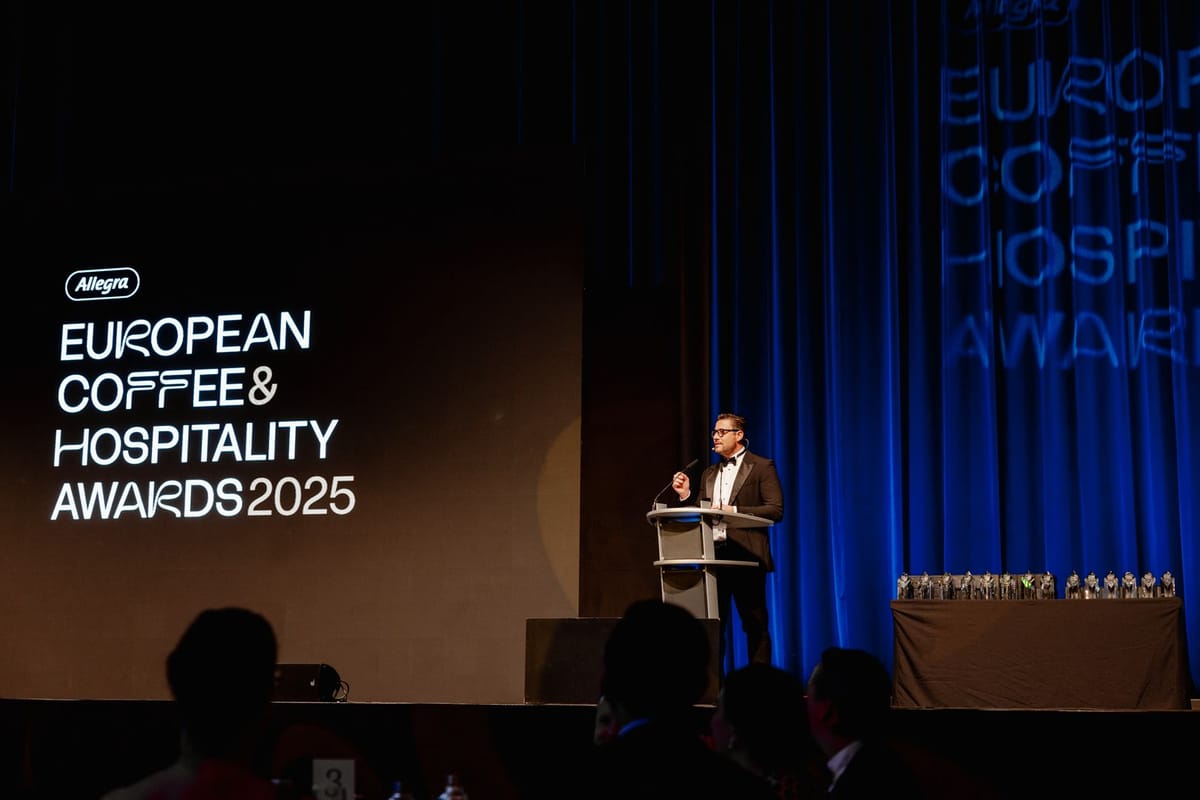
Celebrating excellence from across Europe’s coffee and hospitality industries, senior executives gathered in Berlin for the European Coffee & Hospitality Awards and Gala Dinner on 25 November 2025. In partnership with Coffee Ventures Europe and 5THWAVE, World Coffee Portal proudly reveals this year’s winners.

Following nominations and votes from over 10,000 industry peers, World Coffee Portal is pleased to announce the winners of the European Coffee & Hospitality Awards 2025.

From global powerhouses to pioneering independents, the winners represent the cream of the crop across 15 categories – from Best European Coffee Chain and Best European Specialty Coffee Roaster to Most Sustainable Brand and Matcha Brand of the Year.

“When 10,000 industry professionals cast their votes, they weren’t just participating – they were declaring what excellence means. We are proud to champion the 150 brands they recognised for refusing to be ordinary, and humbled to celebrate the 15 winners who represent the pinnacle of our industry,” said Jeffrey Young, Allegra Group CEO and Founder.

The winners were announced at a Gala Dinner at the JW Marriott Berlin on 25 November 2025, as part of an evening to recognise and celebrate the people, products and businesses pushing the European coffee and hospitality industry to new heights.

Photo credit: Coffee Ventures Europe

European Coffee & Hospitality Awards 2025 – Winners by category

Best European Coffee Chain

  • Winner: WatchHouse

  • Highly commended: % Arabica, Caffè Nero

Best European Food & Bakery Chain

  • Winner: Gail’s

  • Highly commended: Ole & Steen, Zeit für Brot

Best European Hotel Coffee Experience

  • Winner: Soho House

  • Highly commended: The Hoxton Boutique Hotels, The Mandarin Oriental Hotel Group

Best Independent Coffee Shop – Europe

  • Winner: Bonanza Coffee Roastery

  • Highly commended: Friedhats FUKU Cafe, Special Guests

Best European Commercial Coffee Roaster

  • Winner: Lavazza

  • Highly commended: Illy, Löfbergs

Europe’s Best Specialty Coffee Roaster

  • Winner: Caravan Coffee Roasters

  • Highly commended: Manhattan Coffee Roasters, Origin Coffee Roasters

Best European Traditional Coffee Equipment Brand

  • Winner: La Marzocco

  • Highly commended: Slayer, Victoria Arduino

Best European Automatic Coffee Equipment Brand

  • Winner: Eversys

  • Highly commended: La Cimbali, WMF

Best European Food/Beverage Supplier

  • Winner: Monin

  • Highly commended: Beyond The Bean, Nestlé

Most Sustainable Brand – Europe

  • Winner: Origin Coffee Roasters

  • Highly commended: BRITA, Lavazza

Matcha Brand of the Year

  • Winner: Jenki

  • Highly commended: Good & Proper Tea, PerfectTed

Plant-based Supplier of the Year

  • Winner: Oatly

  • Highly commended: Alpro, Minor Figures

Bakery Supplier of the Year

  • Winner: Danish Bakery (Easyfood)

  • Highly commended: Delifrance, La Lorraine

Packaging Supplier of the Year

  • Winner: Tetrapak

  • Highly commended: Duni, SEDA

Home Coffee Equipment Brand of the Year

  • Winner: De’Longhi

  • Highly commended: La Marzocco Home, Sage

The European Coffee & Hospitality Awards, organised by World Coffee Portal, 5THWAVE and Coffee Ventures Europe, are part of the European Coffee Symposium and COHO Expo.

Russian Coffee Shop Purchases Down 7.3% in 2025

Moscow, Russia — Qahwa World

The number of purchases at traditional coffee shops across Russia fell by 7.3% year-on-year in the January-October 2025 period. This data, compiled from a joint study by fiscal data operator Platform OFD and the self-service coffee chain Tochka Chernogo, highlights ongoing traffic challenges in the food service sector.

Revenue Rises Despite Fewer Transactions

Despite the drop in customer visits, the overall turnover (revenue) for coffee shops actually increased by 10%. This seemingly contradictory growth is attributed to a significant jump in the average check, which grew by 14.4% to 412 rubles.

Key Reasons for the Traffic Decline:

Declining Purchasing Power: Experts believe the primary cause of the falling traffic, which has been observed for a second consecutive year across the catering industry, is the decrease in the population’s purchasing power.

Shift to Cheaper Options: A segment of consumers is shifting towards more economical alternatives, including:

Fast Food: The fast-food segment saw a traffic increase of 3% in Moscow, according to Focus Technologies.

Retail Coffee Points: Retailers are posing serious competition by actively developing self-service coffee points within stores and opening their own cafe formats.

Nataliya Savostina, Marketing Director for Shokoladnitsa Group, noted that consumers who are always looking to save money are the most affected and are particularly sensitive to price changes.

The Rise of Self-Service Coffee

In contrast to traditional cafes, the self-service coffee point category demonstrated notable growth:

Transaction Growth: The number of checks at self-service coffee points rose by 9%.

Slower Check Growth: Turnover only increased by 7% due to a more modest rise in the average check of 4.9% (to 107 rubles).

Sergey Kaletin, COO of Uvenco Group, stated that demand for self-service points has been rising over the past five years. However, while affordable, the self-service model cannot yet offer the ambiance and unique experiences of a full-service café. For instance, at Vkusvill, purchases of coffee drinks in their “café” format grew by 38.5%, compared to just 0.3% in their self-service points.

Industry Strategy and Outlook

Coffee shops are forced to adjust prices to compensate for the outflow of visitors and rising costs. This includes optimizing cost structures and growing the average check not only through price increases but also by adjusting the product assortment. For example, Shokoladnitsa Group is maintaining prices for coffee subscriptions to sustain demand.

Experts predict that future development in the segment will be determined by economic factors and consumer purchasing power, which will continue to drive the choice between a traditional café and a more cost-effective self-service option.