Initiative for coffee&climate Set to Illuminate Coffee Farming Realities in Climate Symposium

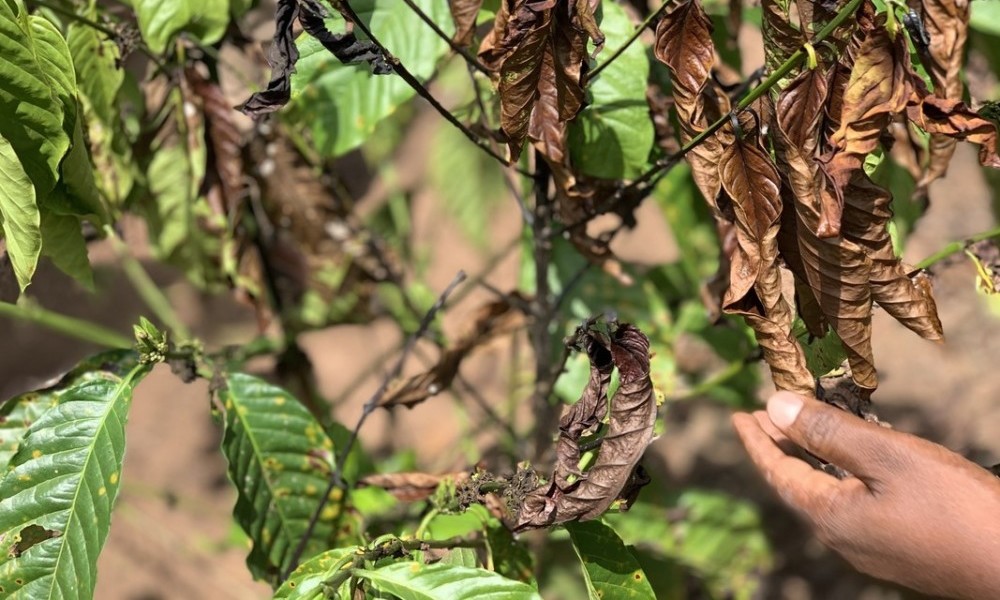
Mark your calendars for the upcoming online symposium hosted by the initiative for coffee&climate, titled ‘It’s Bean Too Hot: The Reality of Coffee Farming in the Era of Climate Change.’ This enlightening event is scheduled to unfold on February 21-22.

Joining forces at the symposium will be coffee farming communities, farmer organizations, local experts, scientists, and coffee companies, all converging to navigate the intricate challenges faced by coffee farming amidst the ever-changing climate.

Conversations during the symposium will dissect the profound impacts on production, landscapes, and livelihoods as a result of rising temperatures. The focus will be on unveiling practical solutions for enhancing resilience, facilitating adaptation, and implementing effective mitigation strategies.

The agenda includes specialized sessions addressing crucial topics like access to finance for smallholder farmers and the indispensable role of gender inclusivity in climate action.

Driven by a collective commitment, the initiative for coffee&climate seeks to effectively address climate change and cultivate sustainable solutions for smallholder coffee farming.

For those eager to engage in these pivotal discussions, registration for the symposium is now open. Dive deeper into the realities of coffee farming and secure your spot by clicking here.

A Brief Overview of Sucden Financial’s Report: Coffee Crop Update – Navigating the Challenges in Coffee Markets

Sucden Financial is a leading multi-asset execution, clearing and liquidity provider across FX, fixed income and commodities. A report entitled “Modernizing the Coffee Crop: A Bumpy Journey for Coffee Markets.”

According to the report, the coffee industry experienced a rollercoaster ride in 2023, with turbulent prices impacting both Arabica and Robusta contracts. Brazil and Vietnam continue to play a pivotal role, comprising 58% of the total blend. Concerns linger about weather conditions, but it is believed that the majority of the damage has occurred, leading to expectations of a fading super crop. While there is no overall shortage of coffee, uncertainties in certain regions create doubts about accessibility.

Executive Summary: Global Economic Variances

The US economy remains robust, driven by strong consumer spending and a tight labor market. Inflation is on the decline, with expectations of a gradual easing of monetary policy, starting with a 25bps Fed interest rate cut in March. In contrast, the eurozone teeters on the brink of recession, facing contraction in manufacturing and services sectors. China grapples with low consumer confidence, weaker global demand, and a deepening property crisis. Brazil, despite a 3% growth in 2023, faces challenges in 2024 due to reduced agricultural output caused by adverse weather conditions.

Starbucks concluded Q4 2023 on a positive note, reporting an 8% increase in global comparable store sales and record consolidated net revenues of $9.4 billion. Nestle thrived with strong organic growth, while JDE Peet’s faced challenges with lower sales growth and decreased profit.

Market Outlook: A Cautionary Tale

The coffee market faces uncertainties, primarily influenced by Brazil and Vietnam. Despite concerns about the weather, expectations of a super crop fading, and potential shifts in farmer behavior, optimism prevails. However, the recent rally in prices is deemed overdone, and a marginal retracement is anticipated in the near term. Changes are noted in other coffee origins, with expectations for production in India, Indonesia, and Central America.

Macro Overview: US Economy Resilient, Global Variances Persist

The US economy defies recession concerns, showing positive Q1’24 outlook with resilient output growth. Consumer spending remains strong, supported by a robust labor market. Inflation decline and expectations of a 25bps interest rate cut in March contribute to an optimistic economic forecast. The global scenario, however, presents challenges, with the eurozone on the brink of recession and China facing economic hurdles.

Corporate Results: Starbucks Shines, Nestle Excels, JDE Peet’s Faces Challenges

Starbucks celebrates a successful Q4 2023, recording an 8% increase in global comparable store sales and reaching record consolidated net revenues. Nestle experiences strong organic growth, especially in emerging markets and e-commerce. In contrast, JDE Peet’s confronts challenges with lower organic sales growth and decreased underlying profit.

Arabica and Robusta Dynamics: Price Swings and Crop Insights

The market witnesses shifts in demand between Arabica and Robusta, leading to multi-decade highs and lows in contract prices. Weather concerns and the threat of El Nino impact the market sentiment. Despite uncertainties, the outlook for Brazil and Vietnam remains positive, with expectations for a retracement in recent price rallies.

Conillon Challenges: Weather Woes and Crop Impact

Dry weather in northern Espirito Santo raises concerns about conillon cultivation, with potential damage estimates ranging from 15% to 35%. Limited irrigation options and government restrictions exacerbate worries about conillon production.

Inventories and Commitment of Traders: Balancing Supply and Demand

Certified stocks witness drawdowns, supporting upward momentum in prices. Attention shifts to supply stories, with Central American shipments slow but expected to pick up. Commitment of Traders positions indicate high net lengths for Arabica and Robusta, with a cautious outlook for potential price vulnerabilities.

In conclusion, the coffee market faces a complex landscape influenced by global economic trends, corporate performances, and crop dynamics. Navigating through uncertainties, industry players remain cautiously optimistic while anticipating potential retracements in recent price rallies.
Coffee Planet Announces Participation in World of Coffee Dubai 2024 Exhibition

Dubai, January 10, 2024 – Coffee Planet, a leading player in the world of coffee, has announced its participation in the World of Coffee Dubai 2024 exhibition, taking place at the Dubai World Trade Centre from January 21 to 23.

Coffee Planet will showcase its latest innovations, products, and specialized tools during the event, inviting attendees to participate in interactive coffee brewing sessions and explore advanced coffee craftsmanship, with the chance to win exciting prizes.

The company confirmed the presence of Dale Harris, the World Barista Champion, alongside the Coffee Planet team from “Campus by Coffee Planet,” adding more expertise and excitement to the event.

A highlight of the exhibition will be Coffee Planet’s participation in the dedicated Brew Bar throughout the event. Attendees will have the opportunity to interact with the team, experience unique flavors, and explore the exceptional world of coffee.

Noteworthy is the comprehensive schedule of events within the World of Coffee Dubai 2024 exhibition, including the Coffee Village, lectures, cupping sessions, the UAE National Championships, the Brew Bar, and the Specialty Coffee Association (SCA) Lounge, all hosted in a bustling trade show floor.

The event is designed to support coffee businesses in the Middle East and beyond, fostering connections and facilitating the growth of the emerging coffee industry in the region.

World of Coffee Dubai 2024 has become a focal point for the global specialty coffee community and is expected to be 50% larger than the previous edition, featuring new highlights and a refreshed program of workshops and lectures.

Managed by DXB Live, the experiential agency of the Dubai World Trade Centre, the event offers a comprehensive range of services, including event management, production, exhibition experiences, professional conference organization, and more.

Don’t miss the opportunity to be part of this exciting event that has captured the attention of the global coffee community. See you at the World of Coffee Dubai 2024!

CEO of Specialty Coffee Association, Yannis Apostolopoulos, Reveals Vision for 2024

Yannis Apostolopoulos, the CEO of the Specialty Coffee Association (SCA), reaffirms the association’s steadfast commitment to enhancing the world of coffee during the current year, 2024.

In an interview with the “Global Coffee Market Report,” Yannis Apostolopoulos, the CEO of the Specialty Coffee Association, highlighted the achievements of the association in 2023, stating, “Considering the accomplishments of 2023, a pivotal year for the Specialty Coffee Association, the introduction of the Coffee Value Assessment (CVA) program was the standout achievement. CVA represents a groundbreaking shift in discovering and appreciating the value of coffee, the culmination of years of dedicated work and research.”

He emphasized that the program marks a significant development in the evaluation system of the SCA, reflecting advancements in sensory science over two decades. CVA is poised to provide the industry and trade with a high-resolution portrayal of coffee, capturing both intrinsic and extrinsic attributes that contribute to the enhanced value of each type of coffee in the market.

Regarding his vision for 2024 and beyond, Yannis Apostolopoulos, the CEO of the Specialty Coffee Association, confirmed the association’s commitment to continuous investment in the development of the Coffee Value Assessment system. The primary focus is on providing education and access to information across the entire value chain.

As a trade association, Apostolopoulos stated that their strategic goal includes expanding the specialty coffee market, aiming to achieve this through direct engagement with consumers. He affirmed that additional investments will be directed towards consumer activation initiatives to stimulate market growth.

Recognizing the tangible challenges faced by the coffee industry, Apostolopoulos acknowledged the marathon-like nature of the journey toward making coffee better, emphasizing the ongoing commitment of both the industry and the Specialty Coffee Association (SCA).

He stressed that sustainability in coffee production remains a key issue, with a continued focus on value distribution. The goal is to facilitate meaningful discussions about risks and rewards across the entire value chain. The regulatory changes observed in 2023 are expected to have a lasting impact on trade dynamics.

In conclusion, Apostolopoulos called for the establishment of a clear framework by industry stakeholders and regulators to address consumer labeling concerns, especially regarding beverages that do not contain coffee beans. This comprehensive approach aims to promote transparent discussions and contribute to the continuous evolution of the coffee industry.

Determining the Optimal Time for Coffee Consumption

A beloved beverage for millions globally, coffee holds a cherished spot in the daily morning rituals of many. However, experts caution against the common practice of consuming coffee immediately upon waking, deeming it “unhealthy.”

According to insights shared by a group of experts cited by ABC News, the ideal timing for morning coffee lies approximately 90 to 120 minutes after rising from sleep. This recommendation is grounded in the understanding of cortisol, the hormone responsible for morning motivation. Dr. Evangeline Mantzioris, a nutritionist at the University of South Australia, elucidates that cortisol levels peak in the early morning but gradually decline thereafter.

“Cortisol, which stimulates and energizes you in the initial two hours after waking, diminishes over time,” explains Dr. Mantzioris. Consequently, the opportune moment to enjoy coffee is post these two hours, aligning with the decline in cortisol levels.

Dr. Mantzioris highlights the presence of adenosine, a chemical inducing sleepiness by binding to cell receptors. Contrary to immediate post-wake-up moments, adenosine’s impact intensifies later in the morning. To counteract this sleep-inducing process, Dr. Mantzioris suggests delaying coffee consumption until drowsiness sets in.

Can Coffee Be Enjoyed Later in the Day?

While consuming one or two cups of coffee before noon typically poses no threat to nighttime sleep, partaking in coffee closer to bedtime can directly interfere with falling asleep and compromise sleep quality and comfort.

Insights into Caffeine

Ian Musgrave, a molecular pharmacologist from the University of Adelaide, delves into the evolution and properties of caffeine. Originally developed by plants as a chemical defense and natural insecticide, caffeine is present in over sixty plant species, with coffee, tea, cocoa, and certain flower nectars being significant sources.

Beyond its insecticidal role, caffeine boasts notable health benefits and pharmacological effects. For instance, it contributes to treating asthma and serves as a bronchodilator in newborn incubators, expanding air passages in the lungs. As elucidated by Trigger McGuire, a pharmacologist at Bond University, caffeine acts as a stimulant, enhancing alertness, focus, metabolism, and regulating heart rate and blood pressure.

McGuire further explains that caffeine swiftly enters the central nervous system, binding to receptors involved in dopamine release— the brain’s feel-good hormone. This stimulation targets the brain’s pleasure and reward center, reducing fatigue during strenuous tasks and enabling athletes to engage in more vigorous training.

Global Coffee Price Surge Propels Indian Exports to New Heights in 2024

India’s 2024 exports could rise 10% to 298,000 T
European buyers paying premium for Indian beans
Untimely rains, labour scarcity delaying harvesting

India’s coffee exports are likely to rise as much as 10% in 2024 as a rally in global prices prompts European buyers to pay premiums in order to increase purchases from the country, industry officials told Reuters.

The South Asian country – famous as a tea producer – is also the world’s eighth-largest coffee grower, mainly churning out the robusta beans used to make instant coffee. It also produces some of the more expensive arabica variety.

“The demand for Indian coffee, particularly robusta beans, is strong due to firm global prices resulting from production issues,” said Ramesh Rajah, president of the Coffee Exporters’ Association of India, predicting a rise in exports this year of up to 10%.

Robusta coffee is trading near its highest in at least 15 years as Vietnam, the world’s biggest producer, is expected to produce less in 2023/24 than the previous season.

India exports three quarters of its production mainly to Italy, Germany and Belgium.

Indian coffee typically commands a premium over the global benchmark because it is grown under shade, hand-picked, and sun-dried. However, this year, premiums are higher than normal due to a production shortfall, exporters said.

Coffee exports in 2024 could jump to 298,000 metric tons from last year’s 271,420 tons, said a Bengaluru-based dealer with a global trade house.

Report this ad
Indian robusta cherry is fetching a premium of nearly $300 a tonne over London futures because of strong demand, he said.

WEATHER WOES
While export demand is good, traders are waiting for supplies to increase, which could bring down local prices, the dealer said.

This season’s robusta harvest is almost 20% complete, although rainfall in recent days in growing areas has been disruptive, said M M Chengappa, a coffee grower from Kodagu, in top producing Karnataka state.

The state-run Coffee Board has estimated that India’s production could rise to 374,200 tons in the 2023/24 season, which started on Oct. 1, up from last year’s 352,000 tons. However, farmers are saying that rainfall is limiting the upside in production.

“Torrential unseasonal rain in the last few days, along with the rains in December, has caused a lot of fruit droppings,” said Chengappa.

Harvesting is also slowed by labour scarcity, despite offers of higher wages, said exporter Rajah.

“Global prices are rising, but Indian farmers’ income is not rising in the same proportion due to higher production costs. They need to spend more on inputs and wages,” Rajah said.

Barista Hits 400-Store Milestone Amidst Intense Competition in India’s Coffee Market

India’s Barista has achieved a milestone of 400 stores, unveiling its latest outlet at the Metro Station in New Delhi. The Haryana-based coffee chain, established in 2000 with its debut site in the Indian capital, has expanded its footprint to 29 stores in Sri Lanka since its launch there in 2002. Operating both standalone outlets and Express kiosks, Barista is making significant strides in the market, aiming to surpass Café Coffee Day’s leading count of 460-plus outlets by 2024.

Rajat Agrawal, CEO of Barista, expressed the brand’s commitment to growth, innovation, and catering to customer needs. Agrawal remarked, “With the opening of this 400th store, we are taking a giant leap forward in reaching more communities and making our products accessible to everyone.”

While positioned as the third-largest branded coffee chain in India, Barista faces robust competition from Café Coffee Day and Starbucks, with the latter boasting 390 outlets. Fueled by a substantial Rs 100 crore ($12.1 million) investment, Barista plans to open 80 new sites in India this year, eyeing a trajectory that could surpass Café Coffee Day’s store count, which has experienced four consecutive years of net outlet closures.

Challenges loom on the horizon for Barista, as Tata Starbucks aims to open 600 new outlets within the next four years, emphasizing smaller-format sites. The domestic market also sees a surge in competition, with Blue Tokai Coffee Roasters, Nothing Before Coffee, Third Wave Coffee, and abCoffee making significant investments in outlet expansion.

International players are not to be left behind, capitalizing on the growing demand for premium coffee experiences in India. Costa Coffee, Tim Hortons, and Pret A Manger have ambitious plans for expanding their store networks, while Dunkin’ undergoes a strategic ‘coffee-first’ rebrand in India, introducing new store designs and a cold espresso beverage menu to attract a younger demographic of coffee consumers.

DMCC Coffee Centre Announces Exciting Coffee Cupping Session in 2024

The DMCC Coffee Centre is thrilled to unveil the first coffee cupping session of the year, presented in collaboration with Manural.co. Taking place on January 11, the event will be held at the prestigious DMCCLounge, offering coffee enthusiasts an opportunity to delve into the distinct characteristics of Costa Rican coffee beans.

Manural Cupping Session

ABOUT THE EVENT

Manural FZE is set to host an engaging open cupping session at the DMCC Lounge in Almas Tower, JLT. This unique session will showcase a curated selection of premium coffee beans sourced from the vibrant coffee landscapes of Costa Rica.

To register for the event, please contact Catalina Castillo:

[email protected]

+971 58 606 0112

SESSION DETAILS

WHERE: DMCC Lounge, Almas Tower, JLT

WHEN: 3:00 PM – 5:00 PM, January 11, 2024

Join us for an afternoon of exploration and appreciation for the rich flavors and aromas that Costa Rican coffee has to offer. Don’t miss out on this exciting opportunity to enhance your coffee palate. We look forward to welcoming you at the DMCC Coffee Centre’s first cupping session of the year.

Follow the DMCC Coffee Centre’s official Instagram account for more updates and insights: @DMCCCoffeeCentre

Ethiopia Commences $20.8 Million Coffee Land Use Initiative (FOLUR)

In collaboration with the United Nations Development Programme (UNDP), the Ethiopian government has officially launched a comprehensive initiative to address deforestation and incorporate sustainability into the coffee industry.

Backed by additional funding from the Global Environment Facility (GEF) based in Washington D.C., the joint venture boasts a budget of $20.8 million and is scheduled to operate from 2023 to 2031, as outlined by the UNDP.

Titled “Preventing Forest Loss, Promoting Restoration, and Integrating Sustainability into Ethiopia’s Coffee Value Chains & Food Systems,” the project aims to thwart deforestation, advocate for reforestation, and extend market support to Ethiopian coffee producers.

This Ethiopian coffee endeavor is part of the larger FOLUR initiative (“Food. Land Use. Restoration.”), comprising 26 distinct country projects. Together, these projects represent substantial public and private investments focusing on expansive production landscapes for agricultural commodities like coffee, cocoa, corn, livestock, palm oil, rice, soy, and wheat, totaling billions of dollars.

Minister of Planning and Development Fitsum Assefa spearheaded the launch of the FOLUR project in Addis Ababa, Ethiopia’s capital, yesterday.

The initiative formally embraces Ethiopia’s new integrated land use policy while striving to enhance the lives of approximately 440,000 individuals. The project targets the restoration of 10,500 hectares of unproductive coffee lands and the management of 60,000 hectares of crucial forested areas.

Implemented in 22 woredas across four regions—Oromia, Sidama, Central Ethiopia, and the Southwest—the Ethiopia FOLUR project aims to tackle political, logistical, and climate-related challenges that have impacted the nation’s coffee industry in recent years. Despite these challenges, coffee remains Ethiopia’s primary source of export revenue, contributing around 30-35% to the country’s overall share, as reported in a recent study.

Toddy® Named Official Sponsor for Coffee Championship at World of Coffee Dubai 2024

The Specialty Coffee Association in the United Arab Emirates has proudly announced Toddy® Cold Brew Systems as the official sponsor for the Coffee Championships at the upcoming World of Coffee Dubai 2024 exhibition.

The official Instagram account of the World of Coffee Dubai Exhibition stated, “We are delighted to announce Toddy® Cold Brew Systems as the main sponsor for the 2024 Coffee Championships.”

The Specialty Coffee Association encourages the public to join the event for an opportunity to connect, learn, and explore with the best in the specialty coffee industry. They urge attendees to secure their tickets in advance before prices rise at the gates.

Notably, the World of Coffee Dubai exhibition is an annual event, and the 2024 edition marks its third session. It is scheduled to take place from January 21 to 23, 2024, in Dubai, United Arab Emirates. This edition is expected to be 50% larger than the previous one, featuring new elements and a refreshed program of workshops and lectures.

Hailing from Colorado, Toddy® brings its expertise to the table, creating delicious, whole-food coffees and teas through a unique cold-water extraction process. The Toddy® Cold Brew System has a rich history dating back to 1963 when Todd Simpson was inspired by a smooth, delicious cup of cold brew coffee served hot in the mountains of Peru.

The Specialty Coffee Association (SCA) plays a crucial role in uniting stakeholders worldwide, from coffee farmers to baristas and roasters. The association promotes openness, inclusivity, and shared knowledge to elevate global coffee standards.

The event is managed by DXB Live, the agency of Dubai World Trade Centre, providing comprehensive services including event management, production, exhibition experiences, professional conference organization, and more.

Double success for JDE Peet’s: sustainability leadership in Europe and a strategic acquisition in Brazil

JDE Peet’s (EURONEXT: JDEP) celebrates a momentous start to the year by achieving recognition as a sustainability leader and successfully completing the acquisition of Maratá’s Coffee & Tea Business in Brazil.

Sustainability Leadership Recognized by Dow Jones Sustainability Europe Index: JDE Peet’s has been distinguished as a leader in sustainability, securing its place on the prestigious 2023 Dow Jones Sustainability Europe Index. The company stands out as the only coffee representative among the four European food companies acknowledged on the list. This recognition reflects JDE Peet’s commitment to a sustainable future through its Common Grounds Programme, emphasizing Responsible Sourcing, Minimizing Footprint, and Connecting People. CEO Fabien Simon expressed pride in the company’s progress, emphasizing sustained efforts towards 100% responsibly sourced coffee by 2025 and achieving net-zero carbon emissions by 2050. The Dow Jones Index specifically highlighted JDE Peet’s exceptional commitment to sustainability across various categories, including Emissions, Resource Efficiency & Circularity, Waste Management, Human Capital Development, Talent Attraction & Retention, and Cybersecurity & System Availability.

Strategic Acquisition of Maratá’s Coffee & Tea Business in Brazil: In a parallel development, JDE Peet’s has successfully concluded the acquisition of Maratá’s Coffee & Tea Business from JAV Group, as initially announced on 24 July 2023. This strategic move bolsters JDE Peet’s position in the Brazilian market, with Maratá’s business, renowned for brands like Café Maratá and Chá Maratá, predominantly operating in the northern region of Brazil. The acquisition complements JDE Peet’s existing portfolio, concentrated in the southern regions, and enhances the company’s national coverage. The deal is expected to yield long-term value through revenue and cost synergies, providing a platform for continued growth in one of the world’s largest coffee markets.

CEO Fabien Simon expressed excitement about the acquisition, highlighting the complementary nature of Maratá’s portfolio and geographical presence. This strategic move allows JDE Peet’s to serve a wider range of consumers across different price points and product offerings, solidifying its presence in Brazil.

The dual achievements underscore JDE Peet’s commitment to sustainability and strategic growth, positioning the company for a robust and responsible future in the global coffee and tea market.

It is noteworthy that JDE Peet had launched its first branches in the Middle East in the city of Dubai, specifically in the Dubai Mall, and it now owns a number of branches in Dubai and the Emirates.

Coffee Training Academy Reveals 5 Reasons Why Coffee is Sweet or Bitter

The Coffee Training Academy, based in Italy, has identified five crucial factors that influence whether coffee is sweet or bitter. During the barista training courses at the academy, coffee lovers, and those curious about the world of coffee often pose the question: “Why is coffee bitter?”

The word “coffee” is closely associated with various smells, sensations, and memories, but it’s almost always linked to one taste—bitter. When sugar is omitted, people might mistakenly say, “I drink it bitter” instead of “I drink it without sugar,” assuming that the coffee inherently tastes bitter.

The academy explores five reasons that will help you discover, through your taste buds, that coffee should not be bitter at all:

  1. Coffee is a tree that produces fruits called drupes. These drupes contain very sweet pulp and seeds with bitter substances (caffeine and chlorogenic acids), carbohydrates (mostly simple sugars), and fats. Coffee beans, by nature, do not have a noticeable bitter taste.

  2. Various types of coffee trees exist, with Arabica and Robusta being commonly used. Arabica tastes sweet and sour, while Robusta tastes more bitter due to higher caffeine content.

  3. The coffee undergoes processing (natural, honey, washed, etc.) after harvesting to produce dried beans. These processes affect the texture, aroma, and taste of the drink, providing more or less sweetness and acidity. Careful selection eliminates defective grains that can result in an unpleasant and sometimes bitter taste.

  4. Roasting plays a crucial role in the conversion of beans. Similar to cooking, roasting gives the coffee flavor without making it bitter. The barista’s choice of roast can determine the bitterness level.

  5. Well-trained baristas can achieve conscious extraction of coffee, dissolving the most delicious and aromatic substances without causing over-extraction. Professional training allows manipulation of the recipe for different flavors without making the coffee bitter.

In conclusion, coffee is not always bitter, and with proper training, one can enjoy sweet coffee without resorting to sugar. Professional courses, conducted by specialists, teach techniques and proper tool usage, ensuring a delightful cup without the need for added sweetness.