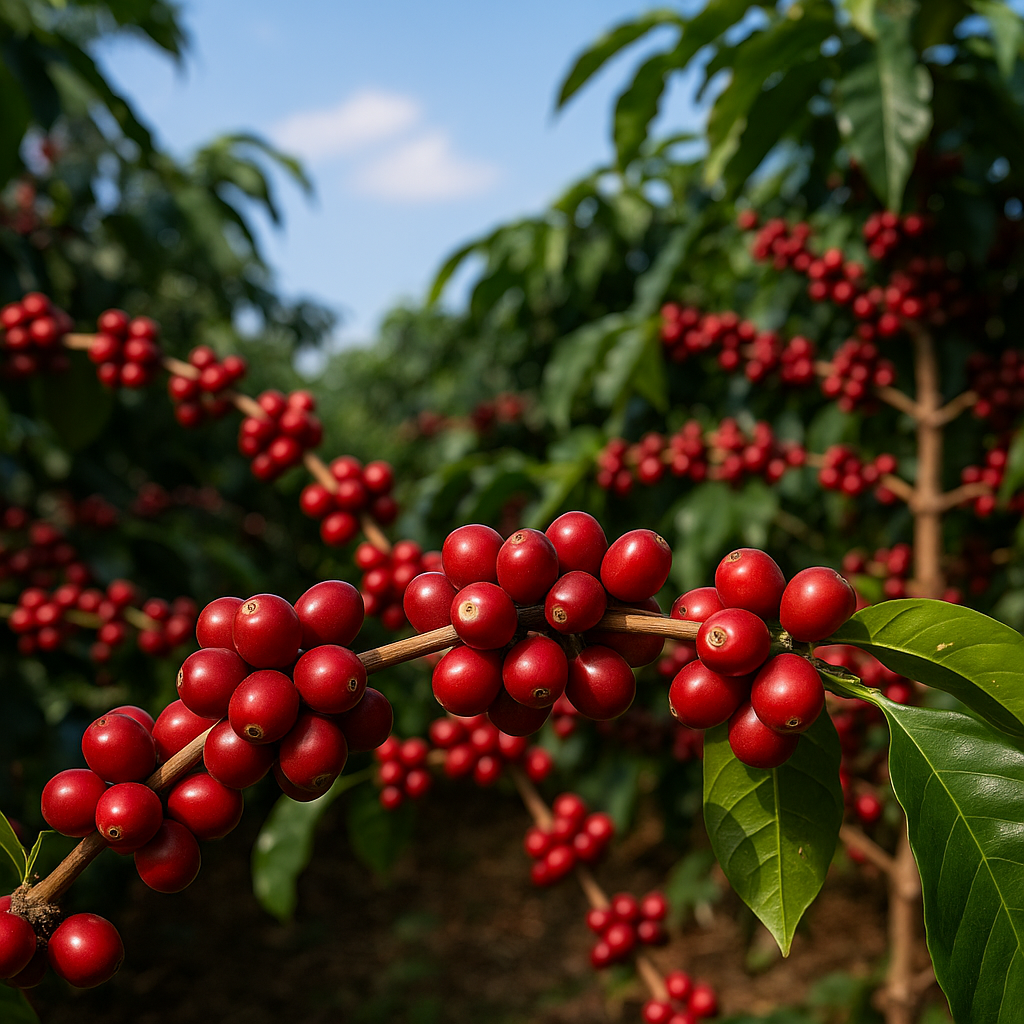
How Cooxupé Is Embedding Circularity Across Brazil’s Largest Coffee Cooperative

Dubai – August 2, 2025 (Qahwa World) –At the 21st session of the Circular Economy Working Group in Coffee, Natalia Fernandes Carr, ESG Manager at Cooxupé, presented an overview of how Latin America’s largest coffee cooperative is integrating circular economy and sustainability principles across its operations.

Speaking alongside representatives from Kenya and Brazil, Carr highlighted Cooxupé’s holistic approach to environmental, social, and governance (ESG) practices — from regenerative agriculture and waste reuse to farmer training and ecosystem preservation.

Founded in 1932, Cooxupé (Cooperativa Regional de Cafeicultores em Guaxupé) represents thousands of smallholder coffee farmers across multiple Brazilian states. In recent years, the cooperative has expanded its sustainability commitments to include climate adaptation, reduced dependency on chemical inputs, and a full embrace of circular economy practices at the farm level.

During the session, Carr emphasized several key strategies being implemented:

  • Supporting farmers in adopting bio-inputs and reducing reliance on synthetic fertilizers and pesticides

  • Promoting reuse of coffee husks and spent grounds as mulch and compost within farm systems

  • Investing in on-farm training programs for regenerative agriculture and climate-smart land use

  • Integrating monitoring tools to track environmental performance (water use, soil quality, biodiversity)

  • Collaborating with public and private partners to fund and scale sustainable initiatives

She explained that circularity at Cooxupé is not treated as a side project or marketing tool — it is embedded into the cooperative’s core business model, with a focus on long-term resilience and shared value creation.

“We view sustainability not as a cost, but as an opportunity to create stronger farms, healthier ecosystems, and better markets,” said Carr.

The cooperative also plays a key role in data collection and reporting, supporting ESG transparency across its supply chain, and helping member farmers comply with growing sustainability regulations and export requirements.

Carr’s remarks came as part of a broader Working Group session hosted by the Center for Circular Economy in Coffee (C4CEC), in coordination with the Coffee Guide Network and the International Trade Centre (ITC). The July 2025 session focused on regenerative agriculture and circular innovation across producing countries, with Cooxupé’s example serving as a model of how cooperative infrastructure can scale climate action.

Brazil’s “Water-Producing Coffee” Leads Sustainability Shift

August 2, 2025 – (Qahwa World) – Luiza Mantiça Kreimeier, Technical Advisor at the Brazilian National Coffee Council (CNC), shared insights into one of Brazil’s most ambitious regenerative agriculture initiatives — the Café Produtor de Água program — during the 21st session of the Circular Economy Working Group, hosted by the Center for Circular Economy in Coffee (C4CEC) and the Coffee Guide Network.

Kreimeier’s presentation focused on how the program is helping to restore degraded land, protect water resources, and strengthen the resilience of coffee-growing regions across Brazil. Her session formed part of a broader panel on regenerative agriculture, which included field-based experiences from Kenya and Brazil.

The Café Produtor de Água initiative, whose name translates to “Water-Producing Coffee Farmer,” promotes practical environmental actions designed to revitalize watersheds and ensure long-term water availability for rural and urban areas alike. According to Kreimeier, the program also contributes to increased farmer income and climate resilience through integrated, land-based interventions.

Among the measures adopted within the program:

  • Contour planting and terrace construction to improve water infiltration and reduce erosion

  • Tree planting and reforestation of degraded areas, particularly along rivers and springs

  • Fencing of water sources to protect recharge zones

  • Planting green manure crops between coffee rows to increase organic matter

  • Training of farmers and machinery operators on soil and water conservation

  • Monitoring of rainfall and terrace water levels

One of the program’s distinguishing features is its Environmental Services Payment (PSA) model, which compensates farmers financially for adopting practices that generate ecological benefits — including improved water flow, biodiversity restoration, and reduced chemical inputs.

“This isn’t just about environmental protection,” Kreimeier said. “It’s about improving rural livelihoods through sustainability.”

In addition to environmental outcomes, the program includes infrastructure improvements like reshaping rural roads with elevated areas to slow runoff and prevent erosion. Farmers are also trained to use tools such as rain gauges and water-level markers to monitor seasonal changes and adapt their practices accordingly.

The program supports Brazil’s broader national strategy for circular economy and environmental resilience. Kreimeier noted that Brazil now produces 27 million tons of coffee husk waste annually, underscoring the urgent need for integrated waste reuse policies. Agriculture has been identified as a key priority sector under Brazil’s National Circular Economy Plan (PLANEC 2025–2034) and the National Circular Economy Strategy (ENEC).

In closing, she invited global partners to learn from and collaborate with the program, which she described as “a living laboratory for climate-smart coffee.”

Her contribution came alongside insights from Kenyan farmer David Waweru and ESG specialist Natalia Fernandes Carr of Cooxupé Cooperative, forming a multi-regional snapshot of regenerative practices that are being piloted — and scaled — across the Global South.

David Waweru of Kenya Shares Regenerative Farming Experience at Circular Coffee Economy Meeting

Dubai – August 2, 2025 (Qahwa World) – Kenyan farmer David Lenny Waweru, owner of Ruwawa Farm, shared his practical experience in regenerative agriculture during the 21st session of the Working Group on Circular Economy in Coffee, organized by the Center for Circular Economy in Coffee (C4CEC) in coordination with the Coffee Guide Network and the International Trade Centre (ITC).

Waweru’s presentation was part of a broader discussion focused entirely on regenerative agriculture. He participated as one of the farmers involved in the Kenya Circular Coffee Pilot Project, which aims to restore soil fertility through simple, low-cost agricultural practices adapted to smallholder farmers.

In his remarks, Waweru explained how his journey toward regenerative farming began after years of facing soil degradation, declining yields, and erratic rainfall. Through the pilot project, he implemented several practices, including using coffee husks as organic mulch to retain soil moisture and reduce weed growth, composting coffee and farm waste to improve organic content and biological activity in the soil, planting cover crops to fix nitrogen and prevent erosion, constructing small rainwater harvesting pits and basic terraces to allow water infiltration rather than runoff, and integrating trees within the coffee plots to enhance shade and biodiversity.

He noted that these practices started showing results within a single farming season. “The smell of the soil changed,” he said. “Life returned — from earthworms to deeper color and increased fertility.”

In addition to the direct impact on his land, Waweru spoke about the change he began observing among neighboring farmers. Many started visiting his farm, asking questions, and gradually adopting some of the same techniques. “When they saw I wasn’t using chemical fertilizers but still had strong, healthy trees, they got curious,” he said. “Now we’re exchanging compost recipes.”

He emphasized the importance of collaborative learning among farmers, seeing knowledge sharing as a key enabler for spreading regenerative practices without needing large-scale external interventions.

Despite the progress, Waweru acknowledged several ongoing challenges, particularly the need for more manual labor to carry out these practices, and the lack of clear market incentives for farmers who apply regenerative methods.

Nonetheless, he stressed that his vision is guided by long-term thinking. “If I care for the land today, it will feed us and our children for decades. But if we deplete it, we’ll only take what we have now — and lose the future.”

He also expressed his ambition to expand his work by engaging local youth, documenting practices digitally, and collaborating with broader farming networks to share the experience.

Waweru’s contribution offered a compelling example of how smallholder farmers can lead sustainable transitions from the ground up, using knowledge, creativity, and community support. His story was one of several real-world case studies shared during the July session, alongside experiences from Brazil and other coffee-producing regions.

Why Yemeni Coffeehouses Are Redefining America’s Coffee Culture

August 2, 2025 – (Qahwa World) – While major coffee chains like Starbucks attempt to recover their image as community-centered gathering spots, a different movement is gaining traction in cities across the U.S.—one grounded not in marketing slogans but in centuries-old traditions of warmth, connection, and hospitality. Enter Yemeni coffeehouses: a fast-growing segment of cafés offering much more than a caffeine fix.

A Cultural Shift Brewing Beyond the Drive-Through

Over the past decade, the U.S. coffee market has tilted increasingly toward automation and convenience. Mobile ordering, contactless pickups, and algorithmic personalization have reshaped how Americans interact with their daily brew. Starbucks, the largest player in the field, has doubled down on digital expansion, reshaping stores to prioritize drive-through lanes and app-based orders.

Yet, this shift has created a void—what sociologists call the erosion of the “third place,” the social space that exists between home and work. In response, a new generation of cafés is emerging to fill this gap, and Yemeni coffeehouses are at the forefront.

Unlike corporate chains, these cafés emphasize conversation over convenience, handcrafted beverages over speed, and community over transactions. From Michigan to California and Texas, dozens of Yemeni-owned cafés are reimagining what coffee can mean in public life.

From Dearborn to the Nation: The Yemeni Coffeehouse Movement

The heart of this movement is Dearborn, Michigan—home to a large Arab-American population and a long history of Middle Eastern migration. It’s where flagship brands like Qahwah House, Haraz Coffee House, and Qamaria Yemeni Coffee Co. first began reshaping the coffee experience with elements inspired by traditional Yemeni hospitality.

These spaces are designed not just to serve drinks but to foster connection. Interiors often feature communal seating, soft lighting, architectural accents drawn from Yemeni homes, and a curated menu that blends espresso-based beverages with traditional Yemeni recipes such as qishr (a spiced coffee-husk drink), Adeni chai, and cardamom-infused lattes.

They also serve as cultural hubs, where both Arab-American and non-Arab customers gather in a welcoming, alcohol-free environment that stays open late—often past midnight—making them especially popular with Muslim families, university students, and young professionals seeking alternatives to bars.

A Legacy in Every Cup

Yemen’s historical link to coffee is foundational. It was in Yemen that coffee was first cultivated commercially in the 15th century, spreading from the highlands of Haraz and Ibb to the world via the port of Mokha. This legacy gives Yemeni coffee a cultural gravitas rarely found elsewhere.

Despite its deep roots, Yemen today produces less than 0.1% of the world’s coffee. Decades of conflict, economic instability, and logistical challenges have weakened its global share. Yet, efforts to revive the country’s coffee sector have intensified. Initiatives by exporters like Port of Mokha, Qima Coffee, and local cooperatives are creating new value chains focused on sustainability, farmer equity, and direct trade.

Coffeehouses in the U.S. like Arwa Yemeni Coffee, based in Texas, actively source their beans from Yemeni farms. According to co-founder Susan Shihab, every drink is a connection to Yemen’s agricultural and cultural soul. “Whether it’s from the espresso machine or brewed traditionally, what we serve reflects our heritage and supports farmers back home,” she explains.

More Than a Business: A Revival of the Third Place

The appeal of Yemeni cafés extends beyond coffee. They restore something that’s been missing in the American café experience: intentional, inclusive spaces. Unlike cafés that prioritize turnover, these spaces encourage people to stay, talk, reflect, or even hold community events.

“We don’t see ourselves as fast-food coffee,” says Omar Jahamee, co-founder of Delah Coffee in California. “Our focus is on people feeling at home, even if that means things take a little longer.”

This ethos aligns with the original concept of the “third place” coined by sociologist Ray Oldenburg—a neutral space where people from all walks of life can engage in meaningful interaction. While Starbucks once claimed to embody this concept, its shift toward automation and policy restrictions (such as limited access to store restrooms and the crackdown on unionizing workers) has eroded that image.

Yemeni coffeehouses, by contrast, are living examples of Oldenburg’s ideal: welcoming, diverse, and unpretentious spaces where human interaction takes precedence over transactions.

Challenges and Resilience

Despite their growth, Yemeni cafés face significant hurdles. Importing coffee from Yemen remains expensive due to limited supply, unstable infrastructure, and rising shipping costs. Many Yemeni-American entrepreneurs also navigate the challenges of Islamophobia, post-9/11 stereotyping, and complex immigration dynamics.

Yet these businesses are thriving—perhaps because they represent more than a trend. They offer cultural preservation, economic empowerment, and a response to social fragmentation.

Shihab emphasizes this balance: “Of course we have customers on their way to work who grab a latte and go. But what we care about most is that people can sit, converse, and experience something rooted in tradition.”

The Future of U.S. Coffeehouses?

The American coffee landscape is changing. While giants like Starbucks recalibrate, smaller culturally driven cafés—especially those with deep historical connections to coffee—are gaining ground.

Yemeni coffeehouses show that growth doesn’t have to come at the expense of soul. In fact, their success may indicate a wider desire in the U.S. for authenticity, shared experience, and human warmth in a coffee shop.

And that, more than a million app downloads or a drive-through expansion plan, may be what defines the next era of American coffee culture.

Barista Terminology | Episode 11: Milk-Based Coffee Drinks

Welcome to Episode 11 of our Barista Terminology series on QahwaWorld.com — your guide to mastering the essentials of specialty coffee. In this episode, we explore the most popular milk-based coffee drinks found in cafés around the world. From cappuccinos to cortados, each drink has its own balance of espresso and milk, with unique textures and flavors every barista should know.

Milk transforms espresso into a wide variety of drinks — each with its own texture, flavor balance, and presentation. Understanding these drinks is essential for any barista, not only for technical preparation but also for communicating clearly with customers. In this episode, we explore 15 of the most common milk-based coffee drinks served in specialty cafés around the world.

  1. Espresso Macchiato
  • Ingredients: Espresso + a small amount of textured milk
  • Ratio: 1 shot of espresso with a dollop of milk foam
  • Notes: Strong and bold with a hint of creaminess; “macchiato” means “stained” in Italian.
  1. Cappuccino
  • Ingredients: Espresso + steamed milk + thick milk foam
  • Ratio: 1:1:1 (equal parts espresso, milk, and foam)
  • Notes: Balanced and airy with pronounced foam; traditionally served in a 150–180 ml cup.
  1. Flat White
  • Ingredients: Espresso + steamed milk with microfoam
  • Ratio: Double espresso + thin layer of velvety milk
  • Notes: Originated in Australia/New Zealand; smooth texture, stronger coffee taste than a latte.
  1. Caffè Latte
  • Ingredients: Espresso + steamed milk + a thin layer of foam
  • Ratio: 1:3 or 1:4 espresso to milk
  • Notes: Creamy and mild; ideal for larger servings and often used for latte art.
  1. Caffè Mocha
  • Ingredients: Espresso + chocolate syrup or powder + steamed milk + whipped cream (optional)
  • Ratio: 1:1:1 with chocolate
  • Notes: Sweet and indulgent; often topped with chocolate drizzle.
  1. Cortado
  • Ingredients: Espresso + equal amount of steamed milk
  • Ratio: 1:1
  • Notes: Spanish in origin; less milky than a latte but smoother than straight espresso.
  1. Piccolo Latte
  • Ingredients: Ristretto + steamed milk in a small glass
  • Ratio: ~1:2
  • Notes: A miniature version of a latte; rich, concentrated, and smooth.
  1. Breve
  • Ingredients: Espresso + steamed half-and-half (milk + cream)
  • Ratio: Similar to a latte, but creamier
  • Notes: American in origin; luxurious texture and richness.
  1. Spanish Latte
  • Ingredients: Espresso + steamed milk + sweetened condensed milk
  • Ratio: ~1:2 espresso to milk (plus sweetness)
  • Notes: Sweet and strong; popular in the Middle East and Southeast Asia.
  1. Dirty
  • Ingredients: Cold milk topped with hot espresso
  • Ratio: ~1:1 or to taste
  • Notes: Visually layered; cold milk remains separate from the hot espresso briefly.
  1. Affogato
  • Ingredients: Vanilla ice cream “drowned” in hot espresso
  • Ratio: 1 scoop + 1 shot
  • Notes: Dessert-style drink; creamy, hot, and cold at once.
  1. Vienna Coffee
  • Ingredients: Espresso + whipped cream
  • Ratio: 1 or 2 shots with a generous cream topping
  • Notes: Served without milk foam; rich, sweet, and creamy.
  1. Iced Latte
  • Ingredients: Espresso + cold milk + ice
  • Ratio: Typically 1:3
  • Notes: Refreshing milk-based coffee served cold; no foam.
  1. Iced Mocha
  • Ingredients: Espresso + chocolate + cold milk + ice + whipped cream
  • Ratio: Similar to hot mocha
  • Notes: Sweet and indulgent; often garnished with chocolate syrup.
  1. Babyccino (Non-caffeinated)
  • Ingredients: Steamed milk with foam, no coffee
  • Ratio: Milk only
  • Notes: Served for children; often topped with chocolate powder or sprinkles.

Related Stories:

Barista Terminology | Episode 10: Advanced Concepts

Barista Terminology | Episode 9: Sensory Evaluation

Barista Terminology | Episode 8: Customer Service Language in the Café

Barista Terminology | Episode 7: Water & Temperature Control

Barista Terminology | Episode 6: Grind & Extraction Variables

Barista Terminology | Episode 5: Milk Texturing & Latte Art

Barista Terminology | Episode 4: Brew Methods Explained

Barista Terminology | Episode 3: The Coffee Bean – From Seed to Roast

Barista Terminology | Episode 2: Barista Tools & Equipment

Barista Terminology | Episode 1: The Coffee Bean – From Seed to Roast


Café Boulud Riyadh Launches the Kingdom’s First Cheese and Non-Alcoholic Wine Library

A new gourmet sanctuary opens at Four Seasons Hotel Riyadh

Riyadh – August 1, 2025 (Qahwa World) – In a pioneering step toward redefining the fine dining landscape in Saudi Arabia, Café Boulud at Four Seasons Hotel Riyadh has unveiled the Kingdom’s first-ever Cheese and Non-Alcoholic Wine Library. This innovative concept offers a curated, rotating selection of over 60 artisanal cheeses, premium cold cuts, and a refined range of non-alcoholic wines, curated by Philippe Caillouet, a Meilleur Ouvrier de France in service craftsmanship and Riyadh’s first French cheesemonger.

Each cheese is carefully selected to suit Saudi tastes and imported exclusively through Four Seasons channels. From hand-pressed Camembert to long-aged wheels with bold flavor profiles, every piece is aged to perfection and paired with thoughtfully chosen charcuterie and gourmet condiments.

Complementing the cheese collection is a sophisticated range of non-alcoholic wines tailored for the growing demand for upscale halal dining. Highlights include:

  • Bella – A premium Italian sparkling wine from Iris Vigneti, crafted through a patented method that preserves aromas of green apple, mint, and basil. Unpasteurized and fresh, Bella offers a refined perlage ideal for gourmet pairings.

  • Lussory – A Spanish brand known for its halal-certified Merlot, Chardonnay, and Airen-based whites. Produced using a patented de-alcoholization technique, these wines maintain their authentic grape character while being low in calories, vegan-friendly, and free from additives.

The Cheese and Wine Library is more than a tasting room—it is an immersive culinary journey. Guests are invited to explore personalized pairings under the guidance of Philippe Caillouet, who brings the finesse of a sommelier and the passion of a mentor. The full experience can be enjoyed in the elegant setting of Café Boulud, with select cheeses and charcuterie also available for takeaway.

Weekly Masterclass Series

Beginning September 2, 2025, Café Boulud will host a Cheese and Wine Pairing Masterclass every Tuesday evening, led by Philippe Caillouet.

  • When: Tuesdays | 6:30 PM – 7:30 PM (through the end of the year)

  • Experience: A guided tasting of five curated cheeses, expertly paired with condiments and a specially designed non-alcoholic wine program

  • Price: SAR 225 per guest

Whether you’re a seasoned connoisseur or simply curious, the Cheese and Non-Alcoholic Wine Library promises a refined journey through taste, culture, and craftsmanship—anchored in quality and elevated by a master’s touch.

Café Amazon Achieves Record Sales Despite Margin Pressures

Bangkok – August 1, 2025 (Qahwa World) – Café Amazon, owned by Thailand’s PTT Oil and Retail Business (OR), reported record-breaking sales of 107 million cups of coffee in the second quarter of 2025. The surge in sales was supported by the addition of 40 new outlets across its expanding network.

However, the company is facing growing margin pressures. According to CGS International Equities, the non-oil EBITDA margin is projected to decline to approximately 28%, down from 29.9% in the previous quarter. The dip is attributed to rising selling and marketing expenses.

As one of Thailand’s most recognizable coffee chains, Café Amazon operates on a convenience-driven model, with locations spread across petrol stations, shopping malls, and transit hubs. The chain plays a critical role in OR’s non-oil growth strategy. With over 4,500 stores in 11 countries, CGS International estimates that a 1% increase in the number of Café Amazon outlets could boost full-year EBITDA by 3.4%.

In Cambodia, Café Amazon added five new stores in Q2, maintaining expansion momentum despite early signs of operational challenges. While petroleum sales slightly declined due to seasonal effects, the company continues to push growth across its non-oil business units. However, rising logistical costs and softening consumer sentiment may weigh on Q3 performance.

In 2024, OR had set a target to open 300 new Café Amazon locations annually. According to Amornrat Cheevavichawalkul, Executive Vice President of Research at CGS International Securities (Thailand), most of these openings are planned for domestic markets, which deliver stronger margins compared to international operations.

Nevertheless, the brand opened only 47 new outlets in Q1 2025, falling short of its annual pace.

While Café Amazon remains a key pillar of OR’s diversification strategy, analysts caution that its promotional activities may pose downside risks. CGS estimates that a 10% price cut on coffee products could reduce full-year 2025 earnings by 6.7%.

Looking ahead, OR is also exploring new non-oil business opportunities to replace its now-defunct Texas Chicken operations, which closed last year.

Brazil Urges U.S. to Exempt Coffee from New Tariffs

Brasília / São Paulo – August 1, 2025 (Qahwa World) – The Brazilian government is urging the United States to exempt coffee from the newly imposed tariffs announced by the administration of President Donald Trump, which now affect several key Brazilian exports, including coffee and beef.

In a televised interview, Brazil’s Vice President Geraldo Alckmin said that the new 50% tariff on coffee exports would hurt both countries, emphasizing that the U.S. does not produce coffee and that the cost will ultimately be borne by American consumers.

“We will work to convince the U.S. to reduce the tariff on coffee,” Alckmin said during an appearance on TV Globo’s Mais Você morning show. “This is a lose-lose scenario.”

Official estimates show that 35.9% of Brazil’s exports to the U.S. by value are now subject to the new 50% tariff. Another 44.6% of exports remain under the pre-existing 10% tariff, while 19.5% are affected by global U.S. import tariffs ranging from 25% to 50%.

The U.S. administration claims the tariff decision is a response to what Trump has called a “witch hunt” targeting former Brazilian President Jair Bolsonaro, who is currently on trial for allegedly plotting a coup after losing the 2022 election. While some sectors like aviation, energy, and orange juice were spared from the sharp increases, coffee was not exempted.

In response, the Brazilian government is preparing an economic contingency plan to support affected industries. The plan will include financial aid, credit facilities, and tax relief, with the aim of protecting jobs and ensuring production stability.

Alckmin also noted that some of the goods initially destined for the U.S. market could be redirected to the domestic market, helping to ease inflationary pressures at home. He added that some of the support measures may be excluded from the government’s primary fiscal target, as Brazil works to eliminate its budget deficit in 2025.

Finance Minister Fernando Haddad confirmed that Brazil would challenge the U.S. decision through legal avenues—either within U.S. jurisdiction or via international bodies—stating that several sectors were unfairly and disproportionately impacted.

“We see room for corrections,” Haddad said. “Some sectors were excessively burdened, and this must be reviewed urgently.”

A New Color Standard: Scientists Uncover a Universal Color Curve for Roasted Arabica Coffee

Dubai, July 31, 2025 (Qahwa World) – In a major leap for coffee science, researchers at the University of California, Davis, have discovered that all Arabica coffee—regardless of origin or roasting method—follows the same trajectory of color change during roasting. Published in Scientific Reports, this breakthrough introduces a “universal roasted coffee color curve” that could redefine how the coffee industry measures roast levels.

Color: More Than Just a Visual Cue

Color is one of the most important indicators of coffee roast level and quality, long relied upon by roasters, cuppers, and consumers alike. Traditionally, roasters have used visual inspection or analog references like SCA color tiles and Agtron disks to assess roast degree. But such methods are often subjective, inconsistent, and influenced by lighting, perception, and sample variation.

The UC Davis team—led by Dr. Irwin Donis-González and colleagues—sought to solve this challenge using data science and commercial-scale roasting. They systematically roasted 663 coffee samples across seven distinct roast profiles using beans from three origins (Uganda, Indonesia, and El Salvador) and processed by wet and honey methods.

The result? No matter the roast style—fast, slow, or extended Maillard—or the bean origin, the roasted coffee always plotted along the same path in the CIELAB color space (L*, a*, b*). In other words, coffee color during roasting is not chaotic—it’s mathematically predictable.

What Is the Universal Color Curve?

The “universal roasted arabica coffee color curve” is a mathematical model showing how coffee color evolves over time during roasting:

  • L* tracks lightness (from 100 = white to 0 = black),

  • a* shifts from green to red,

  • b* shifts from blue to yellow.

As coffee roasts, L* decreases, a* peaks then falls, and b* follows a similar arc. These changes are closely tied to Maillard reactions, which form melanoidins—the compounds responsible for browning and flavor complexity.

Importantly, the team observed consistent Lab* values at key roast milestones—color change, first crack, and second crack—across all samples. For example:

  • L* at first crack: ~29.7

  • L* at second crack: ~19.9

This means a coffee’s visual color at these points can serve as a universal reference for roast level, regardless of how it was roasted.

Implications for the Coffee Industry

This discovery has wide-reaching implications:

  • ✅ Standardization: The curve offers a potential industry-wide framework to define “light,” “medium,” and “dark” roasts quantitatively, solving long-standing inconsistencies across brands and countries.

  • ✅ Quality Control: Roasters can use objective data to calibrate and reproduce roast profiles more accurately.

  • ✅ Instrument Calibration: Devices like Agtron, ColorTrack, and RoastVision can potentially align their scales to a shared reference curve.

Moreover, this model opens the door for real-time roast monitoring using color sensors and data-driven roasting systems, enhancing precision without sacrificing artisan control.

How Universal Is It, Really?

To validate the curve’s universality, the researchers conducted a meta-analysis of 20 previous studies involving different coffee types, origins, postharvest methods, and roasting equipment. Over 392 Lab values* were compared.

Remarkably, over 96% of data points from other studies fell within 3 units (ΔE)* of the UC Davis curve—meaning imperceptible or minor visual differences. Even Robusta coffees and baked goods like bread followed similar paths, underscoring the robustness of the color trajectory during Maillard reactions.

Only a handful of outliers—often from studies with unusual roasting methods or poor documentation—deviated significantly.

Caveats and Next Steps

While groundbreaking, the study’s scope focused on:

  • Arabica only (no Liberica or decaf),

  • Specialty-grade beans free of defects,

  • Commercial-scale roasting with 5 kg batches.

Future research may explore whether lower-grade coffees, aged greens, or decaffeinated beans exhibit different color behavior. Researchers also call for collaborations with industry to define consumer-facing standards for roast color, including sensory mapping and color-language guidelines (e.g., “reddish-brown,” “chestnut,” etc.).

Conclusion

The “universal roasted coffee color curve” is more than a scientific curiosity—it’s a transformative tool that brings objectivity to the art of coffee roasting. For an industry still dominated by subjective cues, this model could be the first step toward global consistency, better transparency, and smarter roasting.

As the specialty coffee world matures, innovations like this signal a new era where data, tradition, and flavor harmonize.

Explore more breakthroughs in coffee science at QahwaWorld.com
Stay ahead with the latest in roast technology, quality standards, and scientific insig

Arabica Coffee Prices Dip as Tariff Concerns Ease

Dubai, July 31, 2025 –( Qahwa World)  – Arabica coffee prices experienced a drop on Wednesday due to reduced concerns about potential tariffs affecting Brazilian coffee exports. The futures for September arabica coffee declined by 3.10 points (-1.05%), whereas robusta coffee futures saw an increase of 66 points (+1.97%), hitting their highest level in two weeks.

This decrease in arabica coffee prices came after Commerce Secretary Lutnick indicated that Brazil’s coffee exports might avoid a previously proposed 50% tariff. The announcement alleviated market worries over potential disruptions from Brazil, the largest producer of arabica coffee globally.

Meanwhile, robusta coffee prices benefited from dry weather conditions forecasted for Vietnam, the world’s top robusta coffee producer. Predictions of no rain in Vietnam’s key coffee-growing regions for the upcoming week provided additional market support. Furthermore, significant short positions reported by ICE Futures Europe highlighted the likelihood of potential short-covering rallies in robusta coffee futures.

Brazil’s ongoing coffee harvest continues to impact global coffee market dynamics. Cooxupe, Brazil’s largest coffee cooperative, announced that their harvest reached 67% completion as of July 25. Overall, Brazil’s 2025/26 coffee harvest was 84% completed by July 23, outpacing the prior year’s progress and exceeding the five-year average.

Coffee prices have generally weakened in recent months due to expectations of ample supply. According to the latest report from the USDA’s Foreign Agricultural Service, Brazil’s coffee production for 2025/26 is forecasted to increase modestly by 0.5% year-on-year to 65 million bags, while Vietnam’s production is expected to rise by 6.9% to reach 31 million bags, a four-year high.

Recent rains in Brazil’s Minas Gerais region, the primary arabica-producing area, have further eased concerns about drought conditions. Somar Meteorologia reported significant rainfall of 3.5 mm in the week ending July 26, well above historical averages.

Inventory levels also present mixed signals for coffee markets. Robusta coffee inventories monitored by ICE reached a one-year high, indicating a bearish outlook. In contrast, arabica inventories dropped to their lowest in three and a half months. Brazilian coffee exports experienced a notable reduction, falling by 31% in June compared to the previous year, potentially signaling tighter supply conditions.

Vietnam continues to grapple with coffee production issues stemming from drought conditions, recording its smallest crop in four years for the 2023/24 season. Additionally, Vietnam’s coffee exports in 2024 declined by 17.1%. However, exports from January to June 2025 increased slightly by 4.1% compared to the same period last year.

The USDA’s latest global outlook anticipates record-breaking coffee production for the 2025/26 season, reaching 178.68 million bags, driven by a robusta increase of 7.9%. Conversely, arabica production is forecasted to decline by 1.7%. Ending stocks for the season are expected to rise nearly 5%.

Additionally, Volcafe has forecasted a substantial global deficit for arabica coffee at 8.5 million bags for the 2025/26 season, an increase from the previous year’s deficit of 5.5 million bags, marking five consecutive years of deficits.

Luckin Coffee Powers Through Q2 2025 with Strong Growth in Sales and Store Expansion

Dubai, July 30, 2025 –( Qahwa World) – Luckin Coffee, the leading coffee chain in China, reported significant gains in the second quarter of 2025, driven by its expansive store network, supply chain investments, and growing customer base.

During the quarter ending June 30, 2025, Luckin achieved a 47% year-on-year increase in revenue, reaching RMB 12.3 billion (approximately $1.7 billion). Both its directly managed and franchised locations contributed to this growth, with sales rising by 46% and 55%, respectively.

Net profit also saw a healthy rise, increasing 44% year-on-year to RMB 1.2 billion ($174.4 million). Operating income under GAAP standards surged by 62% to RMB 1.7 billion ($237 million), while store-level operating profit grew by 42% to RMB 1.9 billion ($268 million).

While overall operating expenses rose by 45% to RMB 10.6 billion ($1.5 billion), the company managed to improve efficiency, reducing operating costs as a share of total revenue by nearly one percentage point compared to Q2 2024. Luckin credited its performance to a growing base of transacting users, which averaged a record 91.7 million per month during the period.

“Our strategy focused on scaling has driven robust growth and improved margins,” said CEO Dr. Jinyi Guo. “Our operational strengths — from fulfillment and efficiency to supply chain execution — enabled us to deliver double-digit same-store sales growth in our directly operated stores.”

The company’s rapid growth was supported by its infrastructure expansion. In April 2024, Luckin launched a 570,000-square-foot roasting facility in Suzhou City. By September, it began construction on a RMB 3 billion ($21.2 million) roasting and logistics center in Qingdao, which will play a central role in handling Brazilian coffee imports.

Luckin has deepened its supply relationships as well. In 2024, the company signed two major agreements with ApexBrasil — the Brazilian Trade and Investment Promotion Agency — to secure 240,000 tons of Brazilian green coffee over five years, valued at $1.38 billion.

In terms of footprint, Luckin added 2,085 net new outlets across China in the second quarter, bringing its domestic total to 26,117. It also expanded internationally, opening 24 stores abroad — including its first two locations in the U.S. in New York. As of the end of the quarter, the company operated 26,206 stores worldwide, 76% of which are company-operated. Outside China, its presence includes 63 outlets in Singapore and 24 in Malaysia.

With an aggressive approach to scaling, an efficient supply chain, and a keen focus on affordability and convenience, Luckin Coffee continues to reinforce its position as one of the fastest-growing coffee brands globally.

Brazil’s Accelerating Harvest and Tariff Reprieve Push Coffee Prices Lower

Dubai, July 30, 2025 ,(Qahwa World) – Coffee prices fell on Tuesday as Brazil’s harvest progressed rapidly and concerns over a potential U.S. tariff on Brazilian beans eased.

September arabica futures (KCU25) dropped by 1.72%, closing at -5.20, while robusta futures (RMU25) edged down by 0.39% (-13). The decline followed fresh updates from Brazil’s largest coffee cooperative, Cooxupé, which reported that 67% of its harvest was completed as of July 25. Safras & Mercado added that Brazil’s national 2025/26 coffee harvest reached 84%, outpacing last year’s 81% and the five-year average of 77%. The breakdown revealed 96% of the robusta and 76% of the arabica crops had been harvested by July 23.

Markets also responded to remarks by U.S. Commerce Secretary Lutnick, who indicated Brazilian coffee might be exempt from the proposed 50% tariff, calming earlier fears of supply disruptions. Those fears had previously driven prices higher on concerns about global trade imbalances.

Prices have generally trended downward in recent months amid expectations of strong global supply. Arabica recently hit an eight-month low, while robusta dropped to its lowest level in over a year. The USDA’s June report estimated that Brazil’s 2025/26 coffee production would rise by 0.5% to 65 million bags, and Vietnam’s production would increase by 6.9% to a four-year high of 31 million bags.

Weather developments in Brazil have also pressured prices. Recent rainfall in Minas Gerais — Brazil’s key arabica-producing region — exceeded 200% of the historical average, reducing drought concerns.

Meanwhile, speculative activity remains a factor. ICE Futures Europe data revealed that fund managers increased net-short positions in robusta futures to 4,628 contracts — the highest in two years — potentially setting the stage for a short-covering rally. Inventories also reflect mixed signals: ICE-monitored robusta stocks rose to a one-year high of 7,029 lots, while arabica inventories fell to a 3.5-month low of 791,842 bags.

On the export front, Brazil’s green coffee shipments declined by 31% year-over-year in June to 2.3 million bags, with arabica exports falling 27% and robusta 42%. In Vietnam, drought conditions caused 2023/24 output to drop by 20% to its smallest level in four years. While 2024 exports were down 17.1% year-over-year, the first half of 2025 saw a 4.1% rebound.

Looking ahead, the USDA projects global coffee production for 2025/26 will reach a record 178.68 million bags, up 2.5% year-over-year. This includes a 1.7% drop in arabica and a 7.9% rise in robusta production. Ending stocks are forecast to climb 4.9% to 22.82 million bags.

Despite bearish trends, Volcafe projects an arabica deficit of 8.5 million bags for 2025/26 — the fifth consecutive global shortfall, and significantly wider than the 5.5 million bag deficit in 2024/25.

For ongoing coverage of coffee prices, trade dynamics, and market analysis, stay connected with Qahwa World.