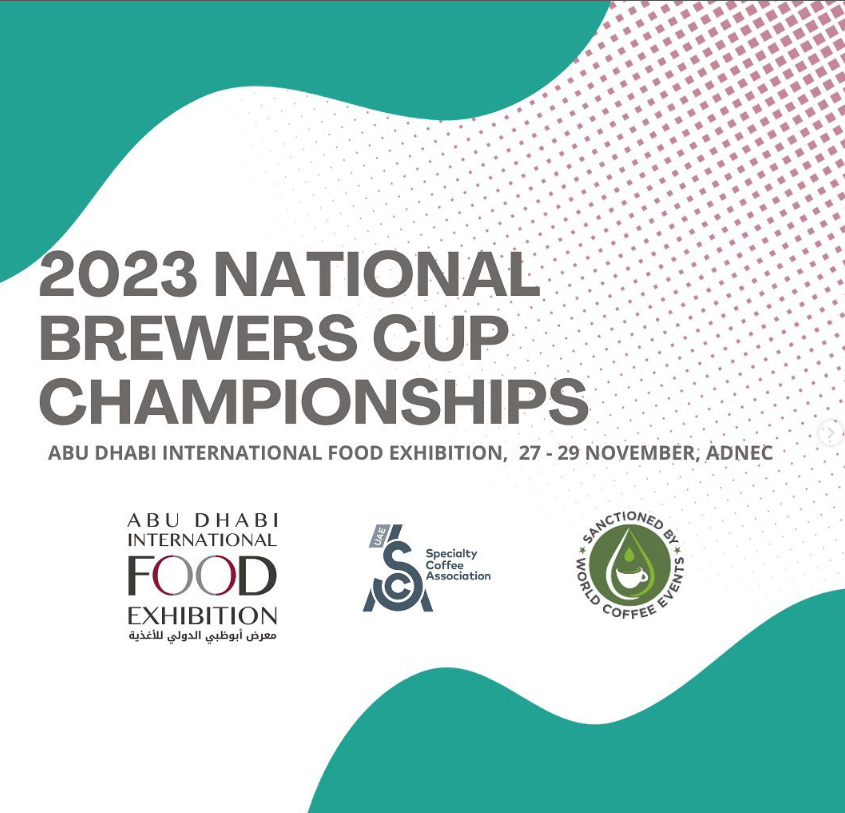
Announcement of Competitors for the 2023 UAE National Brewers Cup Championship

The Specialty Coffee Association in the United Arab Emirates has officially announced the list of contenders for the 2023 UAE National Brewers Cup Championship.

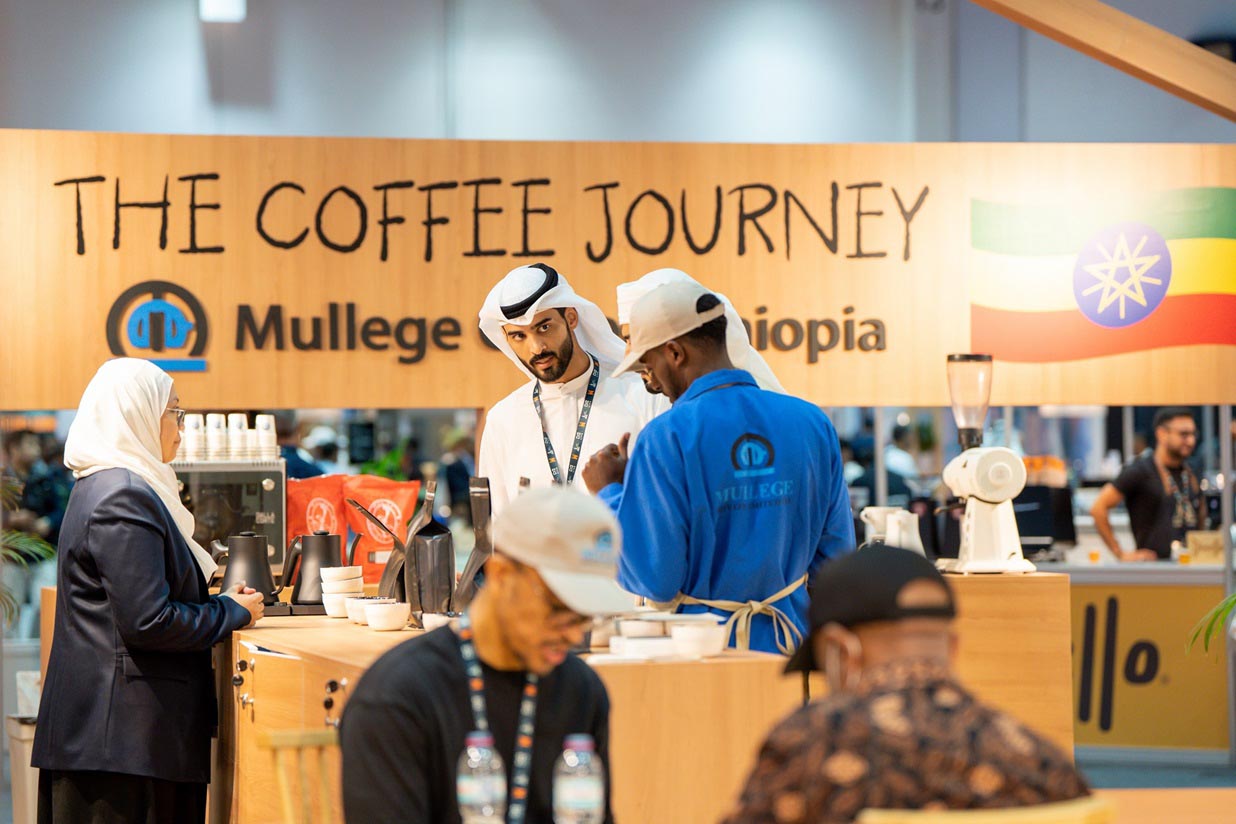
The event is scheduled to take place at the Abu Dhabi International Food Exhibition, hosted at the Abu Dhabi National Exhibition Centre, from November 27 to 29, 2023.

The association revealed the list of 16 participants on its official Instagram account, featuring individuals competing personally as well as those representing cafes or establishments. The list includes:

Mohammed Al-Omairi – Individual
Carlo Bernabe – Café Lama
Ibrahim Hamza Al-Malouhi – Espresso Lab
Jean Caboussat Espante – Behind the Cup LLC
Mariam Irin Benza – Cosmic Garden Coffee Roastery
Kevin Ndwati – Al Mukha 1450 Café
Frederic Pigeo – Archer Coffee
Samundra Kaycee – Refill Roastery
PUJA THAPALIYA – Kranti Roasters LLC
Suleiman Ali – Coffee Trader
Jason Ray Gallenia – Taibeka
Ahmed Al-Kaitob – Grilled Story
Pratama Rahatulaga – EatX LLO
Mohammed Yodah – Espresso Coffee
Kimberlin Rose Cortes – Grandma’s Roastery
Frederick Adam Robin – Blacksmith Coffee Company

The association emphasized that attendance is free for coffee enthusiasts and competition lovers. Interested individuals should register on the Abu Dhabi National Exhibition Centre website to obtain tickets for the Abu Dhabi International Food Exhibition.

The UAE National Brewers Cup Championship is a competition that focuses on the skill of brewing filter coffee. Competitors must prepare and serve three individual beverages for a panel of judges. The judges evaluate the beverages based on a variety of factors, including aroma, taste, balance, and cleanliness.

In related news, due to a low number of registered participants, the association has decided not to host the National Cezve/Ibrik Championship.


Russian Coffee Preferences Unveiled in Latest Survey

In a recent study conducted by the “Pyaterochka. Delivery” service, latte emerged as the most favored coffee choice among Russians, garnering a preference rate of 46%. Cappuccino secured the second spot at 32%, followed by Americano at 13%. This insightful analysis, based on user orders over the past year, sheds light on the nation’s coffee inclinations.

Interestingly, regional variations were observed, with the residents of the Pskov region favoring cappuccino over latte by a substantial 30%. Notably, St. Petersburg led the nation in coffee consumption, accounting for 51% of the total volume.

Cities such as Moscow, Leningrad, Novosibirsk, Tomsk, Pskov, Irkutsk, and Krasnoyarsk also stood out as coffee aficionados, according to “Pyaterochka. Delivery.”

The majority of Russians, constituting 60%, prefer brewing their coffee at home, with instant coffee being the most popular choice. Whole-bean coffee ranks second at 20%, closely trailed by ground coffee at 18%. Capsule coffee represents a niche preference, making up less than 2% of the market.

Divergent taste preferences were noted across regions, as exemplified by the higher demand for instant coffee in Moscow, Moscow Oblast, and St. Petersburg. Meanwhile, Tatarstan, Krasnodar Krai, Rostov, Sverdlovsk, and Voronezh regions displayed a penchant for coffee for home preparation. Capsule coffee found a niche following among residents of the northern capital.

The study further revealed that coffee consumption peaks on weekdays, constituting 67% of total delivery orders. This comprehensive survey offers valuable insights into the dynamic coffee landscape, reflecting the diverse preferences of coffee enthusiasts across Russia.

Global Coffee Platform (GCP)

Global Coffee Platform (GCP) is a multi-stakeholder membership association dedicated to advance coffee sustainability towards the vision of a thriving, sustainable coffee sector for generations to come. GCP enables coffee producers, traders, roasters, governments and NGOs to align and multiply their efforts and investments, collectively act on local priorities and critical issues, scale local sustainability programs and grow the global market for sustainable coffee across the coffee world. United in the belief that coffee sustainability is a shared responsibility, GCP Members and GCP’s Network of Country Platforms work together to achieve transformational change on prosperity for one million coffee farmers by 2030.

GCP Vision

A thriving and sustainable coffee sector for generations to come.

GCP Mission

Promote farmers’ prosperity, improved well-being and conservation of nature.

GCP Goal 2030

Transformational change on prosperity for more than one million smallholder farmers

GCP History

The Global Coffee Platform was born out of a need for the coffee sector to continue its pioneering role and to take a more collaborative, holistic and aligned approach to coffee sustainability with a farmer-oriented agenda. To achieve transformational change in the coffee sector, the clear need was seen for new forms of public-private collaboration and co-investments in coffee producing countries, along with gearing the different programs and initiatives towards a unified vision.

Additionally, learnings from competitive supply chain investments as well as various projects have shown a huge opportunity to achieve more impact by preventing duplication of efforts and by supporting local ownership for an enabling environment for sustainable coffee production in origin.

By combining and building on the achievements of the 4C Association’s expansive membership and the Sustainable Coffee Program’s programmatic activities, and the rich connections of the International Coffee Organization (ICO) representing its producing and consuming country government members, the Global Coffee Platform was formed in March 2016 ushering in a new era where sustainability is a shared responsibility.

Members of the Global Coffee Platform today include farmers and farmer organizations, coffee trade roasters and retailers, other supply chain actors, civil society, sustainability standards, donor agencies, financial institutions and individuals.

Supported by the GCP Team, together we address overarching and deeper sustainability challenges facing the sector including threats related to climate change, pests and disease outbreak, ageing trees and farmers.

Sip by Sip: Waqar Alhammadi’s Journey to Brewing Excellence in Specialty Coffee

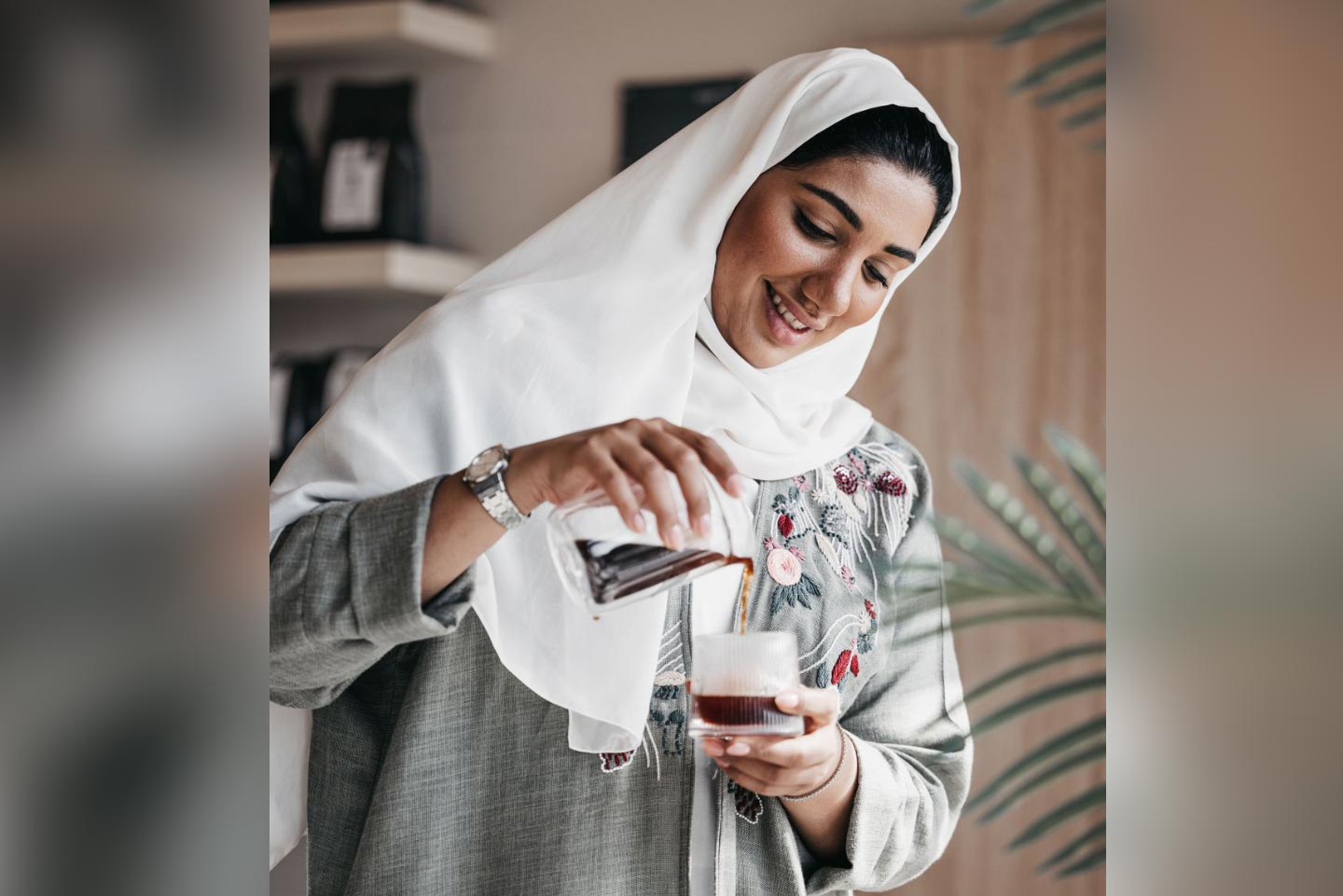
Introduction: In a world stirred by the aroma of specialty coffee, we sit down with Waqar Alhamaadi, a young Emirati whose journey into the realm of specialty coffee began amidst the challenges of the Corona crisis. From winning the UAE Aeropress Championship in 2022 to claiming the fourth spot globally, Waqar shares insights into her coffee-making odyssey and the distinctive flavors that set specialty coffee apart. Join us as we delve into her experiences, challenges faced, and the sweet success she achieved through determination and passion.

Can you tell us about your journey in the world of specialty coffee? What inspired you to pursue a career in this field?

Waqar’s journey with specialty coffee began during the Corona crisis and was limited to V60 coffee. However, it took a deeper dive after winning the Aeropress Championship in 2022. This marked the beginning of her exploration in developing her taste and experimenting with various coffee distillation methods.

What do you think distinguishes specialty coffee from regular coffee?

There are many differences between regular coffee and specialty coffee, including tastes, availability, and aroma. The prominence of flavors in specialty coffee stands out. As a coffee connoisseur, Waqar prefers coffee that is light and pleasant, akin to tea, with sweetness and acidity—qualities lacking in regular (commercial) coffee.

You are the UAE Aeropress Champion and secured fourth place globally. Can you share insights into your training and preparations for these tournaments?

Since winning the UAE Aeropress Championship, Waqar faced challenges due to limited experience. Introduced to the Aeropress tool just two weeks before the UAE Championship, she had no prior knowledge of recipes or flavors. A friend’s advice, rooted in expensive specialty coffee experience, played a crucial role in her victory. Waqar emphasizes presenting coffee to judges that she enjoys daily.

What challenges did you face at the Aeropress World Championships, and how did you overcome them?

Challenges at the World Aeropress Championship included a lack of support, finances, coaching, training space, and recipe testers. Despite the hurdles, Waqar’s determination led her to fulfill her dream. While challenges persisted, she acknowledges the support and assistance received, emphasizing her personal determination. The trip to the United States for the tournament, though arduous, resulted in the achievement of her dream.

What advice can you give to those aspiring to participate in coffee tournaments and those who want to improve their coffee-making skills?

Waqar advises aspiring participants to educate themselves through practice, reading, and studying various experiments and recipes. Confidence in oneself and one’s abilities is crucial for success.

You have become a judge in several coffee competitions. How do you judge, and what criteria do you look for in a winning cup of coffee?

Judging standards vary by competition type. For Aeropress championships, the judge’s taste is pivotal. Waqar looks for consistency in the winning cup, emphasizing the importance of prominent flavors and a preference for overpowering sweetness.

What do you find particularly exciting and rewarding about being a coffee judge? Are there any special moments that you remember during your experience as a judge?

Every judging experience holds beautiful and enjoyable memories for Waqar. She enjoys sharing sour gum candy with judges and participants, referring to the act as “calibration.”

In the specialty coffee industry, how do you stay current and on top of the latest trends and innovations?

Waqar stays updated by developing her skills through reading, attending exhibitions and workshops, and learning about new tools and equipment. Her interest extends beyond specialty coffee, covering roasting, espresso, and more.

Can you share some of the key trends or developments you have noticed in the world of specialty coffee, especially in the UAE and the Gulf region?

Waqar observes significant development in the coffee field, not only in cafes but also among cafe patrons. People have become knowledgeable about specialty coffee, its tasting nuances, and the suitable coffee crops. The passion for learning and exploration is evident, with home coffee makers willing to participate in various competitions.

What is your favorite way to prepare coffee, and why do you enjoy it so much?

While the V60 was initially Waqar’s favorite tool, the Aeropress, after winning the championship, became the closest to her heart. She enjoys it because each sip reminds her of her achievements, ambitions, and passions. The tool’s sensitivity to slight changes in standards makes the process enjoyable for her.

How important are sustainability and ethics in the specialty coffee industry, and what steps can consumers take to support these practices?

In Waqar’s “Relam” roaster, emphasis is placed on values linked to community development, education, and sustainability. Initiatives align with UN Sustainable Development Goals, focusing on quality education, responsible consumption and production, climate action, gender equality, and partnerships to achieve goals.

What future projects do you have in the coffee field that you are excited about?

Waqar aspires to further develop her skills in green coffee and roasting. She expresses a great passion for participating in brewercup tournaments.

Can you recommend any resources, books, or courses for people looking to learn more about the art of making and appreciating specialty coffee?

Waqar recommends the book “Specialty Coffee” by teacher and professor Ali Al-Diwani, along with courses offered by the International Specialty Coffee Association.

As a woman in a field traditionally dominated by men, have you faced unique challenges or special experiences, and how have you dealt with them?

Waqar received support from family, friends, and even strangers, but encountered challenges from those underestimating her due to limited experience. She emphasizes that experiences and a love for exploration shape individuals, citing her rapid success in the Aeropress Championship within two weeks.

Waqar acknowledges the invaluable moral bolstering she received from Mr. Garfield, CEO of Mokha 1450 Café. Upon recounting her tribulations during her journey to America and the subsequent cancellation of her ticket, she vividly recollects his reassuring words: “Waqar, book the ticket, and I will promptly refund its cost. We are in this together… unequivocally by your side.”

What is your advice to someone interested in starting their own business in the coffee field, especially in the UAE?

Waqar’s advice is to “Believe in yourself, trust your abilities, and your passion… There is nothing impossible. Live every experience to its fullest… and enjoy every moment and every sip.”


Global coffee landscape shifting from traditional techniques to smart machines and technologies

Being one of the world’s most widely used commodities, coffee has always been greatly influenced by significant economic and social trends. In recent years, the industry has experienced substantial changes, aligning with global trends such as technological integration, eco-consciousness, and customisation. With coffee being considered a daily staple in the modern world, the ripple of this increased attachment can be witnessed in global coffee markets. In the Middle East, where coffee is considered a tradition that has been woven into the fabric of the region, the strong gusts of this transformation can be sensed.

With advanced technologies infiltrating every facet of human life, they are also reshaping traditional coffee consumption trends. The innovative concept of Digital Brew adds a new layer of convenience to the coffee landscape by skilfully merging traditional practices with cutting-edge technology. From smart brewing to blockchain traceability and virtual tasting, these advanced technologies are transforming the coffee industry to be more personalized, transparent, and sustainable. These changes are not limited to the dynamic Middle East coffee industry but are also evident in the global market.

According to reports the worldwide consumption of coffee is expected to grow 4.47 per cent, annually. This market report signifies the necessity to elevate the industry practices to seamlessly cater to the growing needs. In line with this, cutting-edge solutions equipped with Artificial Intelligence (AI), Internet of Things (IoT) connectivity, and advanced brewing algorithms are opening vast possibilities.

The integration of AI into coffee machines marks a significant leap in the industry. The potential of these machines is not limited to simply brewing a cup of coffee, it is equipped with features to adapt to personal specifications. The seamless blend of technologies and coffee brewing craftsmanship has brought about a trend of advanced machines that are integrated with cloud computing systems and mobile apps. Similarly, customer’s expectations from machines have gone beyond simply brewing a cup of coffee, they look for a seamless fusion of functionality and aesthetics.

In addition to digitisation, sustainability is another prominent trend fuelling a revolution in the coffee market. The coffee industry is currently undergoing a significant transformation through the adoption of sustainable coffee technologies. Heightened environmental issues and growing customer demand for ethically sourced products are the driving forces behind this shift. This approach is actively reshaping coffee farming practices, improving traceability, and fostering eco-consciousness throughout the supply chain.

The coffee sector has been actively adopting eco-conscious measures like precision agriculture, blockchain technology, and eco-friendly packaging solutions. Furthermore, certifications like International Fairtrade Certification, guarantee the coffee was cultivated adhering to sustainability and labour guidelines. In alignment with the efforts to promote the circular economy, coffee machine manufacturers are also making significant strides in designing machines with a heightened focus on energy efficiency, recyclable materials, and sustainable manufacturing methods. With the coffee sector transitioning towards a sustainable path, the UAE, and the wider Middle East region, which is renowned for its legacy in the industry, is also actively promoting the environmentally responsible coffee culture.

With the extensive influence of cutting-edge technologies and the changing preferences of consumers, the coffee industry is undergoing a third wave of evolution. The movement has led to the proliferation of specialty coffees, innovative coffee brewing techniques, and artisanal craftsmanship. The increasing appeal of specialty and artisan coffee brings a range of benefits from supporting small-scale farmers and local businesses to fostering a deeper appreciation for coffee’s diverse flavours and origins. It also gives the artisans the flexibility to craft their signature drinks and market their unique brewing methods. The implications of the current trend can also be witnessed with the growing demand for various brewing features in coffee machines like automatic, pre-grind, and pre-infused. Cutting-edge coffee machines like drip coffee machines, steam coffee machines, and capsule machines, are currently pushing the boundaries and ensuring continued industry growth.

According to reports, the global specialty coffee market size is expected to grow at a compound annual growth rate (CAGR) of 11.3 per cent from 2023 to 2030.  The impact of the third wave can also be experienced through new emerging brewing techniques.  Currently, the trending brewing techniques ruling the coffee landscape are cold brew and nitro cold brew.

The coffee industry, which traces its heritage back to the ancient period, is now expanding by adapting to changing consumer preferences and technological advancements. By integrating with innovative digital solutions, the industry is now ensuring convenience, precision, and customisation. The ever-evolving coffee landscape is now set to expand its growth, especially with heightened attention towards integrating technological and sustainable practices into the industry. The events like World of Coffee Exhibition 2024, which will be held from January 21 to 23, 2024 at the Dubai World Trade Centre (DWTC) is set to boost the industry’s growth prospects. The event, organised by DXB LIVE in collaboration with the Specialty Coffee Association (SCA), will gather industry professionals, exhibitors, and coffee enthusiasts to highlight the latest trends in the coffee industry.

A busy program of World of Coffee Dubai 2024 and events promoting companies in the global coffee industry

The World of Coffee 2024 Exhibition, one of the most anticipated events in the coffee industry, announced the holding of a group of events aimed at enhancing cooperation and partnership between exhibitors and specialized visitors, and exploring the features of the future of the coffee industry, which is witnessing great prosperity.

The agenda of the third edition of the World of Coffee Exhibition, organized by DXB Live, the arm providing integrated event organization and management services at the Dubai World Trade Centre, from 21 to 23 January 2024, includes a wide range of events and activities, including:

This is the Roosters Village area and the Cabin Room and Brew Bar suites; The exhibition devotes a wide space to sustainability in the field of coffee, including organizing a group of dialogue sessions and specialized workshops on sustainability, the best methods for exploiting resources, and sustainable practices that embody the global coffee community’s commitment to responsible production.

The exhibition will witness the launch of a number of new events, including the Franchise Village, a space that brings together leading brands wishing to expand their business in the region, with serious investors looking to invest in establishing branches of well-known brands in the field of coffee. This enhances the exhibition’s position as an important platform for exploring horizons and opportunities for growth and cooperation between industry leaders, including merchants, farmers, distributors, buyers, and roaster owners.

The “Buyers Program” and the “Buyers Lounge” are among the most prominent programs and facilities included in the exhibition, as the program allows for the preparation of scheduled meetings between buyers, farmers, merchants, distributors, roaster owners, and nutrition managers and officials in hotels, restaurants, cafes, and airline companies, so that the meetings take place according to a specific schedule and dates. In advance in the buyers’ lounge, which adopts an innovative methodology that contributes to enhancing communication and interaction between industry leaders, providing an ideal environment and a unique work atmosphere for cooperation, building partnerships, and discussing potential deals between parties.

The event is characterized by holding a series of dialogue sessions and free workshops, and the space allocated for the sessions will be doubled in this session to establish two large theaters, one for the dialogue sessions of the Specialty Coffee Association, and the second for the Unfiltered Theater, which will host expanded dialogue sessions in the presence of dozens of international experts and specialists, to talk about new trends, discoveries, and the latest products. In the world.

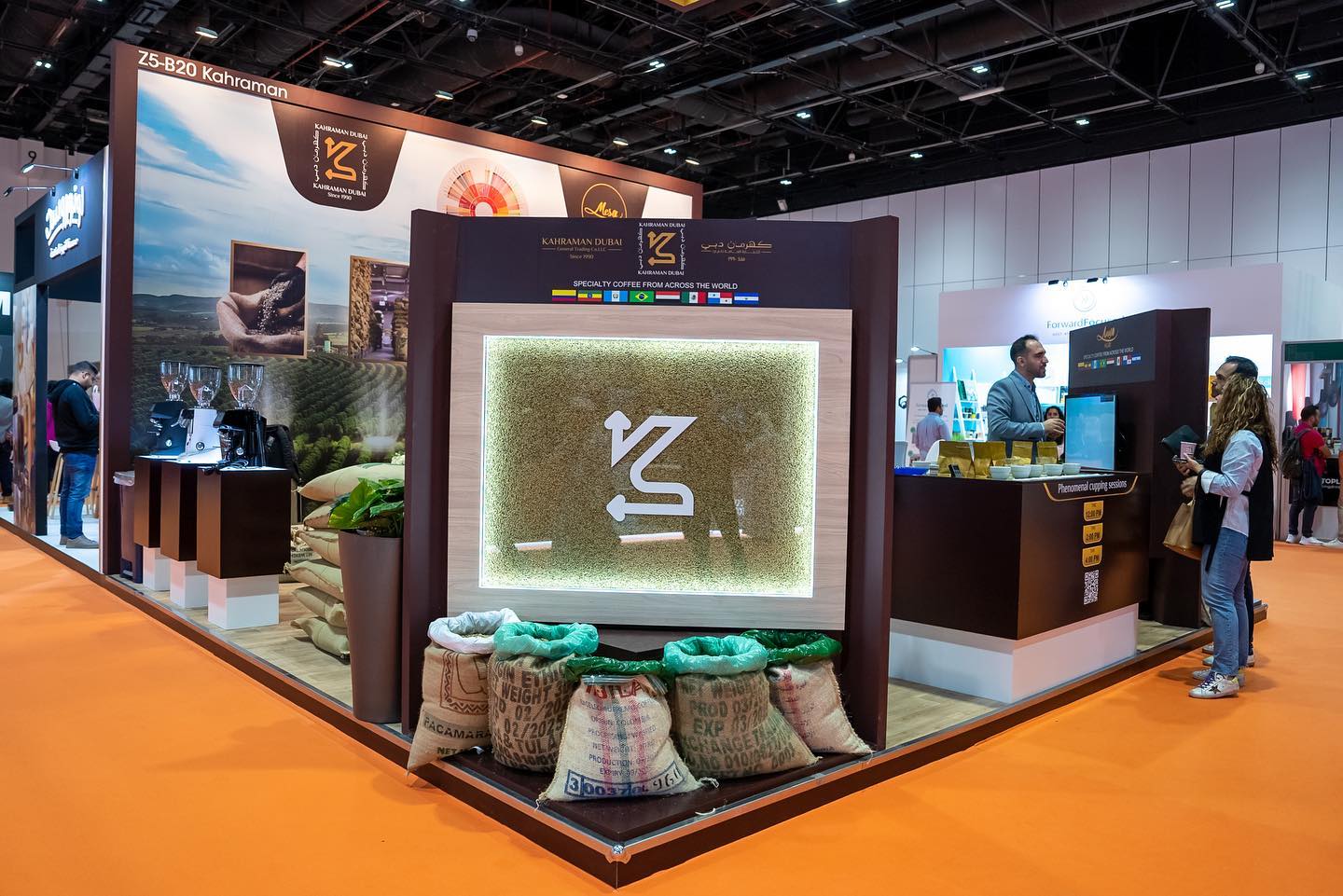
The “Roosters Village” area and the “Cabinet Room” and “Brew Bar” pavilions are also doubling their area to meet the increasing demand for participation. The “Roosters Village” area is considered one of the most attractive areas for the public, and it has similar display platforms equipped with a coffee machine and a water source, while Exhibiting companies bring in their own coffee beans and prepare the coffee; The region brings together dozens of brands from all over the world, with specialized visitors, providing them with the opportunity to taste roasted coffee prepared in different ways.

The “Cabinet Room” pavilion allows its visitors to taste coffee varieties, evaluate their quality, and compare them. Each company displays for an hour to buyers and the public a group of coffee flavors to taste and compare between them. As for the “Pro Bar” pavilion, it consists of two large platforms that can accommodate 12 companies. Each of them can use the platform for 3 hours to prepare different coffee flavors, while visitors and buyers move between companies to taste the coffee and watch the barista prepare unique coffee drinks in innovative ways

  • A platform for innovation

In order to encourage innovation and development, the exhibition’s activities will include the Coffee Innovation Platform Award, “Coffee Design Award,” and the Best New Product Award, “Best New Product Award.” “Coffee Design Award” is concerned with keeping pace with the latest developments in coffee preparation techniques and equipment, and the latest sustainable practices. The award areas include: design, packaging, branding, cups and coffee pampers. The contestants submit their designs on the website of the two competitions before the exhibition, so that the judges can choose the winner of the competition’s logo for the year, which is what all contestants passionately seek to win the International Specialty Coffee Association Award as the best design, or the best product in the world for the year 2024. The exhibition will witness the organization of regional and international competitions to provide a comprehensive experience for coffee lovers.

  • Enhance participants’ experience

In this regard, Khaled Al Hammadi, Senior Vice President of DXB Live, said: “We seek to strengthen the position of the World of Coffee Exhibition to be the first global destination for coffee industry leaders. We are keen for the event to go beyond the concept of traditional trade exhibitions, to become the first global platform for those interested and experts.” And specialists to keep pace with the latest industry trends, and explore innovative ways and smart, environmentally friendly methodologies to enhance the growth and sustainability of the sector.” He added: “The event is an important opportunity to learn about the sources of coffee beans, roasters and coffee supply chains, and to review the latest developments in the fields of packaging, distribution and production. There is no doubt that the exhibition’s activities “The various programs, especially the buyers’ program, will enhance the participants’ experience and enable them to communicate directly to grow their businesses and ensure their sustainability.”

  • A leading platform

The Dubai edition of the World of Coffee exhibition is the preferred destination for companies aspiring to strengthen their presence in the Middle East and benefit from the enormous potential of the coffee markets in the region in light of the growing demand for high-quality coffee and the increasing demand for modern café chains. DXB Live seeks to provide a pioneering platform that enhances the growth and sustainability of the coffee industry, by setting new standards for the coffee industry.

The importance, efficiency and innovation in organizing international exhibitions, and providing a platform that meets the needs of the various poles of the coffee industry, and brings together brands, farmers, producers, distributors, experts and specialists under one umbrella, to share their expertise and experiences, display their latest products, and develop their cooperation with potential partners and buyers.

Is Morning Coffee Safe for Your Stomach?

Coffee is a favorite beverage for many, but there’s a lot of talk about whether it’s bad to have it on an empty stomach. Dr. Trisha Pasricha, a gastroenterologist from Massachusetts General Hospital, shared some insights in a piece for The New York Times.

She explained that scientists started studying coffee’s impact on the body, especially the intestines, back in the 1970s. The verdict? Coffee isn’t seen as a potential threat to the stomach. The stomach has a protective layer of mucus that shields it from what we swallow, even from its own natural acidic environment. So, disrupting this defense requires something quite powerful.

Research shows that substances like alcohol, tobacco smoke, and certain medications can suppress the stomach’s defenses, but coffee doesn’t fall into that category. Even a 2013 study in Japan with over 8,000 participants found no significant link between coffee consumption, even in higher quantities, and stomach or intestinal ulcers.

While coffee can speed up the colon’s work and stimulate bowel movements, it slightly increases stomach acid production. Drinking coffee on an empty stomach might cause temporary heartburn, but it’s unlikely to harm your stomach.

However, the data isn’t crystal clear. Despite a dozen and a half studies worldwide, there’s no consistent link between coffee and heartburn symptoms.

Dr. Pasricha advises paying attention to your body’s reaction. If you often feel a burning pain in your chest or a sour taste after coffee, consider cutting back or adding more milk to neutralize stomach acid. Ultimately, listen to your body when it comes to your coffee routine.

Surprising Facts: How Much Coffee We Drink in a Lifetime?

A recent study reveals that the average coffee drinker in the UK consumes approximately 62,000 mugs of coffee over their lifetime. The survey, which included 2,000 caffeine enthusiasts, found that individuals enjoy an average of three cups per day, with the first cup typically enjoyed at 7 a.m.

Notably, 41 percent of respondents reported difficulty managing daily tasks before their initial caffeine boost, while 43 percent admitted to consistently ordering the same coffee for as long as 21 years.

The study also provided intriguing insights into coffee preferences. The most popular choices were:

  • Latte: 21 percent
  • Cappuccino: 20 percent
  • Americano: 18 percent
  • Flat White: 15 percent

Interestingly, 74 percent of participants were not aware of the specific type of coffee bean in their preferred beverage. While 80 percent recognized Arabica beans, awareness of other varieties was significantly lower: only one-third were familiar with Robusta, nine percent knew about Liberica, and a mere eight percent recognized Excelsa.

Additionally, the survey, conducted by OnePoll, found that 51 percent of respondents were unclear about the difference between cold brew and iced coffee. The primary distinction is in the preparation process: cold brew is made by steeping coffee grounds in cold water for 12 hours, whereas iced coffee is simply regular coffee that has been cooled.

Brazil Specialty Coffee Association

The Brazil Specialty Coffee Association is a non-profit member association created to elevate the standards of excellence and enhance value in the production and marketing of Brazilian coffees.

Although recognized widely as the world’s largest coffee producing origin, little is known about the country’s highest quality specialty coffees. Coffee Strategies was selected to help the Brazil Specialty Coffee Association to better position the coffee origin — specifically within the North American market and conduct market promotions for the period of one coffee growing season.

During the engagement, Coffee Strategies conducted brand image market research, developed an annual marketing communication plan for Brazil within North America, assisted with in-country events for green coffee buyers, wrote English language promotional materials and conducted coffee tasting events across the USA in conjunction with Cup of Excellence competitions, a centerpiece of the BSCA promotional strategy.

As a result of these efforts and an aggressive social media campaign, BSCA measured record results at the 2013 Cup of Excellence Early Harvest auction, doubling the top lot price over its prior year and increasing total revenues by more than 30%.

Coffee Value Chain Consulting for Agriculture and Economic Development

Improve productivity and value of trade for farmers

Policy Guidance

Assistance designing national agriculture policy and enabling business environments that improve income from coffee production as a sustainable, high-value specialty crop.

Market Access

Connecting exporters to suitable international market players who have the incentive, and ability to influence a change in the market system for coffee. Design and execution of programs that create sustainable trade linkages between buyers and coffee producers through public-private partnerships and direct trade activity

SME Consulting

Small and medium enterprise management consulting, including business planning, marketing and brand creation, communication, risk analysis, inventory and personnel management training and best practices to improve smallholder or SME performance

Trade Associatons

Industry trade association facilitation, organization, and capacity building. Working with industry stakeholders to create functional producer/exporter organizations to manage domestic and international issues

Technical Reports and Studies

Coffee industry technical research reports and custom studies that identify quantitative and qualitative opportunities for improvement

Market Research

Market analysis reports showing coffee trends, consumption data and other indicators to identify or evaluate strategic market opportunities for trade

Standards and Evaluation

Coffee quality assessment and creating new quality grading standards or defining best practices in agriculture, harvesting, processing, sorting, and storage

Equity and Diversity

Advice on how to make the a coffee sector more inclusive (gender, youth, disabled and disadvantaged) through identification of relevant market actors who have the right incentive to make it happen in a sustainable way

Certification Assistance

Sustainability standards and certifications, evaluating certification options and guidance to following program criteria for certification brand marks including Rainforest Alliance, Fair Trade (US and International), certified organic, Kosher and more

Coffee Operations and Product Consulting

Management Consulting

Management consulting, including business strategy, marketing and brand creation, communication, risk analysis, inventory and personnel training

Facility Design and Engineering

Coffee consultants to design and engineer green storage facilities, roasting plants, quality control laboratory and all necessary equipment and tools that will be best suited to meet quality goals and production forecasts

Green Coffee Buying

Green coffee purchasing strategy to meet the quality of any product line from shelf blends through rare and distinctive specialty lots.

Review and evaluate company procurement of green coffee, compare to best industry practices (origins and qualities, suppliers, contracts, pricing, buying plan (forward, spot), substitutions for market/quality fluctuation, sourcing alternatives, management of integrated logistics, examination of forecast demand allocations vs actual results).

Staffing and job functions

Specify the job functions of employees that will work at the facilities and, as appropriate, assist with candidate evaluation and hiring. Develop and document daily procedures performed by each job role.

Brand Development

Develop consumer and wholesale B2B brands and branded products in all coffee categories

Product Development

Product development for coffee beverages, roast and ground coffee, single serve, and ready-to-drink products. Develop or evaluate coffee blending practices and sourcing for product mix (origins, blend compositions, component substitutions, coffee for flavoring, certified coffees), as well as, manufacturing procedures related to pre- and post-roast blending.

Risk Management and Financial Controls

Develop or review risk management procedures and financial controls, compare to best industry practices (internal communication, payment terms, inventory levels, derivatives and hedging, ethical sourcing, pre-approvals, sampling, liquidity risk, reporting)

RFP Specifications and Administration

Issue and evaluate requests for proposals, evaluate and / or locate best suppliers of coffee-related capital equipment (e.g. roaster, packaging machines), services and supplies.

Quality Assessment

Coffee consulting to assess and grade coffee samples for quality and taste, evaluate and approve samples for purchase and continue to provide those services on a long-term basis to ensure consistency.

Coffee Market Consulting and Subject Matter Expertise

Learn more about the global market for coffee and how to reach it better

Coffee Subject Matter Expertise

Subject matter expertise in coffee production and trade at every point across the value chain to aid business decision making, investments, due diligence in mergers and acquisitions, or as an expert witness in coffee-related litigation

Market Research

Custom market analysis reports showing coffee trends, consumption data and other indicators to identify or evaluate opportunities for trade. Producer analysis reports evaluating production quantities, quality, export markets for trade, and other requested factors by geography or market segment

Company Research

Analysis of public and private industry stakeholders, position, financial performance, market share and outlook

B2B Coffee Marketing

Coffee marketing that communicates an origin brand message to the global coffee trade. We work with coffee industry trade media, perform public relations activities, organize field events and missions or national coffee festivals.
ASEAN Coffee Federation (ACF)

ASEAN Coffee Federation (ACF) was first conceived by a group of passionate ASEAN coffee industry players who are in constant pursuit of improving and developing the quality of ASEAN’s coffee beans, so as to compete in the world stage.

The inaugural meeting was held at Pattaya, Thailand in early 2010 where the members held their first brainstorming session on what they could do together in order to promote ASEAN coffee via a common vehicle, ACF. A subsequent meeting was held in Pakse, Laos on the 5th August 2010 where member country from Singapore, Thailand, Laos, Indonesia and Malaysia signed the historical Memorandum of Understanding (MOU) inking the pro temp formation of the Federation.

The following year, ACF welcomed its 6th member country, the Philippines, making ACF a stronger voice representing the ASEAN coffee scene.

On the 14th March 2013, Singapore, the formal formation of the ASEAN Coffee Federation was completed with its adoption of the Federation’s Constitution by the Board which had also held its inaugural constitutional election of coffee bearers with the President of Singapore Coffee Association (SCA), Mr Victor Mah, elected as the Founding President of ACF.

Vision

To be the Key Industry Representative of ASEAN’s Coffee Industry

Objectives & Mission

To establish a platform for common dialogue through regular meetings
To educate farmers in productivity improvements
To share market information about coffee on a global scale
To share the best farms practices through implementation & certification through GAP for coffee
To promote ASEAN coffee to the world

ASEAN Coffee Institute (ACI)

ASEAN Coffee Institute (ACI) is the official coffee training and education body formed by the ASEAN Coffee Federation (ACF). Established in 2021 with its headquarters in Singapore, the institute’s objectives are to:

i) establish coffee quality and standards for the ASEAN region reaching out to the world
ii) provide affordable coffee education to all
iii) promote sustainability practices to coffee farmers
iv) encourage sustainable sourcing by traders, roasters and cafe owners

Chairman

Mr. Victor Mah
Chairman & President
Mr Mah has over 40 years of experience in the coffee industry and is a well-known personality in the coffee space in the Asia Pacific region, particularly for his expertise in cup quality. Mr Mah serves as the President of Singapore Coffee Association as well as the President of the ASEAN Coffee Federation which Singapore is one of the member countries.

Coffee Programmes

ASEAN Coffee Institute has thoughtfully designed various coffee programmes to help kick-start your coffee career. With all the different course offering, our certification will open doors of opportunity whether as a barista, café owner, mixologist or sensory expert.

ASEAN Coffee Institute Barista Certification (Level 1)
ACI Barista Certification Level 1 is an introductory course to everything you need to know as a junior barista. This course includes both theoretical session on the basics of the bean and practical session on how to operate and prepare coffee using an espresso machine. Upon completion, you will gain a better understanding on what goes into each sip of coffee: from growing, harvesting, processing, roasting and brewing. At the same time, you will be equipped with the fundamental and necessary skills needed to work in a café as a barista.

ASEAN Coffee Institute Barista Certification (Level 2)
ACI Barista Certification Level 2 takes your existing barista skills up a notch. You will learn all the practical skills needed to craft a great cup of coffee, including dialing in espresso, latte art techniques, as well as customer service and workspace efficiency. Besides building up your confidence and developing competency to run an espresso bar, this course is your path towards espresso mastery.

The green coffee industry needs $452 million to overcome the “innovation crisis”

A recent white paper released by World Coffee Research (WCR) highlights a critical shortfall in research and development (R&D) funding within the coffee sector, posing a threat to the diversity and quality of green coffee. The non-profit organization estimates that an annual investment of approximately $452 million is essential over the next decade to sustain the current state of coffee that consumers worldwide have come to enjoy.

Without such investments, the study suggests that the industry could witness widespread consolidation in coffee production, accompanied by a significant decline in the diversity of high-quality arabica coffee varieties and their origins. This potential crisis is primarily attributed to the impacts of climate change and the pressures faced by producers amid escalating global demand.

The white paper refers to the $452 million financial benchmark as an “investment gap” and characterizes the situation in the global green coffee sector as an “innovation crisis.” Dr. Mywish Maredia, the lead researcher and a development economics professor at Michigan State University, emphasizes that this scale of underinvestment is unsustainable if the world wishes to continue enjoying its favorite beverage. Increasing global investments in coffee R&D is seen as crucial to fostering innovation across various countries, addressing climate change challenges, and combating poverty while averting further consolidation of production.

WCR, a non-profit based in Portland, Oregon, advocates for increased funding across the global coffee industry, which it claims has been disproportionately underfunded compared to other agricultural sectors of similar consumer value. The authors specifically highlight the need for R&D funding in the coffee sectors of Latin America and Africa, citing historical deficiencies.

The paper unveils previously undisclosed financial statistics, revealing that the current global investment in coffee R&D stands at $115 million per year, with 90% originating from the public sector and 10% from the private sector. This amounts to just under half a cent for every dollar of green coffee produced globally. Despite green coffee constituting about 4.8% of the total value of agricultural output in 45 coffee-producing countries, the investment in the sector is merely 1.8%, the paper contends.

In conclusion, the authors assert that a nearly four-fold increase in R&D investments is imperative to prevent further consolidation and loss of commercial green coffee diversity. They advocate for allocating a fraction of retail profits, stating, “For an industry with a retail value of more than US$200 billion, this would mean setting aside less than 0.3 cents for every $1 of coffee retailed to consumers.” The urgency of increased funding is underscored as essential to safeguard the future of the global coffee industry.