SCA Releases Updated Rules for the 2025 World Barista Championship in Milan

The Specialty Coffee Association (SCA) has officially released the updated rules and regulations for the 2025 World Barista Championship (WBC), set to take place from October 17–21 at HostMilano in Milan, Italy.

This year’s updates focus on harmonizing procedures across all seven World Coffee Championships. Key changes include the standardization of competitor registration and complaint submissions via an online form, an updated definition of espresso to offer greater flexibility, and clarified penalties to ensure consistency in judging.

Additionally, the appeals and complaints process has been streamlined at both the national and world levels to match the new unified protocol for all 2025 championships.

The 2025 edition also marks a major milestone: the 25th anniversary of the WBC. Throughout the competition season, the SCA will celebrate the contributions of the global coffee community that has shaped the WBC into one of the industry’s most prestigious events.

These rule updates were overseen by the WCC Competitions Strategic Committee. The full documents — including rulebooks, change summaries, scoresheets, and appeals forms — are available at: wcc.coffee/rules-regulations

Upcoming World Coffee Championship Events in 2025:

  • Houston, USA | April 25–27
    World Coffee Roasting Championship at the Specialty Coffee Expo

  • Jakarta, Indonesia | May 15–17
    World Brewers Cup at World of Coffee Jakarta

  • Geneva, Switzerland | June 26–28
    World Latte Art, Coffee in Good Spirits, Cup Tasters, and Cezve/Ibrik Championships at World of Coffee Geneva

  • Milan, Italy | October 17–21
    25th World Barista Championship at HostMilano

Whether attending in person or online, coffee professionals and fans are invited to join the global community in celebrating a quarter-century of barista excellence.

JDE Peet’s Provides Periodic Update on Share Buyback Programme

JDE Peet’s (EURONEXT: JDEP), the world’s foremost pure-play coffee and tea company, today announced that it has repurchased 26,582 ordinary shares between March 31 and April 4, 2025. The shares were acquired at an average price of EUR 20.41 each, representing a total investment of EUR 0.5 million.

This recent repurchase is part of the ongoing EUR 250 million share buyback programme, initiated by JDE Peet’s on March 3, 2025. As of today, the company has repurchased a total of 3,443,342 ordinary shares, representing an overall consideration of EUR 63.8 million.

The company issued this update in compliance with the disclosure and reporting obligations stipulated in Article 2(3) of the EU Regulation 2016/1052, outlining technical standards for share buyback programmes.

Further information regarding the progress of the buyback programme is available here.

Background:
JDE Peet’s (EURONEXT: JDEP), the leading global pure-play coffee and tea company, has announced the repurchase of 26,582 shares between March 31 and April 4, 2025, at an average price of EUR 20.41 per share, totaling EUR 0.5 million. This brings the total repurchased shares under its EUR 250 million buyback programme, initiated on March 3, 2025, to 3,443,342 shares, worth EUR 63.8 million.

5 Reasons Why You Should Add Coconut Oil to Your Morning Coffee

Many people are always looking for new ways to enhance the flavor of their morning coffee, whether by adding whipped cream, caramel, or even marshmallows. However, a new trend is gaining increasing popularity — adding coconut oil to coffee. Some consider this combination a healthy option that offers multiple benefits alongside a unique taste. But is it worth trying? Let’s explore the potential benefits of this blend based on recent scientific studies.

1- Boosting Metabolism

Coconut oil is rich in a type of saturated fat called “Medium-Chain Triglycerides” (MCTs), which studies suggest can enhance metabolism and help burn more calories. When combined with coffee, the coconut oil can increase the number of calories burned throughout the day, making it easier to manage weight. However, it’s important to consume it in moderation to avoid excessive fat intake.

2- Reducing Appetite and Supporting Weight Loss

Adding coconut oil to coffee may help reduce hunger. The ketones produced by the liver after consuming coconut oil help curb appetite. Additionally, caffeine in coffee has appetite-suppressing effects. This combination can be useful in controlling overeating when trying to lose weight. However, it’s important that this mix is part of a balanced diet rather than a meal replacement.

3- Increasing Energy Levels

While caffeine is known to promote alertness and energy, coconut oil contributes to energy in a different way. The healthy fats in coconut oil are quickly absorbed by the liver and converted into energy, providing the body with the fuel needed to function properly. However, it’s crucial not to overconsume coconut oil, as large amounts could lead to fat buildup in the liver.

4- Enhancing Heart Health and Immunity

Studies have shown that coconut oil can raise levels of “good” HDL cholesterol, which supports heart health. However, it’s worth noting that some studies also suggest that coconut oil may increase “bad” LDL cholesterol levels in certain cases. In addition, coconut oil contains lauric acid, which has antibacterial and antiviral properties, potentially strengthening the immune system and reducing the risk of various illnesses.

5- Supporting Brain Health and Mental Performance

Coconut oil’s fatty acids provide a crucial energy source for brain cells, as they are converted into ketones that boost brain performance. Some studies indicate that these ketones could help improve symptoms in Alzheimer’s patients, making coconut oil an excellent addition to coffee for enhanced mental clarity and focus at the start of the day.

How to Prepare:

To make coconut oil coffee, start by adding one tablespoon (about 14 grams) of coconut oil to your hot coffee. Stir well to ensure the oil blends completely with the coffee. If the taste or texture doesn’t suit your preference, you can increase the amount of coconut oil to two tablespoons to enjoy the mentioned benefits. Some people prefer to blend the coconut oil with coffee using an electric blender to create a frothy, creamy drink similar to those served at specialty coffee shops.

Notes:

It is important not to overdo the amount of coconut oil in your daily diet, especially if you are following a low-fat or low-calorie diet. Excessive coconut oil intake could lead to side effects such as nausea, particularly for those with sensitive stomachs. Therefore, it’s recommended to consume it in moderation and as part of a balanced diet to reap the desired health benefits.

Uganda Registers Over 800,000 Coffee Farmers Ahead of the European Union Deadline

Uganda’s State Minister for Agriculture, Fred Bwino Kyakulaga, announced that the country has registered approximately 812,000 coffee farmers out of an estimated 3 million, just nine months before the European Union’s deadline on December 31, 2025, to implement the Forests Law (EUDR). While this number represents only about 30% of the target, the Ugandan government is confident it will reach the goal by August this year, following the European Union’s extension of the deadline.

Minister Kyakulaga stated that the government aims to use digitalization to simplify the tracking of supply chains, enabling the younger generation to participate more actively in the coffee industry. He added, “Coffee never lets us down. If we double the quantity of coffee, we also double our exports, which amounted to nearly 1.6 billion dollars last year.”

The European Union’s Forests Law (EUDR) is a regulation aimed at reducing deforestation by regulating agricultural commodities linked to deforestation, such as coffee, cocoa, soy, palm oil, and timber. The law requires companies to track their supply chains, verify the origins of their products, and ensure they are not linked to deforestation or forest degradation after December 31, 2020. Additionally, countries will be classified based on their deforestation risks, with products imported from higher-risk regions subjected to stricter scrutiny. The law aims to enhance transparency and environmental sustainability in European markets and encourages producing countries to adopt sustainable agricultural practices.

The delay reflects concerns raised by businesses and trade partners regarding the complexity and cost of compliance. For companies in the coffee industry, especially those importing from countries with medium to high risk, meeting the requirements of the law presents a significant logistical and financial challenge.

The European Union’s decision to delay the deadline until December 2025 provides businesses with additional time to develop robust tracking systems and prepare for more detailed customs inspections. This extension is especially crucial for the coffee sector, where supply chains often extend across multiple countries and small farms, making compliance particularly complex.


View this post on Instagram


A post shared by عالم القهوة (@qahwaworld)

New U.S. Tariffs on Green Coffee: Impact on Roasters and Farmers

In an article published by Alejandro Cadena, co-founder and CEO of Caravela Coffee, he discussed the impact of the new U.S. tariffs on green coffee imports, which were imposed on April 2, 2025. Despite strong lobbying from key industry players, including Cadena, green coffee was not granted an exemption from these tariffs. As a result, roasters, farmers, and traders are bracing for the impact these new import duties will have on both forward and spot coffee prices, especially for shipments that have not yet been dispatched, whether contracted or not.

This move is expected to drive up the cost of green coffee in the U.S., disrupting existing supply chains and potentially altering sourcing strategies across the industry. While the decision has left many in the coffee community scrambling for answers, it also presents a pivotal moment for businesses to re-evaluate their operations and contracts in light of the new reality.

Key Details About the Tariffs:

  • Effective Date:

    • Tariffs will apply to goods loaded onto vessels after 12:01 a.m. EDT on April 5, 2025.

    • For Nicaraguan coffee, the 18% tariff will take effect for goods loaded after 12:01 a.m. EDT on April 9, 2025.

  • Exemptions:

    • Coffee already shipped before the above dates.

    • Coffee currently in U.S. warehouses.

    • Mexican coffee that complies with USMCA (United States-Mexico-Canada Agreement) provisions. It is worth noting that all Caravela’s Mexican coffee complies with this agreement.

  • How Tariffs Are Calculated:

    • Tariffs are calculated based on the CIF (Cost, Insurance, and Freight) value.

    • For example, coffee with a CIF value of $5.00/lb will incur a $0.50/lb duty at a 10% tariff rate.

  • How It Will Appear on Invoices:

    • In the spirit of transparency, tariffs will appear as a separate line item labeled “Duty” on invoices for any forward-contracted coffee shipped after the effective date.

Impact on Producers and the Global Supply Chain:

  • Most Latin American and African coffee will be subject to 10% duties, creating a relatively level playing field.

  • Mexican coffee, which qualifies for exemption under the USMCA, will become a more attractive option for U.S. roasters.

  • Nicaraguan coffee will be the most affected, as it will face the highest tariff of 18%, leading U.S. roasters to seek alternatives from countries with lower tariffs.

  • Vietnam and Indonesia, major producers of Robusta and Arabica, will face higher tariffs (46% and 32%, respectively), pushing roasters to reconsider their sourcing strategies, with potentially increased demand for Arabica, especially from Brazil.

  • This change in tariff rates may lead to shifts in blend compositions, price differentials, and create winners and losers based on tariff exposure.

What to Expect in the Short and Long Term:

  • Short Term:

    • Increased demand for ICE (Intercontinental Exchange) certified and non-ICE-certified spot coffee currently in U.S. warehouses.

    • Likely price increases on spot coffee, with reduced availability.

  • Long Term:

    • Higher roasted coffee prices in the U.S. market, as tariffs will impact all roasters.

    • Relatively minor pressure on demand (less than 3%) due to coffee’s inelastic nature.

    • With roasted coffee in Europe also subject to tariffs, U.S.-based roasters may find new business opportunities.

Market Outlook and Opportunities for Roasters:

On April 4, 2025, futures prices dropped to a two-month low. Further downward pressure is expected as Brazilian farmers take advantage of a weak Real to sell. This presents an opportunity for roasters to lock in forward contracts at more favorable levels before further market volatility sets in.

Caravela Coffee remains committed to helping its partners navigate these changes. While the tariffs cannot be avoided, Caravela focuses on providing support and transparency to help roasters and producers adjust their sourcing strategies strategically and sustainably.

Our Commitment to You:

“We understand that these changes bring additional complexity and cost, especially for small and medium-sized roasters already grappling with historically high green coffee prices. While we cannot eliminate the tariffs, we will continue to offer strategic solutions to help you adjust your sourcing plans effectively.”

Reimagining Coffee’s Future – Exclusive with Garfield Kerr, President of the SCA

Dubai – Ali Alzakary

From the vibrant coffee farms of Jamaica to the heart of Dubai’s specialty coffee revolution, Garfield Kerr  has charted a remarkable path — one defined by vision, professionalism, and a profound respect for coffee as both craft and culture. As the founder of Mokha1450, the café that first introduced the boutique specialty coffee concept to Dubai, Kerr became a key force in transforming the UAE into a global destination for rare brews, refined brewing methods, and world-class coffee experiences.

Now, as President of the Specialty Coffee Association SCA, his journey reaches a new chapter. In this exclusive interview with QahwaWorld, Garfield Kerr opens up about his mission to elevate the role of farmers, the future of the Coffee Value Assessment protocol CVA, and the delicate balance between science, tradition, and storytelling in assigning value to every cup. He discusses the SCA’s evolving role in shaping fairer supply chains, navigating global challenges like climate change and deforestation regulations, and harnessing technology to build a more sustainable, equitable coffee industry — one where excellence is measured not only by quality, but by the fairness of its impact.

You became President of the SCA at a pivotal moment for the industry. What is your personal vision for this role?
I am personally driven by a need to work hard and a strong desire to succeed at whatever I attempt, with the full understanding that success is never guaranteed. During my presidency, I hope to achieve the stated goal of the organization to make coffee better, and to help with the SCA’s first ever pivot towards farmers at origin, the SCA pivot towards consumers, seeing the Coffee Value Assessment (CVA) protocol being the sole language of the coffee industry for the evaluation of coffee and discovering value in coffee, in addition to the continued growth of the SCA as the standard bearer in the global coffee industry that leads through education, research, and its unique ability to bring industry participants along the entire value chain together via trade shows and other events.

The industry is undergoing rapid transformation. What challenges are you most focused on addressing?
There are significant geopolitical challenges, in addition to myriad of other challenges facing the coffee industry, chief among them right now are tariffs, exceptionally high prices facing the  coffee market, continued strong demand outstripping future projected supply, global warming issues, and inflation, just to name a few. The SCA has facilitated research on most of these challenges with groundbreaking work, such as the Price Crisis Response Initiative, and we are continuously working to improve industry understanding and response to critical social, environmental, and economic issues through education, events, our work with NGOs and awards that provide incentives to tackle many of these issues.

Let’s talk about the Coffee Value Assessment (CVA). How will this reshape the way coffee is evaluated?
I am very much excited about the CVA, as I am driven by data and empirical hard evidence over an anecdotal or merely socially acceptable approaches to doing anything. However, social norms and personal preferences are also exceptionally important as they often define perception and values for discrete groups, geographic regions, to entire peoples. The CVA adds hard science to the evaluation of coffee by integrating the latest advances in sensory and coffee science, making coffee evaluation compatible with scientific research for the very first time. Most importantly, the CVA approach separates and assigns value to both the objective and subjective criteria of evaluating coffee, and also exponentially drives forward the SCA’s sustainability agenda, which emphasizes equitable value distribution throughout the supply chain.

How does the CVA align or conflict with existing protocols like those from CQI?
The CVA is a science-based approach with years of hard work and research behind it. The CVA also represents a great leap forward, and as such I think the global industry is best served by everyone adopting this new approach, as it unequivocally best serves everyone involved, and as such I think CQI will be a valuable partner and will eventually adopt the CVA. It is also very important that all leading organizations within the coffee industry are aligned in serving the community and speaks with one voice.

How has the community responded so far?
The feedback on the CVA has been overwhelmingly positive, with some renowned industry experts exclaiming that the advancement that the CVA represents is long overdue. Of course, there are those that will need more time to adopt, because it is not easy to give up a way of doing things that has become entrenched in your everyday life. I have also had passionate discussions, one just last week where a good friend and also well-known coffee professional said somewhat sarcastically that the CVA scores a coffee higher that is from a farmer that has some “story” or “peculiarity” that has become well known for whatever reason. Much to his surprise, I agreed with that assessment and noted that if the story of that fictitious farmer resonates with individuals and makes people more likely to buy and pay a higher price for that farmer’s coffee, then that value creation should be shared directly with that farmer and the CVA is designed to do just that.

Take the example of the Fix chocolate brand and Sarah Hamouda who created the famous Dubai Chocolate that has become an international sensation. Can you imagine a world wherein Ms. Hamouda, as the creator of that unique and exceptional dessert, is disconnected from the value created by the intense demand and would be the lowest compensated person along the value chain for her product? That is somewhat the current state of the coffee industry. Imagine that Ms. Hamouda would make the same much lower amount whether or not the chocolate becomes famous, and only retailers are allowed to profit from the upside of the product’s popularity — is this fair?

Let’s address perceptions of the SCA becoming more commercial. How do you respond to this, and how can the association stay grounded in its core mission?
I have heard some of these discussions and criticism, and I understand them to a degree because change seems scary for some, and when an organization grows, becomes more inclusive instead of exclusive, and even becomes more organized, it seems further away from its early years and how it once operated. You see this for example in music where a few people will instinctively turn away from obscure artists once they become a global sensation and will often say those artists have “sold out” even if the music remains true to the vision of that artist. I think there is a similar dynamic here. The SCA has grown and has definitely become more organized and more professional with each successive year. For example, this year’s board of directors is the most impressive board that has ever served, and is comprised of some of the industry’s brightest minds. This growth and increased professionalism are nothing to be feared or denigrated but should be lauded, as I know from personal experience, and fervently believe that most people that have interacted with the SCA’s staff, the executive team, and board members would agree. This is true because every single individual within the SCA gets up every day with only one mission in mind, and that is how do we make coffee better for all involved.

Looking ahead, what major trends do you foresee shaping the industry in 2025?
The current high Coffee prices  may likely affect the industry in negative and positive ways that are very hard to predict. However, we may find big players trying to reduce cost and exposure by investing more aggressively in coffee alternatives, but I think that the love affair with coffee may prove far too strong to overcome with manufactured alternatives. The high price and current crisis could also usher in a new age of discovery for coffee farming and best agronomy practices to stave off diseases and increase yield.

We will likely see a continued shift towards cold drinks, ready-to-drink coffees, and also investments in how to produce quality specialty coffee in instant products — be it powdered or liquid concentrates. However, the most salient shift will be towards experiential activities related to the way brands present coffee. I often say that coffee is the simplest most complicated subject, and brands that can shake up the simplicity of our morning routine of grab-and-go coffee and allow customers to experience coffee on a deeper level without making it too complicated will likely lead the way.

What are your thoughts on the new European deforestation regulations and their impact on coffee producers?
I think the goals of the new European deforestation regulations are very good and very laudable, however the execution can be vastly improved. As it stands, the current regulations may produce winners and losers, with countries that have mostly smallholder farmers losing out. Even if they meet the EUDR requirements, the problem lies in proving that through the cumbersome documentation process expected by customs at EU destinations.

In addition to that, the penalty in the event that the lots are found non-compliant upon arrival at destination falls on import companies. As they do not have the direct involvement in the production nor export of these coffees, it makes it difficult to assume the risk for such importers. This may result in shifting away from smallholder-based producing countries… which is counterproductive.

As such, I believe a more thoughtful deep dive into the unintended impacts of the regulations in the various coffee-producing and importing countries should be reconsidered.

The SCA’s leadership has held many discussions on the topic and is leading through facilitation and making the voices and views of all involved very clear — for the mutual benefit of every stakeholder involved along the value chain.

Let’s talk about the Middle East. What’s your perspective on the specialty coffee scene in the UAE and GCC region?
It was once controversial to exclaim that the UAE is a leading market in the global Specialty Coffee arena, and that statement no longer is. You can get any Cup of Excellence coffee and rare coffees that most people will spend a lifetime without having the ability to try here in the UAE. Furthermore, it is common practice that coffee shops in the UAE and especially Dubai are specialized in offering all brewing methods, whether it is a Syphon, Cezve/Ibrik, V60, Chemex, etc., and that practice is not commonly available anywhere else in the world.

There are many opportunities in the UAE and GCC to continue to innovate and offer more experiential activations that continue to elevate coffee beyond a caffeine fix, and as for business opportunities, while the UAE is somewhat saturated, companies and brands that innovate will definitely stand out more and produce a race to the top. Also, there are many international brands that are locating in the UAE and then using the location here as a springboard into other Middle East and GCC countries where the markets are still growing and this proves there are still great business opportunities here in the region.

How can the SCA help support historical coffee origins like Yemen?
Currently because of the politics and the current situation in Yemen, it is very hard for the SCA to lend support directly and on the ground. However, with the new CVA protocols, countries like Yemen that have a long history of producing exceptional coffee will benefit in value discovery. The SCA will also be more focused on farmers at origin in the near term and as such when Yemen fully opens up again, Yemen stands to benefit immensely. Yemen also has expertise that could serve the entire coffee world as they have produced excellent coffees by way of ingenious agronomy and methods that require the least amount of water anywhere in the world. Yemeni farmers are the world’s foremost experts on best sustainability practices with respect to water preservation, a vital skill as global warming becomes more prevalent. The Yemeni coffee varieties are also quite drought resistant and have been studied for quite some time now, and those studies will have to produce best practices that will then be translated into action once a critical tipping point is reached and the current negative trends in our environment become even more pronounced. As such Yemen’s importance to the coffee world is not only historical — it will only become more important over time.

How will the SCA ensure farmers receive fair value and support?
The CVA is designed to do just that and one critical change to the SCA’s approach is that of ensuring there is a developmental portion of the CVA that will work at origin and make sure that farmers are an integral part of the CVA and use it as a practical tool in running their enterprise so as to understand the perception and language of importers and roasters so as to get the maximum return on their hard work in bringing coffee to the world.

What role do you see for innovation and technology in solving industry challenges?
Technology and innovation are very important and will be leveraged to solve most of the aforementioned problems currently facing the coffee industry. With the importance of data to understanding and making things better, especially with the use of Artificial Intelligence, the ability to collate and share data on best regions for farmers to sell coffees, the best technology-driven agronomy practices such as drone technology currently being used to assist farmers — instant analysis of soil quality and when and where to plant — the latest company and consumer-driven trends being available to everyone in real time, the sharing of knowledge and advances in coffee scientific research and the instantaneous identification of real-world applications, all of this becomes possible and the SCA stands ready to lead the way to leverage technology and innovate to improve the way things are done.

Any final thoughts or messages you’d like to share with our readers?
Imagine a world without coffee. Not for one day, a week or a few months, but no coffee forever. I don’t think anyone wants to live in this type of dystopian nightmare, and as such, it is incumbent on all of us from consumers to industry players to do our very best to make coffee equitable for all involved, and that has to start first and foremost with the farmer. The coffee industry can be very opaque for consumers, especially with respect to pricing, and most consumers are very much price sensitive and unwilling to pay a price for coffee over an individually perceived maximum price threshold. Consumers must be able to understand the hard work that farmers endure to bring coffee to them and be willing to pay a fair price for this work and craft.

I would like to challenge everyone to think about how we can change the current system with respect to the C coffee market as well as the specialty coffee market to start with the farmer and make sure that they are first in being compensated fairly and be made to feel valued and appreciated for doing the hard work, without which my first sentence becomes a reality. We should all think critically as to how we can change our current ways of doing business to ensure there is a fair and comfortable margin for everyone so that the market becomes exceptionally efficient and free of arbitrage so that everyone can make a living in this endeavor we love so dearly and that there are no stark realities of big winners and perpetual losers. After all, we all want to make coffee better.


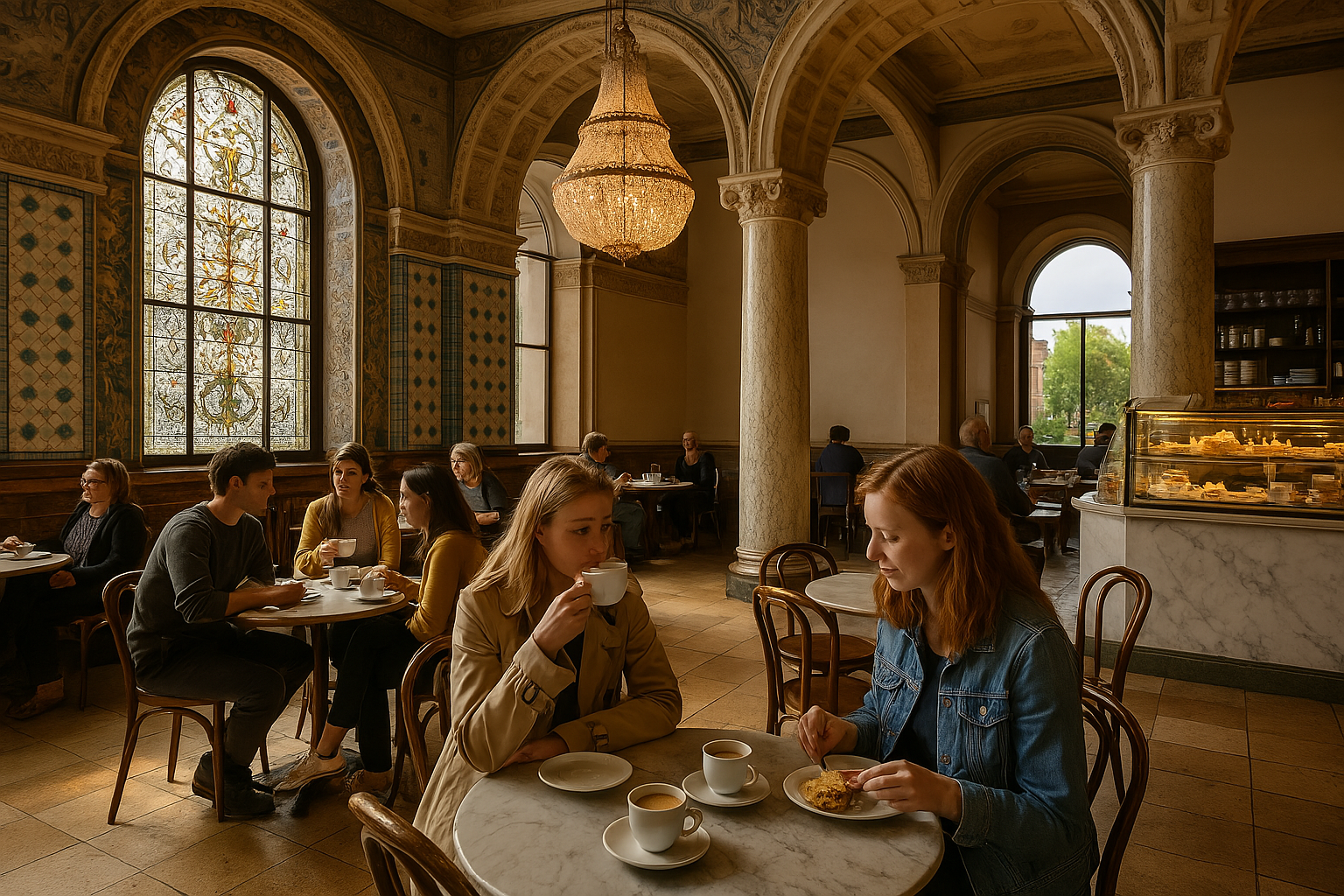
20 Iconic Museum Cafes in the UK You Need to Visit

In a world filled with the rapid pace of life and daily routines, many places not only satisfy the taste buds but also tell stories rich in art and culture. Museum cafes in the UK are not just pit stops for a quick snack, but artistic destinations that open new doors for understanding history and culture. You might assume these places only serve sandwiches or fast food, but some of these cafes offer a full experience worth exploring, where flavor blends with artistic and historical creativity.

In this context, The Guardian presents a list of the top 50 museum cafes in the UK. However, we decided to bring you the 20 most iconic ones that combine the charm of art galleries, tranquility, and delicious food that enhances your cultural experience. We’ve chosen these spots to be your guide in discovering places that not only satisfy your taste but also invite you to dive deep into British history and art. Whether you’re looking for a luxurious experience or a quiet break between exhibitions, these cafes offer more than just food – they offer the memory of the place and its stories that unfold with every sip.

1. The Gamble Room Café, Victoria and Albert Museum, London

The Gamble Room Café at the Victoria and Albert Museum in London is one of the most iconic spots. Designed to extend the culture and history of the museum itself, visitors can enjoy delicious snacks in a setting that dates back to 1868.

2. The Garden Café, Garden Museum, London

Located in the heart of London, The Garden Café at the Garden Museum offers a calm atmosphere where you can enjoy a cup of coffee surrounded by beautiful gardens and historic buildings.

3. Louie Café, South London Gallery

Louie Café at the South London Gallery is a lively spot that draws visitors from all over. The café serves great coffee and a varied menu, and is a popular gathering place for local artists and students.

4. The Garden Café, Garden Museum, London

Another iconic Garden Café in London that provides a perfect blend of coffee and tranquility amidst the natural beauty of the gardens surrounding the museum.

5. Corner Café, Tate Modern, London

Corner Café at the Tate Modern provides a unique experience with a beautiful view of the Thames River. The café offers a variety of light meals and snacks, making it the perfect stop for visitors exploring the galleries.

6. Art Café, Courtauld Gallery

Inspired by the vibrant colors and bold abstract designs of the Bloomsbury Group, Art Café at the Courtauld Gallery offers a perfect place to enjoy coffee after visiting the gallery’s exquisite art collections.

7. Caffè Estorick, Estorick Collection

Located in a Georgian house near Highbury and Islington, Caffè Estorick is a café that offers a mix of Italian food and contemporary art. The café’s minimalist menu includes delightful dishes like spinach and ricotta ravioli.

8. The Wallace Collection Café, London

Situated inside a stunning 18th-century townhouse, The Wallace Collection Café is an ideal place for a light lunch or afternoon tea, all while surrounded by the museum’s beautiful rococo masterpieces.

9. Crispin at Studio Voltaire, London

Crispin at Studio Voltaire is a serene restaurant located in a former Victorian mission hall in Clapham, offering a seasonal menu that features delicate dishes like Montgomery cheddar croquettes and gurnard with fennel.

10. The Town Square Café, Young V&A

Located in the former Museum of Childhood, The Town Square Café offers a simple menu that includes soups, sandwiches, and kid-friendly meals, making it a perfect stop for families.

11. Waterside Café, Weald & Downland Living Museum, West Sussex

Nestled near a beautiful lake, Waterside Café at the Weald & Downland Living Museum provides a picturesque setting for breakfast or lunch, with options like Welsh rarebit and jumbo fish finger sandwiches.

12. Louie on Sea, Turner Contemporary, Margate

Louie on Sea at Turner Contemporary offers an excellent seaside view and serves a small but carefully crafted menu that includes burrito bowls, homemade quiches, and crispy pizza.

13. Rooftop Restaurant, Ashmolean Museum, Oxford

With stunning views of Oxford, the Rooftop Restaurant at the Ashmolean Museum serves traditional afternoon tea and sophisticated dishes such as pea and broad bean risotto, making it a perfect pit stop after sightseeing.

14. Pallant Café, Pallant House Gallery, Chichester

Located in Chichester, Pallant Café offers a unique experience with an art-inspired interior and a variety of delicious meals, including focaccia with caponata and classic Sunday roasts.

15. Café at the Museum of Rural Life, Reading

At the Museum of Rural Life, this café serves simple, homemade dishes like soup and sticky buns, and offers a peaceful atmosphere surrounded by the museum’s historical farmyard paraphernalia.

16. Light Café, Towner Eastbourne

Light Café at Towner Art Gallery in Eastbourne offers a fresh, Scandinavian-inspired lunch menu with smørrebrød (open sandwiches) and small plates like burrata with rhubarb jam, perfect for a sunny day.

17. Stone Café, Perth Museum, Scotland

Stone Café at Perth Museum offers a traditional Scottish menu, including haggis, neeps, and tatties, all while you enjoy the museum’s historic atmosphere.

18. Coliseum Coffee House, Ceredigion Museum, Aberystwyth

The Coliseum Coffee House offers a cozy and light-filled space to enjoy homemade cakes and Welsh specialties like cawl and rarebit, all while immersing yourself in the museum’s rich local heritage.

19. The Dylan Thomas Boathouse Café, Laugharne, Carmarthenshire

The Dylan Thomas Boathouse Café offers spectacular views of the Taf Estuary and serves a variety of simple yet delightful dishes, including cream tea, Welsh cakes, and sandwiches.

20. Miners’ Canteen, Big Pit National Coal Museum, Blaenafon

The Miners’ Canteen at Big Pit National Coal Museum serves traditional Welsh miners’ fare, including pies, pasties, and chips, all while providing a glimpse into the region’s coal mining history.

WA Coffee Shops Seek New Sources for Beans as Trump Tariffs Begin

Coffee roasters in the Puget Sound area are preparing for rising costs following new tariffs on coffee imports. Many local coffee businesses, including those in Seattle—a city renowned for its coffee culture—are concerned about the impact of the tariff increases, particularly on beans imported from Latin America.

The U.S. Department of Agriculture reports that 80% of coffee beans imported into the U.S. come from Latin American countries, with Brazil and Colombia being significant suppliers. Both countries are now facing a 10% tariff hike, which is likely to drive up prices for local coffee roasters.

In response, some roasters are exploring alternative bean sources. A Tacoma coffee shop owner is even considering Puerto Rico and other U.S. territories to find more affordable options. However, the owner warned that if tariffs continue to rise, they may have no choice but to pass the higher costs onto consumers. While corner cafés may not experience the same impact as grocery store customers, price hikes could still affect local coffee drinkers.

Gabrielle Clune, a Seattle resident, expressed concern about the rising costs: “It’s very expensive already. I mean, like seven dollars for a cup. If the prices go up even more, I might just start getting my coffee from the office instead of the shop downstairs.”

In Quincy, The Pour Haus is also feeling the strain of the new tariffs. The owners, who source their coffee beans from Colombia and Guatemala, as well as liquor from Germany and Canada and syrup from France, are preparing for a potential increase in costs. However, they remain hopeful about keeping prices stable for their customers.

Jarid Jones, co-owner of The Pour Haus, said, “Our hope is to continue to maintain prices as they stand and we hope that if something does need to change, that customers will be responsive to that and understand what that looks like because again, it’s not something that we can control and it will be something that is even outside of our business and other businesses, and so we hope that customers will continue to support the local businesses.”

Under the proposed tariffs, import duties could rise up to 45% for coffee from Mexico and 10 to 15% for beans from Colombia, Honduras, and Guatemala. Jones noted that his business is already feeling the effects, particularly with the rising costs of coffee and liquor used in their popular espresso martinis.

“Certainly, imports are going to change what that cost looks like. We have noticed it already and our specialty is the espresso martinis, and that’s one of our biggest cocktail hour drinks. There are two combinations there, one for the liquor which has increased and then the combination of what we see for our beans as well,” Jones said.

As tariffs continue to affect local businesses, both coffee roasters and drink shops like The Pour Haus are facing an uncertain future, with both business owners and consumers awaiting the full impact of these price changes.

Nasdaq: Global Coffee Prices Tumble Amid Market Volatility and Export Pressure

Coffee prices saw a steep decline on Friday, with May Arabica contracts falling by 5.07% to reach a two-month low, and May Robusta down by 4.82%, hitting their lowest level in two and a half months. According to Nasdaq, the drop was driven by a widespread risk-off sentiment in global markets, which pressured most commodities, including coffee. Concerns are also mounting that rising tariffs could raise retail prices for consumers and dampen overall demand.

The Brazilian real weakened to a three-week low against the U.S. dollar, prompting increased export activity from Brazilian producers. As Nasdaq reported, this added further pressure to prices, especially for Arabica, as Brazil remains the world’s largest coffee exporter.

While previous fears over dry weather in Brazil have eased, long-term supply concerns remain. Somar Meteorologia recently reported that Brazil’s key Arabica-producing region of Minas Gerais received 31.1 mm of rain in the last week of March—114% of the historical average. Nonetheless, Brazil’s coffee export data points to tightening supply: Cecafé revealed a 12% year-over-year drop in February green coffee exports, totaling 3 million bags. Brazil’s official crop agency, Conab, also lowered its 2024 crop estimate to 54.2 million bags and projects a further decline to 51.81 million bags for the 2025/26 season, the lowest in three years.

ICE-monitored inventories reflect similar trends. Arabica stocks fell to a one-and-a-half-month low of 770,476 bags, while Robusta stocks dropped to a three-week low of 4,308 lots. Brazil’s largest Arabica cooperative, Cooxupé, has also warned that recent high temperatures and below-average rainfall may negatively impact this year’s yields.

The effects of last year’s El Niño are still being felt across Latin America. Brazil is reportedly experiencing its driest weather since 1981, affecting flowering and harvest potential for upcoming seasons. Colombia, the second-largest Arabica producer, continues to recover from drought conditions as well.

On the Robusta front, Vietnam is facing ongoing supply constraints. Its 2023/24 coffee production dropped by 20% to 1.472 million metric tons—the lowest level in four years—while exports in the first quarter of 2024 were down 15.3% year-over-year. The Vietnam Coffee and Cocoa Association recently lowered its 2024/25 production forecast from 28 million bags to 26.5 million. However, expectations for a rebound in 2025/26 persist, with Marex Solutions projecting Vietnam’s Robusta production to rise to 28.8 million bags, alongside a 13.6% increase in Brazil’s Robusta output to 25 million bags.

Marex Solutions also forecasts that the global coffee surplus will expand in the 2025/26 season to 1.2 million bags, up from 200,000 bags in 2024/25. Nevertheless, drought-linked revisions may tighten the outlook once again. Volcafe, following a crop tour, cut its 2025/26 Brazil Arabica forecast by nearly 11 million bags, projecting a total of 34.4 million. The firm also estimates an 8.5 million bag global Arabica deficit next season—the fifth consecutive year of deficit.

On the demand side, USDA’s Foreign Agriculture Service expects global coffee production to increase by 4% in 2024/25 to 174.86 million bags, split between a 1.5% rise in Arabica and a 7.5% rise in Robusta. Still, the report projects a 6.6% drop in ending stocks, bringing global reserves to a 25-year low of 20.87 million bags. The USDA also forecasts Brazil’s coffee inventories will fall to 1.2 million bags by the end of the 2024/25 season, down 26% year-over-year.

Global export figures remain mixed. Brazil’s coffee exports in 2024 rose 28.8% year-over-year to a record 50.5 million bags, according to Conab. Meanwhile, data from the International Coffee Organization showed global exports fell 12.4% in December and slipped 0.8% year-over-year in the October-to-December quarter.

Egg Coffee: A New Trend Blending Flavor and Wellness

A new and intriguing trend is making waves in the coffee world: egg coffee. This unusual beverage, inspired by an old Swedish brewing method, combines the rich aroma of coffee with the nutritional benefits of eggs — and it’s quickly gaining a devoted following, according to Sports.kz, citing Pravda.ru.

What’s the Secret Behind Egg Coffee?

The preparation of egg coffee is simple, yet surprisingly unconventional. A whole raw egg, including the shell, is mixed with ground coffee in a bowl. This mixture is then boiled over heat, and once it reaches a rolling boil, it’s strained through a fine sieve. The result is a clean, aromatic brew with a smooth flavor, free from the bitterness and tannins often found in traditional coffee.

Key benefits of this brewing method include:

  • A milder, less bitter flavor;

  • Removal of impurities often present in regular coffee;

  • A clean, full-bodied aroma.

Health Benefits Beyond Taste

Egg coffee isn’t just about flavor — it’s packed with nutrients that support overall health:

  • Rich in vitamins and minerals: Egg yolk is a natural source of vitamins A, E, D, K, and B-complex;

  • Supports fat metabolism: Choline in eggs helps protect the liver from fat accumulation;

  • Antioxidant protection: Lutein and zeaxanthin help guard liver cells against oxidative stress;

  • Cholesterol regulation: Regular consumption may help maintain healthy cholesterol levels;

  • Brain health: Caffeine boosts brain function, while the nutrients in eggs support cognitive performance.

Why Is Egg Coffee Gaining Popularity?

This Swedish-style coffee is turning heads thanks to its unique combination of flavor and function. It’s emerging as a perfect breakfast companion for those who value both taste and health benefits. As noted by Hungarian publication Kiskegyed, egg coffee is opening up new possibilities in the world of coffee traditions and could very well become the next big hit among adventurous coffee lovers.

Trump’s New Tariffs Threaten U.S. Coffee Imports

Sweeping new tariffs announced by President Donald Trump on April 2 may have a significant impact on the U.S. coffee market, according to data from the Foreign Agricultural Service (FAS) of the U.S. Department of Agriculture and the International Trade Administration (ITA).

During an afternoon press conference, President Trump unveiled a universal minimum tariff of 10% on all imported goods, including food and agricultural products. The 10% tariff will take effect on April 5, while additional country-specific tariffs will be implemented on April 9, according to White House officials.

The president presented a chart listing tariff rates for at least 50 countries, ranging from 10% on imports from the United Kingdom to 49% on imports from Cambodia.

Several of the countries listed are among the world’s largest coffee producers. As the top global importer and consumer of coffee, the U.S. could face significant supply chain challenges as a result.

According to 2024 FAS data, the leading coffee-producing countries and their new U.S. tariff rates are:

  1. Brazil (38% of global production) – 10%

  2. Vietnam (17%) – 46%

  3. Colombia (7%) – 10%

  4. Indonesia (6%) – 32%

  5. Ethiopia (5%) – 10%

  6. Uganda (4%) – 10%

  7. India (4%) – 26%

  8. Honduras (3%) – 10%

  9. Peru (2%) – 10%

  10. Mexico (2%) – 25%

Based on ITA data, the top 10 sources of U.S. coffee and coffee product imports by value in 2023 were:

  1. Colombia – $1.4 billion

  2. Brazil – $1.4 billion

  3. Switzerland – $1.1 billion (31% tariff)

  4. Canada – $568 million

  5. Honduras – $463 million

  6. Guatemala – $458 million (10% tariff)

  7. Mexico – $364 million (25% tariff)

  8. Nicaragua – $360 million (18% tariff)

  9. Vietnam – $347 million

  10. Indonesia – $269 million

Most coffee imports are not covered by tariff exemptions under the U.S.-Mexico-Canada Agreement (USMCA), meaning they are subject to the additional 25% tariffs President Trump has pledged to enforce against certain nations.

In March, the National Coffee Association (NCA) urged the White House to exempt coffee and coffee products from the proposed duties.

“Except for limited production in Hawaii, the United States has no domestic alternatives to imported coffee,” wrote Bill Murray, NCA president and CEO, in a letter to the Office of the U.S. Trade Representative. He emphasized that the coffee industry contributes over $340 billion annually to the U.S. economy.

Earlier this year, coffee prices rose sharply amid inflation and supply concerns, climbing to a wholesale high of over $4 per pound.

This is a developing story. Stay tuned to Food Business News for updates on how the new tariffs may reshape the food and beverage industry.

New Study Reveals What Your Favorite Coffee Says About Your Personality

A new psychological analysis suggests that your daily coffee choice may offer more than just a caffeine boost—it could be a window into your personality. From bold black coffee to carefully customized brews, researchers have found interesting links between preferred coffee types and certain character traits.

Clinical psychologist Dr. Ramani Durvasula conducted a study involving over 1,000 individuals to explore how food and beverage choices reflect personality dimensions. One of the most intriguing findings: the type of coffee you drink can mirror how you think, act, and relate to others.

Black coffee lovers tend to value simplicity and efficiency. They’re often traditional, disciplined, and straightforward, though they may resist change. Latte and cappuccino fans are warm and friendly, but can sometimes neglect their own needs while pleasing others.

Those who enjoy iced coffee are often seen as spontaneous and creative, enjoying life in the moment. However, their impulsive nature can sometimes lead to rash decisions. On the other hand, those who prefer highly customized or decaffeinated coffee often exhibit perfectionism and a need for control, balancing that with health-conscious habits.

Perhaps most notable are the consumers of specialty coffee—individuals who demonstrate a higher degree of self-awareness, ethical consideration, and appreciation for quality and craft. According to a study published in the journal Appetite, such coffee drinkers often have strong values around sustainability and social responsibility.

Although these findings are not absolute, they provide an intriguing perspective on how daily rituals like coffee drinking can reflect deeper psychological tendencies.