Coffee at Risk: U.S. Tariffs on Vietnam Threaten Higher Prices

The U.S. coffee market is bracing for potential price hikes following Washington’s decision to impose a 46% tariff on coffee imports from Vietnam — the world’s largest producer of robusta beans, which are widely used in instant coffee and low-cost espresso blends.

The new trade measure is expected to intensify existing supply chain pressures, as global coffee markets already grapple with tight inventories and rising costs. Robusta futures in London have surged by more than 40% over the past year, while arabica prices in New York remain high due to adverse weather conditions in key producing countries.

According to Priyanka Sakdeva, a senior analyst at Phillip Nova, the newly imposed tariffs will likely worsen market volatility and deepen the robusta supply shortage. She emphasized that the impact will be particularly felt in segments that rely on robusta for affordable coffee products. Replacing robusta with arabica, she noted, is not a viable solution due to the latter’s higher cost and different flavor profile.

Nguyen Nam Hai, Chairman of the Vietnam Coffee and Cocoa Association, expressed shock at the scale of the tariff and voiced serious concern about existing export contracts. He stressed that alternative suppliers such as Brazil, Indonesia, and Côte d’Ivoire would struggle to match both the volume and quality of Vietnamese coffee.

Analysts warn that U.S. importers will now face higher sourcing costs, which could trickle down to consumers through rising retail prices and reduced availability of budget-friendly options in cafés and grocery stores — all at a time when the global coffee industry is already under strain from climate, logistical, and economic challenges.

Trump’s Tariff Shockwaves Rattle Coffee, Cocoa, and Sugar Markets Worldwide

World markets for coffee, cocoa, and sugar saw notable declines on Wednesday, following a dramatic escalation in trade tensions sparked by U.S. President Donald Trump’s announcement of sweeping new import tariffs. Investors reacted with concern, fearing that higher costs would dampen demand for key soft commodities in the United States—one of the largest global consumers of chocolate and coffee products.

The latest trade measures include a 10% baseline tariff on all U.S. imports, with certain countries facing levies exceeding 50%. This move marks a sharp departure from decades of trade liberalization and sent ripples across global commodity markets, triggering sell-offs and heightened volatility.

Coffee markets were particularly impacted. Arabica coffee futures on the ICE exchange—a benchmark for global prices—fell 0.7% to $3.8605 per pound by 15:54 GMT, after dropping nearly 3% earlier in the day. Robusta coffee prices also weakened, slipping 0.1% to $5,393 per metric ton, following a steeper decline of 2.5% earlier.

Tariffs targeting major coffee-producing nations added to the pressure. Vietnam and Indonesia—leading exporters of robusta coffee—now face tariffs of 46% and 32%, respectively. Brazil, the world’s top exporter of arabica coffee and a key sugar supplier, was hit with a 10% tariff.

Cocoa markets were similarly disrupted. London cocoa futures declined 1.9% to £6,654 per ton, after earlier tumbling nearly 5%. In contrast, New York cocoa prices surged 3.3% to $9,262 per ton, buoyed by a weakening U.S. dollar. The disparity reflects currency-driven market dynamics, with a softer dollar making dollar-priced cocoa more attractive to international buyers, while sterling gains rendered London cocoa less competitive abroad.

Top cocoa producers Ivory Coast and Ghana were not spared, facing tariffs of 21% and 10%, respectively. The U.S. is also a significant importer of processed cocoa products—such as butter and powder—from the European Union, Malaysia, and Indonesia. These regions were likewise hit with tariffs of 20%, 24%, and 32%, respectively, affecting both cocoa and coffee shipments.

“The full impact remains uncertain, but the message is clear: there are no winners,” said a Europe-based coffee trader. “This is bad for everyone. For the U.S., it’s inflationary. For producers and exporters, it cuts off access to one of the world’s most important markets.”

Sugar markets followed a similar trajectory. Raw sugar prices dropped 2.2% to 19.17 cents per pound, while white sugar fell 1.5% to $544.70 per ton.

As investors scrambled to adjust their positions, safe-haven assets like bonds and gold gained momentum—further reflecting the unease surrounding the shift in global trade policy. For the coffee and cocoa sectors, which rely on stable trade flows and price transparency, the road ahead may be marked by uncertainty and volatility.

Facing the Inevitable: How to Raise Prices Without Losing Customers

In an economic climate marked by soaring costs—rising raw material prices, increased wages, tax hikes, surging energy bills, and property expenses—coffee business owners are facing tough decisions. Among them: whether to raise prices.

But is increasing prices the only viable path forward? And if so, how much should you raise them—and how do you do it without alienating loyal customers?

Industry veteran and Coffee Knowledge Hub (CKH) curator Andrew Tolley explores these questions and offers a framework for navigating pricing decisions in today’s rapidly evolving business landscape.

Profitability Under Pressure

For any coffee shop, roastery, or café group, profitability isn’t just about financial gain—it’s a necessity for long-term sustainability. As Tolley points out, “You have an obligation to yourself, your team, and your customers to run the business sustainably. In most cases, that means profitably.”

But achieving higher profit margins isn’t simply about raising prices. It’s about optimizing the three key drivers of revenue:

  • Unit Sales: The number of customers you serve

  • Average Transaction Value (ATV): The value of each sale

  • Frequency: How often each customer returns

Increase any one, and your revenue goes up. Increase all three, and your business grows. But, warns Tolley, raising prices might boost ATV at the expense of unit sales and frequency—creating an unintended negative effect.

What to Do Before You Touch the Price Tag

Before making any pricing decisions, Tolley advises business owners to take a hard look at their margins. For each product on your menu, ask:

  • Do I really need to offer this item?

  • Can I reduce the cost without compromising quality?

  • Would a slight price increase be acceptable to customers and improve both margin and revenue?

If the answer to any of these is yes, you’re already one step ahead.

Alternative Levers for Growth

Raising prices isn’t the only way to improve financial performance. Tolley outlines several strategies coffee businesses can use to grow revenue without risking customer goodwill:

1. Increase Unit Sales

  • Invest in marketing to attract new customers or promote underperforming items.

  • Streamline operations to reduce service bottlenecks.

  • Train your team to improve product knowledge and upselling—asking simple questions like “Can I get you anything else?” can work wonders.

2. Increase Visit Frequency

  • Launch loyalty programs to reward returning customers.

  • Diversify your product range to attract visits across different times of day.

  • Re-engage your customer base with timely, targeted promotions.

A Matter of Trust and Communication

Even when a price increase is the right move, execution matters. “We don’t live in a cold, rational world,” Tolley notes. “We have relationships with our customers.” Price hikes, even minor ones, must be handled with transparency and empathy.

From Tolley’s experience, price increases that are well-communicated tend to succeed. Customers generally understand the need—especially when it’s tied to higher quality, better service, or improved sustainability. “Most of the time the amount is so small they might not even notice,” he says. “But it’s still important to let them know. That relationship matters.”

The Bottom Line: Value is the Real Currency

In a challenging market, price increases may be inevitable—but they shouldn’t be the only lever you pull. Enhancing customer value, optimizing operations, and nurturing relationships can all contribute to stronger margins without risking brand trust.

As coffee businesses adapt to economic realities, those who focus on long-term value creation—not just short-term fixes—will be the ones to thrive.

The 10 Best U.S. Cities for Coffee Lovers in 2025

Coffee is more than a beverage—it’s a cultural identity. In the United States, its legacy stretches from revolutionary acts in the 18th century to daily rituals in modern cities. Each city has its own relationship with coffee, filled with traditions and innovation. As of 2025, these ten American cities stand out for their rich coffee scenes, offering a unique blend of flavor, history, and community. Here’s a tour of the top U.S. coffee destinations this year:

1. Los Angeles: Creative and Diverse in Every Sip

Los Angeles leads the list with its vibrant, experimental coffee culture. Cafés range from architecturally stunning spaces to minimalist neighborhood stands. From Mexican-inspired café de olla lattes to pineapple espresso tonics, L.A. offers a global mix of flavors. Whether you sip in Chinatown, Pasadena, or Boyle Heights, every cup reflects the city’s cultural mosaic.

2. New York City: Coffee at the Speed of Life

New York’s love affair with coffee goes back centuries, from early trading hubs to today’s bustling third-wave cafés. Whether it’s a to-go cup with a breakfast sandwich or a hand-poured single-origin espresso in Brooklyn, NYC offers a full range of coffee experiences. The city is a global melting pot, and its coffee scene follows suit.

3. Seattle: Home of Starbucks, Heart of Independents

Seattle’s rainy weather and creative spirit fuel its deep connection to coffee. While the original Starbucks opened here in 1971, today’s Seattle is also home to a thriving community of independent roasters and neighborhood cafés. Coffee is a way of life here, and exploring its many offerings is a must for enthusiasts.

4. Portland: Pioneer of the Third Wave

Portland helped lead the third-wave coffee movement and remains one of the most passionate coffee cities in the U.S. Locals are fiercely loyal to their favorite cafés, which serve everything from traditional pour-overs to lattes with seasonal, herbal infusions. A walk through Portland is an adventure in taste, discovery, and cozy coffee corners.

5. New Orleans: Old World Charm Meets Southern Boldness

Coffee in New Orleans is part of its soul. Introduced by the French and enriched with chicory during historical trade shortages, café au lait remains a must-try—especially paired with beignets at Café du Monde. The city’s cafés now balance heritage with inventive drinks, adding layers of flavor to this timeless ritual.

6. San Francisco: Gold Rush to Specialty Roasts

San Francisco has a long-standing coffee history—from supplying miners during the Gold Rush to birthing West Coast espresso culture. Today, it boasts a mix of iconic roasters, historic cafés, and forward-thinking coffee labs. The city’s scene is a beautiful intersection of past and present.

7. Boston: Revolutionary Roots, Modern Revival

Boston has deep ties to coffee, dating back to its rejection of tea during the American Revolution. Today, with its strong academic presence and four-season climate, the city thrives with both cozy cafés and cutting-edge coffee houses. From honey blossom lattes to single-origin espressos, Boston balances warmth with sophistication.

8. Miami: Latin Flair and Cuban Soul

Coffee in Miami is inseparable from its Cuban heritage. Coladas, cortaditos, and café con leche are daily staples, especially in neighborhoods like Little Havana. Alongside these traditions, a wave of specialty cafés brings bold new twists—some even serve espresso drinks with gold leaf or tropical garnishes.

9. Honolulu: Island-Grown and Locally Brewed

Hawaii is the only U.S. state that grows coffee commercially, and Honolulu celebrates that heritage proudly. Many cafés serve beans grown in Kona and nearby regions. Island flavors like coconut, honey, and taro find their way into drinks, creating a coffee experience infused with aloha spirit.

10. San Juan, Puerto Rico: Reviving a Coffee Legacy

Puerto Rico was once among the world’s top coffee exporters, and San Juan is embracing a modern revival. Local cafés craft drinks like miel de avena (honey-oat lattes) with native spices and partner with nearby farms to bring fresh, locally grown beans into the city. It’s a vibrant fusion of old traditions and new energy.

Share Your City

This journey across America’s top coffee cities reveals one truth: coffee is never just a drink—it’s a story, a culture, and a community. Which city inspired you the most? Have your own unforgettable coffee experience to share? Join the conversation and help us uncover the next hidden coffee gem.


Vietnam’s Golden Gate Acquires The Coffee House for Just $10.5 Million

Deal reflects an 80% drop in the coffee chain’s valuation since 2021 amid financial struggles and store closures

Vietnamese food and beverage giant Golden Gate has confirmed its acquisition of The Coffee House from retail group Seedcom in a deal worth VND 270 billion ($10.5 million).

According to the group’s consolidated financial statement, Golden Gate acquired a 99.98% stake in Vietnam Tea and Coffee Trading Service Corporation — the legal entity that operates The Coffee House — on January 8, 2025.

The steep discount in the acquisition price underscores the challenges faced by The Coffee House in the aftermath of the COVID-19 pandemic. The chain was previously valued at $50 million by auditing firm ASCO in April 2021, making the current deal equivalent to just 20% of that amount.

Founded in 2014, The Coffee House quickly emerged as one of Vietnam’s fastest-growing coffee brands, expanding to over 150 outlets nationwide. Seedcom, a retail conglomerate that also owns fashion label Juno and supermarket chain King Food Mart, acquired a controlling stake in the brand in 2020 but struggled to generate consistent revenues.

In 2022, The Coffee House posted a strong 67% year-on-year revenue growth, reaching VND 781 billion ($30.5 million). However, revenues declined by 11% in 2023 to VND 700 billion ($27.5 million), reflecting operational and market pressures.

The company failed to turn a profit between 2019 and 2023, with Seedcom accumulating total losses of VND 1.17 trillion ($49.82 million) and subsequently shutting down a number of locations. The chain now operates just 93 stores, primarily located in Ho Chi Minh City and Hanoi.

Golden Gate, established in 2005, is one of Vietnam’s leading F&B operators, with a portfolio of nearly 500 restaurants across 22 brands. Its lineup includes popular hotpot and barbecue chains Gogi House and Kichi-Kichi, as well as the bubble tea chain Yu Tang and café brand The Coffee Inn.

In 2024, Golden Gate reported a 5.5% increase in annual revenues, reaching VND 6.63 trillion ($258.7 million). However, the group’s net profit dropped by 28% to VND 100 billion ($3.9 million).

4o

Reuters: Coffee Prices Rise After Dropping to Two-Month Lows

Reuters reported that ICE coffee futures rose on Tuesday after earlier hitting their lowest levels in two months, amid concerns that historically high prices could dampen demand. Cocoa and sugar futures also saw notable gains.

According to the agency, Arabica coffee contracts gained 9.3 cents, or 2.4%, to settle at $3.8905 per pound, after reaching a low of $3.7225 earlier in the session—the weakest level since early February. Broker and market consultant Michael J. Nugent said traders are closely watching how consumers react to higher retail prices, especially as roasters run through their stockpiles of cheaper beans.

Market participants remain concerned about the upcoming harvest in Brazil, the world’s largest coffee producer. Both the Cooxupé cooperative and broker Marex expect output to remain below average, similar to last year’s sub-par harvest. Dealers also noted that potential tariffs from the Trump administration could push prices higher.

Robusta coffee futures rose 2.1% to $5,406 per metric ton.

In the sugar market, raw sugar climbed 2.6% to settle at 19.35 cents per pound, rebounding after hitting a nearly three-week low of 18.72 cents on Monday. Traders said drier weather conditions are returning to Brazil, potentially affecting the final development of the new cane crop. Meanwhile, India—the world’s second-largest sugar producer—has produced 24.8 million tons so far in the 2024–2025 season, according to an industry body.

White sugar rose 2.1% to $545.90 per ton.

As for cocoa, London cocoa futures rose by £90, or 1.5%, to close at £6,264 per ton, following a 1.1% decline on Monday. The market is being driven by concerns over the mid-crop in top producer Ivory Coast, although cocoa arrivals at ports remain 11% higher than the same period last year. New York cocoa surged 3.5% to $8,177 per ton.

illycaffè Announced as Official Coffee Partner of Art Paris 2024

illycaffè has been announced as the Official Coffee Partner for the 27th edition of Art Paris, taking place from April 3 to 6 at the Grand Palais in Paris.

Visitors, including art professionals and exhibitors, will be able to enjoy illy coffee at all refreshment points across the fair. The brand will offer its signature blend, made from the top 1% of Arabica beans.

Cristina Scocchia, CEO of illycaffè, commented:
“This partnership aligns with the brand’s ongoing relationship with art and culture. Art Paris presents a chance to share our values of quality and innovation, and we believe that both coffee and art can inspire and connect people.”

illycaffè has a long-standing presence in contemporary art through artistic collaborations and the illy Art Collection—an initiative launched in 1992 featuring numbered and signed espresso cups designed by over 130 international artists. The project aims to make contemporary art accessible through everyday objects.

illycaffè Achieves Record Growth in 2024 with 42% Surge in Net Profit

illycaffè closes 2024 with record-breaking financial results: €630 million in consolidated revenues (+6%), a 42% rise in net profit, and a 19% EBITDA increase—marking its third consecutive year of double-digit profitability growth. The company also awarded a €1 million bonus to employees in recognition of their contribution. Explore the full financial highlights and CEO insights.
Explore the full story here.

illycaffè S.p.A. has reported exceptional financial results for 2024, marking a third consecutive year of double-digit profitability growth. Consolidated revenues reached €630 million, a 6% increase from 2023, driven by strong organic performance across all major markets and sales channels.

The company recorded an EBITDA of €110 million, up 19% from the previous year, with an improved margin of 17.5% of revenues. EBIT rose to €61 million—an impressive 50% increase—while net profit surpassed €33 million, up 42% year-over-year. The company’s Net Financial Position improved to €109 million, backed by strong cash generation and disciplined investment.

In recognition of this record performance, illycaffè announced a €1 million bonus to its global workforce of over 1,000 employees.

CEO Cristina Scocchia commented:
“2024 marked another year of robust organic growth despite a challenging macroeconomic and geopolitical context. We accelerated our sustainability and international expansion strategies and achieved outstanding financial results thanks to the commitment of our team. Looking ahead to 2025, we will navigate rising raw material costs while continuing to invest in innovation and expansion, including our €120 million plan to double production and logistics capacity in Trieste.”

Geographic and Channel Highlights:

  • Key Markets: Strong revenue growth in Italy, the U.S. (+11%), Spain, France, and the UK

  • Distribution Channels:

    • Ho.Re.Ca. grew ~6%

    • Modern Distribution up 10%, notably in Italy, U.S., UK, and Spain

    • Online sales in the U.S. surged 18%

In Italy, illycaffè further strengthened its leadership in the super-premium coffee segment. In the U.S.—the company’s priority market—growth was broad-based across all channels. The company continues to focus on sustainable innovation and digital transformation to support future expansion.

Victoria Arduino presents E1 Prima at Milan Design Week 2025

Victoria Arduino, the iconic brand in the world of professional coffee machines, presents the E1 Prima Special Edition during Milan Design Week 2025. The event, entitled ‘The Design Blend’, celebrates the encounter between innovation and tradition with an exclusive installation at Starbucks Reserve™ Roastery in Piazza Cordusio, from 7 to 13 April.

With the E1 Prima Special Edition, the Victoria Arduino brand redefines the customisation of coffee machines, responding to the growing demand for bold aesthetics and distinctive identities.

The E1 Prima Special Edition stands out as a design icon, offering three unique finishes – vegan leather, textured and raffia – that merge premium materials, refined colour palettes and functionality into an object designed to redefine spaces and inspire through innovative visual narratives. Every detail represents a style manifesto, combining premium materials and functionality to create perfect harmony and inspire through visual narratives that redefine spaces.

The iconic coffee machine will be the centrepiece of an installation that combines aesthetics and function, exploring the link between past and future. Art Deco details blend with modern, brutalist elements, creating a visual and sensory experience that celebrates the beauty of design and a passion for coffee.

A distinctive element of the installation will be the reinterpretation of some of the brand’s historical images through Artificial Intelligence, which will come to life in a fascinating animation that spans time, combining art and technology.

To further enrich this celebration of design, a refined coffee table book will be presented in a limited edition that collects the evocative images of the photo shoot carried out at an exclusive experience hotel that celebrates Made in Italy design in every room. Signed by Victoria Arduino, the book will interweave the history of design and brand values with the timeless elegance of the rooms, narrating the link between architecture and the design of the machine.

The coffee table book will be displayed next to the machines, offering visitors an even more immersive experience in Victoria Arduino’s aesthetic universe.

During Milan Design Week, Starbucks® Roastery will become a meeting point for designers, fashion influencers and important figures from the lifestyle world. It will offer an ideal opportunity to explore coffee culture through an innovative perspective, in a context that celebrates Italian excellence and creativity.


About. Victoria Arduino, founded in 1905 by Pier Teresio Arduino, is an Italian brand renowned for the production of professional espresso coffee machines and coffee grinders. With over a century of experience, the company combines technological innovation, refined design and environmental sustainability to offer high quality products. Since 2001, Victoria Arduino has been part of the Simonelli Group, continuing to represent Italian excellence in the coffee sector at an international level.

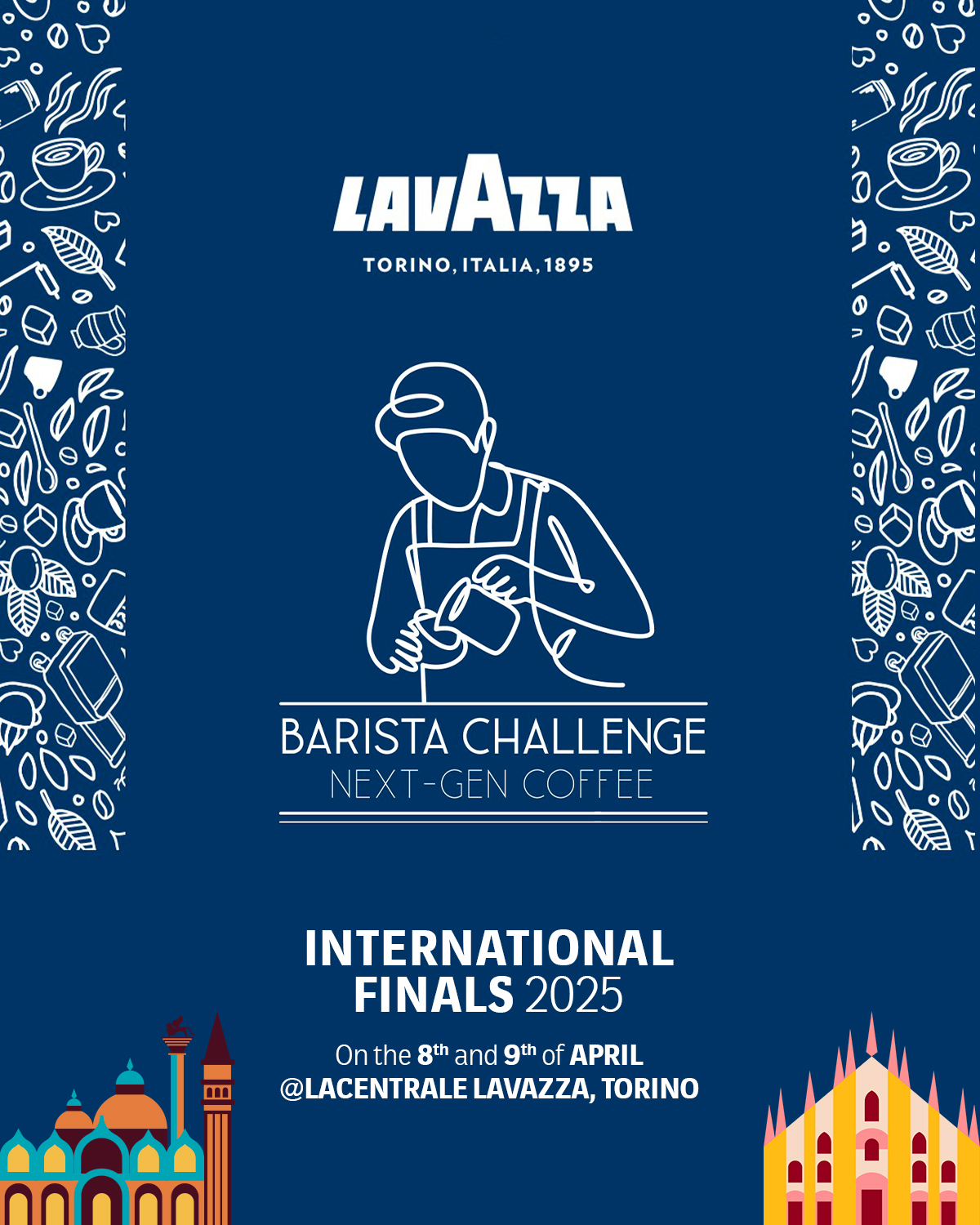
Lavazza Barista Challenge 2025 Finals to Take Place in Turin This April

Lavazza is preparing to host the International Finals of the Lavazza Barista Challenge 2025, set to take place from April 8 to 10 at La Centrale, within the Nuvola Lavazza headquarters in Turin. This major event will bring together top baristas from across the globe who qualified through local and regional competitions, culminating in a celebration of talent, storytelling, and innovation in coffee preparation.

This year’s edition goes beyond showcasing espresso skills. Finalists will be challenged to create signature drinks that reflect their personality, technique, and cultural background. In a bold new addition to the competition, Lavazza has introduced a global Cold Coffee Challenge, inviting participants to craft cold coffee recipes using the brand’s Tales of Italy blends—a tribute to both tradition and innovation in modern coffee consumption.

Lavazza emphasizes that the event is “more than a competition; it’s a platform to honor creativity, commitment, and the passion baristas bring to every cup.” The 2025 challenge underlines Lavazza’s mission to nurture global coffee culture and support the next generation of coffee professionals.

A distinguished international panel of judges will evaluate the finalists based on creativity, technical execution, flavor harmony, and the narrative behind each recipe. The judging panel includes:

  • Fabrizio Fiorani – Pastry Chef – Zucchero x Fabrizio Fiorani, Rome

  • Lauro Fioretti – Coffee Expert – Simonelli Group

  • Dario Tortorella – Mixologist – L’Antiquario, Naples

  • Federico Zanasi – Chef – Condividere, Turin

The event will also feature live presentations, workshops, and interactive experiences for attendees, all set within Nuvola Lavazza—a cultural and innovation hub that symbolizes Lavazza’s commitment to combining Italian heritage with forward-thinking coffee excellence.

A Global Tribute to Women in Coffee: Vanusia Nogueira Named One of Brazil’s Most Powerful Women by Forbes

As Women’s History Month came to a close this March, Forbes Brazil honored Vanusia Nogueira, Executive Director of the International Coffee Organization (ICO), by including her in its prestigious list of Brazil’s Most Powerful Women of 2025. The recognition celebrates her leadership and tireless efforts to champion women across the coffee value chain.

Women’s History Month, officially recognized by the U.S. Congress in 1987, has since become an international moment of reflection and celebration, highlighting women’s contributions in politics, science, economics—and agriculture. This year, the International Coffee Organization marked the occasion with a remarkable digital campaign that illuminated the vital yet often overlooked role of women in the coffee industry throughout history.

ICO’s “Women in Coffee History” Series

To honor the month, the ICO launched a dedicated Instagram series titled “Women in Coffee History,” which traced the legacy of influential women who have shaped coffee culture across the ages. The series began with the discovery of coffee and its journey from Yemen to the rest of the world, following its trade through major historical ports like Mokha and its expansion into Africa, the Ottoman Empire, Europe, and beyond.

Each post in the series spotlighted a specific woman who made a meaningful impact in her era—whether in farming, trade, science, entrepreneurship, or social reform. The ICO’s goal was to rebalance a narrative that has historically favored male figures, by restoring visibility to the many women who helped shape the global coffee landscape.

A Well-Deserved Honor for Vanusia Nogueira

Vanusia Nogueira’s inclusion in the Forbes list reflects her groundbreaking role as the first woman to lead the ICO, an intergovernmental organization that plays a central role in shaping global coffee policies. At the Forbes Power Lunch event held on March 28 at Fasano Jardins in São Paulo, Vanusia delivered a powerful message:

“My work today is to amplify the challenges women in agriculture face and to ensure that young people take pride in working in the fields—while also earning a prosperous income.”

The International Coffee Organization responded to the announcement with a heartfelt message: “We couldn’t think of a better way to conclude our Women’s History Month special series than with this incredible news: our Executive Director has been named one of Brazil’s Most Powerful Women by Forbes. We extend our heartfelt congratulations to Vanusia and all the inspiring women recognized with this prestigious award!”

A Celebration of Female Leaders Across Industries

The Forbes Brazil event honored 13 women leading in fields ranging from energy and finance to education and digital innovation. Notable names on the list included Magda Chambriard, President of Petrobras; Patricia Muratori, YouTube’s Director for Latin America; and Geyze Diniz, Chair of the Pact Against Hunger.

Vanusia’s recognition is especially significant for the global coffee sector, where millions of women—from farmers to cuppers to exporters—play essential roles but rarely receive the spotlight. Her leadership represents a broader shift in the industry: a move toward equity, inclusion, and sustainability that puts people—especially women—at the center.

Qahwa World’s Perspective: A Message for the Future

At Qahwa World, we view this recognition not simply as a personal achievement, but as a symbolic moment for all women in coffee. Vanusia Nogueira stands not only as a leader, but as a representative of countless women who have worked in the background of the global coffee story—often without recognition.

This award affirms that there can be no truly sustainable future for coffee without empowering women, acknowledging their labor, and granting them the voice and visibility they have long deserved.

Brazilian Coffee Farmers Embrace Expensive Irrigation to Tackle Climate Pressure

Brazil’s coffee producers are increasingly relying on costly irrigation systems to safeguard yields and meet rising global demand, according to a detailed report by Reuters published on March 31, 2025. The shift comes in response to erratic rainfall and prolonged droughts that have significantly impacted the country’s coffee-growing regions over recent years.

Citing interviews with over 20 farmers, agronomists, and industry stakeholders, Reuters noted that irrigation is becoming a crucial factor in coffee production, especially in emerging areas like western Bahia—Brazil’s new agricultural frontier. Large farms equipped with advanced irrigation systems, such as central pivot and drip technologies, are now playing a central role in maintaining Brazil’s position as the world’s top coffee supplier.

One such example is the Joha farm in Bahia, operated by Rodrigo Brondani and owned by agricultural holding AFB&IOB. The farm spans 900 hectares of irrigated coffee fields and is projected to yield up to 80 bags per hectare—twice the national average. At current prices, the farm’s last harvest alone could be worth approximately $17 million, Reuters reported.

Brondani told Reuters that irrigation was key to the farm’s resilience amid Brazil’s changing climate conditions. His comments echo a broader trend, as many producers are now moving away from traditional rain-fed coffee farming and investing heavily in water infrastructure to ensure stable output.

Coffee Deficit, Soaring Prices

Brazil accounts for roughly 35% of global coffee consumption. Yet, prolonged droughts and declining yields have caused significant supply deficits. According to the Reuters report, 2025 is expected to mark the fourth time in six years that global coffee consumption has outpaced production. Data from the International Coffee Organization (ICO) shows a cumulative deficit of 12.5 million bags since 2022—equivalent to about 7% of the global annual supply.

These imbalances have pushed Arabica futures to record highs. Reuters cited market data showing a 70% surge in 2024 followed by another 25% increase so far in 2025. The benchmark price reached $4.40 per pound in February, prompting major brands such as Starbucks, Nespresso, and JDE Peet to raise consumer prices—with more hikes expected.

Water Access: A Dividing Line in Production

While water is relatively abundant in Bahia, where the Urucuia aquifer lies just 20 meters below the surface, regions like Minas Gerais face mounting challenges. Reuters noted that in some areas, farmers must drill as deep as 300 meters to access groundwater—an expensive and sometimes unreliable endeavor.

In 2024, several municipalities in Minas Gerais imposed restrictions on irrigation due to falling water levels. One farmer, Mario Alvarenga, told Reuters that despite owning an irrigation system, he was unable to use it because of water scarcity.

Data from Fundação Procafé, a Brazilian coffee research institute cited in the report, revealed a severe soil moisture deficit of 300 mm in Minas Gerais in October 2024—far above the long-term average.

High Costs and Technological Shifts

According to Reuters, the cost of installing a central pivot irrigation system can exceed 1.5 million reais (approximately $263,000). Drip irrigation systems, though more efficient, can cost around 40,000 reais ($7,000) per hectare. These costs are significant for small and mid-sized farmers, many of whom are still recovering from years of low coffee prices.

To address this, Cooxupé, the world’s largest coffee cooperative, has partnered with Israeli firm Netafim to facilitate irrigation access through payment plans involving future coffee deliveries. Cooxupé President Carlos Augusto Rodrigues de Melo told Reuters he expects the proportion of irrigated farms within the co-op’s network to double in the next three to five years.

Agronomists quoted in the report also emphasized the importance of regenerative practices—such as soil enrichment and tree renewal—to enhance moisture retention and productivity in tandem with irrigation.

Environmental Concerns and Regulation Gaps

While irrigation has helped stabilize production, it raises sustainability concerns. The Reuters investigation highlighted the risks of over-extracting groundwater, particularly in western Bahia. A study conducted by non-profit Imaterra and the Federal University of Bahia found that local authorities have relaxed water-use regulations, potentially leading to unsustainable practices.

The study reported that agriculture in Bahia uses around 17 billion liters of water per day—enough to supply nine times the population of São Paulo. Between 2002 and 2021, the Urucuia aquifer lost 31 cubic kilometers of water, according to Brazil’s Geological Service, largely due to agricultural use.

Experts interviewed by Reuters urged the government to enhance water monitoring systems, particularly in areas of rapid agricultural expansion.

Conclusion
The Reuters report paints a clear picture: Brazil’s coffee sector is undergoing a structural transformation. While large-scale irrigated farms in regions like Bahia are thriving, traditional producers in drought-affected areas face mounting challenges. As global coffee demand continues to rise, the country’s ability to sustainably manage its water resources may determine its future as a coffee powerhouse.