Is Coffee the Next Anti-Aging Elixir? New Research Suggests So

Emerging evidence links daily coffee consumption with reduced risk of age-related frailty.

Recent findings published in the European Journal of Nutrition reveal that regular coffee consumption may offer more than just a morning boost — it could also help stave off age-related decline. The study, conducted among adults aged 55 and older in the Netherlands, found that drinking two to four cups of coffee a day (European-sized cups, each approximately 125 mL or 4.2 fluid ounces) was associated with a significantly lower risk of developing frailty over time.

Researchers observed that even moderate coffee consumption helped reduce inflammation, support muscle health, and improve metabolic function — all factors known to protect against age-related frailty. Notably, the study also found that decaffeinated coffee offered similar benefits, suggesting that the protective effects may be due to the antioxidants and polyphenols in coffee, rather than caffeine alone.

“The more coffee people drink — within reason — the lower their chances of developing frailty in later life,” said Dr. Ehsan Ali, a geriatric care physician and founder of Beverly Hills Concierge Doctor.

What Makes Coffee Protective Against Frailty?

Experts highlight four key mechanisms through which coffee may support healthy aging:

  • Antioxidant Protection: Coffee is rich in antioxidants that combat oxidative stress, a major contributor to cellular aging and chronic disease.

  • Anti-Inflammatory Effects: Polyphenols and other bioactive compounds in coffee help reduce chronic inflammation, a known driver of frailty.

  • Muscle Mass Preservation: Bioactive compounds in coffee promote mitochondrial health and cellular repair, which are essential for maintaining muscle strength.

  • Metabolic Benefits: Coffee has been linked to improved insulin sensitivity and overall metabolic health, helping reduce the risk of muscle loss and systemic inflammation.

While the findings are observational and cannot establish causation, they add to growing evidence that coffee could play a meaningful role in promoting longevity and resilience in aging populations.

Beyond Frailty: Additional Health Benefits of Coffee

Coffee’s benefits extend far beyond anti-aging:

  • Cognitive Health: Caffeine stimulates the central nervous system and may help lower the risk of neurodegenerative diseases such as Alzheimer’s and Parkinson’s.

  • Physical Performance: Caffeine increases adrenaline levels, potentially enhancing endurance and reducing the perception of exertion during exercise.

  • Heart and Liver Protection: Regular coffee consumption has been linked to a reduced risk of cardiovascular disease, stroke, liver cirrhosis, and liver cancer.

  • Longevity: Several studies have shown a connection between moderate coffee intake and a lower risk of early death.

How Much Coffee Is Enough?

Experts suggest that one to two 8-ounce cups of coffee per day provide sufficient health benefits for most people. It’s worth noting that the “cups” referenced in the European study are smaller than the typical U.S. serving. Therefore, drinking one to two American-sized cups already aligns with the study’s beneficial range.

According to Dr. Ali, healthy adults can safely consume up to 400 milligrams of caffeine per day — roughly four 8-ounce cups of brewed coffee — though individual tolerance may vary. Exceeding this amount may lead to side effects such as jitteriness, insomnia, digestive issues, and elevated heart rate.

The Best Way to Drink Coffee for Health

The study focused on plain brewed black coffee and decaffeinated coffee. Experts caution that heavily sweetened beverages, whipped cream toppings, and flavored syrups can negate the health benefits.

“When you add artificial sweeteners, sugar, or syrups, you spike your blood sugar, promote inflammation, and essentially cancel out the anti-inflammatory effects of coffee,” says Jennifer Bianchini, a functional dietitian and founder of Body to Soul Health.

For optimal benefits, it’s best to enjoy coffee in its simplest form: black or with a small amount of unsweetened plant-based or dairy milk.
EU Deforestation Regulation Puts Peruvian Coffee Farmers at Risk of Market Exclusion

As Europe advances sustainability goals, smallholder farmers in remote coffee regions like Amazonas, Peru, face new challenges that threaten their place in global trade.

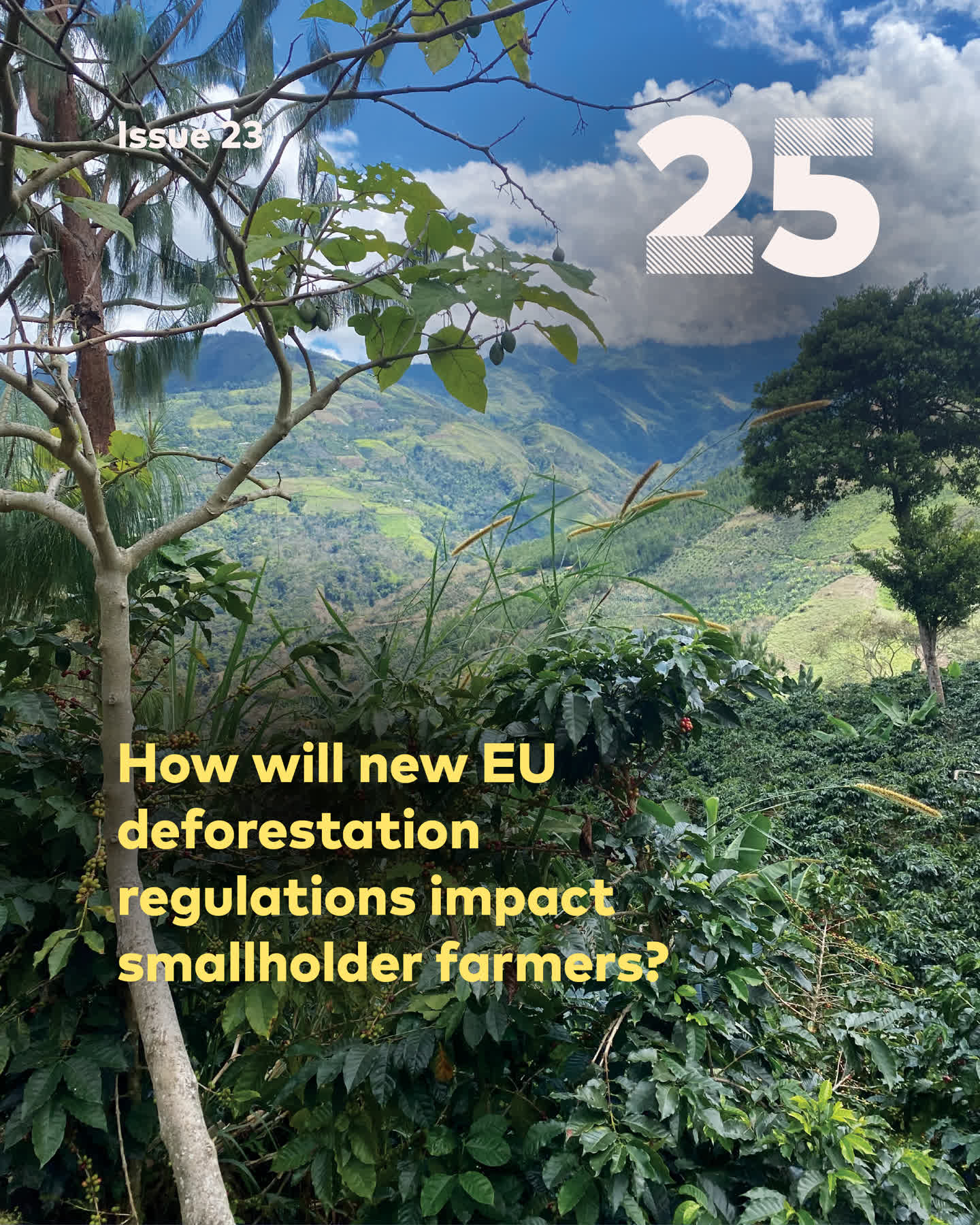
In a bid to combat global deforestation, the European Union has introduced the European Union Deforestation Regulation (EUDR), a landmark policy that aims to prevent the importation of commodities—such as coffee, cocoa, and soy—linked to forest degradation. While celebrated by environmental advocates, the regulation is already showing signs of creating unintended harm, particularly for smallholder coffee farmers in regions like Amazonas, Peru.

Amazonas is one of Peru’s leading coffee-producing zones, with 39% of its coffee exported to the European Union. Yet, the region is dominated by small-scale farmers who often operate on minimal income, lack access to digital infrastructure, and are disconnected from global policy discussions. According to interviews conducted by journalist María Paz Lobo, many farmers in the area are not even aware of the EUDR—let alone prepared to comply with its complex requirements for traceability and proof of deforestation-free supply chains.

A Regulation Misaligned with Local Realities

The EUDR mandates that exporters of coffee and other high-risk commodities provide geolocation data and evidence that their products do not contribute to deforestation. However, such requirements assume a level of technological access, administrative capacity, and institutional support that is out of reach for many rural farming communities.

In Amazonas, the causes of deforestation are deeply interwoven with issues such as poverty, insecure land tenure, and the need for subsistence farming. Some producers employ agroforestry systems that preserve tree cover, while others clear small plots for survival. The regulation’s broad-brush approach, critics argue, fails to account for these local complexities.

“The EUDR is a powerful tool, but it doesn’t reflect the diverse causes of deforestation on the ground,” said a local agronomist who works with farmer cooperatives. “In Amazonas, environmental degradation is often a symptom of economic desperation, not intentional destruction.”

A Growing Divide

With compliance expected by December 2024, many small-scale producers in Peru and across Latin America risk being excluded from European markets. This could lead to significant income losses for farming families and could push them further into poverty—or worse, incentivize them to shift toward crops with fewer international restrictions, some of which may be even more harmful to the environment.

The EUDR, while noble in its environmental mission, risks reinforcing a two-tiered trading system: one where large-scale, well-capitalized operations adapt with ease, while smallholders are left behind.

Rethinking Sustainability for Inclusion

Experts and advocates are calling for a more balanced implementation of the regulation. They suggest that traceability systems should be accompanied by robust technical and financial assistance, especially for marginalized groups. Others argue for differentiated compliance timelines, locally adapted frameworks, and formal recognition of traditional land-use systems like agroforestry, which are often overlooked in deforestation metrics.

“Without inclusive policies, the EUDR risks doing more harm than good,” said one representative from a regional coffee cooperative. “We need a transition plan that supports farmers, not penalizes them for circumstances beyond their control.”

Looking Ahead

The EUDR signals a critical shift in how sustainability is regulated globally. However, if the goal is to create a greener future that includes—not excludes—smallholder farmers, then more inclusive dialogue and flexible, region-specific policies are essential.

Ultimately, ensuring sustainability in coffee supply chains should not mean placing the heaviest burden on those with the fewest resources. As implementation begins, the international community will need to find ways to align environmental goals with economic justice—so that progress in one area does not come at the cost of another.

What Is the International Coffee Agreement 2022, and What Has Changed?

In response to the growing challenges facing the global coffee sector—ranging from price volatility and climate change to farmer poverty and supply chain disruptions—the International Coffee Agreement (ICA) 2022 was introduced as a modernized global framework for cooperation. Adopted by the International Coffee Council under the International Coffee Organization (ICO), the ICA 2022 marks a significant evolution from previous agreements, laying the foundation for a new era of inclusive, sustainable, and equitable governance in the coffee industry.

What Is the International Coffee Agreement 2022?

The ICA 2022 is a multilateral treaty signed between ICO member countries. It aims to strengthen international cooperation in the production, trade, and consumption of coffee, support producer livelihoods, promote environmental sustainability, and improve market transparency. The agreement was opened for signature in October 2022, with the ratification window extending until July 2023. It entered into force once the minimum required number of exporting and importing countries completed their ratification procedures.

What Has Changed in This Agreement?

Compared to its predecessors, the ICA 2022 introduces several key innovations:

  1. Official Inclusion of the Private Sector
    For the first time, private companies—including traders, roasters, retailers, and NGOs—can formally participate as observers and contributors in working groups and policy discussions.

  2. More Inclusive Governance
    Decision-making is no longer limited to governments. The agreement creates mechanisms that engage a broader spectrum of stakeholders throughout the coffee value chain, increasing transparency and responsiveness.

  3. Stronger Focus on Sustainability and Climate Resilience
    ICA 2022 prioritizes environmental protection, sustainable farming practices, and climate adaptation, especially for smallholder producers in vulnerable regions.

  4. Encouragement of Value Addition at Origin
    The agreement supports the development of domestic processing (e.g., roasting and packaging) in producing countries to enhance local economies and increase producer income.

  5. Enhanced Data Systems and Transparency
    The ICO will strengthen its data collection, market analysis, and reporting frameworks to inform evidence-based policymaking and early warning systems.

  6. Flexible and Fair Contribution Structure
    The financial contribution model has been revised to make participation more accessible, especially for developing countries, while ensuring the financial sustainability of the ICO.

Who Are the Members?

More than 40 coffee-producing countries have signed or ratified the ICA 2022, including Brazil, Vietnam, Colombia, Ethiopia, Honduras, Indonesia, and Yemen. Key importing members include the European Union, Japan, the United Kingdom, Switzerland, and Norway.
This diverse membership reflects a broad global commitment to reshaping the future of coffee through cooperative engagement.


What Does It Mean for a Country to Be a Member?

Joining the ICA 2022 brings with it a set of tangible benefits and responsibilities for any country—whether it is a coffee producer or consumer:

Benefits of Membership

  • Influence in Global Coffee Policy
    Member states participate in the International Coffee Council, the decision-making body of the ICO, where they help shape global trade policies, sustainability priorities, and development initiatives.

  • Access to Market Intelligence and Data
    Members gain full access to ICO’s data systems and market reports, which provide critical insights into global coffee trends, pricing, production, and consumption patterns.

  • Technical and Development Support
    Members can benefit from ICO-led or ICO-supported projects focused on farmer training, climate resilience, access to finance, digital tools, and sustainable farming practices.

  • Promotion of Sustainable and Fair Trade
    The agreement helps position member countries as responsible participants in the global market—especially important under emerging international regulations like deforestation laws or due diligence standards.

  • Opportunities for Regional and Global Collaboration
    Membership facilitates partnerships with other countries, NGOs, and private sector actors for research, market development, and cross-border initiatives.

  • Support for Smallholder Livelihoods
    ICA 2022 seeks to ensure fair income for coffee farmers through transparency, better pricing systems, and global campaigns focused on living income benchmarks.

Responsibilities of Membership

  • Annual Financial Contribution
    Based on the country’s status (producer or importer) and its coffee trade volume.

  • Data Reporting and Transparency
    Members are expected to provide accurate and timely information on production, trade flows, and domestic coffee policies.

  • Active Participation
    Member countries are encouraged to engage in ICO meetings, working groups, and to adopt the policy recommendations adopted under the agreement.


Why Is This Agreement Considered Strategic?

For the first time, the ICO has moved beyond a purely intergovernmental dialogue to create a global platform that includes all relevant voices: farmers, cooperatives, government agencies, NGOs, and private companies.
It addresses the root causes of crises in the coffee sector—not just their symptoms—by focusing on systemic reforms, equitable economics, and climate action.

By aligning with today’s sustainability goals and governance standards, the ICA 2022 positions itself as a vital tool for ensuring that the future of coffee is not only profitable but also just, inclusive, and resilient.

Norway Officially Ratifies the International Coffee Agreement 2022, Reinforcing Global Coffee Cooperation

In a significant move for global coffee governance, Mr. Tore Hattrem, Ambassador of Norway to the United Kingdom, has officially signed and deposited the instrument of ratification for the International Coffee Agreement (ICA) 2022. This step completes Norway’s accession process under the new agreement and affirms the country’s long-standing commitment to sustainable coffee development and multilateral cooperation.

Norway, known for its high per-capita coffee consumption and deeply rooted coffee culture, has been an active and engaged member of the International Coffee Organization (ICO) for decades. Its ratification of the ICA 2022 marks a continuation of this engagement, aligning with the country’s support for sustainable agriculture, transparency, and equitable trade practices.

A New Framework for the Global Coffee Sector

The International Coffee Agreement 2022 represents a modernized and more inclusive framework for international cooperation in the coffee sector. It was adopted on 9 June 2022 by the International Coffee Council and opened for signature from October 2022 through April 2023. As of mid-2025, the agreement has attracted strong support from both producing and consuming countries, with over 40 exporters and multiple major importers—such as the European Union, the United Kingdom, Japan, Switzerland, and now Norway—having signed or ratified it.

Unlike previous agreements, the ICA 2022 introduces a hybrid governance model that includes both public and private sector actors in decision-making. This approach aims to foster more effective, responsive, and inclusive global coffee policies.

What ICA 2022 Offers Its Members

Under the ICA 2022 framework, member countries gain access to a wide range of strategic, economic, and policy benefits:

  • Shared governance between governments and private stakeholders: This structure ensures that voices from across the value chain—producers, roasters, retailers, and civil society—are represented in shaping international coffee policy.

  • Commitment to sustainability and climate resilience: Members benefit from collaborative programs focused on sustainable farming practices, climate adaptation, and environmental protection in coffee-producing regions.

  • Access to market intelligence and transparency tools: ICA 2022 enhances the role of the ICO as a global hub for reliable data, market analysis, and early-warning systems to mitigate price volatility and supply shocks.

  • Promotion and value-added initiatives: Members participate in global campaigns, research projects, and technical support to promote quality, increase domestic consumption, and support value addition in producing countries.

  • Development and cooperation mechanisms: The agreement facilitates joint initiatives to support smallholder farmers, address living income gaps, and improve access to financing and digital tools.

  • Fair contribution system: ICA 2022 includes a revised structure for financial contributions, making membership more accessible to developing countries while ensuring operational sustainability.

Norway’s Role in the Global Coffee Community

Norway’s ratification comes at a time when the coffee sector faces significant challenges, including climate disruption, supply chain instability, and economic pressure on producers. As one of the world’s top coffee-consuming nations per capita, Norway brings to the ICA 2022 not only its economic weight but also its commitment to ethical sourcing and international development.

The International Coffee Organization expressed appreciation for Norway’s continued engagement, highlighting its valuable contribution to policy dialogue, sustainability discussions, and advocacy for producer livelihoods.

With this latest ratification, Norway joins a growing coalition of countries committed to building a more inclusive, sustainable, and resilient global coffee sector. The ICA 2022 now serves as the primary multilateral framework for aligning public and private efforts to ensure the future of coffee—from farm to cup.


U.S. Federal Court Fines Company $31 Million Over Coffee Shipment Failure

A federal court in the United States has ordered H&H Coffee Investments to pay over $31 million in damages to Neumann Gruppe USA, after hundreds of containers of green coffee from Nicaragua were never delivered as agreed.

The ruling was issued by Judge Jacqueline Becerra in the U.S. District Court for the Southern District of Florida, following an extensive bench trial held in January. During the trial, the judge found the defendant’s testimony to be largely lacking in credibility.

The legal proceedings began in December 2022 when Rothfos Corporation, later acquired by Neumann Gruppe USA (a subsidiary of Germany’s Neumann Kaffee Gruppe), filed a lawsuit.

According to case documents, between September 2021 and March 2022, Rothfos made advance payments totaling approximately $21.7 million to CLR Roasters, based in Miami, for Nicaraguan green coffee shipments. The transactions were conducted under standard contracts recognized by the Green Coffee Association.

However, CLR — a former subsidiary of Youngevity International that ceased operations in 2023 — failed to fulfill most of the contracts. Nearly 147,950 bags of coffee were not delivered, despite 49 purchase orders being issued.

The defendant, H&H Coffee Investments, is wholly owned by Florida businessman Alain Piedra Hernandez, who guaranteed CLR’s contractual obligations.

Court records show that Piedra Hernandez was also a shareholder or operator in two Nicaraguan companies — Hernandez Export and Beneficio Solecafe — which were key suppliers of green coffee to CLR.

During the proceedings, H&H argued that its financial guarantee was either invalid or limited to just $1 million. The court rejected this argument.

Ultimately, the judge ordered H&H to pay $31.4 million in total damages — including $19 million in principal losses and approximately $12.3 million in interest.

The case was filed in the U.S. District Court for the Southern District of Florida under the number 1:22-cv-24000, titled Rothfos Corp. v. H&H Coffee Investments LLC.

European Branded Coffee Shops Reach Record Growth Despite Soaring Costs

Specialty coffee, rising prices, and shifting consumer habits define Europe’s dynamic café landscape in 2025

Europe’s branded coffee shop sector has surged to its highest growth rate in five years, with the total number of outlets expanding by 4.7% to reach 51,042 locations across the continent, according to the latest Project Café Europe 2025 report published by World Coffee Portal.

Despite economic headwinds, the report paints a picture of a resilient and evolving industry that is embracing specialty coffee, digital transformation, and experience-driven customer engagement. Industry optimism remains strong, even as operational challenges mount.

United Kingdom, Germany, and Russia Lead Market Size

The United Kingdom continues to top the list as Europe’s largest branded coffee shop market with 11,456 outlets, followed by Germany (7,428), Russia (5,157), France (4,162), and Turkey (3,819). Notably, France added over 700 new outlets in a year, reaching 4,890 total locations and emphasizing experiential café formats.

Smaller markets such as Croatia, Lithuania, and Armenia also demonstrated significant momentum, alongside strong specialty-led growth in Czechia and urban-focused expansions in Romania.

Industry Faces Uneven Terrain: From Switzerland to Turkey

Among the fastest-growing markets were Switzerland (+21.3%) and Ukraine (+8%)—the latter showing remarkable resilience amid ongoing conflict. Conversely, Poland experienced its first contraction in five years, closing a net 26 outlets, while Sweden and Switzerland saw declines of 5.7% and 6.3%, respectively.

In a striking example of divergence, Turkey grew by 12.6% despite facing 44% CPI inflation, underscoring consumer appetite and adaptability in even the most volatile markets.

The Rise of Specialty Coffee and Value-Driven Consumers

The Project Café report highlights three key consumer trends shaping the European coffee scene:

  1. The growth of specialty coffee

  2. Increasing price sensitivity

  3. The powerful influence of social media

A regular 12oz cappuccino now averages €3.69, marking a 7.6% year-on-year increase. In Belgium, prices have soared to €4.67, and in the Netherlands to €4.55. The report warns that price hikes are starting to impact daily purchasing habits, with 38% of industry leaders reporting that some consumers are being priced out of daily coffee consumption.

Still, 75% of industry leaders believe there’s strong room for further branded coffee shop expansion. Meanwhile, 49% cited iced coffee as a key growth category in their markets.

Leading Chains and Market Forecasts

The top three branded chains in Europe continue to dominate:

  • McCafé – 3,983 outlets across 26 countries

  • Starbucks – 3,534 outlets across 31 countries

  • Costa Coffee – 3,097 outlets in 21 countries

Collectively, these chains account for nearly 21% of the total European market. World Coffee Portal forecasts that by March 2030, the branded coffee shop market will exceed 60,900 outlets, growing at an estimated 3.6% CAGR.

Navigating High Costs and Consumer Expectations

Despite expansion, industry leaders are grappling with sustained cost pressures—record-high green coffee prices, inflation, and rising operational expenses. Some operators report strong sales but see margins shrinking under escalating utility and ingredient costs.

“There is tremendous consumer appetite for coffee and café culture to support a thriving European market,” said Jeffrey Young, Founder & CEO of Allegra Group. “But operators must be smart to navigate these challenges.”

The report notes that operators are doubling down on loyalty programs, digital tools, and plant-based innovations to meet evolving expectations while maintaining profitability.

Outlook: Europe’s Coffee Culture Thrives Amid Uncertainty

From the specialty revolution in France and Germany to innovation in Nordic sustainability and the digital expansion in Greece and Portugal, the European coffee market is entering a period of rapid transformation.

Despite geopolitical tensions and economic pressures, the demand for quality coffee experiences continues to elevate cafés into cultural and economic hubs across the continent. For the foreseeable future, Europe’s coffee story appears to be one of resilience, reinvention, and robust consumer passion.

Lavazza Celebrates 130 Years of Passion and Innovation: From a Small Grocery in Turin to a Global Coffee and Social Legacy

This year, Lavazza marks 130 years since its founding — a journey that began in 1895 in a small grocery store in Turin, where Luigi Lavazza, driven by curiosity and care, began experimenting with coffee blends. What started as one man hand-selecting beans has evolved into a global company fueled by tradition, innovation, and a deeply rooted commitment to quality, people, and the planet.

Though Lavazza has grown into a global group, its headquarters — Nuvola — remains not far from where it all began. Over the decades, Lavazza has celebrated countless milestones, but its mission remains the same: to always do better. To do more. To lead responsibly.

To commemorate its 130th anniversary, Lavazza has launched a special retrospective titled “Yesterday, Today and Tomorrow – A Tradition of Innovation”, showcasing iconic moments and values that have defined the brand across time. From heritage and creativity to community and design, the curated exhibits include:

  • A City in Search of an Author – Turin, Capital of Business Culture

  • Inspiring Chefs – Revolutionizing Traditions

  • Homecoming – Journey to the Roots of Coffee

  • The Porcelain Queen – The Espresso Coffee Cup

  • From Factory to Nuvola – The Rising Light of Turin’s Aurora

  • The Memory of Spaces – SANTOMMASO 10

  • Beyond the Alps – Lavazza Coffee Without Borders

  • The Sustainability Perspective – Views on Lavazza’s Origins

  • Coffee School – Spreading Espresso Culture Globally

  • Lavazza Readings – Corporate Publishing and Culture

  • Styling Coffee – Evolution of Packaging and Marketing

  • Lavazza Loves Design – The Shape of Coffee

  • Generations and Regenerations – Horizons from Elsewhere

  • Amigos, che profumo! – South America in a Coffee Cup

  • Lavazza Calendars – Over 25 Years of Iconic Photography

  • A Women’s History of Coffee – Social Roles and Heritage

  • Lavazza Picture Cards – An Encyclopedia in a Cup

  • Lavazza & Sport – Supporting Great Feats with Passion

The display includes rare artifacts like a 1950s ground coffee tin, original blend notebooks from 1932, commemorative stamps and logos, and new innovations such as the 2025 Tablì capsule-free coffee tabs. All reflect the continuous evolution of Lavazza’s coffee identity.

Coffee and Tennis: A Perfect Match

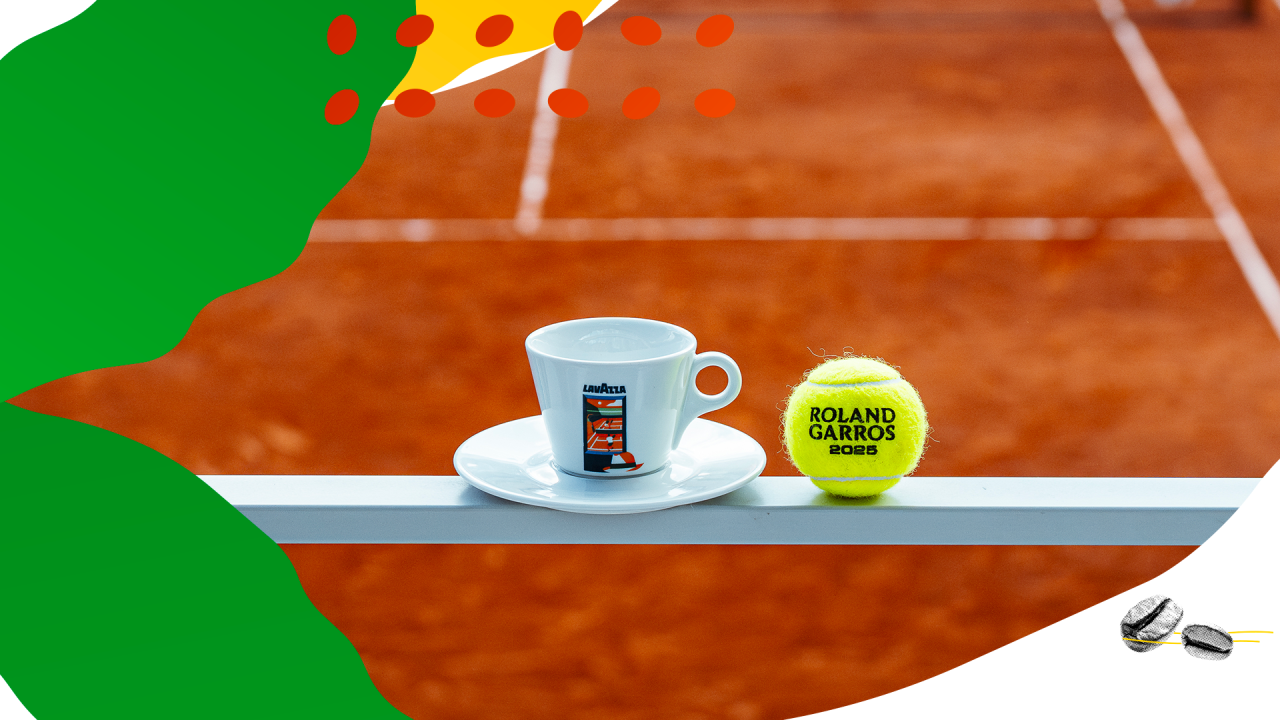
Since 2011, Lavazza has also maintained a deep connection with the world of tennis — a partnership built on shared values like precision, ritual, excellence, and global appeal.

The journey began on the grass courts of Wimbledon and expanded to Roland Garros in 2015, then to the US Open and Australian Open — making Lavazza the only brand to partner with all four Grand Slam tournaments up to 2020. In 2021, Lavazza deepened this commitment as the Platinum Partner of the Nitto ATP Finals in its hometown, Turin, continuing through 2025.

The brand’s global reach extended further in 2023 with its sponsorship of the Rolex Shanghai Masters, the only coffee brand present at this major Chinese tennis event. In 2024, Lavazza also partnered with Mutua Madrid Open, Spain’s most important tennis tournament, reinforcing its focus on international expansion and excellence.

As Giuseppe Lavazza puts it: “A good coffee is like a perfect passing shot — it requires precision, attention to detail, and a pursuit of excellence. Coffee, like tennis, has tradition and a ritual.”

Through this lasting relationship with tennis, Lavazza has served over 10 million cups of espresso across 12 years of tournaments, delivering the true Italian coffee experience to millions of fans. Among Lavazza’s brand ambassadors is Jannik Sinner, the youngest Italian ever to break into the ATP Top 10. His spectacular 2024 season featured 73 wins out of 79 matches, including three victories at the Davis Cup Finals in Málaga — a shining symbol of focus and flair.

To enhance fan experiences, Lavazza has hosted activations like the A Modo Mio Home of Masters at the Nitto ATP Finals in Turin, with appearances from top chefs, athletes, and entertainers celebrating excellence in all its forms.

A Cup of Learning: Brewing Opportunity

In addition to sport, Lavazza champions social responsibility — most notably through its flagship education initiative, A Cup of Learning.

Launched in 2017, A Cup of Learning is a free global training program dedicated to empowering youth and refugees with skills to work in the coffee sector. Beyond vocational training, the initiative spreads coffee culture and helps young people turn passion into profession.

The program offers two tailored tracks:

  • One focused on green coffee, covering sensory analysis, processing techniques, origin-based tastings, and blend creation.

  • The other trains students in espresso preparation, from grinding and tamping to extraction methods and latte art — treating the cup as a canvas for flavor and creativity.

Delivered by Lavazza’s expert trainers in coffee-producing countries and at the Lavazza Training Center in Turin, the program is hands-on, immersive, and transformative.

Since its founding, A Cup of Learning has trained over 600 individuals across Italy, Brazil, India, Haiti, Peru, Albania, the Dominican Republic, Ecuador, the Ivory Coast, Cuba, Honduras, Australia, the UK, and most recently, the United States. In Italy, it supports the “A.A.A. – Welcomes, Approaches, Accompanies” project in partnership with Rete Italiana di Cultura Popolare, targeting asylum seekers and local youth in Turin’s historic Aurora district, where Lavazza was born and still operates.

UNHCR Recognition

In 2024, Lavazza was once again honored by the United Nations High Commissioner for Refugees (UNHCR) with the “Welcome. Working for Refugee Integration” award. This recognition celebrates the company’s exceptional efforts in providing employment opportunities to refugees — many of whom continued working at the same cafés where they trained.

Since 2017, this national initiative has helped more than 50,000 refugees find jobs in Italy, with A Cup of Learning standing as one of its most successful corporate programs.

New Chapter: Naples Stop

The most recent milestone came in Naples, where Lavazza collaborated with CESVI’s House of Smiles to train eight vulnerable youth at the Lavazza Training Center in Torre del Greco. Participants learned directly from Lavazza professionals and graduated with official certificates — taking a vital step toward employment and dignity.

CESVI’s “Houses of Smiles” provide safety, education, and support for at-risk children and teenagers, and Lavazza’s involvement brings not just training, but renewed hope.

A Message for the Future

Reflecting on this 130-year journey, Giuseppe Lavazza shared: “These have been years of change, challenges, and growth. But above all, years we have lived together. A company, first and foremost, is made of people. Today, we are over 5,500 individuals across the world. Our results come from a unique blend: a meeting of stories, knowledge, and perspectives. This diversity, rooted in a shared vision, is our greatest strength — and our guide to build the future with confidence and determination.”

JDE Peet’s Launches Bold New Strategy to Drive Growth and Value Creation

JDE Peet’s, the world’s largest pure-play coffee company, has unveiled a sweeping new strategy titled “Reignite the Amazing”, aimed at accelerating profitable growth and unlocking long-term value. The announcement was made during the company’s Capital Markets Day in Amsterdam.

The brand-led strategy focuses on simplifying the company’s portfolio, streamlining operations, and doubling down on high-potential growth opportunities. Central to the plan are three major brands: Peet’s, L’OR, and Jacobs, along with ten local icons that are expected to drive long-term consumer relevance and performance.

JDE Peet’s is targeting EUR 500 million in net productivity savings, with more than 50% of that goal expected to be achieved by the end of 2027. Half of these savings will be reinvested into growth initiatives, while the other half will support profit expansion.

“JDE Peet’s is a fantastic company with strong foundations,” said Rafa Oliveira, CEO of JDE Peet’s. “As the world’s largest pure-play coffee company, we are uniquely positioned to capture the long-term opportunities this resilient and vibrant coffee category offers. Our new strategy is focused, ambitious, and designed to combine the scale of an industry leader with the agility and mindset of a startup.”

The company has set medium-term financial targets to support the new strategy. Between 2026 and 2027, JDE Peet’s aims to grow gross profit by 1–3%, adjusted EBIT by 3–4%, and generate around EUR 2 billion in free cash flow. By 2028–2029, these targets rise to 3–4% gross profit growth, 4–5% EBIT growth, and at least EUR 2 billion in cash flow. Looking further ahead, from 2030 to 2032 and beyond, the company projects 4–7% gross profit growth, 5–8% EBIT growth, and a minimum of EUR 3.5 billion in free cash flow.

As part of its transformation, JDE Peet’s will also refocus its capital allocation strategy. This includes directing resources toward its priority brands, strengthening the balance sheet with a net leverage target of 2x, increasing shareholder returns through dividend growth and share buybacks, and pursuing more selective, asset-light mergers and acquisitions.

The comprehensive plan positions JDE Peet’s to reinforce its leadership in the global coffee market while delivering sustained value to shareholders and customers alike.

World of Coffee Geneva 2025 Welcomes Nearly 20,000 Attendees, Celebrating Innovation, Sustainability, and Global Collaboration

The curtains have closed on World of Coffee Geneva 2025, which concluded over the weekend with remarkable success, attracting nearly 20,000 participants from more than 140 countries to the Palexpo convention center. With vibrant participation from Europe, the United States, Brazil, Colombia, and beyond, the event reaffirmed its position as Europe’s leading specialty coffee trade show.

Over the course of three dynamic days, the event offered an inspiring platform for innovation, knowledge exchange, and connection, featuring more than 430 exhibitors who showcased cutting-edge technologies, sustainable solutions, and equipment shaping the future of specialty coffee.

Supported by major sponsors — BWT water+more (Host Sponsor), Barista Attitude (Platinum Sponsor), Nestlé Professional (Diamond Sponsor), and Alpro (Gold Sponsor) — the Exhibit Hall served as the energetic heart of the event, brimming with new products, networking, and interactive experiences.

Colombia: 2025 Portrait Country

This year’s Portrait Country honor was awarded to Colombia, recognized for its unwavering commitment to sustainability and its global reputation for high-quality coffee. Colombian exhibitors presented tastings, cultural insights, and innovations that spotlighted the country’s leadership in the global coffee community.

Key Highlights from World of Coffee Geneva 2025

  • Four World Coffee Championships crowned new champions from around the world:

    • World Latte Art Champion: Chen Zhuohao (China)

    • World Coffee in Good Spirits Champion: Georgius Audrey Teja (Indonesia)

    • World Cup Tasters Champion: Chatchalerm “Boss” (Thailand)

    • Cezve/Ibrik Champion: Charles Boyenval (France)

  • Best New Product & Coffee Design Awards recognized groundbreaking product innovation and creative brand storytelling.

  • CEO Roundtable: Moderated by Dr. Krisztina Szalai (Swiss Coffee Trade Association) and Yannis Apostolopoulos (CEO of the SCA), the session gathered global industry leaders to discuss pressing challenges and future strategies.

  • Cupping Rooms: Offered curated tastings from top origins including Peru, Kenya, and Brazil.

  • Education Program: Featured over 20 free lectures and 25 hands-on workshops spanning roasting, sourcing, sustainability, business, and marketing.

  • Roaster Villages: Provided a platform for micro-roasters to share distinctive coffees and foster meaningful connections.

  • Sustainability Initiatives: Included a tree-planting campaign in Burundi, executed in collaboration with Sucafina and the Kahawatu Foundation, to offset event emissions.

  • Green Coffee Connect: A specialized program for green coffee professionals, hosted by Barista Attitude, focusing on sourcing strategies and trade insights.

A Community Effort

A remarkable 276 volunteers were instrumental to the event’s success — with 61% from Europe, 17% from the United States, 14% from Asia, and 8% from South America. Their dedication and energy contributed to a warm and seamless experience for all attendees. The Specialty Coffee Association (SCA) extended its sincere gratitude to every volunteer.

Looking Ahead to Brussels 2026

As Geneva 2025 closes its doors, preparations are already underway for World of Coffee Brussels 2026, scheduled for June 25–27. Exhibitor registration is now open.

About the Specialty Coffee Association (SCA)
The Specialty Coffee Association is the world’s largest coffee trade association, committed to promoting excellence across the entire coffee value chain. By supporting research, education, events, and global standards, the SCA empowers a growing community to create a sustainable and thriving coffee industry. Learn more at sca.coffee or follow @specialtycoffeeassociation on social media.

Four New World Coffee Champions Crowned at World of Coffee Geneva 2025

After three days of intense competition, creativity, and craftsmanship, the Specialty Coffee Association (SCA) has officially crowned four new World Coffee Champions at World of Coffee Geneva 2025. Held from June 26 to 28 at Palexpo, the event brought together more than 120 competitors and 44 judges, along with thousands of spectators, to witness the highest levels of excellence in specialty coffee.

This year’s championships included the World Cup Tasters, World Latte Art, World Coffee in Good Spirits, and Cezve/Ibrik Championships. The competitions served as a global stage for skill, innovation, and cultural expression.

World Cup Tasters Champion: Chatchalerm (BOSS), Thailand
Representing Thailand, Chatchalerm, also known as BOSS, was named the 2025 World Cup Tasters Champion after outperforming fellow finalists in the final round. This competition tests a coffee cupper’s ability to detect taste differences in specialty coffee using speed, accuracy, and sensory skill. BOSS’s performance reflected a high level of precision and consistency.

The 2025 World Cup Tasters Championship was supported by Title Sponsor Porland, Qualified Water Sponsor Brita, and partners 3TEMP, InterAmerican Coffee Europe, Femobook, and Pulycaff.

World Latte Art Champion: Chen Zhuohao, China
Chen Zhuohao of China secured the 2025 World Latte Art Championship title after delivering exceptional performances across multiple rounds, including the Art Bar showcase. The competition judges baristas on visual presentation, creativity, symmetry, contrast, and overall performance. According to Emma Markland-Webster, Judge Operations Lead for WLAC, this year’s competition demonstrated new levels of precision and creativity, making traditional etching tools and artificial coloring increasingly obsolete.

Sponsors for the 2025 WLAC included Thermoplan AG as the Qualified Espresso Machine Sponsor, along with Club House, Luckin Coffee, The Force Tamper, Oatly, and Pulycaff.

Cezve/Ibrik Champion: Charles Boyenval, France
France’s Charles Boyenval was crowned the 2025 Cezve/Ibrik Champion. This competition celebrates the traditional preparation of coffee using the cezve or ibrik method, encouraging competitors to incorporate cultural and personal storytelling into their routines. Boyenval’s performance stood out for its technical execution and narrative depth, drawing from his upbringing across Mauritius, Réunion Island, and France. According to Judge Operations Lead Trent Rollings, Charles demonstrated how coffee can serve as a bridge between cultures and identities.

Pulycaff was the official sponsor for the 2025 Cezve/Ibrik Championship.

World Coffee in Good Spirits Champion: Georgius Audrey Teja, Indonesia
Georgius Audrey Teja of Indonesia was named the 2025 World Coffee in Good Spirits Champion. This competition blends coffee and spirits in innovative ways, highlighting mixology skills and beverage design. Teja’s routine, titled “Root,” drew inspiration from his hometown and featured traditional Indonesian ingredients. Judge Operations Lead Teija Lublinkhof praised the performance for its elegance, balance, and emotional impact.

Sponsors for the 2025 World Coffee in Good Spirits Championship included Rocket Espresso, Femobook, Scotsman Ice, and Pulycaff.

A Global Showcase of Coffee Excellence
Throughout the championships, spectators also had the opportunity to sample coffee from renowned international roasters at the WCC Brew Bar, engage with industry professionals, and witness the depth of talent emerging across the coffee world.

Looking Ahead: World Barista Championship at HostMilano
The 2025 World Coffee Championships season will continue with the 25th edition of the World Barista Championship, to be held at HostMilano from October 17 to 21. The event marks a return to the birthplace of espresso and will celebrate 25 years of excellence on the world stage.

Full rankings from each competition are available at wcc.coffee, and videos of all competitor performances can be viewed on the official WCC YouTube channel.

About the Specialty Coffee Association (SCA)
The Specialty Coffee Association is the largest global coffee trade association, working to make coffee better through education, research, events, and collaboration. The SCA supports a sustainable and inclusive industry that benefits every link in the value chain.

About the World Coffee Championships (WCC)
Organized by the SCA, the World Coffee Championships consist of seven global competitions: World Barista Championship, World Latte Art Championship, World Brewers Cup, World Cup Tasters Championship, World Coffee in Good Spirits Championship, World Coffee Roasting Championship, and the Cezve/Ibrik Championship.

Sara Alali to Qahwa World: Judging at Global Competitions Is a Responsibility and a Chance to Grow

Geneva – Ali Alzakary

On the sidelines of her role as an international judge at the Latte Art Championship during World of Coffee Geneva 2025, Saudi coffee professional Sara Alali shared her insights with Qahwa World on the challenges and nuances of judging at global coffee competitions.

“As an internationally certified judge in Latte Art, Barista, and Coffee Tasting Championships, I’ve had the privilege of judging across local and international platforms—including in Europe, East Asia, various Arab countries, and in world championships held in Taiwan, Jakarta, and now here in Geneva,” said Alali.

“Each experience has been unique and valuable. As judges, we grow with every event. These competitions are not just about evaluation—they’re opportunities to practice, refine, and sharpen our skills.”

On the differences between local and global events, she noted: “Local competitions often provide space for new judges to learn, while world championships demand higher levels of precision and professionalism—from both competitors and judges. The technical differences are also significant. In global events, everything from visual evaluation in Latte Art to flavor balance in Barista competitions is analyzed at a more advanced level. The expectations are higher, and the responsibility is greater.”

When asked what advice she would offer aspiring Arab judges, she emphasized: “Continuous practice is essential. A judge must be thoroughly familiar with the rules and standards of each competition. Accuracy, attentiveness, and integrity are critical. Judges are evaluated, too—based on performance, commitment, and interaction with organizers. You must also stay up to date with the latest developments in judging, whether in Latte Art, Barista, or Coffee Tasting.”

She concluded: “Judging isn’t a routine job—it’s a craft, a science, and a growing journey. To stay in this path, you need passion, dedication, and an eye for detail.”

Winners Revealed: Best New Products of 2025 Announced at World of Coffee Geneva

The Specialty Coffee Association (SCA) has officially unveiled the winners of the prestigious Best New Product Awards 2025 during the ongoing World of Coffee Geneva event, hosted at Palexpo SA. Each year, these awards recognize breakthrough innovations that are shaping the future of specialty coffee across categories such as equipment, accessories, and technology.

A panel of seasoned industry professionals selected the winning products based on strict criteria, including quality, innovation, and value to the specialty coffee community. This year’s winners reflect a strong commitment to excellence, creativity, and functionality.

“We are honored to celebrate this year’s winning products, which exemplify the dedication, ingenuity, and vision that define the specialty coffee industry,” said Yannis Apostolopoulos, CEO of the Specialty Coffee Association. “These innovations are not only raising the bar but also shaping the future of coffee for communities around the world.”

The 2025 Best New Product Award Winners:

1. Coffee Accessories
Winner: Subminimal
Product: Subscale
Description: A precision tool designed for coffee professionals, offering sleek design and accurate measurements for brewing excellence.
Booth: 1848

2. Commercial Coffee Preparation & Serving Equipment
Winner: Ubermilk
Product: Ubermilk PLUS X
Description: A cutting-edge solution for milk steaming in commercial settings, enhancing efficiency and consistency in cafés.
Booth: 1327

3. Consumer Coffee Preparation & Serving Equipment
Winner: Fellow
Product: Espresso Series 1
Description: A compact and powerful home espresso machine designed to bring café-quality extractions to everyday users.
Booth: 1559

4. Open Class
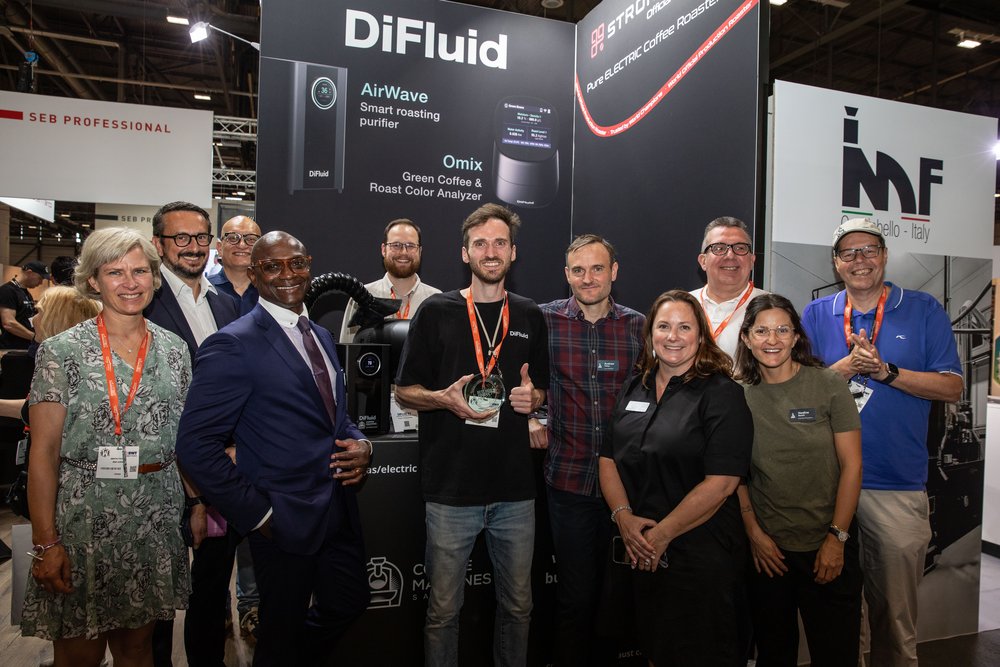
Winner: DiFluid
Product: AirWave – Smart Roast-Smoke Filter
Description: A modern solution for smoke filtration during roasting, reflecting sustainability and air quality innovation.
Booth: 1507

5. People’s Choice Award
Winner: To Be Announced
Description: This category recognizes the product voted most innovative by attendees at World of Coffee Geneva. The result will be revealed soon.

With thousands of industry professionals in attendance, the 2025 awards shine a spotlight on companies that continue to push the boundaries of what’s possible in the world of specialty coffee. From consumer tools to commercial-grade technology, these winners are helping shape a smarter, more sustainable, and more refined coffee future.