Coffee Prices Face Continued Pressure Amid Brazil Harvest Progress and Global Supply Outlook

Coffee prices are under ongoing pressure as Brazil’s harvest continues to advance, influencing both arabica and robusta markets. On Thursday, September arabica futures (KCU25) closed down by 1.60 cents (-0.55%), while September ICE robusta futures (RMU25) edged up by $25 (+0.69%), signaling mixed market performance.

The Brazilian coffee harvest remains a key driver behind price movements. Cooxupé, the country’s largest coffee cooperative and exporter, reported that 31% of its harvest was completed as of June 27—down from 42% at the same point last year. Dry weather forecasts for the coming days in major growing regions are expected to accelerate the pace of picking.

Meanwhile, data from Safras & Mercado indicates that Brazil’s 2025/26 harvest was 35% complete by June 11. The robusta harvest reached 49% completion, while the arabica harvest lagged at 26%, slowed by heavy rainfall in key areas. According to Somar Meteorologia, Minas Gerais—Brazil’s largest arabica-producing region—received 5 mm of rainfall during the week ending June 28, amounting to 714% of the historical average, alleviating earlier dryness concerns and supporting crop development.

Market sentiment is also affected by global production outlooks. The USDA’s Foreign Agricultural Service (FAS) forecasts Brazil’s 2025/26 production at 65 million bags, a modest 0.5% increase year-over-year. Vietnam’s output is projected to rise by 6.9% to a four-year high of 31 million bags. These figures reinforce expectations of ample supply, contributing to downward price pressure.

Inventories also play a role in the shifting dynamics. ICE-monitored arabica stocks recently hit a 4.75-month high of 892,468 bags in late May and remain elevated at 842,223 bags. In contrast, robusta inventories dipped to a six-week low of 5,108 lots last week, though they have since recovered slightly to 5,153 lots, offering limited support to robusta prices.

Export figures add another layer to the market picture. Cecafé, Brazil’s coffee export council, reported that May exports of green coffee fell by 36% year-over-year to 2.8 million bags—an indicator that could offer some bullish influence on prices. On the other hand, Vietnam continues to see the impact of past droughts. Its 2023/24 coffee production dropped by 20% to 1.472 million metric tons—the smallest harvest in four years. Exports also declined: 2024 shipments fell by 17.1% to 1.35 million metric tons, and the January-May 2025 export figure is down 1.8% year-over-year.

Looking ahead, the USDA’s global outlook signals higher supply. Its biannual report estimates 2025/26 world coffee production will rise by 2.5% to a record 178.68 million bags. This includes a 1.7% decline in arabica output to 97.02 million bags and a 7.9% increase in robusta production to 81.66 million bags. Ending stocks are expected to grow by 4.9% to 22.82 million bags.

Despite the broader increase in supply, consultancy Volcafe forecasts a deeper arabica deficit for the 2025/26 season, projecting a shortfall of 8.5 million bags—widening from the 5.5 million bag deficit estimated for 2024/25. If accurate, this would mark the fifth consecutive year of arabica deficits, potentially setting the stage for renewed volatility.

In summary, coffee markets remain in flux, shaped by Brazil’s harvest pace, improving weather, fluctuating inventories, and shifting global forecasts. While robusta prices show slight signs of support due to tighter inventories and weather impacts in Vietnam, arabica continues to feel the weight of strong supply expectations, especially from Brazil—the world’s largest producer.
African Fine Coffees Association and Coffee Quality Institute Renew MOU

Dubai – Qahwa World

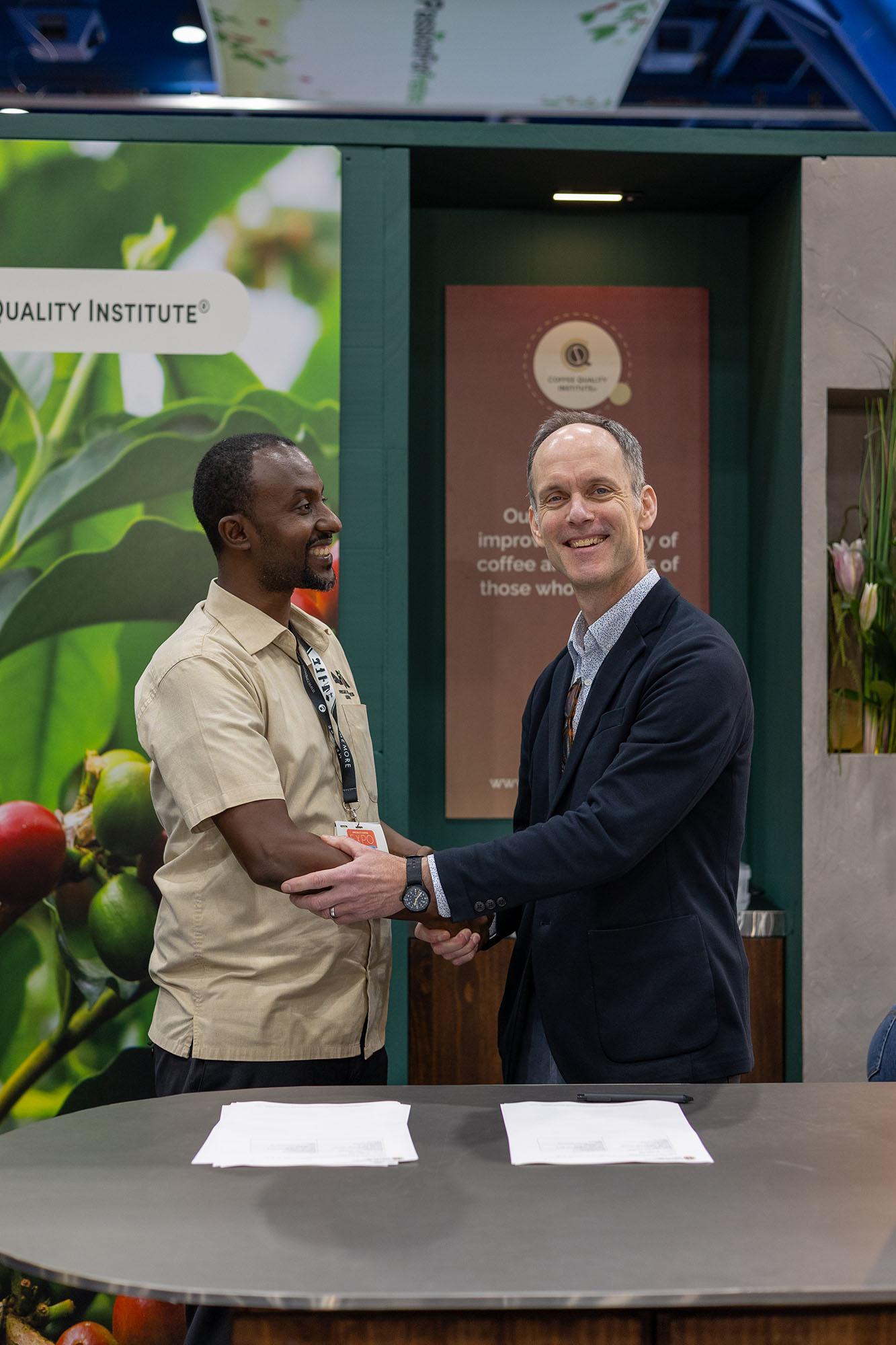
Coffee Quality Institute (CQI) and the African Fine Coffees Association (AFCA) have renewed and expanded a Memorandum of Understanding (MOU), reaffirming their shared values and commitment to collaborate.

“AFCA is committed to expanding opportunities for millions of producers in some of the most storied coffee origins in the world,” said Michael Sheridan, Chief Executive Officer at Coffee Quality Institute. “CQI is proud to renew our partnership with AFCA in support of that worthy objective at a time when we are renewing our own commitment to improve the lives of coffee producers. This MOU builds on the deep alignment in the mission and values of the two organizations and a track record of successful partnership to set the stage for expanded collaboration into the future.”

‍Representatives from both organizations met at SCA EXPO in Houston to exchange signatures. The African Fine Coffees Association represents the coffee sectors of eleven countries: Burundi, Cameroon, the Democratic Republic of Congo, Ethiopia, Kenya, Malawi, Rwanda, South Africa, Tanzania, Uganda, and Zambia.

Key points in the memorandum include:

• Building professional skills and product knowledge through CQl’s Post Harvest Processing programs. This program spans both Arabica and Robusta.

• Consulting and supporting AFCA’s operations, as desired. This could include training, coffee quality competitions, or providing short-term technical

assistance.

• Collaborating on CQI community support.

• Supporting green coffee buyer origin trips and market access activities.

• Collaborating with AFCA partner organizations on coffee education, skills building, and product and market knowledge development.

“AFCA exists to advocate for our members across the African coffee value chain—from farmers and exporters to institutions and innovators,” said Gilbert Gatali, Executive Director of the African Fine Coffees Association. “We are proud to renew our collaboration with CQI, an organization that shares our vision of building capacity, promoting quality, and enhancing market access for African coffees. This MOU reinforces our commitment to professionalizing the sector and co-developing meaningful programming that drives long-term impact.”

CQI and Progreso Foundation Join Forces to Elevate Coffee Quality and Producer Prosperity

At World of Coffee Geneva, the Coffee Quality Institute (CQI) and the Progreso Foundation have officially signed a Memorandum of Understanding (MoU) that marks the beginning of a one-year strategic partnership aimed at enhancing coffee quality and supporting producers across Latin America, Africa, and Asia.

The agreement outlines a collaborative framework between the two organizations to:

  • Deliver post-harvest processing training and certification programs.

  • Strengthen producer organizations through tailored technical support and business development.

  • Facilitate greater market access and improve income opportunities at the producer level.

  • Develop joint education and skills-building initiatives targeting farming communities.

By aligning CQI’s expertise in coffee quality improvement and education with Progreso Foundation’s strong local networks and community development experience, the partnership seeks to make a meaningful impact on both coffee quality and the sustainability of smallholder livelihoods.

Both organizations emphasized their shared commitment to fostering a more equitable and resilient coffee sector through capacity building and market integration. The collaboration is expected to create new pathways for producers to thrive in a challenging and competitive global coffee economy.

This announcement at WOC Geneva signals an important step forward in CQI and Progreso’s shared mission to empower coffee-growing communities worldwide.

Study Finds Coffee Compounds May Reduce Risk of Type 2 Diabetes

A new study published in the International Journal of Molecular Sciences suggests that drinking black coffee—whether caffeinated or decaffeinated—may help lower the risk of developing type 2 diabetes. The findings point to naturally occurring polyphenols in coffee, not caffeine, as the key compounds offering potential protection.

Researchers from universities in the Republic of Korea analyzed data from 149 scientific publications to evaluate coffee’s impact on metabolic factors linked to type 2 diabetes. The focus was on five hydroxycinnamic acids found in coffee and their influence on the intestines, pancreas, liver, muscles, and tissue.

Their analysis revealed that consuming 3 to 5 cups of black coffee daily may:

  • Regulate blood sugar levels

  • Reduce inflammation

  • Improve insulin sensitivity

  • Enhance antioxidant activity

  • Support healthier glucose metabolism

These benefits were observed regardless of whether the coffee contained caffeine. According to the study, regular coffee drinkers may experience a 20–30% lower risk of developing type 2 diabetes.

The researchers concluded that polyphenols—particularly chlorogenic acid and related hydroxycinnamic acid derivatives—could play a preventive role in diabetes management. However, they also emphasized the need for further clinical studies.

Dr. Zhaoping Li, professor of medicine and chief of clinical nutrition at UCLA, who was not involved in the study, endorsed the findings. “Drinking coffee provides natural benefits. You can make coffee part of your healthy lifestyle,” she said.

Dr. Marilyn Tan, a clinical associate professor of medicine at Stanford University, noted that while the findings are promising, some of the underlying data came from lab studies. She also cautioned that observational studies may not fully account for other health and lifestyle factors among coffee drinkers.

Still, Tan acknowledged the significance of the results: “A 20–30% risk reduction is very large and meaningful. The fact that both caffeinated and decaffeinated coffee showed similar effects suggests the benefits are due to other bioactive components in coffee, not caffeine.”

Dr. Li added that coffee beans contain more than 200 compounds, many of which have health-promoting properties—some similar to those found in medicinal spices. “The health benefits of black coffee seem to be obvious,” she said.

Previous studies have linked regular coffee consumption to reduced risks of cardiovascular disease, improved brain health, lower depression rates, and protection against certain liver conditions.

Experts recommend drinking coffee without added sugar or cream and avoiding pairing it with unhealthy foods to maximize its health benefits.

Vanadi Coffee Shareholders Approve €1 Billion Bitcoin Treasury Strategy

Vanadi Coffee, a small café chain based in Alicante, has gained shareholder approval for an ambitious plan to invest up to €1 billion in Bitcoin, marking a bold shift in its financial strategy. The move positions the company to become the largest publicly listed Bitcoin-holding firm in Spain.

According to a filing released on June 29, Vanadi Coffee acquired 20 additional Bitcoins this month, raising its total holdings to 54 BTC. The digital assets are being held with Bit2Me, a leading cryptocurrency custody and exchange provider based in Spain. At current market prices, Vanadi’s Bitcoin reserve is valued at approximately €5.8 million.

The shareholder document noted the recent purchase was made at an average price of €93,444 per Bitcoin. With this acquisition, Vanadi officially becomes one of the first publicly traded Spanish companies to adopt Bitcoin as its primary treasury asset.

The company’s shares, listed on BME Growth — the Spanish exchange for small- and medium-sized enterprises — have more than tripled over the past month since the Bitcoin strategy was first announced.

A translated version of Vanadi’s strategic release stated: “Vanadi Coffee redefines its business model and will use Bitcoin as its main reserve asset, accumulating large amounts of Bitcoin as part of its treasury.” The company is reportedly taking inspiration from similar moves by international firms such as Strategy (U.S.) and Metaplanet (Japan).

Once seen as a struggling local brand, Vanadi Coffee reported losses of €3.3 million in 2024, up 15.8% from the previous year. The pivot to Bitcoin marks a dramatic transformation in its approach to financial management.

The company is also reviewing two investment proposals — one from a local software consultancy and another from international fund Alpha Blue Ocean, which has invested over €1.5 billion globally. These investments may support Vanadi’s goal of significantly increasing its Bitcoin reserves.

Komerz Inks Exclusive Deal to Distribute Beanies and Coffeeway Brands in UK Coffee Market

In a significant move signaling its entry into the global coffee sector, Komerz Ltd has signed an exclusive UK distribution agreement with Cafetex Group, the international coffee company behind the popular brands Beanies and Coffeeway. The strategic partnership marks Komerz’s official debut in the coffee industry and is expected to reshape the flavoured coffee segment in the United Kingdom.

Under the new agreement, Komerz will act as the sole distributor of Beanies and Coffeeway products across the UK. The collaboration is projected to generate £5 million in revenue within its first year, with expectations to exceed £20 million by 2029. The move aligns with Komerz’s broader strategy to integrate high-growth consumer brands into its AI-powered commerce platform, Komerz OS.

“This partnership is a major milestone for Komerz as we enter the coffee space with a trusted and innovative partner like Cafetex Group,” said Ramesh Krishnamurthy, CEO of Komerz Ltd.

The Cafetex portfolio includes a wide range of coffee offerings, from instant and ground coffee to pods and ready-to-drink (RTD) beverages. The Beanies brand, in particular, has gained international recognition for its flavoured coffee products—a category experiencing growing demand in the UK market.

Ioannis Benopoulos, CEO of Cafetex Group, emphasized the strategic value of the partnership:

“We’ve long looked for a partner who could bring our brands to scale in the UK while maintaining our commitment to quality, innovation, and customer engagement. Komerz offers the reach and intelligence we need, especially with its focus on integrated growth across physical and digital retail.”

Through Komerz OS, which utilizes AI and machine learning, Komerz enables brands to make real-time data-driven decisions while managing sales, logistics, marketing, and customer development in a unified interface. The platform’s omnichannel capabilities are expected to accelerate market penetration for Cafetex’s brands and help Beanies strengthen its leadership in the flavoured coffee category.

This deal also enhances Komerz’s growing brand portfolio, which already includes major names such as Unilever International. The company is positioning itself as one of the fastest-growing global distributors of consumer goods, powered by intelligent technology and agile supply chain systems.

About Komerz Ltd
Komerz Ltd is a global commerce and distribution platform leveraging its proprietary AI/ML-powered Komerz OS to enable scalable, omnichannel expansion for consumer brands. The company focuses on delivering end-to-end growth solutions across marketing, logistics, sales, and retail strategy.

About Cafetex Group
Headquartered in Greece, Cafetex Group is an international coffee company and the parent of the Beanies and Coffeeway brands. Known for its leadership in the flavoured coffee segment, Cafetex operates across more than 30 countries and offers a wide portfolio spanning instant, pods, ground, and RTD coffee.

Barista Terminology | Episode 5: Milk Texturing & Latte Art

We are proud to continue our educational series on QahwaWorld.com, designed to equip baristas and coffee enthusiasts with essential industry knowledge. Titled “Barista Terminology,” this comprehensive series delivers clear, concise insights into the foundational concepts shaping the world of coffee. Spanning more than 20 episodes, each installment explores a distinct element of coffee preparation and culture.

In Episode 5, we turn our focus to the craft of milk texturing and latte art — an essential skillset for any aspiring barista. From mastering the steam wand to pouring intricate patterns, this episode unpacks the techniques, tools, and terminology behind beautifully balanced milk-based drinks. Whether you’re creating silky microfoam or perfecting your free pour, this guide will help you elevate every cup with texture, taste, and visual appeal.

In many coffee beverages, milk is not just an addition — it’s a craft. How milk is steamed and poured can transform the flavor, texture, and appearance of a drink. In this episode, we explore the essential terms every barista should know about milk texturing, steaming techniques, and the art of creating beautiful patterns in the cup.

1. Steaming

The process of heating milk using pressurized steam from the espresso machine. It combines heat with air to create microfoam and enhances the milk’s sweetness.

2. Milk Texturing

Refers to the process of incorporating air into milk while steaming to achieve the desired consistency. Proper texturing results in smooth, velvety milk suitable for latte art.

3. Microfoam

A fine, silky foam created when air is gently incorporated into milk during steaming. It has a glossy appearance and blends smoothly with espresso.

4. Froth (Foam)

A drier, thicker layer of milk bubbles usually found in cappuccinos. It sits on top of the drink and doesn’t blend into the espresso as microfoam does.

5. Stretching

The initial phase of steaming where air is introduced into the milk, causing it to expand in volume. Achieved by placing the steam wand near the surface.

6. Rolling

The second phase of steaming where the milk is spun in a whirlpool motion to break down large bubbles and create a uniform texture.

7. Milk Temperature

Ideal steamed milk temperature ranges between 55°C and 65°C. Overheating can scald the milk and ruin flavor and texture.

8. Aeration

The act of introducing air into milk. Controlled aeration creates microfoam; too much leads to dry foam and loss of sweetness.

9. Pitcher

The metal jug used to steam and pour milk. Its shape and spout design are crucial for precision in latte art.

10. Pouring Technique

The way milk is poured affects the integration with espresso and determines the success of latte art. It involves speed, height, and angle.

11. Latte Art

Decorative patterns or images made by skillfully pouring steamed milk into espresso. Common designs include the heart, tulip, and rosette.

12. Free Pour

Latte art created purely by pouring from the pitcher, without tools. It relies on control, timing, and fluid motion.

13. Etching

A latte art technique where designs are drawn on the milk foam using a thin tool. Allows for more intricate artwork.

14. Milk Splitting

Dividing steamed milk into multiple pitchers to create different textures for different drinks (e.g., latte vs. cappuccino).

15. Mouthfeel

The tactile sensation of milk in the mouth. Properly textured milk feels smooth, creamy, and dense — not watery or bubbly.


Related Stories

Barista Terminology | Episode 4: Brew Methods Explained

Barista Terminology | Episode 1: The Coffee Bean – From Seed to Roast

Barista Terminology | Episode 2: Barista Tools & Equipment

Barista Terminology | Episode 3: Espresso Basics

Arabica Coffee Prices Drop as Brazil Crop Conditions Improve

arabica coffee prices declined notably on Tuesday, driven by growing optimism over Brazil’s upcoming harvest. September arabica futures dropped by 2.72%, reaching their lowest level in more than six months, while robusta coffee futures edged higher by 1.10%.

The downturn in arabica was largely attributed to favorable weather in Brazil. Meteorological data showed that the key arabica-growing region of Minas Gerais received 5 millimeters of rain during the last week of June — 714% above its historical average. This rainfall eased concerns about dryness and raised expectations for a healthy crop in the world’s top arabica-producing country.

Meanwhile, the U.S. dollar weakened to its lowest point in over three years, prompting short-covering activity that helped lift robusta coffee into positive territory.

Over the past two months, arabica prices have been under pressure due to a stronger outlook for global supply. According to the U.S. Department of Agriculture’s Foreign Agricultural Service (FAS), Brazil’s 2025/26 coffee production is projected to rise by 0.5% year-on-year to 65 million bags. Vietnam, the top producer of robusta coffee, is expected to increase its output by 6.9% to a four-year high of 31 million bags.

Despite these gains, the Brazilian harvest is progressing at a slower pace than in previous years. Cooxupé, Brazil’s largest coffee cooperative and exporter, reported that as of June 20, only 24.3% of the harvest was complete, down from 34.2% at the same point in 2024. Another report by Safras & Mercado estimated the national harvest was 35% complete by June 11, with robusta at 49% and arabica at 26%. Heavy rains in some regions have delayed arabica harvesting.

Robusta prices, in contrast, found support from tightening supply conditions. ICE-monitored inventories of robusta recently fell to a six-week low of 5,108 lots. However, arabica inventories monitored by ICE reached a 4.75-month high in late May and stood at 841,770 bags as of Tuesday — a bearish signal for arabica prices.

On the export front, Brazil’s green coffee exports dropped by 36% year-on-year in May to 2.8 million bags, according to Cecafé. Meanwhile, Vietnam’s 2023/24 crop saw a 20% decline due to drought, producing just 1.472 million metric tons — the lowest in four years. The country’s coffee exports in 2024 fell 17.1% year-on-year to 1.35 million metric tons, and exports from January to May 2025 were down 1.8%.

The USDA’s latest biannual report, released last week, added further pressure to prices. It projected global coffee production for the 2025/26 season to rise 2.5% to a record 178.68 million bags. This includes a 1.7% decline in arabica output to 97.02 million bags and a 7.9% increase in robusta output to 81.65 million bags. Global ending stocks are expected to grow by 4.9% to 22.82 million bags.

Despite the optimistic supply projections, commodity trader Volcafe warned of a deepening arabica supply deficit. The firm expects an 8.5 million bag shortfall in the 2025/26 season — widening from 5.5 million bags in the previous year — marking the fifth consecutive year of arabica deficits.

In short, while improved crop conditions and higher production estimates are weighing on prices, ongoing concerns about long-term arabica supply imbalances continue to cast uncertainty over the global coffee market.

Black Rifle Coffee Company Sets August Dates for Q2 2025 Earnings Release and Investor Call

Black Rifle Coffee Company (BRCC), the U.S.-based premium coffee and lifestyle brand founded by veterans, has officially announced the dates for its second quarter 2025 earnings release and investor conference call.

According to the company’s statement, financial results for the second quarter will be published on Monday, August 4, 2025, following the close of the markets. A conference call to discuss the results will be held the next day, Tuesday, August 5, at 8:30 a.m. Eastern Time. The event will be streamed live through BRCC’s investor relations website, where the earnings press release and accompanying presentation will also be made available alongside the company’s 10-Q filing.

Institutional investors and financial analysts interested in joining the call can dial (877) 407-0609 (toll-free in the U.S.) or +1 (201) 689-8541 for international access. A recording of the call will be accessible for replay until August 12, using the replay numbers (877) 660-6853 or +1 (201) 612-7415, with access code 13754411.

Founded in 2014 by former Green Beret Evan Hafer, BRCC has established itself not only as a coffee company but as a patriotic lifestyle brand, deeply rooted in its mission to serve those who serve America. The company offers a range of high-caffeine coffee blends and ready-to-drink products while maintaining a strong commitment to veterans, first responders, and active-duty military personnel. With its unique identity, BRCC has attracted a dedicated customer base and expanded its presence across retail shelves and direct-to-consumer platforms.

As the company continues to grow and navigate a competitive beverage market, investors and industry observers will be watching closely for insights into BRCC’s revenue performance, profitability, retail expansion, and ongoing initiatives to strengthen its brand.

This upcoming earnings release follows a first quarter marked by product innovation and store growth, amid a dynamic retail environment. The second quarter results are expected to offer further clarity on how the company is performing in terms of scaling operations and sustaining customer loyalty.

For full access to the webcast, supporting documents, and future updates, stakeholders can visit the official investor page: ir.blackriflecoffee.com.

RAW Coffee Company Offers Free Espresso Machine Health Checks This Summer

As temperatures rise in the UAE, RAW Coffee Company is extending some much-needed TLC—not just to coffee lovers, but to their espresso machines too. From July 1st to August 31st, 2025, the Dubai-based specialty coffee pioneer is offering free health assessments for coffee equipment, available Monday through Friday between 9:00 AM and 5:00 PM.

This summer initiative allows cafés, restaurants, and home baristas to have their espresso machines inspected by RAW’s expert servicing team at no cost. Following the inspection, customers will receive a detailed technical report highlighting the condition of their machine.

“There are no strings attached,” RAW clarified. “If something needs fixing, we’ll quote you a fair price and only proceed if you approve. Should you move forward with the repairs, we’ll even deliver your machine for free anywhere in the UAE.”

What the Offer Includes:

  • A complimentary assessment by RAW’s experienced technicians.

  • A full written diagnostic report post-inspection.

  • Optional repairs or part replacements, with clear pricing provided upfront.

  • Free delivery within the UAE if you proceed with the recommended service.

  • Service availability from Monday to Friday, 9 AM to 5 PM.

To book an appointment, customers are encouraged to email [email protected] or call 04 339 5474 in advance to secure a time slot.

Terms and Conditions Apply:

  • The assessment is free, but all repairs or part replacements are chargeable and require full pre-payment before work begins.

  • Free delivery is only included if you approve and proceed with RAW’s service recommendations.

  • RAW reserves the right to change or cancel the offer at any time without prior notice.

This offer reinforces RAW’s commitment to maintaining the quality and performance of specialty coffee equipment across the UAE. As one of the country’s most respected names in specialty coffee, RAW Coffee Company continues to support the local coffee community not only through exceptional beans but also through its robust training and technical service divisions.

Offer valid: July 1 – August 31, 2025
Location: UAE
Book now: [email protected]
Call: 04 339 5474

Is your espresso machine due for a check-up?
Let RAW’s expert team help you keep your equipment running smoothly—because good coffee starts with a healthy machine.

London Coffee Festival Wins AEO Award for Best UK Trade Show

The London Coffee Festival has received one of the UK’s most prestigious industry recognitions, winning the Best UK Trade Show (2,001–4,000 SQM) at the Association of Event Organisers (AEO) Excellence Awards. The award was presented at a ceremony held in London on Friday, June 13, celebrating excellence in live events across the United Kingdom.

Organised by the AEO, the annual Excellence Awards are widely regarded as the benchmark for outstanding achievement in the event industry. This recognition positions the London Coffee Festival among the nation’s top trade shows in terms of scale, impact, and innovation.

The London Coffee Festival team expressed deep appreciation to its partners, exhibitors, and attendees, particularly members of the specialty coffee community whose ongoing enthusiasm continues to shape the festival’s success.

“We are honoured to receive this award. It’s a testament to the collective passion, creativity, and dedication of the entire coffee industry,” said Harry Goddin, Commercial Director of The London Coffee Festival.

Now in its fourteenth year, The London Coffee Festival has become a cornerstone of the global specialty coffee calendar, drawing thousands of professionals and enthusiasts to the capital each spring. The event features an extensive programme of exhibitions, tastings, workshops, competitions, and panel discussions, all designed to celebrate the evolving culture and commerce of coffee.

As part of the ongoing celebration of innovation in the sector, the festival’s sister brand, Lumina Intelligence, has released a new episode of The Market Pulse podcast titled:
“Caffeinated Futures: Innovation, Wellness & the Third Space”.

In the episode, Flora Zwolinski, Senior Insight Manager at Lumina Intelligence, sits down with Harry Goddin to explore major trends shaping the future of coffee—from functional ingredients like collagen and adaptogens to the growing role of coffee in wellness and community spaces. The discussion offers insights into the changing expectations of consumers and the new business models emerging in response.

In addition to the podcast, a series of exclusive interviews from the festival floor have been released, featuring key voices in the industry, including:

  • Jonny England, Löfbergs UK

  • Ben Brooker, La Marzocco

  • Ant Duckworth, crowned LCF Influencer of the Year 2025

These interviews offer a behind-the-scenes look at the innovation, leadership, and creativity that define the UK’s specialty coffee scene today.

With this award and ongoing industry engagement, The London Coffee Festival reaffirms its role as a leading platform not just for trade, but for thought leadership in coffee.

Listen to the full episode of The Market Pulse podcast:
“Caffeinated Futures: Innovation, Wellness & the Third Space” – now available on all major podcast platforms.

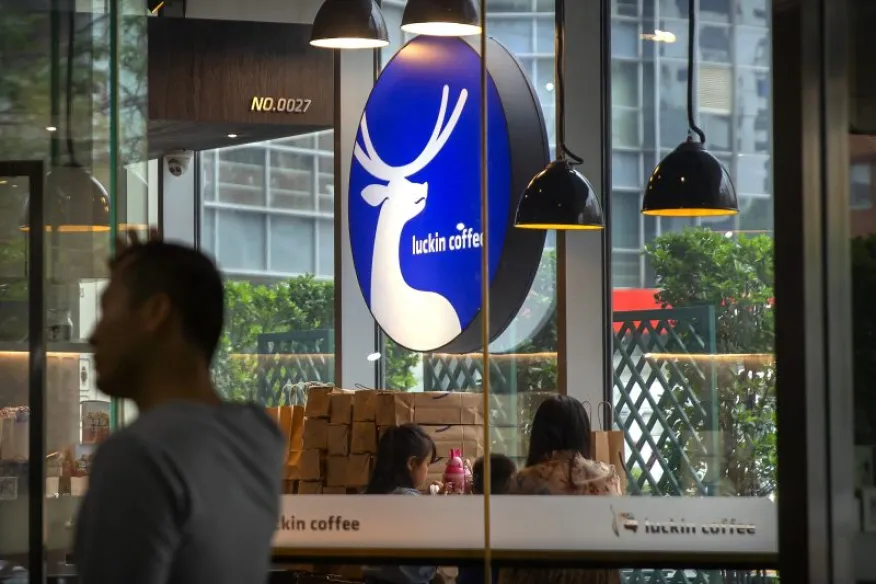
Chinese Coffee Giant Luckin Launches in New York with Two Initial Stores

The popular Chinese chain makes its U.S. debut, beginning with soft openings in Brooklyn and Manhattan.

 A new competitor has entered the bustling U.S. coffee market. Chinese coffee chain Luckin Coffee, one of the fastest-growing brands in Asia, has officially opened its first stores in the United States, choosing New York City for its debut.

On Monday, the company began soft operations at two locations: 755 Broadway in Brooklyn and 800 6th Avenue in Manhattan. The brand announced its arrival with a simple message via its dedicated U.S. social media channel: “NYC, we’re here. This is just the beginning.”

Luckin Coffee, which was established in Xiamen, China in 2017, promotes a streamlined, cashier-less experience where customers place orders through the company’s mobile app or affiliated platforms. Its physical outlets are typically compact, designed mainly for order pickup and limited in-store seating.

The U.S. launch attracted attention not just from New Yorkers. One enthusiastic customer reportedly drove from Florida to New York — a journey of over 1,400 miles — to be among the first to try the new stores.

With over 24,000 branches globally, the brand has built a strong presence in China, Singapore, and Malaysia, positioning itself as an affordable and tech-forward alternative to traditional café models. In China, Luckin has been noted for offering drinks similar to global competitors — such as lattes, cold brews, and matcha beverages — but often at significantly lower prices.

This isn’t Luckin’s first brush with the American market. The company filed for a U.S. stock exchange listing in 2019, but faced setbacks the following year when it was revealed that revenue figures had been artificially inflated. A settlement with the U.S. Securities and Exchange Commission (SEC) in 2020 required Luckin to pay $180 million to resolve the matter. Despite the controversy, the company quickly rebounded, and by 2021, its China-based revenue outpaced Starbucks, according to reports by The New York Times.

Whether Luckin plans to pursue the same level of expansion in the U.S. remains unclear. Starbucks currently operates more than 17,000 locations across the United States and over 7,700 in China, according to the latest company data. Luckin did not issue a comment on its long-term U.S. strategy.

The American coffee landscape is increasingly crowded. Alongside Starbucks and Dunkin’ — which has over 14,000 outlets — regional chains like Dutch Bros, Biggby Coffee, and Scooter’s Coffee are all actively expanding. Dutch Bros aims to reach over 2,000 locations by 2029, while Biggby has set a target of 1,000 stores by 2028. Scooter’s, already operating more than 850 outlets, also plans further growth.

Meanwhile, Starbucks has undergone several operational changes in recent months. These include discontinuing its olive oil coffee line, removing surcharges for plant-based milks, and revising policies related to menu items and customization charges — including fees for syrups and matcha powder.

With the arrival of Luckin Coffee, U.S. consumers now have yet another player in the rapidly evolving specialty coffee scene — one that brings a tech-driven, cost-efficient model already proven successful abroad.