How To Make Coffee a Healthy Drink?

Coffee is one of the most controversial drinks after alcohol. Some scientists claim that it is harmful to health, and some insist on its positive properties. In fact, coffee can be both harmful and beneficial.

Whether coffee will benefit or harm depends on how often and in what amount it is consumed.

Six simple tips on how to use coffee correctly so that it benefits the body.

It is harmful to drink coffee on an empty stomach

A morning cup of fragrant coffee is a good solution, but if you drink it after breakfast, and not instead of it. Otherwise, there will be a negative impact on the metabolism, esophagus, heart and endocrine system. Although the first hours will feel imaginary satiety, but paying for it will cost health more.

coffee + butter

It is advisable to add oil to the drink. Coconut is best. The temperature of the coffee should not be too high. The fats contained in the oils protect the heart from diseases and normalize blood pressure.

In order for coffee to really benefit, you should refuse to add cow’s milk or cream to the drink. If you are still used to drinking latte or cappuccino, then soy, almond or coconut milk will be an excellent substitute. Vegetable milk does not contain harmful cholesterol and other dangerous additives that are currently found in store-bought cow’s milk.

Coffee + cinnamon

Coffee with cinnamon is not only delicious, but also healthy. This duo contains antioxidants, which helps to eliminate toxins from the body and prolong youth. In addition, cinnamon lowers blood sugar levels.

Cinnamon is also good for potency, and therefore oriental men, known for their strong male health, often use it in food and drinks.

Replace sugar with other sweeteners

By the words “other sweeteners” we do not mean synthetic sweetener. We are talking about natural sweeteners, for example – honey, date, maple syrup or agave syrup. But remember that you need to add podstastiteli, especially honey, not in hot coffee, but already a little cold.

You can also drink the drink with dried fruits (for example, dates). This will be a great option for a snack and dessert.

To make coffee, you need to use filtered water

To make the water clean and safe, it is not enough just to boil it. It must pass through a filter to get rid of heavy metals and various harmful impurities. Otherwise, there is a risk of harm to health.

It is advisable to use disposable paper filters

To make coffee, it is advisable to use paper disposable filters. In this way, the components that contribute to the growth of bad cholesterol are filtered out.

If you cook and drink coffee properly, the positive effect for health and well-being will not take long to wait. It is also important to choose high-quality varieties of the drink. It is best to take coffee beans of a moderate degree of roasting and do not store the ground coffee for a long time.

Experts: coffee benefits men

Experts from the USA have found that coffee is as useful for the stronger sex as drugs to improve potency, in particular Viagra.

To conduct the study, representatives of science studied the data of more than 4,000 men.

The organizers paid special attention to health indicators. The volunteers also found out whether they have problems with sex, whether they drink coffee and with what regularity.

The result of the experiment showed that 2-3 cups of coffee in the daytime contribute to improving blood flow to the genitals.

It was also noted that coffee drinkers are 42% less likely to experience erection problems.

At the same time, there is no particular difference in the type of drink: espresso, latte, Americano, etc. The effect is the same. Only two nuances matter.

Firstly, coffee should contain caffeine, and secondly, it should be natural. Caffeine has not only an invigorating effect, but also improves blood circulation.

Another experiment on this issue was conducted in Britain.

Scientists have also found that coffee has a positive effect on the intimate side of men’s lives. In particular, it improves the quality of spermatozoa – they become more mobile, which increases the chances of conceiving a child.

Another remarkable fact related to coffee has been revealed by American researchers.

They claim that if you drink coffee in the company of a woman, then the probability of completing a coffee party with intimacy increases. The fact is that caffeine encourages women to have sex.

To implement the experiment, female rats in the amount of 108 individuals were given caffeine. After using it, they quite willingly agreed to repeated mating, which indicates an increase in sexual desire.

However, health officials do not recommend drinking more than 3 cups of coffee a day. Otherwise, there is a risk of developing disorders associated with the functioning of the heart.

Scientists from Japan advise drinking one cup of natural, brewed coffee at lunch to feel refreshed and energized for the rest of the day.

As a rule, after lunch, especially a hearty one, people feel drowsy, and invigorating coffee will help prevent it. The optimal time for its use is 2 pm.

Coffee prices have returned to November levels

Arabica coffee futures were last so cheap seven weeks ago. Experts attribute the decline in prices to an increase in the volume of supplies
It is profitable for Brazilian producers to sell goods such as coffee on international markets for dollars, because the local currency is rapidly depreciating.

Given that Brazil is considered the world’s largest producer of first-class coffee, the increase in supplies in this region affects prices. Meanwhile, the countries of Central America have harvested a good harvest. Honduras, the main supplier of coffee in this region, increased exports last month. These events will help calm the panic that drove prices up by 76% in 2021.

Prices are falling, and buyers are waiting for a favorable moment.

“Roasters have taken a break, hoping that prices will drop to $2 per pound,” said Jorge Cuevas, director of Sustainable Harvest, an Oregon-based importer. “Now everything depends on the Brazilian harvest in 2022.”

Cuevas added that the market will remain highly volatile, given the weather factors and uncertainty associated with the omicron Covid strain.

The March coffee contract fell 2.5% to $2,2055 per pound on ICE Futures, which is the minimum for the most active contract since mid-November. The premium relative to the May contract is narrowing, which means that traders are in no hurry to get their coffee as soon as possible.

Last year, coffee prices rose sharply: production in Brazil fell due to drought, and frosts threatened the harvest next season.

Production problems threaten the largest shortage of coffee in history: the volume will leave the market, equal to the annual supply of Colombia, the second largest producer of Arabica. Increased freight rates against the background of a shortage of ships and containers, as well as shipment delays, reduced margins throughout the industry.

During the annual rebalancing of commodity indices, which will take place during the standard January index change, a net sale of Arabica futures is expected.

Prices for other soft raw materials, including sugar and cocoa, are declining. Cotton is getting more expensive.

A quick review of the performance of the coffee sector in 2021

While the first half of 2021 saw much of the global coffee industry reeling from new lockdowns and a fresh wave of the pandemic, significant M&A activity and international expansion highlighted the resilience of coffee businesses around the world.

With a new wave of Covid-19 sweeping the world and the reimposition of trading restrictions in many markets, the beginning of 2022 feels eerily familiar to last year. Yet, there have been many positive developments over the last 12 months. The global vaccination roll-out has gained significant momentum, enabling operators to resume trading in some form, and in many cases fully reopen to customers.

Many coffee businesses have also spent the last year diversifying through digital integration and new propositions, including coffee subscriptions and new retail partnerships. Meanwhile, 2021 also saw a significant number of brands expand into new markets, particularly the US. Presented in chronological order, here are ten of 2021’s most significant news stories as reported by World Coffee Portal.

Covid-19 winds back seven years’ sales growth for UK branded coffee shops

At the beginning of 2021, World Coffee Portal’s Project Café UK 2021 report laid bare the impact of Covid-19 on Europe’s largest branded coffee shop market. It showed the £3bn ($4bn) segment suffered a near 40% sales decline over the previous 12 months, with nearly £2bn wiped off the market value. It also showed operators were adapting to new trading realities with delivery, app-based ordering and drive-thru.

Covid-19 wipes out nearly a quarter of US coffee shop market value

Yet more gloom in early 2021 as World Coffee Portal’s Project Café USA 2021 report revealed Covid-19 had wiped nearly a quarter of the value from the US branded coffee shop market. Despite turbulent trading, the report identified the US remained a source of innovation for the global coffee industry, with operators rapidly adapting to Covid-19 trading pressures with drive-thru, digital integration and new trading formats.

De’Longhi reaches agreement to fully acquire Eversys

Italy-based De’Longhi, which has held a 40% minority stake in Eversys since 2017, announced it would acquire the remaining 60% stake in the Swiss super-automatic coffee machine maker for CHF 110m ($118m), bringing the total ‘enterprise value’ of the acquisition to CHF 150m ($161m). De’Longhi would later report record revenues amid soaring global demand for at-home coffee equipment driven by the pandemic.

EG Group acquires UK food-to-go and coffee chain Leon in £100m deal

EG Group, which is controlled by entrepreneur siblings Mohsin and Zuber Issa, reportedly paid £80m-100m ($111m-139m) to take control of Leon’s 42 company-owned and 29 franchise sites. EG Group would later acquire UK bakery and coffee chain, Cooplands, while continuing the roll-out of its franchised Cinnabon stores in the UK.

JAB Holdings creates ‘unrivalled fast casual platform’ Panera Brands

Luxembourg-based JAB Holdings further tightened its grip on the US coffee and food-to-market through the creation of a new business unit, Panera Brands. Bringing together the Panera Bread, Caribou Coffee and Einstein Bros. Bagels brands, the new group comprises nearly 4,000 stores and employs around 110,000 staff across 11 countries. Panera Brands later confirmed it would file for an IPO after attaining new investment for global expansion.

Blank Street secures $25m funding to accelerate micro-retail concept

A small business receives a mighty investment – US startup Blank Street secured $25m series A funding to grow its mobile cart and small-format coffee shop concept in New York from 15 to 100 locations. Highlighting the growing appeal of mobile coffee concepts in the US, in October 2021 Ukrainian coffee capsule maker Boseco announced plans to introduce its mobile e-bike coffee shop concept in San Francisco, with mobile cold brew concept Brewbike later securing $3m investment in December.

Grind raises $30m to fuel at-home coffee business and US expansion

The London-based coffee shop, bar and restaurant raised £22m ($30m) investment to grow its direct-to-consumer coffee business and fund expansion in the US. In early 2021 Grind opened a new 15,000sq ft roastery to keep pace with growing demand. The company forecast 2021 sales exceeding £20m, with 30 million coffee pods expected to be shipped to around 100,000 customers.

Melitta Group takes 70% stake in Italian coffee roaster Corsino Corsini

Germany’s Melitta Group, which posted annual sales exceeding €1.7bn ($1.9bn) in 2020 acquired a 70% stake in premium Italian coffee roaster, Corsino Corsini. The companies have said they will work together to grow their share of the retail, foodservice and vending markets while developing new products and strategies.


South Korea’s A Twosome Place acquired by The Carlyle Group

US private equity firm, The Carlyle Group, snapped up South Korea’s third largest coffee chain from Hong Kong-based Anchor Equity Partners for an undisclosed sum. A Twosome Place, which operates more than 1,400 coffee shops in South Korea, previously changed hands for 450bn won ($422m) when Hong Kong-based Anchor Equity Partners acquired it from CJ Foodville Co in 2018.

Westrock Coffee significantly expands production plants in the US and Malaysia

Westrock Coffee announced a significant expansion of its production capacity in late 2021, upgrading its roasting, ready-to-drink (RTD) and tea production capacity to meet increased demand in the US and globally. Its new facilities include an expanded 524,000sq ft tea, coffee and RTD plant, the largest of its kind in the US, and a new 90,000sq ft packing and distribution plant in Malaysia.

Sustainability Awards 2022

The Sustainability Awards celebrate innovative individuals, projects, and businesses supporting sustainability in the coffee industry through collaborative partnerships that pursue equity, prioritize mutual benefits, and result in positive impact throughout the coffee value chain. The deadline to submit an application is January 7, 2022. There are three categories in the 2022 Sustainability Awards: Business Model, Individual, and Project.⠀

Sustainability Awards

The Sustainability Awards recognize individuals, businesses, and organizations that have created innovative projects or business models shown to expand and promote sustainability within the coffee world while inspiring others to initiate similar endeavors.

Since 2004, the SCA has recognized outstanding work in the field of sustainability with its annual Sustainability Awards.

The projects, business models, and people receiving these awards are not only dedicated to confronting the enormous challenges facing the specialty coffee industry—from climate change to gender inequality—but also to collaborating across geographies, cultures, and value chain roles, and to sharing the lessons they have learned for the benefit of the entire coffee sector.

Nominations for the 2022 Sustainability Awards are open November 15, 2021 through January 7, 2022.

Categories

BUSINESS MODEL

This award recognizes the role that for-profit companies play in the sustainability of the coffee sector. In addition to recognizing the individuals involved in creating the business, the award also aims to inspire others to build sustainable business models. Please note that this award is for businesses that have been operating for at least three years. Products, projects, and ideas do not qualify for the award.

Judging Criteria

Exceptional approach. Business models will pursue equity, prioritize mutual benefits, and address intertwined social, economic, and environmental challenges facing coffee value chains.

Adaptability. Business practices will be relevant to companies of various sizes and across diverse cultures and geographies.

Impact. Businesses will clearly articulate how their models have achieved measurable results.

Global inspiration. Business models will exemplify the contributions that specialty coffee makes to the accomplishment of the United Nations’ Sustainable Development Goals (SDGs).

Equitable Value Distribution. The SCA seeks to drive a sustainable specialty coffee agenda, motivated by the belief that specialty coffee must challenge mindsets – including those of industry leaders – and redetermine how value is created, measured, and distributed in coffee value chains. Businesses will be evaluated on their efforts towards equitable value distribution in this way.

Please note: Value does not refer solely to money, but rather to a combination of different types of reward in relation to the cost or investment made. Value is created by every activity in the coffee system, whether that activity consists of turning roasted coffee and water into a beverage or turning soil, rain, and seeds into coffee plants. The recognition of and reward for these many different varieties of value is influenced by many factors including cultural and political beliefs.

Equitable distribution refers to how the total value – monetary and non-monetary – created by all actors in the coffee system is distributed among them. Equitable distribution does not result in everyone receiving the same reward, but rather the right return for the value they add, the risks they take, and the costs they bear.

Eligibility and Process

This annual award is open to SCA members. Applications must be submitted by, or on behalf of, a business in operation for a minimum of three years. Individuals, organizations, businesses, farms, and cooperatives may submit applications for multiple business models.

For 2022, there will be two rounds of review: first, a team of SCA staff will review all submissions that meet the requirements listed in the form below, considering a wide range of applications that reflect the depth and breadth of sustainable work being done in all areas across the specialty coffee industry.

A second round of applicants will be selected as finalists and may be asked to provide additional information.

Prize

SCA Sustainability Award Winner Plaque

SCA Sustainability Award Winner logo for promotional use

Recognition on sca.coffee, in SCA News article and in press release

One five-minute speaking slot during the Sustainability Awards Session at the Re:co Symposium in Boston, USA on April 6-7, 2022

One complimentary ticket to the 2022 Re:co Symposium, which includes a three-day pass to the 2022 Specialty Coffee Expo immediately following Re:co in Boston, USA

A US $1,000 travel stipend to attend the 2022 Re:co and Expo events

PROJECT

This award celebrates innovative projects that advance the coffee sector’s pursuit of sustainability. In addition to recognizing the work of the individuals, businesses, and organizations involved in the project, the award also aims to inspire other sector actors to take action in their own contexts. Please note that this award is only for projects that have been implemented for at least three years. Products, companies, business models, and ideas do not qualify for the award.

Judging Criteria

Exceptional approach. Projects will pursue equity, prioritize mutual benefits, and contribute to the sustainability of the coffee industry by addressing intertwined social, economic, and environmental challenges facing the coffee sector.

Adaptability. Project learnings will be relevant to projects of various sizes and across diverse cultures and geographies.

Impact. Projects will clearly articulate how their models have achieved measurable results.

Global inspiration. Projects will exemplify the contributions that specialty coffee makes to the accomplishment of the United Nations’ Sustainable Development Goals (SDGs)

Equitable Value Distribution. The SCA seeks to drive a sustainable specialty coffee agenda, motivated by the belief that specialty coffee must challenge mindsets – including those of industry leaders – and redetermine how value is created, measured, and distributed in coffee value chains. Businesses will be evaluated on their efforts towards equitable value distribution in this way.

Please note: Value does not refer solely to money, but rather to a combination of different types of reward in relation to the cost or investment made. Value is created by every activity in the coffee system, whether that activity consists of turning roasted coffee and water into a beverage or turning soil, rain, and seeds into coffee plants. The recognition of and reward for these many different varieties of value is influenced by many factors including cultural and political beliefs.

Equitable distribution refers to how the total value – monetary and non-monetary – created by all actors in the coffee system is distributed among them. Equitable distribution does not result in everyone receiving the same reward, but rather the right return for the value they add, the risks they take, and the costs they bear.

Eligibility and Process

This annual award is open to SCA members. Applications must be submitted on behalf of a project implemented for a minimum of three years. Individuals, organizations, businesses, farms and cooperatives may submit applications for multiple projects or programs.

For 2022, there will be two rounds of nomination review. A team of SCA staff will review all submissions that meet the requirements listed in the form below, considering a wide range of applications that reflect the depth and breadth of sustainable work being done in all areas across the specialty coffee industry.

A second round of applicants will be selected as finalists and may be asked to provide additional information.

Prize

SCA Sustainability Award Winner Plaque

SCA Sustainability Award Winner logo for promotional use

Recognition on sca.coffee, in SCA News article and in press release

One five-minute speaking slot during the Sustainability Awards Session at the Re:co Symposium in Boston, USA on April 6-7, 2022

One complimentary ticket to the 2022 Re:co Symposium, which includes a three-day pass to the 2022 Specialty Coffee Expo immediately following Re:co in Boston, USA

A US $1,000 travel stipend to attend the 2022 Re:co and Expo events

INDIVIDUAL

This award celebrates individuals who have significantly contributed to advancing sustainability in the coffee industry, for example by raising awareness of key issues or developing a project or business model that generates positive social and environmental impacts. In addition to recognizing the achievements of the winner, the award also aims to inspire others to initiate similar endeavors. Please note that individuals must have spent at least three years working in coffee to be eligible for this award and that products, companies, business models, and ideas do not qualify for the award.

Judging Criteria

Exceptional approach. Individuals will pursue equity, prioritize mutual benefits, and contribute to the sustainability of the coffee industry by addressing intertwined social, economic, and environmental challenges facing the coffee sector.

Adaptability. Individuals will demonstrate the ability to bridge diverse cultures and geographies.

Impact. Individuals will clearly articulate how they have achieved measurable results.

Global inspiration. Individuals will exemplify the contributions that specialty coffee makes to the accomplishment of the United Nations’ Sustainable Development Goals (SDGs).

Equitable Value Distribution. The SCA seeks to drive a sustainable specialty coffee agenda, motivated by the belief that specialty coffee must challenge mindsets – including those of industry leaders – and redetermine how value is created, measured, and distributed in coffee value chains. Businesses will be evaluated on their efforts towards equitable value distribution in this way.

Please note: Value does not refer solely to money, but rather to a combination of different types of reward in relation to the cost or investment made. Value is created by every activity in the coffee system, whether that activity consists of turning roasted coffee and water into a beverage or turning soil, rain, and seeds into coffee plants. The recognition of and reward for these many different varieties of value is influenced by many factors including cultural and political beliefs.

Equitable distribution refers to how the total value – monetary and non-monetary – created by all actors in the coffee system is distributed among them. Equitable distribution does not result in everyone receiving the same reward, but rather the right return for the value they add, the risks they take, and the costs they bear.

Eligibility and Process

This annual award is open to SCA members with at least three years of experience in the coffee industry (applicants do not need to have been association members for three years). Individuals may self-nominate or apply on behalf of someone else. SCA staff and members of its Board of Directors, Advisory Councils, and Guild Leadership Councils are not eligible for this award.

For 2022, there will be two rounds of review: first, a team of SCA staff will review all submissions that meet the requirements listed in the form below, considering a wide range of applications that reflect the depth and breadth of sustainable work being done in all areas across the specialty coffee industry.

A second round of applicants will be selected as finalists and may be asked to provide additional information.

Prize

SCA Sustainability Award Winner Plaque

SCA Sustainability Award Winner logo for promotional use

Recognition on sca.coffee, in SCA News article and in press release

One five-minute speaking slot during the Sustainability Awards Session at the Re:co Symposium in Boston, USA on April 6-7, 2022

One complimentary ticket to the 2022 Re:co Symposium, which includes a three-day pass to the 2022 Specialty Coffee Expo immediately following Re:co in Boston, USA

A US $1,000 travel stipend to attend the 2022 Re:co and Expo events
Do you know what a coffee nap is ?

A coffee nap? Yes, you read this correctly. Drinking up to 12 ounces of coffee before settling in for a maximum 20-minute power nap will keep you alert, refreshed, and fatigue-free.

While this may sound counter-intuitive, studies conducted in the United Kingdom and Japan confirmed the effectiveness of this unlikely pairing. To understand how a coffee nap works, we first need to review how coffee interacts with your body.

Coffee and your body

While simply smelling the aroma of coffee may wake you up, there is a gap of approximately 20 minutes between your first sip of coffee and caffeine-induced alertness. Once consumed, coffee travels from your stomach, through your bloodstream, and up to your brain.

This process takes between 15 and 20 minutes.

Once in your brain, coffee stimulates the nervous system by blocking the adenosine receptors. Adenosine is a nervous system depressant or something that makes you sleepy.

During sleep, your adenosine levels drop. This natural drop in adenosine, coupled with caffeine’s receptor blocking skills, create a dual attack on the sensation of fatigue.

According to research out of Japan, this dual attack, or coffee nap, is more effective than a nap or a coffee alone.

If you find it difficult to nap, a coffee nap can still work for you. Keep reading to learn more.

Perfecting the coffee nap

Timing and precision. Perfecting the coffee nap is not challenging but does demand attention to detail.

First, brew a cup of coffee no larger than 12 ounces (studies found that coffee consumption greater than 400 milligrams or 12 ounces negatively impacts sleep and cognition — it is also more likely to disrupt your evening sleep).

It is essential to drink your coffee quickly — sipping your cup for 10-15 minutes will near assure you that your nervous system will be stimulated before you’ve had the chance to nap.

If you find it difficult to drink an entire cup of coffee quickly, go for a single shot of espresso. Next, set an alarm for 20 minutes and nap. Try to get to sleep as quickly as possible after finishing your coffee.

If you can’t fall asleep, rest your head and shut your eyes. Researchers in the UK* found that “half-sleep” was nearly as effective as full sleep in the coffee nap.

Avoiding the coffee nap pitfalls

Before committing to a coffee nap, do a quick assessment to ensure you aren’t succumbing to one of these napping pitfalls. Check the time.

While everyone metabolizes coffee at a different rate, on average, coffee remains in your system for 4 to 6 hours post consumption.

If you nap too late in the day, you may find it difficult to sleep at night.

Avoid processed sugar. If you enjoy a sweet cup, try adding a natural sweetener like honey or molasses to your pre-nap coffee.

Having a sugary drink increases the difficulty of napping and may lead to a sugar crash just as your caffeine is at its peak. Work with your natural biorhythm.

Most of us tend to experience an afternoon lull at some point between 2pm and 4pm. Optimize your afternoon by timing your coffee nap to avoid the lull.

The love of black coffee and dark chocolate may be in your DNA

If you like your coffee black, it could be that your grandpa or your great-aunt did, too.

A preference for black coffee and also for dark chocolate seems to lie in a person’s genes, scientists report.

It’s not the taste that these individuals actually love, but it’s because their genes enable them to metabolize caffeine faster and they associate the bitter flavor with mental alertness.

“That is interesting because these gene variants are related to faster metabolism of caffeine and are not related to taste,” said study author Marilyn Cornelis, an associate professor of preventive medicine in nutrition at Northwestern University Feinberg School of Medicine in Chicago. “These individuals metabolize caffeine faster, so the stimulating effects wear off faster as well. So, they need to drink more.

“Our interpretation is these people equate caffeine’s natural bitterness with a psycho-stimulation effect,” Cornelis said in a university news release. “They learn to associate bitterness with caffeine and the boost they feel. We are seeing a learned effect. When they think of caffeine, they think of a bitter taste, so they enjoy dark coffee and, likewise, dark chocolate.”

Dark chocolate also contains a small amount of caffeine but predominantly theobromine, a caffeine-related compound, which is also a psychostimulant.

Past research on coffee’s benefits have relied on epidemiological studies that showed an association with the benefits rather than a causal link. This new research shows that these genetic variants can be used more precisely to study the relationship between coffee and health benefits, according to the study.

Previously, scientists were using the genetic markers for coffee drinkers in general, but the new findings suggest they are stronger markers for particular types of coffee drinkers, such as black coffee drinkers.

“Drinking black coffee versus coffee with cream and sugar is very different for your health,” Cornelis said. “The person who wants black coffee is different from a person who wants coffee with cream and sugar. Based on our findings, the person who drinks black coffee also prefers other bitter foods like dark chocolate. So, we are drilling down into a more precise way to measure the actual health benefits of this beverage and other food.”

Benefits attributed to dark chocolate and two to three cups of coffee per day include a lower risk of Parkinson’s disease, type 2 diabetes, heart disease and several types of cancer.

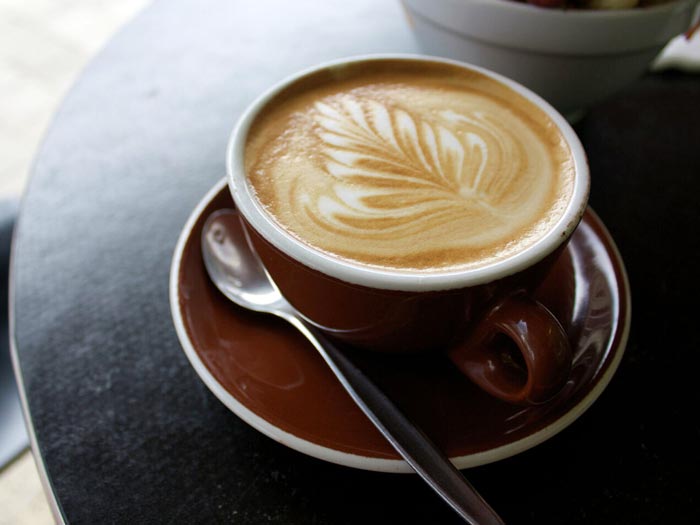
What is a flat white & how is it different from a latte?

Flat whites have become a staple on specialty coffee menus worldwide, offering a robust espresso experience complemented by steamed milk and a delicate layer of microfoam. But, as you savor this no-nonsense coffee option, do you truly understand its roots, how it’s crafted, and what distinguishes it from the ubiquitous latte? This exploration delves into the history of the flat white, its evolution, and the ongoing debate over its uniqueness compared to other popular espresso-based beverages.

A flat white is an espresso-based beverage featuring steamed milk, providing a powerful coffee taste with a creamy mouthfeel. Crafted with a small amount of steamed milk and a thin layer of microfoam, the flat white is the go-to choice for those seeking a rich coffee experience without compromising the indulgence of steamed milk.

Origins and Evolution:

Debates persist regarding the flat white’s origin, with claims from both Australia and New Zealand. Emerging in the 1980s, it transitioned from a regional specialty to a global café standard. Ben Bicknell, Strategic Projects Manager at Five Senses Coffee in Melbourne, suggests that the flat white naturally evolved in response to consumers shifting from instant coffee to espresso-based beverages. The request for a “flat” coffee, as opposed to the foamy cappuccino of the time, led to the creation of the flat white.

Understanding Latte and Cappuccino:

To distinguish the flat white, one must navigate the intricate world of espresso-based drinks, including lattes and cappuccinos. The term “latte” gained popularity in the 1980s, describing a coffee with warm milk, typically featuring a shot of espresso and topped with steamed and foamed milk. A cappuccino, on the other hand, is smaller and stronger, comprising one shot of espresso and a thick layer of milk foam.

Decoding the Differences:

Navigating the fine line between a flat white and a latte can be challenging, as each café may interpret these drinks differently. Traditionally, a latte is served in a 200 ml glass, while a flat white finds its home in a 180 ml ceramic cup, with slightly less dilution. Over time, variations in foam levels between the two have diminished, adding to the confusion.

Individual Perspectives on the Flat White:

The definition of a flat white can vary based on location and individual barista preferences. Jonathan Prestidge, Managing Director at Repack Espresso in Bath, UK, emphasizes the milk-to-coffee ratio as the key differentiator between a latte and a flat white. Felipe Cisneros, owner of Traviesa Coffee in Quito, Ecuador, suggests that the popularity of these drinks can depend on the coffee shop’s wave and the barista’s personal touch.

Size Matters, but Preferences Differ:

While the size of the cup and the coffee-to-milk ratio may differ, a consensus emerges—flat whites are generally smaller than lattes and contain a higher concentration of espresso. This makes them an ideal choice for those who appreciate the nuanced flavors of specialty coffee while still enjoying a dairy-based drink. However, the subjective nature of taste ensures there is no objective “better” option.

Strength and Sensory Experience:

Is a flat white stronger than a latte? The answer lies in its concentrated nature, offering a bolder coffee taste with the use of two espresso shots. The flat white expertly combines the intensity of espresso with the velvety mouthfeel of steamed milk. For those opting for plant-based alternatives, these can work well with flat whites, though they may produce less foam than dairy.

Final Thoughts:

Understanding what sets a flat white apart is valuable when placing an order, but personal preferences play a significant role. As Ben Bicknell notes, the crucial question extends beyond the drink’s definition: “Do coffee drinkers appreciate 80+ specialty coffee in their lattes and flat whites? And are they willing to pay a sustainable price for it?” In the end, the flat white remains a testament to the evolving coffee culture, inviting enthusiasts to explore and savor the diverse world of espresso-based beverages.

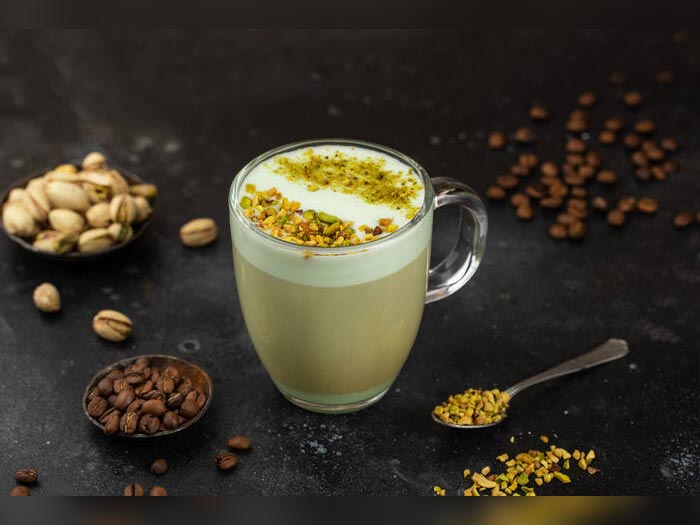
What is the pistachio latte?.. lets get to know

The pistachio latte, a rich and comforting milk-based drink infused with the warm, sweet essence of pistachios, has captivated coffee enthusiasts. With roots in Middle Eastern and Italian culinary traditions, pistachios have been a timeless ingredient.

Starbucks, inspired by the success of hazelnut-flavored beverages, introduced a syrup-based pistachio and rose mocha in the Middle East, Europe, and Africa, preceding the launch of the pistachio latte in North America by about five years.

Though not a groundbreaking concept, the pistachio latte has found a place on coffee shop menus, particularly in the Middle East, where it is enjoyed both iced and warm. This reflects the historical significance of pistachios in Middle Eastern cuisine, reaching back to 7,000 BC.

In London, Jolt Coffee serves a pistachio latte year-round, drawing inspiration from its Middle Eastern heritage and sourcing premium pistachio paste from Sicily. Dessert Oasis Coffee Roasters in Detroit introduced the pistachio latte, inspired by a manager’s morning pistachio ice cream indulgence.

Both coffee establishments craft their pistachio latte with a house-made pistachio and condensed milk sauce, available hot or iced. The flavor profile is a delightful blend of sweet, nutty, and slightly menthol-caramel notes reminiscent of high-quality pistachios.

Complementing the pistachio latte, recommended coffee pairings include the Costa Rica/El Salvador blend or infused El Salvador coffee from Nude Coffee Roasters, and a natural process single variety Yellow Bourbon from Fazenda Sertão in Brazil for Dessert Oasis.

The pistachio latte has become a beloved and Instagram-worthy beverage, with Jolt Coffee considering it a staple on their menu. Dessert Oasis plans to keep it as a permanent offering, recognizing its enduring popularity.

As the pistachio latte trend extends beyond the Middle East, the UK, and the US, it is making its mark in coffee cultures across Europe. With global acclaim, consumers can anticipate encountering this flavorful creation in more coffee shops worldwide.

Looking forward, there’s anticipation for the rise of pistachio milk as a potential alternative in the coffee sector, hinting at the possibility of a vegan pistachio milk latte—a fresh twist to the cherished pistachio latte appealing to an even broader audience.

Coffee Quality Institute

Coffee Quality Institute (CQI) is a non-profit organization working internationally to improve the quality of coffee and the lives of people who produce it.

Since 1996, we have worked to improve the quality of coffee and the lives of people who produce it. Quality is one of the most important variables that influence a coffee’s value. However, many producers do not have access to the tools and support they need to evaluate the quality of their coffee, improve that quality, access markets that reward that quality, ultimately enabling them to make more informed business choices. That’s where we come in.

At CQI we bring diverse stakeholders together to solve local challenges. Our customized solutions, shaped by coffee experts and decades of experience, result in long-term solutions that emphasize self-sufficiency. With deep roots in the coffee trade, we aim to facilitate market connections that build healthier supply chains and thriving coffee communities.

Coffee Q VENUE PROGRAM

What is a Q Venue?

Coffee Quality Institute’s mission, to improve the quality of coffee and the lives of people who produce it, is achieved through our education programs and training initiatives. The Q Venue Program creates a global, verified network of quality facilities for cupping, sensory and processing education designed to meet the specific instructional needs of all CQI courses.

CQI Q Venues can be used in many ways; from instructors hosting courses, to development project trainings, and as a lab for coffee quality assessment. CQI will work with you to assess which Q Venue certification is the right fit for your needs.

CQI provides three types of certification for Q Venues: Q Venue, Q Venue Processing and Q Venue Professional.

What are the benefits of becoming a Q Venue?

Q Venue certification provides a verified space so that instructors and students recognize the facility as safe, accessible, and hygienic while also operating in accordance with industry standards and protocols. The infrastructure of Q Venues meets the needs of our market with specific professional equipment, supplies, and environment. CQI requires venues to obtain Q Venue approval and certification to host CQI courses.

Benefits include the ability to host CQI courses, the right to use the Q Venue Program logo, official certificate issued by CQI, promotion of certified Q Venues on our global website and to our instructors, and international recognition.

How does a lab or facility become a Q Venue?

If you are interested, and have questions about the requirements and different certification levels, please contact Kim Ta at [email protected]

How to get the health benefits of coffee?

Drinking a moderate amount of Black Coffee, three to five cups a day, reduces the risk of many diseases, including Parkinson’s disease, heart disease, Type 2 diabetes, and many types of cancer, a health expert said.

Marilyn corellis, assistant professor of Preventive Medicine at Northwestern University’s Feinberg School of Medicine, stressed that these benefits are likely to be more pronounced if coffee is free of milk, sugar and other flavors that are commonly added.

The benefits of coffee vary by type. Coffee with milk and sugar contains more calories, which means it causes more harm to the body than black coffee without additives.

SOURCE: UfacityNews.ru

Coffee boutique MOKHA 1450

With an innovative menu serving coffee from crop to cup, Mokha 1450 offers the finest coffee in a boutique experience format unlike any other. While combining classic ingredients with the ancient origins of coffee, this concept ensures exemplary practices as everything done here lies at the ‘Heart of Coffee’. It’s located at three different venues, including Khawaneej which is open from 10am to 12am, Al Wasl which is open from 7am to 10pm and to 11pm on weekends and Palm Jumeirah which is open from 7am to 10pm and 11pm on weekends.

ABOUT MOKHA 1450

THE NAME OF MOKHA 1450 IS BORN FROM THE EARLIEST APPEARANCE OF COFFEE CULTURE

Yemen and Ethiopia have long contended for the distinction of being the source of coffee. The first written text referring to coffee is believed to have come from Sufi monks in Yemen in southern Arabia but in Africa, the oral storytelling of Kaldi the Ethiopian goat herder, who fed his flock coffee and watched as they reacted to the beans before deciding to try it himself, long pre-dates the written text of Yemen. We believe Ethiopia to be the source of coffee; however, Yemen is recognized as being instrumental in bringing coffee to the World from their port of Mokha in the middle of the fifteenth century.

Mokha 1450 is the ‘Heart of Coffee’

MOKHA 1450 goes back to the source focusing heavily on the twin origins of coffee; Ethiopia and Yemen to emphasize where all coffee comes from and where coffee begins its journey to its drinkers across the World. We provide our connoisseurs with unique experience by sourcing coffees that limited in quantity and are exclusive to us that can be found only at Mokha 1450 and nowhere else in the world, hence the “Boutique” in our name. Most importantly, we also provide our connoisseurs with a strong link to the forgotten people; the coffee farmer; primarily women, living sometimes in poverty and doing the exceptionally hard and thankless work of providing coffee; one of the most globally consumed products in history

Our philosophy is an attempt to do coffee the right way in providing a model where the end user and the farmer share more equitably in the burdens and rewards in producing an amazing cup of coffee. As most people are unaware of Yemen’s historical significance in bringing coffee to the world, so too are the present day drinkers of coffee unaware of the contribution from female farmers all over the world in producing coffee for global consumption. Women, who generally do most of the labor, represent and create 90% of the coffee value chain but constitute a woeful 5% ownership and management within the coffee supply industry.

We at Mokha 1450 aim to radically change this statistic. We have discovered that, to secure exceptional coffees ethically on a consistent basis is to pay a fair price that equitably compensates the famers for their hard work or embarking on a collaborative approach with the female farmers as the situation dictates to help them overcome some of the country specific burdens that have held them back in the past. We have started from the heart of coffee, ethically sourcing from women’s cooperatives such as our exceptionally driven female coffee farmer Fatimah Khabeer in Yemen.

In working with Fatimah Khabeer in Yemen we have establish exemplary standards and a level of consistency that is generally elusive to Yemeni coffee through training and working with our in country partners to assist with quality control as well as through providing investments where needed. The result of this collaboration is that we have secured tremendous high quality coffee that we have closely monitored from harvest to export.