Coffee Consumption In Russia Has Increased 10 Times In 30 Years

Consumption of natural coffee in Russia for 30 years has increased from 0.2 to 2.1 kg per person, follows from the calculations of the Rosselkhoznadzor.

“Since 1991, the consumption of natural coffee has grown mainly due to an increase in the solvency of the population and the development of a culture of coffee consumption. Over the past 5 years, natural coffee has been drunk by 30% more, and the main driver now is the purchase of takeaway coffee,” said Andrey Dalnov, head of the bank’s Industry Expertise Center.

According to him, now a Russian on average drinks about 300 cups of natural coffee a year, while 30 years ago he could afford only 29.

After the introduction of covid restrictions in 2020, the growth rate of coffee consumption decreased to 6% for the year against 13% a year earlier. In 2021, this indicator increased by 8%, which indicates a return to the pre-pandemic trend .

Experts Discover Positive Effect of Coffee on Digestion

Experts have discovered that coffee has a stimulating effect on digestive processes.

According to the journaluurr, it turned out that the researchers after studying about 200 scientific research published, that drinking coffee in moderation 3-5 cups a day, does not damage the digestive process, but on the contrary reduces the risk of the emergence of stones in the gallbladder bag and the incidence of pancreatitis and some liver diseases. Because they stimulate the secretions of the stomach, bile and pancreas necessary for the digestion of food.

They also affect the gut microbiome and shrink the colon walls necessary for food to pass through the digestive tract.

Analysis of the results of 194 scientific studies showed that drinking coffee in moderation stimulates digestion and increases the number of “beneficial bacteria” in the intestine, and that it has a protective effect for the liver, including against malignant tumors.

The results of the study showed that coffee stimulates the secretion of the digestive hormone “gastrin” and hydrochloric acid, which help digest food in the stomach. Coffee also stimulates the release of the hormone cholecystokinin, which increases the production of bile and also contributes to digestion.

The results of this study showed that coffee stimulates colon movement by 60 percent better than water, and by 23 percent better than non-caffeinated coffee alternatives. That is, coffee is able to relieve chronic constipation.

Coffee Retail Summit Returns in 2022

Following the success of the first and second Coffee Retail Summit events in 2021, the SCA is proud to announce the third virtual event of its kind, continuing a line of retailer-focused programming and content. This free-to-attend event will be delivered virtually with three days of presentations, lectures, and panel discussions on February 21, 23, and 25, 2022.

Coffee Retail Summit 2022 topics will include insights for companies considering international expansion, profiles of brands using new technology to deepen their in-person and digital relationships with customers, and strategies for building a healthy workplace culture in the midst of the “great resignation,” among other topics chosen for their community impact potential and market relevance.

Each day of Coffee Retail Summit 2022 will focus on a different region and feature a set of speakers with experience in the markets they will be discussing. This summit will commence on Monday February 21, 2022, with a day examining the European market, followed by a day focused on the United States market on Wednesday February 23, 2022, and concluding with a day centered on the retail landscape in Korea on Friday, February 25, 2022. Attendees may opt to participate in all three days of the live summit, during which time presenters will take questions from the audience and attendees will engage in conversation via live chat, or they may choose to narrow their scope to the day that corresponds to the region of greatest interest to them.

Over three days, we’ll host a series of live lectures and discussions aimed at giving coffee retailers the information they need to identify opportunities for growth and expansion as well as to navigate upcoming challenges in this next phase of the COVID-19 global pandemic. Coffee Retail Summit 2022 will explore how coffee retail businesses can use their unique position as hubs for connection, learning, and personal expression to overcome obstacles, adapt, and grow.

This summit’s topics will include insights for companies considering international expansion, profiles of brands using new technology to deepen their in-person and digital relationships with customers, and strategies for building a healthy workplace culture in the midst of the “great resignation,” among other topics chosen for their community impact potential and market relevance.

Each day of the Summit will focus on a different region and feature a set of speakers with experience in the markets they will be discussing. This summit will commence on Monday February 21, 2022, with a day examining the European market, followed by a day focused on the United States market on Wednesday February 23, 2022, and concluding with a day centered on the retail landscape in Korea on Friday, February 25, 2022.

Attendees may opt to participate in all three days of the live summit, during which time presenters will take questions from the audience and attendees will engage in conversation via live chat, or they may choose to narrow their scope to the day that corresponds to the region of greatest interest to them.

All of the content from the live events will be recorded and added to the Coffee Retail Summit library to live alongside sessions from the two previous Coffee Retail Summit events held in 2021.

Regarding Coffee Retail Summit 2022, SCA CEO Yannis Apostolopoulos says “As we begin a new year full of promise and uncertainty, the SCA wishes to continue its work in supporting coffee retail businesses who are so vital to our communities, our cities, and the international coffee industry. Coffee Retail Summit 2022 will of course address some of the challenges that lie ahead but will also provide vital information to those wishing to expand their businesses on an international scale as well as provide insights unique to the markets of Europe, North America, and Asia Pacific; further fostering the conversations, shared learning, and expansion of the global coffee retail community.”

This event and resource library would not be possible without the support of Astoria – global title sponsor of Coffee Retail Summit 2022 – who recognize the unique economic and cultural importance of coffee retail businesses within local communities and the global coffee industry. Speaking about their support of Coffee Retail Summit 2022, Astoria said: “Coffee retail operators are the backbone of our industry. They are driven by passion for coffee and hospitality, represented daily by their owner and staff alike. Most are small or medium sized businesses that learn through doing, relentlessly innovating.

We aim to provide meaningful support to the creation of templates for successful business models: points of reference and tools to help operators navigate through change, while reducing business mortality rate, unfortunately increased by the pandemic.”

The first day of Coffee Retail Summit – which will take place on Monday, February 21, 2022 and will focus on the European coffee retail market – is proudly supported by BWT water+more. The second day of the Summit – which will take place on Wednesday, February 23, 2022 and will focus on the US market – is generously supported by Pacific Foods.

The SCA also wishes to thank Nuova Simonelli for their role as Lead Sponsor of Coffee Retail Summit 2022

Coffee Protects Women From Uterine Cancer

Scientists are still researching the benefits and harms of coffee, one of the most widely consumed stimulants in the world, containing a complex mix of more than 1,000 chemicals.

In this regard, scientists have revealed in a new study, published in the journal “research of Obstetrics and gynecology”, that coffee has the ability to reduce the risk of endometrial cancer.

According to the study, caffeinated coffee may provide better protection than decaffeinated coffee, to protect against uterine cancer.

Most uterine cancer begins in the layer of cells that make up the lining of the uterus, and there are other types of cancer that can form in the uterus, including uterine sarcoma, but they are much less common than endometrial cancer, according to Sky News Arabia.

Endometrial cancer is often detected at an early stage; it causes abnormal vaginal bleeding, and if detected early, it is often surgical removal of the uterus is the cure for endometrial cancer, according to the site “Mayo Clinic” medical.

Scientists say coffee is one of the most widely consumed stimulants globally, and contains a complex blend of more than 1,000 chemicals such as phenolic compounds (including chlorogenic acid), which produce catechins, caffeine, Ferulic, and comaric acids.

These substances may have beneficial and harmful effects on health, as a negative statistical association between coffee consumption and the incidence of certain cancers has been reported.

Previously, the relationship between coffee consumption and endometrial cancer was unclear, and it was common for coffee consumption to have the potential to reduce the risk of endometrial cancer.

The new study removed this mystery surrounding the relationship of coffee to cancer of the uterus, as the efforts of researchers included the analysis of 24 studies on coffee intake included about 10 thousand new cases of endometrial cancer.

The scientists found that people who consumed the most coffee had a 29 percent lower relative risk of developing endometrial cancer than those who consumed the least.

According to the study, endometrial cancer is one of the most common gynecological malignant tumors worldwide, with an incidence rate of 12.9 per 100 thousand women, and an estimated mortality rate of 2.4 per 100 thousand women.

In developing countries, it is the second most common gynecological malignant neoplasm, with an incidence rate of 5.9 cases per 100 thousand women, while the mortality rate is 1.7 cases per 100 thousand women.

Causes of endometrial cancer include long-term exposure to excess estrogen, obesity, diabetes and high blood pressure, while the most important protective factors include physical activity, aspirin intake and healthy eating habits.

The researchers believe that more studies are needed that expand the sample size (the patients being studied), to get more information about the benefits of drinking coffee in relation to the risk of endometrial cancer.

How To Use Coffee To Lose Weight ?

American nutritionist Ashley Shaw explained how to effectively use coffee in the process of losing weight.

In order for coffee to bring cheerfulness, but not harm the body, you can drink up to four cups a day with an optimal volume of 400 milligrams of caffeine.

This amount of coffee will give energy and support the metabolism. Not very strong coffee can be drunk one cup every two to three hours.

Of course, if the goal is to lose weight, you should not add cream, sugar and other sweeteners to coffee.

“Black coffee itself has a negligible amount of calories. Weight loss is caused by their deficiency — you consume less than you spend. A popular and obvious way to achieve a deficit is to consume fewer calories and expend more energy.Black coffee is ideal for this, as it contains less than five calories per cup. However, this drink remains low in calories until you add sugar or milk to it,” the nutritionist explained”.

The Most Popular Type of Coffee for Russians

Yandex.Shop, a food and household goods delivery service, has found out which types of coffee are popular among Russians. The study is at the disposal of “Gazeta.Ru».

The demand for buying coffee on the Internet has increased markedly since the spring of 2020, according to analysts of the service, but in 2021 it has more than doubled compared to 2020.

The highest growth rates are shown by coffee in drip bags — over the past six months, sales have increased almost 3.5 times. Instant coffee showed another noticeable increase, but ground coffee, on the contrary, began to order less.

The leader in sales is still coffee in capsules, which has been most actively ordered by Russians over the past two years.

Speaking of taste preferences, Russians most often prefer Brazilian coffee, as well as Colombian and Ethiopian, but there is also an increase in the popularity of coffee blends.

Previously, Psychopharmacology specialists found that caffeine helps to improve dynamic visual acuity.

1000 Companies And 7000 Specialists In The World of Coffee  Dubai

More than a thousand exhibitors and brands will participate in the world of coffee exhibition “World of coffee”, at the Dubai Exhibition Center at Expo 2020 Dubai, and lasts for three days. More than 7 thousand specialized visitors and experts from the coffee industry from within the country, the region and all over the world will participate in the exhibition.

This year’s edition will host two accredited national championships, the National Coffee Tasting Championship and the National Pitcher Championship finals, where winners will have the opportunity to represent the UAE in the world of coffee finals, which will be held this year in one of the European countries and will be announced soon. Both tournaments are held to celebrate the Arabian coffee industry in the UAE and the region, where coffee is an integral part of authentic Arabian hospitality and its associated traditions reflect the region’s heritage and heritage.

In addition to the UAE hosting the event for the first time, national pavilions from Australia, Brazil, Bolivia, Colombia, El Salvador, Ethiopia, Guatemala, Indonesia, India, Italy, Kenya, Korea, Saudi Arabia, Kuwait, Nepal, Poland, Portugal, Romania, Singapore, Ukraine, the United Kingdom and the United States of America will participate in the event.

The course is particularly important as it is held in conjunction with Expo 2020 Dubai and at the Dubai Exhibition Centre at Expo site, and is increasingly important on the back of the success of previous courses held in several European cities including Budapest 2017, Amsterdam 2018, Berlin 2019 and Warsaw 2021.three US states, Seattle 2018, Boston 2019 and New Orleans 2020, have also seen three more successful courses.

The exhibition is widely supported by local coffee industry leaders and is an important platform for many exhibitors to promote their new products, including Naji soorati, co-founder and general manager of Matina artisan roaster, as the Dubai-based company launches its new coffee called “V. DRIP” as the innovative method of preparing a competent coffee that satisfies the taste of the taste, it also displays a range of rare coffee varieties such as “Esmeralda Geisha natural” from Panama,”original Blue Mountain” from Jamaica,”cap of excellence” from Costa Rica in addition to the finest varieties of Yemeni and Ethiopian coffee.

On the occasion of the launch of the first edition of the exhibition in Dubai and the Middle East, Khalid Al Hammadi, senior vice president and Chief Executive Officer of DXB life, said that Dubai’s hosting of this event strengthens its position in the global coffee market and represents a historic opportunity for local and regional companies to showcase the experiences and skills that have long been demonstrated in the region in the field of coffee .this session will certainly contribute to the creation of new and important job opportunities for local, regional and international participants, especially with an increase in the global participation of exhibitors from outside the region to more than 50%.

Coffee world /world of coffee is the annual global gathering of coffee industry leaders and experts, bringing together farmers, traders, roasters, manufacturers, distributors, baristas, SMEs, coffee shop owners, hotels and coffee lovers and connoisseurs from all over the world.

Arabian Coffee Institute: Pioneering Coffee Knowledge and Innovation

Arabian Coffee Institute (ACI)

It is an institute, with a Team of experts, educators, and researchers that cover all aspect of the coffee value chain.

Vision

Be the coffee center of excellence leader in the Middle East.

Objectives

1. Provide internationally accredited solutions in the coffee industry.

2. Establish a research division specialized in providing professional programs and scientific research (R&D).

3. Develop internationally recognized curricula in Arabic and English.

4. Create strategic partnerships with global coffee communities.

5. Build local and regional coffee communities and chapters.
Partner with the Saudi Standard Classification of Professions, to develop the barista and roaster professions.

Coffee is more than a bean. If coffee beans are properly processed and brewed, they will become an amazing drink with deep flavors that will make your day a wonderful one.

(AIC) offer high-quality consultations and training programs. Furthermore, we at the Arab Coffee Institute understand the importance of taking care of coffee through the different stages in the process from cultivation and harvesting all the way through proper processing and roasting. We ensure a premium flavors final cup without an unpleasant aftertaste.

The Arabian Coffee Institute, offer you a variety of courses, consultations, and experiences in the coffee field.

You will have an amazing opportunity to become a professional in the various areas of coffee. We will prepare you to advance in your career and acquire new skills by providing you with the best training and courses.

The training programs at the Arab Coffee Institute are of high quality and are based on academic researches to ensure continuous development.

In addition, AIC  courses go through rigorous auditing by our quality control department in accordance with the international and local standards to measure the trainees learning outcomes.

ACI training programs are continuously evaluated to ensure the application of theoretical knowledge to practice.

To start advancing your career, you can now apply to benefit from one of our training or advisory programs in the various areas of coffee.

This will allow you to gain valuable knowledge, acquire new skills, and view the latest research and discoveries related to coffee by the best trainers and experts in the field through the Arab Coffee Institute, the most complete coffee institute in the Arab World.

7 Informations You Probably Didn’t Know About Coffee

If you’re a coffee drinker, you probably know everything about the difference between Arabica and Robusta beans, dark and light roast, and caffeinated vs. decaf.

You have likely noticed that just smelling coffee can give you a boost of energy before you take your first sip – not that it’s enough to make you skip that cup of joe.

Coffee is clearly an extremely popular and widely consumed beverage, so it might not surprise you to hear that coffee is the second most traded product in the world (after oil), with 25 million farmers in over 50 countries involved in its production.

But how much do you know about the history and the science of coffee? Get ready for a fascinating look behind the curtain of your morning pick-me-up.

7. The world’s most expensive coffee costs up to $600 a pound

For that much money, it’s got to be something truly special. We guess that’s one word for it – this particular coffee is extracted from the feces of a Sumatran wildcat called a civet. The animals love the berries but are unable to digest the beans.

The beans are therefore fermented in the stomach of the animal before being excreted. This apparently produces a smooth and chocolaty coffee with no bitterness once the beans are collected from the feces (and, we assume, washed). To each their own, we guess.

6. It only grows well near the equator

Today, the majority of coffee is grown in Brazil, which produces a full 40% of the world’s supply. That’s twice as much as 2nd and 3rd place producers, Colombia and Vietnam. The only state in the U.S. that grows coffee commercially is Hawaii, with its distinctive Kona beans.

Each of these locations enjoys the year-round warmth and humidity associated with equatorial regions, a climate that is much preferred by coffee berries. In fact, the area between latitudes 25 degrees North and 30 degrees South has been nicknamed the “Bean Belt” for this reason.

5. Coffee has been banned many times throughout history

As world governments became more advanced, so did efforts to harsh everyone’s buzz. Coffee was banned in Mecca in 1511 because officials were sure that it caused radical thinking.

Italian clergymen took it a step further in the later 16th century by labeling coffee satanic. By 1623, Ottoman leader Murad IV decided to institute punishments for drinking coffee, such as being beaten or thrown into the sea.

The Swedish government made owning coffee paraphernalia illegal in 1746, and that included mugs and dishes that could theoretically be used for other things.

Another attempt to ban coffee occurred in 1777, when Frederick the Great of Prussia banned coffee because he was worried about beer sales. But as we know, nothing could stop the runaway train that is coffee consumption. (And beer is doing just fine, too.)

4. Shepherds discovered coffee in Ethiopia around 800 A.D.

The legend goes that goat herders in the early 9th century noticed that their goats seemed to dance after eating coffee berries. A local monk got the idea to make a beverage with the berries, and after drinking it, he predictably stayed up all night. That event marks the birth of the original cup of coffee, but in the earliest use of coffee overall, the berries were mixed with fat to create an energy-rich snack.

If you prefer your history codified, the first written record of the coffee plant comes from Yemen at the end of the 15th century. After discovery of the plant, coffee was very quickly exported to the rest of the world. Cultivation began in the 1600s.

3. Coffee stays hotter when cream is added

And now for a little something about the science of coffee. Adding cream to your brew actually keeps it warmer longer, even though the initial addition of cold cream cools it somewhat.

Overall, coffee with cream cools 20% slower than black. That’s true for a couple of reasons. First, the darker the beverage, the faster it gives off heat. And second, the more viscous the beverage (coffee with cream is thicker than black coffee), the slower it gives off heat.

There is also some evidence that the caffeine in coffee with a dairy additive (milk or cream) is absorbed more slowly by the body. That can decrease the zing you get from it. However, it’s not decreased by much, and other things play a greater role in how quickly caffeine is metabolized, including how much fiber you also have in your stomach.

2. Coffee is a fruit

The coffee “beans” that we use are actually seeds. More accurately, they are the pits of a stone fruit that resembles a cherry. Grown on bushes, coffee cherries contain two seeds, positioned with the flat sides together. About 10-15% of coffee cherries have only one seed, which is called a peaberry. It’s commonly believed that peaberry seeds have more flavor, though there’s no real proof of this claim.

But what happens to the cherry when its seed is extracted? Unfortunately, up to 46 billion pounds of them are simply thrown away.

Concerned about the waste, some companies are starting to produce a product called coffee flour, made from dried coffee fruit. It is said to taste nutty and slightly bitter, with as much caffeine as dark chocolate. But the nutritional benefits are the real surprise. Coffee flour is a rich source of fiber, antioxidants, iron, protein, and potassium.

1. Coffee is healthy

And finally, you don’t need to feel bad about drinking so much of it. Many regular coffee drinkers harbor some guilt about their habit, but that shouldn’t come from the quality of the beverage itself. Sure, if you spend half your food budget on Starbucks or dump a full day’s worth of sugar into each cup, that’s not great.

But coffee drinkers get health benefits from the habit, too. The coffee itself has high levels of antioxidants as well as potassium, manganese, and B vitamins.

And research shows that the caffeine in coffee offers protection against Alzheimer’s, type 2 diabetes, and Parkinson’s disease. Women also seem to have a lower risk of skin cancer when they consume caffeine regularly.

So the next time you are sharing a cup of coffee with a new friend, or an uncomfortable silence falls over the breakfast table, you’ll have lots of interesting tidbits about coffee to share.

And don’t let anyone hassle you about your little habit – coffee is one addiction that’s okay to lean into. In fact, if you want to help save the planet, buy coffee flour, too.

World of Coffee Dubai event Started Tomorrow

World of Coffee (WOC), led by the Specialty Coffee Association (SCA), is being hosted in Dubai for the very first time from 12-14 January – and Coffee Planet, the authority in specialty coffee, is set to take part.

A region steeped in coffee history; the Middle East has been identified as one of the fastest-growing coffee markets globally – promising further growth over the next decade – making it one of the largest emerging specialty coffee markets in the world.

As one of the prominent leaders of specialty coffee in the region, Coffee Planet will have a strong presence at World of Coffee with two stands and a spot in the famous Roasters Village.

Coffee Planet’s bar allows attendees to sample both Coffee Planet’s specialty coffee range and exacting brewing methods. Next to the bar, another stand will showcase their extensive range of core products, new product developments, new equipment launches and host an array of interviews with leading industry experts. As an exclusive to World of Coffee, Coffee Planet will launch its brand-new 90+ range of coffee across the stands and in the Roasters Village.

Coffee Planet comments: “As the authority on specialty coffee since 2005, we could not let the WOC come to Dubai, our home, without being part of it. World of Coffee gives us access to an amazing array of coffee experts from across the world, allowing us to meet our long-term partners at a great event and show off what we do to those who may not have met us before, giving them a taste of what we produce.

“We are excited to be sharing some new specialty coffee products and equipment to those attending as well as hosting interviews with stars of the coffee world.”

For more click here

Did you know that drinking coffee reduces the risk of liver cancer?

Coffee consumption reduces risk of hepatocellular carcinoma (HCC), the most common type of liver cancer, by about 40 percent, according to an up-to-date meta-analysis published in Clinical Gastroenterology and Hepatology, the official clinical practice journal of the American Gastroenterological Association. Further, some data indicate that three cups of coffee per day reduce liver cancer risk by more than 50 percent.

“Our research confirms past claims that coffee is good for your health, and particularly the liver,” said Carlo La Vecchia, MD, study author from the department of epidemiology, Istituto di Ricerche Farmacologiche “Mario Negri,” and department of clinical sciences and community health, Università degli Studi di Milan, Italy. “The favorable effect of coffee on liver cancer might be mediated by coffee’s proven prevention of diabetes, a known risk factor for the disease, or for its beneficial effects on cirrhosis and liver enzymes.”

Researchers performed a meta-analysis of articles published from 1996 through September 2012, ultimately studying 16 high-quality studies and a total of 3,153 cases. This research fills an important gap as the last meta-analysis was published in 2007, and since then there has been data published on more than 900 cases of HCC.

Despite the consistency of results across studies, time periods and populations, it is difficult to establish whether the association between coffee drinking and HCC is causal, or if this relationship may be partially attributable to the fact that patients with liver and digestive diseases often voluntarily reduce their coffee intake.

“It remains unclear whether coffee drinking has an additional role in liver cancer prevention,” added Dr. La Vecchia. “But, in any case, such a role would be limited as compared to what is achievable through the current measures.”

Primary liver cancers are largely avoidable through hepatitis B virus vaccination, control of hepatitis C virus transmission and reduction of alcohol drinking. These three measures can, in principle, avoid more than 90 percent of primary liver cancer worldwide.

Liver cancer is the sixth most common cancer in the world, and the third most common cause of cancer death. HCC is the main type of liver cancer, accounting for more than 90 percent of cases worldwide. Chronic infections with hepatitis B and C viruses are the main causes of liver cancer; other relevant risk factors include alcohol, tobacco, obesity and diabetes.

10 Best Places to Drink Coffee at Expo 2020 Dubai

Visitors to Expo 2020 Dubai can not only see the diverse pavilions of the 192 participating countries, but also taste some of the best coffee cups from around the world.

Visitors to the international event can pamper their senses with a selection of the best coffee offered by the cafes of the many pavilions participating in the international event.

To make things easier, we’ve compiled a list of the 10 favorite places to drink the coffee you need for a boost of energy and energy, to continue exploring the Expo 2020 Dubai site:

1. Burundi Pavilion, Opportunity Zone

The Republic of Burundi is located in the Great Rift Valley, where the Great Lakes of Africa converge, in the East African region, and the country offers a breathtaking combination of inland lake beaches, magnificent mountains, and the heart-shaped country is known for its high-quality coffee, and its mountain tea, so we strongly recommend heading to the pavilion Burundi to taste one of the best coffee in the world, where the pavilion offers daily different types of coffee beans that the country is famous for, recognized by the United Nations Global Coffee Quality Alliance “Alliance for coffee excellence”, as well as to experience the mountain tea and honey that the country is proud to produce.

2. Canvas by coffee culture, opportunity Pavilion, Opportunity Zone

This is the best place to have local coffee, enjoy art exhibitions, a mix of coordinated musical tones, and a menu served throughout the day. Co-founded by Stephan bahuero and Abdullah Ibrahim Suhail, “canvas by coffee culture” is designed to welcome Dubai’s ever-evolving creative community, who are looking for space to work, meet others, design and innovate. The coffee shop/co-working space boasts a cultural programme to enrich the community experience, in a simple factory-inspired design.

3. El Salvador Pavilion, mobility area

Known for its strong acidic taste, El Salvador coffee beans are among the highest quality in the world today. Explore the Central American country through its pavilion, which features an immersive three-dimensional and multi-sensory show highlighting the country’s major development projects, and then indulge in a specially designed cafe decorated with surfboards.

4. Ethiopia Pavilion, Opportunity Zone

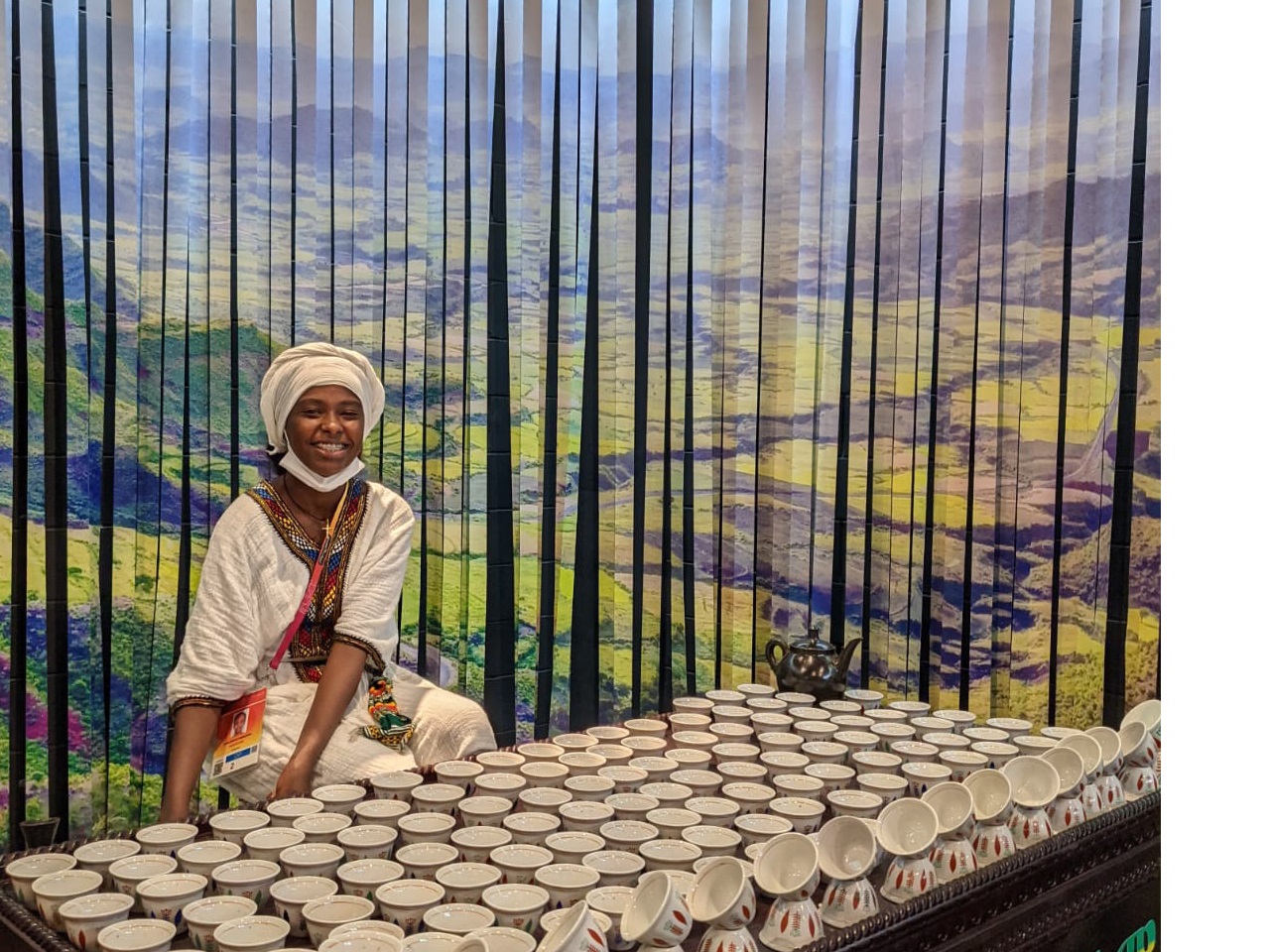
The ceremony, which involves the ritual of processing unwashed raw coffee beans and pouring them into coffee cups, is the most important social event in many villages in Ethiopia. The Ethiopia Pavilion takes its visitors on a journey that enables them to see the process of growing indigenous coffee from seed to cup, through an interactive screen display, which takes visitors at the end of the trip to the area of “asalna”, a garden planted with Calla Lilies – the national flower of Ethiopia – where at the end of this inspiring journey they can enjoy the traditional ceremony of preparing and serving coffee.

5. Gabon Pavilion, sustainability zone

Head to “alanga” cafe in the Gabon Pavilion every Thursday from 10: 00 to 15: 00, according to UAE time, for a chance to sample coffee, and to get a pack of the best coffee capsules produced by alanga cafe. And if you need a little more convincing, alanga – the only coffee bean grown in Gabon’s rainforest in haute – oguy province-has been awarded the Gold Medal of the gourmet award in the “round and balanced” category at the fourth edition of the International Coffee Roasting Championship.

6. Indonesia Pavilion, Opportunity Zone

Indonesia has been producing and exporting distinctive and delicious coffee for centuries, as well as being one of the largest producers of coffee beans in the world.the Indonesia pavilion offers an integrated scene full of natural and cultural treasures enjoyed by the Indonesian people, from traditional dances to coffee grown in Java, which provides the whole world with its authentic flavor. the Indonesia pavilion provides a modern bridge between authenticity and modernity.

7. Panama Pavilion, Jubilee area

Brewed from the finest Arabica coffee beans known as Geisha coffee, it is grown in the highlands of Chiriqui province, located near the city of Vulcan Baru.Panamanian Geisha coffee is known for its unique sharp taste, aromatic aroma, delicious fruity flavor, mild acidity and excellent sweetness. Head to the Panama pavilion to explore the fog-shrouded coffee plantations by taking a 360-degree virtual tour of the coffee plantation in Boquete; explore the five magnificent UNESCO World Heritage sites; take a virtual reality trip through the Panama Canal and, at the end of the visit, head to the pavilion shop to buy coffee beans, including the famous Geisha coffee beans.

8. Rwanda Pavilion, Opportunity Zone

Rwanda’s favorable climate, combined with high-quality processing of coffee beans, plays an important role in making some varieties of coffee beans rich and varied in flavor. At the end of your visit to the Rwanda Pavilion, which takes visitors on a journey through a space inspired by the King’s Palace, as well as allowing visitors to experience virtual reality that takes them on an exciting journey with a gorilla, head to the Rwanda cafe for a taste of the original coffee grown in the country.

9. Venezuela Pavilion, Jubilee

If you’re looking for a delicious combination of coffee and chocolate, just head to the Venezuela Pavilion restaurant and lounge. Venezuela is famous for its traditional Arabica coffee beans (Venezuela is the most famous region for growing this type of coffee bean, which is grown near the Andes mountain ranges), having a very sweet flavor with a remarkably balanced acidity. In addition, the country is famous for the production of cocoa beans with a legendary taste, especially the abundance of Criollo cocoa beans, known for the wonderful taste they leave after drinking and is the reason for their popularity.

10. Yemen Pavilion, sustainability zone

Yemen has a long history with coffee dating back more than 1,000 years, where the first archaeological evidence of the use of the coffee drink was discovered in the Yemeni city of “Zabid”, according to global studies. To meet local demands, the people began to grow coffee beans in the fifteenth century, so all coffee lovers have to visit the Yemen Pavilion. The pavilion features a presentation that lists the beautiful links between the Yemeni people and the coffee beans they produce, as well as the experience of inhaling the aroma of coffee beans that will refresh your senses.