刘太阳 TaiYang Liu Wins 2024 World Coffee Roasting Championship

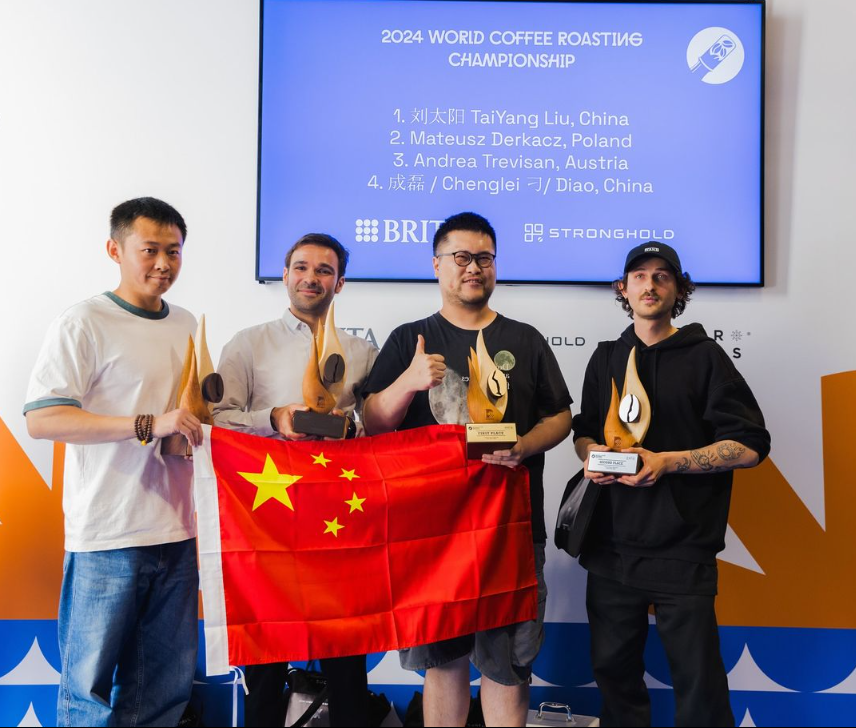
The 2024 World Coffee Roasting Championship concluded with 刘太阳 TaiYang Liu from China claiming the prestigious title after three days of intense competition at World of Coffee 2024 Copenhagen. Participants from around the world showcased their expertise in coffee grading, roasting profile development, and achieving exceptional cup quality.

The top four scorers in this esteemed competition are:

  1. 刘太阳 TaiYang Liu, China
  2. Mateusz Derkacz, Poland
  3. Andrea Trevisan, Austria
  4. 成磊 / Chenglei 刁/ Diao, China

The event highlighted the skills and dedication of these coffee roasting professionals. Full rankings and more details will soon be available on the official World Coffee Championships website at copenhagen.wcc.coffee.

Congratulations to 刘太阳 TaiYang Liu and all participants for making the 2024 World Coffee Roasting Championship a resounding success!


Seung Chan Wi of South Korea Wins 2024 World Coffee in Good Spirits Championship

In a thrilling finale at the 2024 World Coffee in Good Spirits Championship held in Copenhagen, Seung Chan Wi of South Korea emerged triumphant, showcasing his exceptional mixology skills and solidifying South Korea’s prominence in the global coffee community.

Competing against a field of international talent, Wi’s innovative approach and precise technique impressed judges, securing him the top position in this prestigious competition.

The final rankings for the 2024 World Coffee in Good Spirits Championship are as follows:

  1. Seung Chan Wi, South Korea
  2. Sandro Roth, Switzerland
  3. Andrea Villa, Italy
  4. Yessylia Violin Angkasa, Indonesia
  5. Sin Jay Kao, Taiwan
  6. Chloe Lai, Hong Kong

Over the course of three intense days, participants from around the world captivated audiences with their creativity and mastery in crafting coffee cocktails. Sponsored by @arzumokka, the championship highlighted the artistry and skill required in the field of coffee mixology.

Congratulations to Seung Chan Wi and all participants for making the 2024 World Coffee in Good Spirits Championship a memorable success!

Jordan Tachnakian Wins 2024 Cezve/Ibrik Championship in Copenhagen

In a thrilling display of skill and precision, Jordan Tachnakian of France emerged victorious as the 2024 Cezve/Ibrik Champion at the World Coffee Championships held in Copenhagen. Representing France with finesse, Tachnakian captivated judges with his exceptional technique and dedication to the craft.

The final standings of the championship are as follows:

  1. Jordan Tachnakian, France
  2. Kevser Atmaca, Turkey
  3. Ivan Bilousov, Ukraine
  4. Emanuele Bernabei, Italy
  5. Ply, Canada

The competition, sponsored by @arzumokka, saw participants from around the globe showcase their talent and passion for Cezve/Ibrik coffee preparation. Each competitor brought a unique blend of tradition and innovation to the stage, making it a memorable event for coffee enthusiasts worldwide.

Congratulations to Jordan Tachnakian and all the competitors who made the 2024 Cezve/Ibrik Championship a resounding success!

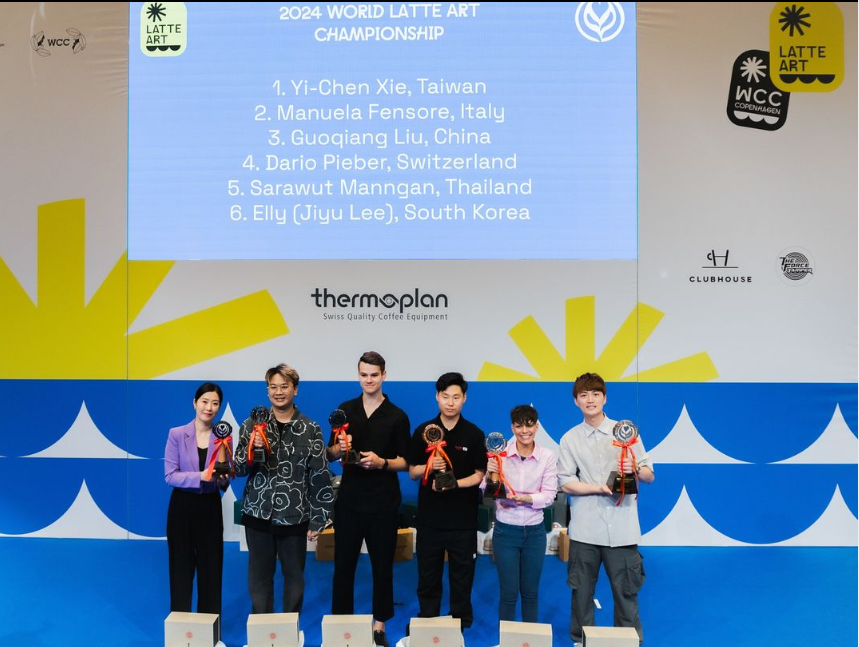
Taiwan’s Yi-Chen Xie Claims 2024 World Latte Art Championship at World of Coffee Copenhagen

The 2024 World Latte Art Championship at World of Coffee Copenhagen culminated in an exhilarating victory for Yi-Chen Xie of Taiwan, who impressed judges and spectators alike with an extraordinary display of skill and creativity. Competing against a field of exceptionally talented baristas from around the globe, Xie’s winning performance showcased intricate designs and flawless execution, securing the coveted title.

Reflecting on the competition, the Specialty Coffee Association and World Coffee Championships organizers expressed admiration for Xie’s technical prowess and artistic innovation, underscoring the event’s role in celebrating the artistry of coffee preparation.

“I am thrilled and honored to represent Taiwan on this global stage,” said Yi-Chen Xie, visibly moved by the win. “This competition has been an incredible journey, and I am grateful for the opportunity to share my passion for latte art with the world.”

The final rankings of the 2024 World Latte Art Championship are as follows:

  1. Yi-Chen Xie, Taiwan
  2. Manuela Fensore, Italy
  3. Guoqiang Liu, China
  4. Dario Pieber, Switzerland
  5. Sarawut Manngan, Thailand
  6. Elly (Jiyu Lee), South Korea

In addition to the thrilling competition, attendees at World of Coffee Copenhagen also had the chance to vote for the Best New Product People’s Choice Award. Emerging triumphant was Squeaky. Coffee with their innovative product, SQUEAKY- The King Eddy (Electric), showcased at booth #CA-017. This inaugural award highlights the industry’s commitment to innovation and consumer engagement.

Hesham Al Ghazali: From the Heart of Yemen to the Pinnacle of the Coffee World

At the heart of Yemen’s rich coffee heritage and the evolving culinary scene in Dubai, Hesham Al Ghazali stands out as a third-generation coffee expert, SCA-certified professional, and passionate blogger. Hesham’s journey is an inspiring story of dedication, tradition, and innovation, seamlessly blending the intricate flavors of coffee with the art of fine gastronomy. Join us as we delve into his personal and professional journey, uncovering the inspirations, challenges, and dreams that fuel his passion.

How did your passion for coffee begin, and what inspired you to become an expert in this field?
My passion for coffee began in 2020 when I received the last harvest from my grandmother’s farm after her passing in the same year. My goal was to continue our family tradition and to showcase Yemeni coffee to the world in the best possible way.

What were the main challenges you faced during your journey to becoming SCA certified?
The courses offered by the Specialty Coffee Association (SCA) were enjoyable and filled with valuable information, greatly enhancing my skills. The biggest challenge was passing the online exams, which required precise and exact answers, demanding a lot of preparation and accuracy.

As a Yemeni, what is your personal story with Yemeni coffee?
My story with Yemeni coffee begins in my childhood, where it always connected me to cherished family members such as my grandparents, my father, and my relatives. Coffee has always been a part of our daily lives, filled with warm memories and strong family bonds.

How do you see Yemen’s historical role in the coffee industry, and how can this heritage be preserved today?
Yemen has a fundamental and historical role in cultivating and spreading coffee around the world. We are among the first to grow and export coffee, and Yemeni coffee is renowned for its high quality. Preserving this heritage requires continuous efforts to promote Yemeni coffee globally, achieved through the creativity and dedication of young Yemenis who are now actively developing this industry.

What changes have you noticed in the Yemeni coffee industry over the years?
I observed that the coffee industry did not attract much interest from Yemeni youth in the past. However, with the emergence of the third wave of coffee, it has started to attract a significant number of young people who are now keen on developing and enhancing this field.

How do you see the future of the coffee industry in Yemen and the Arab world?
I see a bright and promising future for the coffee industry in Yemen and the Arab world. We are now in the third wave of coffee, which focuses on educating consumers and raising awareness about quality and innovation, which will positively impact the development of this industry.

What innovations or improvements do you think will make a significant difference in the coffee world?
There are many improvements in coffee cultivation and processing, especially with the growing interest from our Saudi brothers, creating greater opportunities in the region. Additionally, there are new and innovative methods of processing coffee that introduce unique flavors, attracting new consumer segments. There are also notable advancements in coffee extraction tools.

Do you have any current projects or future plans related to coffee that you would like to share with us?
Currently, I am a coffee producer, selling it globally thanks to my direct contact with farmers in Yemen. I am learning new methods of coffee cultivation and processing, and I plan to teach these modern techniques to Yemeni farmers for free, either through the United Nations in Yemen or other personal initiatives, to help them compete on regional and global levels.

As a food lover and coffee enthusiast, how do you balance these two passions?
Both are closely intertwined. For me, coffee and food complement each other, and it’s common to see both together on the same table frequently.

What advice do you have for young people who want to enter the coffee world?
I want them to know that the coffee tree is generous and giving, and that behind every cup of coffee are the efforts of many people. My advice is to focus on both the humanitarian and commercial aspects, as many people focus solely on the commercial side and forget their role in helping farmers sustain their livelihoods and provide a decent life for their families.

How do you enjoy coffee in your daily life, and what is your favorite way to prepare it?
I enjoy roasting coffee regularly at home and preparing it in the traditional Yemeni way (Qishr) or as espresso. Occasionally, I use the V60 method.

How can we enhance the culture and awareness of Yemeni coffee’s importance in the world?
Coffee is a national product and a cultural heritage. Every Yemeni should enter and innovate in this field because its benefits for the country and Yemeni families are significant and crucial. We can take Ethiopia as an example; it is now one of the top five coffee-exporting countries, with substantial financial returns.

What is your role in raising awareness about Yemeni coffee and its culture?
I represent Yemen in the best possible light to the world, given my presence in the UAE, which is one of the largest hubs for coffee trade globally. I have a wide network of relationships worldwide, and I strive to convey the history and quality of Yemeni coffee and its products in the best way possible.

Global Coffee Prices Surge Due to Climate Challenges

Global coffee prices have experienced a significant surge, driven by adverse weather conditions in major coffee-producing countries, according to multiple sources including Bloomberg, DW, Nasdaq, and Food Digital.

In the first half of 2024, the price of robusta coffee rose by 40%. This sharp increase is attributed primarily to a prolonged drought in Vietnam, the largest exporter of robusta beans, which has faced poor harvests for the fourth consecutive year. Brazil, the leading producer of arabica coffee, has also seen its crop yields affected by unusual weather patterns, including heavy rains followed by dry spells.

The supply shortages from these two key producers have pushed prices up on major exchanges in London and New York. Analysts note that the speed of robusta’s price increase is the fastest since 2008. The National Coffee Association had anticipated a 10% reduction in yields due to dry weather last year, but the actual decline has been closer to 20%​ (DW)​​ (World’s No.1 Food Magazine)​.

Fairtrade International and GEPA, Europe’s largest importer of fair-trade food, highlight that while higher prices might seem beneficial for farmers, the volatility and sudden price changes can cause significant strain. Climatic uncertainties, disruptions in trade routes, and speculative investments have created a challenging environment for both producers and consumers​ (Fairtrade)​​ (World’s No.1 Food Magazine)​.

Brazil’s ambassador to Russia noted efforts to increase coffee exports to Russia, with a hopeful increase of 20% despite the complex global situation. This sentiment was echoed during the St. Petersburg International Economic Forum, emphasizing the unpredictability of coffee prices due to climate change and other factors​ (DW)​​ (World’s No.1 Food Magazine)​.


Mokha Revival Project: Revitalizing Coffee-Producing Communities in Yemen

Under the banner of “Mokha Revival,” an ambitious project in Yemen aims to address social and economic challenges in the coffee sector. Led by the Lavazza Foundation in collaboration with the Qima Foundation and GIZ, the project began in 2023 and will run until 2025, focusing on the Yemeni provinces of Taiz and Yafa’a. The initiative seeks to rejuvenate and transform the coffee industry from the ground up, from improving agricultural practices to promoting and enhancing the final product.

Project Objectives

The “Mokha Revival” project aims to achieve several key objectives:

  1. Improving Farm-Level Practices: This includes implementing modern, sustainable agricultural practices to increase the productivity and quality of coffee.
  2. Promoting the Final Product: Enhancing and marketing Yemeni coffee globally to increase its economic value.
  3. Data Collection: Gathering comprehensive information on coffee cultivation through a national survey of 145 households to understand the dynamics of agricultural and household economies.

Key Achievements

Some of the significant achievements of the project so far include:

  • Signing a Memorandum of Agreement (MoA): A MoA was signed with the Yemeni Minister of Agriculture to foster development and research in the coffee industry through comprehensive training programs.
  • Involving Women: 65 women have actively participated in training programs aimed at enhancing their role in the coffee industry.
  • Training Youth: More than 1,160 hours have been dedicated to training young people in essential skills for coffee cultivation and production improvement.

Details and Partnerships

Technical Details of the Project

  1. Geographical Focus: The project concentrates on the provinces of Taiz and Yafa’a, which are significant coffee-growing areas in Yemen.
  2. Project Duration: The project spans from 2023 to 2025.
  3. Beneficiaries: The project targets over 265 farmers and their families.

Partnerships

  1. Qima Foundation: Provides field support and expertise necessary for project implementation.
  2. GIZ: The German international cooperation agency contributes funding and technical expertise.
  3. Yemeni Ministry of Agriculture: Offers government support and oversight for the implementation of training programs.

Project Components

  1. Sustainable Agriculture: Implementing modern and sustainable agricultural techniques.
  2. Training and Education: Providing training programs for farmers and youth to enhance their agricultural skills.
  3. Marketing and Promotion: Elevating the profile of Yemeni coffee in global markets.

Community Impact

The “Mokha Revival” project aims to achieve sustainable economic and social benefits for local communities by:

  1. Increasing Productivity: Improving agricultural practices to boost farm productivity.
  2. Empowering Women: Enhancing women’s roles in the coffee industry through active participation in training programs.
  3. Youth Development: Providing educational and training opportunities to empower the youth economically.

Future Expectations

The “Mokha Revival” project serves as a model that can be replicated in other regions of Yemen and possibly in other coffee-producing countries. The project is expected to:

  • Ensure Sustainable Production: Provide sustainable agricultural practices that enhance coffee productivity and quality.
  • Empower Communities: Empower women and youth through training programs that improve their skills and economic opportunities.
  • Boost Local Economy: Increase the value of Yemeni coffee in global markets, contributing to local economic growth.

Conclusion

The “Mokha Revival” project represents a significant step towards revitalizing the coffee industry in Yemen and enhancing the local economy by focusing on improving agricultural practices, promoting the product, and empowering local communities. Through the collaboration between the Lavazza Foundation and local and international partners, the project provides a model for sustainable development that can serve as a valuable reference for researchers and policymakers.

Sources

This report provides a comprehensive overview of the “Mokha Revival” project, serving as a valuable reference for anyone researching this field and contributing to a broader understanding of the project’s positive impact on Yemeni communities.

Global Coffee Markets Navigate Complex Interplay of Climatic Challenges and Economic Dynamics

In the intricate dance of global commodity trading, coffee markets continue to exhibit volatility driven by a complex interplay of climatic events and economic trends. On Thursday, the coffee trading session closed with mixed results, as September arabica futures (KCU24) saw a modest uptick of 0.89 percent, while September ICE robusta futures (RMU24) experienced a slight decrease of 0.30 percent.

Arabica’s Resilience Amidst Adversity

The day’s trading was heavily influenced by concerns emanating from Brazil, the world’s leading producer of arabica coffee. Reports from Expocacer, a prominent cooperative, highlighted that Brazilian farmers are harvesting unusually small beans this season—a consequence of prolonged periods of heat and drought that stunted bean development. This development underpins concerns about reduced quality and yield affecting the overall supply chain.

Further complicating the market landscape, StoneX released projections indicating a global 2024/25 coffee surplus of merely 2 to 3 million bags, starkly lower than the USDA’s forecast of 5.6 million bags. This discrepancy points to a potentially tighter global supply than initially anticipated, providing upward support to arabica prices.

Economic Shifts and Their Impact

On the economic front, the Brazilian real’s significant depreciation—to a two-and-a-half-year low—spurred a surge in export activity. While beneficial for Brazilian exporters leveraging favorable exchange rates, this has injected additional volumes into the global market, exerting downward pressure on prices.

Robusta’s Struggles and Global Concerns

Conversely, robusta coffee, primarily cultivated in Vietnam, faces its own set of challenges. A report from Volcafe raised alarms about Vietnam’s upcoming 2024/25 robusta harvest potentially being the smallest in thirteen years. This dire prediction stems from poor rainfall, which has caused “irreversible damage” to coffee blossoms, threatening to significantly constrict global robusta supplies.

This concern is echoed by recent statistics from Vietnam’s agriculture department, which forecasted a 20% drop in the country’s coffee production for the 2023/24 crop year due to ongoing drought conditions. These developments suggest a looming deficit in the robusta market, further complicated by a consecutive fourth year of expected robusta bean deficits.

Market Dynamics and Future Outlook

As the Brazilian coffee harvest accelerates—reported by Safras & Mercado to be 44% complete, outpacing both last year’s progress and the five-year average—market sentiments are mixed. While a faster harvest generally suggests ample supply reducing price support, the specific context of smaller bean sizes and potential quality issues could counterbalance this effect.

Moreover, the inventory levels at ICE also provide insight into broader market dynamics. After reaching historically low levels, both arabica and robusta coffee inventories have seen significant recoveries, suggesting a temporary easing of supply constraints. However, these fluctuations underscore the ongoing uncertainty and sensitivity of coffee markets to both climatic conditions and economic policies.

Conclusion

As stakeholders from farmers to traders navigate these turbulent waters, the global coffee market remains a focal point of interest due to its significant economic implications and the direct impact of environmental factors on production. With the situation continually evolving, market participants remain vigilant, closely monitoring weather patterns and economic indicators to strategize their next moves in this high-stakes market.

Winners of the Best New Product Awards at World of Coffee Copenhagen 2024 Announced

The Specialty Coffee Association recently unveiled the winners of the 2024 Best New Product Awards at the World of Coffee event in Copenhagen, highlighting a wave of innovative products shaping the future of coffee. Judges at this prestigious competition were thoroughly impressed by the high quality and standards of the entries this year.

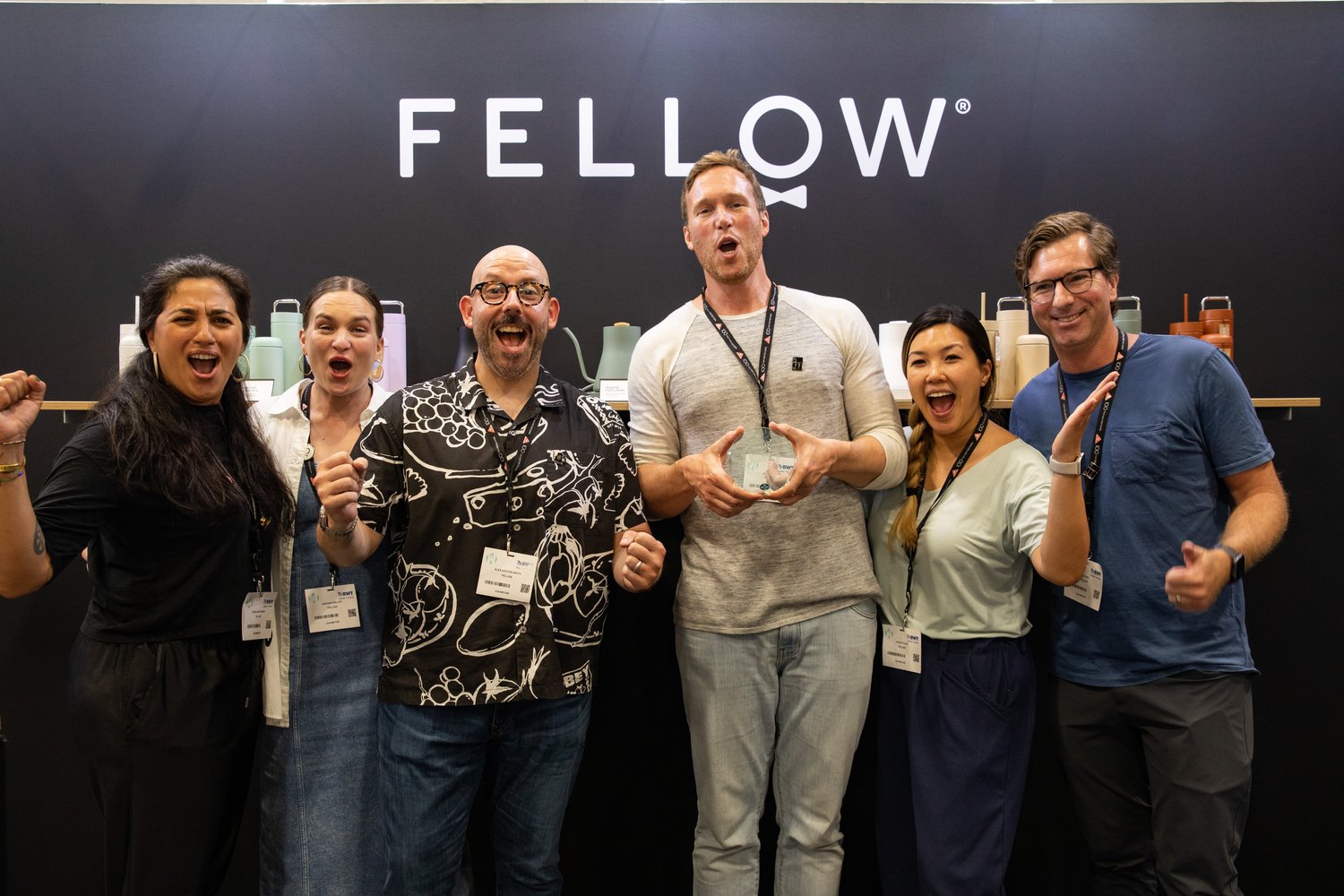
In the category of Consumer Coffee Preparation & Serving, Fellow emerged victorious with their “Aiden Precision Coffee Maker,” a cutting-edge device that promises precision and ease in coffee making. Visitors can explore this product at Booth #CH-011.

For Commercial Coffee Preparation & Serving Equipment, Bellwether Coffee took the top spot with their “Bellwether Shop Roaster,” designed to transform the roasting experience with its state-of-the-art technology. Attendees can check out this revolutionary roaster at Booth #EF-002.

Beyond the Bean triumphed in the Specialty Coffee Beverage Additive category with their “Sweetbird Popcorn Syrup,” offering a unique twist to coffee flavors. This inventive syrup can be found at Booth #CB-007.

In the realm of Specialty Non-Coffee Beverages, DRYK impressed the judges with their “DRYK Pea Barista,” an innovative plant-based milk alternative tailored for baristas. This product is showcased at Booth #DA-004.

The Coffee Accessories category saw Hauck Tamper winning with their “Vibra Tamper,” an accessory that ensures perfect coffee packing through innovative vibration technology. Coffee enthusiasts and professionals can view this tool at Booth #DF-015.

Lastly, in the Open Class category, Kavekalmar stood out with their “ROASTINO Manual Roaster,” a product that brings roasting back to the basics with a manual approach, available for viewing at Booth #CJ-035.

The event continues to be a hub for innovation and excellence in the coffee industry, with these winners setting new standards. Stay tuned for the upcoming announcement of the Best New Product People’s Choice Award, which will be declared later this week.

Lavazza Foundation Revitalizes Coffee-Producing Communities in Yemen

The Lavazza Foundation, in collaboration with the Qima Foundation and Deutsche Gesellschaft für Internationale Zusammenarbeit (GIZ), has launched an ambitious project named “Mokha Revival” to tackle social and economic challenges in Yemen’s coffee sector. This initiative, which began in 2023 and will run until 2025, focuses on the Yemeni provinces of Taiz and Yafa’a, aiming to rejuvenate and revolutionize the coffee industry from the ground up.

Project Objectives and Achievements

The “Mokha Revival” project aims to improve farm-level practices and enhance the quality and value of the final coffee product. One of the project’s significant milestones is the signing of a Memorandum of Agreement (MoA) with the Yemeni Minister of Agriculture. This agreement is set to foster development and research in the coffee industry through extensive training programs. The project has already made notable progress:

  • Data Collection: Information has been gathered from 145 households to better understand coffee cultivation and economic dynamics.
  • Training: Over 1,160 hours have been dedicated to training young people, with a special focus on including women—65 women have been actively involved in the training programs.
  • Community Impact: By enhancing agricultural practices and promoting the coffee produced, the project is designed to bring sustainable economic benefits to local communities.

Partnerships and Support

The Lavazza Foundation works alongside the Qima Foundation and Deutsche Gesellschaft für Internationale Zusammenarbeit (GIZ) GmbH to implement this project. These partnerships are crucial for amplifying the project’s reach and effectiveness, ensuring that the real needs of the people and the environment are addressed effectively.

Broader Impact and Future Plans

The Lavazza Foundation has a long history of supporting coffee-producing communities globally, with active projects in 20 countries across three continents. Their mission is to enhance coffee productivity and quality while fostering entrepreneurship and improving living conditions. This holistic approach is evident in their Yemen project, which not only aims to boost the local economy but also to empower individuals through education and training.

For more detailed information on the “Mokha Revival” project and other initiatives by the Lavazza Foundation, you can visit their official website​ (Lavazza Foundation)​​ (Lavazza Foundation)​​ (Lavazza Foundation)​.

China and Brazil Forge a Groundbreaking $500 Million Coffee Partnership

In a significant move for the global coffee industry, China’s Luckin Coffee has entered into a Memorandum of Understanding (MoU) with the Brazilian government, a deal that’s set to reshape market dynamics. This agreement, valued at $500 million, involves the purchase of 120,000 tons of Brazilian coffee through 2026. This strategic partnership aims to solidify the coffee trade relations between China and Brazil, positioning them as formidable players in the global arena.

Over the past year, China has ascended from being the 20th to the 6th largest importer of Brazilian coffee, a leap facilitated by a tripling of its imports. This surge underscores China’s burgeoning role as a pivotal market force in the coffee sector.

According to Vinícius Estrela, Executive Director of the Brazil Specialty Coffee Association (BSCA), “This agreement is a triumph for the Brazilian coffee value chain, representing a commitment of one million bags annually over the next two years. Luckin’s planned imports approximate the entire coffee import volume of China in 2023.”

Brazil, known for its rich coffee heritage and vast production capabilities, offers a favorable price-quality ratio that makes it an attractive partner for China. The MoU, facilitated by the Brazilian Trade and Investment Promotion Agency (ApexBrasil), not only supports Luckin Coffee’s market expansion but also enhances supply chain efficiencies and broadens China’s access to premium coffee varieties.

Mau Perez, Purchasing Manager for Shanghai Cooway Trading Co.,Ltd., highlighted the importance of government-backed agreements like this MoU in fostering trust among industry stakeholders. “Brazil accounts for over 38% of China’s total green bean imports, a testament to the strategic nature of this partnership,” Perez noted.

The broader implications of this partnership extend beyond mere transactional exchanges. It includes eight intergovernmental instruments and 30 outcomes, along with 11 private sector agreements, signaling a deep economic integration and cooperative spirit between China and Brazil.

“This is more than a coffee deal; it’s a larger partnership reflecting strategic economic alliances,” remarked Omar Ali, Managing Director at Ocean Grounds Coffee Roasters in China. “Such initiatives not only diversify China’s coffee sources but also introduce Chinese consumers to new flavors and quality standards, enhancing the cultural and economic ties between the two nations.”

As global market dynamics evolve, with traditional markets facing constraints due to inflation and regulatory pressures, China’s strategic pivot to Brazilian coffee could herald a new era in international coffee trade, fostering technological innovation and cross-cultural exchanges that benefit the entire coffee value chain.

This landmark agreement between China and Brazil marks a pivotal chapter in their trade relations, setting the stage for a sustained partnership that could significantly influence the global coffee industry’s future.

Major Partnership Announced at World of Coffee Copenhagen

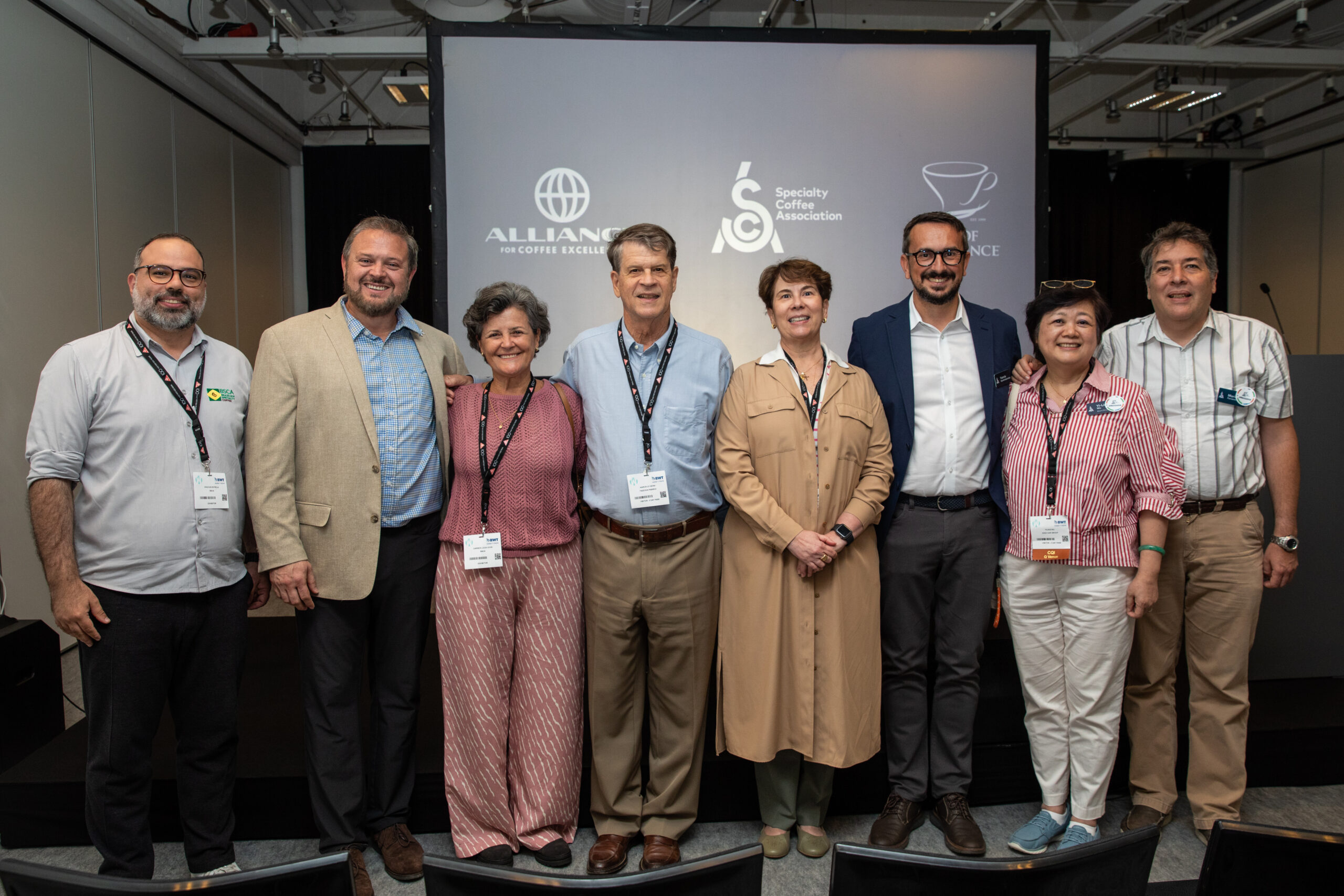
The Cup of Excellence (CoE) and the Alliance for Coffee Excellence (ACE) have officially partnered with the Specialty Coffee Association (SCA). This collaboration was formalized today with the signing of a Memorandum of Understanding (MoU) at the World of Coffee Copenhagen trade show.

Historically, CoE, ACE, and SCA have worked independently, with occasional collaborations on smaller projects. This formal partnership leverages their combined strengths to create a significant impact on coffee producers, the industry, and consumers alike.

Erwin Mierisch, Executive Director of Cup of Excellence and Alliance for Coffee Excellence, highlighted the partnership’s potential: “For too many years, our organizations have walked separate paths. This long-awaited partnership is just the beginning of the positive impact expected for farmers, producing countries, and roasters searching for high quality. From education to quality analysis to outreach and information-sharing, huge opportunities abound to drive specialty coffee in the right direction.”

The initial focus of the partnership will be to integrate the descriptive and scoring portions of the CVA analysis protocol into the Cup of Excellence competition structure. CoE professional head judges and staff, along with the SCA technical team, will jointly assess, refine, and adapt the CVA form to the competition, ensuring fair and impartial judging and sensory analysis of competition and auctioned coffees.

Education and cupper certification will also be pivotal in this partnership. The aim is to enhance the skills and recognition of in-country cuppers, whose expertise is crucial to the foundation of specialty coffees.

Yannis Apostolopoulos, CEO of the Specialty Coffee Association, remarked, “This partnership goes beyond improving quality assessment; it aims to enhance the entire coffee ecosystem. By collaborating and sharing expertise, we will set new standards that benefit everyone from producers to consumers, ultimately making coffee better for all.”

The World of Coffee Copenhagen event, where the MoU signing took place, served as an ideal backdrop for this announcement. The synergy between the organizations promises significant positive changes to the industry, showcasing award-winning coffees and the remarkable work of CoE and ACE in discovering and rewarding producers.