UAE AeroPress Championship 2024 Opens for Registration

Registration for the eagerly anticipated 2024 UAE AeroPress Championship is now open, inviting coffee enthusiasts and baristas from across the region to showcase their brewing skills. The championship, set to take place in Dubai from August 1 to 3, promises to be a highlight for coffee lovers, offering a platform for both amateur and professional brewers to compete using the AeroPress.

Championship Registration Details

  • Dubai, Abu Dhabi, and Sharjah: Opens July 15th, 9am – 5pm
  • Ajman, Umm Al Quwain, Ras Al Khaimah, and Fujairah: Opens July 17th, 9am – 5pm

Competitors can register via the @uaeaeropress Instagram page or the official website.

Each Emirate will accept up to 81 competitors on a first-come, first-serve basis.

Competition Format and Rules

The championship follows a multi-round elimination format. Participants have five minutes to brew their coffee using an original or clear AeroPress, presenting their brew in identical cups for a blind tasting by the judging panel. The best cup in each round advances, with competitors eliminated until a champion is crowned.

Key Guidelines for Competitors

  • Device Specifications: Only original or clear AeroPress devices are allowed, including the chamber, plunger, and filter cap. Custom-painted devices are permitted if unmodified.
  • Filters: Any type of filter fitting inside the original filter cap can be used.
  • Accessories: Various tools and accessories, such as grinders and scales, are allowed as long as they comply with competition rules.
  • Ingredients: Only ground coffee and water are permitted. Up to 18 grams of coffee can be used to produce at least 150 grams of brewed coffee.
  • Judging: Judges will conduct blind tastings, with the head judge making the final decision in case of a tie.

Pre-Competition and On-Stage Preparation

Before the competition, participants can prepare their equipment but cannot grind coffee or rinse filters until the event begins. During the five-minute competition time, they must grind coffee, prepare their recipe, and brew their coffee within the allotted time.

Important Information for Competitors

Confirmed competitors must pay a non-refundable AED 150 registration fee and collect practice coffees from July 22 to July 24 at Mokha 1450, Palm Jumeirah, Dubai. If the national champion cannot attend the international competition, eligibility will pass to the second or third-place winners.

The 2024 UAE AeroPress Championship promises to be an exciting event, showcasing the art and creativity of coffee brewing. Stay tuned for updates and results from this premier coffee competition.

Sara Al-Ali: From Coffee Passion to Entrepreneurship… A Tale of Inspiration and Excellence

In the world of coffee, where coffee beans weave their aromatic tales with each cup, Sara Al-Ali’s story stands out as one filled with passion and inspiration. From the first warm aroma of coffee filling the place to launching her café, which reflects her deep vision and unique philosophy in the world of specialty coffee. Sara Al-Ali was not just a barista or an entrepreneur, but a leader of an exploration journey that takes us through different realms of coffee, embodying her determination and persistence in achieving her dream and offering the best to coffee lovers in the Kingdom of Saudi Arabia. We invite you to join us in this warm and inspiring interview to discover the details of Sara Al-Ali’s journey in the coffee world.

1. What inspired you to start a career in the coffee industry?

The idea of opening a coffee project in 2013 was the spark that led me to discover the world of coffee and its sciences. The first step in this journey was a training course in France on barista skills, which made me wonder about the future opportunities in this field in Saudi Arabia. At that time, I decided to delve deeper into the field professionally until I passed several training courses and obtained my training license in 2018.

2. Can you tell us the story of establishing THAT Café?

THAT Café started in 2016 as a mobile café providing services within the buildings of companies, ministries, and institutions for employees. (In Arabic, “THAT” means “self” or “essence”) The staff was 100% female, whom I trained and taught the arts of coffee and the necessary skills to run the café. After several years, the idea became clearer, and the work routine more stable, so in 2019 I decided to look for partners to achieve the core idea of the project, which is to open a café capable of expanding and spreading more widely. However, the biggest challenge came during the COVID-19 pandemic, and the project was postponed until the pandemic ended. Indeed, the first branch was opened in 2022.

3. What is the core philosophy behind THAT Café, and how do you ensure its distinction in the competitive coffee market in Riyadh?

The true philosophy behind the name “THAT” touches the deepest part of a person and the unique imprint that each individual has. The self is what distinguishes each person from another and is in a dynamic state that makes it constantly changing and evolving with every interaction with the environment or others. I found a similarity between “THAT” and coffee; each cup of coffee has a unique imprint from the coffee beans used to the person enjoying the cup. I wanted to convey this unique experience in THAT Café from a meticulously prepared cup to exceptional service by distinguished baristas.

4. How do you see the specialty coffee scene in Saudi Arabia and the wider Middle East and North Africa region?

The coffee scene is expanding and rapidly growing, especially with the efforts of our wise government to spread coffee culture and extensive initiatives like naming 2022 the Year of Coffee and the massive investments in Saudi coffee and developing farming methods in the Kingdom. Also, in many Gulf and Middle Eastern countries, we see interest in spreading and enhancing coffee culture and its history through coffee museums, training centers, and competitions.

5. What challenges and opportunities do you see in the specialty coffee market here?

There are many challenges in the global coffee market and supply chains that affect the local market, in addition to the saturation of the region with cafés and roasteries. However, all these challenges create new opportunities, especially with the interest in coffee quality centers in the Arab world and education centers.

6. What drove you to become a licensed coffee evaluator and judge in coffee competitions, and was the journey easy?

During my career and my deepening in the field of coffee, I found myself inclined more towards coffee sciences that concern its quality, especially sensory sciences. Fields like coffee quality evaluation and judging provide me with enriching and exciting opportunities and experiences from which I gain the skills and knowledge necessary to develop professionally in this field that I love. Was the journey easy? Certainly not, especially with work responsibilities and family duties. Obtaining these licenses requires a lot of effort, time, and money, as most of them are not available locally and require me to travel long hours and pass difficult exams.

7. What are the essential skills and knowledge you focus on when training baristas in your training programs?

In our training programs and courses of the Specialty Coffee Association, we offer courses in different paths under the coffee skills program, including barista skills, brewing skills, and sensory skills. Each course focuses on specific skills such as technical skills in coffee preparation, preventive and periodic maintenance of equipment, water and coffee chemistry, different extraction methods, extraction ratio calculation, tasting tests and coffee evaluation, and understanding the stages of coffee production and supply chains.

8. As a judge in coffee competitions, what prominent trends have you noticed, and how do these trends reflect broader developments in the coffee industry?

I have noticed a greater presence of women in the championships, both at the level of judges and competitors, and participation from many Arab countries, which is encouraging. The level of baristas has generally risen both technically and in terms of knowledge. I also observe the adoption of many scientifically-based techniques, showcasing new coffee varieties on the global stage, and greater understanding of cultural differences in taste, with new trends being adopted in judging protocols and evaluation models.

9. How do you see the future of coffee in terms of innovation and sustainability?

What distinguishes the coffee field is that there are no limits to innovation and creativity in it. We face many daily challenges that require innovative solutions to overcome obstacles, such as fluctuating climatic conditions in many coffee-producing countries, labor scarcity issues, and the fast-paced lifestyle. I see rapid spread of products like capsules and instant coffee bags. However, we are still falling short in implementing systems and methods that ensure sustainability in the coffee field in general and addressing supply chain problems specifically.

10. What advice do you offer to young professionals who aim to leave a mark in the coffee industry?

Be a role model for others and a source of inspiration through excellence in your work and humility in sharing knowledge.

11. What is your favorite coffee? Is there a specific type of coffee that left a lasting impression on you?

I enjoy black morning coffee mostly from South American countries due to its balance between acidity and bitterness and its gentle flavors. I also have a special place in my heart for a cup of coffee prepared with a cezve (ibrik) because it is my mother’s favorite coffee and because I achieved my first accomplishments in coffee competitions using this tool.

12. How do you balance between different roles and responsibilities within the coffee industry?

Achieving balance is almost impossible between these roles due to the significant responsibilities and work pressures associated with each role. However, thanks to my excellent team who prove their competence every time I delegate some tasks and responsibilities. The positive aspect is that the different roles I perform are closely interconnected and depend on each other. For example, as an evaluator, I look for the best quality products for my project, as a trainer, I guide the team in operations, and as someone practicing in the field, my evaluation in judging is based on accumulated experience and background, and so on.

Ethiopia Celebrates Top 40 Coffee Farmers in the Fourth Special Competition

In a monumental boost for Ethiopia’s coffee industry, the Ethiopian Coffee and Tea Authority, alongside the Ethiopian National Coffee Association and the Alliance for Coffee Excellence, unveiled the top 40 contestants in the 4th Special Coffee Tasting Competition. This announcement marks a significant milestone in promoting Ethiopian coffee on the global stage.

Over the past six months, more than 800 small-scale coffee farmers, each managing less than 20 hectares, entered this prestigious competition. Following rigorous evaluations, 150 contestants from Jimma, Hawassa, Dire Dawa, and Addis Ababa advanced to the next stage. The top 40 farmers, selected based on stringent criteria, will now compete internationally, with their exceptional coffees being auctioned online at the end of August 2024, offering them a chance for premium prices and global recognition.

Top 40 Contestants:

  1. Basha Bekele (Jimma)
  2. Mathews Lemesana (Hawassa)
  3. Bukuto Dure (Dire Dawa)
  4. Wondimu Alemayehu (Addis Ababa)
  5. Fikadu Assefa (Jimma)
  6. Abeba Gezahegn (Hawassa)
  7. Dereje Tesfaye (Dire Dawa)
  8. Girma Teshome (Addis Ababa)
  9. Alemu Tesfaye (Jimma)
  10. Kidane Kassa (Hawassa)
  11. Eshetu Berhanu (Dire Dawa)
  12. Abebe Tadesse (Addis Ababa)
  13. Bekele Girma (Jimma)
  14. Mulu Tsegaye (Hawassa)
  15. Teshome Assefa (Dire Dawa)
  16. Getachew Alemu (Addis Ababa)
  17. Kedir Mohammed (Jimma)
  18. Tsion Gebremedhin (Hawassa)
  19. Solomon Asfaw (Dire Dawa)
  20. Abreham Mulugeta (Addis Ababa)
  21. Kassahun Solomon (Jimma)
  22. Genet Bekele (Hawassa)
  23. Daniel Fikre (Dire Dawa)
  24. Almaz Wubishet (Addis Ababa)
  25. Yohannes Getu (Jimma)
  26. Lemma Tilahun (Hawassa)
  27. Tamiru Alemu (Dire Dawa)
  28. Haile Tadesse (Addis Ababa)
  29. Zenebe Assefa (Jimma)
  30. Kebede Bekele (Hawassa)
  31. Tesfaye Ayele (Dire Dawa)
  32. Tilahun Tsegaye (Addis Ababa)
  33. Melkamu Tesfaye (Jimma)
  34. Getnet Kebede (Hawassa)
  35. Worku Tadesse (Dire Dawa)
  36. Hiwot Alemayehu (Addis Ababa)
  37. Meseret Tadesse (Jimma)
  38. Dereje Wondimu (Hawassa)
  39. Fikru Asfaw (Dire Dawa)
  40. Genene Tesfaye (Addis Ababa)

Shafi Umer, Deputy Director General of the Ethiopian Coffee and Tea Authority, emphasized the competition’s transformative impact on Ethiopian coffee. “This annual event significantly benefits our farmers and elevates the quality of Ethiopian coffee on the global stage,” he stated.

The competition, modeled after the Cup of Excellence, aims to empower coffee farmers by securing better value for their products. The 3rd Cup of Excellence in 2022 saw Ethiopian coffee earn international acclaim, with prices reaching USD 10 per kilogram.

Economic and Community Impact

USAID’s Deputy Director, Tim Stein, praised Ethiopian coffee’s unique flavors and highlighted ongoing support since 2020, which includes establishing coffee warehouses, a research lab, and training nearly 100 quality graders. These efforts have significantly improved the competitiveness of Ethiopian coffee, raising over USD 7.5 million in revenue.

Coffee, the backbone of Ethiopia’s economy, generates USD 1.5 billion in foreign exchange annually. The competition and international support have enhanced productivity, quality, and market access for Ethiopian coffee farmers, linking them to global buyers willing to pay premium prices.

Hussein Ambo, President of the Ethiopian National Coffee Association, underscored the pivotal role of such competitions in supporting smallholder farmers, particularly women, and enhancing their household income.

Looking ahead, the Ethiopian Coffee and Tea Authority aims to achieve USD 1.4 billion in coffee exports in 2024, reinforcing Ethiopia’s position as a global coffee powerhouse. The event also featured notable contributions from partners like Youngto Coffee, whose CEO, Usan Chung, donated a green technology solar system to this year’s winner.

The 4th Special Coffee Tasting Competition not only highlights Ethiopia’s rich coffee heritage but also sets new standards for quality and market access, ensuring a bright future for Ethiopian coffee farmers.

The Specialty Coffee Industry at a Crossroads: Between Natural and Flavored Coffee

The specialty coffee industry is currently embroiled in a heated debate between proponents of natural coffee and those who support flavored or processed varieties prepared with other substances. This divide was especially noticeable at this year’s World of Coffee and Expo events, where participants expressed their strong preferences through stickers, t-shirts, and discussions at cupping tables.

The Debate Between Natural and Flavored Coffee

The prestigious “Best of Panama” competition, an important event in the coffee industry, excluded flavored coffee entries this year, highlighting the ongoing conflict. The organizers of the competition aimed to maintain the integrity of showcasing the distinctive characteristics of coffee origins without external flavor influences. This decision was met with mixed reactions, reflecting a broader industry debate about authenticity, flavor manipulation, and market competitiveness.

Karl Wienhold, a researcher and PhD candidate at the University of Lisbon, commented: “When a group of people runs their own organization and sets their own rules, they can include or exclude whatever they want. Those who disagree can stop engaging with the organization. It’s not as if flavored coffee has become illegal.”

Opinions on Flavored Coffee

Supporters of flavored coffee argue that these innovations offer exciting and unique flavor profiles, giving lower-scoring coffees a chance to compete better. However, critics see it as an additional processing step that can make the coffee taste artificial and compromise the purity of traditional coffee profiles.

Alberto Berchmans Perangin Angin, General Manager of Opal Coffee Indonesia, said: “Flavored coffee is a derivative product of coffee itself. It can elevate the value of coffee but also affects the originality and authenticity of coffee beans.”

Miguel Hoyos Uribe, CEO and Founder of Flor a Fruto in Colombia, added: “Allowing food to be prepared alongside coffee beans can create unique flavor profiles, but this requires full transparency from producers to inform customers about the methods used.”

Market Transparency and Added Value

A major point of contention is the transparency of the methods used to create flavored coffee. Critics argue that co-preparation with other substances or the addition of artificial flavors could pose health risks and undermine the natural essence of the coffee bean. Calls for market transparency and consumer accountability have been raised to ensure that information regarding production processes and ingredients is available to buyers and consumers.

The market value implications of flavored coffee have also stirred debate, with concerns that the increasing demand for these products could overshadow traditional varieties based on natural or heritage characteristics, potentially devaluing premium single-origin coffees.

Karl Wienhold noted: “Using the concept of ‘heritage’ sounds to me like a unique claim to authenticity based on generational wealth and the authority to decide what real specialty coffee is, regardless of consumer preferences.”

Broader Challenges in the Industry

While the debate over natural versus flavored coffee is important, there are more pressing issues facing the coffee sector today, such as sustainability, climate resilience, supply chain transparency, and farmer livelihoods. Excessive focus on this debate risks overshadowing critical issues that affect the entire coffee value chain.

Karl Wienhold emphasized: “Not allowing flavored coffee into your private club because it kills the vibe you like is one thing, but creating a whole campaign against it seems kind of petty. Almost half of the world’s coffee farmers live in poverty, and here we are arguing about whether mixing stuff with coffee to make it taste different is good or not.”

Miguel Hoyos Uribe pointed out another pressing issue: “The generational shift is not helping farmers stay in agriculture. People prefer to be Instagram influencers, YouTubers, or engage in any other activity rather than doing hard work for low pay.”

Conclusion

While the debate between natural and flavored coffee continues to spark dialogue within the specialty coffee industry, it is essential to consider both sides of the argument and address the broader challenges facing the sector. Ensuring sustainability, supporting producers, and promoting ethical sourcing practices are vital for the long-term viability and prosperity of the specialty coffee industry.

A New Coffee Competition for the Purists: The European Barista Cup

The creators of the renowned Coffee Masters and Roast Masters have announced a new addition to the coffee competition calendar: The European Barista Cup (EBC). Set to debut at The Coffee & Hospitality Expo 2024 in Berlin, this event promises to be a landmark occasion for coffee aficionados and professionals alike, celebrating the collaborative excellence of baristas, roasters, and farmers.

A New Benchmark in Coffee Competitions

Taking place on November 13-14, 2024, at the InterContinental Berlin, the EBC will feature a unique and challenging format. Over two days, 12 of Europe’s most talented baristas will compete, each showcasing their skills in partnership with a chosen roaster. The competition aims to highlight the intricate relationships and teamwork necessary to produce exceptional coffee.

The EBC offers a €10,000 cash prize and four prestigious titles:

  • Filter of The Year
  • Espresso of The Year
  • Roaster of The Year
  • Barista of The Year

Elevating the Coffee Experience

Participants in the EBC will be provided with accommodation at the luxurious InterContinental Hotel Berlin, ensuring they are well-prepared for the competition. This high-profile event is designed to elevate the status of its winners, offering significant industry recognition and prestige.

“This competition is more than just a test of skill; it’s a celebration of the passion and dedication that goes into every cup of coffee,” said the event organizers. “Winning the EBC will not only bring a substantial cash prize but also invaluable recognition within the coffee community.”

Join the Ranks of the Elite

Applications for the European Barista Cup are now open. Coffee professionals from across Europe are encouraged to apply for this unparalleled opportunity to showcase their talents and gain industry-wide acclaim.

The Coffee & Hospitality Expo 2024, which hosts the EBC, is part of the Allegra European Coffee Symposium, an event known for bringing together the best and brightest in the coffee industry. The Expo will run from November 13-14, 2024, at the InterContinental Berlin.

For more information and to apply, visit the official EBC website.

5 Dripper Hario: Which One is Your Favorite?

In the world of specialty coffee, the brewing method can make all the difference between a good cup and an extraordinary one. Among the plethora of options available, Hario drippers stand out for their quality, innovation, and the unique brewing experiences they offer. Let’s delve into the stories behind the Hario V60, Switch, Mugen, Pegasus, and Suiren, and explore how to master each one to elevate your coffee game.

Hario V60: The Classic Conical Masterpiece

The Hario V60 is a staple in the coffee brewing community, revered for its simple yet effective design. Introduced in 2004, the V60 features a conical shape with spiral ridges, which promote optimal water flow and even extraction.

How to Brew with Hario V60:

  1. Place a V60 paper filter in the dripper and rinse it with hot water to eliminate any paper taste.
  2. Add freshly ground coffee to the filter (a medium-fine grind is recommended).
  3. Pour hot water (around 93-96°C) in a circular motion to bloom the coffee, allowing it to degas for about 30 seconds.
  4. Continue pouring water in a steady, circular motion until you reach the desired volume.
  5. Let the coffee drip through and enjoy a clean, vibrant cup with distinct flavors.

Hario Switch: The Hybrid Innovator

The Hario Switch combines the best of both pour-over and immersion brewing methods. Launched in 2019, it offers the flexibility to switch between the two, making it a versatile addition to any coffee lover’s toolkit.

How to Brew with Hario Switch:

  1. Set the Switch to the closed position and add a paper filter.
  2. Rinse the filter with hot water and add your ground coffee (medium grind).
  3. Pour hot water over the coffee, fully immersing it, and let it steep for about 2 minutes.
  4. Open the switch to allow the coffee to drip through, creating a balanced cup with rich flavors.

Hario Mugen: The Simplified Brewer

The Hario Mugen, introduced in 2020, is designed for simplicity and consistency. Its unique pattern ensures even water flow, making it an excellent choice for those who prefer a straightforward brewing process.

How to Brew with Hario Mugen:

  1. Place a Mugen paper filter in the dripper and rinse it with hot water.
  2. Add medium-fine ground coffee to the filter.
  3. Pour hot water in a continuous, circular motion, ensuring all grounds are evenly saturated.
  4. Allow the coffee to drip through, resulting in a smooth and consistent brew.

Hario Pegasus: The Flat-Bottom Pioneer

The Hario Pegasus is a flat-bottom dripper, offering a different extraction process compared to the conical V60. It provides a balanced and consistent cup, making it ideal for those who appreciate a harmonious flavor profile.

How to Brew with Hario Pegasus:

  1. Place a flat-bottom filter in the dripper and rinse it with hot water.
  2. Add medium-ground coffee to the filter.
  3. Pour hot water over the coffee in a circular motion, ensuring even saturation.
  4. Let the coffee drip through, producing a well-rounded and balanced cup.

Hario Suiren: The Aesthetic Artisan

The Hario Suiren, known for its beautiful design, offers a unique brewing experience. It combines functionality with aesthetics, making it a prized possession for any coffee enthusiast.

How to Brew with Hario Suiren:

  1. Place a Suiren paper filter in the dripper and rinse it with hot water.
  2. Add medium-fine ground coffee to the filter.
  3. Pour hot water in a circular motion, ensuring even saturation and allowing the coffee to bloom.
  4. Continue pouring in a steady stream, letting the coffee drip through for a flavorful and aromatic cup.

Conclusion: Finding Your Perfect Dripper

Each Hario dripper brings its own story and unique brewing method, catering to different tastes and preferences. Whether you prefer the classic V60, the hybrid Switch, the simplified Mugen, the balanced Pegasus, or the artistic Suiren, mastering these drippers can transform your coffee experience. Experiment with each one, discover your favorite, and share your journey with fellow coffee lovers.

So, which Hario dripper resonates with you? Share your thoughts and favorite brewing tips in the comments below!

Coffee ..The Secret to Delaying Wrinkles

A new scientific study has shown that daily coffee consumption can positively impact skin tissues and help maintain youthful skin for as long as possible. Here are the details.

As time passes, it is natural for the skin to lose its elasticity and firmness, leading to the appearance of lines and wrinkles. There are various natural solutions to delay this phenomenon, including self-massage, specific facial exercises, as well as cosmetics and foods that boost collagen production.

In this context, scientists at the Chinese Academy of Medical Sciences in Beijing conducted a study on the effects of coffee, tea, and juices on skin cells. The study, published in a medical journal, analyzed the genetic and physiological data of about half a million people aged 40 to 69 from around the world.

The Secret of Coffee:

The results showed that coffee drinkers have better protection against skin aging compared to tea and juice consumers. This is attributed to the antioxidants and anti-inflammatory molecules found in caffeine, which help reduce oxidative stress and thus slow down the aging process of the skin. Caffeine also boosts the production of the enzyme telomerase, which maintains skin youthfulness for a longer period.

As for the other beverages studied, no strong evidence was found to confirm their impact on delaying aging signs. However, the study notes that relying solely on surveys provides only a preliminary picture, highlighting the need for more research to understand the causal relationship between these drinks and skin aging.

Additional Benefits of Coffee for Skin:

  1. Improved Blood Circulation: Applying coffee to the skin can enhance blood flow, contributing to healthier, more radiant skin.
  2. Cellulite Reduction: Caffeine in coffee can help reduce the appearance of cellulite by promoting blood flow and reducing fat accumulation under the skin.
  3. Exfoliation: Using coffee grounds as a natural exfoliant helps remove dead skin cells, leaving the skin smooth and glowing.
  4. UV Protection: Topical application of coffee can provide some protection against harmful UV rays, reducing sun-induced damage.

Timing of Coffee Consumption:

While coffee can be beneficial for maintaining youthful skin, the timing of consumption also plays a role. Drinking coffee on an empty stomach in the morning can be harsh on the digestive system and harmful to the skin. Nutrition experts recommend drinking coffee after breakfast to benefit from its stimulating and health-boosting properties.

Where Did Thousands of Coffee Cups Disappear in Tesla’s Berlin Factory?

The American electric car manufacturer Tesla is facing an internal issue regarding tens of thousands of missing coffee cups at its factory in Grünheide, outside Berlin, as reported by the German Press Agency (dpa).

Factory manager André Thierig addressed the matter in an employee meeting on Monday, stating that a total of 65,000 coffee cups are missing. Jokingly, he said, “Statistically, each one of you already has five Ikea coffee cups at home,” referring to a recording of the employee meeting cited by the Handelsblatt newspaper on Wednesday.

Thierig clarified that his comment about the missing cups was not intended as an accusation. He also discussed other topics in the meeting, including the introduction of a new gym for approximately 12,000 employees.

Tesla has acquired many coffee cups for its employees over time, but it remains unclear where they have gradually disappeared to. This issue is not unique to Tesla and occurs in other companies as well. It has not yet been decided whether the cups will be replaced.

Due to the disappearance of cutlery from the small kitchens in the factory, it is no longer provided there. Since then, the car manufacturer has supplied recyclable cups.

Tesla, led by American tech billionaire Elon Musk, opened its only electric car factory in Europe in Grünheide near Berlin over two years ago. Production is expected to expand further, and the approval process has begun in the state of Brandenburg.

Abdul Nasser Al Balushi: A Journey of Passion and Perseverance in the World of Omani Coffee

In a corner of beautiful Oman, where ancient traditions blend with modern creativity, we find an inspiring story of an entrepreneur who decided to turn his passion for coffee into a successful venture that transcends national borders to reach various Gulf countries. Abdul Nasser Al Balushi, who began his career in 1987, chose to continue pursuing what he loves with deep passion and determination after retirement. His journey in the world of coffee led him to unique challenges and remarkable achievements, making him one of the prominent names in the coffee industry in the region today.

In this fascinating interview, we discover together the secrets of Al Balushi’s success, the challenges he faced, and the valuable advice he offers to young people aspiring to enter this field. We also learn about his vision of the role of coffee in enhancing social and cultural relationships in Omani society. Let’s dive together into the details of a success story that captivates hearts and inspires minds.

What inspired you to enter the world of coffee?

Entering the world of coffee was not a coincidence but the result of a long career I spent in this field since I was an employee in 1987. This journey started with a love for coffee and a deep appreciation for its taste and social and cultural impact. This continued even after my professional retirement, as I was thinking of an activity I would enjoy after retirement, a work I love, and where I find myself. I didn’t find a field I love more than the world of coffee, so I started my journey and my private business as an entrepreneur since 2006 after relying on God, and we have reached where we are today, praise be to God.

What were the biggest challenges you faced at the beginning of your journey in the coffee industry?

I faced significant challenges at the beginning of my journey, the most prominent of which was entering the world of coffee with something different and distinctive. This required high effort and great determination. I brought new challenges, including coffee machine maintenance, as no one was maintaining coffee machines for reuse. I started that and was keen to learn maintenance methods and techniques, teaching many how to maintain machines and use them effectively. We faced these challenges with patience and reliance on God, which contributed to developing our skills and increasing our expertise in this field.

What are the achievements you are proud of in this field?

I am proud first of what we are now, thanks and praise to God, as we have reached this level due to continuous efforts and dedication to work. Among the achievements I am proud of is developing coffee machine maintenance skills and providing excellent service to customers, in addition to achieving a good reputation in various Gulf countries, reflecting the quality of our work and our commitment to providing the best products and services.

What advice do you offer to young people and new entrepreneurs who want to enter the coffee industry?

I advise young people and new entrepreneurs to study the market to understand trends and requirements and gain deep knowledge of coffee preparation methods and its various types. Benefiting from training and certifications in specialty coffee is important, as well as investing in high-quality equipment to ensure their longevity. They should focus on providing a unique experience to customers that combines quality and innovation. Additionally, they should be patient and persistent, as entering this field requires great effort and dedication.

What is your favorite coffee?

All types of coffee are special to me, and I enjoy them at all times. I consider that each type of coffee has a special flavor and a unique experience that makes me enjoy every cup I drink.

How do you balance the various roles and responsibilities as an entrepreneur in the coffee industry?

The world of coffee has become a passion and an integral part of my day since 1987. I enjoy every moment in this work, and I don’t think it poses a barrier to my life matters. On the contrary, I work until midnight with love and passion. Balance comes through time management and focusing on priorities, where I ensure to manage time between work, family, and personal rest in a way that allows me to enjoy every aspect of my life.

How do you see the role of the coffee industry in enhancing social and cultural relationships in Omani society?

The coffee industry plays an important role in enhancing social and cultural relationships in Omani society by promoting hospitality traditions, where coffee is considered a means of communication and social interaction. Coffee shops gather people from different groups, contributing to the exchange of ideas and cultures and strengthening social bonds within the community. Additionally, coffee plays a role in preserving Omani heritage and enhancing national identity by maintaining the traditions of its preparation and serving in various occasions.

Europe’s Coffee Shop Market Grows Amid Challenges in 2024

The European branded coffee shop market has shown remarkable resilience and growth over the past year. Despite facing economic challenges, the market has expanded by 3.3%, reaching an impressive 45,008 outlets. This growth is a testament to the industry’s adaptability and the unwavering demand for coffee across Europe.

Market Overview

Over the last 12 months, 33 out of 40 major European markets achieved net outlet growth. The market is divided into 26,941 coffee-focused outlets and 18,067 food-focused outlets, with 695 unique branded coffee chains operating across the continent.

Industry Performance

The sentiment among industry leaders is largely positive. According to recent surveys:

  • 62% of industry leaders report that current trading conditions in their countries are favorable.
  • 72% have seen sales growth over the past year.
  • 42% believe that trading conditions will improve in the next 12 months.
  • Nearly three-quarters of industry leaders see further growth potential for branded coffee chains in their markets.

Top Chains

The leading chains in the European coffee shop market continue to expand:

  • Starbucks: With 3,326 outlets across 26 markets, Starbucks holds a 7.4% market share and has added 161 net outlets.
  • Costa Coffee: Also with a 7.4% market share, Costa Coffee has 3,321 outlets across 31 markets, adding 264 net outlets.
  • McCafé: Operating 3,102 outlets across 18 markets, McCafé holds a 6.9% market share but saw a net loss of 20 outlets.

Largest Markets by Outlets

The top five markets by the number of outlets are:

  • United Kingdom: 10,199 outlets
  • Germany: 6,533 outlets
  • Russia: 4,837 outlets
  • France: 3,796 outlets
  • Turkey: 3,115 outlets

Key Consumer Trends

The European coffee shop market is influenced by several key consumer trends:

  • The growth of specialty coffee.
  • Increased focus on sustainability.
  • Heightened price consciousness among consumers.

Pricing Insights

The average price for a 12oz cappuccino across Europe is €3.61. The highest price increases were observed in:

  • Turkey: 21.7%
  • Portugal: 34.9%
  • France: 23.9%
  • United Kingdom: 15.6%
  • Germany: 10.5%

Country-Specific Insights

Germany

Germany’s market contracted by 1.3% due to economic challenges. However, premium coffee and bakery chains are focusing on improving coffee quality. Pret A Manger has identified Germany as a key growth market, and many bakery-café chains have implemented reusable coffee cup schemes. Espresso House partnered with Autogrill to expand in airports and railway stations, while Coffee Fellows acquired 25 Waynes motorway service station stores.

France

France saw a 2% growth in outlets, led by coffee-focused chains. The specialty coffee segment is gaining traction, especially in Paris, where 59% of consumers consider specialty coffee crucial to café quality. International brands like Saddle Cafe from Dubai and Ralph’s Coffee from New York have entered the market. Le Paris Café Festival attracted over 10,000 visitors in March 2024, and Coutume Café is seeking regional expansion opportunities.

Poland

Poland’s market grew nearly 5% to 1,170 stores and is forecasted to exceed 2,000 outlets within three years. International chains like Starbucks and Green Caffè Nero are expanding. Research shows that 57% of coffee shop customers spend less than 30 minutes in-store, and more than a third prefer self-service kiosks over counter service. McCafé leads the market with a 30% share, and Lagardère Travel Retail has acquired Costa Coffee franchise rights.

EU Deforestation Regulation (EUDR)

New EU rules coming into force by December 2024 could impact coffee supply and pricing, particularly from countries like Ethiopia. Major companies like JDE Peet’s are already taking action to ensure compliance. The European Coffee Federation has urged for a delay in implementation, and the EU has indicated it might delay the classification of deforestation risk countries.

Industry Challenges

The coffee shop market faces several challenges:

  • High operating costs and low consumer confidence in some markets.
  • Pressure to demonstrate value-for-money amid rising beverage prices.
  • Potential coffee supply issues due to new EU regulations.
  • Uncertainty over EUDR implementation and its impact on smallholder farmers.

Market Dynamics

Hungary showed the highest growth at +8.7%, while Spain saw a decline of -4.3%. Convenience and value-focused formats are gaining popularity, and there is an increasing focus on premium and specialty coffee offerings. There is also growing international interest in European markets, particularly for specialty coffee.

The European branded coffee shop market continues to evolve and grow, driven by consumer demand and industry innovation. Despite economic and regulatory challenges, the future looks promising for Europe’s coffee enthusiasts and businesses alike.

Source: Project Café Europe 2024, World Coffee Portal

Russia Seeks to Join International Coffee Agreement 2022

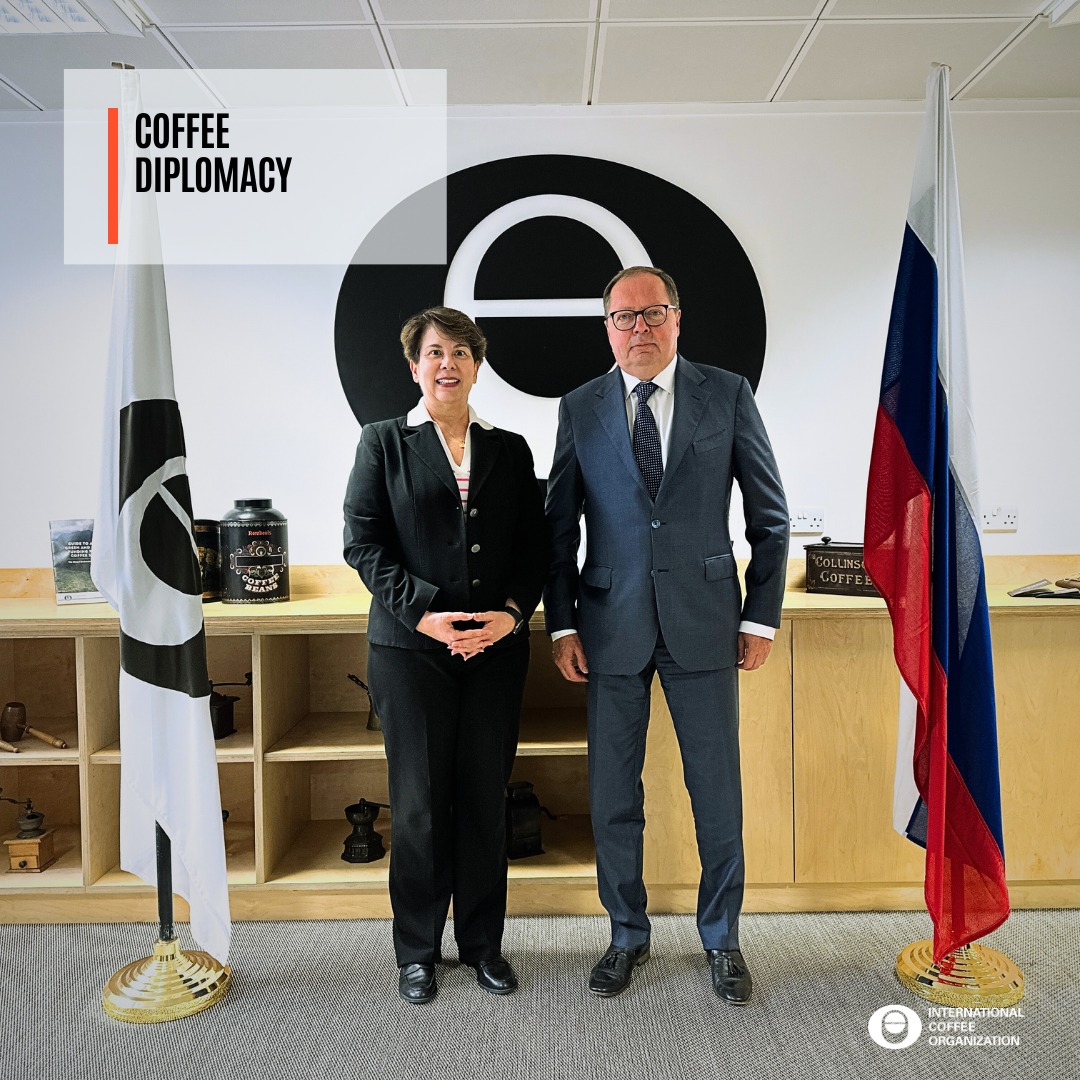
London, UK – July 9, 2024 – Today, H.E. Mr. Andrei Kelin, Ambassador of the Russian Federation to the United Kingdom, and Mr. Denis Piminov, Senior Counsellor, visited the International Coffee Organization (ICO) headquarters. The delegation was warmly received by the Executive Director of the ICO, Ms. Vanusia Nogueira, setting the stage for a productive meeting focused on the global coffee sector and the Russian Federation’s process to join the International Coffee Agreement 2022.

During the meeting with Ms. Nogueira, the discussions centered on the current trends and challenges in the global coffee industry, as well as the steps required for the Russian Federation to join the International Coffee Agreement 2022. This agreement, which commenced in 2022, aims to enhance international cooperation in the coffee sector, promote sustainable coffee production, and improve market transparency. It provides member countries with a platform to collaborate on policies that support the economic, social, and environmental dimensions of coffee production and trade.

The International Coffee Agreement 2022 currently has 44 member countries, representing a significant portion of the world’s coffee production and consumption. The inclusion of Russia would further strengthen global efforts to address issues such as climate change, market volatility, and the promotion of fair trade practices.

H.E. Mr. Kelin expressed the Russian Federation’s strong interest in contributing to the international coffee community. He highlighted the importance of collaborative efforts to address the challenges faced by the coffee industry and ensure its resilience and growth.

According to the International Coffee Organization (ICO), Russia consumed approximately 3 million bags of coffee in 2023​ (ICO)​. This upward trend is expected to continue, with increasing demand for high-quality coffee among Russian consumers.

The Executive Director of the ICO, Ms. Nogueira, welcomed the Russian Federation’s intent to join the International Coffee Agreement 2022, emphasizing that the inclusion of Russia would further strengthen global cooperation and support the organization’s mission to foster a thriving coffee sector. She noted that the agreement plays a pivotal role in addressing the economic, social, and environmental dimensions of coffee production and trade.

The visit concluded with a mutual commitment to continue dialogue and collaboration, paving the way for the Russian Federation’s integration into the ICO framework. Both sides acknowledged the significance of this development in bolstering global coffee sector governance and advancing shared goals.

For further information on the International Coffee Organization and its activities, please visit the ICO website.

A Coffee Lover’s Dream: Coffee City Brewing in Saudi Arabia’s Al Baha

An extraordinary destination is percolating for coffee enthusiasts in Saudi Arabia.

Saudi Arabia’s love affair with coffee is no secret. Stroll through any street in Riyadh, Jeddah, or Al Khobar, and you’ll find a coffee shop every few meters. Even in smaller towns, these cafes thrive as favorite hangout spots. Now, this rich coffee culture is about to reach new heights with the announcement of a groundbreaking project: Coffee City.

Nestled in the scenic Al Baha region, Coffee City will span over 5.5 million square meters, featuring more than 300,000 coffee trees. This ambitious project is part of Saudi Arabia’s Vision 2030, aiming to boost local coffee production and contribute to economic growth. Coffee lovers, a visit to Al Baha’s Coffee City should definitely be on your radar once it’s completed.

But here’s where it gets interesting. The Saudi Ministry of Environment, Water, and Agriculture is inviting investors to participate in this project by submitting their bids. This isn’t just a visit to a coffee paradise; it’s an opportunity to be part of its creation. Interested businesspersons have until September 9 to submit their proposals, after which they will be reviewed.

This exciting announcement follows closely on the heels of Saudi Arabia’s decision to rename Arabic coffee to Saudi coffee. The Ministry of Commerce announced last week that this change is part of a broader initiative to preserve cultural heritage and promote Saudi identity.

With the upcoming Coffee City in Al Baha, Saudi Arabia is set to significantly enhance its local coffee production. This project, deeply rooted in the Kingdom’s rich history and culture, is one to watch. In the meantime, grab yourself a cup of coffee and anticipate the brewing magic.