Crafting Coffee, Sustainability, and Stories: Inside Ginza Coffee Collective with Fabricio Scocco Fioravante

Fabricio Scocco Fioravante, solo founder of the Ginza coffee collective, is not just an entrepreneur but a passionate advocate for quality, sustainability, and meaningful coffee experiences. From his childhood fascination with coffee to his efforts to redefine coffee culture in workplaces and homes, Fabricio shares how his journey combines innovation, sustainability, and a love for craftsmanship. In this exclusive interview, he delves into his inspiration, the values driving his business, and his vision for the future of specialty coffee.

Can you introduce yourself to the World of Coffee audience?
From a young age, coffee captivated me. It wasn’t just a drink; it was a ritual that brought my family and friends together. This connection sparked a passion that has stayed with me my entire life. My professional journey spans industries like real estate and animal nutrition, but coffee was always a constant companion and source of inspiration.

I began as a barista, immersing myself in the craft from the ground up. Later, I worked in quality control for two global coffee retailers, gaining invaluable insights into sourcing, roasting, and delivering exceptional coffee. These experiences laid the foundation for Ginza Coffee Collective, where I now combine my entrepreneurial spirit with a mission to create sustainable, high-quality coffee experiences.

What inspired you to establish Ginza Coffee Collective?
The idea for Ginza Coffee Collective arose from observing a gap in the market. Many workplaces lacked access to great coffee, and I saw an opportunity to blend convenience, sustainability, and exceptional taste.

Ginza is more than a coffee company; it’s a platform to connect people with the values and stories behind every cup. We prioritize micro-batch roasting, ethical sourcing, and environmentally conscious practices, ensuring our coffee isn’t just flavorful but also meaningful.

How did your career shift from real estate and animal nutrition to specialty coffee?
Coffee has always been my passion, even as I explored other industries. Over time, I recognized a consistent issue: a lack of quality coffee options in many settings. This realization inspired me to merge my love for coffee with my entrepreneurial skills.

At Ginza, we focus on bringing premium coffee to workplaces and homes, with an emphasis on sustainability. My commitment to providing high-quality Geisha coffee stems from my childhood love for it, and I wanted to make such exceptional beans more accessible.

What does coffee mean to you, personally and professionally?
Coffee is a companion and a passion. Personally, it connects me to diverse cultures and experiences. Professionally, it’s a craft that drives me to create memorable coffee experiences.

At Ginza, every cup tells a story. Whether sourcing unique beans or perfecting roasts, our goal is to honor the artistry and care that goes into every step of the coffee journey.

What sets Ginza Coffee Collective apart in the specialty coffee market?
Our commitment to quality, sustainability, and personalized service distinguishes us. Through micro-batch roasting, we highlight each bean’s unique profile. We also integrate technology, such as app-connected machines and QR codes on packaging, to enhance the customer experience.

Sustainability is a cornerstone of Ginza. From recyclable packaging to ethically sourced beans, every decision reflects our values. By tailoring solutions for offices and individuals, we deliver more than coffee—we create connections and unforgettable moments.

Could you elaborate on your sourcing strategy, especially for Geisha coffee?
Geisha coffee holds a special place in our hearts for its unparalleled flavor and aroma. We build long-term relationships with farmers who share our values, ensuring ethical practices and consistent quality.

Sourcing Geisha directly from trusted partners allows us to celebrate the dedication and expertise of the farmers, delivering an exceptional experience with every cup.

How does Ginza Coffee Collective prioritize sustainability?
Sustainability is embedded in every aspect of our operations. We work with farmers who uphold ethical practices, use recyclable packaging, and educate customers about eco-friendly habits.

By minimizing waste through micro-batch roasting and adopting circular economy principles, we aim to inspire a more responsible coffee culture.

How does technology enhance your Coffee Corners solutions?
Technology plays a pivotal role in creating smarter coffee experiences. Our machines use advanced calibration systems for consistent quality and connect to apps for tracking stock and maintenance.

QR codes on our packaging provide customers with brewing tips, flavor notes, and sustainability insights, deepening their connection to the coffee.

What is the state of the specialty coffee market in The Netherlands?
The Netherlands is embracing specialty coffee, though it remains in its developmental phase compared to global hubs. The market faces challenges, such as a preference for cost over quality and limited awareness of specialty coffee’s value.

However, there’s growing interest in premium, ethically sourced coffee, particularly in cities like Rotterdam. By focusing on sustainability and education, Ginza is poised to lead this transformation.

How does Ginza Coffee Collective contribute to the global specialty coffee market?
Ginza leads by example through sustainable practices, ethical sourcing, and innovative solutions. We collaborate with eco-conscious companies, promote circular economy initiatives, and educate customers about sustainability.

Our mission is to create a thriving coffee industry that benefits everyone, from producers to consumers.

What are your plans for Ginza Coffee Collective’s future?
We’re focused on international expansion and innovation. Recent success in Spain motivates us to explore other European markets. We’re also integrating advanced technologies, such as app-connected machines and educational QR codes, to enhance our offerings.

By fostering collaborations and community connections, we aim to redefine sustainable coffee culture globally.

How do you tailor your products to meet the needs of offices and individuals?
For offices, we design Coffee Corners that combine technology and premium coffee for a seamless experience. For individuals, we offer micro-batch roasted coffee with detailed brewing tips and flavor notes.

Both approaches emphasize sustainability and a connection to the origins of the coffee.

How does Ginza Coffee Collective engage with the local and international coffee community?
Locally, we host workshops and cupping sessions to educate and connect. Internationally, we build partnerships with producers and showcase our innovations.

Our storytelling bridges the gap between farmers and consumers, celebrating quality and authenticity.

What are your plans for innovation and collaboration?
We’re integrating more advanced technology, like app-connected machines, and collaborating with eco-conscious brands to amplify our sustainability efforts.

By connecting with like-minded businesses, we’re fostering a shared commitment to exceptional coffee and environmental responsibility.

How do you envision the specialty coffee industry evolving in five years?
The industry will prioritize sustainability and transparency. Consumers will demand accountability from brands, seeking quality and ethical sourcing.

Ginza will lead by example, blending innovation and sustainability to shape the future of specialty coffee.

What’s your ideal coffee experience?
My ideal coffee experience begins at the source—building relationships with farmers and ensuring quality and sustainability. The joy lies in perfecting each micro-batch and sharing it with customers, knowing every cup carries a story.

What advice do you have for aspiring specialty coffee entrepreneurs?
Prioritize sustainability in every aspect of your business. Protect the environment, understand your coffee’s origins, and make decisions that create long-term value.

With growth comes responsibility. By focusing on ethical practices, you can build a thriving and impactful coffee business.

New Study Reveals High Caffeine and Antioxidant Levels in Ethiopian Coffee Beans

A recent study conducted by researchers from Woldia University in Ethiopia has shed light on the caffeine content and antioxidant activity of raw and roasted coffee beans from the Habru Woreda region. The findings, published in Clinical Pharmacology: Advances and Applications, highlight the potential health benefits of Ethiopian coffee, particularly its high caffeine levels and strong antioxidant properties.

Key Findings:

  1. Caffeine Content: The study analyzed coffee beans from three different areas within Habru Woreda—Bohoro, Wurgisa, and Girana. The caffeine content in raw coffee beans ranged from 124.01 to 191.27 parts per million (ppm) when extracted with water, and from 145.15 to 200.09 ppm when extracted with dichloromethane. Roasted coffee beans showed slightly lower caffeine levels, ranging from 125.51 to 160.05 ppm in water extraction and 177.11 to 184.08 ppm in dichloromethane extraction. Bohoro’s coffee beans had the highest caffeine content, making them the most potent among the samples tested.
  2. Antioxidant Activity: The study also measured the hydrogen peroxide scavenging activity of the coffee beans, a key indicator of antioxidant potential. The results showed that roasted coffee beans from Wurgisa had the highest antioxidant activity, with an IC50 value of 3.12 ppm, significantly lower than the reference compound, ascorbic acid, which had an IC50 value of 6.91 ppm. This suggests that Wurgisa roasted coffee beans have superior antioxidant properties compared to other samples and even to ascorbic acid, a well-known antioxidant.
  3. Comparison of Extraction Methods: The study found that dichloromethane extraction yielded higher caffeine levels compared to water extraction, particularly in roasted coffee beans. This is likely due to caffeine’s higher solubility in organic solvents like dichloromethane. However, both extraction methods confirmed that Ethiopian coffee beans, especially those from Bohoro, are rich in caffeine.
  4. Geographical Influence: The research highlighted that the caffeine content and antioxidant activity of coffee beans can vary significantly depending on their geographical origin. Factors such as soil type, altitude, and climate play a crucial role in determining the chemical composition of coffee beans. This variation underscores the importance of regional specificity in coffee production and marketing.

Implications:

The study’s findings have important implications for both consumers and the coffee industry. For consumers, the high caffeine content and strong antioxidant activity of Ethiopian coffee beans suggest potential health benefits, including protection against chronic diseases and oxidative stress. For the coffee industry, the results emphasize the value of Ethiopian coffee, particularly from regions like Habru Woreda, which produce beans with high caffeine levels and exceptional antioxidant properties.

Conclusion:

This study not only highlights the unique qualities of Ethiopian coffee but also provides valuable insights into the factors that influence its chemical composition. As coffee continues to be a popular beverage worldwide, understanding its health benefits and regional variations can help consumers make informed choices and support sustainable coffee production practices.

For more details, the full study can be accessed in Clinical Pharmacology: Advances and Applications.

New Study Reveals Another Factor Behind Coffee’s Bitterness

A recent study published in Food Chemistry has identified a new factor influencing coffee’s bitter taste: mozambioside and its by-products formed during roasting. Researchers at the Leibniz Institute for Food Systems Biology at the Technical University of Munich found that these compounds play a key role in shaping the coffee’s flavor.

Roasting and the Science of Bitterness

For a long time, caffeine was considered the main source of coffee’s bitterness. However, this study highlights another important contributor: mozambioside. This compound, present in raw Arabica coffee beans, breaks down during roasting into several new substances, some of which have an even stronger bitter taste than caffeine.

Using advanced testing methods, researchers tracked how mozambioside changes during roasting. They found that the level of bitterness depends on the roasting temperature and duration, with the strongest bitterness forming at temperatures between 240 and 260°C. Among the new substances formed, some were identified as key contributors to coffee’s bitter flavor.

How Does This Affect Coffee Drinkers?

Taste tests confirmed that these bitter compounds interact with specific taste receptors in the human body. Interestingly, some people are more sensitive to these compounds than others due to genetic differences. About 20% of Europeans, for example, have a genetic variation that makes them less sensitive to coffee’s bitterness.

Additionally, nearly all these bitter compounds dissolve into coffee when it is brewed, regardless of the brewing method. This means that whether you drink espresso, filter coffee, or another preparation, you are likely consuming these bitterness-enhancing substances.

Implications for the Coffee Industry

This discovery could help coffee roasters fine-tune their roasting techniques to control bitterness. By adjusting roasting conditions, they could create different flavor profiles to match consumer preferences. The study also opens the door for further research into how personal genetics influence the way people experience coffee.

Conclusion

This study provides new insights into why coffee tastes bitter, highlighting the role of mozambioside and its breakdown products. These findings could lead to new innovations in coffee roasting and brewing, helping both coffee producers and consumers better understand and manage coffee’s flavor.

For coffee lovers, this research adds a deeper appreciation for the complexity behind every cup, showing that the taste of coffee is shaped not just by caffeine but by a range of other naturally occurring compounds.

Coffee Market Faces Record Prices Amid Climate, Trade Challenges, and Trump’s Policies

The global coffee market is experiencing a turbulent phase, driven by the combined effects of climate change and shifting trade policies. Major coffee-producing regions such as Brazil and Vietnam are facing extreme weather conditions, reducing crop yields and pushing prices to record levels. Recent geopolitical developments have added another layer of uncertainty to the coffee industry. The potential imposition of tariffs on Colombian coffee by the United States had threatened to disrupt trade flows. While negotiations led to a temporary suspension of such measures, the episode underscored how political decisions can rapidly influence market dynamics. Colombia, a leading supplier of high-quality Arabica coffee, remains at the center of this uncertainty, contributing to price fluctuations.

Poor harvests across top coffee-producing nations have led to a supply deficit, with global stock levels expected to drop to their lowest in 25 years, according to industry estimates. This imbalance has fueled an unprecedented surge in prices. Arabica futures in New York have risen by over 80% compared to the previous year, reflecting the tight supply conditions. Colombian coffee, in particular, has reached an all-time high on the international market, with prices climbing sharply. This surge follows a sustained increase since late 2023, when the cost per pound began rising due to reduced availability.

Extreme weather patterns have significantly impacted coffee yields. Brazil, the world’s largest producer, is experiencing its most severe drought in decades, while Vietnam, a major supplier of Robusta beans, reported an 11.4% decline in exports during the first half of 2024. Similarly, Mexico’s coffee industry has suffered due to persistent heat and drought, affecting the vast majority of its production. Farmers in Brazil have noted that the 2024 Arabica crop is producing smaller beans due to prolonged dry conditions, further tightening supply. Unfavorable weather patterns, including unexpected storms and excessive heat, continue to challenge coffee-growing regions worldwide.

Looking ahead, the coffee industry faces continued price pressures as supply constraints persist. Rising transportation costs, increasing global demand, and economic instability in key producing countries suggest that high prices may extend well into 2025. Market analysts highlight that while weather disruptions remain the primary driver of price hikes, supply chain disruptions and geopolitical factors also play a significant role. Political uncertainties in key exporting nations, coupled with logistics challenges, further complicate the outlook.

As climate change and economic uncertainties weigh on the coffee market, consumers are likely to face higher costs and potential shortages. Addressing these challenges will require a combination of sustainable agricultural practices, trade stability, and investment in resilient supply chains to ensure long-term market stability.

Chinese Coffee Machine Innovators Achieve Global Success Through Smart Technology and Exports

Two innovative coffee machine manufacturers based in Shenzhen, China, have become standout players in the city’s small and medium-sized enterprise (SME) sector. By embracing advanced smart technology, these companies have significantly increased their overseas sales and established themselves as key exporters in the global market.

In Shenzhen’s Bao’an District, a technology industrial park recently hosted international buyers from Georgia, who visited Cino Technology, a leading coffee machine producer. Following detailed discussions, the company secured a large order for 100,000 units.

“Orders are crucial for our business, but they also come with immense responsibility. We have to ensure we deliver our best,” said Liu Youliang, chairman of Cino Technology.

Liu shared that the company achieved over $22 million in export revenue in 2024, with new orders already booked through the second half of the year. The company plans to export more than 30,000 machines during the upcoming Chinese New Year holiday.

Cino Technology’s coffee machines are now available in 87 countries and regions. However, the company’s path to success was not without challenges. Liu recalled a difficult period when their traditional home coffee machines struggled to meet changing market demands, leading to financial strain.

“We were on the verge of collapse. That’s when I realized we needed to focus on developing our own core technology,” Liu explained.

A breakthrough came during a government-sponsored international trade fair, where Liu identified a growing demand for high-end commercial coffee machines.

“Starting from scratch was tough. The technical requirements were much higher, and we had no prior experience to rely on,” said Zhang Yuanxian, the company’s technical director.

After three years of intensive research and development, the company transformed its product line from low-cost machines priced at just a few dozen dollars to high-end commercial models worth over 1,300.Today,CinoTechnologyholdsmorethan270domesticandinternationalpatentsacross40productsandgeneratesannualrevenueexceeding200millionyuan(27.6 million).

Nearby, another innovative company, RobotAnno, is making waves with its futuristic approach. Founded by entrepreneur Huang Huang, the company specializes in robotic coffee machines.

“Meeting international clients has become a regular part of my routine. Our sales team is swamped, and my English has improved significantly,” Huang said with a smile.

RobotAnno’s machines feature fully automated processes. Customers can select their preferred coffee type and latte art design with a simple click, and a robotic arm prepares the drink in just 90 seconds. This advanced technology recently impressed an Indian buyer, who immediately placed an order.

Over the past six years, Huang’s young research team, with an average age of 25, has focused on developing new applications for robotic arms. Using motion capture technology and proprietary control systems, they conducted thousands of tests and improvements to perfect the replication of barista-crafted latte art.

“These movements are based on capturing the actions of professional baristas, which the robots then replicate. We used nearly three tons of milk during testing,” Huang explained.

2024 has been a standout year for RobotAnno, with export values doubling compared to the previous year. In addition to coffee robots, the company’s product line—including cocktail and ice cream robots—has been exported to over 60 countries and regions, including North America and Europe.

With government support, Huang recently partnered with a tech company that uses big data to analyze market trends and help SMEs expand their online global presence.

“In 2024, we facilitated the participation of over 200 enterprises in nearly 30 international trade fairs. The government is committed to supporting small and medium-sized foreign trade companies, helping them secure orders and providing comprehensive services,” said Cai Qingdong, deputy director of the Bao’an District Bureau of Commerce.

In 2024, Shenzhen’s total import and export value surpassed four trillion yuan ($552 billion) for the first time, marking a 16.4% year-on-year increase. Private enterprises accounted for over 70% of this total, underscoring their critical role in driving the city’s foreign trade growth.

UK Coffee Market Expands Despite Rising Costs

The UK’s branded coffee shop market continues to grow despite economic pressures, according to Project Café UK 2025, the latest report from Allegra World Coffee Portal. The annual study provides an in-depth analysis of the evolving coffee sector, highlighting key trends, challenges, and consumer behaviors.

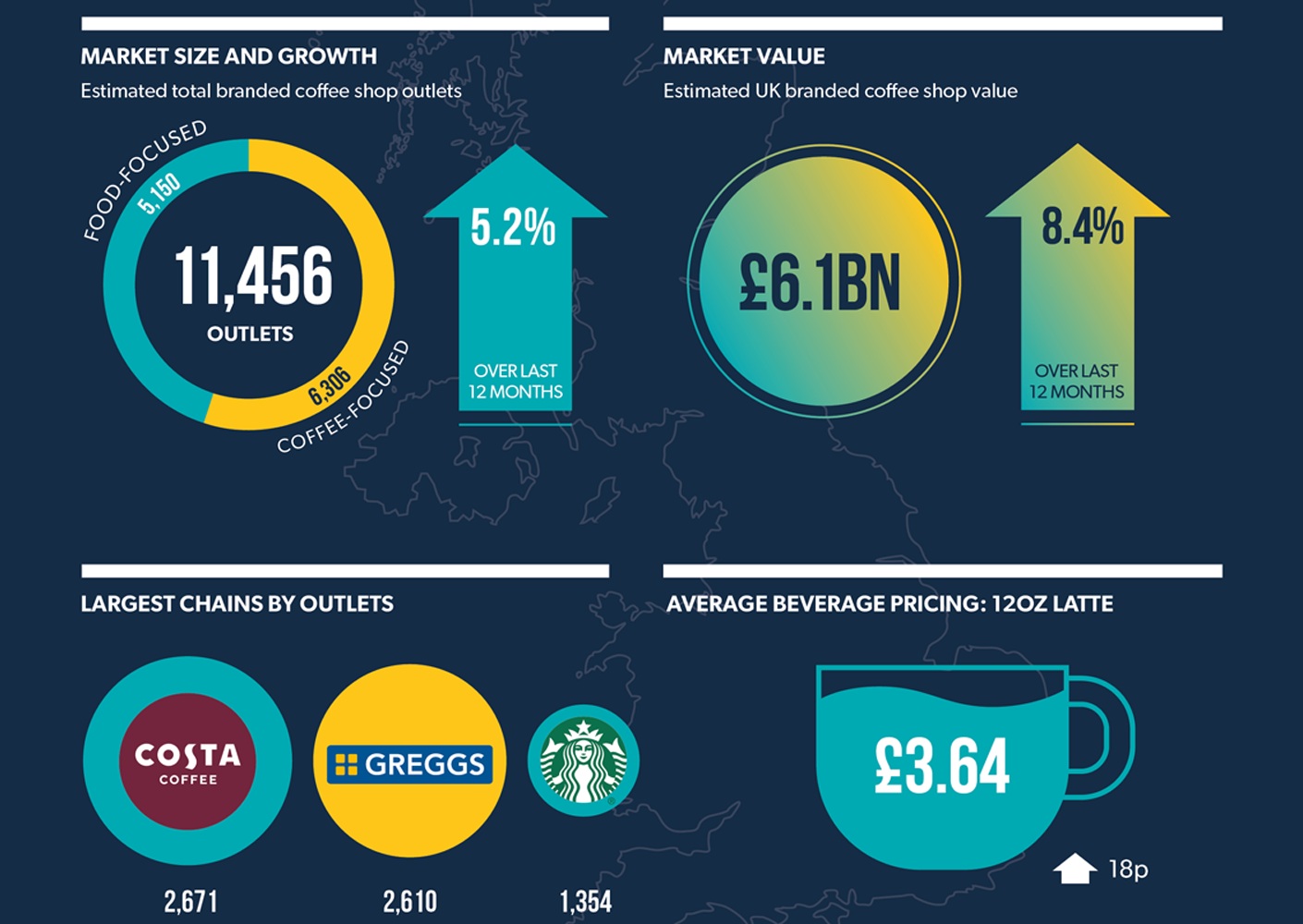
The total number of branded coffee shop outlets has increased 5.2% year-on-year, reaching 11,456 locations, with 6,306 coffee-focused and 5,150 food-focused venues. The UK’s branded coffee shop sector is now valued at £6.1 billion, reflecting an 8.4% annual increase, driven by steady consumer demand and continued brand expansion.

Costa Coffee remains the UK’s largest chain with 2,671 outlets, followed closely by Greggs with 2,610 locations, and Starbucks with 1,354 stores. Despite a competitive market, rising costs have pushed coffee prices higher, with the average price of a 12oz latte now at £3.64, up 18p from the previous year. While affordability concerns grow, demand for specialty coffee remains strong, reinforcing the UK’s deep-rooted coffee culture.

Project Café UK 2025 draws insights from over 50,000 consumer surveys and 100+ industry expert interviews, analyzing pricing trends, market strategies, and retail dynamics. The report serves as a key resource for industry stakeholders, outlining opportunities and challenges shaping the future of the UK coffee sector.

Despite inflationary pressures, the UK coffee market remains resilient, adapting to shifting consumer preferences, digital innovation, and sustainability demands. As the sector evolves, Project Café UK 2025 reaffirms its strength as a cornerstone of British high streets and daily life.

Coffee prices surge to record highs above $3.60 per lb

Global arabica coffee prices hit record highs above $3.60 per lb on Wednesday as Brazil, by far the world’s largest producer, has few beans left to sell and as worries over its upcoming harvest persist.

Dealers said 70%-80% of Brazil’s current arabica harvest has been sold and new trades are slow. Brazil produces nearly half the world’s arabica beans, a high-end variety typically used in roast and ground blends.

The country’s recent weather has been more favorable after a severe drought last year. Still, the upcoming crop will be 4.4% smaller than the previous, according to Brazilian food supply agency (Conab).

“Global coffee supplies remain limited. Vietnam is progressing slowly with sales of its robusta crop. The arabica harvested in Central America and Colombia is taking longer to get to the market, and Brazilian farmers don’t show much interest in selling more,” said broker HedgePoint Global Markets on Wednesday.

Arabica coffee futures on the ICE exchange, a contract used globally to price physical coffee trades, hit a record high of $3.6945 per lb earlier, bringing gains for the year up nearly 15%. The contract later closed up 2.5% at $3.6655 per lb.

Robusta coffee, a generally cheaper variety used mostly to make instant coffee, rose 0.9% at $5,609 a metric ton.

Coffee exports from India, the world’s fifth largest robusta producer, are expected to decline more than 10% in 2025 due to lower production and reduced carry-forward stocks from last season’s crop.

Dealers said farmers in both India and Vietnam, the world’s top robusta producer, are holding back sales in anticipation of further price gains and that in Brazil, some 80-90% of the current harvest has been sold.

Broker Sucden said in a report that Brazilian farmers are also prioritizing local sales over dollar-priced exports even though the latter fetch more money as their financial position has improved significantly over the past two years.

It added the country’s current buffer stocks have eroded to an estimated 500,000 bags versus some 8 million bags traditionally, meaning any additional weather disruptions could have an outsized impact on global coffee prices.

Sucden sees the global coffee market recording a fourth successive deficit this season.

In other soft commodities traded, raw sugar ​​rose 1.1% at 19.45 cents per lb, rebounding strongly from last week’s five-month low, while white sugar gained 2.2% at $522.90 a ton.

New York cocoa futures ​rose 3.3% to $11,745 a ton, while London cocoa gained 1.6% to 9,138 pounds per ton.

Simonelli Group Showcases Innovation at WOC Dubai 2025

Dubai is set to host the highly anticipated World of Coffee Dubai 2025 from February 10 to 12, where Simonelli Group will present its latest innovations through its brands Victoria Arduino and 3Temp at stand Z6-G5.

Victoria Arduino: Sponsoring the Barista Competition

As an official sponsor of the Barista Competition, Victoria Arduino will feature the Eagle One espresso machine alongside the Mythos grinder, the official grinder of the World Barista Championship (WBC). Eagle One, known for its advanced New Engine Optimization (NEO) technology, is designed to enhance energy efficiency while maintaining high performance. Complementing this, the Mythos grinder ensures precise dosing and temperature stability, thanks to its Clima Pro and Gravitech technologies.

Visitors to stand Z6-G5 will have the opportunity to attend Espresso & Signature Drinks workshops featuring Jane Espante (CIGS UAE Champion), bartender Mariano Da Conde, and roasters from Cafè Richard, El Matador, Gold Box, Palate Coffee, and Watch House London. These workshops will highlight Victoria Arduino’s Black Eagle Maverick machine, which incorporates T3 Genius and PBtech technologies for precise extraction.

Eagle Tempo: New Espresso Machine Unveiling

WOC Dubai will also see the introduction of Eagle Tempo, a professional espresso machine designed for cafés, restaurants, roasters, and bakery chains. With a high production capacity, the Eagle Tempo features NEO technology for energy efficiency and reduced waste. Visitors will be able to experience a variety of coffee and milk-based beverages prepared by baristas from Cafè Richard, CMI, Lohas Beans, Ore Coffee, and Seriate Coffee at the Eagle Tempo station.

PureBrew+: Adapting to New Coffee Trends

With an increasing demand for natural, sustainable coffee experiences, Victoria Arduino is presenting PureBrew+, a single brewer designed for filter coffee and signature drinks. This technology enables customized extraction profiles with light, medium, and dark water pulse settings, offering a consistent coffee experience in under three minutes. Visitors can participate in tasting sessions at stand Z6-G5, where roasters will showcase an expanded range of coffee preparations.

Also on display will be the E1 Prima PRO, a one-group professional espresso machine designed for coffee specialists, roasters, and mixologists. The machine integrates advanced brewing technologies, aiming to elevate coffee quality and exploration.

Simonelli Group Expands with 3Temp

Simonelli Group will also introduce 3Temp, a Swedish brand specializing in filter coffee and cold brew extraction. The acquisition of a stake in 3Temp in late 2024 marks Simonelli Group’s commitment to expanding its specialty coffee solutions.

At stand Z6-G5, the HIPSTER series of brewers, including 3TEMP KOBRA, 3TEMP PULS, 3TEMP WALL, and the Coffee Particle Analyzer (CPA), will be showcased. These brewers incorporate a tankless dispensing system that ensures each cup is made with fresh water, preserving the coffee’s original flavors. Visitors can sample batch brew filter coffee and cold brew using beans from CMI (Coffee Market Innovations).

Additionally, 3Temp brewers will be available at the SCA Brew Bar, where roasters can explore different extraction methods.

Industry Engagement and Knowledge Sharing

WOC Dubai will also host industry-focused workshops, including Antonio Orria’s session on E1 Prima PRO extraction and a lecture by Andrew Tolley (CoffeeKnowledgeHub.com) on ‘Everyday Hospitality’. Another key event will be the Victoria Arduino Exclusive Party, scheduled for February 10th from 5 PM to 7 PM at the Victoria Arduino Experience Lab in Dubai.

Simonelli Group’s presence at WOC Dubai underscores its continued focus on technological advancements, sustainability, and industry collaborations, reinforcing its role in shaping the future of specialty coffee.

Nordic Coffee Fest Returns: An Exclusive Interview with Founder Steven Moloney

Get Ready for the Nordics’ Biggest Coffee Celebration!

The wait is over! The Nordic Coffee Fest is making a grand return for its second edition on March 1-2, 2025, at the iconic Bananpiren in Gothenburg. After a highly successful debut in 2024, the event promises to be even bigger and more exciting, bringing coffee enthusiasts and industry professionals together under one roof.

We sat down with Steven Moloney, the founder of Nordic Coffee Fest, to dive into the inspiration behind the festival, what’s new in 2025, and how it continues to shape the Nordic and global coffee communities. Join us in this exclusive conversation to uncover the highlights of the upcoming event and what makes it a must-attend experience for coffee lovers worldwide.

What inspired you to create the Nordic Coffee Fest, and how has the journey been since its debut in 2024?

The idea behind NCF actually started back in 2021. Coming out of the pandemic, we wanted to reconnect with the coffee community in Sweden. We had been organizing events all over the world, but not in Sweden for years. Through our research and conversations, it became evident that while the industry was growing, there was no unifying event like the old Nordic Barista Cup—no space where coffee professionals and consumers could gather, share knowledge, and engage with the industry.

The response to the first event in 2024 was incredible! It became clear that such an event was much needed. We were also surprised by the strong interest from outside the Nordics—so many people want to visit, exhibit, and participate. That kind of attention to Nordic coffee culture has been incredibly meaningful to us.

With the festival doubling in size this year, what are the most exciting additions attendees can look forward to in 2025?

This year, we’re introducing some major highlights:

  1. Barista School: A hands-on workshop where attendees can brew coffee with professional baristas, ask questions, and refine their coffee-making skills.
  2. Expanded Content Program: Our main stage will be more accessible and fun for consumers, while our industry stage, produced with Simonelli Group, will host in-depth discussions on the future of coffee. The industry talks will also be available later on via their coffee knowledge hub.
  3. Nordic’s Best Roaster Competition: We’ve refined the structure of this prestigious competition to focus on what truly defines a great roaster. Attendees will have the chance to taste competition coffees and vote in the Public Choice Award, in collaboration with Victoria Arduino and Ceado.

How do you see the festival contributing to the growth of Nordic coffee culture and the global coffee community?

The Nordic coffee scene has historically played a major role in shaping the global specialty coffee industry. The influence of Tim Wendelboe, Coffee Collective, and the Nordic light roast style put the region on the map. However, over the years, the cohesiveness of the Nordic coffee scene has faded.

By bringing together top industry professionals, roasters, and enthusiasts in one place, we hope to revive that sense of connection and innovation. The level of expertise and talent at this festival is unparalleled, and we want to continue making this a place where ideas and collaborations flourish.

Sustainability is a key focus for the festival. What specific steps have been taken this year to reduce waste and make the event more eco-friendly?

We approach sustainability with three key pillars:

  1. Reduce – We are eliminating single-use items, adhering to a carbon budget, tracking our footprint, and making sustainability a core part of our planning process.
  2. Challenge – We challenge our partners and suppliers to be more sustainable. For example, Adapt, our production company, is developing a tool to track electricity usage per exhibitor—an industry-first initiative.
  3. Inspire – Beyond our direct impact, we want to influence change. If an exhibitor or attendee leaves the festival questioning the norm (like why other events still use paper cups), we’ve already made a difference.

How do you balance sustainability while hosting a large-scale event with international participation?

We can’t avoid the fact that the most sustainable thing for us to do is to not host events, but we know there is a need for connection, a need for events.
. Instead, we strive to be a model of how coffee events can reduce their environmental impact while still thriving. We publish our sustainability data openly—the good and the bad—and we invite everyone to challenge us. Transparency and progress are what matter most.

Can you tell us more about the new Barista School and how it aims to engage both professionals and enthusiasts?

The Barista School is designed to bridge the gap between professionals and consumers. It has four interactive stations:

  • Espresso
  • Latte Art
  • Pour Over
  • Brewing

Visitors get hands-on experience, guided by expert baristas. They can ask anything—from basic storage tips to complex extraction techniques. Home brewers often struggle without direct access to professional advice, so this initiative aims to provide that missing link.

The Nordics’ Best Roaster Competition is a major highlight. What can we expect from this year’s event?

This year, 27 roasters applied, with 10 finalists set to compete in Gothenburg. The competition evaluates not just roasting but sourcing, consistency, and technique. Attendees can taste all competition coffees and vote for the Public Choice Award. Our partners at ROEST are also introducing advanced data tracking, providing deeper insights into the roasting process.

Where do you see the Nordic Coffee Fest in the next five years, and what is your ultimate vision for its impact on the coffee industry?

Our goal is clear: NCF should be the top coffee event in the Nordics. If you want to understand the future of coffee, this is the event to attend.

By 2027, we will be moving the festival to another Nordic city—though that’s still a secret for now!

What has been the most rewarding part of organizing this festival for you personally?

Seeing some of the world’s most respected coffee professionals at the festival has been deeply rewarding. But the most meaningful part? Watching my team rise to the challenge of organizing such an ambitious event.

I started as a barista with a dream to create great coffee events. Today, we have an agency of incredibly talented people making the best coffee events possible. That’s humbling, and it’s what keeps me inspired to push forward.

Join Nordic Coffee Fest 2025!

Mark your calendars for March 1-2, 2025, and get ready for an unforgettable coffee experience in Gothenburg! Whether you’re a coffee lover, an industry professional, or simply curious about Nordic coffee culture, this is the place to be.

See you at Bananpiren for two days of coffee, connection, and innovation!

Nestlé Inaugurates $675 Million Coffee Creamer Facility in Glendale

Nestlé, the world’s largest food and beverage company, has officially opened a $675 million coffee creamer manufacturing plant in Glendale, marking a significant investment in Arizona’s economy.

A Major Economic Boost for Arizona

Originally announced in 2022, the Glendale facility was seen as a major economic development victory for Arizona, which outcompeted New Mexico and other states for the project. The plant is expected to create 300 jobs, strengthening the region’s manufacturing sector.

Expanding Coffee Customization

The state-of-the-art facility will produce several of Nestlé’s leading coffee creamer brands, including Coffee mate, natural bliss, and Starbucks Coffee At Home. According to Daniel Jhung, president of Nestlé USA’s beverage division, the plant is one of the company’s most technologically advanced, allowing for the development of innovative coffee products tailored to evolving consumer preferences.

Nestlé’s research indicates that home-brewed coffee is increasingly seen as an affordable luxury, particularly among Gen Z consumers, who enjoy customizing their drinks with unique flavors and textures. In response, the company plans to roll out new products in 2025, featuring cold foam, floral flavors, and other premium enhancements.

Commitment to Sustainability

Beyond production, Nestlé is prioritizing sustainability. The Glendale facility is designed to recycle up to 75% of its treated water, and the company is collaborating with Arizona State University (ASU) on water conservation strategies.

Nestlé’s Growing Presence in Arizona

The Glendale plant joins Nestlé’s two other facilities in Arizona—a Purina pet food manufacturing campus in Flagstaff and a Health Science division facility in Prescott. This expansion underscores the company’s long-term commitment to the state.

With sustainability, innovation, and economic growth at its core, Nestlé’s new Glendale plant is set to redefine the future of at-home coffee experiences.

World of Coffee Dubai 2025 Just Two Weeks Away!

Dubai is gearing up to host the fourth edition of World of Coffee Dubai 2025, the region’s premier coffee industry event, set to take place at the Dubai World Trade Centre from February 10 to 12, 2025. With just two weeks to go, anticipation is at an all-time high as the global coffee community prepares to converge for what promises to be the largest and most dynamic edition yet.

Organized in collaboration with the Specialty Coffee Association (SCA) and DXB Live, World of Coffee Dubai has quickly established itself as a vital hub for coffee professionals, uniting producers, roasters, traders, manufacturers, retailers, and industry experts from across the Middle East and beyond.

What to Expect at World of Coffee Dubai 2025

This year’s event will feature an extensive trade show floor bustling with exhibitors from every corner of the coffee supply chain. Attendees can explore the latest innovations, equipment, and trends shaping the coffee industry, with a strong focus on sustainability, specialty coffee, and market expansion.

Key Features of the Exhibition:

  • Roaster Village – Showcasing top-tier coffee roasters from around the world, offering a unique opportunity to sample exclusive blends and single-origin coffees.
  • UAE National Coffee Championships – A platform for the country’s top baristas and brewers to compete at the highest level.
  • SCA Community Lounge – A dedicated space for networking, industry discussions, and connecting with global coffee professionals.
  • Best New Product Competition & Display – Highlighting the most innovative products and solutions in the industry.
  • Lectures & Workshops – Educational sessions led by industry experts covering market insights, coffee trends, and technical advancements.

A Strategic Gateway to the Middle East’s Coffee Market

Dubai has emerged as a critical hub for coffee trade and innovation, making World of Coffee Dubai a must-attend event for businesses looking to enter or expand in the region. The UAE’s specialty coffee sector has seen remarkable growth, driven by a thriving café culture, increasing consumer awareness, and demand for high-quality coffee.

Za’abeel Halls 1, 4, 5 & 6 at the Dubai World Trade Centre will serve as the venue for this landmark event, accommodating thousands of attendees and exhibitors in a dynamic and interactive setting.

Registration is Now Open

With just two weeks to go, now is the time to secure your spot at World of Coffee Dubai 2025. Whether you are a coffee professional, industry investor, or enthusiast, this event offers unparalleled access to the latest developments and opportunities in the coffee sector.

Starbucks Surpasses Quarterly Sales Expectations as Revamp Strategies Show Early Promise

Starbucks has kicked off the new fiscal year with a stronger-than-anticipated performance, signaling that its recent turnaround initiatives are beginning to yield results. The global coffee chain reported flat revenue of 9.4billionforthe13−weekperiodendingDecember29,surpassingWallStreet’sforecastof9.3 billion, according to FactSet analysts.

Customer-Centric Changes Drive Growth

Under the leadership of Chairman and CEO Brian Niccol, who joined the company in September, Starbucks has implemented several customer-focused changes aimed at enhancing service and boosting store traffic. Key initiatives include eliminating extra charges for non-dairy milk, simplifying the menu, and reintroducing ceramic mugs for in-store customers. Additionally, the company announced plans to offer free refills on coffee or tea for dine-in patrons, reinforcing its goal to reestablish Starbucks as a community gathering space.

In a bid to balance customer experience with operational efficiency, Starbucks has also introduced a new policy requiring customers to make a purchase if they wish to linger or use the restroom. These efforts appear to be paying off, as the company’s same-store sales decline of 4% was less severe than the 5.5% drop analysts had predicted. This marks an improvement over the previous quarter, which saw a 7% decline in global same-store sales.

U.S. Performance and Strategic Shifts

In the U.S., same-store sales also fell by 4%, with transactions down 8%. However, customers spent more per visit, and the company reduced its reliance on discounts during the quarter. Niccol emphasized that these steps are part of a broader strategy to refocus the business and align it more closely with its identity as a premium coffee brand.

“We’ve taken steps to refocus the business, our mission, and our marketing to better align with our identity as a coffee company,” Niccol said in a video message. “These changes are helping us improve service and drive store traffic.”

Leadership Changes and Cost-Cutting Measures

In addition to operational shifts, Starbucks announced significant changes to its leadership team. Mike Grams, former president of Taco Bell, has been appointed as Starbucks’ chief stores officer for North America, while Meredith Sandland, CEO of Empower Delivery and former chief development officer at Taco Bell, will take on the role of chief store development officer. Both executives bring extensive experience from Niccol’s tenure at Taco Bell and Chipotle.

The company also revealed plans for corporate layoffs by early March, though the exact number of job cuts remains unspecified. These measures are part of Starbucks’ efforts to streamline operations and reduce costs amid a challenging economic environment.

Market Response

Investors responded positively to the news, with Starbucks’ shares rising 3% in after-hours trading on Tuesday. The better-than-expected results and early signs of progress in the company’s turnaround strategy have bolstered confidence in its ability to navigate current challenges and return to growth.

As Starbucks continues to refine its approach, the coffee giant remains focused on strengthening its brand, enhancing customer experience, and driving long-term profitability. With Niccol at the helm, the company is poised to build on this momentum and deliver on its promise of becoming a beloved gathering place for coffee lovers worldwide.