The Burg Coffee Museum: A Historical Journey Through Coffee Culture in Hamburg

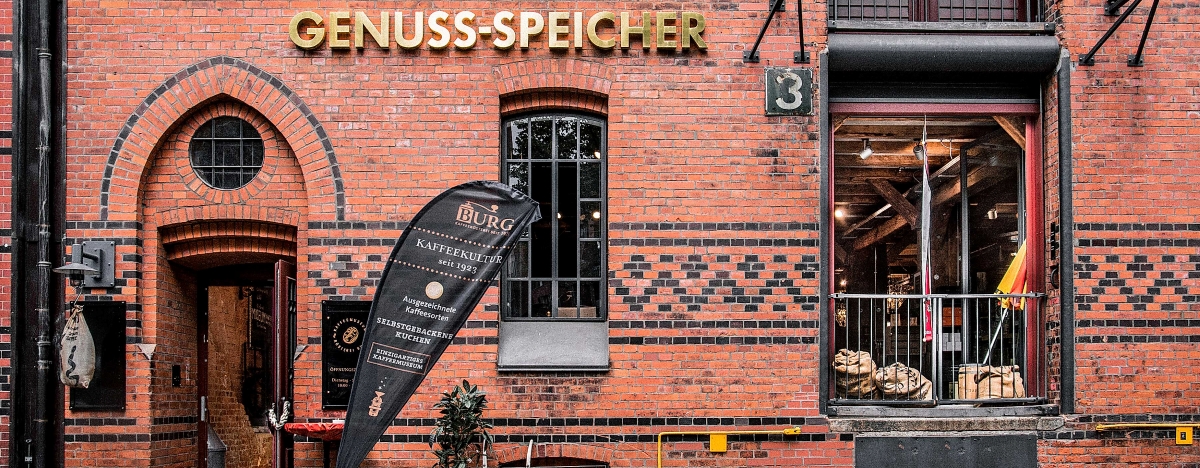
Nestled in the heart of Hamburg’s historic Speicherstadt district, The Burg Coffee Museum stands as a testament to Germany’s deep-rooted coffee culture. Originating from a family legacy dating back to 1923, this museum is more than a collection of artifacts—it is a journey through time, tracing coffee’s transformation from a coveted luxury item to an indispensable staple enjoyed worldwide.

An Insider’s Tip for Coffee Lovers

With its special history as well as its unique and comprehensive collection, the Hamburg Coffee Museum is an insider’s tip not only among coffee lovers. The museum provides a rare opportunity to explore the evolution of coffee culture in one of Europe’s most historically significant coffee hubs.

Concentrated Coffee Knowledge in Speicherstadt

The coffee museum’s history began in 1896, when coffee was first stored and processed in Hansen & Studt Kaffee’s coffee warehouse on St. Annenufer. In 1923, the Burg family took up their coffee business with their roastery and, over time, amassed an impressive coffee-related collection. In the heart of the Speicherstadt, where the history of Hamburg coffee trade flourished, hundreds of objects can be admired today. Visitors can also learn fascinating facts about coffee cultivation, the Hamburg coffee trade, and how coffee found its way into German mugs.

One of the most interesting parts of the exhibition is the replica of the country shop that has been run by the Burg family in Eppendorf since 1923. In addition to the exhibits, texts and films provide information about the long and exciting history of the coffee bean, ensuring that every visitor leaves with a deeper appreciation of coffee’s journey.

A Unique Experience in Speicherstadt’s Vaulted Cellar

As the only vaulted cellar in Speicherstadt, the museum immerses visitors in a world where coffee’s rich history comes to life. Hundreds of exhibits from the Burg Collection tell the story of coffee cultivation, processing, and consumption. From ancient tools and roasters to vintage advertisements and coffee cans, the museum presents an unparalleled narrative of the global coffee trade.

Visitors can explore a replica of the original Burg family shop, where coffee was sold in traditional settings, reminiscent of Hamburg’s golden era of coffee trade. Detailed exhibition texts, films, and specialized literature offer deeper insights, ensuring that even seasoned coffee connoisseurs discover new knowledge.

Tracing Coffee’s Journey

The museum begins its storytelling with the legendary discovery of coffee by Kaldi, the Ethiopian goatherd, whose lively goats led to the recognition of coffee’s invigorating effects. The exhibition then follows coffee’s journey through Africa, Yemen, and the Arab world, where it was first cultivated and closely guarded before making its way to Europe in the 1600s.

During this period, coffee remained an exclusive luxury, accessible only to society’s elite. However, as the drink became more widespread, coffee houses emerged as intellectual hubs where artists, scholars, and merchants gathered, solidifying coffee’s place in European culture.

After Theory Comes Practice

After the tour of the museum, the in-house roastery, shop, and café entice visitors. Here, you can experience on your own palate what you have previously learned in theory in the museum. The Burg Coffee Museum also invites visitors to tastings and seminars, where they can engage in hands-on experiences with coffee brewing, roasting techniques, and sensory evaluations.

Exploring the Coffee Museum: An Interactive Journey

The museum offers a range of immersive experiences to cater to coffee lovers, researchers, and casual visitors alike:

  • Self-Guided Tours with Audio Guides: Available in 14 languages, this tour allows visitors to explore the museum’s 20 stations at their own pace.
  • Guided Tours with Experts: Led by coffee specialists, these tours offer deeper insights into coffee’s journey through history.
  • Coffee Tasting & Seminars: Learn about traditional roasting methods using a 1930s drum roaster, discover different brewing techniques, and compare Arabica and Robusta varieties.
  • Home Barista Training: Hands-on workshops teach the art of espresso-making, milk frothing, and machine maintenance using professional barista equipment.
  • Sensory & Fragrance Experiences: Explore the aromatic world of coffee through guided olfactory sessions designed to enhance appreciation of different coffee notes.

A Living Coffee Culture: More Than Just a Museum

Beyond its historical exhibits, The Burg Coffee Museum is a living hub of coffee culture. Visitors can enjoy freshly roasted coffee at the on-site café and roastery, purchase premium beans, and even partake in gin and tea tastings, expanding the sensory journey beyond coffee alone.

The museum also hosts private and corporate events, making it a sought-after venue for birthdays, team-building activities, and cultural gatherings. Whether you are a researcher delving into coffee history, a barista honing your craft, or simply a coffee enthusiast, this museum offers an experience that transcends time and taste.

Plan Your Visit

Location: St. Annenufer 2, 20457 Hamburg
Opening Hours: Tuesday – Sunday, 10:00 – 18:00
Bookings & Inquiries: [email protected] | +49 40 55204258

For those passionate about the past, present, and future of coffee, The Burg Coffee Museum is a must-visit destination—a place where history is brewed and enjoyed, one cup at a time.

 

Coffee Expert Cleia Junqueira Hosts Exclusive Course on Multisensory Flavour Perception with Dr. Fabiana Carvalho

Acclaimed coffee consultant Cleia Junqueira is set to host an exclusive two-day course, “Multisensory Flavour Perception,” featuring distinguished neuroscientist Dr. Fabiana Carvalho. This immersive program will delve into the science of sensory perception, offering coffee professionals and enthusiasts a transformative understanding of how aroma, taste, and other sensory factors shape the coffee experience.

Course Dates & Venues:

  • Dubai: April 26–27, 2025 – Victoria Arduino & Nuova Simonelli Experience Lab
  • Muscat: April 29–30, 2025 – Crowne Muscat International
  • Time: 9:30 AM – 5:30 PM
  • Investment: AED 2500 + VAT / US$ 680 + VAT
  • Registration: [email protected]

Limited seats available – Reserve now!

About Dr. Fabiana Carvalho

A pioneering researcher in sensory neuroscience, Dr. Fabiana Carvalho holds an MSc in Biochemistry and a PhD in Psychobiology, specializing in neural processes related to perception and memory. As the creator of “The Coffee Sensorium” research project and a collaborator with the Specialty Coffee Association (SCA) and Oxford University’s Prof. Charles Spence, her groundbreaking work explores how packaging, cups, and environmental factors influence coffee tasting.

Course Overview

This exclusive program blends cutting-edge neuroscience with practical coffee sensory exercises, helping participants refine their flavour perception skills through hands-on techniques.

Day 1 – Multisensory Flavour Perception in Coffee

Participants will examine the sensory mechanisms that shape flavour perception, exploring how taste, smell, sight, touch, and sound interact to influence the coffee experience.

Morning Theory Session:

  • The fundamentals of gustation, olfaction, and oral somatosensation
  • How the brain processes flavour: bottom-up and top-down mechanisms
  • The impact of packaging and cup design on sensory perception

Afternoon Practical Session:

  • Tasting exercises assessing individual sensitivity to taste and organic acids
  • Understanding genetic predisposition to bitterness perception
  • Exploring mouthfeel descriptors such as silkiness and velvety textures
  • Experimenting with how colour and sound alter coffee flavour perception

Day 2 – Aromas in Coffee: Perception and Description

This session will enhance participants’ ability to identify and articulate coffee aromas, a critical skill for industry professionals.

Morning Theory Session:

  • The neurobiology of olfaction and how aromas influence flavour
  • Genetic variations in scent perception
  • Identifying key aroma families in coffee

Afternoon Practical Session:

  • Sensory exercises to develop aroma recognition and crossmodality skills
  • Identifying key aroma notes in coffee and perfume samples
  • Exploring retronasal olfaction and its role in flavour dominance

Who Should Attend?

This course is tailored for coffee professionals, Q-Graders, baristas, sensory analysts, roasters, and coffee enthusiasts eager to deepen their understanding of multisensory perception in coffee.

Don’t Miss This Exclusive Learning Experience!

Curated by Cleia Junqueira, this event offers a unique opportunity to learn from one of the world’s leading sensory scientists. Participants will gain valuable insights and practical techniques to enhance their coffee sensory skills.

For registration and inquiries, contact: [email protected]

About Cleia Junqueira

With 19 years of experience in the coffee industry, Cleia Junqueira is a seasoned expert in green coffee analysis, roasting, and coffee blend development. She has spent over a decade in the Middle East, working closely with industry leaders and shaping coffee culture in the region.

A certified Q-Grader and Q-Robusta Grader, Cleia has served as a Certified Judge for World Coffee Events for six years and was a board member of the Specialty Coffee Association (UAE Chapter) from 2017 to 2019. She is also a respected consultant for green coffee suppliers and roasted coffee businesses across the UAE.

Cleia has contributed to major coffee publications, including Hospitality News ME and Taste & Flavor Magazines, and continues to play a vital role in the global coffee community.

JDE Peet’s Continues Share Buyback Momentum, Repurchasing Over 1.3 Million Shares

JDE Peet’s (EURONEXT: JDEP), the world’s leading pure-play coffee and tea company, has repurchased 1,303,975 ordinary shares in the period from March 10 to March 14, 2025, at an average price of EUR 18.61 per share. This latest tranche amounts to a total consideration of EUR 24.3 million, further advancing the company’s EUR 250 million share buyback programme announced on March 3, 2025.

With this latest repurchase, JDE Peet’s has now acquired a total of 2,588,336 ordinary shares under the programme, representing an aggregate investment of EUR 47.7 million. This follows the company’s initial repurchase of 1,284,361 shares between March 3 and March 7, 2025, at an average price of EUR 18.25 per share, amounting to EUR 23.4 million.

The buyback programme reflects JDE Peet’s confidence in its long-term growth prospects and robust financial position. Announced alongside the company’s full-year 2024 results on February 26, 2025, the initiative is part of a broader strategy to return up to EUR 1 billion to shareholders over multiple years, with EUR 250 million earmarked for share buybacks in 2025 alone.

The primary objective of the buyback remains the reduction of JDE Peet’s share capital, with the majority of repurchased shares slated for cancellation. A smaller portion will be allocated to cover obligations related to share-based remuneration.

The share buyback is being executed in compliance with the EU Market Abuse Regulation (MAR) and within the framework authorized at JDE Peet’s 2024 Annual General Meeting (AGM) on May 30, 2024. Further execution authority, if granted, will be reaffirmed at the upcoming AGM on June 19, 2025. An independent intermediary has been appointed to oversee the execution, ensuring adherence to applicable regulations and pre-defined parameters.

JDE Peet’s will continue to provide periodic updates on the buyback programme’s progress via official press releases and a dedicated section on its corporate website.


Global Coffee Price Challenges in 2025: Roasters’ Strategies for Adaptation

As global coffee prices soar to record highs in 2025, with Arabica surpassing $4 per pound, coffee roasting companies face significant challenges in maintaining profitability while meeting consumer expectations. Here’s a comprehensive look at the strategies these companies are adopting to navigate this volatile market:

1. Adjusting Retail Prices

  • Price Increases: Many roasters are raising retail prices to offset the rising costs of green coffee and operational expenses. Experts recommend modest increases of $2–$4 per pound of roasted coffee.
  • Transparency with Consumers: Companies selling directly to consumers are openly communicating about price changes and market fluctuations to build trust and retain customers.

2. Optimizing Sourcing Strategies

  • Futures Contracts: Roasters are securing future coffee purchases through futures contracts to stabilize costs and avoid immediate market volatility.
  • Diversifying Supply Sources: Some companies are sourcing from lower-cost origins or incorporating high-quality Robusta beans into blends.
  • Utilizing Previous Harvest Coffee: Purchasing green coffee from previous harvests, which is more affordable while still suitable for certain products.

3. Streamlining Product Offerings

  • Simplifying Coffee Menus: Reducing product variety to focus on core offerings.
  • Blending Lower-Grade Beans: Employing innovative techniques to enhance the quality of more cost-effective beans.

4. Managing Cash Flow and Financial Risks

  • Maintaining Green Coffee Inventory: Stockpiling green coffee as a hedge against sudden price spikes.
  • Reducing Capital Expenditures: Prioritizing financial flexibility to navigate the current pricing environment.
  • Negotiating Payment Terms: Extending payment periods with suppliers to manage cash flow effectively.

5. Investing in Quality and Differentiation

  • Focusing on Specialty Coffee: Continuing to prioritize high-quality offerings despite price pressures.
  • Sustainable Practices: Investing in sustainable sourcing practices to ensure long-term supply chain stability.

6. Leveraging Technology

  • Pricing Tools: Using software such as wholesale pricing calculators to determine optimal price adjustments.
  • Operational Efficiency: Implementing advanced technologies to maximize the value extracted from lower-cost beans.

7. Diversifying Revenue Streams

  • Exploring Alternative Income Sources: Introducing subscription services, selling brewing equipment, and offering coffee education workshops.

8. Preparing for Long-Term Market Shifts

  • Building More Resilient Business Models: Balancing short-term adaptations with long-term sustainability goals.
  • Consumer Education: Raising awareness about the real cost of producing high-quality coffee.

Conclusion

In 2025, coffee roasting companies face the delicate task of maintaining profitability while delivering value to customers in an era of unprecedented price volatility. By employing a combination of pricing strategies, sourcing innovations, financial planning, and quality differentiation, these companies aim to adapt not only to current challenges but also to the evolving global coffee industry. These strategies underscore the resilience and creativity that define the modern coffee sector as it navigates this transformational period.

Ahmed Al-Rashid: From Sales to Pioneering Coffee Content Creation

Ahmed Al-Rashid has emerged as one of Iraq’s first dedicated coffee content creators. Over the years, his passion and commitment have led him to become a certified trainer by the Specialty Coffee Association (SCA). Through his work, he has played a crucial role in raising awareness about specialty coffee and improving quality standards in the industry. In this interview, Al-Rashid shares his journey from the world of sales to the coffee industry, the challenges he faced, and his insights into the evolving coffee scene in Iraq, the Gulf region, and beyond.

How did your journey with coffee begin, and what inspired you to enter this field?
For years, I worked as a sales manager and trainer in the mobile phone industry, traveling frequently and experiencing a wide variety of coffee—some great, some not so much. This exposure led me to question how I could contribute to improving the coffee scene. But before I could help develop the industry, I needed to develop my own knowledge first. That’s how my journey into coffee began.

What motivated you to become a coffee content creator?
Creating content about coffee is a fascinating challenge because it requires a deep, scientific understanding rather than just personal taste. Additionally, when I started in 2019, there were no other content creators in Iraq specializing in coffee. That made me realize the opportunity to fill this gap and provide valuable knowledge to the community.

How did your career progress until you became a certified trainer (AST SCA) in barista skills and brewing?
My extensive experience in sales and marketing, along with certifications such as TOT from New York University, provided me with strong training skills. Moreover, my academic background in chemistry helped me approach coffee scientifically—after all, coffee is fundamentally a chemical process. Once I had acquired enough knowledge, I decided to transition from mobile sales to my true passion: coffee.

What are the biggest challenges you’ve faced as a coffee content creator?
The biggest challenge has been balancing my personal life with the demands of content creation, which requires a significant amount of time, effort, and travel.

How has content creation contributed to spreading awareness about specialty coffee?
As the first coffee content creator in Iraq, I had a direct impact on educating people about specialty coffee. This, in turn, put pressure on cafés and restaurants to improve their quality and raise their standards.

Have you noticed a shift in how people perceive coffee over the years?
Absolutely. The rise of home baristas and coffee enthusiasts is clear evidence that people are becoming more interested in and appreciative of quality coffee.

In your opinion, what makes a successful coffee content creator today?
Accurate knowledge, hands-on experience, and an openness to different perspectives. Creating content isn’t just about sharing opinions; it requires continuous learning and development.

How do you see the future of the specialty coffee market in the UAE?
Previously, Saudi Arabia dominated the specialty coffee scene in the Arab world. However, I believe the UAE is set to become a major player in the coming years due to its strong focus on the industry, its ability to attract major companies, and the rapid growth of specialty roasteries. The success of World of Coffee Dubai (WOC Dubai) further solidifies its position.

What are the key differences between the coffee scene in the UAE and the rest of the Gulf region?
The UAE offers an exceptional business environment, attracting top global coffee brands and professionals from around the world. This diversity enriches the market and enhances overall quality.

How is the Arab world engaging with specialty coffee, and what are the main challenges the industry faces?
As Arabs, coffee is deeply ingrained in our culture. The biggest challenge is ensuring that we’re not just consumers but also leaders in coffee production, innovation, and quality.

Do you see a growing interest in coffee education and training in the Arab world?
Yes, very much so. The demand for specialized courses and workshops is increasing significantly, reflecting a rising awareness of specialty coffee.

How would you describe the current coffee culture in Iraq?
Traditionally, coffee in Iraq was purely a commercial product. However, in the past two years, the shift toward specialty coffee has accelerated at an impressive rate.

What factors are driving the growth of specialty coffee in Iraq?
There are four key factors:

  1. Content creators who educate the public about specialty coffee.
  2. Certified trainers who provide accurate information (as opposed to unqualified trainers who spread misinformation).
  3. Importers and traders who ensure high-quality coffee is available.
  4. Local specialty roasteries, which are the most crucial factor in establishing a strong coffee culture.

What are the biggest challenges facing the Iraqi coffee market?
Limited awareness of specialty coffee, difficulties in sourcing high-quality beans, and a lack of advanced training programs.

Are there promising Iraqi coffee brands or initiatives?
Yes, several initiatives have emerged in recent years. One example is Kava Academy, which I established to provide specialized training and free consultations to support new coffee businesses and help them start on the right path.

How do you see Iraq’s coffee market evolving compared to other Arab countries?
In the coming years, Iraq will become a strong competitor due to the rapid growth of its specialty coffee sector and increasing consumer demand.

With advancements in technology, AI, and modern brewing methods, what do you think the future of coffee looks like?
Technology is making coffee more accessible and improving its quality. These advancements will only strengthen the industry, making the future of coffee very promising.

What are the biggest global challenges facing the coffee industry today?
Climate change and rising coffee prices, both of which directly impact production and supply chains.

What advice would you give to newcomers in the coffee industry and aspiring content creators?
Never stop learning. The key to success in this industry is continuous education and hands-on experience. Knowledge is what sets true professionals apart.

Global Coffee Exports Drop Amidst Market Volatility, While Prices Surge in February 2025

The global coffee market witnessed significant fluctuations in February 2025, with total coffee exports declining while the ICO Composite Indicator Price (I-CIP) surged by 14.3% compared to January 2025. According to the latest data from the International Coffee Organization (ICO), total coffee exports for January 2025 amounted to 10.8 million bags, reflecting a decline in Robusta exports while Arabica experienced a moderate drop.

Arabica coffee accounted for 61.6% of all coffee exports, with a slight decrease of 2.5% compared to January 2024. In contrast, Robusta exports saw a steep decline of 26.4%, significantly impacting the overall trade balance. The total volume of coffee exported in January 2025 reached 42.3 million 60-kg bags across all forms of coffee, highlighting a noticeable shift in supply chain dynamics.

Despite declining exports, the global coffee price index saw a notable increase. The ICO Composite Indicator Price (I-CIP) averaged 354.32 US cents per pound in February 2025, marking a 14.3% rise from January 2025. The surge in prices was largely driven by tightening supply conditions, particularly in Robusta, as well as increasing demand for premium Arabica varieties.

The ICO report further details that the highest I-CIP recorded during February was 375.00 US cents/lb, while the lowest stood at 337.54 US cents/lb. Notably, Colombian Milds and Brazilian Naturals saw the strongest price movements, reflecting increased demand and limited supply from key producing regions.

With supply-side constraints and growing uncertainty in global coffee trade, stakeholders are closely monitoring market trends. The decline in Robusta exports and the upward pressure on prices could reshape trading patterns in the coming months, influencing sourcing decisions and consumer preferences worldwide.

Ethiopia’s Coffee Exports Generate $1.226 Billion in Eight Months

Ethiopia has earned 1.226 billion U.S. dollars from coffee exports in the past eight months, reflecting the success of government-led reforms aimed at maximizing the sector’s potential, the Ethiopian Coffee and Tea Authority (ECTA) announced on Friday.

According to an official statement from the ECTA, Ethiopia exported over 257,000 tonnes of coffee during the first eight months of the 2024/2025 Ethiopian fiscal year. The increase in revenue is attributed to a series of reforms that enhanced coffee production, productivity, and quality, resulting in higher export volumes.

The East African nation, renowned as the birthplace of Arabica coffee, is on track to generate $2 billion in coffee export revenue by the end of the 2024/2025 fiscal year, with a target of over 400,000 tonnes of coffee exports, according to Fana Broadcasting Corporate S.C. (FANA).

Ethiopia previously earned more than $1.4 billion from coffee exports in the last fiscal year, and the country is now looking to surpass that figure as demand for high-quality Ethiopian Arabica coffee continues to rise in the global market.

During the reported period, Saudi Arabia, Germany, and the United States ranked as the top three importers of Ethiopian coffee. Other key buyers include Belgium, South Korea, the United Arab Emirates, and China.

With strong demand and continued government-backed initiatives, Ethiopia’s coffee sector remains one of the country’s most valuable export industries, reinforcing its global reputation as a leader in Arabica coffee production.

Vietnamese Coffee: A Bold Experience That Leaves Visitors Awestruck

Vietnamese coffee is famous for its rich, bold flavors and intense caffeine kick, often surprising first-time visitors. Many tourists describe their first sip as an unforgettable experience, with its strength catching them off guard.

British traveler Ben Maguire visited Ho Chi Minh City in February and was amazed by the powerful taste of Vietnamese coffee. He humorously remarked that after drinking it, he had enough energy to “power a small city.”

Maguire had heard about Vietnamese coffee’s intensity but wanted to experience it firsthand. On his first day, he ordered an iced black coffee, expecting a strong but manageable flavor. However, his reaction quickly went viral on social media, drawing nearly 400,000 views and 15,000 interactions.

In his post, he described the experience with humor:

  • The first sip was rich and flavorful.
  • The second sip felt like a jolt of energy.
  • By the third sip, he joked that he was ready to launch a business, run for office, and learn Vietnamese in ten minutes.

Many visitors shared similar experiences, laughing at their initial shock when trying Vietnamese coffee.

A Drink That Packs a Punch

Some tourists even compared the strength of Vietnamese coffee to a powerful energy boost.

  • French traveler Ingrid Baghag described it as “stronger than expected.”
  • Dickie Suzuki from Hong Kong found two cups of iced milk coffee so intense that he had to return to his hotel, spending hours trying to shake off the caffeine rush.
  • David Poppinga, an American visitor, recalled how drinking two cups of egg coffee in Hanoi left him feeling alert for an entire day.

Even experienced coffee drinkers find Vietnamese coffee surprisingly robust. Maguire admitted, “This is not your average cup of coffee—it’s rich, intense, and a wake-up call for first-timers.”

He also appreciated the phin brewing method, which he described as a slow, almost meditative process rather than a simple way to make coffee. During his week-long stay, he explored different varieties, including egg coffee, salt coffee, and iced milk coffee.

Sitting on small street-side stools, sipping coffee while watching the vibrant city life, Maguire felt that the atmosphere made the experience even more special.

A Lasting Impression on Visitors

Many travelers develop a deep appreciation for Vietnamese coffee after their trip. Hilary Hilton, an American tourist, admitted she missed the taste of iced milk coffee, joking that it was “not for the faint-hearted.”

Recently, Vietnamese coffee has gained global recognition, with several traditional varieties ranking among the world’s best coffees. Its unique preparation and rich flavors continue to impress coffee lovers worldwide.

What Makes Vietnamese Coffee So Unique?

According to Cuong Pham, a café owner in Hanoi, the secret behind Vietnamese coffee’s strength lies in its use of robusta beans, which contain nearly double the caffeine of arabica beans.

He explained that coffee plants naturally produce caffeine to protect themselves from pests. Since robusta is grown in low-altitude regions where pests are more common, it has a higher caffeine content for defense. In contrast, arabica, cultivated at higher elevations, contains less caffeine.

Because many foreign visitors are accustomed to milder arabica coffee from places like Ethiopia or Colombia, the bitterness and intensity of robusta-based Vietnamese coffee can come as a surprise.

To create a balanced flavor, many coffee shops mix robusta and arabica beans, adjusting the strength based on customer preferences. Robusta’s bold bitterness pairs well with condensed milk and whipped egg, whereas arabica’s acidity doesn’t complement these flavors as well.

A Must-Try Coffee Culture

For those looking to experience coffee in a new and exciting way, Vietnam offers a rich and unique coffee culture. Whether it’s the traditional phin-brewed coffee, the creamy egg coffee, or the refreshing iced milk coffee, the country’s coffee scene continues to captivate visitors from around the world.

Brazil’s Rainy Outlook Puts Pressure on Coffee Prices Amid Global Supply Shifts

Coffee prices slipped on Friday as market pressures mounted amid forecasts of widespread rain in Brazil’s key coffee-growing region and evolving global supply dynamics. May arabica coffee (KCK25) closed down by 2.20%, marking a two-week low, while May ICE robusta coffee (RMK25) fell 2.37%.

In Minas Gerais, Brazil’s largest arabica-producing region, Somar Meteorologia forecasted widespread showers for next week, alleviating earlier concerns over a prolonged dry spell. However, support for prices was short-lived as other market factors added downward pressure. The region recorded just 1.1 mm of rain for the week ended March 8—merely 2% of the historical average—raising concerns over long-term crop impacts.

Market sentiment was further dampened by Marex Solutions’ report, which revised the global coffee surplus forecast for the 2025/26 season to 1.2 million bags, a significant increase from the surplus of 200,000 bags expected in the 2024/25 season. Meanwhile, robusta coffee faced its own set of challenges. Vietnam, the world’s leading robusta producer, reported a 6.6% increase in February exports, reaching 169,000 MT. However, drought conditions have taken their toll, with Vietnam’s 2023/24 robusta production dropping 20% to 1.472 million metric tons. Subsequent estimates for the 2024/25 season have been revised slightly downward by both the USDA FAS and the Vietnam Coffee and Cocoa Association.

Despite these bearish signals, some supportive factors have provided short-term relief. ICE-monitored robusta inventories fell to a 1½ week low of 4,288 lots, and the weakening U.S. dollar—evidenced by the dollar index tumbling to a 4¾ month low—helped stabilize prices momentarily. On the export front, Brazil’s February green coffee shipments declined 12% year-over-year, while Conab has projected a 4.4% drop in Brazil’s 2025/26 coffee crop to a three-year low of 51.81 million bags.

The impact of last year’s dry El Niño weather, combined with continued below-average rainfall in Brazil, has damaged coffee trees during the critical flowering stage. This not only jeopardizes the current season but also raises concerns about longer-term crop prospects in South and Central America. Colombia, the world’s second-largest arabica producer, is still recovering from the drought conditions that plagued the previous year.

USDA reports have painted a mixed picture for the coffee market. The latest projections indicate a modest increase in global production—1.5% for arabica and 7.5% for robusta—yet ending stocks are expected to drop by 6.6% to a 25-year low. In a further sign of uncertainty, Volcafe’s recent revision slashed its Brazil 2025/26 arabica production estimate by about 11 million bags following extensive drought assessments. The projection now foresees a wider global deficit of 8.5 million bags for the upcoming season, compared to a 5.5 million bag deficit for 2024/25.

As market participants brace for continued volatility, all eyes remain on weather forecasts and evolving global supply data that will likely dictate the trajectory of coffee prices in the coming months.

Ethiopian Coffee Revolution: The Inspiring Journey of Ansha Yassin

The International Trade Center published an important report on the journey of Ethiopian entrepreneur Ansha Yassin, who, as it was said, is leading a quiet revolution in the Ethiopian coffee industry. Given the importance of Ansha Yassin’s experience and journey, we at Qahwa World are republishing it because of the aspects it contains that may inspire and motivate other women, not only in Ethiopia but also in the world. Elevating Ethiopian coffee through knowledge and quality

In the bustling heart of Addis Ababa, Ansha Yassin is quietly transforming the coffee industry. As the Managing Director and co-owner of COQUA Trading, she has dedicated her career to uplifting Ethiopian coffee by combining expertise, comprehensive training, and improved market access.

Her passion for coffee was kindled far from the capital—in Ethiopia’s rural regions—where she worked side-by-side with local farmers. “I studied agriculture in Jimma and was sent to a remote area after graduating,” Ansha recalls. “There was no electricity, no drinking water—it was a harsh environment. But I quickly learned that coffee was much more than just a crop; it was a lifeline for these families.”

Driven by those early experiences, Ansha resolved to reform the industry from its roots. Her mission has been to empower coffee farmers by helping them achieve higher quality production and secure direct connections with international markets.

From Field to Market: A Vision for Coffee Excellence
Ethiopia, renowned as the birthplace of Arabica coffee, is famous for its rich and varied flavor profiles. However, many smallholder farmers face the challenges of inconsistent quality and limited global reach. As a certified top grader and expert in coffee processing, Ansha has made it her mission to bridge this divide.

COQUA Trading stands out as one of the few Ethiopian labs to earn the prestigious Q-certification. Through this facility, Ansha offers consulting services that connect local producers with global buyers. Collaborating with cooperatives, NGOs, exporters, and government agencies, she works to enhance coffee quality, ensure traceability, and meet international standards. “Our coffee is beautiful,” she insists, “but without proper agronomy, processing, and harvesting techniques, its quality can quickly diminish. That’s why our training is hands-on—we cup the coffee, provide feedback, and empower farmers with the knowledge they need to boost both yield and price.”

Her commitment to education extends to her work with the International Trade Centre (ITC) under the Netherlands Trust Fund V programme in Ethiopia. Through ITC’s Alliances for Action initiative, Ansha trains coffee producers in sustainable farming practices, post-harvest processing, and quality improvement, all aimed at securing better market prices. “Better coffee quality means better incomes,” she explains. “When farmers earn more, they can invest in their families’ futures, send their children to school, and improve their living conditions. That is my true motivation.”

Breaking Barriers and Building Networks
Despite her extensive expertise, Ansha has encountered obstacles in a traditionally male-dominated industry. “When I visit farms, men sometimes trust my assistant more than me simply because he is a man,” she observes. “It takes time to earn their confidence, but once they witness tangible results, their attitudes shift.”

Her efforts to uplift women extend beyond her immediate work. As a leader in the International Women’s Coffee Alliance (IWCA) Ethiopia Chapter, she champions the cause of female workers, who, despite performing most of the processing—from harvesting to sorting—often earn significantly less than their male counterparts. “We need to support one another, enhance our skills, and ensure that women in the coffee industry receive the recognition and opportunities they deserve,” she affirms.

Looking forward, Ansha envisions COQUA Trading not only as a consulting firm but also as a hub for excellence in coffee education. With her lab now Q-certified, she is laying the groundwork for training the next generation of coffee professionals, exporters, and quality experts. “The investment in expensive lab equipment was challenging, but it’s an investment in the future because knowledge is the key to unlocking Ethiopia’s full coffee potential.”

As Ethiopia continues to adapt to the evolving global coffee market, leaders like Ansha are ensuring that local producers are not merely participants, but strong competitors on the world stage. Through dedicated training, persistent advocacy, and an unwavering pursuit of quality, she is shaping a more sustainable and prosperous future for Ethiopian coffee.

Starbucks ordered to pay $50 million in compensation to a delivery driver

A California jury has ruled that Starbucks must pay $50 million in damages to delivery driver Michael Garcia after a hot beverage spill resulted in severe injuries. Garcia, while picking up his order at a Los Angeles drive-through, was injured when a drink, not properly secured in its container, spilled onto him. The resulting injuries included significant burns, disfigurement, and nerve damage, particularly affecting his groin area.

According to Garcia’s legal team, the incident occurred because the lid on one of the hot drinks was not fully engaged when handed over at the drive-through, causing the drink to spill. The lawsuit, filed in California Superior Court back in 2020, argued that Starbucks failed to meet its duty of care by not ensuring the lid was properly secured. The damages awarded cover a range of compensations for physical pain, emotional distress, loss of life enjoyment, and other related harms.

Starbucks, however, has stated its intention to appeal the decision. The company maintains that it upholds strict safety standards in the handling of hot beverages and disagrees with the jury’s determination of fault. This case has drawn comparisons to the notorious 1994 incident involving McDonald’s, where a similar hot coffee spill led to a highly publicized legal battle over the extent of the damages awarded.


o3-mini

Outperformed America… Europe: The Main Destination for Costa Rican Coffee

Europe has now become Costa Rica’s top destination for its coffee exports, outpacing the United States for the first time in history. According to new data from Costa Rica’s Foreign Trade Promoter, 27,494 tons of coffee were sent to European markets in 2024—making up 42.6% of total exports—while the US, long the country’s primary buyer, imported 25,759 tons (40%). Major European importers include Belgium, Switzerland, and Germany.

Over the past four years, overall export volumes have experienced a slight decline. However, Costa Rican coffee producers are shifting focus toward higher quality products, catering to a growing global appetite for premium and specialty coffee, particularly in Europe and Asia. Both PROCOMER and the Costa Rican Coffee Institute see these figures as a sign of increasing European confidence in Costa Rican coffee, even as new EU deforestation regulations (EUDR) loom on the horizon. These rules, set to take effect on December 30, 2025, will require EU importers of commodities like coffee, cocoa, palm oil, paper, and wood to verify that their products have not contributed to deforestation since the end of 2020.

Gustavo Jiménez, President of the Costa Rican Coffee Institute, remarked that selling more coffee to Europe than to the US highlights a pivotal shift in international trade dynamics and readiness to adapt to evolving market conditions.

The data is also encouraging for proponents of the EUDR. In November 2024, the EU postponed the regulation’s implementation after concerns emerged about the preparedness of coffee producers and the potential impact on supply chains and market access. In response, Costa Rica has taken proactive steps to ensure its coffee complies with these new standards. For instance, in March 2024, the United Nations Development Programme reported the country’s first shipment of deforestation-free coffee to Europe, with Exclusive Coffees sending 275 bags (each weighing 60 kg) to Italy’s illycaffè. A month later, Aquiares Estate—the largest Rainforest Alliance Certified coffee farm in Costa Rica—exported EUDR-compliant coffee to Barcelona-based specialty roaster Nomad Coffee.

Today, over 27,300 family groups, with 85% being smallholder farmers, contribute to Costa Rica’s vibrant coffee industry, which now stands as the nation’s third largest export, following medical equipment and fruit.