From Oversupply to Strategic Shift: The Coffee Industry Between Challenge and Adaptation

As prices fall and Robusta exports surge, the world’s coffee market enters a delicate dance between abundance and anxiety. What’s really brewing behind the beans?

For the first time since December 2024, global coffee prices have dipped below the 300 US cents per pound threshold. The June 2025 ICO Composite Indicator Price (I-CIP) fell sharply to an average of 295.06 US cents/lb—an 11.8% drop from the previous month. But the price movement is just one piece of a much larger picture: a complex, shifting landscape where oversupply is challenging assumptions and rewriting strategies from São Paulo to Saigon.

Behind the falling prices lies a surprising culprit: abundance. According to the latest USDA estimates, the world is heading for a surplus of 9.32 million bags for the 2025/26 coffee year—on top of an already massive 7.88 million bag surplus from 2024/25. Meanwhile, certified stockpiles have climbed to multi-month highs before dipping slightly, feeding negative sentiment across trading floors.

Even traditionally resilient segments like Colombian Milds saw a drop, while Robusta prices fell dramatically—down 17.5% to 196.21 US cents/lb, breaking below the critical 200 mark for the first time since January 2024. But perhaps most telling is the global export behavior: Robusta shipments surged 20.1% year-over-year in May 2025, with Vietnam increasing its exports by a stunning 87.3%. Indonesia and Uganda followed suit with triple- and double-digit growth.

At first glance, it might appear that Robusta is finally claiming its place at the table—but this isn’t necessarily a triumph. The shift is partly due to Brazil’s normalization after an exceptional season and Vietnam’s recovery from prior drought-driven losses. It’s a short-term reshuffling of cards, not a redefinition of the game.

Meanwhile, Arabica exports, despite comprising 62.9% of total green coffee exports, saw more muted performance. The Colombian Milds group—long viewed as a beacon of quality and stability—suffered its first contraction after 19 months of steady growth. Colombia, the group’s anchor, experienced its second straight monthly downturn.

But the volatility goes beyond numbers. On June 23rd, frost fears in Brazil briefly reignited price spikes—only to quickly subside with improved weather reports. It was a stark reminder of how climate still wields enormous power over coffee’s fate, even in an age of data-driven markets.

The story of this month’s coffee market is not simply about decline—it’s about strategic adaptation. Roasted coffee exports, for example, rose by 46.8% year-over-year, and soluble coffee exports were up 15.4%, with Brazil leading the instant boom. Markets are clearly trying to adjust by adding value, diversifying offerings, and leaning into convenience.

So what does this all mean for the coffee industry?

Producers are under pressure to manage surpluses without collapsing prices. Exporters are pivoting toward soluble and roasted markets. Roasters are forced to navigate narrowing price gaps between specialty and commercial coffee, as consumers weigh quality against affordability. And climate still lingers as the great unknown.

In a world where more coffee is not always better, the real winners may be those who learn not just to grow or roast—but to read the market. As the lines between origin, quality, and pricing continue to blur, the ability to anticipate and adapt is becoming the industry’s most valuable currency.

International Coffee Organization: Sharp Decline in Global Coffee Prices and Rise in Robusta Exports

The global coffee market witnessed a notable downturn in June 2025, as the ICO Composite Indicator Price (I-CIP) dropped below the 300 US cents/lb threshold for the first time since December 2024. According to the latest Coffee Market Report by the International Coffee Organization (ICO), the average I-CIP in June fell to 295.06 US cents/lb, representing an 11.8% decrease from May.

This price decline was largely driven by increased supply pressures, including expectations of a surplus for the 2025/26 coffee year. The U.S. Department of Agriculture forecasts a surplus of 9.32 million bags, following another 7.88 million bag surplus in 2024/25. Additionally, certified stocks of Arabica coffee rose to a nine-month high of 1.85 million bags in May before slightly easing to 1.78 million by the end of June.

Market Breakdown by Variety

All major coffee groups saw price reductions:

  • Colombian Milds fell by 9.0% to 360.08 US cents/lb

  • Other Milds dropped 8.7% to 363.16 US cents/lb

  • Brazilian Naturals declined by 10.9% to 338.53 US cents/lb

  • Robustas experienced the sharpest fall, down 17.5% to 196.21 US cents/lb, dipping below 200 US cents/lb for the first time since January 2024.

On futures markets, London prices sank by 18.4% to 183.21 US cents/lb, while New York prices dropped 10.5% to 329.56 US cents/lb.

Differentials and Volatility

  • The Colombian Milds–Other Milds differential continued to shrink, reaching -3.08 US cents/lb, while the Colombian Milds–Robustas differential rose to 163.86 US cents/lb.

  • Arbitrage between New York and London widened to 146.35 US cents/lb, up 1.9% from May.

  • Volatility across the board declined. The I-CIP’s intra-day volatility averaged 10.2%, down from 11.1% in May. Robusta volatility also dropped, from 11.5% to 10.2%.

Brief Rally Triggered by Frost Concerns

Prices briefly rallied on 23 June due to reports of frost in Brazil’s main coffee-producing regions, São Paulo and Minas Gerais. The I-CIP surged by 3.6% to 288.8 US cents/lb. However, subsequent weather updates mitigated frost fears and halted the rally.

Green Coffee Exports: Robustas Lead the Growth

Global green bean exports in May 2025 reached 11.2 million bags, up 3.5% compared to the same month last year. However, total exports for the coffee year (October–May) were down 3.1% to 81.97 million bags.

  • Robusta exports soared 20.1% to 4.31 million bags, driven by Vietnam (+87.3%), Indonesia (+381.6%), and Uganda (+45.9%).

  • Brazilian Naturals dropped 11.2% to 3.29 million bags, mainly due to Brazil’s cyclical downturn.

  • Colombian Milds fell 3.0%, with Colombia’s exports dropping for the second consecutive month.

  • Other Milds rose 4.2%, supported by strong shipments from Ethiopia and Nicaragua.

Arabicas accounted for 62.9% of total green bean exports in the first eight months of 2024/25, up from 60.8% the previous year.

Regional Export Trends: Asia and Africa Expand, South America Contracts

In May 2025, total exports of all coffee forms rose 4.9% to 12.65 million bags, but year-to-date totals remained 2.3% lower than last year at 91.29 million bags.

  • Asia & Oceania: +48.9% to 4.11 million bags, led by Vietnam and Indonesia.

  • Africa: +33.3% to 2.33 million bags, with Ethiopia and Uganda as primary contributors.

  • Mexico & Central America: +3.8% to 2.13 million bags, boosted by Nicaragua’s 60.8% export rise.

  • South America: -25.7% to 4.08 million bags, driven by a sharp 31.8% drop in Brazil’s exports after a record 50.1 million bags shipped in 2023/24.

Soluble and Roasted Coffee Exports

  • Soluble coffee exports rose 15.4% to 1.33 million bags in May, with Brazil shipping 0.37 million of that total.

  • Roasted coffee exports jumped 46.8% to 0.12 million bags.

Soluble coffee’s share of total exports increased to 10.5% for October 2024–May 2025, up from 9.6% in the previous year.

Stocks and Storage

Certified stocks on the New York exchange declined slightly to 0.91 million 60-kg bags in June, while London stocks of Robusta coffee dropped 4.9% to 0.87 million bags.

Conclusion: Supply Pressures Dominate Outlook

June’s market retreat reinforces the dominance of supply-side factors in shaping global coffee prices. With high certified stocks, robust Robusta exports, and surplus forecasts from USDA, bearish pressure may continue unless major weather disruptions materialize. However, the brief spike triggered by frost concerns in Brazil signals that weather volatility still holds the power to jolt markets in the short term.

As the 2024/25 coffee year progresses, all eyes will remain on Brazil’s harvest, Vietnam’s shipping trends, and evolving consumer demand amid shifting price dynamics.

Rising Prices Blur the Lines Between Specialty and Commercial Coffee

As global coffee prices remain elevated, the distinction between specialty and commercial-grade coffee is becoming less clear. While specialty coffee has traditionally operated in a different space from commodity coffee, current market dynamics are bringing the two closer than ever before—raising new questions for consumers, producers, and roasters alike.

A Market in Flux

Over the past two years, coffee prices have surged due to a combination of poor harvests in Brazil and Vietnam, low global stockpiles, and increased speculation in commodities markets. In February 2025, green coffee prices hit a record $4.41 per pound, before stabilizing below $3 following improved weather conditions and better-than-expected forecasts.

Despite this slight correction, volatility remains high. Factors such as Middle East tensions affecting shipping routes and potential frost risks in Brazil continue to influence price movements. According to the UN Food and Agriculture Organization (FAO), consumers in the European Union and United States will feel the full effects of these spikes within the next 8 to 11 months, with the impact expected to last several years.

Consumer Behavior Shifts

Coffee brands, including major players like JM Smucker and JDE Peet’s, have already raised retail prices multiple times since 2024. Supermarkets are pushing back, but as brands aim to protect margins, further increases are anticipated. In Brazil, supermarket coffee prices have already risen by 40% this year alone.

Such developments are affecting consumer behavior. As prices rise, some consumers switch to cheaper options, reduce consumption, or stop buying coffee altogether—echoing trends seen in other markets, such as eggs in the U.S., where prices quadrupled and over a third of consumers stopped purchasing.

Specialty Coffee in the Spotlight

Although specialty coffee operates outside the C market, it cannot escape the ripple effects. The costs of logistics, green coffee, and financing affect all actors. As Albert Scalla of StoneX Group explains, “When the C market rises, everything goes up—including specialty.”

With commercial coffee prices approaching those of specialty, the value proposition of the latter is being reevaluated. Specialty has long justified its higher price through quality, transparency, and sustainability. But now, in a high-cost environment, many consumers may question: Why not pay a little more for significantly better coffee?

Sam Klein of Partners Coffee notes that for roasters relying on low-cost beans, rising input costs leave few options. “If your only value proposition is that your coffee is cheap, you’re in trouble when cheap isn’t cheap anymore,” he says.

However, not all producing regions are equally affected. Friso Miguel Spoor of Koffie Lente points out that countries like Ethiopia have set cherry prices that provide some insulation. Elsewhere, the pricing flexibility depends on the internal dynamics of cooperatives and exporters.

The Opportunity—and the Challenge

The narrowing price gap presents an opportunity for specialty roasters to attract new customers. By offering smaller package sizes or cost-effective blends, they can introduce quality to consumers who are used to commercial products. A $0.25 to $0.50 increase per cup may be tolerable for many customers if the product quality is noticeably superior.

But this strategy has limits. To cover rising costs, many specialty brands are also increasing prices—potentially discouraging price-sensitive buyers. Additionally, high C prices reduce the incentive for farmers to invest in high-quality lots, as commodity sales may offer easier profits with less effort.

Cash flow becomes another concern. Exporters face challenges in paying producers upfront without confirmed buyers, particularly when prices fluctuate rapidly.

Looking Ahead

Will consumers abandon coffee as prices rise? Not necessarily. But behavior will change. Some may shift to instant or supermarket brands. Others may embrace private labels, which are gaining ground in many markets. Yet, a segment might indeed upgrade to specialty coffee—especially if brands can clearly communicate the added value and experience they offer.

The specialty coffee sector, built on transparency, ethics, and craftsmanship, is at a turning point. Sam Klein sums it up: “It’s an interesting moment. We’ve always told consumers that they can get better coffee while also doing right by farmers. But when cheap coffee is no longer cheap, do we still believe in that mission?”

Limitless X Expands into Global Coffee Sector with Brain-Boosting Instant Blend

In a strategic move signaling its entry into one of the world’s largest consumer markets, Limitless X Holdings has introduced a new functional coffee product designed to support cognitive performance. The new offering—a nootropic-infused instant coffee concentrate—marks the company’s expansion beyond its established presence in wellness and nutritional supplements into the global coffee and consumer packaged goods (CPG) industries.

The product, marketed as a cognitive-enhancing coffee alternative, is being launched through the company’s subsidiary and is available in concentrated liquid form. It blends Arabica coffee with ingredients known for their potential to support mental clarity, focus, and sustained energy. With this launch, Limitless X positions itself in two high-growth sectors: the $500 billion global coffee industry and the $2.5 trillion CPG market.

A Functional Take on Instant Coffee

The newly launched coffee concentrate is available in a compact 120ml bottle, containing 30 servings. Each serving includes approximately 200 mg of caffeine and is designed to be mixed with hot or cold water or milk. The formula includes a combination of natural compounds such as Maca root extract, Cordyceps mushroom, Guarana, Guayusa, L-Theanine, Noopept, and 5-HTP—compounds often associated with mood support, energy regulation, and mental alertness.

Offered in three flavor profiles—Original, French Vanilla, and Mocha—the concentrate is marketed as vegan, gluten-free, non-GMO, and free from added sugars. Instead of traditional sweeteners, monk fruit is used to maintain a low-calorie profile without compromising taste.

Bridging Coffee with Cognitive Wellness

While caffeine remains a core stimulant in coffee products, Limitless X has taken a broader approach by including functional adaptogens and nootropics. This reflects a growing trend in the global beverage sector where consumers are seeking multi-functional beverages that align with health-conscious lifestyles.

Unlike traditional instant coffees or energy drinks that rely primarily on caffeine, this product is designed to deliver a more balanced experience—supporting both mental performance and mood throughout the day without the common crash associated with high-caffeine beverages.

Strategic Market Positioning

The company’s move comes as the coffee industry sees rapid innovation in convenience formats and wellness-driven offerings. Instant coffee products have evolved significantly in recent years, and Limitless X aims to capitalize on that momentum by targeting health-conscious consumers, professionals, and fitness enthusiasts alike.

The coffee concentrate will be distributed through multiple retail and e-commerce channels. According to company representatives, negotiations are underway with retail chains, specialty outlets, and global online platforms to scale availability.

The product’s price is set at $29.95 per bottle, with subscription discounts available. This pricing places it within the premium coffee category, appealing to consumers willing to invest in performance-oriented products.

Part of a Larger Expansion Strategy

The coffee launch is one part of a broader expansion strategy for Limitless X Holdings. While the company is best known for its supplements and wellness products, it is now venturing into areas including global distribution, real estate, and media content—reflecting a diversified approach to lifestyle branding. Upcoming projects include residential wellness communities and health-focused entertainment content.

Jas Mathur, the company’s Chairman and CEO, stated that the move into coffee is part of a vision to offer accessible, science-informed solutions to consumers. He emphasized the importance of combining convenience with functionality in everyday products, calling the launch a “starting point” for further innovation in both the beverage and wellness markets.

Global Market Trends Support Functional Offerings

Consumer trends show growing interest in drinks that offer more than taste—particularly those supporting mental performance, energy, and general well-being. Functional beverages are among the fastest-growing segments in the CPG space, with increased demand for clean-label, low-sugar, and natural ingredient products.

This trend has also influenced the coffee industry, where new entrants and established brands alike are introducing products with added vitamins, adaptogens, and other functional ingredients. The addition of nootropics in coffee is part of this larger evolution.

Final Notes

The new concentrate is available for direct order through the company’s online store. Limitless X reports plans for expanded flavor options, alternative sizes, and product line extensions in the future.

This launch may offer a compelling case study on how wellness brands are reshaping traditional beverage categories. Whether the product will disrupt the market or capture a niche audience remains to be seen, but it reflects a clear signal that health and performance are increasingly central to coffee innovation.

Inside the Roast: Unlock the Secrets of Precision Roasting at the Link Roaster Experience in Dubai

On July 17, 2025, the Victoria Arduino Experience Lab in Al Quoz, Dubai, will host Inside the Roast: The Link Roaster Experience, an exclusive event that delves deep into advanced coffee roasting. Organized by Nucleus Link in collaboration with Victoria Arduino and Harvestbelt, the session offers a hands-on exploration of roast profiling, live cupping, and brewing excellence.

The art and science of coffee roasting take center stage this July as Dubai’s specialty coffee community prepares for Inside the Roast: The Link Roaster Experience. Set to take place at the Victoria Arduino Experience Lab in Al Quoz on July 17 from 4 PM to 7 PM, the event promises an immersive journey into the world of precision roasting and flavor unlocking.

Organized by Nucleus Link, in partnership with Victoria Arduino and Harvestbelt, the event is designed to help participants master “advanced dialling-in” techniques—transforming raw beans into exceptional brews through intelligent profiling and sensory evaluation.

From live cupping sessions to guided roast curve analysis, attendees will witness how even subtle adjustments in roast parameters can dramatically reshape the coffee experience. The session highlights the capabilities of the Link Roaster system, renowned for its innovation in heat control and real-time data visualization.

“Whether you’re a seasoned professional or just beginning your roasting journey, this is your moment to roast like a world champion,” organizers said. “The event will walk you through how to optimize your roast curve, tailor it to your green coffee, and achieve extraction perfection.”

Each roast will be extracted on Victoria Arduino machines, demonstrating the powerful synergy between elite roasting technology and world-class brewing equipment. Participants will also engage in a flavor exploration to understand how roast development directly impacts taste, body, and complexity in the cup.

The event is open to a limited number of 50 participants, with registration now live via the official Google Form.

Event Details:

  • 📍 Victoria Arduino Experience Lab, Al Quoz, Dubai

  • 📅 Date: 17 July 2025

  • Time: 4 PM – 7 PM

  • 👥 Minimum capacity: 50 participants

  • 🎟 Limited seats available

  • 🔗 Register here

With limited seats and high interest expected from Dubai’s thriving coffee community, early registration is strongly encouraged. Don’t miss your chance to unlock your coffee’s full potential and experience the Link Roaster like never before.

Coffee Prices Remain Under Pressure Amid Brazil’s Advancing Harvest and Global Supply Outlook

Coffee prices remain under pressure as Brazil’s ongoing harvest and global production forecasts point to abundant supply in the 2025/26 season.

On Thursday, September arabica coffee futures (KCU25) declined by 1.60 cents (-0.55%), while September robusta futures (RMU25) rose by $25 (+0.69%), closing the day mixed. Arabica prices fell to a contract low on Wednesday, and the nearest July futures dropped to their lowest point in 7.5 months. Robusta futures had also hit a 1.25-year low last week.

Brazil’s advancing harvest is a major factor. Cooxupé, the country’s largest coffee cooperative and top exporter, reported that its harvest was 31% complete as of June 27 — down from 42% at the same time last year. Meanwhile, dry weather forecasts in key coffee regions are expected to accelerate harvesting activities.

Safras & Mercado provided a broader view, stating that Brazil’s total 2025/26 harvest was 35% complete by June 11 — nearly aligned with the 5-year average, although slightly behind last year’s 37%. Robusta harvesting was 49% complete, while arabica was at 26%, delayed by heavy rainfall in some regions.

Recent rainfall in Minas Gerais — Brazil’s primary arabica-growing state — further pressured prices. Meteorological agency Somar reported 5 mm of rain during the week ending June 28, which is 714% of the historical average for that period, easing drought concerns and benefiting crop development.

On the global front, forecasts continue to weigh on prices. The USDA’s Foreign Agricultural Service (FAS) projects Brazil’s 2025/26 coffee output will rise slightly by 0.5% year-over-year to 65 million bags. Vietnam — the leading robusta producer — is expected to grow its output by 6.9% to a four-year high of 31 million bags.

However, robusta prices have some support. ICE-monitored robusta inventories fell to a six-week low of 5,108 lots last week, before slightly rebounding to 5,153 lots. On the other hand, arabica inventories are trending higher — reaching a 4.75-month high of 892,468 bags in late May and settling at 842,223 bags by last Thursday.

Meanwhile, Brazilian green coffee exports dropped by 36% in May compared to the previous year, totaling 2.8 million bags, according to Cecafé — a bullish sign for prices in the short term.

In Vietnam, the situation is more mixed. The 2023/24 crop dropped by 20% due to drought, down to 1.472 million metric tons — the smallest in four years. Export data also shows contraction: 2024 shipments fell by 17.1% year-over-year, and exports from January to May 2025 were down 1.8% to 813,000 metric tons. The Vietnam Coffee and Cocoa Association has revised its 2024/25 production forecast down to 26.5 million bags.

Despite regional declines, the USDA’s global report remains bearish. The FAS expects world coffee production in 2025/26 to reach a record 178.68 million bags — a 2.5% increase from the previous year. Arabica output is expected to fall by 1.7% to 97.022 million bags, while robusta is forecasted to grow by 7.9% to 81.658 million bags. Ending stocks are projected to rise by 4.9% to 22.819 million bags.

Volcafe, however, forecasts a global arabica supply deficit of 8.5 million bags for 2025/26 — larger than the 5.5 million bag shortfall projected for 2024/25. If confirmed, it would mark the fifth consecutive annual deficit for arabica coffee, signaling long-term supply strain despite current price softness.

Espresso vs. Coffee: Understanding the Difference, One Cup at a Time

While espresso and coffee both originate from the same beans, they are distinctly different in how they’re prepared, served, and consumed. Many cafés list them separately — and for good reason. The difference between espresso and regular coffee is not just in size or strength, but in history, craftsmanship, and culture.

A Shared Origin, Diverging Paths

All espresso is coffee, but not all coffee is espresso. Both are brewed from roasted coffee beans, yet they differ significantly in grind size, brewing technique, caffeine concentration, flavor profile, and serving tradition.

Espresso emerged in early 20th-century Italy, when inventor Luigi Bezzera patented a machine that forced hot water through coffee grounds under high pressure. This innovation shortened brewing time and gave birth to the “espresso” — meaning “pressed out” in Italian. It quickly became a symbol of Italian coffee culture, renowned for its intensity and speed.

Brewing: Pressure Makes the Difference

What truly defines espresso is the pressure applied during brewing. While drip or pour-over coffee is made using gravity, espresso machines use 9 bars of pressure (nine times the atmospheric pressure at sea level) to extract flavors in under 30 seconds. This high-pressure method produces a small but concentrated drink — complete with crema, the golden foam layer that signifies a well-pulled shot.

In contrast, drip or pour-over coffee uses a 1:18 coffee-to-water ratio, resulting in a gentler, longer extraction. Coffee beans are ground coarser than espresso and brewed more slowly, yielding a larger, more diluted cup.

Espresso uses a 1:2 ratio — much stronger — and is brewed with finely ground dark-roasted beans. This produces a dense, bold, and aromatic beverage in just 1 to 2 ounces, typically consumed in a few sips.

Comparing Caffeine and Serving Size

A common misconception is that espresso has more caffeine than regular coffee. While this is true per ounce, the overall caffeine content in a typical 6 to 10 oz cup of drip coffee can surpass that of a single 1 oz espresso shot.

According to Compass Coffee:

  • Drip coffee contains around 12 mg of caffeine per ounce

  • Espresso contains about 63 mg per ounce

Because of this, espresso is ideal for a quick energy boost, but can lead to overconsumption if consumed in large quantities. The FDA recommends no more than 400 mg of caffeine per day, meaning roughly 6 shots of espresso or 3 large cups of coffee.

Flavor Profiles and Experience

Espresso offers intensity. The short, pressurized brew pulls out oils and soluble compounds that drip coffee often leaves behind. Depending on the bean and roast, espresso can have notes of chocolate, spice, roasted nuts, or dried fruit.

Drip or pour-over coffee tends to be lighter and smoother, highlighting floral, fruity, or citrusy undertones. Its slower brew time allows for a more delicate extraction, offering a different kind of complexity.

Usage: Espresso as an Ingredient, Coffee as a Base

Because of its concentrated nature, espresso is often used as a foundation for other drinks:

  • Americano: espresso + hot water

  • Latte: espresso + steamed milk + light foam

  • Cappuccino: espresso + equal parts steamed milk + dense foam

  • Macchiato: espresso + dollop of milk foam

  • Flat white: espresso + velvety microfoam

  • Red eye: coffee + a shot of espresso

  • Affogato: espresso poured over vanilla ice cream

Drip coffee, on the other hand, is typically enjoyed on its own — black or with milk, cream, sugar, or syrups — and is often the go-to choice for cold brew, iced coffee, or batch brewing.

Third-Wave Coffee and the Rise of Precision Brewing

In the modern third-wave coffee movement, espresso and coffee are no longer just drinks — they are expressions of craftsmanship. Baristas and roasters treat coffee like wine: focusing on origin, altitude, processing, and brew parameters to highlight terroir — the “taste of place.”

Single-origin espressos are becoming more common, with precise control over grind size, water temperature, extraction time, and even TDS (Total Dissolved Solids) to create a balanced and personalized experience.

Health, Alternatives, and Decaf Options

For health-conscious drinkers, both espresso and coffee offer significant benefits. Coffee is rich in antioxidants and has been linked to improved cognitive function, metabolism, and heart health — provided it’s consumed in moderation and without excessive sugar or additives.

For those sensitive to caffeine, decaf options are now much more refined. Processes like the Swiss Water Process allow for caffeine removal without compromising flavor. You can now find decaf espresso or decaf pour-over offerings in most specialty cafés.

So Which One Should You Choose?

Here’s a quick guide:

  • Espresso: Best for bold flavor, quick energy, or espresso-based drinks.

  • Drip coffee: Ideal for slow sipping, long conversations, and exploring subtle flavors.

  • Iced variations: Great for hot weather and longer refreshment.

  • Cold brew: Smooth and lower-acid, brewed over hours for a mellow, caffeinated drink.

Final Word

Whether you enjoy the sharp, bold punch of a double espresso or the smooth, aromatic comfort of a pour-over, both drinks reflect the richness and diversity of the coffee world. Understanding their differences helps you not just choose what to drink — but appreciate what goes into each cup.

In the end, it’s not a battle between espresso and coffee. It’s a celebration of both.

Rebuilding Global Coffee Stocks May Take At Least Two Strong Harvests, Experts Warn

Replenishing global coffee inventories after years of supply deficits could require at least two consecutive strong harvests, according to industry officials speaking at the Coffee Dinner & Summit held in Brazil.

Despite forecasts of a large coffee crop in Brazil for the upcoming season, experts cautioned that this alone will not be enough to restore stock levels or ease market pressures in the short term. The combination of persistent demand and unstable weather patterns continues to challenge recovery efforts.

“I do not believe we’ll be able to rebuild stocks from this year to next year,” said Luiz Fernando dos Reis, Commercial Superintendent at Cooxupé, Brazil’s largest coffee cooperative. “We would need at least two good harvests.”

Charles Chiapolino, Director of Coffee Research at Louis Dreyfus Company, echoed the sentiment:
“To return to the stock levels we had four years ago, we’ll need at least two years of very good harvests — and that’s if everything goes right.” He added that achieving favorable weather conditions across major producing countries for two consecutive years is “almost impossible.”

German Bahamon, CEO of the Colombian Coffee Growers Federation, emphasized that global demand remains stable or even growing in some markets, making it difficult to accumulate reserves:
“At the moment, no one can build stocks while consumption remains this strong.”

Looking ahead, Reis noted that even if Brazil delivers a strong 2026/27 harvest, the following crop may fall short due to the biennial nature of arabica coffee trees, which typically alternate between high and low-yielding years.

Coffee prices surged earlier this year, driven by tight supplies and consistent global demand. While Brazil, the world’s top producer and exporter, plays a crucial role in stabilizing the market, experts warn that structural challenges — from climate volatility to shifting production cycles — will continue to test the industry’s ability to rebuild inventories in the near future.


Luckin Coffee’s U.S. Strategy: Less Seating, More Speed, and Inventive Menus

The Chinese chain enters the U.S. market with fruit-forward cold brews and a digital-first café model, offering a bold contrast to Starbucks’ traditional approach.

Chinese coffee giant Luckin Coffee has officially launched in the United States, opening two compact stores in Manhattan this week and signaling a new phase of global ambition. Unlike traditional cafés, Luckin is betting on speed, convenience, and bold flavors to attract American consumers — starting with a blood orange cold brew and jasmine-infused coffee.

Inside the midtown store, customer Sam Liu took a sip of her jasmine cold brew, visibly surprised. “I’ve never tried anything like it,” she said. “I thought I’d order at the counter, but everyone was standing around staring at their phones.” Like all Luckin stores, the new Manhattan locations operate solely through a mobile app, with no in-person ordering at the counter and only minimal seating — just three tables.

Founded in Xiamen, China in 2017, Luckin Coffee now operates over 24,000 outlets across Asia, making it the largest coffee chain in China by store count — with more than double the number of Starbucks locations there. The two New York stores represent Luckin’s first venture beyond Asia, positioning the brand in the world’s most competitive coffee market.

CEO Guo Jinyi called the U.S. “a strategically important market,” stating in a launch announcement: “We are excited to introduce a diverse and unique coffee experience to American consumers.” While the company has not disclosed future expansion plans, its entry into New York suggests broader ambitions.

Luckin’s success in China has been driven by its mobile-only ordering system and a menu packed with innovative drinks, such as coconut cloud lattes, fruit-flavored brews, and even alcohol-infused coffee. This combination of tech-forward service and product innovation has enabled it to scale rapidly, optimize delivery logistics, and personalize customer engagement.

John Zolidis, founder of Quo Vadis Capital and a retail analyst who follows both Starbucks and Luckin, explained: “Luckin has developed an incredible muscle for product innovation. They’re extremely creative with their menu, and that helps them stand out in saturated markets.” He added that the key to Luckin’s success in the U.S. will be whether these non-traditional drinks — like blood orange cold brew and coconut lattes — resonate with American palates.

Despite facing significant challenges in the past, including a high-profile accounting scandal that led to its delisting from Nasdaq in 2020 and a U.S. bankruptcy filing in 2021, Luckin has rebounded impressively. It emerged from bankruptcy in 2022 and reported $4.7 billion in global revenue in 2024, a 38.4% year-over-year increase.

Meanwhile, Starbucks is facing turbulence on both domestic and international fronts. In fiscal year 2024, same-store sales in the U.S. dropped 2%, while sales in China fell 8%. The company reported in April that its quarterly profit had dropped by half compared to the previous year. CEO Laxman Narasimhan admitted in June that the company had “veered away from owning the idea of the ‘third place’” — a term Starbucks has long used to define its in-store café experience as a welcoming space between home and work.

In contrast, Luckin is taking a lean, low-cost approach: small locations, no cashiers, minimal seating, and app-based transactions. In China, this strategy has positioned Luckin as “the everyman’s coffee,” offering affordable prices and fast service, appealing to urban professionals and students alike.

Some American consumers are already embracing the model. Samantha Coy, who previously lived in China, said she traveled from New Jersey to visit the midtown location. “I’m surprised Starbucks hasn’t brought drinks like this to the U.S.,” she said while holding a fruit-flavored latte. “I hope Luckin stays.”

Analyst Zolidis believes the brand has a real shot at carving out space in the American market. “They’ve scaled faster than anyone expected in China and built a strong financial model. They wouldn’t be entering the U.S. unless they believed they could capture a piece of this highly competitive market.”

As Luckin quietly sets up shop in the land of Starbucks, its success will depend on more than novelty drinks. The company is wagering that Americans — especially urban, mobile-first consumers — are ready for a faster, smarter, and more adventurous coffee experience.

JDE Peet’s Raises Coffee Prices by 64% Despite Global Bean Price Decline

JDE Peet’s, the parent company of Douwe Egberts, has announced a new coffee price increase ranging from 10% to 25%, triggering sharp criticism from retailers and specialty coffee brands. According to De Telegraaf, the updated pricing sets the cost of a kilogram of coffee beans at €21.55, bringing the half-kilo price to €10.69.

This marks the third price hike since January 2024, resulting in a cumulative increase of 64% over the past 18 months. In response, major retailers including Jumbo’s procurement organization Everest, online supermarket Picnic, and Jumbo’s French and German partners have reportedly suspended orders from JDE Peet’s.

The decision comes at a time when global coffee bean prices are actually falling. Commodity analysts point to favorable conditions in Brazil, where fears of frost damage during the winter did not materialize. “We are heading for a record harvest this year,” said Alexander Sterk, CEO of commodity intelligence firm Vesper. “There is more reason to expect a price decline than an increase.” Analysts noted that global market prices have dropped over 20% since January.

Gianluigi Ferrari, CEO of Everest, criticized the move, accusing JDE Peet’s of prioritizing shareholder profits over market fairness. “They talk about ‘price discipline,’ but it’s clear they just want to increase their profits,” he told De Telegraaf.

Earlier this year, JDE Peet’s reported a 13.4% rise in profits for 2024, announced a $250 million share buyback program, and raised its dividend payout. The company stated that customers have shown “little price sensitivity” and claimed it has “successfully managed” the impact of rising prices. A spokesperson emphasized JDE Peet’s long-term pricing strategy: “Thanks to our sourcing approach, we can offer more stable prices over time.”

However, smaller coffee brands are voicing concerns over the opaque nature of coffee pricing. Ferry Poppegaai, founder of Wonderbeans and a former JDE Peet’s employee, said the current system is disconnected from the realities of production. “Most transactions are between intermediaries who don’t touch the beans — it’s completely non-transparent,” he said. Poppegaai added that millions of coffee farmers live in poverty. “Many don’t even own boots to walk through their farms. Their children miss school because they’re helping the family secure food.”

Bart Dingjan, founder of De Koffiejongens, echoed those concerns and questioned JDE Peet’s rationale. His company secures long-term contracts directly with farmers to ensure price stability. “I don’t understand why JDE Peet’s is raising prices,” he said. When asked about the company’s claims of supporting fair pay and sustainability, Dingjan replied: “It feels like greenwashing. They showcase one good project to create the illusion that everything is ethical.”

He also pointed out that specialty coffee prices are now only slightly higher than JDE Peet’s retail prices, but with significantly more revenue going back to the farmers. “We don’t have George Clooney in our ads, and I don’t get a €60 million bonus,” he added.

Barista Terminology | Episode 6: Grind & Extraction Variables

We are proud to continue our educational series on QahwaWorld.com, designed to equip baristas and coffee enthusiasts with essential industry knowledge. Titled “Barista Terminology,” this comprehensive series delivers clear, concise insights into the foundational concepts shaping the world of coffee. Spanning more than 20 episodes, each installment explores a distinct element of coffee preparation and culture.

In Episode 6, we delve into one of the most critical aspects of brewing: the relationship between grind size, extraction variables, and brew quality. From grind consistency and water temperature to brew ratios and TDS, this episode defines the technical terms every barista must understand to master the art of extraction. Whether you’re fine-tuning an espresso shot or crafting a pour-over, this guide will help you unlock the full flavor potential of your beans through precision and control.

The perfect cup of coffee is not just about quality beans and good equipment — it’s about precision. Grind size, brewing time, and water contact all play vital roles in how flavors are extracted. In this episode, we define the essential variables that every barista must understand and control to achieve optimal extraction.

1. Grind Size

Refers to how fine or coarse the coffee is ground. Different brewing methods require different grind sizes. For example, espresso needs a fine grind, while cold brew requires a coarse one.

2. Grind Consistency

How uniform the particles are after grinding. Inconsistent grind leads to uneven extraction — some particles over-extract (bitter), others under-extract (sour).

3. Extraction

The process of dissolving soluble compounds from coffee into water. Proper extraction balances acidity, sweetness, and bitterness.

4. Under-Extraction

When too little is extracted from the coffee. Results in sour, acidic, or salty flavors. Common causes include too coarse a grind or too short brew time.

5. Over-Extraction

When too much is extracted. Leads to bitterness, dryness, and harsh flavors. Usually caused by too fine a grind or long brew time.

6. Brew Time

The total time water is in contact with coffee. Each brewing method has an ideal time range. Too fast = under-extraction. Too slow = over-extraction.

7. Brew Ratio

The proportion between the amount of coffee and water used. A common espresso ratio is 1:2. Adjusting this changes strength and flavor.

8. Dose

The amount of dry ground coffee used in a recipe, typically measured in grams. Key to consistency in taste and strength.

9. Yield

The amount of brewed coffee produced (in grams or milliliters). In espresso, it’s the liquid that ends up in the cup after extraction.

10. TDS (Total Dissolved Solids)

The measurement of how much soluble material has been extracted into the brew. Used to evaluate strength and extraction percentage.

11. Extraction Yield

A percentage that shows how much of the coffee’s soluble material was extracted. Ideal yield ranges between 18%–22% for most brews.

12. Distribution

The even spread of ground coffee in the filter basket before tamping. Prevents channeling and promotes uniform extraction.

13. Channeling

Occurs when water flows unevenly through the coffee bed, creating weak spots. Leads to both under- and over-extraction in the same shot.

14. Blooming

The initial stage of brewing (especially in pour-over), where hot water activates gases in fresh coffee, causing it to expand and release carbon dioxide. Improves flavor clarity.

15. Water Temperature

Ideal brewing temperature ranges from 90°C to 96°C. Too cool = under-extraction. Too hot = bitterness and over-extraction.

Related Stories:

Barista Terminology | Episode 5: Milk Texturing & Latte Art

Barista Terminology | Episode 4: Brew Methods Explained

Barista Terminology | Episode 1: The Coffee Bean – From Seed to Roast

Barista Terminology | Episode 2: Barista Tools & Equipment

Barista Terminology | Episode 3: Espresso Basics

University of Pennsylvania Scientists Discover a More Efficient Way to Brew Stronger Coffee Using Pour-Over Method

As global coffee prices rise and sustainability becomes a growing concern, scientists from the University of Pennsylvania have unveiled new research showing that a carefully controlled pour-over brewing technique can produce stronger coffee using fewer beans. Published in the journal Physics of Fluids, the study introduces a physics-based understanding of how water interacts with coffee grounds—offering both home brewers and industry professionals a smarter, more sustainable approach to coffee preparation.

Scientific Discovery in a Coffee Cup

Led by Dr. Arnold Mathijssen, the research team investigated the fluid dynamics involved in pour-over coffee brewing. Using high-speed cameras and laser imaging, the team replaced coffee grounds with transparent silica-gel beads inside a glass dripper to simulate and visualize what normally remains hidden in a cup of coffee. They discovered that when water is poured from a precise height in a controlled stream, it causes small “avalanches” within the coffee bed, promoting better mixing and extraction of flavor compounds.

“These miniature avalanches help water reach deeper layers of the coffee bed more evenly,” explained Dr. Mathijssen. “It’s not just a culinary trick—it’s physics in action.”

Stronger Coffee With Fewer Beans

The implications are significant. The researchers found that the enhanced extraction enabled by the pour-over technique allows brewers to use up to 10% fewer coffee grounds while still achieving a strong, flavorful cup. Tests using real coffee and measurements of total dissolved solids (TDS) confirmed that coffee brewed with these optimized conditions retained or even exceeded the strength of conventionally brewed coffee.

The study emphasizes three key variables for optimal results:

  • Pouring height: Approximately 30 centimeters (12 inches) to allow for sufficient jet force.

  • Flow control: A steady, laminar stream to avoid splashing or early jet breakup.

  • Brew time: Between 2.5 and 4 minutes to allow complete caffeine extraction without overheating.

Cleaner Coffee, Better Taste

The researchers’ findings also support the well-known advantage of paper filters in pour-over brewing: they retain oils and micro-particles that can make coffee bitter or muddy in flavor. The result is a cleaner, brighter cup with reduced lipid content—up to ten times lower than coffee made using a French press or metal filter.

Chef and nutrition expert Sergey Leonov, founder of the healthy eating academy “ZOZhigai,” agrees with the findings. “Pour-over coffee not only delivers on taste but also has health benefits due to its cleaner composition,” he said. “Lower lipid content means a more balanced drink with fewer compounds that may negatively affect cholesterol.”

A Response to Market and Climate Pressures

With Arabica coffee prices reaching multi-year highs and climate change threatening yields in key producing regions, the timing of this research is critical. By demonstrating that more efficient brewing can reduce waste without compromising quality, the study offers both economic and ecological benefits.

“This research isn’t just about making a better cup of coffee—it’s about making the industry more resilient,” said Dr. Mathijssen.

Beyond the Café

The study’s implications extend beyond the coffee world. The insights into fluid dynamics and granular mixing could inform various fields, including soil erosion modeling, filtration systems, and even industrial waste-water processing. “What we’ve learned about coffee might help solve much bigger problems,” Dr. Mathijssen added.

Practical Takeaways for Coffee Enthusiasts

For those brewing at home or in specialty cafés, the team recommends:

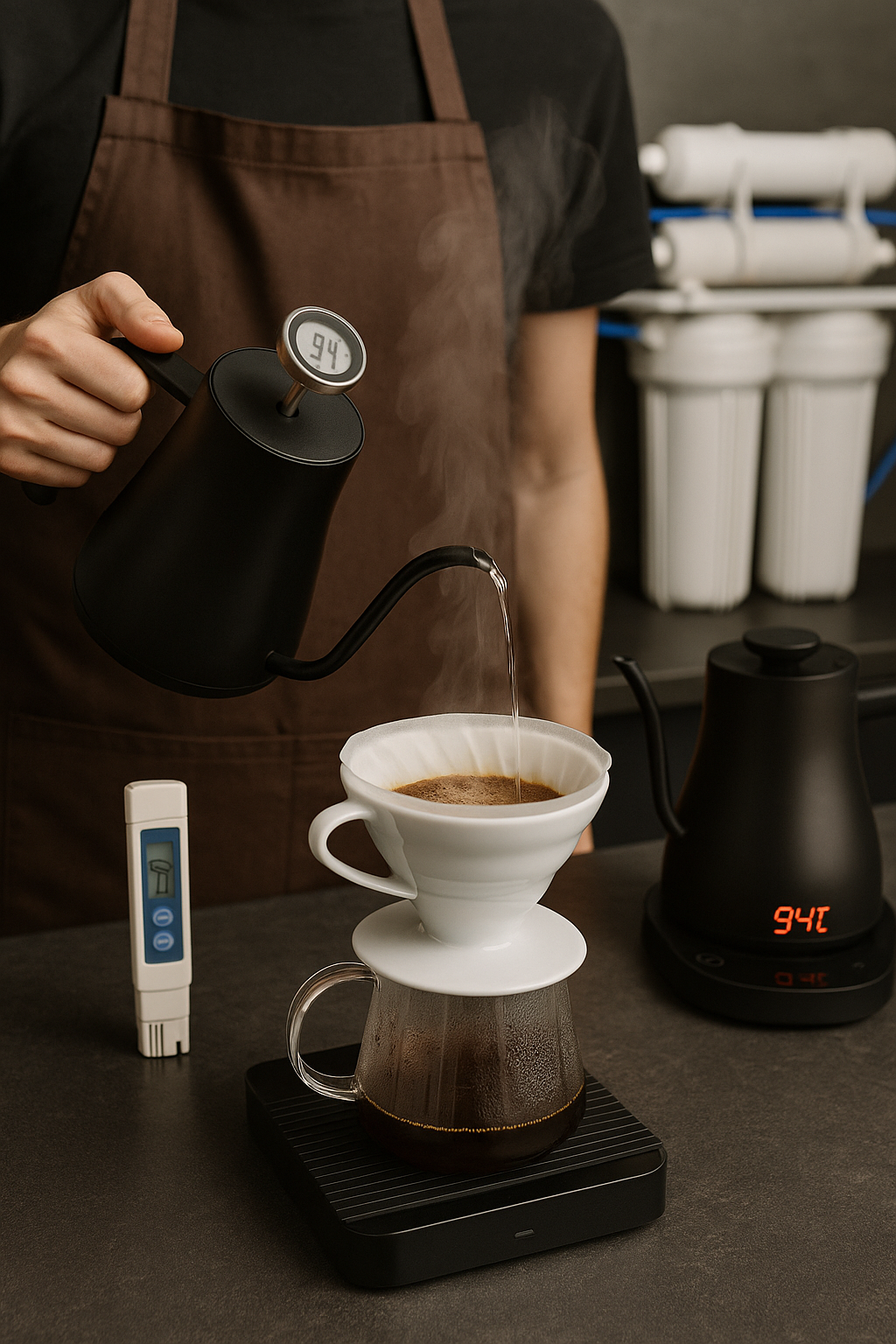
  • Using a gooseneck kettle to control the water stream precisely.

  • Pouring from a height of about 30 cm to induce the beneficial mixing.

  • Keeping the stream steady and continuous to maintain laminar flow.

  • Reducing coffee usage by 10% and adjusting only if the flavor profile demands it.

Final Word

As the world searches for ways to reduce consumption while maintaining quality, this study reminds us that even something as simple as pouring water can be reimagined through science. The pour-over method, long favored by specialty coffee enthusiasts for its elegance and clarity, now has the scientific backing to prove it’s not just better—but smarter.

The full study, “Pour-over coffee: Mixing by a water jet impinging on a granular bed with avalanche dynamics,” is available in Physics of Fluids, April 2025 edition.