Qima Coffee Strengthens Regional Presence with Strategic Hub at DMCC in Dubai

Qima Coffee has announced the launch of its newest regional logistics hub at the Dubai Multi Commodities Centre (DMCC), the region’s premier commodities trading hub, strategically located in the heart of Dubai.

Historically, roasters across the Gulf Cooperation Council (GCC) region have grappled with complex and fragmented logistics for specialty coffee. Delays due to extended customs procedures, dispersed warehousing, and inconsistent traceability have often compromised freshness and quality, creating significant operational challenges for roasteries.

With this new presence at DMCC, Qima Coffee is taking a bold step forward to resolve these inefficiencies. The hub offers streamlined customs clearance, consolidated storage solutions, and optimized logistical procedures—ensuring shorter lead times and better preservation of coffee integrity.

“Our new base at DMCC allows us to offer GCC roasters faster, more reliable access to our curated selection of coffees,” the company stated. “From rare, award-winning micro-lots and competition-grade coffees to scalable, high-quality specialty offerings, our portfolio is now closer to our clients than ever before.”

While the DMCC hub primarily serves the Gulf region, it also enhances service capabilities for clients in Asia and Europe, complementing Qima Coffee’s existing distribution centers in both regions.

For roasters looking to simplify sourcing and elevate quality, Qima Coffee’s Dubai hub marks a significant upgrade in regional specialty coffee logistics.

Record-Breaking MICE2025 Welcomes Over 31,000 Visitors, Gears Up for 2026 Edition

The Melbourne International Coffee Expo (MICE2025) exceeded all expectations this year, attracting an impressive 31,708 attendees over its three-day run at the Melbourne Convention and Exhibition Centre. The event once again cemented its status as the Southern Hemisphere’s largest and most influential coffee trade show, drawing café owners, roasters, hospitality professionals, and coffee lovers from across Australia and the globe.

From cutting-edge coffee equipment and technology to the latest brewing trends and business innovations, MICE2025 served as a dynamic platform for industry professionals and enthusiasts alike. With more than 11,000 annual attendees typically expected, this year’s turnout marked a new milestone, highlighting the growing interest in specialty coffee and hospitality.

Exhibitors had the opportunity to connect with hundreds of potential clients, grow their networks, and showcase innovations shaping the future of the industry. The show floor buzzed with energy as visitors explored the latest products, attended live demonstrations, and engaged with thought leaders across the coffee value chain.

Building on this momentum, MICE will return from 26–28 March 2026, once again hosted at the Melbourne Convention and Exhibition Centre. With excitement already building, over 40% of the exhibition floor space has already been secured, reflecting the strong demand and anticipation for next year’s edition.

MICE2026 promises another groundbreaking event, offering unparalleled opportunities for businesses to grow, connect, and be at the forefront of coffee innovation.

U.S. Coffee Prices Hit Record Highs Amid Global Supply Chain Pressures

According to a recent report by Fox News, coffee prices in the United States have surged to record levels as a result of severe disruptions in global supply chains, adverse weather in major producing countries, and rising international demand. In February 2025, the average retail price of ground roast coffee rose to $7.25 per pound—the highest ever recorded, based on official government data.

The spike follows a dramatic increase in wholesale arabica prices, which hit $4.30 per pound on the New York futures market—double the rate from the previous year. Coffee roasters that typically rely on futures markets to manage costs are now facing tighter margins, prompting concerns that the added burden will soon fall on consumers.

“We want to make sure that we are able to pass along cost changes both up and down, and we do intend to do that,” said Mark Smucker, CEO of J.M. Smucker, during a recent earnings call.

Key coffee-exporting nations have been hit hard by extreme weather conditions. The International Coffee Organization (ICO) reported that Brazil’s green coffee exports declined by 11.3% in December 2024, following a season marked by droughts and frost. Vietnam saw an even steeper drop, with a 39.5% reduction in exports after enduring an unseasonal drought in October.

Asia and Oceania experienced similar setbacks, with total coffee exports from the region down 31.2% in 2024, according to the ICO.

Compounding the issue are geopolitical tensions and logistical bottlenecks. Heightened conflict in the Red Sea region has disrupted a crucial shipping route that handles roughly 30% of global container traffic, according to the World Bank. Delays and added shipping costs through the Suez Canal have further strained coffee trade flows, especially from Asia.

At the same time, growing demand from emerging markets is intensifying supply pressures. The U.S. Department of Agriculture projects that China will purchase a record 6.3 million bags of coffee by the end of 2025, a new milestone for the world’s most populous nation.

Smucker added that much of the current volatility in coffee pricing is driven by speculation, noting, “As we get into the harvest, we will have more intel in terms of what that looks like.”

With multiple global factors converging, analysts say coffee prices are likely to remain elevated through the year, with limited room for relief in the near term.

Australian’s Café Becomes Unexpected Tourist Attraction on Remote Japanese Island

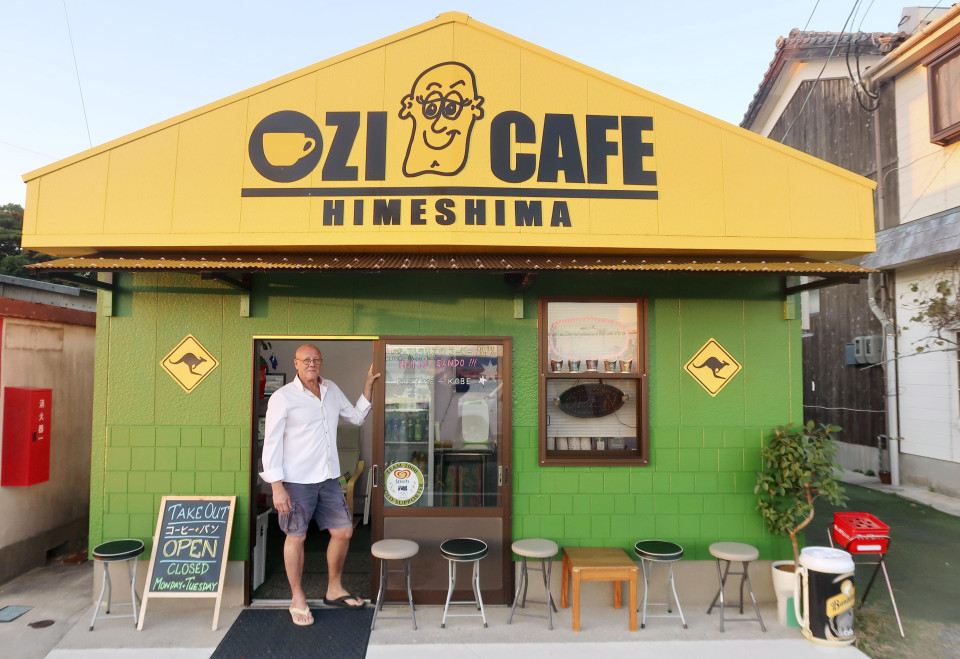
On the remote island of Himeshima in southwestern Japan, home to just 1,700 residents, Australian John Widmer has become a local figure of interest — and not just because he’s reputedly the island’s only foreigner. He’s also the proud owner of Ozi Cafe, a colorful coffee shop he hopes will become a new destination for visitors.

Travelers arriving by ferry to the island in Oita Prefecture are met with the café’s eye-catching green and yellow facade, adorned with a cheerful hand-drawn caricature of Widmer himself, now 64 years old.

Widmer opened Ozi Cafe in May 2023, driven by a passion for quality coffee and a desire to bring a taste of home to Japan. Serving brews made from beans roasted and imported from Australia, the café quickly became popular among both locals and tourists.

“Customers were really surprised at how nice the coffee was,” Widmer said. “I give them a taste of the beans. If the bean tastes good, you’re going to get good coffee — that’s how I always choose coffee at home.”

Local businesses have seen a boost as well. Since Walk Japan Ltd., a company offering walking tours across the country, added Himeshima to its itinerary, more foreign visitors have been stopping by the café, helping put the small island on the map.

Originally from Sydney, Widmer was a competitive swimmer and ran a swim school in Australia for about 20 years. His connection to Japan — and to Oita, where his wife is from — eventually led the couple to relocate to Himeshima.

Despite initial challenges with language and cultural differences, Widmer has been warmly embraced by the local community. Beyond running his café, he also teaches swimming to elementary school students and is a member of a local volleyball club.

“We welcome new people bringing fresh ideas,” said Shiori Matsubara, a 63-year-old souvenir shop employee. “I hope the island keeps getting livelier.”

What Will the Coffee Industry Look Like by 2030?

The global coffee industry is approaching a defining moment. After decades of growth driven by globalization, urbanization, and rising incomes, the sector is now facing both unprecedented opportunities and serious challenges. While coffee consumption continues to rise—especially in emerging markets—production is under threat from climate change, rising costs, and labor shifts at origin.

By 2030, the coffee business will be more technologically advanced, sustainability-focused, and geographically diverse. Power will continue to shift from traditional markets to regions like Asia, Africa, and the Middle East. This report presents a grounded, data-based forecast of the future of the coffee sector by 2030.

Global Coffee Market Trends (2024–2030)

According to the International Coffee Organization (ICO), global coffee consumption is projected to exceed 180 million 60-kg bags by 2030, up from approximately 178 million in 2023. This growth is largely driven by emerging economies like India, China, and Saudi Arabia.

  • India: Expected to join the world’s top five coffee-consuming nations due to a rising middle class.

  • China: Already the largest branded coffee shop market, leading in digital retail innovation.

  • MENA: Countries like Saudi Arabia and the UAE are investing heavily in coffee production and consumption infrastructure.

Arabica vs. Robusta: Due to climate change, the balance may tilt toward Robusta and climate-resilient hybrids, even in specialty markets.

Consumer Behavior and Preferences

The new generation of coffee consumers—especially Gen Z—demands ethical sourcing, environmental responsibility, and high customization.

Key trends:

  • Normalization of specialty coffee across urban centers

  • Functional beverages (e.g. with adaptogens or nootropics)

  • Dominance of plant-based milks

  • Growth of home brewing culture with premium grinders and machines

Technology and Innovation

By 2030, AI, robotics, and data analytics will reshape how coffee is grown, roasted, sold, and brewed.

  • At origin: AI-powered drones, smart irrigation, and predictive harvest modeling

  • In roasteries: Smart roasters that learn and optimize flavor profiles

  • In retail: Cashless stores, robotic baristas, and loyalty apps with predictive ordering

  • At home: Home roasting may become accessible to connoisseurs and hobbyists

Sustainability and Climate Impact

Climate change is the biggest long-term threat to the coffee industry. Warmer temperatures, unpredictable rainfall, and disease pressure are already reducing yields.

  • Brazil, Ethiopia, and Vietnam may lose significant arabica-suitable land

  • Climate-smart farming, shade-grown systems, and regenerative agriculture are critical

  • Blockchain and QR code traceability will become standard tools for transparency

Shifting Origins and Supply Chains

As climate change impacts traditional regions, new frontiers for coffee cultivation are emerging:

  • Southern Europe (Italy, Portugal) experimenting with high-elevation arabica

  • Australia offers a disease-free environment and strong domestic demand

  • Sub-Saharan Africa (Rwanda, Kenya, Uganda) shows long-term promise

Yemen: A Legacy of High-Altitude Resilience
With centuries of coffee cultivation at elevations of 2,000–3,000 meters and in dry conditions, Yemen’s coffee trees have developed strong drought resistance and genetic diversity. Despite war and climate challenges, production remained stable between 2014–2020, making Yemen a model for climate-resilient coffee agriculture.

South Sudan: Coffee for a Hotter Future
In South Sudan, the Excelsa variety has shown remarkable tolerance to high heat and drought. As climate extremes rise, such resilient cultivars offer a lifeline for future production in challenging environments.

Retail and Digital Evolution

The coffee shop of 2030 will be hybrid, digital, and personalized:

  • AR experiences: See coffee info through smart glasses or phone apps

  • Automated cafés: Staffless stores with robot baristas

  • Omnichannel models: In-store, app-based, and home subscriptions

  • Compact home roasting machines: Allowing direct trade and customized roasts at home

Investment and Market Opportunities

The global coffee market could exceed $600 billion by 2030.

Investment areas:

  • Sustainable production and vertical integration

  • Premium café chains and regional brands

  • Coffee tech (AI roasting, vending, apps)

  • Emerging markets: India, Nigeria, Saudi Arabia

Franchising will dominate growth in secondary cities across Asia and Africa.

Challenges Ahead

  • Climate volatility and loss of suitable land

  • Price instability and limited producer equity

  • Labor shortages at origin due to aging farming populations

  • Digital dependency risks in café operations

  • Loss of human hospitality with automation

Conclusion: The Coffee Business in 2030—Prepared or Perilous?

Coffee in 2030 will be more complex, data-driven, and digitally enabled—but also more unequal. It risks becoming a luxury item if price hikes and climate change go unchecked.

However, with strategic investments, ethical models, and collaborative innovation, coffee can remain accessible, sustainable, and global.

FC Bayern Celebrates 125th Anniversary with Pop-Up Café in Shanghai

Dubai – Qahwa World

To mark its 125th anniversary, FC Bayern Munich brought its celebrations to China with the opening of a temporary pop-up café in Shanghai from 27 February to 2 March.

Located in the vibrant Jing’an District, the café offered visitors a unique experience that combined the club’s football heritage with the city’s dynamic coffee culture.

The space quickly became a gathering point for local Bayern fans, who were welcomed into a specially designed environment blending FC Bayern’s visual identity with elements of Shanghai’s urban lifestyle.

Supporters were able to connect with one another, celebrate the club’s milestone, and enjoy various interactive activities arranged throughout the event.

The pop-up café also featured an exclusive retail area offering special 125th anniversary merchandise. Among the items available were a commemorative jersey, a limited-edition anniversary scarf, and a collectible set of postcards showcasing illustrations of global cityscapes.

The atmosphere was enhanced with creative branding, wall art, music, and engaging displays, reinforcing the club’s presence in one of Asia’s most influential cities.

The initiative received an enthusiastic response from fans, highlighting FC Bayern’s continued global appeal and its ability to create memorable moments for supporters far beyond its home in Germany.

The café in Shanghai served as a symbolic extension of the club’s ongoing commitment to engaging with its international fanbase, making the 125th anniversary celebration a truly global occasion.

Study: Modern Coffee Machines May Raise Cholesterol Levels

A new Swedish study has found that coffee brewed in many modern workplace machines may contain high levels of cholesterol-raising compounds, compared to coffee prepared using traditional paper-filter drip methods.

The study, conducted by researchers from Uppsala University and Chalmers University of Technology, analyzed coffee from 14 machines in office break rooms across Sweden. It revealed that several machines produced coffee with elevated concentrations of cafestol and kahweol—naturally occurring compounds known to increase levels of LDL (low-density lipoprotein) cholesterol, often referred to as “bad” cholesterol.

Published in the journal Nutrition, Metabolism, and Cardiovascular Diseases, the research raises concerns about long-term health impacts for individuals who consume multiple cups of coffee daily, especially in professional environments where unfiltered coffee machines are commonly used.

“Given the quantity of coffee consumed in Swedish workplaces, we aimed to assess the content of cholesterol-raising compounds in machine-brewed coffee,” said lead researcher Dr. David Eeg-Olofsson from Uppsala University.

To compare brewing methods, the study examined coffee prepared using drip machines with paper filters, French press, boiled coffee, espresso, and cloth-filtered coffee. The findings showed that boiled coffee and French press preparations contained the highest levels of cafestol and kahweol. Espresso samples also varied in concentration depending on the machine.

In contrast, coffee made using paper-filtered drip machines showed significantly lower levels of the two diterpenes. Researchers concluded that paper filtration is highly effective in removing these substances and reducing their cholesterol-raising effects.

“There were substantial differences in compound levels between the machines,” Eeg-Olofsson said. “Some machines produced coffee with levels of cafestol and kahweol similar to those found in boiled coffee, which is already discouraged in Nordic dietary guidelines.”

The 2023 Nordic Nutrition Recommendations advise reducing or avoiding boiled coffee due to its established link to higher cholesterol. The current study reinforces this recommendation and highlights the health advantages of choosing filtered coffee methods, particularly for high-frequency drinkers.

The researchers emphasized the importance of filtration in mitigating the presence of these compounds and called on coffee machine manufacturers to consider better filtering mechanisms in future designs.

“For individuals who drink a lot of coffee daily, drip-brewed coffee or any coffee that is well-filtered is clearly the safer option,” Eeg-Olofsson added.

The study stops short of labeling machine-brewed coffee as harmful but urges caution over long-term exposure to high levels of these compounds. The team recommends further controlled studies involving habitual coffee drinkers to better understand the cumulative effects on cholesterol levels.

As global coffee consumption continues to rise—particularly in workplace settings—the study offers a timely reminder that brewing method matters not only for taste, but also for heart health.

Hot and Dry Weather in Vietnam Pushes Robusta Coffee Prices Higher

Robusta coffee prices climbed on Friday amid growing concerns over hot and dry weather conditions in Vietnam, the world’s largest producer of robusta beans. According to the Dak Lak weather office, the Central Highlands region is forecast to receive limited rainfall between March 21 and 31, raising fears of further crop stress.

On the Intercontinental Exchange (ICE), May robusta futures (RMK25) closed up $18, or 0.33%, while May arabica futures (KCK25) slipped 0.19%, or $0.75. The strength of the U.S. dollar, which reached a two-week high, weighed on most commodities, including arabica coffee.

Despite a slight increase in ICE-monitored robusta inventories, which rose to a six-week high of 4,360 lots, concerns persist over shrinking global production. In contrast, ICE-monitored arabica inventories declined to a one-month low of 777,708 bags.

In Brazil, insufficient rainfall continues to impact arabica crops. Somar Meteorologia reported only 30.8 mm of rain in Minas Gerais—the country’s key arabica-producing region—during the week ending March 15, just 71% of the historical average. Cooxupé, Brazil’s largest arabica cooperative, also noted that high temperatures and below-average rainfall in February are expected to reduce yields this year.

According to the Brazilian Coffee Exporters Council (Cecafé), Brazil’s green coffee exports dropped 12% year-over-year in February, totaling 3 million bags. Earlier forecasts by Conab, Brazil’s national crop agency, projected the 2025/26 coffee crop to fall by 4.4% year-over-year to 51.81 million bags, the lowest level in three years. The 2024 crop estimate was also revised downward by 1.1% to 54.2 million bags.

Meanwhile, Marex Solutions projected a growing global surplus, forecasting that the coffee surplus for the 2025/26 season will widen to 1.2 million bags, up from 200,000 bags in 2024/25.

Vietnam’s February coffee exports rose by 6.6% year-over-year to 169,000 metric tons, according to the General Statistics Office. However, the longer-term outlook remains tight. Drought conditions have already reduced Vietnam’s 2023/24 robusta crop by 20% to 1.472 million metric tons—the smallest harvest in four years. The USDA’s Foreign Agricultural Service (FAS) projects a slight decline in Vietnam’s robusta output to 27.9 million bags in 2024/25. The Vietnam Coffee and Cocoa Association recently cut its production forecast for 2024/25 to 26.5 million bags, down from a previous estimate of 28 million.

Globally, coffee export data presents a mixed picture. Brazil’s 2024 coffee exports rose by 28.8% to a record 50.5 million bags, according to Conab. However, the International Coffee Organization (ICO) reported that global exports in December dropped by 12.4% year-over-year to 10.73 million bags, with total exports for Q4 2024 falling 0.8% to 32.25 million bags.

The USDA’s latest biannual report forecasts a 4.0% increase in global coffee production in 2024/25, reaching 174.86 million bags. Arabica output is expected to rise by 1.5% to 97.85 million bags, while robusta production is projected to increase by 7.5% to 77.01 million bags. Despite the production rise, ending stocks are forecast to fall by 6.6% to 20.87 million bags—the lowest level in 25 years.

In a separate report, Volcafe cut its estimate for Brazil’s 2025/26 arabica crop to 34.4 million bags, down 11 million from its September forecast, citing the impact of prolonged drought. The firm now projects a global arabica deficit of 8.5 million bags for the 2025/26 season—widening from the 5.5 million deficit expected in 2024/25 and marking the fifth consecutive annual shortfall.

Mohammed Issa Al Ghurair: Karam Coffee is an Emirati story we share with the world in every cup

Karam Coffee has emerged as one of the most prominent Emirati brands achieving notable success in the coffee market, benefiting from the rapid development of e-commerce in the UAE and its collaboration with major platforms such as Amazon UAE—an experience that marked a significant shift in the company’s journey.

Mohammed Issa Al Ghurair, CEO of Karam Food Industries, explained that Karam Coffee, founded in 2013 with a vision of offering world-class coffee inspired by the Emirati hospitality culture, has succeeded in combining authenticity with quality and sharing this spirit with a growing audience both inside and outside the country.

“In our culture, coffee is more than just a beverage—it is a way to connect and bring people together,” Al Ghurair said. “We were committed from the beginning to blending traditional practices with modern techniques to create an exceptional coffee experience.” Today, Karam Coffee proudly operates one of the largest roasteries in the Middle East, with a daily capacity of 16 tonnes. Its offerings include whole and ground specialty coffee, high-end coffee equipment, and gluten-free food products.

Al Ghurair noted that the company faced challenges early on in convincing major retailers to stock their products, which led them to pivot towards e-commerce. “Our collaboration with Amazon UAE opened doors we couldn’t access through traditional retail. It allowed us to reach a broader customer base, especially in markets like Saudi Arabia.”

He added that during the holy month of Ramadan—a peak season for coffee consumption—fast delivery becomes a top customer expectation. That’s where Amazon’s Fulfillment program plays a vital role, handling storage, packaging, and delivery while the company focuses on maintaining supply and product quality.

Karam Coffee’s success on Amazon.ae, according to Al Ghurair, is the result of strategic decisions, effective use of Amazon’s sales tools, and a strong commitment to quality and innovation. Participating in major sales events such as Ramadan promotions, Prime Day, and White Friday helped increase visibility. Coupled with targeted ads and discount coupons, these efforts significantly boosted sales.

The brand also benefited from customer behavior insights on Amazon, allowing it to better understand market demand and fine-tune its product offerings accordingly.

Al Ghurair concluded with advice to Emirati entrepreneurs: “Take full advantage of the vast opportunities available in the UAE’s e-commerce sector. The country has made great strides in building a digital economy that supports entrepreneurs. Our experience with Amazon gave us access to global tools and services that helped us expand and connect our brand with millions of customers online.”

Karam Coffee stands today as a shining example of how Emirati brands can thrive and grow through digital platforms. With Amazon UAE’s commitment to hosting products from 100,000 companies by 2026, the road is wide open for more Emirati entrepreneurs to share their stories and products with the world.


View this post on Instagram


A post shared by عالم القهوة (@qahwaworld)

FAO Releases Major Report on the Global Coffee Market in 2025

The Food and Agriculture Organization of the United Nations (FAO) has released a comprehensive report titled “Global Coffee Market and Recent Price Developments,” shedding light on critical challenges currently facing the international coffee trade. The report reveals that global coffee prices reached their highest levels in over 13 years by the end of 2024, driven by extreme weather, declining production, and rising transport costs.

Coffee, a lifeline for more than 25 million farming families, is one of the most traded agricultural commodities in the world. In 2023, the global value of coffee production stood at USD 23 billion, while international trade surpassed USD 26 billion. The industry as a whole generates over USD 200 billion annually.

For many low-income producing countries, coffee exports remain a vital source of foreign exchange. In 2023, coffee accounted for:

  • 33.8% of Ethiopia’s merchandise exports,

  • 22.6% in Burundi, and

  • 15.4% in Uganda.

In many of these nations, coffee earnings covered the majority of food import bills, underscoring its role in national food security.

Sharp Rise in Global Prices

Coffee prices rose by 38.8% in 2024 compared to 2023. Both Arabica and Robusta varieties experienced significant increases:

  • Arabica: +58% year-on-year

  • Robusta: +70% year-on-year

This has narrowed the historical price gap between the two varieties, a phenomenon not seen since the mid-1990s.

Climate-Driven Supply Constraints

Severe weather affected output in major producing countries:

  • In Brazil, drought and frost reversed growth forecasts, leading to a 1.6% production decline.

  • Viet Nam experienced a 20% drop in production, with farmers also delaying sales due to rising domestic prices.

  • Indonesia’s production fell by 16.5%, with a 23% drop in exports caused by excessive rainfall.

Rising Shipping and Fuel Costs

The FAO report highlights that higher transportation costs have played a significant role in inflating coffee prices. According to the study:

A 1% increase in global shipping costs leads to a 0.44% increase in coffee prices within 10 months, with over half the effect occurring within the first 3 months.

These dynamics were further exacerbated by global oil price volatility, affecting freight rates and logistical expenses throughout the supply chain.

Effects on Consumers and Retail Prices

Despite the global surge in commodity prices, retail impacts were relatively moderate:

  • +6.6% increase in U.S. retail coffee prices (December 2024 vs. 2023)

  • +3.8% increase in the European Union

The demand for coffee remains inelastic, meaning that consumption patterns do not change significantly with price shifts. In both the U.S. and EU, coffee accounts for less than 1% of annual household spending.

Producer Incomes: Uneven Gains

Producers in key countries benefited from higher farmgate prices in 2024:

  • +17.8% in Ethiopia

  • +13.6% in Brazil

  • +11.7% in Colombia

  • +12.3% in Kenya

  • +15.9% in Indonesia

  • +5.8% in Viet Nam

However, increased input costs and logistical challenges limited the net benefits for many smallholder farmers.

FAO Recommendations for a More Resilient Market

To address long-term instability and safeguard livelihoods, the FAO recommends:

  1. Enhancing market transparency, including better forecasting of supply and demand.

  2. Supporting value-added processing at origin, such as roasting and packaging.

  3. Reducing tariffs on processed coffee to support producer countries.

  4. Fostering international cooperation between exporters and importers.

  5. Investing in climate-resilient farming and diversified cropping systems.

Conclusion

The FAO’s 2025 report paints a clear picture: without coordinated efforts to address climate risks, supply chain fragilities, and market inequality, the global coffee sector could face heightened instability. Yet, through strategic reforms and stronger international collaboration, a more sustainable and equitable future for coffee remains within reach.

China Boosts Coffee Exports to Russia Nearly Twelvefold in Early 2025

China exported coffee worth $1.1 million to Russia in January and February of 2025, marking a nearly twelvefold increase compared to the same period last year, when shipments totaled just $91,700. This data was published by China’s General Administration of Customs and highlights a growing momentum in the coffee trade between the two countries.

Although China has long been associated with tea, the country is increasingly making a name for itself as a coffee producer. The southwestern province of Yunnan has become the center of Chinese coffee cultivation, with its high-altitude terrain producing Arabica beans known for their balanced body, mild acidity, and fruity notes. Improvements in quality and scaling of production have allowed China to expand its coffee exports and find growing demand in international markets.

In the first two months of 2025, China exported coffee to 36 countries. The leading destinations included the Netherlands ($8.9 million), Germany ($4.3 million), Japan ($2.9 million), France ($1.2 million), and Russia ($1.1 million). This positions Russia among China’s top five coffee export markets during the period, a notable shift considering its previously minor role in China’s coffee trade.

For the full year of 2024, Russia imported $13.6 million worth of coffee from China, a 6.3% increase compared to 2023. While Chinese coffee still represents a small portion of Russia’s overall coffee imports—traditionally dominated by Brazil, Vietnam, and Indonesia—the sharp growth reflects increasing interest from Russian roasters and importers seeking new origins and supply alternatives amid shifting geopolitical and logistical realities.

Meanwhile, China’s tea exports to Russia declined by 12.6% during January–February 2025, totaling $6.9 million, compared to $7.9 million in the same period a year earlier. However, for the full year 2024, tea imports from China to Russia reached $58.7 million, an increase of 8.3% year-over-year.

Globally, China exported tea to 98 countries during the first two months of 2025. Key importers included Morocco ($47.9 million), Ghana ($17.5 million), Senegal ($11.8 million), Mauritania ($9.5 million), and Malaysia ($15.7 million).

China’s rise as a coffee exporter, particularly to Russia, signals a deeper structural change in global coffee trade dynamics. Once seen solely as a tea powerhouse, China is now carving a niche in the specialty coffee segment. With improving quality and competitive pricing, Chinese coffee is increasingly being adopted by roasters looking to diversify their offerings with new flavor profiles and origins. If current trends continue, China may soon emerge as a stable and recognizable origin in Russia’s evolving coffee landscape.

Coffee Prices Slide as Stronger Dollar Weighs on Market

Coffee futures were mostly lower today as a stronger U.S. dollar pressured commodity markets. May arabica coffee (KCK25) fell by 4.50 cents (-1.15%), while May ICE robusta coffee (RMK25) remained flat.

The U.S. dollar index climbed to a two-week high, weighing on coffee prices. However, robusta losses were limited due to weather concerns in Vietnam. The Dak Lak weather office reported that the Central Highlands, Vietnam’s main coffee-producing region, will likely see hotter temperatures and reduced rainfall through the end of March. Vietnam is the world’s top robusta producer.

Robusta inventories are on the rise, adding bearish pressure. ICE-monitored robusta stocks climbed to a six-week high of 4,360 lots. In contrast, arabica inventories fell to a one-month low of 782,489 bags.

In Brazil, insufficient rainfall is creating bullish sentiment for arabica. Somar Meteorologia reported that Minas Gerais—Brazil’s largest arabica-producing area—received just 30.8 mm of rain in the week ending March 15, only 71% of the historical average. Cooxupé, Brazil’s largest arabica cooperative, warned that high temperatures and dry weather last month may impact yields negatively this year.

Brazil’s February green coffee exports also declined 12% year-on-year to 3 million bags, according to Cecafe. Additionally, Brazil’s crop agency Conab projected that the 2025/26 coffee crop will fall 4.4% year-on-year to a three-year low of 51.81 million bags. It also revised the 2024 crop estimate down by 1.1% to 54.2 million bags.

Despite current supply concerns, bearish forecasts are emerging. Marex Solutions expects the global coffee surplus to widen to 1.2 million bags in the 2025/26 season, up from 200,000 bags in 2024/25.

Additional pressure on robusta prices came from Vietnam’s General Statistics Office, which reported a 6.6% year-on-year rise in February coffee exports, reaching 169,000 metric tons.

Dry conditions caused by last year’s El Niño continue to affect coffee production in South and Central America. Brazil is experiencing its driest period since 1981, according to disaster monitoring center Cemaden, threatening flowering stages of arabica crops. Colombia, the second-largest arabica producer, is still recovering from last year’s drought.

In Vietnam, drought slashed 2023/24 robusta production by 20% to 1.472 million metric tons—the smallest crop in four years. The USDA’s FAS estimates Vietnam’s 2024/25 robusta output will decline slightly to 27.9 million bags, down from 28 million bags. Meanwhile, the Vietnam Coffee and Cocoa Association revised its 2024/25 production forecast down to 26.5 million bags from a previous 28 million.

While Brazil’s coffee exports reached a record 50.5 million bags in 2024 (up 28.8% year-on-year), the International Coffee Organization (ICO) reported a 12.4% year-on-year decline in December global coffee exports, and a 0.8% decline for the October–December quarter.

The USDA’s December biannual report offered mixed implications. Global production for 2024/25 is projected to rise by 4% to 174.86 million bags, including a 1.5% rise in arabica and 7.5% in robusta. However, global ending stocks are expected to fall by 6.6% to a 25-year low of 20.87 million bags.

Brazil’s 2024/25 production is forecast at 66.4 million metric tons, down from a previous 69.9 million. Ending stocks in Brazil are projected at 1.2 million bags, a 26% year-on-year drop.

Volcafe recently downgraded its 2025/26 Brazil arabica production forecast to 34.4 million bags—a reduction of 11 million bags from September—following a crop tour that revealed severe drought damage. The trader now expects a global arabica deficit of 8.5 million bags in 2025/26, up from 5.5 million in 2024/25. If accurate, this would mark the fifth consecutive year of arabica deficits.