Engineering Student Brews Up AI-Powered Scent Tech to Boost Coffee Shop Sales, Seeks First Free Pilot Partner

Move over, baristas – artificial intelligence and neuroscience might soon be the secret ingredients pulling customers into your local coffee shop and boosting sales of those tempting cinnamon buns. Harper Dammann, an enterprising engineering student, has developed an innovative technology designed to harness the power of smell to directly increase customer conversions for coffee retailers.

Dammann’s system leverages a potent combination of AI, scent marketing (olfactory marketing), and neuroscience to create targeted “aroma profiles.” The technology operates on two fronts:

  1. Attracting Foot Traffic: The system emits an enticing ambient coffee aroma outside the shop. This scientifically crafted scent is designed to cut through street distractions and powerfully draw passersby towards the entrance, effectively turning the sidewalk into a marketing channel.

  2. Boosting In-Store Sales: Once inside, the scent environment shifts. The technology releases specific aromas tied to the shop’s highest-margin products, like freshly baked pastries, croissants, or cinnamon buns. The subtle, appealing scent of these goods is intended to subconsciously influence customers to add them to their coffee order, increasing the average transaction value.

Dammann emphasizes the sophistication of the approach, stating the system includes “smells that have been scientifically shown to create certain moods such as happiness and calmness,” potentially enhancing the overall customer experience and dwell time beyond just driving sales.

The Pitch: A Groundbreaking Free Trial

The technology is beyond the conceptual stage, and Dammann is actively seeking a forward-thinking coffee shop owner to partner in the first real-world application. The offer is compelling: a completely FREE pilot program.

“We’re looking for our first coffee shop to run a FREE pilot with our technology,” Dammann announced. This presents a unique, risk-free opportunity for a cafe to test the impact of AI-driven scent marketing on their foot traffic and sales conversions.

Why This Matters

Scent marketing is a well-established concept, with studies suggesting it can significantly influence consumer behavior, mood, and memory recall. Dammann’s innovation lies in the integration of AI for dynamic scent profile optimization and the specific application of neuroscience principles to target measurable outcomes – increased conversions and upsells – within the competitive coffee shop market. The dual-zone approach (outside attraction, inside upsell) is particularly novel for this sector.

Call to Action for Coffee Shops

Coffee shop owners interested in exploring this novel technology and participating in the groundbreaking free pilot are encouraged to reach out directly to Harper Dammann to discuss the opportunity further.

To Read the original story  click here


From Art to Appetite: D.C.’s 5 Best Museum Cafés Blend Culture with Culinary Excellence

Washington, D.C., is home to some of the world’s finest museums—but beyond the exhibits lies another treasure: exceptional museum cafés. From soul food rooted in history to indigenous cuisine and award-winning pastries, these cafés offer more than just a meal—they serve a cultural experience on every plate.

Whether you’re exploring artifacts from the African diaspora or admiring impressionist paintings, the nation’s capital invites you to take a break—and take a bite. Museum cafés in Washington, D.C., have elevated the dining experience, offering visitors menus that are as thoughtfully curated as the exhibitions themselves. Here’s a look at the top five museum cafés that are winning over both food lovers and culture seekers alike.

1. Sweet Home Café – National Museum of African American History and Culture
More than just a stop for lunch, Sweet Home Café delivers a culinary journey through African American history. Featuring regional dishes such as buttermilk fried chicken, shrimp and grits, and Caribbean-inspired oxtail pepperpot, the café reflects the museum’s commitment to telling stories through food. A James Beard semifinalist, it has become a must-visit destination for both tourists and locals.

2. Mitsitam Native Foods Café – National Museum of the American Indian
Mitsitam, meaning “let’s eat” in the native languages of the Americas, lives up to its name. This café offers authentic dishes from five indigenous regions across the Western Hemisphere, including wild rice salad, bison chili, and tamales wrapped in corn husks. It’s a powerful way to connect with Native American cultures through the rich tradition of indigenous cuisine.

3. Bread Furst at The Phillips Collection
Located inside America’s first museum of modern art, Bread Furst serves as an oasis of warmth and artisanal simplicity. Created by acclaimed baker Mark Furstenberg, the café offers fresh quiches, Middle Eastern spreads, sandwiches, and pastries—all in a quiet, artsy setting. With no ticket required to dine, it’s also a favorite neighborhood escape in Dupont Circle.

4. Hillwood Café – Hillwood Estate, Museum & Gardens
This lesser-known gem offers elegance and tranquility within the historic Hillwood Estate. Guests can enjoy refined dishes like coronation chicken, salmon tartines, and Russian-style soups. The café is surrounded by lush gardens and opulent interiors, making it a popular spot for tea service and quiet reflection after a tour of the estate’s extensive collection.

5. Café at the National Museum of American History
Formerly known as America’s Table, this café offers a nostalgic menu that includes American comfort food staples—mac and cheese, burgers, sandwiches, and salads. While the offerings are more conventional, the setting and accessibility make it a convenient and family-friendly dining stop in the heart of the Smithsonian complex.

A Cultural Experience Beyond the Galleries
Each of these museum cafés offers something unique—whether it’s a history lesson served alongside smoked brisket or a freshly baked scone enjoyed between galleries. As visitors explore D.C.’s rich cultural institutions, these cafés serve as a reminder that food, too, is a powerful medium for storytelling.

Explore more of D.C.’s museum gems—culinary and cultural—on your next visit.

CTA: Discover the full guide to D.C.’s top museum cafés here.

Barista Terminology | Episode 3: Espresso Basics

We are pleased to launch this educational series on QahwaWorld.com , dedicated to providing essential knowledge for every barista and coffee enthusiast. Titled Barista Terminology,” this series offers clear and concise explanations of key concepts in the coffee industry. It will span more than 20 episodes, each covering different aspects of the coffee world.

Espresso is more than just a concentrated shot of coffee — it’s the foundation for countless café drinks and a true test of a barista’s skill. In this episode, we explore the core concepts and terms every barista must understand to prepare, evaluate, and troubleshoot espresso like a professional.

1. Espresso

A small but intense coffee beverage brewed by forcing hot water under pressure through finely ground coffee. Known for its rich body, crema, and concentrated flavor.

2. Crema

The golden, foamy layer that forms on top of a properly extracted espresso shot. It consists of emulsified oils and carbon dioxide, and indicates freshness and correct extraction.

3. Single Shot / Double Shot

A single shot typically uses about 7–9 grams of coffee and yields around 25–30 ml. A double shot (the standard in most cafés) uses 14–18 grams and yields 50–60 ml.

4. Ristretto

A “short” shot of espresso made with the same amount of coffee but less water. It produces a more concentrated and syrupy cup with less bitterness and more sweetness.

5. Lungo

A “long” espresso shot made by allowing more water to pass through the coffee. It’s larger in volume but often more diluted and bitter.

6. Brew Ratio

The ratio of dry coffee grounds to the final liquid espresso. Common ratios include 1:2 (e.g., 18g coffee to 36g espresso). It affects strength, flavor, and balance.

7. Extraction Time

The duration it takes to brew an espresso shot — usually between 25 to 30 seconds. Extraction time influences flavor development; too fast may lead to sourness, too slow to bitterness.

8. Yield

The amount of liquid espresso produced in the cup, typically measured in grams. A key factor when dialing in espresso.

9. Puck

The compacted disc of used coffee grounds left in the portafilter after extraction. A clean, dry puck can indicate a good tamp and distribution.

10. Channeling

When water flows unevenly through the coffee bed, often due to poor tamping or distribution. It causes under- and over-extraction in the same shot.

11. Dialing In

The process of adjusting grind size, dose, yield, and time to achieve the desired espresso taste. Baristas often dial in multiple times a day as variables (e.g., humidity) change.

12. Under-Extraction

Occurs when not enough solubles are pulled from the coffee. Results in sour, sharp, or salty flavors. Often caused by too coarse a grind or short brew time.

13. Over-Extraction

Occurs when too many compounds are extracted. Results in bitterness and dryness. Often caused by fine grind or long brew time.

14. Balanced Shot

An espresso with harmony between sweetness, acidity, and bitterness — a sign of proper extraction and recipe.

15. Tasting Notes

Descriptors used to articulate espresso flavor — such as citrus, cocoa, berries, spice, or nuts. Tasting notes help communicate quality and profile.

Limiting Coffee to the Morning Linked to Better Heart Health

A recent scientific analysis suggests that drinking coffee only in the morning may offer protective benefits for heart health and overall longevity — benefits not observed in those who consume coffee throughout the day or not at all.

The findings, based on U.S. national health survey data, involved nearly 41,000 adults with an average age of 47. Participants shared detailed information about their daily dietary habits, including coffee consumption — whether they drank it, how much, and at what time of day.

In addition to the broader group, a smaller sample of about 1,500 individuals kept a complete food and beverage diary for an entire week. Researchers tracked their health outcomes over an average follow-up period of almost a decade, linking dietary habits to mortality data.

The participants were divided into three groups:

  • Those who drank coffee only in the morning (36%)

  • Those who drank coffee at various times throughout the day (16%)

  • Those who did not drink coffee at all (48%)

The results showed that morning-only coffee drinkers had a significantly lower risk of dying from cardiovascular disease — about 31% less — compared to non-drinkers. They also had a 16% lower risk of death from any cause during the study period.

In contrast, individuals who consumed coffee throughout the day showed no significant difference in mortality rates compared to those who did not drink coffee.

These observations suggest that not just drinking coffee, but when you drink it could play a role in long-term health outcomes, particularly concerning the heart. While more research is needed to explore the mechanisms behind this association, limiting coffee consumption to the earlier part of the day may be a simple lifestyle adjustment with meaningful health advantages.

Mikael Jasin Explores the Full Potential of PBtech in Crafting the Perfect Espresso

World Barista Champion 2024 Mikael Jasin is known for pushing the boundaries of flavor and innovation in specialty coffee. At Omacoffee, he has integrated Victoria Arduino’s groundbreaking PBtech technology into his daily routine—revealing a new dimension of balance, body, and consistency in the cup.

PBtech, developed by Victoria Arduino, is a patented on/off extraction system designed to optimize the brewing process by reducing peaks of acidity and bitterness while enhancing sweetness. Its aim? To ensure a consistently harmonious cup, whether you’re brewing mainstream blends or high-end specialty coffee.

“PBtech allows me to extract a softer, rounder espresso,” says Jasin. “I activate the function for most of our coffees at Omacoffee. Thanks to PBtech’s water agitation system inside the portafilter, I’m able to extract the shot in less time without compromising quality.”

Unlike traditional extraction methods, PBtech introduces a controlled pulsation of water pressure. A unique valve opens and closes in cycles, enabling water to interact with the coffee puck more evenly and dynamically. This results in a rich and full-bodied espresso with reduced bitterness and a clean, sweet finish.

The technology is already integrated into Victoria Arduino’s flagship machines—the Black Eagle Maverick and E1 Prima PRO—offering professional baristas a smart and consistent tool for daily use. One of its most attractive features is its simplicity: baristas can activate PBtech with a single decision at the recipe level, then focus on other tasks such as customer service or milk texturing, confident that their espresso shots will maintain top-tier quality.

Designed with consistency and workflow efficiency in mind, PBtech eliminates the need for continuous adjustments or active barista intervention during extraction. This makes it ideal for high-volume cafés seeking to maintain quality without slowing down operations.

In the cup, PBtech has proven effective across a range of roast profiles, showcasing enhanced sweetness, a round body, and better balance. For Jasin and his team, it opens up new sensory dimensions—unlocking the true potential of each coffee bean.

Coffee professionals and enthusiasts alike will have the opportunity to experience PBtech firsthand at World of Coffee Geneva, taking place from June 26–28, 2025, at Palexpo SA, stand #1739. The event offers an exclusive look at how PBtech can elevate espresso preparation and redefine consistency standards across the industry.

About PBtech Technology

  • What it is: A patented ON/OFF extraction system from Victoria Arduino.

  • Where it’s available: Installed on Black Eagle Maverick and E1 Prima PRO machines.

  • How it works: The PB-Tech valve creates alternating water flow cycles, enhancing coffee puck expansion and ensuring better flavor extraction.

  • Why it matters: Improves balance, boosts sweetness, reduces bitterness, and enhances workflow efficiency.

PBtech is more than just a feature—it’s a new chapter in coffee extraction. Try it with your own coffee and discover the flavors you didn’t know existed.

For more details and the latest updates, visit victoriaarduino.com and follow @victoriaarduinoofficial on Instagram.

From a School Dropout to the Founder of Shin Coffee: A Journey Brewed in Hardship

As part of my daily search for meaningful stories from the world of coffee and its influential figures, I came across a remarkable profile on Vietnam, a multilingual platform dedicated to promoting Vietnam’s culture, business, and innovation. It told the inspiring story of Nguyen Huu Long, the visionary behind Shin Coffee, one of Vietnam’s most recognized specialty coffee brands. His journey from manual labor on a farm to building an internationally respected coffee label is nothing short of extraordinary.

Nguyen Huu Long’s story began in 1993 when he was just 11 years old. Forced to leave school in grade two, he moved with his family from the poor Ha Tinh province to Gia Lai, where they found work on a coffee plantation. Each day, Long dug trenches, pruned trees, and picked cherries—yet amidst the physical hardship, a quiet dream took root: one day, he would build a future through coffee.

By 1999, Long had moved to Ho Chi Minh City, where he worked first at a café, then at a restaurant. One day, a Japanese customer who frequented the establishment noticed him and, struck by Long’s resemblance to his late son, decided to get to know him. Learning of his background, the man adopted Long, funded his education, and personally taught him Japanese. After completing high school and becoming fluent in the language, Long began working as a translator and gradually saved up enough capital to revisit his dream of entering the coffee business.

His first business venture—selling roasted coffee with a friend—failed quickly due to inexperience. That failure taught him a lesson: passion alone isn’t enough. Determined to succeed, he enrolled in the Business Administration program at the University of Economics in Ho Chi Minh City. Upon graduation, he launched a new café business with a partner, only to experience another failure due to conflicting visions. The loss was devastating—Long not only lost his investment, but also the small home he had worked hard to earn. Out of options, he turned to Japan once again, this time as a labor export worker with the intention of rebuilding from scratch.

From Japanese Industry to Organic Coffee Philosophy

In Japan, Long found a stable job and decent salary, but his passion for coffee remained. He enrolled in organic agriculture training courses and began researching global coffee origins, particularly those present in the Japanese market. It struck him as ironic that while Vietnam was one of the world’s largest coffee exporters, Vietnamese-origin coffee was nearly absent from shelves in Japan. The realization fueled his drive.

He balanced his job with his studies—at times even skipping shifts to attend training and making up for the lost hours later. His diligence caught the attention of a Japanese coffee import-export company, which invited him to join as a manager. The role offered him deep insight into global coffee logistics, quality control, and branding—experiences that would later shape his next move.

In 2015, Long returned to Vietnam and launched his third coffee venture. He named it Shin Coffee, in honor of his adoptive father, and set out to create his own raw material supply chain. He began with 50 hectares in Trang village, eventually expanding to 100 hectares. What set his farms apart was the complete rejection of chemical inputs. He relied exclusively on organic compost made from cow manure and coffee husks, and natural pesticides derived from fish oil. This unorthodox approach met initial resistance from local farmers accustomed to conventional methods, but the results were undeniable.

Yields rose to 6 tons per hectare—compared to the regional average of 3 to 4 tons—and Shin Coffee paid farmers 15% to 20% above local market prices. Even members of the Ba Na ethnic minority, initially hesitant, adopted the model. In time, the cooperative’s farms received organic certification from both the European Union and the United States.

A Vietnamese Coffee Brand on the Global Stage

Today, Shin Coffee is recognized not only for its commitment to organic practices, but also for its quality and consistency. The brand offers over 20 distinct products and retails in Ho Chi Minh City for between 80,000 and 150,000 VND per cup. Shin Coffee is exported to Japan, the United States, and most European markets. In 2020, the prominent economic group PAN selected Shin Coffee as the official diplomatic gift for heads of state attending the ASEAN Summit hosted by Vietnam.

And yet, despite his remarkable success, Nguyen Huu Long holds no formal executive title in the cooperative he founded. Instead, he serves as a mentor and advisor. Asked why, he says:
“I wanted to leave space for younger generations to lead. We’re facing great opportunities and serious challenges, and it’s time for new energy and vision to take over. My role is to ignite the spark—not to control it.”

A $1 Billion Threat to Coffee: New Technology Offers Hope Against Destructive Pest

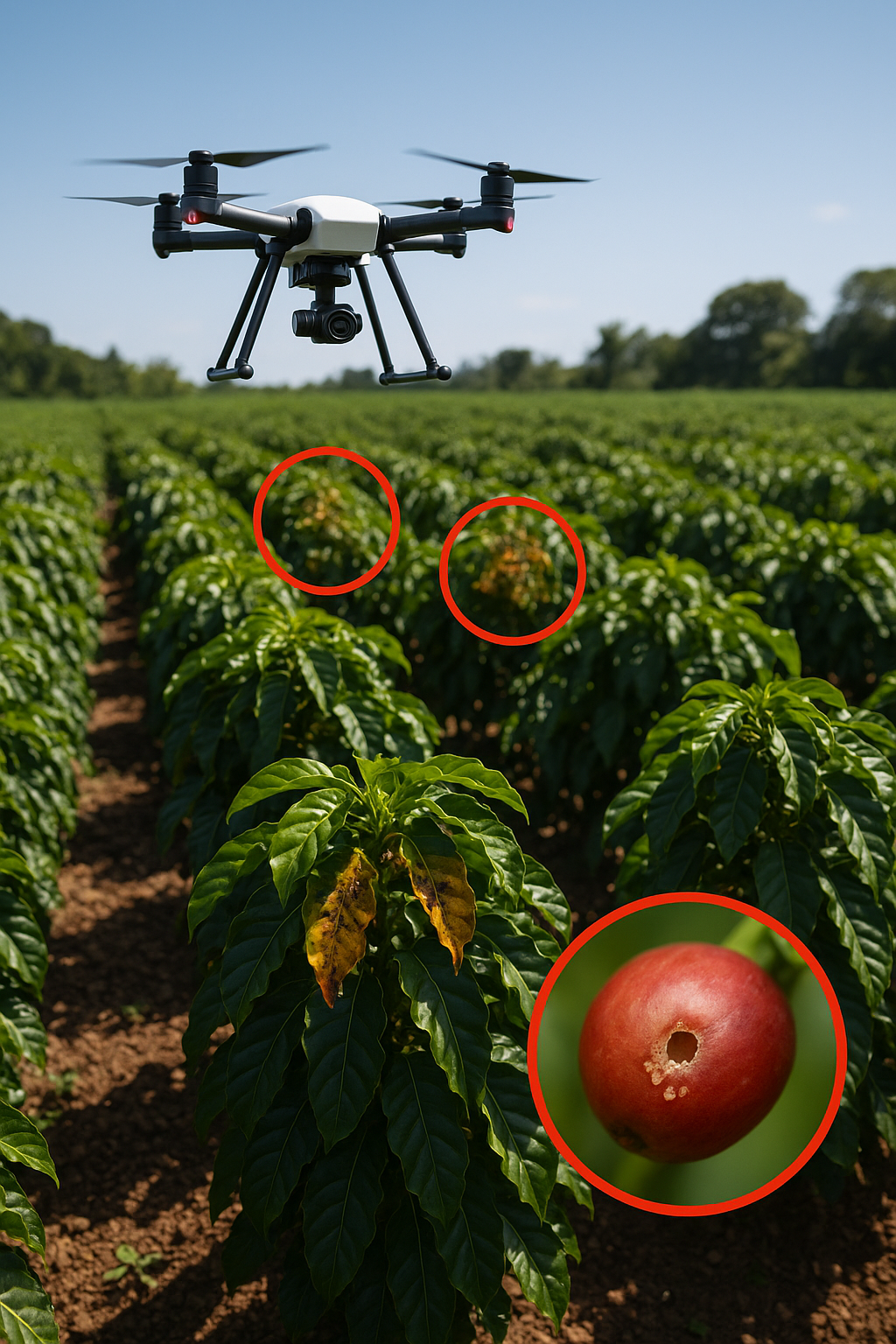
A groundbreaking study from Edith Cowan University (ECU) may offer a lifeline to the global coffee industry, which suffered losses exceeding $1 billion in 2023 due to the coffee berry borer—a tiny but highly destructive pest that invades and ruins coffee crops.

The research team has developed a novel drone-based software system capable of detecting signs of coffee berry borer infestations by identifying the distinctive debris, or “frass,” left behind by the insect. Unlike previous methods that attempt to detect the insect directly—an approach made difficult due to its small size and elusive nature—this technique focuses on visible evidence of damage, allowing for faster and more reliable detection.

“Coffee berry borers are incredibly hard to see with the naked eye,” said ECU researcher Dr. David Cook. “Instead of looking for the insect itself, we look for what it leaves behind—similar to how sawdust collects around a drilled hole. The debris from the borer is far easier to spot.”

The system, based on an advanced image-processing algorithm known as L-systems, mimics aspects of human vision by analyzing color, shape, and structure to detect irregularities in crops. Drones equipped with the software can fly over coffee plantations and quickly flag areas at risk of infestation.

The coffee berry borer poses a serious threat to coffee farmers worldwide, particularly in major coffee-producing regions such as South America, Indonesia, and parts of Africa. According to ECU Senior Lecturer Dr. Leisa Armstrong, the new technology could have a significant economic impact.

“Coffee is a high-value crop. If this software allows farmers to identify and treat infestations early, they can avoid losing a large portion of their harvest,” she explained. “That’s not just good news for producers—it could also help stabilize global coffee prices by preventing supply shortages.”

The system was developed by Master’s student Chris Napier, who designed the anomaly-detection tool using colored lattice squares to measure the size, shape, and number of coffee berries. This detailed visual analysis allows for accurate identification of affected areas without invasive procedures.

Beyond coffee, the technology shows potential for use in other crops with similar structures. According to Napier, the algorithm could be adapted to monitor bunch-based crops like grapes, offering a broader agricultural application.

“As drone use increases in farming, this kind of adaptable detection system can help farmers rapidly respond to different types of pathogen outbreaks—not just in coffee,” Napier said.

The findings were published in the BIO Web of Conferences under the title “Coffee Berry Pathogen Anomaly Detection Using Colour and Shape Separation via L-systems.” The research was authored by Chris C. Napier, Dr. David M. Cook, and Dr. Leisa J. Armstrong.

DOI: 10.1051/bioconf/202516705003

Coffee Retains Its Crown as America’s Favorite Beverage in 2025, Surging Past Bottled Water

Coffee continues to reign as the most consumed beverage in the United States, with two-thirds of American adults (66%) drinking coffee on any given day, surpassing bottled water, tea, juice, and soda. This finding, released in the Spring 2025 National Coffee Data Trends (NCDT) report, highlights a significant 7% increase in daily coffee consumption since 2020.

According to the report—conducted in January 2025 by Dig Insights on behalf of the National Coffee Association (NCA)—coffee is more deeply embedded in American routines than ever. On average, American coffee drinkers consume three cups per day, contributing to a staggering total of 516 million cups daily, enough to fill an Olympic-size swimming pool 48 times.

Specialty Coffee on the Rise

The 2025 data shows a notable shift toward specialty coffee, which now accounts for 59 out of every 100 cups consumed. Consumption of specialty beverages has jumped nearly 18% in five years, with 46% of adults reporting past-day consumption, up from 39% in 2020. In contrast, traditional coffee has held steady, consumed by 42% of adults in 2025, compared to 43% in 2020.

Among specialty coffee drinkers, preferences have evolved:

  • Espresso-based beverages (such as cappuccinos, espressos, lattes, mochas, macchiatos, flat whites, and Americanos) are consumed by 28% of adults daily—up 17% from 2020.

  • Non-espresso-based beverages (including cold brew, nitro coffee, and frozen blends) have experienced the largest growth, increasing nearly 42% from 12% in 2020 to 17% in 2025.

NCA President and CEO Bill Murray stated:

“Coffee holds a unique place in Americans’ daily lives—no other beverage is such a beloved and prominent touchstone. Coffee’s popularity brews big benefits for American coffee drinkers and the entire U.S. economy, and we expect America’s love affair with coffee to continue for many decades to come.”

Regional and Daily Patterns

Regionally, the Northeast leads the nation in daily coffee consumption at 69%, followed by the Midwest (67%), South (66%), and West (62%). Most coffee is consumed in the morning, with 83% of Americans pairing coffee with breakfast.

Hot coffee remains dominant, particularly in winter. In January 2025, 78% of coffee consumed was served hot—up 13% from the summer—while 16% was iced and 7% frozen blended. Still, cold coffee remains popular in winter, reflecting the growing year-round appeal of chilled formats.

At-Home and On-the-Go Brewing

The majority of Americans (82%) still enjoy their coffee at home, while 38% consume it on the go. Drip coffee makers remain the most common home brewing equipment (62% ownership), followed by single-cup machines (42%), instant coffee (35%), bean-to-cup machines (15%), and espresso machines (12%). Ownership of slow-drip cold brew systems has climbed to 11%, reflecting a surge in at-home cold brew preparation.

Coffee brewed at home has also increased in prevalence. In 2025, 71% of daily coffee drinkers reported preparing coffee only at home—up from 63% in 2020—while 16% consumed coffee only outside the home, and 13% did both.

Purchasing Trends

Grocery stores continue to dominate coffee purchases, with 40% of coffee drinkers buying there. However, online purchases have doubled, from 7% in 2020 to 14% in 2025, illustrating a growing shift toward digital convenience. Mass merchandisers (big box stores) accounted for 29% of purchases, while club stores dropped slightly to 10%, and coffee shops remained steady at 5%.

Conclusion

The Spring 2025 NCDT underscores coffee’s enduring appeal and its evolving presence in the lives of American consumers. From the increasing popularity of specialty formats to the growing trend of at-home and online coffee consumption, the beverage continues to adapt to new habits while maintaining its central place in American culture.

For more insights and to purchase the full NCDT 2025 report, visit ncausa.org/ncdt.

Global Coffee Market in June 2025: Falling Stocks, Weather Worries, and Macroeconomic Tensions Shape Volatile Trading

As coffee prices continue to react to global supply pressures, DRWakefield’s June 2025 market report highlights a turbulent period for Arabica and Robusta futures. With low certified stocks, unpredictable weather in producing countries, and shifting macroeconomic indicators, the global coffee market is once again showing signs of stress and uncertainty.

Volatility Returns to Arabica as Frost Fears Collide with Macro Pressure

The week of June 9–13, 2025, opened with bullish sentiment for Arabica, following a significant drop in certified stock levels—down by 61,500 bags the previous week. European Coffee Federation (ECF) stocks remain at just 7.07 million bags, a worrying 5 million bags below the 5-year average. Japan Coffee Association (JCA) inventories are also tight, reported at 2.21 million bags, around 500,000 bags below the average.

Despite this backdrop, the market moved erratically. Arabica futures opened Monday at 357.85 c/lb, closing only slightly higher at 361.55 c/lb. But by Tuesday, frost warnings in Minas Gerais (Guaxupé and Poços) ignited a rally into the 370 c/lb range, before collapsing to a close of 355.05 c/lb. As frost concerns eased midweek and key technical levels failed to hold, Arabica resumed its descent. It hit a low of 338 c/lb on Friday before ending the week at 349.70 c/lb, partially buoyed by opportunistic roaster buying.

Robusta Shows Brief Strength Before Retreating Again

The London Robusta market saw a short-lived recovery midweek after breaking a six-day bearish streak. Prices reached a low of $4,315/MT, the weakest since November 2024, before rebounding and then declining again to close the week at $4,440/MT. Although up temporarily, the market remains well below this year’s high of $5,800/MT, reflecting strong export pressure from Vietnam and Brazil’s progressing harvest.

Production Outlook: Mixed Signals from Key Origins

In Brazil, Arabica production is forecast to fall 11%, down to 40.46 million bags, while Robusta is expected to increase 20% to 25 million bags, pushing total output to 65.51 million bags. Experts say Robusta yields may even surpass forecasts, contributing to falling Robusta prices.

Meanwhile, in Central America, recent rainfall has helped development, but the USDA’s Foreign Agricultural Service predicts an overall increase in 2025/26 harvest volumes—except Costa Rica, where output is expected to decline by 10% to 1.17 million bags, reversing last year’s growth cycle. Excessive rainfall in November and December hampered previous harvests, and though 2025 is expected to have “neutral” weather, uncertainty remains.

Colombia, on the other hand, faces a potential 5.3% decline in coffee production for the upcoming season, with an output estimated at 12.5 million bags. While the country is recovering from the El Niño-driven climate disruption, current heavy rains are now threatening flowering and cherry development, particularly in the south. High prices are also discouraging farm investment in replanting, raising concerns over long-term yield.

Certified Stocks & Commitment of Traders (COT)

  • Arabica Certified Stock: ↑ 846,291 bags

  • Pending Grading: ↓ 77,961 bags (down 45,425 from last week)

  • Non-commercial net long: ↓ 21,712 futures lots

  • Commercial net short: ↓ 53,686 futures lots

Organic Coffee Faces Delays Amid EU Compliance Challenges

Organic-certified exports from Central and South America continue to face bottlenecks. Residue from glyphosate—a commonly used herbicide—has been detected in containers entering the European Union, often traced to cross-contamination from nearby non-organic farms. Exporters are cautious about offering forward contracts until physical stocks are secured, forcing organic buyers to wait several months to cover supply gaps.

Currency Movements & Macro Conditions

U.S. Dollar Index (DXY): The World Bank has revised its 2025 global growth forecast down to 2.3%, the lowest since the 1960s, as post-pandemic and geopolitical challenges linger. The OECD echoed the downgrade, citing growth of 2.9% in 2025–2026. Despite momentary support from positive U.S. payroll data, the USD fell to a 3-year low midweek due to concerns over U.S.–China trade uncertainty. However, a late-week rebound followed renewed cooperation between the two countries.

GBP/USD: The British pound opened the week under pressure, triggered by April unemployment rising to 4.6%, the highest since August 2021, and slowing wage growth (5.2%). UK GDP shrank by 0.3% in April, marking the sharpest monthly decline since October 2023.

Middle East Tensions Surge Oil Prices

Heightened conflict between Israel and Iran—marked by Israeli airstrikes on Tehran on Friday, June 13—fueled a 10% jump in oil prices, raising fears of disruption to global crude supply. Iran’s strategic exports to India and China and its critical shipping lanes are now viewed as potential flashpoints that could rattle global trade and inflation.

Qahwa World Insight

June 2025 underscores the fragility of the global coffee supply chain—from frost alerts in Brazil and production cuts in Colombia and Costa Rica to certification hurdles affecting organic exports. The market remains on edge as traders weigh short-term weather shifts against long-term macroeconomic and geopolitical risks. With prices volatile and supply chains constrained, the second half of the year could test the resilience of roasters, exporters, and coffee producers alike.

High-impact workshops and lecture series announced for World of Coffee Geneva 2025

Actionable learning opportunities focus on the specialty coffee value chain

The Specialty Coffee Association (SCA) is proud to unveil the education program at World of Coffee Geneva, taking place June 26–28, 2025, at Palexpo SA. This year’s program features more than 60 free lectures and 25 hands-on workshops, designed to empower professionals across the specialty coffee value chain with the tools, skills, and knowledge they need to innovate, adapt, and lead in a rapidly evolving industry.

“This year’s education program is all about practical, forward-thinking learning that meets the moment,” said Kim Elena Ionescu, Chief Strategy & Insights Officer at the SCA. “Our Lecture Series, which is free of charge to attendees, is designed to inform, inspire, and connect the global coffee community, while our fee-based workshops offer a deeper dive into key topics and skills that complement SCA’s certificate programs.”

Workshops: actionable skills in every session

Early registration is strongly encouraged for the workshops, which are limited in capacity and cover a wide range of industry-relevant topics. Each workshop lasts between 2.5 and 3.5 hours.

Thursday, June 26, 2025

  • Crafting Connections: A market-readiness workshop for green coffee producers & exporters

  • Regenerative Thinking: A design thinking toolkit for specialty coffee

  • Crafting Exceptional and Sustainable Coffee Blends

  • Hiring and Training: Building strong foundations for a growing team

  • Your Coffee Data Made Easy: Build your business intelligence dashboard for better decisions

  • Beyond the Beans: How to craft stories to connect with your buyer

  • Boost Your Social Ventures: Sustainable project funding through crowdfunding

  • Sensory Training: Unlocking coffee’s full potential

Friday, June 27, 2025

  • Mastering Sensory Skills: A hands-on approach to specialty coffee evaluation

  • Taste with Your Eyes: How color impacts flavor (and willingness to pay?)

  • The Evolution of Coffee Brewing: Geography, flavor, and culture

  • Taste, Describe, Create: Applying the CVA descriptive form to coffee blend creation

  • Coffee Business Growth Masterclass: Navigating consolidation with strategic action

  • Savoring Diversity: A workshop on coffee species genetics and flavor exploration

  • Building Your Own Pricing Impact Assessment: Supporting smallholder livelihoods

  • Where Did That Charge Come From?: A roaster’s guide to coffee costs

Saturday, June 28, 2025

  • Fundamentals of Green Coffee Buying

  • Level Up Your Leadership: Management for multi-site operators

  • Infused at Origin: Understanding and experiencing infused coffees

Lecture Series: free access, rich insights

The World of Coffee Geneva Lecture Series will explore urgent and emerging issues across three thematic tracks: Science, Business, and Sustainability. All lectures are free to attend.

Science

Sessions in the Science track will dive into chemistry, sensory research, and brewing behavior:

  • Unraveling Cup Quality of wild varieties and hybrids at Brazil’s coffee genebank

  • Electrochemical Measurement and Modification of Coffee

  • The Past, Present, and Future of Cupping

  • Impact of Decaffeination on Coffee Quality

  • Sensory and Chemical Effects of Black and Sour Physical Defects

  • Hot & Cold Value Assessment: Comparing hot, cold, and gentle brews using descriptive techniques

  • Brewing Habits Through Netnography and Means-End Chain Analysis

  • Nitrogen Injection and Cold Brew: Effects on extraction, caffeine, and chlorogenic acids

  • Exploring Coffee Acidity: A flavoromics approach

Business

The Business track offers tools and strategies for navigating the evolving global coffee landscape:

  • What is Specialty Coffee?

  • Coffee Consolidations: Smart strategies for scaling up

  • Staying Ahead of the Curve: Leveraging coffee industry trends

  • The Great Coffee Price Breakaway

  • Building Customer Loyalty: Insights from Nairobi’s first specialty coffee subscription service

  • Overcoming Logistics Disruptions in the global supply chain

  • Trends in Consumer Experience: Global shop designs and communication strategies

  • Coffee Culture in Ukraine: Adaptation, challenges, and future directions

Sustainability

The Sustainability track will spotlight initiatives supporting environmental and social responsibility:

  • Latin America Coffee Carbon Footprint Baseline Study: Collaborative industry outcomes

  • Circular Economy & Regenerative Agriculture: Toward living incomes

  • The Role of Women in Sustainability: A case from Rebuild Women’s Hope Cooperative (DR Congo)

  • Carbon Footprint in Brazilian Coffee: Measurement and mitigation strategies

  • Toward Equitable Compliance: Navigating human rights and environmental due diligence

  • Closing the Living Income Gap: Price and value distribution in Honduras

  • Agroforestry and Participatory Guarantee Systems: The work of the Slow Food Coffee Coalition

Europe’s largest specialty coffee trade show

World of Coffee Geneva 2025 is Europe’s premier specialty coffee trade event, expected to draw 13,000+ professionals from over 160 countries. With more than 450 exhibitors, the show offers unmatched opportunities to connect with qualified buyers—25% of whom plan to invest over $1 million this year.

Sponsors and partners for this year’s edition include:

  • Host Sponsor: BWT water+more

  • Platinum Sponsor: Barista Attitude

  • Diamond Sponsor: Nestlé Professional

  • Gold Sponsor: Alpro

  • Portrait Country: Café de Colombia, featuring cultural activations and a pop-up café experience

Registration now open

Registration for World of Coffee Geneva 2025 is now open at www.worldofcoffee.org.
SCA members receive exclusive discounts.
To inquire about exhibiting or sponsoring, contact:
📧 [email protected] or [email protected]

About the Specialty Coffee Association

The Specialty Coffee Association (SCA) is the world’s largest trade association dedicated to promoting excellence and equity in the global coffee community. Through collaboration, research, standards, and education, the SCA supports the development of a thriving and sustainable coffee industry. Learn more at www.sca.coffee or follow @specialtycoffeeassociation on social media.

UAE Coffee Innovation Summit to Brew Global Industry Dialogue on June 23

This June, the UAE will host a groundbreaking event that brings together leading voices from across the coffee sector—locally and globally—to shape the future of the coffee industry. The UAE Coffee Innovation Summit, taking place on June 23 at Victoria Arduino’s Experience Center in Dubai, aims to spark strategic dialogue, collaboration, and innovation in one of the world’s most dynamic and fast-growing industries.

On June 23, Dubai will welcome a pivotal moment for the coffee world: the UAE Coffee Innovation Summit, a first-of-its-kind gathering designed to bring together coffee professionals, thought leaders, and entrepreneurs to address the future of the global coffee industry.

Held at Victoria Arduino’s Experience Center in Al Quoz, the summit will run from 3:00 PM to 6:00 PM, welcoming café owners, roasters, trainers, baristas, importers, and innovators from across the UAE and beyond.

More than just another industry event, this summit serves as a strategic platform for deep dialogue and collaborative planning. It seeks to explore how innovation, education, and sustainability can be integrated into the global coffee value chain—and how the UAE can contribute meaningfully to that evolution.

“As coffee continues to evolve into a global cultural and economic force, this summit comes at a crucial time to rethink the direction we are all heading,” say the event’s organizers. “The UAE, with its diversity, openness, and ambition, is the perfect location to host this critical conversation.”

Key themes include:

  • Addressing global challenges in sourcing, sustainability, and climate

  • Elevating barista training and professional development

  • Strengthening connections between café culture, technology, and education

  • Creating collaborative ecosystems between local and international coffee actors

  • Positioning the UAE as a hub for innovation, not just consumption

The timing of the summit reflects the rapid momentum building in the coffee space—not just within the UAE, but globally. From rising consumer awareness and specialty growth to new roasting techniques and sustainability demands, the landscape is shifting fast.

Why this summit matters:
The UAE Coffee Innovation Summit offers a rare opportunity to pause and reimagine the industry’s future—by bringing together those who live and lead coffee every day. It’s a chance to listen, share, and shape what’s next for one of the world’s most beloved and impactful beverages.

Event Details:

location: Victoria Arduino’s Experience Center

Address: 39 Umm Suqeim Street, Al Quoz, Dubai

Date: Monday, June 23, 2025 | 3:00 PM – 6:00 PM

Final Word:
Whether you’re a café founder, a roaster, a barista, or an entrepreneur invested in the future of coffee—this summit is your space. Join the dialogue. Shape the future. Let’s reimagine coffee together.

How Coffee Helps You Lose Weight: 9 Science-Backed Benefits

Coffee isn’t just a morning ritual—it may also play a meaningful role in supporting your weight loss journey. In an article published by Health.com, authored by Lauren O’Connor, MS, RDN, and medically reviewed by Melissa Nieves, LND, the potential benefits of coffee—including metabolism support, fat burning, appetite suppression, and exercise enhancement—are explored in depth. This guide summarizes the key findings and offers practical tips for getting the most from your daily brew.

1. Boosts Metabolism

Caffeine stimulates your central nervous system by:

  • Blocking adenosine, a compound that induces tiredness.

  • Activating chlorogenic acid (CGA), which aids in fat breakdown and reduces inflammation.

  • Delivering trigonelline, a B-vitamin that supports blood sugar and lipid regulation.

2. Helps Burn Calories

Caffeine promotes thermogenesis, the production of heat in muscles, which can modestly increase calorie burn by activating proteins like SERCA.

3. Enhances Energy & Focus

Caffeine increases heart rate, blood flow, and alertness—helping you stay active and motivated for physical movement.

4. Provides Antioxidants

Coffee is a major dietary source of antioxidants, especially CGA, which is linked to weight management. Green coffee contains higher CGA levels than roasted beans and is available in brew, powder, or capsule form.

5. Mobilizes Fat for Energy

Drinking coffee about an hour before exercise (about 3 mg caffeine per kg of body weight) can increase the fat your body uses for energy—especially during high-intensity workouts.

6. Improves Exercise Performance

Caffeine quickly crosses the blood-brain barrier, boosting alertness, muscle activation, and focus—leading to more effective workouts.

7. Naturally Low in Calories

Black coffee contains only 6–8 calories per 8‑oz cup. But adding sugar, cream, or syrups increases calorie intake and may reduce coffee’s natural antioxidant benefits.

8. Suppresses Appetite

Coffee may lower ghrelin (the hunger hormone) and raise serotonin, leading to reduced appetite—especially when consumed as green coffee.

9. Reduces Sugar Cravings

The bitterness of black coffee may curb sweet cravings by desensitizing sweet taste receptors and increasing the hormone CCK, which signals fullness.

Cautions and Considerations

  • Avoid overconsumption: More than 500 mg of caffeine per day (about 5 cups) can cause anxiety, insomnia, dehydration, and bone health concerns.

  • Watch your add-ins: Flavored creamers, syrups, sugar, and bulletproof-style fats can drastically raise calories and offset benefits.

Smart Coffee Tips for Weight Loss

  • Keep it black, or use minimal low-fat milk.

  • Avoid sugar and flavor syrups—opt for stevia, vanilla, or cinnamon.

  • Drink coffee in the morning or 1 hour before workouts for best effect.

  • Avoid late-night coffee to protect your sleep cycle and metabolism.

Summary

Used wisely, coffee can support weight management by boosting fat burn, enhancing workouts, and curbing appetite. To gain the most benefits, enjoy it black or with minimal add-ins—and time your coffee around your metabolism and activity levels.

Frequently Asked Questions

1. How much coffee is safe to drink daily?
Up to 400 mg of caffeine (around 4–5 cups of coffee) is considered safe for most healthy adults, according to the FDA.

2. Are there any downsides to drinking coffee daily?
Moderation is key. Too much caffeine may increase anxiety, interfere with sleep, and affect bone density over time.

3. What is Bulletproof Coffee?
It’s coffee blended with butter, ghee, or MCT oil—marketed for energy and satiety. However, it’s high in saturated fats and calories, and may cause digestive discomfort or raise cholesterol.