World of Coffee Heads to Brussels in 2026 for First-Ever Belgian Edition

The Specialty Coffee Association (SCA) has officially announced that World of Coffee Europe 2026 will take place in Brussels, Belgium, from June 25 to 27, marking the first time the event will be held in the country. The renowned Brussels Expo will serve as the venue for this landmark gathering of the global specialty coffee community.

Brussels joins a select list of cities hosting World of Coffee events in 2026, making it a milestone year for the international trade show series. Each edition of World of Coffee is designed to drive innovation, professional development, and networking across the coffee value chain, from farmers and exporters to roasters and baristas.

Brussels offers an exceptional platform for international business and industry exchange,” said Yannis Apostolopoulos, CEO of the SCA. “Hosting World of Coffee in this globally connected city strengthens our ability to support trade, foster collaboration, and deliver value to professionals across the coffee value chain—all in service of our purpose to make coffee better for everyone.”

A Strategic Choice for Global Collaboration

As the unofficial capital of the European Union and home to over 2,500 international organizations, Brussels is a hub for diplomacy, commerce, and culture. The city offers outstanding accessibility, with direct flights from more than 200 global destinations and high-speed rail connections to major European cities—making it a strategic location for a world-class industry event.

Belgium, with its long-standing café culture and expanding specialty coffee scene, provides a rich backdrop for the event. Brussels itself has become a dynamic coffee destination, blending traditional coffee houses with innovative, quality-focused cafés that reflect its multicultural spirit.

Brussels Expo: A Premier Venue for a Growing Event

The Brussels Expo, one of Europe’s most iconic exhibition venues, will host the event. Easily accessible by public transport, car, or bicycle, the venue offers ample space to accommodate World of Coffee’s expanding exhibitor base and diverse show features—from cupping rooms and competitions to educational seminars and product showcases.

Continuing a Strong Partnership with BWT water+more

The SCA also confirmed that BWT water+more will return as the Official Event Host Sponsor for World of Coffee Brussels 2026, continuing a valued partnership in Europe.

Partnership and ‘hands-on’ support are the key words for BWT water+more when it comes to events like World of Coffee,” said Dr. Frank Neuhausen, General Manager of BWT water+more. “We proudly continue our support for the SCA and the global coffee community. As always, we’ll provide optimal water solutions on site—helping everyone craft the perfect cup.”

Exhibitor Applications Now Open

World of Coffee Brussels 2026 is expected to attract thousands of industry professionals from across Europe and around the world. Exhibitor booth applications are now open, with more details available at worldofcoffee.org/exhibit.

For updates, registration, and visitor information, visit worldofcoffee.org.

Coffee Prices Tumble as Global Supply Outlook Improves Despite Long-Term Deficit Fears

Global coffee prices have fallen sharply this week, with both arabica and robusta futures plunging to multi-month lows as traders react to a more optimistic short-term supply outlook, particularly in Brazil and Vietnam. July arabica contracts dropped by 3.31% to a five-month low, while robusta prices tumbled nearly 7% to hit a one-year low, reflecting the markets’ heightened sensitivity to ongoing harvest updates and weather patterns in major producing regions.

According to Safras & Mercado, Brazil’s 2025/26 coffee harvest reached 35% completion by June 11—slightly below last year’s pace (37%) but aligned with the five-year average. Notably, robusta harvesting is further along at 49%, while arabica remains slower at 26%, hampered by intermittent rains across key growing zones like Minas Gerais. Meteorological data from Somar confirms that the region received 10.6 mm of rainfall in the week ending June 14—131% above the seasonal average—alleviating drought concerns and further weighing on prices.

Brazil’s largest coffee cooperative, Cooxupe, also reported progress: 13.7% of its harvest was complete as of June 11, increasing to 17.8% by June 13. Although these figures reflect a gradual pace, they point to steady supply growth that has pressured market sentiment.

Adding to the bearish trend are forecasts from the USDA’s Foreign Agricultural Service, which projects a 0.5% year-on-year increase in Brazil’s 2025/26 output, reaching 65 million bags. Similarly, Vietnam’s production is expected to rise by 6.9% to 31 million bags, driven by improving weather and recovery efforts following last year’s severe drought, which slashed yields by 20%—the lowest in four years.

Nonetheless, robusta markets may find some support amid lingering concerns over stock levels. ICE-monitored inventories of robusta hit a one-month low of 5,150 lots this week. In contrast, arabica inventories remain elevated at around 860,000 bags—near a 4.5-month high—adding downward pressure to arabica prices.

Despite the near-term bearish outlook, underlying structural concerns remain. Brazil’s green coffee exports fell sharply by 36% year-over-year in May, according to Cecafe, signaling that logistical bottlenecks and internal market dynamics could still support price rebounds. Moreover, the USDA’s December 2024 report points to a 6.6% decline in global ending stocks for the 2024/25 season, reaching a 25-year low of 20.867 million bags.

Looking further ahead, Volcafe projects a deepening global arabica deficit for the 2025/26 marketing year—estimated at 8.5 million bags, up from 5.5 million bags in 2024/25. If realized, this would mark the fifth consecutive year of arabica shortfalls, raising long-term sustainability and pricing concerns for producers and buyers alike.

While global coffee production for 2024/25 is projected to grow by 4% to 174.9 million bags—driven largely by a 7.5% rise in robusta output—analysts warn that such gains may not offset consumption trends, climate variability, and declining stock levels in the years to come.

For now, however, the immediate focus remains on Brazil’s and Vietnam’s harvest progress, weather conditions, and inventory signals, which continue to shape short-term price volatility in global coffee markets.

Circular Economy and Regenerative Agriculture: A Path to Prosperity for Coffee-Producing Countries

As the coffee industry faces mounting environmental and economic challenges, a new vision is emerging—one that leverages circular economy and regenerative agriculture to build sustainable livelihoods. On Thursday, June 26, industry leaders, policymakers, and development experts will gather at World of Coffee Geneva for a vital panel titled “Circular Economy and Regenerative Agriculture: Toward Living and Prosperous Incomes.”

Each year, the global coffee sector generates over 40 million tonnes of biomass during processing—material often discarded, yet rich with potential. By applying circular economy principles and regenerative practices, this biomass can be repurposed to create new products, reduce waste, and generate diverse revenue streams for farmers and processors.

The session draws on key insights from the Coffee Development Report (CDR) 2024-2025, published by the International Coffee Organization. Titled “Beyond Coffee: Toward a Coffee Circular Economy,” the report presents bold policy recommendations and outlines how a circular economy model can contribute to both environmental sustainability and improved incomes across the coffee value chain.

This 4th edition of the CDR is the result of a global collaboration, co-authored by the International Trade Centre (ITC), Lavazza Foundation, Politecnico di Torino, and the Center for Circular Economy in Coffee (C4CEC). It offers a strategic roadmap to transition from linear, extractive models to regenerative systems rooted in equity, biodiversity, and economic resilience.

The session will be led by Hernan Manson, Head of Inclusive Agribusiness Systems at the ITC. With deep experience in sustainable value chains and inclusive investment strategies, Manson brings a global perspective shaped by his work across cocoa, coconut, and coffee-producing regions.

Key questions to be addressed include:

  • How can circular economy principles be adapted to fit the realities of coffee-producing countries?

  • What role can regenerative agriculture play in strengthening ecosystems and incomes?

  • How can global coffee stakeholders promote the wide-scale adoption of these models?

Participation in this session is free with a valid World of Coffee badge. Attendees will leave with actionable insights into how a circular coffee economy can shift the paradigm from survival to prosperity for smallholder farmers and communities around the world.

For more information, visit the World of Coffee Geneva program or connect with C4CEC and ITC representatives at the event.

Green Coffee Connect Returns to World of Coffee Geneva with an Expanded Program for 2025

The Center for Circular Economy in Coffee (C4CEC) has announced the full return of Green Coffee Connect to the World of Coffee 2025 in Geneva, unveiling a robust three-day program focused on circular economy, regenerative agriculture, and value-chain transparency.

The event kicks off with a virtual C4CEC Members’ Meeting on Friday, June 20, from 4:00 to 4:30 PM CET, where members will review and approve the annual financial statement and vote on new membership applications. As required under Italian association law, member participation is essential. Those unable to attend are encouraged to submit a proxy form.

Green Coffee Connect Highlights at World of Coffee

From June 26 to 28, Green Coffee Connect will offer a dynamic slate of panels, workshops, and informal meetups:

June 26 – Thursday

  • 12:00 PM | Circular Economy Meet-Up at ITC Stand #1359: A casual networking session for idea exchange.
  • 1:30–2:45 PM | Innovation Exhibition: Circular Economy and Regenerative Agriculture: Real-world innovations by Coffee Kreis, EcoBean, Coffeefrom, Delta Cafes, and More2Coffee. New insights from the upcoming C4CEC white paper on spent coffee grounds.
  • 3:15–4:15 PM | Policy Panel: Toward Living and Prosperous Incomes: Discussing the ICO’s 2025 Coffee Development Report with policy recommendations for sustainable circular coffee economies.

June 27 – Friday

  • 10:15 AM | DACH Market Roundtable: Moderated by Sara Morrocchi, featuring key figures from Algrano, Caventura, Kaffeemacher, The Good Life Coffee, and Martin Auer.
  • 11:45 AM | Producer Perspectives: The VOCAL Network invites producers to share experiences on value distribution and risk.
  • 1:30 PM | Durable Carbon Removal Credits in Coffee: Exploring biochar’s potential with Cotierra, ECOM, IBI, and Terraton.ai.
  • 3:00 PM | Tracking Coffee Production Costs in Real Time: COSA and JNP Coffee present findings from field testing.
  • 4:00 PM | Sip & Greet with Slow Food Coalition: Coffee tasting and networking with producers committed to sustainability.

June 28 – Saturday

  • 10:30 AM | Sip, Connect & Reflect: Coffee and Wellness: Sessions on mindfulness tasting (with Freda Yuan), plant-based milk tasting, and cascara’s nutritional potential with experts from Origin Coffee, Alpro, and ZHAW.

Inclusive Learning and Free Participation Green Coffee Connect is open to all World of Coffee attendees and offers entirely free participation, aiming to foster inclusivity and accessibility across the sector. The program includes Green Coffee Conversations, where speakers such as Mario Fernandez (SCA), Olga Lucia Botero (Cereza Coffee), and Jeanine Niyonzima-Aroian (JNP Coffee) share actionable insights.

A Hub for Innovation and Sustainability Created by C4CEC in partnership with the International Trade Centre and supported by Barista Attitude, Green Coffee Connect 2025 promotes systemic thinking and collaboration. It showcases how circular economy and regenerative agriculture can transform coffee production and livelihoods.

“Our goal is to deepen inter-stakeholder relationships while spotlighting sustainable innovations that can shape the future of coffee,” said Dario Toso, Circular Economy Manager at C4CEC.

To Learn More or Join the Conversation: Visit the ITC stand #1359 during World of Coffee Geneva or connect with C4CEC members and event hosts.

For press inquiries or interview requests, contact: [email protected].

ICO Relaunches Global Coffee Sustainability Platform with Enhanced Tools

Coffee Sustainability Support Database becomes a strategic hub for over 400 projects across producing countries

The International Coffee Organization (ICO) has officially relaunched the Coffee Sustainability Support Database (C2SD), a modernized and interactive platform that centralizes global coffee sustainability efforts into one publicly accessible digital resource. This upgraded version of the former Coffee Sustainability Initiatives Map introduces new features aimed at fostering greater collaboration, transparency, and strategic alignment across the coffee value chain.

With a redesigned interface and intuitive dashboards, including a Country View and Project View, the C2SD offers detailed insights into over 400 sustainability projects in coffee-producing nations. Each entry includes data on project location, implementation period, scope, budget, stakeholders, and direct links to official resources.

“We are very proud of the new Coffee Sustainability Support Database, which reflects our ongoing commitment to promoting the sustainable and inclusive growth of and by the global coffee sector,” said Vanúsia Nogueira, Executive Director of the ICO.

A Shared Platform for Collective Impact

Developed through a joint effort by the ICO’s Coffee Public-Private Task Force (CPPTF) Technical Workstream 3 – Importing Countries (TW3 IMP) and supported by the International Trade Centre (ITC) via its Alliances for Action initiative, the revamped C2SD is intended as a shared tool for all actors in the sector—governments, NGOs, development agencies, and coffee companies alike.

The platform’s objectives include:

  • Encouraging co-investment, collaboration, and knowledge exchange.

  • Helping stakeholders align and scale up their sustainability strategies.

  • Identifying overlaps, synergies, and funding gaps for smarter decision-making.

While the ICO hosts the platform, voluntary contributions are welcome from all industry stakeholders. A user-friendly online form enables project owners to submit or update entries, which undergo validation before being published.

Importantly, the platform will expand to include initiatives from development banks and investment funds, further enhancing its reach and impact.

“This relaunch marks a major step forward in consolidating scattered information and making it accessible to decision-makers. The enhanced tools now available will guide more effective collaboration and strategic funding,” concluded Vanúsia Nogueira.

🔗 Explore the platform: https://c2sd.ico.org

About the International Coffee Organization (ICO)

The International Coffee Organization is the only intergovernmental body focused on the global coffee sector. It brings together exporting and importing countries to enhance sustainability, gather official data, and promote inclusive growth through public-private dialogue, development funding, and technical projects.

About the International Trade Centre (ITC)

The International Trade Centre, a joint agency of the World Trade Organization (WTO) and the United Nations (UN), supports small and medium-sized enterprises in developing countries, boosting their competitiveness and contributing to sustainable economic growth under the Aid-for-Trade agenda and the UN’s Sustainable Development Goals.

UK Home Coffee Market Booms in 2025: New Report Highlights Major Growth Opportunities

As economic pressures reshape consumer habits, a new report by Allegra World Coffee Portal reveals that the UK’s home coffee market is experiencing a dramatic rise in popularity—opening fresh opportunities for brands and retailers to capture growing demand for premium, at-home coffee experiences.

Titled “The Coffee At Home Report UK 2025,” the strategic report offers in-depth analysis of consumer behavior, product preferences, and market trends shaping this fast-growing segment. With rising prices in cafés and coffee shops, more Britons are turning to the comfort of their kitchens to recreate barista-style beverages—ushering in a new era for home coffee innovation.

Cost of Living Reshaping Habits

The report highlights that cost of living concerns are having a profound impact on how UK consumers engage with coffee. Among the key changes:

  1. A significant share of consumers are drinking more coffee at home as a cost-effective alternative to coffee shop visits.

  2. Others have reduced their coffee consumption overall.

  3. Many have switched to cheaper coffee brands to manage household budgets.

These shifts reflect not just financial caution but a broader transformation in how consumers perceive value, convenience, and quality in their daily coffee rituals.

£6.42 – The Weekly Coffee Budget

On average, UK households are now spending £6.42 per week on coffee prepared at home, a figure that underscores both the scale and sustainability of this growing market. This trend is reinforced by the fact that 58.1% of consumers have actively tried to recreate their favorite coffee shop beverages at home—further blurring the line between café and kitchen.

The Home Coffee Toolkit: Instant, Ground, and Capsules

Consumer preference remains diverse, but the report reveals:

  1. Instant coffee (jar/tin) continues to dominate as the most popular format.

  2. Ground coffee ranks second, appealing to those with more advanced brewing setups.

  3. Coffee pods and capsules hold third place, offering convenience and consistency.

This variety points to a robust market for both entry-level and premium offerings, allowing brands to cater to a full spectrum of coffee drinkers.

Best Value Devices: The Rise of the French Press

From an equipment perspective, the report identifies which devices are seen as the best value for money:

  1. French press tops the list for its affordability and simplicity.

  2. Filter/drip coffee machines are a close second.

  3. Manual pour-over devices round out the top three, favored by coffee aficionados seeking control and flavor precision.

Despite their reputation, espresso machines are not viewed as essential to high-quality home brewing, with 64% of industry experts disagreeing that they are a must-have—challenging traditional assumptions about coffee excellence.

Data-Driven Insights for Strategic Action

Backed by more than 2,000 online consumer surveys and over 80 expert interviews, the 140-page report offers a comprehensive guide for companies looking to navigate and succeed in this evolving market. It includes:

  • Full market sizing for coffee machines by segment: capsule, filter, and espresso

  • Profiles of major equipment brands, coffee retailers, and subscription services

  • Analysis of technological innovations and competitive strategies

  • Exploration of consumer motivations and purchasing behaviors

The findings serve as a powerful resource for brands, retailers, and manufacturers aiming to tailor their offerings to meet the growing sophistication of the UK home coffee consumer.

Strategic Outlook

“The Coffee At Home Report UK 2025” is part of Allegra’s broader effort to look beyond branded chains and explore the full coffee ecosystem—from automation and product development to independent roasters and emerging retail models.

As coffee shop prices continue to rise and consumers become more selective about how and where they enjoy their coffee, the home is fast becoming the UK’s most competitive coffee frontier. For businesses ready to innovate, the rewards could be significant.


Engineering Student Brews Up AI-Powered Scent Tech to Boost Coffee Shop Sales, Seeks First Free Pilot Partner

Move over, baristas – artificial intelligence and neuroscience might soon be the secret ingredients pulling customers into your local coffee shop and boosting sales of those tempting cinnamon buns. Harper Dammann, an enterprising engineering student, has developed an innovative technology designed to harness the power of smell to directly increase customer conversions for coffee retailers.

Dammann’s system leverages a potent combination of AI, scent marketing (olfactory marketing), and neuroscience to create targeted “aroma profiles.” The technology operates on two fronts:

  1. Attracting Foot Traffic: The system emits an enticing ambient coffee aroma outside the shop. This scientifically crafted scent is designed to cut through street distractions and powerfully draw passersby towards the entrance, effectively turning the sidewalk into a marketing channel.

  2. Boosting In-Store Sales: Once inside, the scent environment shifts. The technology releases specific aromas tied to the shop’s highest-margin products, like freshly baked pastries, croissants, or cinnamon buns. The subtle, appealing scent of these goods is intended to subconsciously influence customers to add them to their coffee order, increasing the average transaction value.

Dammann emphasizes the sophistication of the approach, stating the system includes “smells that have been scientifically shown to create certain moods such as happiness and calmness,” potentially enhancing the overall customer experience and dwell time beyond just driving sales.

The Pitch: A Groundbreaking Free Trial

The technology is beyond the conceptual stage, and Dammann is actively seeking a forward-thinking coffee shop owner to partner in the first real-world application. The offer is compelling: a completely FREE pilot program.

“We’re looking for our first coffee shop to run a FREE pilot with our technology,” Dammann announced. This presents a unique, risk-free opportunity for a cafe to test the impact of AI-driven scent marketing on their foot traffic and sales conversions.

Why This Matters

Scent marketing is a well-established concept, with studies suggesting it can significantly influence consumer behavior, mood, and memory recall. Dammann’s innovation lies in the integration of AI for dynamic scent profile optimization and the specific application of neuroscience principles to target measurable outcomes – increased conversions and upsells – within the competitive coffee shop market. The dual-zone approach (outside attraction, inside upsell) is particularly novel for this sector.

Call to Action for Coffee Shops

Coffee shop owners interested in exploring this novel technology and participating in the groundbreaking free pilot are encouraged to reach out directly to Harper Dammann to discuss the opportunity further.

To Read the original story  click here


From Art to Appetite: D.C.’s 5 Best Museum Cafés Blend Culture with Culinary Excellence

Washington, D.C., is home to some of the world’s finest museums—but beyond the exhibits lies another treasure: exceptional museum cafés. From soul food rooted in history to indigenous cuisine and award-winning pastries, these cafés offer more than just a meal—they serve a cultural experience on every plate.

Whether you’re exploring artifacts from the African diaspora or admiring impressionist paintings, the nation’s capital invites you to take a break—and take a bite. Museum cafés in Washington, D.C., have elevated the dining experience, offering visitors menus that are as thoughtfully curated as the exhibitions themselves. Here’s a look at the top five museum cafés that are winning over both food lovers and culture seekers alike.

1. Sweet Home Café – National Museum of African American History and Culture
More than just a stop for lunch, Sweet Home Café delivers a culinary journey through African American history. Featuring regional dishes such as buttermilk fried chicken, shrimp and grits, and Caribbean-inspired oxtail pepperpot, the café reflects the museum’s commitment to telling stories through food. A James Beard semifinalist, it has become a must-visit destination for both tourists and locals.

2. Mitsitam Native Foods Café – National Museum of the American Indian
Mitsitam, meaning “let’s eat” in the native languages of the Americas, lives up to its name. This café offers authentic dishes from five indigenous regions across the Western Hemisphere, including wild rice salad, bison chili, and tamales wrapped in corn husks. It’s a powerful way to connect with Native American cultures through the rich tradition of indigenous cuisine.

3. Bread Furst at The Phillips Collection
Located inside America’s first museum of modern art, Bread Furst serves as an oasis of warmth and artisanal simplicity. Created by acclaimed baker Mark Furstenberg, the café offers fresh quiches, Middle Eastern spreads, sandwiches, and pastries—all in a quiet, artsy setting. With no ticket required to dine, it’s also a favorite neighborhood escape in Dupont Circle.

4. Hillwood Café – Hillwood Estate, Museum & Gardens
This lesser-known gem offers elegance and tranquility within the historic Hillwood Estate. Guests can enjoy refined dishes like coronation chicken, salmon tartines, and Russian-style soups. The café is surrounded by lush gardens and opulent interiors, making it a popular spot for tea service and quiet reflection after a tour of the estate’s extensive collection.

5. Café at the National Museum of American History
Formerly known as America’s Table, this café offers a nostalgic menu that includes American comfort food staples—mac and cheese, burgers, sandwiches, and salads. While the offerings are more conventional, the setting and accessibility make it a convenient and family-friendly dining stop in the heart of the Smithsonian complex.

A Cultural Experience Beyond the Galleries
Each of these museum cafés offers something unique—whether it’s a history lesson served alongside smoked brisket or a freshly baked scone enjoyed between galleries. As visitors explore D.C.’s rich cultural institutions, these cafés serve as a reminder that food, too, is a powerful medium for storytelling.

Explore more of D.C.’s museum gems—culinary and cultural—on your next visit.

CTA: Discover the full guide to D.C.’s top museum cafés here.

Barista Terminology | Episode 3: Espresso Basics

We are pleased to launch this educational series on QahwaWorld.com , dedicated to providing essential knowledge for every barista and coffee enthusiast. Titled Barista Terminology,” this series offers clear and concise explanations of key concepts in the coffee industry. It will span more than 20 episodes, each covering different aspects of the coffee world.

Espresso is more than just a concentrated shot of coffee — it’s the foundation for countless café drinks and a true test of a barista’s skill. In this episode, we explore the core concepts and terms every barista must understand to prepare, evaluate, and troubleshoot espresso like a professional.

1. Espresso

A small but intense coffee beverage brewed by forcing hot water under pressure through finely ground coffee. Known for its rich body, crema, and concentrated flavor.

2. Crema

The golden, foamy layer that forms on top of a properly extracted espresso shot. It consists of emulsified oils and carbon dioxide, and indicates freshness and correct extraction.

3. Single Shot / Double Shot

A single shot typically uses about 7–9 grams of coffee and yields around 25–30 ml. A double shot (the standard in most cafés) uses 14–18 grams and yields 50–60 ml.

4. Ristretto

A “short” shot of espresso made with the same amount of coffee but less water. It produces a more concentrated and syrupy cup with less bitterness and more sweetness.

5. Lungo

A “long” espresso shot made by allowing more water to pass through the coffee. It’s larger in volume but often more diluted and bitter.

6. Brew Ratio

The ratio of dry coffee grounds to the final liquid espresso. Common ratios include 1:2 (e.g., 18g coffee to 36g espresso). It affects strength, flavor, and balance.

7. Extraction Time

The duration it takes to brew an espresso shot — usually between 25 to 30 seconds. Extraction time influences flavor development; too fast may lead to sourness, too slow to bitterness.

8. Yield

The amount of liquid espresso produced in the cup, typically measured in grams. A key factor when dialing in espresso.

9. Puck

The compacted disc of used coffee grounds left in the portafilter after extraction. A clean, dry puck can indicate a good tamp and distribution.

10. Channeling

When water flows unevenly through the coffee bed, often due to poor tamping or distribution. It causes under- and over-extraction in the same shot.

11. Dialing In

The process of adjusting grind size, dose, yield, and time to achieve the desired espresso taste. Baristas often dial in multiple times a day as variables (e.g., humidity) change.

12. Under-Extraction

Occurs when not enough solubles are pulled from the coffee. Results in sour, sharp, or salty flavors. Often caused by too coarse a grind or short brew time.

13. Over-Extraction

Occurs when too many compounds are extracted. Results in bitterness and dryness. Often caused by fine grind or long brew time.

14. Balanced Shot

An espresso with harmony between sweetness, acidity, and bitterness — a sign of proper extraction and recipe.

15. Tasting Notes

Descriptors used to articulate espresso flavor — such as citrus, cocoa, berries, spice, or nuts. Tasting notes help communicate quality and profile.

Limiting Coffee to the Morning Linked to Better Heart Health

A recent scientific analysis suggests that drinking coffee only in the morning may offer protective benefits for heart health and overall longevity — benefits not observed in those who consume coffee throughout the day or not at all.

The findings, based on U.S. national health survey data, involved nearly 41,000 adults with an average age of 47. Participants shared detailed information about their daily dietary habits, including coffee consumption — whether they drank it, how much, and at what time of day.

In addition to the broader group, a smaller sample of about 1,500 individuals kept a complete food and beverage diary for an entire week. Researchers tracked their health outcomes over an average follow-up period of almost a decade, linking dietary habits to mortality data.

The participants were divided into three groups:

  • Those who drank coffee only in the morning (36%)

  • Those who drank coffee at various times throughout the day (16%)

  • Those who did not drink coffee at all (48%)

The results showed that morning-only coffee drinkers had a significantly lower risk of dying from cardiovascular disease — about 31% less — compared to non-drinkers. They also had a 16% lower risk of death from any cause during the study period.

In contrast, individuals who consumed coffee throughout the day showed no significant difference in mortality rates compared to those who did not drink coffee.

These observations suggest that not just drinking coffee, but when you drink it could play a role in long-term health outcomes, particularly concerning the heart. While more research is needed to explore the mechanisms behind this association, limiting coffee consumption to the earlier part of the day may be a simple lifestyle adjustment with meaningful health advantages.

Mikael Jasin Explores the Full Potential of PBtech in Crafting the Perfect Espresso

World Barista Champion 2024 Mikael Jasin is known for pushing the boundaries of flavor and innovation in specialty coffee. At Omacoffee, he has integrated Victoria Arduino’s groundbreaking PBtech technology into his daily routine—revealing a new dimension of balance, body, and consistency in the cup.

PBtech, developed by Victoria Arduino, is a patented on/off extraction system designed to optimize the brewing process by reducing peaks of acidity and bitterness while enhancing sweetness. Its aim? To ensure a consistently harmonious cup, whether you’re brewing mainstream blends or high-end specialty coffee.

“PBtech allows me to extract a softer, rounder espresso,” says Jasin. “I activate the function for most of our coffees at Omacoffee. Thanks to PBtech’s water agitation system inside the portafilter, I’m able to extract the shot in less time without compromising quality.”

Unlike traditional extraction methods, PBtech introduces a controlled pulsation of water pressure. A unique valve opens and closes in cycles, enabling water to interact with the coffee puck more evenly and dynamically. This results in a rich and full-bodied espresso with reduced bitterness and a clean, sweet finish.

The technology is already integrated into Victoria Arduino’s flagship machines—the Black Eagle Maverick and E1 Prima PRO—offering professional baristas a smart and consistent tool for daily use. One of its most attractive features is its simplicity: baristas can activate PBtech with a single decision at the recipe level, then focus on other tasks such as customer service or milk texturing, confident that their espresso shots will maintain top-tier quality.

Designed with consistency and workflow efficiency in mind, PBtech eliminates the need for continuous adjustments or active barista intervention during extraction. This makes it ideal for high-volume cafés seeking to maintain quality without slowing down operations.

In the cup, PBtech has proven effective across a range of roast profiles, showcasing enhanced sweetness, a round body, and better balance. For Jasin and his team, it opens up new sensory dimensions—unlocking the true potential of each coffee bean.

Coffee professionals and enthusiasts alike will have the opportunity to experience PBtech firsthand at World of Coffee Geneva, taking place from June 26–28, 2025, at Palexpo SA, stand #1739. The event offers an exclusive look at how PBtech can elevate espresso preparation and redefine consistency standards across the industry.

About PBtech Technology

  • What it is: A patented ON/OFF extraction system from Victoria Arduino.

  • Where it’s available: Installed on Black Eagle Maverick and E1 Prima PRO machines.

  • How it works: The PB-Tech valve creates alternating water flow cycles, enhancing coffee puck expansion and ensuring better flavor extraction.

  • Why it matters: Improves balance, boosts sweetness, reduces bitterness, and enhances workflow efficiency.

PBtech is more than just a feature—it’s a new chapter in coffee extraction. Try it with your own coffee and discover the flavors you didn’t know existed.

For more details and the latest updates, visit victoriaarduino.com and follow @victoriaarduinoofficial on Instagram.

A $1 Billion Threat to Coffee: New Technology Offers Hope Against Destructive Pest

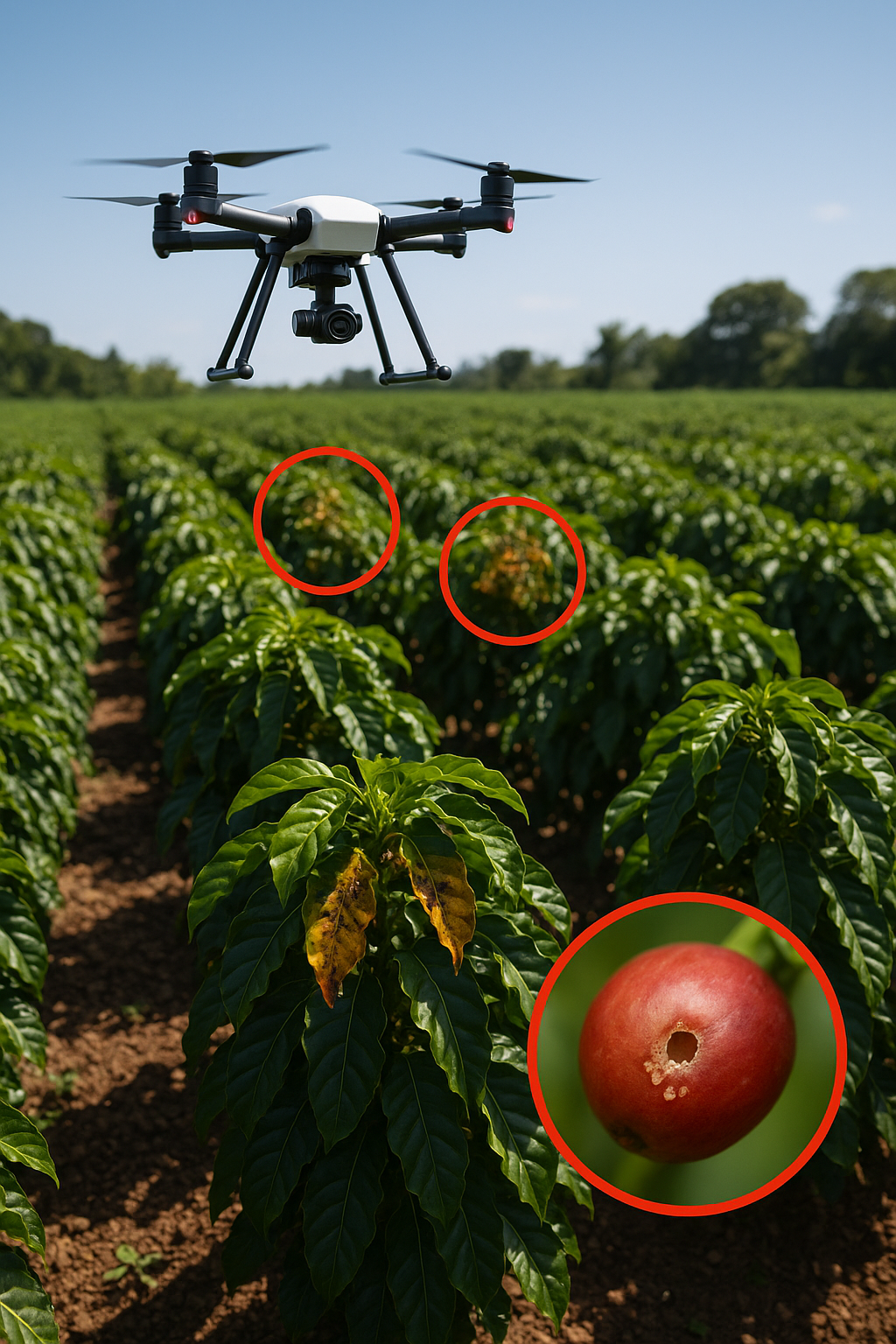
A groundbreaking study from Edith Cowan University (ECU) may offer a lifeline to the global coffee industry, which suffered losses exceeding $1 billion in 2023 due to the coffee berry borer—a tiny but highly destructive pest that invades and ruins coffee crops.

The research team has developed a novel drone-based software system capable of detecting signs of coffee berry borer infestations by identifying the distinctive debris, or “frass,” left behind by the insect. Unlike previous methods that attempt to detect the insect directly—an approach made difficult due to its small size and elusive nature—this technique focuses on visible evidence of damage, allowing for faster and more reliable detection.

“Coffee berry borers are incredibly hard to see with the naked eye,” said ECU researcher Dr. David Cook. “Instead of looking for the insect itself, we look for what it leaves behind—similar to how sawdust collects around a drilled hole. The debris from the borer is far easier to spot.”

The system, based on an advanced image-processing algorithm known as L-systems, mimics aspects of human vision by analyzing color, shape, and structure to detect irregularities in crops. Drones equipped with the software can fly over coffee plantations and quickly flag areas at risk of infestation.

The coffee berry borer poses a serious threat to coffee farmers worldwide, particularly in major coffee-producing regions such as South America, Indonesia, and parts of Africa. According to ECU Senior Lecturer Dr. Leisa Armstrong, the new technology could have a significant economic impact.

“Coffee is a high-value crop. If this software allows farmers to identify and treat infestations early, they can avoid losing a large portion of their harvest,” she explained. “That’s not just good news for producers—it could also help stabilize global coffee prices by preventing supply shortages.”

The system was developed by Master’s student Chris Napier, who designed the anomaly-detection tool using colored lattice squares to measure the size, shape, and number of coffee berries. This detailed visual analysis allows for accurate identification of affected areas without invasive procedures.

Beyond coffee, the technology shows potential for use in other crops with similar structures. According to Napier, the algorithm could be adapted to monitor bunch-based crops like grapes, offering a broader agricultural application.

“As drone use increases in farming, this kind of adaptable detection system can help farmers rapidly respond to different types of pathogen outbreaks—not just in coffee,” Napier said.

The findings were published in the BIO Web of Conferences under the title “Coffee Berry Pathogen Anomaly Detection Using Colour and Shape Separation via L-systems.” The research was authored by Chris C. Napier, Dr. David M. Cook, and Dr. Leisa J. Armstrong.

DOI: 10.1051/bioconf/202516705003