The Leading European Countries in Coffee Production and Imports in 2024

In 2024, European Union (EU) countries continue to solidify their role in the global coffee industry, with both production and imports showing significant activity. According to the latest Eurostat data, coffee production in the EU has increased by 15% over the past decade, reflecting the growing demand and cultural significance of coffee across the continent.

Top Coffee Producers in the EU

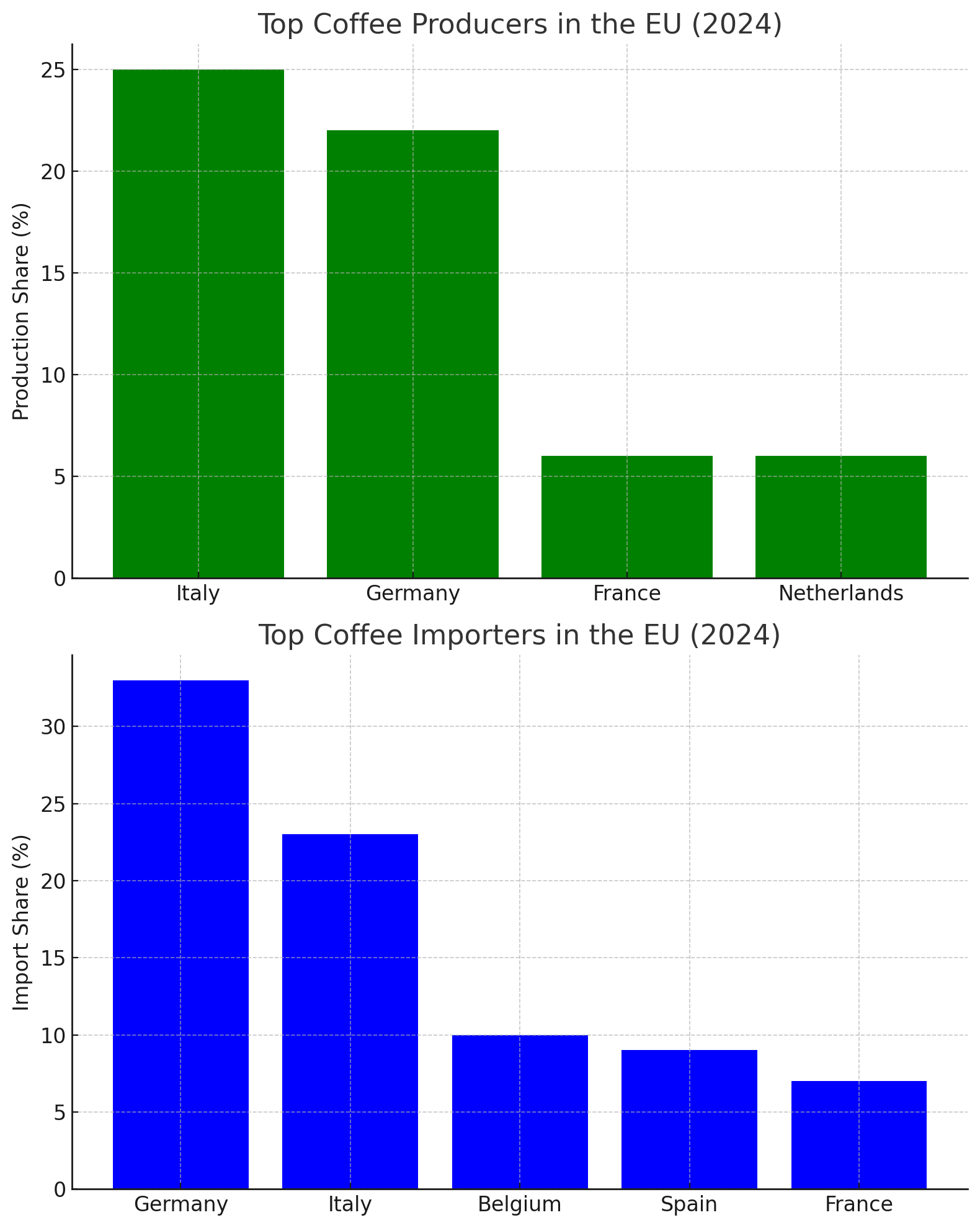
Italy stands as the top coffee producer within the EU, contributing 25% of the total production. Following Italy is Germany, which accounts for 22%, while France and the Netherlands each contribute 6%. Together, these countries lead Europe’s coffee production, which surpassed 2 million tonnes in 2023, including roasted, decaffeinated, and substitute coffee products. This output is valued at approximately €13 billion.

Major Coffee Importers in the EU

In addition to robust production, the EU also plays a dominant role in coffee imports, with nearly 2.7 million tonnes entering the bloc annually, valued at €10.6 billion. Germany leads in coffee imports, purchasing 33% of the EU’s total coffee supply. Italy follows with 23%, while Belgium (10%), Spain (9%), and France (7%) also represent key importers.

Brazil remains the EU’s largest coffee supplier, responsible for 34% of the total coffee imports into the EU, equating to around 921,900 tonnes in 2023. Vietnam and Uganda follow, supplying 24% and 8% of the imports, respectively.

New Challenges on the Horizon: Sustainability Regulations

The EU’s coffee industry, however, faces significant changes with a new law set to take effect in 2025. This legislation will require coffee companies to ensure their supply chains do not contribute to deforestation. This move follows reports indicating that the EU, as the world’s largest coffee importer, is responsible for 44% of coffee-related deforestation globally.

The French government’s data confirms that coffee is a crop with a high deforestation potential, and the new law is seen as a crucial step towards addressing the environmental impact of coffee production and consumption. Coffee-producing countries and companies will need to adapt to these new regulations, which could potentially reshape the landscape of the industry.

Global Coffee Trends and Market Overview

Globally, Brazil continues to dominate coffee production, producing an average of 3 million tonnes annually. Vietnam and Colombia follow as the next largest producers. Despite the massive scale of the industry, it is primarily driven by small family farms, which make up 70% of global coffee production.

With over 2 billion coffee consumers worldwide and 25 million people working in the industry, coffee remains one of the world’s most valuable agricultural commodities. However, the share of value reaching coffee-producing countries has diminished over the past two decades, with profits increasingly captured by large industry players in consumer markets.

Sustainability in the Coffee Sector

The issue of sustainability has become central to the future of coffee production and trade. About 55% of the world’s coffee production is now covered by certifications such as Fairtrade, Rainforest Alliance, and organic standards, which aim to promote fairer and more sustainable coffee supply chains.

In Europe, organizations such as the European Coffee Federation and global initiatives like the Sustainable Coffee Challenge are working to ensure that the coffee industry becomes more transparent and sustainable, addressing both environmental and social issues specific to coffee-growing regions.

Conclusion: The Future of Coffee in Europe

As we move through 2024, European countries remain at the forefront of global coffee production and imports. However, the introduction of new sustainability regulations in the coming years may reshape how coffee is sourced and sold in the EU. The balance between maintaining the EU’s leading position in the coffee market and addressing environmental concerns will be critical for the industry’s future.

Europe’s love for coffee remains as strong as ever, but how the industry adapts to these changes will define its path in the years to come.

Is Starbucks Looking to Own Its Coffee Farms Like Others?

Starbucks, the renowned coffee chain, has only owned one coffee farm in Costa Rica since 2013. However, it is now expanding in this direction, recently acquiring farms in Guatemala and Costa Rica, while also investing in other regions within the “coffee belt” across Africa and Asia.

Vertical integration, particularly regarding raw materials, has experienced waves of interest over the past century. For instance, Henry Ford, the automotive giant and one of the early advocates of this approach, owned a sheep farm to provide wool for car seat covers. However, globalization and free trade dampened enthusiasm for integration between suppliers and manufacturers.

There were many failures in this regard, and breaking up integrations often proved costly and chaotic. One example is Bumar, once the world’s largest calculator manufacturer at the height of the industry in the early 1970s. The company bought a factory to produce its own integrated circuits as prices for its devices fell, only to collapse a year later.

Another example is DuPont, which partly played the role of rescuer by purchasing Conoco in 1979 to secure stable raw material supplies, but the two sides later parted ways after decades.

Geopolitical factors in specific sectors may create a new form of vertical integration. In the chip industry, the rise of “fabless” chipmakers and the enormous cost of building semiconductor factories have discouraged tech companies from securing their own supplies. However, China’s tech giant Alibaba and its peers have begun delving into developing advanced chips, especially after tensions between Washington and Beijing restricted semiconductor exports.

At the same time, technical requirements have driven major companies to return to designing what they need in-house, if not also manufacturing it. In 2020, Apple began phasing out Intel chips in favor of those made in-house. In this context, Apple’s CEO Tim Cook stated, “The integration between hardware and software is essential to everything we do.”

The rise of generative AI technology has pushed Meta and Google towards silicon-based specialized chips, with Google relying on ARM-manufactured CPUs.

Investors’ appetite for vertical integration has fluctuated over time, but this type of control is not the same as Ford’s approach in the past. The same applies to Starbucks, whose farms cannot meet the demand of its 38,000 branches, as it buys nearly 3% of the world’s coffee supply.

Nevertheless, Starbucks’ ownership of these farms allows the company to experiment while achieving beneficial goals related to responsible farming and farmer empowerment. Similarly, Ingka Group, the largest franchisee of IKEA, owns 320,000 hectares of forests across seven countries, equivalent to four New York-sized cities.

Once again, it’s about reforestation rather than integration, as only around 5% of the harvested wood goes to IKEA products via the open market. This benefits everyone. Agriculture—whether sheep farming, coffee beans, or trees—is a completely different business from retail, whether it’s selling flat-pack furniture or serving a daily dose of caffeine.

Best of Yemen Auction 2024 Breaks Record for Yemeni Coffee

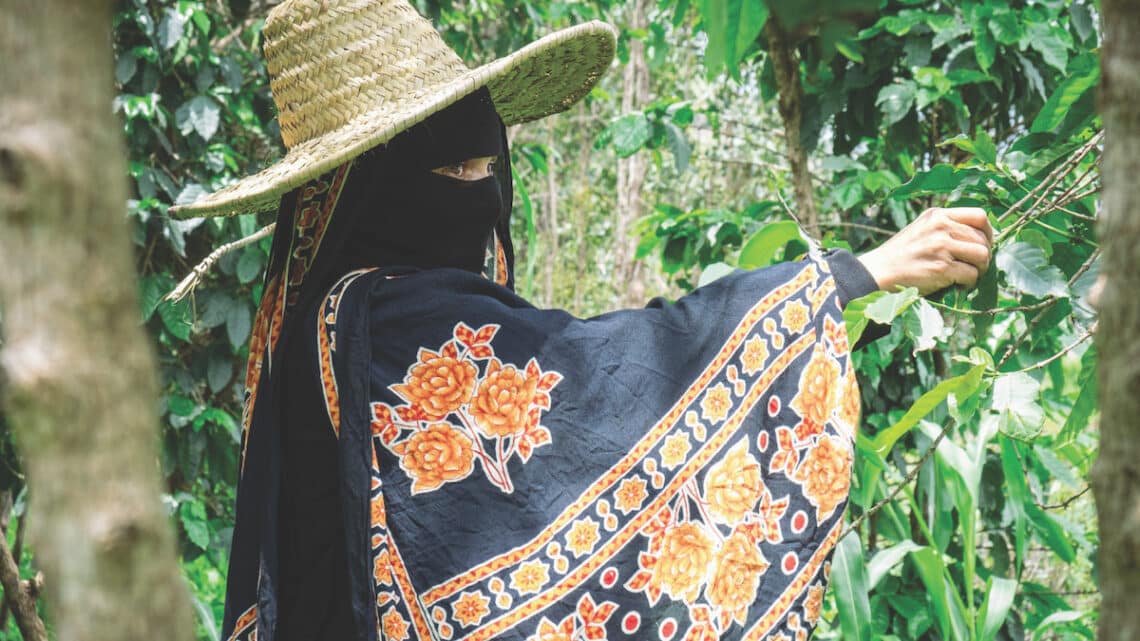
The Best of Yemen Auction 2024 has set a remarkable new standard for Yemeni coffee, with prices reaching a historic high of $1,159 per kilogram. This achievement showcases not only the exceptional quality of Yemeni coffee but also the growing impact of Yemen’s female coffee farmers, who played a key role in this year’s success.

A significant milestone was achieved this year, with 36% of the lots cultivated by women and the introduction of honey-processed coffees that highlight innovation in Yemen’s coffee industry. The auction celebrated the resilience of Yemen’s coffee growers and their adaptability to harsh environmental conditions, proving that coffee can indeed thrive even in challenging climates.

Despite Yemen receiving only 244 to 379 millimeters of rainfall annually – much lower than the global average of 1,400 millimeters for coffee-growing regions – Yemeni coffee stands out for its unique quality. This resilience makes Yemeni coffee a potential key player in ensuring coffee sustainability in the face of climate change.

This year, 13 out of 36 lots in the auction were produced by Yemeni women farmers, marking a historic moment for female empowerment in the sector. The top lot, which fetched a record-breaking price of $1,159 per kilogram, came from a women’s farming group based in Al Hayma Al Dakhiliya, Sanaa. This achievement underscores the increasing recognition of the vital role that Yemeni women play in the coffee community.

“I feel an overwhelming sense of joy,” shared Katibah, a farmer from Hayme Dakhliya. “I never imagined our coffee would be recognized and appreciated beyond Yemen, let alone fetch such a high price.”

The auction also saw the involvement of Middle Eastern buyers, with ORO Roasters from Saudi Arabia placing the winning bid for the highest-scoring lot, which received over 90 points. The average price across all lots was $369 per kilogram, indicating growing global interest in Yemeni coffee.

For the first time, honey-processed coffees were featured in the auction. This method, which does not require water usage and incorporates carbonic maceration, is perfectly suited to Yemen’s limited water resources and adds a distinct dimension to the coffee’s flavor profiles.

“These achievements reflect the dedication of Yemen’s coffee farmers, who continue to produce exceptional coffee despite the challenges they face,” said Faris Sheibani, Founder of Qima Coffee. “Yemen has always been a pioneer in the coffee world, and this auction reaffirms its place as a leader on the global stage.”

The Best of Yemen Auction 2024 was organized by Qima Coffee in collaboration with the Alliance for Coffee Excellence (ACE). This annual auction aims to highlight the unique qualities of Yemeni coffee and support the livelihoods of local farmers by connecting them with global buyers. The event has become a key platform for showcasing Yemen’s diverse coffee varieties, ranging from naturally processed to honey-processed beans, each offering distinctive flavor profiles that are gaining international acclaim.

In addition to breaking price records, the auction has contributed significantly to raising awareness about the challenges faced by Yemeni coffee farmers, including limited access to resources, political instability, and climate change. By spotlighting these issues, the auction aims to garner support for initiatives that improve the livelihoods of farmers and promote sustainable coffee production practices in Yemen.

The auction featured 36 lots in total, each carefully evaluated by an international panel of coffee experts. The top-scoring lot, produced by the women’s farming group in Al Hayma Al Dakhiliya, was praised for its complex flavor notes, which included hints of tropical fruit, floral undertones, and a rich, syrupy body. Such high-quality coffee has not only placed Yemen on the global coffee map but has also provided a source of pride and inspiration for the local farming communities.

With increasing interest from international buyers, the Best of Yemen Auction continues to play a crucial role in reviving Yemen’s coffee industry and ensuring that Yemeni coffee farmers receive fair compensation for their efforts. The involvement of Middle Eastern roasters, such as ORO Roasters, underscores the growing appreciation for Yemeni coffee within the region and highlights the potential for further market expansion.

Looking ahead, Qima Coffee and ACE are committed to expanding the reach of the Best of Yemen Auction and exploring new opportunities to support Yemen’s coffee-growing communities. By promoting transparency, sustainability, and gender equality, the auction is setting a new benchmark for what the global coffee industry can achieve.

Tealive, Malaysia’s Popular Bubble Tea Brand, to Enter UAE in 2025

Tealive, the well-known Malaysian bubble tea chain, is set to make its debut in the United Arab Emirates. The company has signed a master franchise agreement with Dubai-based Eureka Restaurant & Café, paving the way for its first expansion into the Middle East.

The partnership will see Tealive opening five outlets across major UAE cities in 2025, beginning with a flagship store in Dubai set to launch early in the year. This venture aims to capitalize on the growing demand for bubble tea and lifestyle beverages in the region, with plans for further expansion throughout the Middle East.

Bryan Loo, CEO of Loob Holding—the parent company of Tealive—expressed excitement about the move: “The UAE’s dynamic food and beverage market is perfect for Tealive’s innovative offerings. Partnering with Eureka Restaurant & Café will allow us to blend our unique flavors with local tastes and traditions, opening new opportunities in the region.”

Founded in 2017, Tealive has rapidly grown its presence, now boasting over 1,000 locations across East Asia, including international branches in Mauritius and Canada. The UAE launch marks the chain’s strategic move to establish itself in the Middle East, where bubble tea is gaining popularity.

The expansion comes shortly after Taiwanese competitor Gong cha entered the Middle Eastern market by opening a store in Riyadh, Saudi Arabia, as part of its plan to launch over 300 outlets across the region.

Eureka Restaurant & Café, the UAE partner for Tealive, is a part of the Galadari Brothers Group, which has diverse interests spanning food & beverage, technology, trading, and investments. Led by Abdulwahab Ilyas Galadari, Eureka is well-positioned to help Tealive navigate the competitive UAE market.

With the bubble tea craze continuing to grow, Tealive’s UAE expansion signals a new chapter for the brand as it aims to reach more customers and spread its vibrant lifestyle drinks across the Middle East.

The Coffee Festival Kicked Off Yesterday at Dubai Festival City Mall


Immerse yourself in the world of innovative brews, learn the art of coffee-making from top baristas, and enjoy exclusive tastings in a vibrant atmosphere where friends and coffee lovers gather to share their passion.


With the arrival of winter, Dubai Festival City Mall has launched an exciting new gastronomic experience with the inaugural Dubai Coffee Festival. Organized by DXB LIVE and hosted at Festival Bay, the festival runs from 11 to 20 October, offering a true haven for coffee enthusiasts.

This season, Dubai Festival City Mall invites visitors on flavorful journeys with some of the best coffee experts in town. The Dubai Coffee Festival marks a milestone in the region’s rapidly growing coffee culture, offering coffee lovers the unique opportunity to explore international coffee brands, innovations, and experiences. Attendees will enjoy a wide range of coffee blends and roasts. The festival reflects Dubai Festival City Mall’s commitment to providing fresh concepts and innovation in retail and dining experiences, featuring some of the city’s top favorites.

“Coffee is an integral part of Arabian heritage and a symbol of our renowned hospitality. With the Dubai Coffee Festival, we aim to create a new community of coffee lovers and industry professionals in the UAE. At Dubai Festival City Mall, we understand that the love for this irresistible beverage runs deep. Our refreshed approach is dedicated to elevating unique gastronomic experiences, and we envision the Dubai Coffee Festival becoming a beloved event for locals and tourists alike for years to come,” said Hayssam Hajjar, Asset Management Director at Al-Futtaim Real Estate.

“We are excited to announce our partnership with Dubai Festival City Mall as the host venue for the first-ever Dubai Coffee Festival, organized by DXB LIVE. This event celebrates Dubai’s rich coffee culture and offers a unique experience that captures both the joy and diversity of coffee. Designed for coffee enthusiasts of all levels, the festival invites everyone to discover the artistry and innovation in every brew,” said Khalid Al Hammadi, Senior Vice President at DXB LIVE.

The Dubai Coffee Festival will feature live demonstrations, workshops with renowned baristas, and exclusive coffee tastings. The agenda also includes interactive sessions and panel discussions with industry experts for those looking to learn more about their favorite beverage. For more information about the Dubai Coffee Festival, please visit www.dubaifestivalcitymall.com. Follow Dubai Festival City Mall’s social media pages for the latest updates.

Dunkin’ Celebrates 800th Store Milestone in Saudi Arabia

The leading brand in Saudi Arabia’s coffee shop market faces increasing competition from local operators, while benefiting from a pause in expansion by its US-based competitor, Starbucks.

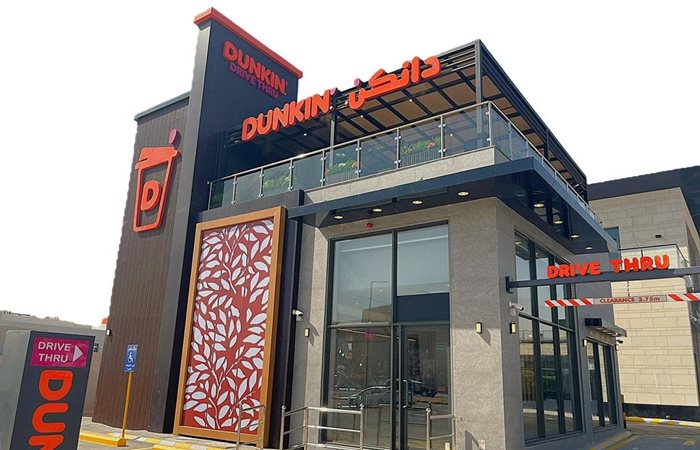
The US coffee chain Dunkin’ has achieved a significant milestone, opening its 800th store in Saudi Arabia with its franchise partner, Shahia Food Limited Company.

Since opening its first branch in the Al-Olaya district of Riyadh in 1986, Dunkin’ has continued to grow, with the latest outlet located in the Al-Arid residential area of Riyadh.

Dunkin’ has seen rapid growth in recent years. By October 2012, the brand had 100 stores in Saudi Arabia, and in December 2022, it reached 600 locations, following the opening of 30 stores in a single day in October of that year.

Despite Dunkin’s leading position, local competitors, including Jeddah-based Barn’s with 775 stores, as well as Kyan Coffee, Coffee Address, and Overdose, are catching up quickly.

Starbucks, Dunkin’s US rival, reached 400 stores in Saudi Arabia by July 2023, with its regional franchise partner Alshaya Group announcing plans to expand further. However, Starbucks has slowed its expansion due to ongoing customer boycotts over its perceived stance on the Gaza conflict. Despite this, Saudi Arabia remains its largest market in the Middle East with 488 locations.

Dunkin’, part of Inspire Brands, operates more than 13,700 outlets across 40 countries, including around 1,000 stores across nine MENA markets.

Coffee Quality Institute Welcomes Four New Q Venues to its Global Network

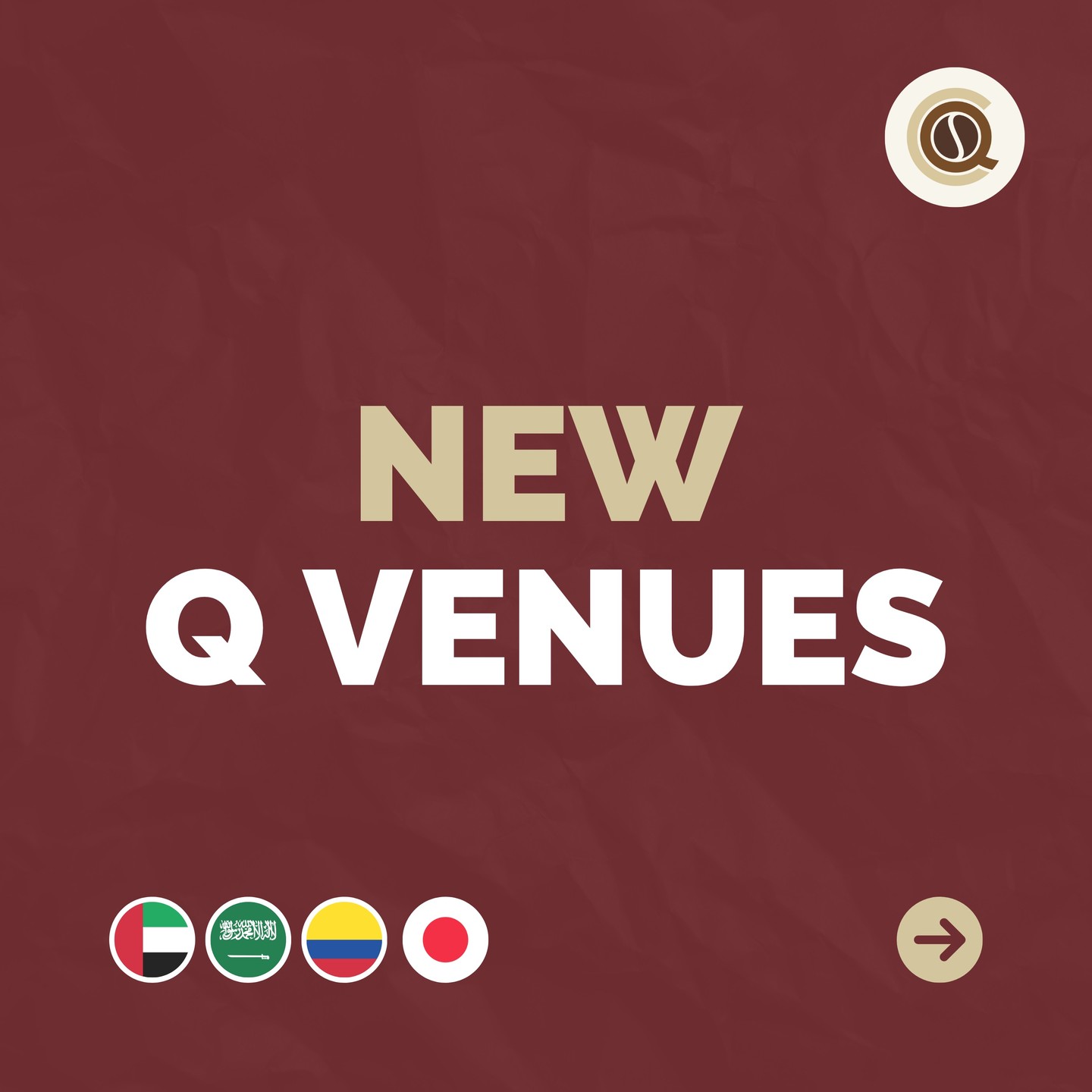
The Coffee Quality Institute (CQI) has officially announced the addition of four new Q Venues, expanding its global network of certified facilities dedicated to coffee education. These venues, located in the UAE, Saudi Arabia, Colombia, and Japan, are now part of CQI’s mission to enhance coffee quality and improve the livelihoods of those who produce it.

The newly certified Q Venues are:

  • QC Roastery & Academy in the United Arab Emirates
  • Piccolo Coffee in Saudi Arabia
  • Red Ecolsierra in Colombia
  • Snow Beans Coffee in Japan

What are Q Venues?

Q Venues are certified environments specifically designed for cupping, sensory analysis, and processing education. These facilities are integral to CQI’s broader educational programs, which aim to elevate coffee quality through training and skill development. Q Venues serve multiple purposes: hosting instructor-led courses, facilitating development project training, and acting as labs for assessing coffee quality.

Certification Options

CQI offers three types of certification under the Q Venue Program:

  • Q Venue: General certification for cupping and sensory education
  • Q Venue Processing: Focused on coffee processing education
  • Q Venue Professional: Tailored for advanced professional-level training

These certifications signal that a facility meets international standards, offering an ideal space for evaluation and education. Whether you’re an educator looking to host a course or a coffee professional seeking to refine your skills, Q Venues provide a verified environment designed to meet CQI’s rigorous educational standards.

For more information on how to become a Q Venue, contact Kim Cosgrove at [email protected]. If you’re looking for a certified venue, you can find one through CQI’s global network.

This announcement highlights CQI’s ongoing efforts to foster a community of high-quality coffee production and education, contributing to better outcomes for coffee producers and professionals worldwide.

New Study: Coffee During Pregnancy Doesn’t Harm Baby’s Brain

A new study led by the University of Queensland has found no significant evidence linking coffee consumption during pregnancy to neurodevelopmental issues in children. However, researchers still urge pregnant women to follow medical advice regarding caffeine intake.

The study, led by Dr. Gunn-Helen Moen and PhD candidate Shannon D’Urso from UQ’s Institute for Molecular Bioscience (IMB), conducted a comprehensive genetic analysis of data from tens of thousands of Norwegian families.

“Norway is known for its high coffee consumption, with many people drinking at least four cups daily, even during pregnancy,” Dr. Moen noted.

The research analyzed genetic data from mothers, fathers, and their children, alongside questionnaires about parental coffee consumption both before and during pregnancy. Parents also provided information about their children’s development up to the age of eight, including social, motor, and language skills.

“Our findings showed no link between coffee intake during pregnancy and neurodevelopmental issues in children,” said Dr. Moen.

Caffeine’s ability to cross the placenta and reach the developing fetus has raised concerns, as the fetus cannot metabolize caffeine effectively. Previous studies suggested that this may affect brain development, but Dr. Moen pointed out that these studies didn’t fully account for other factors such as smoking, alcohol, or diet.

The research team applied a method called Mendelian randomization, which uses genetic markers to predict coffee drinking habits and distinguish the effects of various factors during pregnancy. This approach allowed them to isolate caffeine’s impact from other environmental influences.

“Mendelian randomization gives us a clearer picture by separating the effects of caffeine, alcohol, smoking, and diet,” Dr. Moen explained. “This way, we can focus solely on caffeine’s impact during pregnancy without the risk of exposing mothers and babies to harmful conditions.”

Dr. Moen had previously led research that found no link between coffee consumption during pregnancy and risks such as miscarriage, stillbirth, or low birth weight.

The team continues to recommend that pregnant women follow healthcare guidelines on caffeine intake, as excessive caffeine may influence other pregnancy outcomes.

The study, conducted in collaboration with researchers from Norway, England, and UQ’s IMB, used data from the Norwegian Mother, Father and Child Cohort Study (MoBa). The findings were published in Psychological Medicine.

The Future of Coffee: How Technology is Brewing a Greener Cup?

As the coffee industry faces increasing pressure to reduce its environmental impact, technology is emerging as a key player in driving sustainability. From innovations in post-harvest coffee processing to advancements in eco-friendly packaging, the industry is making strides toward a greener future. Here’s how technology is transforming coffee production for a more sustainable tomorrow.

Technological Advances in Coffee Processing

Post-harvest coffee processing, especially the wet processing method, consumes vast amounts of water, placing strain on resources. However, water-saving technologies, including recycling systems and membrane bioreactors, are helping reduce this environmental burden. These technologies significantly lower water consumption and minimize wastewater pollution.

In Brazil and Colombia, for example, coffee farms are adopting these innovations, becoming more water-efficient and environmentally conscious.

Compostable and Recyclable Packaging Solutions

The popularity of single-use coffee capsules has created an environmental challenge, with many of these products being non-recyclable. In response, companies are developing compostable and recyclable materials for packaging, helping to mitigate plastic waste.

Biodegradable coffee pods and compostable packaging solutions are paving the way for a circular economy, making it easier for consumers to choose environmentally friendly options.

Energy Efficiency in Coffee Roasting

Coffee roasting is an energy-intensive process that traditionally relies on natural gas, contributing to greenhouse gas emissions. To combat this, new technologies, such as solar-powered roasting facilities and energy-efficient roasters, are emerging as sustainable alternatives. These solutions are reducing the carbon footprint associated with coffee roasting.

Biochar and Bioenergy from Coffee By-Products

Advancements in bioenergy technology are turning coffee by-products like husks and pulp into valuable resources. Coffee farms are converting these by-products into biochar or biofuels, which serve as renewable energy sources for both farms and local communities.

For example, some farms in East Africa have implemented biogas systems that utilize coffee by-products, reducing energy costs and contributing to a circular economy.

Smart Farming Technologies

Smart farming technologies, including drones and AI-based systems, are revolutionizing crop management. These innovations allow coffee farmers to optimize the use of resources like water, fertilizers, and pesticides, leading to both increased productivity and reduced environmental impact.

In Costa Rica, some coffee farms are using drones to monitor plant health, enabling early detection of diseases and reducing the need for chemical interventions.

The Future of Innovation in Coffee Sustainability

As consumers become more environmentally conscious, the coffee industry is increasing its investment in sustainable technologies. Organizations like the Center for Circular Economy in Coffee (C4CEC) are driving research and development to promote waste reduction and resource efficiency. This focus on sustainability is helping ensure that the future of coffee is greener and more responsible.

Call to Action: As technology continues to advance, the coffee industry is uncovering innovative solutions to address environmental challenges. From water-saving systems in coffee processing to compostable packaging and bioenergy production, these innovations are helping to brew a greener cup for coffee lovers worldwide.

Global Coffee Prices Soar as Exports Hit Record Highs in 2024


Coffee prices continue to rise as global exports surge, driven by high demand and market disruptions

The latest report from the International Coffee Organization (ICO) for September 2024 has revealed significant growth in coffee prices and exports, showcasing the resilience of the coffee industry despite ongoing logistical challenges and climate-related disruptions.

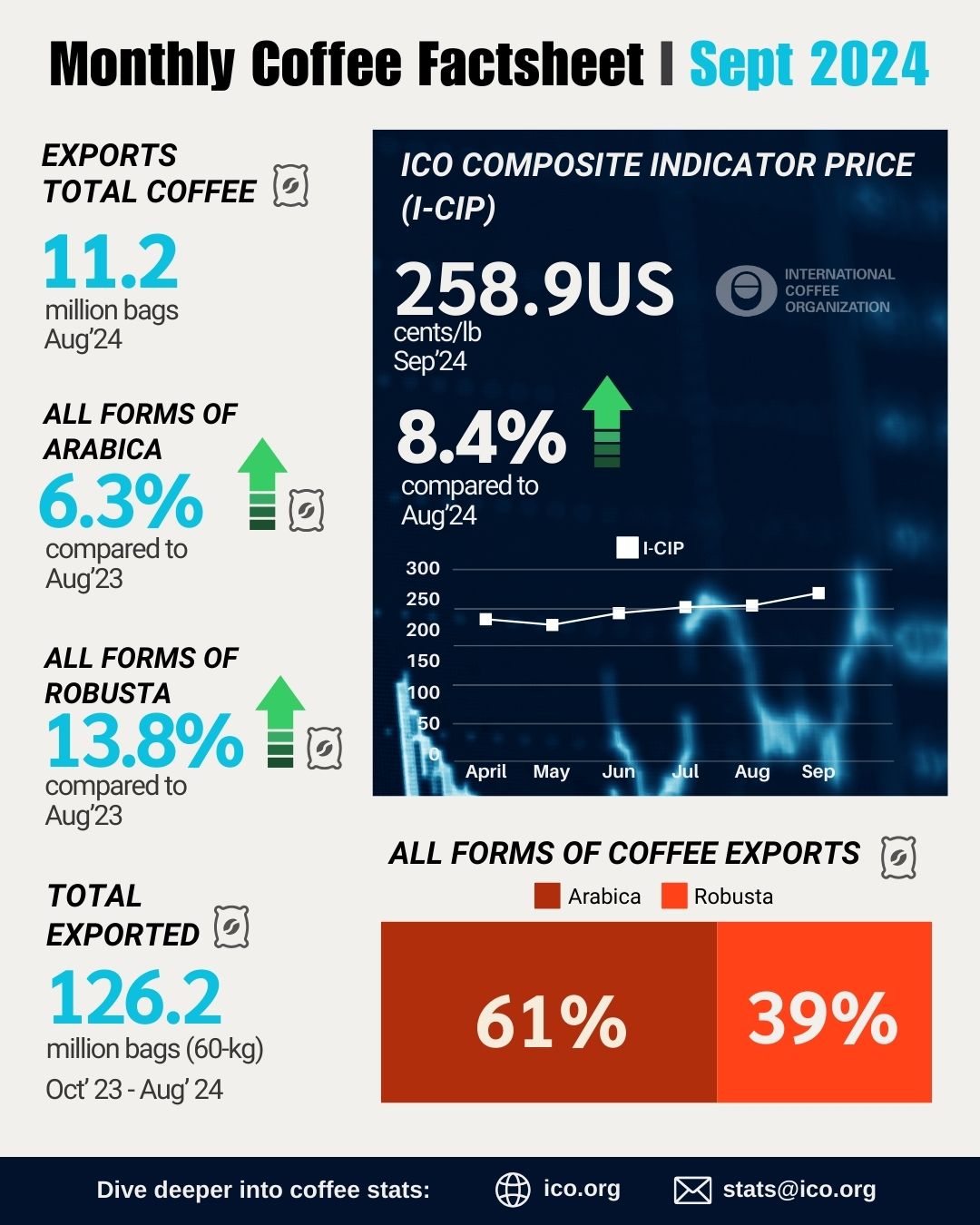
According to the ICO, the ICO Composite Indicator Price (I-CIP) reached 258.9 US cents per pound, marking an 8.4% increase from August 2024 and a staggering 69.1% increase compared to September 2023. This price surge is largely attributed to growing demand following the northern hemisphere’s summer break, along with the impact of climate anomalies affecting global supply chains.

The export landscape also witnessed robust growth, with global coffee exports reaching 126.2 million 60-kg bags between October 2023 and August 2024. Arabica coffee exports rose by 6.3% compared to the same period last year, while Robusta coffee exports surged by an impressive 13.8%. These export numbers reflect a robust recovery in the global coffee market.

Regional exports saw varied performance, with Asia & Oceania and Africa leading the charge. Africa’s coffee exports grew by 29.5%, driven primarily by Ethiopia, Uganda, and Côte d’Ivoire, while South America saw an 8.6% rise, largely due to increased shipments from Colombia and Peru.

While most regions showed positive growth, Mexico & Central America experienced a 28.7% decline in coffee exports due to challenges in Honduras, where production cycles impacted overall output.

Despite these challenges, the coffee industry continues to show resilience, with demand remaining strong and exports maintaining a positive trajectory. However, geopolitical tensions and climate events continue to pose risks to the global coffee supply chain, keeping the market volatile.


International Coffee Organization: Strong Recovery for the Global Coffee Market Amid Logistical and Climate Challenges

The International Coffee Organization’s (ICO) latest report, covering September 2024, reveals key developments in the global coffee market. As coffee continues to be a vital global commodity, understanding the dynamics behind its prices, export trends, and the challenges affecting supply chains remains critical for stakeholders. Here are the most important findings from the report:

1. Coffee Prices Reach New Heights

September 2024 witnessed a notable surge in coffee prices, with the ICO Composite Indicator Price (I-CIP) averaging 258.90 US cents/lb—an 8.4% increase from August 2024. This represents a 69.1% rise compared to September 2023, highlighting the continued upward trend in coffee prices. Robusta, in particular, saw the highest price appreciation, climbing 12.8% to 242.08 US cents/lb, driven by strong demand and market conditions.

The price increase can be attributed to a combination of strong consumer demand, disruptions in supply chains, and climate-related events. These disruptions, such as Typhoon Yagi’s impact on shipping routes, have compounded logistical issues, including the redirection of routes through the Cape of Good Hope due to geopolitical tensions.

2. Export Growth in Key Coffee-Producing Regions

Despite the logistical and climatic challenges, green bean exports in August 2024 surged by 8.8% compared to the previous year. This marks the tenth consecutive month of positive growth, with total green bean exports for the first 11 months of the 2023/24 coffee year reaching 113.81 million bags—up 10.5% year-on-year.

Notably, exports from Africa showed the strongest growth, up 29.5% to 1.75 million bags, driven primarily by Ethiopia, which saw a 62.4% increase in exports. Other regions, such as Asia & Oceania, also posted gains, with Indonesia and India contributing significantly to the 6.2% increase.

3. Varied Performance Across Coffee Types

The report highlights mixed performance across different types of coffee. Colombian Milds led the way with a 26.7% increase in exports, followed by Other Milds, which saw a 5.6% growth. In contrast, Brazilian Naturals experienced a slight decline of 0.2%, marking the first negative growth rate in 11 months. This downturn was primarily due to logistical delays in Brazil’s key port of Santos, despite a significant increase in exports from Ethiopia.

Meanwhile, Robusta exports surged by 14.3%, accounting for nearly 60% of the net growth in global green bean exports. Brazil, India, and Indonesia were the key contributors to this rise, highlighting the continued demand for Robusta coffee in global markets.

4. Impact of Climatic and Geopolitical Factors

Climate and geopolitical issues have had a profound impact on the global coffee trade. Extreme weather events like Typhoon Yagi, combined with ongoing geopolitical tensions, have created further disruptions in coffee supply chains. The rerouting of shipping routes due to conflicts in the Bab al-Mandab Strait has lengthened delivery times and increased costs for coffee exporters.

The report also mentions the potential for strikes in key US ports, which, though resolved quickly, added to the uncertainty in global coffee logistics during September.

5. Decline in Certified Coffee Stocks

Certified stocks of both Arabica and Robusta coffee in London and New York fell in September 2024. Robusta stocks in London dropped by 26.5%, while Arabica stocks in New York fell by 4.2%. This decline reflects the increasing pressure on supply chains and the depletion of available inventories, which may further fuel price volatility in the coming months.

Conclusion

The September 2024 ICO Coffee Market Report underscores the resilience of the global coffee market despite facing significant challenges. Rising coffee prices, robust export growth, and supply chain disruptions have shaped a dynamic and complex market. For coffee producers, traders, and industry stakeholders, navigating these challenges will be key to maintaining momentum in a sector that continues to evolve under the pressure of both market forces and external factors.

The continued rise in consumer demand, especially in key markets, highlights the need for increased investment in sustainability and innovation within the coffee supply chain to mitigate future risks. As the world’s coffee producers adapt to climate change and shifting geopolitical landscapes, the future of coffee may depend on the industry’s ability to innovate and remain resilient in the face of adversity.

Mokha 1450 introduces an exclusive limited edition Colombian Geisha coffee to the UAE

A taste of luxury available at our locations, online boutique, and other exclusive delivery platforms

The Mokha 1450 coffeehouse chain has revealed an exclusive experience for true coffee lovers with a limited edition of rare Colombian Geisha coffee, which will be available exclusively at selected locations in Dubai and online starting from October 11, 2024.

This limited-edition coffee is sourced through Lohas Beans, a renowned Colombian producer that specializes in exotic competition-winning lots. Lohas Beans is celebrated for its processed and washed microlot-certified Colombian coffees that are both differentiated and traceable.

This Colombian Geisha, grown at 1,800 meters on Zarza Farm in Colombia’s Huila region, offers a complex flavor profile with vibrant notes of orange peel, cane sugar, and grapes. Produced using a unique washed process, the coffee delivers a bright acidity and medium body, ensuring an unparalleled sensory experience. Locally roasted in Dubai, Mokha 1450 guarantees each batch maintains its exceptional flavor, freshly delivered in every cup.

Empowering women in coffee

Mokha 1450 is committed to empowering women in coffee production, partnering with women-owned and operated farms in regions such as Jamaica, Ethiopia, Guatemala, Yemen, and now Colombia. By choosing Mokha 1450, customers directly support these women farmers and contribute to long-term industry change.

Where to experience Mokha 1450

This exclusive Colombian Geisha is available at Mokha 1450 locations in The Palm Jumeirah, Al Wasl Road, and the newest location in Alserkal Avenue. The coffee can also be ordered through Mokha 1450’s online boutique or for exclusive B2B projects.

About Mokha 1450

Mokha 1450 is a UAE-based luxury specialty coffee brand known for ethically sourcing coffee primarily from women-owned farms. With a focus on sustainability and empowering women in the coffee industry, Mokha 1450 delivers unmatched quality and redefines the coffee experience for discerning customers.