Strong Coffee Outlook for Nicaragua in 2025/2026 Amid High Prices and Ongoing Challenges

  • Nicaragua expects a strong coffee harvest of 2.58 million bags in 2025/2026, supported by high prices and improved rainfall, despite persistent credit, labor, and export challenges.

Nicaragua is preparing for a strong coffee season in 2025/2026, with total production forecast at 2.58 million 60-kg bags, matching historical averages. The optimism among producers is driven by higher international prices—averaging above $280 per bag in early 2025—which have encouraged farmers to invest in fertilizers and field maintenance. Expectations for a more balanced rainy season under ENSO-neutral conditions are also contributing to a positive outlook. However, structural issues such as limited access to long-term credit, severe labor shortages, and export bottlenecks continue to cloud the sector’s long-term performance.

The previous marketing year, 2024/2025, marked a recovery for Nicaraguan coffee production, which rose to 2.56 million bags following a 10% drop the year before due to El Niño weather disruptions. While the second half of 2024 brought favorable rainfall and supported flowering, extended rains into December and January complicated the harvest and drying process. These delays, coupled with a compressed ripening period across different altitudes, worsened labor shortages and drove up wages. Many pickers demanded double their usual pay, leading to higher production costs and, in some regions, compromised bean quality.

Adding to the uncertainty, one of Nicaragua’s largest exporters filed for bankruptcy just before the 2024 harvest, causing disruptions in the supply chain and reducing market confidence. At the same time, a sharp price surge in late 2024 created liquidity issues for buyers and delayed shipments, particularly as Central American ports struggled with congestion and slow processing.

Despite these obstacles, coffee producers remain hopeful. Nicaraguan coffee continues to be in strong global demand, praised for its smooth and consistent flavor. Many cooperatives and exporters are certified under programs such as Rainforest Alliance and Fair Trade, allowing them to fetch above-average market prices. With such demand and premium positioning, farmers are more willing to invest in crop maintenance.

The total planted area for 2025/2026 is expected to remain at 143,000 hectares, with 141,000 hectares harvested. However, continued outbound migration over the last five years has reduced the available workforce, especially in rural areas, limiting the ability to expand or renew plantations. Since the coffee leaf rust outbreak in 2013, farmers have replanted approximately 20,000 hectares—about 14% of the total arabica area—but this pace is still below the ideal renewal rate. Experts recommend renewing at least 5% of coffee land annually to maintain long-term productivity, but most farms only replant when older trees die or become infected.

Arabica coffee dominates Nicaragua’s production, making up over 95% of output. The most common variety remains Caturra, followed by Bourbon, Paca, Catuai, Catimore, Maragogype, and Pacamara. Meanwhile, robusta production has remained stagnant, contributing about 160,000 bags annually. With the 2023 closure of Mercon, a major promoter of robusta in Nicaragua, some farmers have abandoned expansion plans in lower-altitude regions where robusta is suitable. Today, only about 7,000 hectares are planted with robusta, mostly in the Southern Caribbean Coast near Nueva Guinea.

Nicaragua’s average yield for arabica coffee is projected to remain at 18 bags per hectare for the upcoming season, assuming consistent rainfall and good farming practices. This matches the improved yield seen in 2024/2025 after the El Niño-driven decline the year before. Ongoing efforts from international projects like MOCCA, led by the USDA and World Coffee Research, have improved seed quality, certified nurseries, and expanded access to higher-yielding varieties like Marsellesa, Parainema, and IH Café 90. However, limited financing remains a major barrier to widespread adoption of these innovations.

Within the local market, per capita coffee consumption is forecast to remain at 1.5 kilograms in 2025/2026. However, a growing trend is emerging, especially among young consumers in urban areas, who are increasingly choosing high-quality roasted coffee. This has led to a boom in coffee shops in cities like Managua, offering everything from espresso to cold brew. While this shift reflects a modernization of coffee culture, broader consumption growth is held back by economic pressures, rising food costs, and continued emigration.

On the export front, Nicaragua is expected to ship 2.42 million bags in 2025/2026, a modest recovery after a 15% drop in 2023/2024. The United States remains Nicaragua’s top market, accounting for about 50% of all exports, particularly high-quality arabica beans favored by specialty roasters and cafés. The European Union is the second-largest destination, taking in around 30% of exports, especially organic and certified coffees which remain in strong demand.

However, global market uncertainty, weather concerns in Brazil and Vietnam, and supply chain stress are driving prices up, creating both opportunities and challenges for Nicaraguan exporters. High prices improve margins but also increase volatility, and delays at regional ports may continue to affect shipments in the coming season.

Nicaragua’s coffee sector, which employs more than 330,000 people across the value chain, remains one of the country’s most vital economic engines. Still, the road ahead will require coordinated efforts to overcome financial constraints, modernize infrastructure, and stabilize labor supply if producers are to maintain their position in the highly competitive global coffee market.

Colombia’s Coffee Output to Drop 5.3% in 2025/26 as Heavy Rains and High Prices Stall Growth

Colombia’s coffee production is forecast to fall by 5.3% in 2025/2026 due to heavy rains and record-high prices. Exports and domestic supply face new challenges.

Colombia, the third-largest coffee producer in the world, is expected to face a significant setback in the 2025/2026 marketing year as production is forecast to drop by 5.3%, reaching just 12.5 million 60-kg bags of green bean equivalent. The decrease, outlined in the USDA Coffee Annual Report for May 2025, is attributed to excessive rainfall that disrupted flowering, along with a sustained period of high coffee prices that has discouraged producers from investing in renovation and replanting. This downturn comes shortly after a modest recovery in the previous year, which had been driven by favorable El Niño conditions.

While El Niño raised temperatures and improved soil moisture, boosting production by 3.5% to 13.2 million bags in 2024/2025, that momentum was short-lived. In early 2025, heavy rains interrupted the flowering phase of coffee trees, setting the stage for a weaker harvest starting in October. Although the La Niña phenomenon is currently weakening and is expected to shift to neutral by late 2025, the damage to flowering has already impacted production forecasts for the start of the new season.

Despite strong prices—reaching COP 3.12 million per 125-kg bag by February 2025, a 70% increase since January 2024—producers are not reinvesting as expected. Higher domestic prices, while beneficial in the short term, have not offset the rising cost of production caused by wage increases and labor shortages, especially in rural coffee-growing areas. Even as fertilizer prices ease, overall profitability remains squeezed, prompting many growers to delay farm renovations.

A key strength in Colombia’s coffee sector lies in its specialty segment. Around 40% of national output qualifies as specialty-grade coffee certified by programs like Rainforest Alliance, Fairtrade, and Bird Friendly. These certifications allow smallholders—who produce 60% of the country’s coffee on plots under 5 hectares—to receive premium prices that help them stay afloat in challenging market conditions. Colombia has also made significant progress in upgrading its farms, with 87% of coffee-growing areas now planted with rust-resistant varieties, and average tree density reaching a record 5,340 trees per hectare. In late 2024, Colombia’s coffee research center Cenicafe introduced a new variety, Castillo 2.0, which is more resistant to disease and climate stress. However, it remains too early to gauge adoption among farmers.

Coffee exports are expected to fall to 11.8 million bags in 2025/2026—a 4.1% decline—primarily due to the drop in production. The United States remains Colombia’s top export market, absorbing over 40% of shipments, followed by the European Union, Canada, and Japan. Notably, exports to the U.S. are growing again after five years of decline, despite the recent imposition of a 10% tariff under Executive Order 14257. Analysts do not expect the tariff to have a major impact, as competing producers face similar conditions. In a bid to boost retail presence, Procafecol, which owns the Juan Valdez brand, has partnered with Green Coffee Company Holdings to expand roasted coffee sales in supermarkets and institutional outlets across North America.

Domestically, coffee consumption is projected to remain unchanged at 2.2 million bags through 2026. Although Colombia’s economy is expected to grow by 2.6% in 2025 and inflation is forecast to ease to 4.1%, high coffee prices are suppressing consumption growth. Soluble and low-cost blends still dominate local preferences, and with per capita consumption at just 3.08 kg, Colombia trails behind other Latin American coffee producers where annual consumption exceeds 6 kg per person. Fedecafe continues its efforts to shift this dynamic through its long-running national campaign “Busca el Triángulo de la Calidad – Café de Colombia,” which certifies products made from 100% Colombian beans. As of this year, over 850 brands carry the trademark triangle.

To meet internal demand amid falling production, coffee imports are set to rise by 34% to 1.5 million bags. These imports, mainly from Brazil, Peru, and Ecuador, are used for soluble and lower-cost blends. The bulk of imports—around 70%—are unroasted green beans, while soluble coffee accounts for 28.5%, and roasted products make up the remaining fraction.

Compliance with EU Deforestation Law

A major concern for Colombia’s coffee exporters is the European Union’s Regulation 2023/1115, which mandates deforestation-free sourcing for coffee and other commodities. With over 20% of Colombia’s coffee exports destined for Europe, compliance is critical. The deadline is December 30, 2025 for large companies and June 2026 for smallholders. To prepare producers, Fedecafe has launched a national traceability platform and is offering legal and technical training to help farms meet the new standards.

Ending stocks for the upcoming season are forecast to decline slightly to 458,000 bags. Meanwhile, Colombia’s Coffee Price Stabilization Fund—intended to compensate growers when prices fall below production costs—has not yet been triggered due to persistently strong market rates. The fund currently holds approximately COP 370 billion (about $95 million USD) in reserve. If triggered, it could help stabilize income for smallholders in future downturns.

Colombia’s coffee sector remains a complex mix of resilience and vulnerability. The country’s leadership in specialty coffee and its export partnerships continue to open global opportunities. However, producers face mounting uncertainty driven by erratic weather, labor shortages, global tariffs, and regulatory shifts. As the 2025/2026 season approaches, the industry must strike a balance between short-term gains and long-term sustainability.

Rising Production and Exports Put Kenya Back on the Global Coffee Map

Dubai – Qahwa World

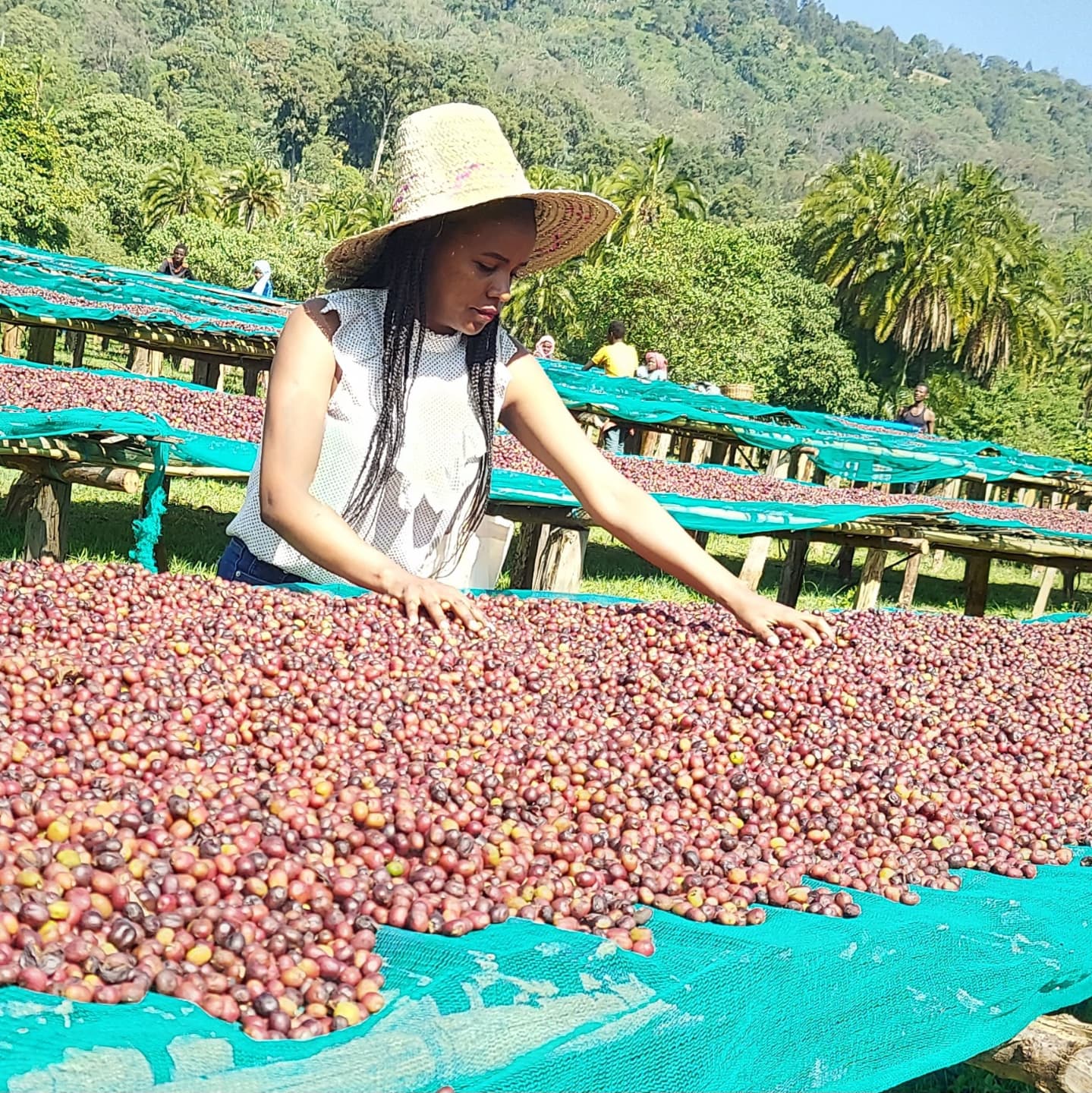
Kenya is witnessing a strong rebound in its coffee sector, with production forecast to grow by 13.3% in the 2025/26 marketing year, reaching 850,000 sixty-kilogram bags. This recovery is driven by high global prices, government reforms, and farmer support programs. Exports are also projected to rise by 10%, while domestic consumption is expected to increase by 6.9%. With these promising indicators, Kenya is reclaiming its place among the world’s top Arabica coffee producers.

According to the USDA’s Coffee Annual Report (May 2025), Kenya’s coffee production is forecast to increase from 750,000 bags in 2024/25 to 850,000 bags in 2025/26. Farmers have responded to favorable prices with improved agricultural practices—applying more fertilizer, controlling pests more effectively, and capitalizing on Arabica’s natural biennial production peak.

In February 2025, the Nairobi Coffee Exchange (NCE) recorded a historic high of $363 per 50-kg bag, up from $254 in October 2024. Although a slight price correction is expected in the second half of the year, prices remain favorable and have reinvigorated investment in farms.

Slight Expansion in Planted Area

While harvested area is expected to remain at 105,000 hectares, planted area will increase slightly as the Kenyan government rolls out its Coffee Expansion Program in both traditional and new growing regions across Central, Eastern, and Rift Valley Kenya. The program includes subsidized seedlings, supported by county-level grants and expanded production at the Coffee Research Institute to meet increased demand.

Urbanization Slows, Coffee Area Stabilizes

Between 2020 and 2024, coffee area declined from 112,000 to 105,000 hectares due to urban development, particularly around Nairobi, Kiambu, and Nyeri. However, this trend has slowed, thanks to a stagnating real estate market, offering the sector a chance to stabilize.

Marketing Reforms and Structural Overhaul

Roughly 80% of Kenya’s coffee is sold through producer cooperatives, while the remaining volume is marketed by private farms and estates. The Nairobi Coffee Exchange remains the country’s primary marketplace, handling over 90% of coffee sales.

Since 2023, Kenya has implemented significant reforms in marketing and regulation. The NCE is now under the Capital Markets Authority, which licenses brokers responsible for classification and auction procedures. There are currently 15 licensed brokers. Additionally, licensing of millers was decentralized to county governments.

A pending Coffee Bill in Parliament seeks to formalize these changes by creating a new Coffee Board of Kenya and an independent Coffee Research and Training Institute, to be funded through a coffee sales levy.

Exports Rising but Facing EU Deforestation Law

Coffee exports are expected to grow by 10% to 840,000 bags in 2025/26, up from 763,000 bags the previous year. Green beans dominate Kenya’s export portfolio, with major buyers including:

  • European Union: Over 57%

  • United States: 16.75%

  • South Korea: 5.16%

  • United Kingdom: 3.43%

  • Other emerging markets: China, Australia, India

However, the upcoming EU Deforestation Regulation, taking effect in January 2026, poses a potential challenge. In response, Kenya has formed a multi-agency committee to evaluate readiness and establish compliance mechanisms.

Domestic Consumption on the Rise

Domestic coffee consumption is projected to grow by 6.9%, reaching 62,000 bags in 2025/26. This growth is driven by the rapid expansion of coffee shops, particularly in Nairobi, and a 15% surge in tourism in 2024. Kenya’s coffee culture is evolving, with increasing demand for specialty brews and locally roasted varieties.

Despite this growth, soluble coffee consumption remains low due to the lack of local processing facilities. Kenya imports approximately 45,000 bags of instant coffee annually.

Stock Levels and Imports

Ending stocks are expected to increase to 86,000 bags in 2025/26, reflecting higher production. For 2024/25, stock estimates have been revised downward to 63,000 bags due to higher exports and tighter output.

Conclusion: Kenya’s Return to Coffee Leadership

With production, exports, and consumption all trending upward, Kenya is once again asserting itself on the global coffee stage. While challenges like EU environmental compliance lie ahead, the country’s proactive reforms and farmer-focused strategies signal a new era of growth and global relevance for Kenyan coffee.

Steffen Schwarz: A Silent Shift Towards Canephora is Redefining Europe’s Coffee Preferences

Dr. Steffen Schwarz, an expert in applied coffee science, believes that a gradual yet decisive transformation is underway in Europe’s coffee preferences. Canephora beans (commonly known as Robusta) are quietly gaining ground over Arabica, which has long dominated the continent’s coffee culture. Schwarz refers to this as a “silent shift,” driven not only by economic factors but by deeper changes in how quality, taste, and function are perceived.

Dr. Schwarz is a leading figure at Coffee Consulate, an independent training and research center based in Germany. The center offers scientifically grounded programs for the coffee industry, including flexible one-day workshops and comprehensive training for professionals in cafés, hotels, bakeries, roasteries, and farms. One of its most advanced offerings is the Coffeologist program, which consists of 12 one-day workshops covering the full coffee value chain—from bean to cup. This builds on the Coffee Connoisseur course, a six-day program focused on cultivation, processing, botanical principles, origin profiles, and professional tasting.

According to Schwarz, the European Coffee Report 2023/2024 confirms a slight decline in Arabica’s market share in EU and EFTA imports, now at 59.2%, while Canephora has risen above 40%—even surpassing Arabica in countries like Italy, Portugal, and Eastern Europe.

This shift, he says, is a response to climate challenges, production efficiency, and evolving consumer behavior. Canephora offers greater resilience, higher yields, and better adaptability for farmers in regions such as Southeast Asia and West Africa. In turn, Europe is adjusting its import dynamics to align with availability.

He also highlights that modern processing techniques—such as anaerobic fermentation and sugarcane washing—have improved the sensory profile of Canephora, bringing out notes of dark chocolate, spices, and red fruit, particularly in high-altitude or hybrid varieties.

Northern markets like Germany and Scandinavia are now integrating high-quality Canephora into blends and even offering it as single-origin coffee—something that was previously rare. This is partly due to younger consumers’ preferences for stronger, fuller-bodied coffee aligned with their tastes for cold brews and energy drinks.

Schwarz raises critical questions: Should Canephora be evaluated on its own terms rather than Arabica’s standards? Will European markets pay a fair premium for quality Canephora as producing countries invest in excellence? Or will it remain trapped in a commodity model focused on quantity?

He concludes that the future of coffee in Europe won’t be decided in cupping labs alone—it will depend on how cultural, economic, and scientific frameworks evolve to embrace this silent shift.

Uganda Brews Growth: Coffee Production, Exports, and Prices Reach New Heights

Uganda’s coffee industry is on an upward trajectory, fueled by rising production, export volumes, and surging global prices. As one of Africa’s top coffee producers, Uganda is now set to consolidate its position in the global coffee trade, with new government initiatives, expanded cultivation, and a maturing coffee culture driving the momentum.

According to the latest USDA Coffee Annual Report, Uganda’s total coffee production for the 2025/2026 marketing year is forecast to rise to 6,875,000 60-kg bags, a 2.61% increase from the previous season. The majority of this output will come from Robusta, which continues to dominate with an 85% share, while Arabica accounts for the remaining 15%.

The 2024/2025 season already showed a healthy jump to 6,700,000 bags, up 4.69% from the previous year, thanks to improved agricultural practices, favorable weather, and the maturing of high-yielding coffee seedlings planted in recent years.

Uganda’s coffee-growing regions — including Central, Eastern, Western, and now increasingly Northern Uganda — are benefitting from favorable climates for both Robusta and Arabica varieties. Districts like Mukono, Luwero, Mount Elgon, Mbale, Kasese, and Zombo are leading production zones, with the latter rapidly emerging as a promising hub for high-altitude Arabica.

The growth in production is also backed by financial support under the Parish Development Model, which offers farmers access to low-interest loans at 6% annually with a two-year grace period. This policy has enabled smallholder farmers — who account for 85–90% of Uganda’s total coffee output — to invest in fertilizers, spraying equipment, and better crop management. In 2024, increased government funding allowed agronomists to conduct nationwide visits to offer direct field support.

Coffee farming in Uganda remains predominantly a smallholder activity, with farms ranging between 0.5 and 2.5 hectares. Intercropping coffee with bananas, beans, and shade trees helps preserve soil fertility, retain moisture, and diversify farmers’ income streams. Medium-sized estates contribute about 8–10% of national output, while large estates, mostly in central Uganda, account for 2–5%, focusing on export-grade beans.

On the trade front, Uganda’s green coffee exports are projected to rise from 6,350,000 bags in 2024/2025 to 6,530,000 bags in 2025/2026, as demand continues to grow in Europe, the United States, and new Asian markets. Europe remains Uganda’s top destination, accounting for 72% of exports in 2024, followed by the United States (7%), Morocco (6%), and growing importers like China, India, and Japan.

A significant development boosting Uganda’s coffee sector is the construction of the Inspire Africa Coffee Industrial Park in Ntungamo District. Slated to become fully operational by May 2025, the facility will process up to 10,000 metric tons of coffee annually. It aims to add value to Ugandan coffee by producing instant, drip, malt, and even coffee-based cosmetics, creating jobs and supporting the national strategy to increase coffee export revenues from 1 billion USD to 4 billion USD.

Domestic coffee consumption, while still modest compared to exports, is slowly growing. It is expected to rise from 325,000 bags in 2024/2025 to 330,000 bags in 2025/2026, driven by increasing disposable incomes, urbanization, and the spread of coffee shops in cities like Kampala. Nevertheless, producers continue to favor exports due to high international prices and stronger returns.

Uganda’s domestic coffee prices have experienced sharp increases in recent years. In 2020/2021, the average farmgate price was $1.61 per kilogram, rising steadily to $2.63 in 2023/2024. In 2024/2025, prices jumped further to $4.64 per kilogram, representing a 7.4% year-on-year increase and a 63% jump since 2020. This surge is attributed to global demand growth and supply constraints caused by droughts in Brazil and Vietnam.

However, not all developments have been smooth. In November 2024, the Ugandan government dissolved the Uganda Coffee Development Authority (UCDA) through the National Coffee Bill, transferring its responsibilities to the Ministry of Agriculture. While the restructuring is intended to improve efficiency and reduce costs, many stakeholders fear the loss of UCDA’s specialized support for farmers and exporters could affect quality control and market access. The long-term effects of this move are still unfolding.

Export dynamics are also shifting. In 2024, shipments to the United States rebounded to 19,142 metric tons, after a previous dip, while exports to China more than doubled, reaching 6,900 metric tons. These figures underscore Uganda’s expanding footprint in non-traditional markets and reflect the global appeal of its coffee, particularly in the specialty segment.

Meanwhile, ending stocks for 2024/2025 are estimated at just 269,000 bags, a relatively low level due to attractive prices that have encouraged more sales and reduced storage. Most of these stocks are held by traders and exporters rather than farmers.

As global markets continue to favor sustainably sourced, traceable coffee — and prices remain high — Uganda stands at a strategic crossroads. With a growing domestic culture, robust government backing, and emerging industrial-scale value addition, the country is poised to not only grow more coffee, but to earn more from it, too.

Honduran Coffee Sector Rebounds as Production and Exports Surge Amid Global Price Boom

Honduras is witnessing a major revival in its coffee sector, with production and exports projected to rise significantly during the 2024/25 and 2025/26 marketing years. Backed by improved weather, reduced outbreaks of coffee leaf rust, and surging international coffee prices, the country is poised to reclaim its place as one of the top Arabica coffee exporters globally.

According to the latest USDA Coffee Annual Report, Honduran coffee production is forecast to reach 5.52 million 60-kilogram bags in MY 2024/25 — a 9.3% increase over the previous year. Production is expected to continue its upward trajectory, reaching 5.8 million bags in MY 2025/26. This is the strongest performance since the 2021/22 season and reflects the sector’s increasing resilience and recovery capacity.

This rebound is largely attributed to improved on-farm conditions, the adoption of disease-resistant coffee varieties like Parainema, and a significant reduction in coffee leaf rust (Hemileia vastatrix), which has historically hampered yields. In April 2024, a national survey by IHCAFE showed that 76% of sampled farms had low levels of rust, a result of persistent dry weather and proactive farm management.

Honduras’ high-altitude geography plays a crucial role in coffee quality. Around 61% of farms are located between 3,900 and 5,200 feet above sea level. Production is spread across 15 of the country’s 18 departments, with top regions including Copán, Montecillos, Comayagua, El Paraíso, and Agalta. These areas cultivate high-quality Arabica varieties such as Bourbon, Catuai, and Typica.

Alongside the production boost, coffee exports from Honduras are expected to reach 5.36 million bags in MY 2024/25, increasing to 5.5 million bags in MY 2025/26. The rise in exports has been bolstered by global supply constraints, particularly in Brazil, where climate-related issues such as drought and heatwaves have disrupted output.

This disruption in global supply, combined with stronger demand, has driven prices to new highs. As of April 2025, the average export price of Honduran coffee reached $345.82 per 60-kg bag, marking an astonishing 81% increase from the $191.34 recorded the previous year. Consequently, total export earnings surged to $1.02 billion, doubling from $507 million the year before.

The volume of export contracts also rose to 3.33 million bags, a 19% increase from the same period last year. The United States, Germany, Belgium, Italy, and Canada remained top buyers, while South Korea emerged as a growing destination thanks to a free trade agreement with Honduras.

Despite strong export momentum, domestic coffee consumption in Honduras fell by 13%, dropping from 385,000 bags in MY 2023/24 to 335,000 in MY 2024/25. The decline is attributed to inflationary pressure and a shift in consumer preference from roasted to soluble coffee, which is more affordable. However, there is growing demand from younger consumers for specialty drinks, with Keurig-style pods and machines becoming increasingly popular in supermarkets and retail stores.

Honduras is also making significant progress in the specialty and certified coffee segment. In MY 2023/24, 52% of total exports — or 2.6 million bags — were classified as differentiated coffees. These include coffees certified by Rainforest Alliance, Organic, Fair Trade, UTZ, and 4C, which cater to the rising global demand for ethical and sustainable sourcing.

Leading the specialty coffee certification share is Rainforest Alliance (43.4%), followed by Organic (24.3%) and Fair Trade/Organic (13.2%). Such coffees command premium prices and are increasingly sought after by roasters who value traceability, environmental responsibility, and social impact in addition to flavor.

The country’s dedication to specialty coffee is further reinforced through its active participation in the Cup of Excellence (COE) competition, which celebrates the finest micro-lots in the country. Honduras also maintains a Geographical Indication (GI) for Marcala Coffee, and promotes its regional identity through the collective label “Honduran Western Coffees.”

Institutional support plays a key role in the sector’s resilience. The Honduran Coffee Institute (IHCAFE) operates six research and training centers across the country, providing farmers with guidance on improved production techniques, post-harvest processing, pest management, and sustainable practices.

The government has also enacted major policy measures to support the coffee sector. In 2022, Executive Decree 352-2022 exempted all coffee products — roasted and green — from the 12% sales tax, reducing production costs and enhancing export competitiveness. IHCAFE also launched the “Renew Without Stopping Production” program, targeting the renovation of aging farms while maintaining output and supporting over 33,000 producers.

In addition, the government is implementing a long-term climate change strategy, divided into six five-year phases stretching until 2050. This plan includes climate-resilient varietals, infrastructure investments, and new harvesting technologies to mitigate the impact of extreme weather and labor shortages.

With global recognition growing and international prices reaching record levels, Honduras is well-positioned to capitalize on its natural advantages, institutional support, and commitment to quality. As global demand shifts toward traceable, sustainable, and specialty coffees, the country stands ready to strengthen its place among the world’s top Arabica exporters.

Global Coffee Market Shaken by Tariff Shock and Climate Concerns, But Demand Keeps Prices Resilient

April 2025 proved to be a turbulent month for the global coffee market, as new tariff policies, shifting weather patterns, and evolving regional dynamics jolted prices and disrupted export trends. The latest Coffee Market Report from the International Coffee Organization (ICO) reveals a complex and fluctuating landscape marked by geopolitical developments, volatile price movements, and a delicate balance between bullish and bearish market forces.

The ICO Composite Indicator Price (I-CIP) averaged 335.76 US cents/lb in April 2025—a 3.5% decline from March, despite remaining 54.8% higher than its level a year ago. The market experienced a sharp dip early in the month, reaching a four-month low of 308.93 US cents/lb on April 8. This drop was triggered by the U.S. government’s unexpected announcement of new tariffs, which caused an immediate 32.59 cents/lb plunge in the index. However, markets quickly rebounded after the tariff decision was temporarily suspended for 90 days, reflecting the current volatility and sensitivity of the global coffee trade.

While prices recovered by mid-April, the market has yet to find a definitive direction. The 12-month rolling average stands at 278.20 US cents/lb, but daily price volatility and mixed futures signals suggest continued uncertainty.

Green bean exports totaled 11.64 million bags in March 2025, down 0.9% year-on-year. This marks the third consecutive month of export decline in the 2024/25 coffee year, with total green exports down 3.2% compared to the same period in 2023/24.

Arabica varieties now account for 63% of global green coffee exports, up from 59.7% a year ago. Notably, Colombian Milds surged by 25.3% to 1.33 million bags, largely driven by Colombia’s own 25.2% export increase. Other Milds also rose by 5.9%, supported by strong performances from Costa Rica, Ethiopia, and Honduras.

In contrast, exports of Brazilian Naturals fell 2.4% year-on-year, with Brazil’s output down 9.4%. Despite a 65.4% rise in Ethiopian exports mitigating some losses, the overall downturn highlights Brazil’s return to typical cyclical output levels following an exceptional harvest in 2023/24.

Robusta exports experienced a sharper 8.4% year-on-year drop to 4.55 million bags, with Brazil’s shipments plunging 83.6%—a correction after extended periods of unusually high exports in previous months.

Regional data underscores shifting dynamics in global supply:

  • Africa recorded an exceptional 36.3% rise in exports to 1.58 million bags, marking the 16th straight month of growth. Ethiopia and Uganda led the expansion, supported by strong harvests and high international prices.

  • Asia & Oceania posted a 6.1% rise to 4.84 million bags, with Indonesia’s exports jumping 125.4% due to base effects and favorable production cycles. Vietnam, however, saw a 4.0% decline.

  • Mexico & Central America rebounded with a 15.3% increase in exports, following a prolonged downturn. Honduras and Mexico were the primary contributors.

  • South America, led by Brazil, declined by 15.9%, registering its fourth consecutive month of falling exports. This marked the region’s lowest share of global exports since June 2023, now standing at just 35.7%.

The global coffee market in April was shaped by a tug-of-war between bullish and bearish pressures:

Bullish factors include:

  • Adverse weather in Brazil, where Cooxupé reported high temperatures and below-average rainfall, could impact upcoming yields.

  • Optimism over falling global inflation—from 5.7% in 2024 to a projected 3.6% by 2026—points to improving purchasing power and rising coffee demand.

  • Coffee’s low elasticity, with a wide range of price-accessible products, continues to support steady consumption despite price shifts.

  • A futures market inversion suggests short-term supply tightness, while the shrinking price gap between Colombian Milds and Other Milds points to a potential undersupply of quality beans.

Bearish factors:

  • Retail price hikes linked to higher customs duties could eventually suppress demand.

  • The inclusion of Vietnamese washed Arabica as a deliverable origin in the Coffee “C” futures contract may ease supply concerns, potentially pressuring prices downward.

Arabica certified stocks in New York rose 6.4% in April to 0.85 million bags, while Robusta stocks in London dropped 3.1% to 0.71 million bags. Price volatility also moderated overall, particularly in Arabicas, with the I-CIP’s volatility falling to 11.2% from 12.3% in March. However, Robusta volatility increased, highlighting continued uncertainty in that segment.

March also witnessed significant growth in value-added coffee forms:

  • Soluble coffee exports rose 15.6% to 1.28 million bags, driven largely by Brazil.

  • Roasted coffee exports increased by 27.3% to 82,684 bags, indicating rising demand for finished coffee products in global markets.

Despite the April turbulence, the coffee market remains robust and resilient. With global inflation expected to continue its downward trend and demand projected to rise steadily, especially in emerging economies, the long-term outlook appears cautiously optimistic. However, much hinges on weather developments in Brazil, the duration of tariff suspensions, and shifts in the futures market.

As of now, Arabicas continue to lead the market while Robustas face pressure. With the 2024/25 coffee year nearing its midpoint, the coming months will be critical in determining whether the bullish forces can overcome the headwinds of global trade politics and climate volatility.

Study: Black Coffee May Reduce Diabetes Risk in Women

A recent study published in the journal Nutrients has found that drinking black coffee may significantly improve insulin sensitivity in women, potentially lowering the risk of developing type 2 diabetes.

Using data from the Korea National Health and Nutrition Examination Survey (2019–2021), researchers analyzed the coffee consumption habits of over 7,000 Korean adults. Participants reported their daily coffee intake, including the type of coffee consumed, over a 24-hour period.

The findings revealed that women who drank two or more cups of black coffee daily had better insulin sensitivity and lower insulin resistance compared to those who drank no coffee or consumed coffee with additives like sugar or cream.

“Consuming two or more cups of black coffee per day is inversely associated with insulin resistance in Korean women,” the study noted. This suggests a potential protective role of black coffee against metabolic disorders.

Insulin sensitivity refers to how effectively the body responds to insulin, the hormone responsible for regulating blood sugar levels. Higher sensitivity means the body can efficiently move sugar from the bloodstream into cells for energy, thereby reducing the risk of high blood sugar and diabetes. Conversely, insulin resistance can lead to elevated blood sugar levels and an increased risk of type 2 diabetes and related health issues.

Researchers point to coffee’s rich content of polyphenols—especially chlorogenic acid—as a likely contributor to these benefits. These natural compounds are known for their anti-inflammatory properties and their role in supporting healthy glucose metabolism.

However, experts caution that moderation is key. While black coffee may offer metabolic benefits, excessive caffeine intake can disrupt sleep and cause unwanted side effects such as restlessness or anxiety. Additionally, to gain the full potential health advantages, it’s best to consume coffee without sugar, flavored syrups, or high-fat creamers.

In summary, your daily cup of black coffee may be doing more than just providing a morning boost—it could be supporting your long-term metabolic health, particularly for women.

New Dutch Study Links Coffee Consumption to Lower Risk of Frailty in Older Adults

Can your daily cup of coffee help you age better? A new study from the Netherlands suggests that drinking more than four cups a day may significantly reduce the risk of physical frailty in later life. Here’s what the researchers discovered.

A new study published in the European Journal of Nutrition in 2025 has uncovered a compelling link between regular coffee consumption and a reduced risk of frailty among older adults. Conducted as part of the Longitudinal Aging Study Amsterdam (LASA), the research followed more than 1,100 Dutch individuals aged 55 and older, analyzing their coffee consumption patterns and physical health indicators over time.

The study found that people who habitually consumed more than four cups of coffee per day — equivalent to at least 500 to 750 ml — were significantly less likely to develop frailty compared to those who drank only one to two cups daily. In fact, drinking 4–6 cups a day was associated with a 64% lower chance of frailty, while drinking more than six cups correlated with a 63% reduction.

Frailty is a clinical condition characterized by a decline in multiple physiological systems, often leading to reduced mobility, higher risk of falls, dependence on care, and increased mortality. It is typically measured using the “Fried frailty phenotype,” which includes five components: unintentional weight loss, low grip strength, exhaustion, slow walking speed, and low physical activity.

The researchers observed that those who drank more coffee had significantly better outcomes in terms of muscle strength and weight maintenance — two core components of frailty. The protective effect of coffee was evident not only in the short term but also over a 7-year follow-up period, during which those who consumed between two and four cups per day had a 59% lower risk of developing frailty.

What makes this study especially noteworthy is that it examined both current coffee habits and retrospective reports of midlife coffee consumption (ages 40–65). While the most significant effects were observed with current consumption, individuals who reported drinking coffee regularly during midlife also showed a trend toward lower frailty rates in older age.

Interestingly, the type of coffee — caffeinated or decaffeinated — also played a role. The data showed that high consumption of decaf coffee was associated with a lower incidence of frailty or pre-frailty over three years, suggesting that caffeine may not be the only beneficial compound in coffee. The researchers suggest that other bioactive compounds, such as polyphenols and antioxidants, may contribute to this protective effect by reducing inflammation and oxidative stress, two factors known to accelerate physical decline with age.

However, the study did not find a strong association between coffee intake and the earlier stage of frailty known as “pre-frailty,” nor did it show consistent results for all subgroups. For example, the effects varied slightly between men and women and among those drinking different types of coffee, though the overall trends were clear.

Lead researcher Mette van der Linden noted that while the results are promising, more research is needed to confirm the findings and to understand the underlying biological mechanisms. “Coffee is one of the most widely consumed beverages in the world,” she said. “If our findings are confirmed, it could become part of the conversation around healthy aging strategies.”

The LASA project is one of Europe’s most respected long-term aging studies, with data going back to 1992. Its findings have previously shaped policy discussions around aging and public health in the Netherlands and beyond.

Conclusion:
This latest research adds to the growing body of evidence that coffee may offer more than just a mental boost or morning ritual — it could play a role in physical resilience as we age. While more studies are needed to establish a causal relationship, the idea that coffee might help preserve strength and mobility later in life is one more reason to savor that cup.

China’s $25 Billion Coffee Market and the Rise of a Global Powerhouse

  • As China rises to become a major player in the world of coffee, this in-depth report explores how the nation built a $25 billion coffee market, blending technology, rural innovation, and cultural transformation. From the misty fields of Yunnan to futuristic metaverse cafés, discover how China is reshaping the global coffee industry.

In the fog-shrouded highlands of Yunnan Province, a quiet agricultural revolution is underway. Once famed for its tea, China has emerged as the world’s eighth-largest coffee producer—and its fastest-growing consumer market.
Valued at $25 billion in 2025, China’s coffee industry is not merely expanding—it is rewriting global trade patterns and challenging traditional coffee culture.

On Yunnan’s terraced farms, 58-year-old farmer Li Wei picks ripe coffee cherries.
“My grandfather grew tea here,” he says, “but now my coffee beans pay for my son’s education.”

Today, Yunnan produces approximately 2.5 million bags of coffee annually, enough to supply nearly half of Luckin Coffee’s 15,000 stores across China.

Yet despite this remarkable growth, smallholder farmers like Li earn just 8 yuan (about $1.10) per kilogram—far less than the retail price of a single Yunnan-sourced latte in cities like Shanghai.

Key Figures:

  • 95% of China’s coffee is grown in Yunnan.

  • Domestic coffee bean usage rose from 20% in 2020 to 40% in 2025.

The App Wars

In Shanghai’s bustling Lujiazui district, coffee battles are fought not over counters, but through smartphone screens.
Luckin Coffee’s app, used by 80 million monthly users, employs AI to predict customers’ next orders.
Meanwhile, Starbucks has launched NFT-based memberships offering exclusive digital perks, while ByteDance—parent company of Douyin—has introduced its Jinri Coffee brand, selling more than 5 million cups daily via livestream flash sales.

Quote:
“Coffee today is no longer just about taste—it’s about mastering the algorithm,” says tech analyst Zhang Lei.

Beyond China’s glittering megacities, a quieter coffee revolution is brewing.
In Anhui Province, local grocer Wang Hua notes rising sales of instant coffee among factory workers.

Meanwhile, vending machines offering 5-yuan ($0.70) oat milk lattes have popped up at rural bus stations, helping boost ready-to-drink (RTD) coffee sales by 200% in tier-4 cities since 2023.

Key Data:

  • Rural coffee penetration reached 10% in 2025, up from 2% in 2020.

  • Plant-based milk now accounts for 45% of coffee orders nationwide.

The Dark Side

Behind Yunnan’s coffee boom lies a troubling environmental cost.
It takes about 120 liters of water to process just one kilogram of coffee here—50% more than the global average.
Severe droughts in 2024 slashed production by 15%, prompting companies like Starbucks to invest in AI-powered irrigation systems.

Still, only 5% of farmers benefit from fair-trade or sustainability premiums.

Quote:
“They talk to us about the future of sustainability,” says Li Wei, “but who pays for it today?”

Genomics, Robots, and Metaverse Cafés

By 2030, China’s coffee market is projected to reach $45 billion. Innovation will be key:

  • Robot baristas are expected to operate in 20% of tier-1 city cafés.

  • Luckin’s DNA Coffee project (launching in 2026) promises genetically personalized coffee blends.

  • Tencent’s Metaverse Café will allow users to sip virtual Yunnan Geisha coffee while collecting NFT art.

China’s coffee story is no longer about catching up—it’s about leading.
From Yunnan’s misty fields to Shenzhen’s neon skyline, coffee has become a symbol of China’s ability to blend deep-rooted tradition with lightning-speed innovation.
As the next great coffee powerhouse, China is not merely joining the global conversation—it is rewriting the rules.

Doctor Issues Warning Over Your Morning Coffee – Even Just One Cup Could Trigger Health Problems

For millions, the day doesn’t properly begin without a cup of coffee. But enjoying your morning brew on an empty stomach could be doing more harm than good, health experts warn.

Dr Masarat Jilani, an NHS GP based in London, told the Daily Mail that drinking coffee first thing in the morning without having food can stimulate excess acid production in the stomach, potentially leading to acid reflux and a host of uncomfortable symptoms.

“As we get older, our gut can become more sensitive,” Dr Jilani explained. “Having coffee before breakfast can irritate the gut lining and ramp up acid production.”

How Your Morning Coffee May Be Triggering Reflux

Acid reflux occurs when stomach acid flows back into the oesophagus, the muscular tube connecting the mouth and stomach. This backflow can cause a burning sensation in the chest, bloating, nausea, bad breath, sore throat, and a chronic cough.

Research has shown that caffeine triggers the release of gastrin, a hormone responsible for increasing gastric acid. While this process aids digestion, consuming coffee on an empty stomach can overwhelm the system, especially in sensitive individuals.

Coffee also contains naturally occurring phenols, which can heighten the stomach’s acidity. A 2022 French study further found that coffee may relax the lower oesophageal sphincter—the muscle that prevents stomach acid from rising—making reflux more likely.

What Doctors Recommend Instead

To avoid these problems, Dr Jilani recommends waiting at least an hour after waking before drinking coffee, and eating something beforehand to buffer the stomach.

“This delay allows hormone levels that regulate digestion to rebalance and gives you a chance to line your stomach,” she said. “Plus, spacing out caffeine intake can promote more stable energy levels throughout the day, rather than triggering early highs and crashes.”

The Hidden Danger of ‘Silent’ Reflux

Reflux symptoms are more common than many realise. It’s estimated that around a quarter of UK adults experience acid reflux. But not all cases are obvious.

Long-term sufferers may have what’s called ‘silent reflux’, where symptoms such as throat clearing, hoarseness, or coughing are mistakenly attributed to other causes. In such cases, the oesophagus may already be desensitised after repeated acid exposure, masking the underlying issue.

Left untreated, chronic acid reflux can lead to more serious complications, including oesophageal cancer—an increasingly diagnosed condition linked to persistent acid damage.

Public Reactions Are Mixed

The warning has prompted varied responses. One reader from Los Angeles commented: “I drink one latte each morning. The milk helps buffer the acid, and it provides nutrients like calcium and protein.”

Another said: “I start with green tea, then switch to coffee until noon. Works for me and has done for years.”

In Summary

Caffeine—whether from coffee, tea, or energy drinks—can improve focus and mood, but timing and individual sensitivity matter. While experts aren’t calling for people to give up coffee altogether, they advise mindful consumption: wait a little, eat something first, and pay attention to how your body reacts.

Your morning brew may still be on the menu—just with a few adjustments to make it easier on your stomach.

Baked Coffee: The Scientific Explanation Behind a Dull Flavor

Have you ever tasted coffee that seemed flat, dull, or lifeless? The culprit may be a roasting defect known as “baked coffee”—a condition not of poor bean quality, but of poor heat management. In this report, Ennio Cantergiani, Owner and Managing Director of l’Académie du Café – Switzerland, unpacks the science behind this phenomenon and offers precise, practical recommendations to help roasters avoid this common but often misunderstood flaw.

You may sip a cup of coffee and find it strangely muted—lacking sweetness, brightness, or depth. While such characteristics might be attributed to origin or processing, the real cause often lies in a little-known roasting flaw called “baked coffee.” Though the term is familiar among seasoned roasters, the scientific rationale behind it is less widely understood.

Ennio Cantergiani, Owner and Managing Director of l’Académie du Café – Switzerland, explains that baked coffee arises not from defective beans, but from a mismanaged roast. Specifically, it results from insufficient heat transfer over an extended period, which inhibits the formation of key aromatic compounds. The outcome is a cup devoid of vibrancy—flat, dull, and lifeless.

At the heart of this defect lies a thermodynamic concept known as the glass transition temperature (Tg). During roasting, coffee beans pass through this physical threshold, shifting from a rigid, glassy structure to a more flexible, rubbery state. This change enables the molecular mobility required for crucial chemical reactions—most notably the Maillard reaction and caramelization—which build the sweetness, complexity, and aromatic richness expected in quality coffee.

However, when beans linger too close to the Tg zone for too long—due to slow or underpowered roasting—these molecular reactions are stifled. With insufficient energy to drive flavor-producing chemistry, the beans fail to develop their full potential. The resulting coffee tastes dull and one-dimensional, lacking clarity or body.

Slow roasting near the glass transition point also affects bean structure. Porosity is reduced, which impairs extraction during brewing. The water struggles to penetrate the bean evenly, producing a thin cup with weak tactile and sensory expression.

To prevent baked coffee, Cantergiani emphasizes the need for controlled, effective heat transfer throughout the roast. Roasters should avoid extending the roast near the glass transition range and tailor roast profiles according to the specific density and moisture content of each batch. These adjustments, though subtle, are essential for unlocking the full flavor locked inside the green bean.

Ultimately, baked coffee is more than a subjective tasting flaw—it is a scientifically explainable result of physical and chemical dynamics. In the age of precision roasting, understanding this phenomenon empowers roasters to create consistently bright, sweet, and balanced coffee, free from the muted signature of a baked profile.