Arabic Coffee Etiquette: A Tradition of Hospitality and Generosity

Arabic coffee is a deeply-rooted symbol of hospitality and generosity in Arab societies, particularly in the Gulf region. The preparation, serving, and drinking of coffee carry profound social meanings, reflecting respect and appreciation between host and guest.

The Art of Coffee Preparation

The process begins with selecting coffee beans, which are gently roasted over a slow fire, typically with a light to medium roast. Spices such as cardamom and sometimes saffron are added to the coffee, giving it a unique flavor that balances the boldness of the coffee with the aromatic richness of the spices.

Traditions of Serving Coffee

Traditionally served in a dallah (coffee pot), the coffee is poured into small cups, with the amount kept minimal, meant for tasting rather than full consumption—a practice known as “Sabba Al-Qahwa.” The coffee service starts with the eldest or most distinguished guest, then proceeds in order of social importance, reflecting awareness of each guest’s status.

The Proper Way to Offer Cups

When serving coffee, the cup is presented with the right hand, while the dallah is held in the left. The guest receives the cup with their right hand, and the cup is offered without using the handle, with the server’s left hand placed behind their back as a gesture of respect and consideration.

Drinking Coffee and Signaling Completion

After finishing the coffee, the guest should gently shake the cup to signal they have had enough and do not wish for more. This customary gesture maintains smooth communication between host and guest, sparing the guest from the need to request that no more coffee be served. If the cup is not shaken, it is assumed the guest desires more.

Number of Cups and Modesty in Serving

Traditionally, no more than three cups are served to a guest, with each cup symbolizing honor and respect. The small amount of coffee in the cup is not due to scarcity but rather an expression of modesty and appreciation. Offering a full cup may be seen as a lack of understanding of customs or a sign of inattentiveness.

Respecting the Occasion and the Host

In formal gatherings, serving coffee is often accompanied by welcoming phrases such as “Hayyakum Allah” (May God bless you) or “Bil Hana’ wal Shifa'” (For your health and well-being), enhancing the warmth and respect conveyed. Refusing coffee, in some cultures, may be interpreted as a sign of dissatisfaction unless there is a valid reason, such as fasting or a health condition.

Overall, Arabic coffee etiquette is more than a set of simple rituals; it is an art that reflects the societal values of generosity, respect, and honoring guests.

Exciting Week of Coffee Diplomacy Begins with the 138th Session of the International Coffee Council

The global coffee industry is abuzz as the 138th Session of the International Coffee Council (ICC) and the 6th CEOs & Global Leaders Forum kick off this week. For the first time since the pandemic, exporting and importing members of the International Coffee Organization (ICO) have gathered in London to address pivotal issues shaping the future of the coffee sector.

Starting from September 9, 2024, through September 12, ICO members, industry leaders, and key stakeholders will engage in a series of important discussions and decision-making sessions aimed at fostering sustainability, enhancing market access, and supporting the livelihoods of coffee farmers worldwide. This gathering offers a unique opportunity to shape the trajectory of the coffee sector amidst ongoing economic, environmental, and social challenges.

Key Highlights of the Week:

  • 9th Meeting of the Working Group on ICA 2022: A crucial session focused on the implementation of the International Coffee Agreement (ICA) 2022, laying the foundation for enhanced international collaboration within the coffee sector.
  • 61st Finance and Administration Committee Meeting: Held online, this session will review the financial health and operational structure of the ICO, ensuring transparency and accountability within the organization.
  • Coffee Sustainability Event (Side Event): Taking place on September 10 at the Swiss Embassy in London, this gathering will spotlight initiatives that aim to make coffee farming more sustainable, with invited participants from leading sustainability-focused organizations.
  • 6th CEOs & Global Leaders Forum (CGLF): Set for September 11, the forum will bring together top executives and key decision-makers from across the global coffee industry to discuss pressing issues such as climate change, innovation, and equitable practices. This year’s CGLF promises to delve deep into strategies for aligning the coffee sector with international sustainability goals.
  • Living and Prosperous Income Sessions: As part of the week’s activities, the ICO will host in-depth discussions on income improvement for coffee farmers, aimed at securing a living and prosperous wage for those working at the heart of the industry.
  • International Coffee Council Plenary: The core of the week’s events, running from September 12, will focus on global coffee policies, with discussions ranging from trade regulations to strategies for boosting global consumption.

The ICO has made the full agenda and details of the events available on their website. These meetings, held in hybrid formats and closed sessions, demonstrate the organization’s dedication to fostering collaboration between exporting and importing countries, ensuring a sustainable future for coffee.

For more information about the programme, visit the ICO website. The global coffee community eagerly awaits the outcomes of these high-level meetings as they are set to influence the coffee sector for years to come.

International Coffee Day 2024: A Celebration of Collaboration for Collective Action in the Global Coffee Sector

  • ICO Unveils the Theme and Message for This Year’s Celebration: “Coffee: Your Daily Ritual, Our Shared Journey”

As International Coffee Day (ICD) approaches on 1 October 2024, the International Coffee Organization (ICO) invites the global coffee community to unite in celebrating this cherished beverage and the collaboration behind every cup. This year’s theme, “Collaboration,” underscores the essential role of collective action in achieving sustainability within the coffee industry. Under the campaign message, “Coffee: your daily ritual, our shared journey,” the ICO aims to highlight the often unseen partnerships that shape the global coffee value chain, from farm to cup.

With 2025 designated by the United Nations as the International Year of Cooperatives, the ICO’s campaign draws inspiration from this milestone, emphasizing collaboration as the key to a more sustainable and equitable coffee sector. The ICD 2024 campaign will showcase how collaboration drives progress in the coffee industry, utilizing diverse media assets—videos, posters, and postcards, available in multiple languages—that visually portray the power of partnerships within the coffee value chain.

The Story Behind International Coffee Day

Launched on 1 October 2015 by the ICO, International Coffee Day highlights coffee as one of the most consumed beverages globally. It serves as a tribute to the millions of people who make the coffee industry possible—from farmers to consumers—while raising awareness about the challenges facing the coffee sector, such as economic inequalities, environmental concerns, and sustainability.

The day also provides a platform for celebrating coffee’s diverse traditions and varieties from around the world, exploring the intricacies of cultivation, roasting, and tasting. Through global events and discussions, International Coffee Day advocates for sustainable agricultural practices and fair trade, promoting the long-term health of the coffee industry.

Objectives of International Coffee Day

Over the years, International Coffee Day has centered around several key objectives, each aimed at fostering a stronger, more resilient coffee sector:

  • Supporting Coffee Farmers: Many coffee farmers continue to face economic challenges due to fluctuating global market prices. International Coffee Day seeks to shine a light on these issues and mobilize support for farmers through various sustainability campaigns.
  • Promoting Sustainability: The celebration emphasizes sustainable agricultural practices, encouraging the coffee industry to adopt methods that protect the environment and ensure the long-term viability of coffee production.
  • Raising Awareness of High-Quality Coffee: ICD serves as an opportunity to highlight the importance of high-quality coffee, encouraging a culture of coffee appreciation, tasting, and education.

The 2024 Campaign: Collaboration for the Future

The 2024 International Coffee Day campaign embraces the theme of Collaboration. As the world prepares for 2025’s International Year of Cooperatives, the ICO is placing a spotlight on the importance of collective action across the coffee value chain. Whether at the farming, roasting, or retail level, collaboration is seen as critical to addressing the challenges that face the coffee sector and to driving meaningful progress.

Vanúsia Nogueira, Executive Director of the ICO, shared her thoughts on this year’s theme, saying, “The ICO’s campaign for ICD 2024 advocates for a united approach to fostering a more sustainable and equitable coffee sector. From farm to cup, collaboration is essential in promoting sustainability, supporting coffee farmers, nurturing a balanced market, and ensuring the satisfaction of conscientious consumers.”

The campaign message, “Coffee: your daily ritual, our shared journey,” encapsulates the role of partnerships in delivering that perfect cup of coffee enjoyed by millions each day. The ICO invites stakeholders from across the coffee sector—farmers, traders, roasters, and consumers—to participate in this collective effort by sharing the campaign’s resources, using the hashtags #ICD2024 and #EmbraceCollaboration, and participating in local and global activities.

Engaging the Global Community

To make this year’s celebration even more interactive, the ICD 2024 campaign offers a wide range of resources to inspire participation. Fourteen unique posters, available in multiple languages, depict examples of collaboration in the coffee sector. Participants can personalize these materials through the campaign’s redesigned website and share their stories of collaboration on social media. By doing so, the ICO hopes to spark a wider conversation about how partnerships are essential for building a more sustainable coffee industry.

In addition to digital assets, the ICO encourages the organization of local events, such as coffee tastings, community activities, and educational seminars. The ICD 2024 website features an interactive map highlighting coffee-related events around the world, and a dedicated section allows event organizers to submit their activities, which will be shared with a global network of coffee enthusiasts.

A Call to Action for All Coffee Lovers

The ICO calls on everyone involved in the coffee sector—from coffee growers to casual consumers—to embrace the spirit of collaboration this International Coffee Day. By sharing the campaign’s resources, participating in events, and spreading the message of #ICD2024 and #EmbraceCollaboration, individuals and organizations can help strengthen the global coffee sector.

In doing so, you are contributing to a larger, collective effort that supports sustainability, improves the livelihoods of coffee farmers, and promotes a fairer and more equitable coffee market. Whether you’re hosting an event, joining a community coffee tasting, or simply enjoying your daily brew, your participation in ICD 2024 helps to celebrate the shared journey that coffee represents.

For more information, event registration, and campaign assets, visit the ICO’s website at www.icocoffee.org.

The American Coffee Habit That Surprises the World

Imagine you’re in a hurry, racing to work with a long list of tasks on your mind. On your way, you stop by your local coffee shop for a quick caffeine fix. But instead of grabbing your large drip coffee or latte to go, you sit down and enjoy your drink in a ceramic mug. Does this seem odd? Well, this is exactly how coffee is often consumed in many parts of the world.

In the U.S., it’s common to see people carrying take-away cups of coffee wherever they go. However, in many other countries, such as parts of Europe and New Zealand, this habit is far from the norm.

In countries like Italy, the coffee ritual is about more than just getting your caffeine fix. Italians often stand at a bar to enjoy a quick espresso, savoring the moment before moving on with their day. In Austria and France, it’s customary to sit down and leisurely enjoy your coffee, often paired with a pastry. This isn’t just about the coffee—it’s a lifestyle choice rooted in culture and community.

This difference in coffee culture can be surprising for Americans who are used to the hustle and bustle of grabbing coffee on the go. In many places around the world, coffee is a social experience, an opportunity to connect with others and enjoy a moment of calm.

Take South America, for example. In Brazil, coffee is often enjoyed over long conversations in cafes, rather than taken on the run. Similarly, in Guatemala, coffee is traditionally served in ceramic mugs without milk, and people take the time to sit down and enjoy it with family or friends.

In India, coffee breaks are social events, often enjoyed away from the desk with colleagues or friends. It’s a shared experience, not just a quick fix to get through the day.

Even in the Philippines, where coffee culture is more relaxed, cafes are social hubs where people gather to escape the heat and spend time together. Unlike the fast-paced, grab-and-go culture of American coffee shops, coffee in the Philippines is about community and taking the time to enjoy the moment.

In Europe, the size of coffee drinks and the pace of life influence how people consume coffee. In Italy, a cappuccino or espresso is typically small and easy to enjoy at the cafe. In contrast, in the U.S., large drinks from chains like Starbucks are often consumed on the go, with people sipping their coffee while driving to work.

This difference in coffee culture is also tied to environmental concerns. In the U.S., the emphasis on takeaway coffee leads to significant waste. Some coffee shops, like Stumptown, encourage customers to enjoy their coffee at the cafe by offering a discount for drinks consumed on-site.

In the end, while American coffee culture is about speed and efficiency, many other parts of the world value a slower, more intentional approach to coffee. It’s a reminder to take a moment, sit down, and savor your coffee—something that might just surprise you.

National Coffee Month.. Celebrating a Beloved Beverage and Its Impact on Health and Industry

August marks National Coffee Month, a time for coffee lovers across the United States to celebrate one of the world’s most cherished beverages. For millions, coffee is not just a drink; it’s a ritual, a comfort, and a necessary start to the day. But beyond personal enjoyment, National Coffee Month serves as a critical period for the coffee industry, highlighting its economic importance, cultural significance, and the intricate journey from bean to cup.

The Origins and Purpose of National Coffee Month

National Coffee Month was established in the early 2000s by the coffee industry, with support from associations like the National Coffee Association (NCA) and leading coffee brands. The initiative was designed to honor coffee’s place in American culture and to boost awareness of the industry’s economic impact. The choice of August might seem unconventional given the summer heat, but it coincides with the harvest season in several coffee-growing regions, making it an appropriate time to celebrate the global coffee journey.

This month-long celebration was also strategically positioned to stimulate interest during a typically slow sales period. The purpose extends beyond marketing, aiming to educate consumers about coffee’s origins, promote sustainable practices, and encourage the exploration of different coffee types and brewing methods. Coffee shops, roasters, and industry professionals come together to offer promotions, tastings, and events, engaging both seasoned enthusiasts and newcomers alike.

The Health Benefits of Coffee: More Than Just a Morning Pick-Me-Up

As a staple in many American households, coffee is revered not only for its rich flavor and energizing effects but also for its potential health benefits. While coffee is often appreciated for its ability to boost energy and enhance focus due to its caffeine content, research has shown that it offers numerous other health advantages, primarily attributed to its antioxidant properties.

Studies have associated regular coffee consumption with a reduced risk of several diseases, including Type 2 diabetes, Alzheimer’s disease, fatty liver disease, and certain cancers, such as breast cancer. When compared to tea, which also boasts health benefits, coffee often delivers a stronger caffeine punch, resulting in more immediate energizing effects. Both beverages, however, offer impressive antioxidant activity, making them valuable additions to a healthy diet.

Moderation and Mindful Consumption

Despite the positive aspects of coffee, moderation remains key. Overconsumption can lead to negative side effects such as anxiety, digestive issues, and disrupted sleep patterns. For those sensitive to caffeine, even small amounts can cause jitters or an increased heart rate. It’s also important to be mindful of the added sugars and creams often used in coffee, which can negate some of its health benefits and contribute to weight gain if consumed in excess.

Recent studies, such as one from Zydus Medical College in India, have suggested that consuming more than 400 mg of caffeine per day—equivalent to about four cups of brewed coffee—may increase the risk of heart disease in otherwise healthy individuals. This study highlights the need for individuals to monitor their caffeine intake and recognize the signs of overconsumption, such as elevated heart rates and blood pressure.

While these findings might seem concerning, it’s essential to remember that coffee, when consumed in moderation, can still be part of a healthy lifestyle. The FDA recommends limiting daily caffeine intake to no more than 400 mg, which is roughly four cups of brewed coffee. It’s also worth noting that the effects of caffeine can vary greatly depending on individual tolerance and metabolism.

How to Get the Most Out of Your Coffee Fix

To maximize the health benefits of coffee while minimizing potential negative effects, consider the following practices:

  1. Limit Your Intake: Aim to consume no more than three to four cups of coffee daily, depending on your caffeine tolerance. Excessive consumption can lead to anxiety, jitters, and disrupted sleep patterns.
  2. Be Cautious with Additives: Avoid high-calorie sweeteners and unhealthy fats. Opt for natural choices like plain dairy milk or plant-based alternatives, and consider using natural sweeteners like stevia in moderation.
  3. Give Yourself a Brew Curfew: To avoid disrupting your sleep, limit coffee consumption to the morning and early afternoon. Caffeine has a half-life of 3 to 10 hours, meaning even an afternoon cup can affect your ability to fall asleep.
  4. Brew at Home: Brewing coffee at home gives you control over ingredient quality and portion sizes. It’s also more cost-effective over time and allows you to explore organic or specialty beans that cater to your taste.
  5. Savor Your Coffee Ritual: Whether at home or on the go, take time to enjoy your coffee mindfully. Focus on its aroma and flavor, and pay attention to how your body responds to it.

The Cultural and Economic Significance of National Coffee Month

Beyond health, National Coffee Month is a time to celebrate coffee’s cultural impact. The way coffee is consumed varies widely across the globe, from the fast-paced espresso culture of Italy to the leisurely coffee houses of Vienna. In the United States, coffee culture is diverse and dynamic, with a growing emphasis on specialty coffee and innovative brewing methods.

For the coffee industry, National Coffee Month provides a platform to address critical issues such as fair trade, sustainability, and the economic challenges faced by coffee producers, particularly in developing countries. As consumers become more conscious of where their coffee comes from, there is increasing demand for transparency and ethical sourcing. This month offers an opportunity for brands to highlight their commitments to these values and showcase initiatives that support farmers and protect the environment.

The Future of Coffee: Challenges and Opportunities

As we celebrate National Coffee Month, it’s also important to consider the future of coffee. The industry faces significant challenges, including climate change, economic instability, and evolving consumer preferences. However, it is also a sector characterized by resilience and innovation. Efforts to reduce the environmental impact of coffee production and promote sustainable farming practices are gaining momentum, while the rise of specialty coffee is driving interest in single-origin beans and new processing methods.

Conclusion

National Coffee Month is a celebration of more than just a beloved beverage. It’s a recognition of the global journey that coffee undertakes from farm to cup, the cultural traditions it fosters, and the economic importance it holds. As we enjoy our favorite brew this August, let’s also reflect on the history of this celebration, the health benefits of coffee, and the challenges and opportunities that lie ahead for this industry. From its humble beginnings as a strategic initiative to its current status as a cultural phenomenon, National Coffee Month serves as a reminder of the enduring power of coffee to connect us all.

Coffee..Life’s Aromatic Essence


Coffee, a humble bean transformed into a rich, aromatic beverage, has woven itself into the fabric of human culture, intellect, and spirit. It is not merely a drink but a symbol of connection, contemplation, and creativity—a testament to its profound impact on the human experience.

From the ancient ports of Yemen, where the first shipments of coffee were sent out to the world, to the bustling streets of Istanbul where the first coffeehouses emerged, and to the modern-day cafes that dot every city corner, coffee has always been more than just a stimulant. It is a ritual, a moment of pause in the whirlwind of life. Each cup is an invitation to savor not only the intricate flavors but also the present moment—a practice that fosters mindfulness and grounding in our daily routines.

Intellectually, coffee has been the silent companion of great minds and revolutionary ideas. Enlightenment thinkers, Beat Generation writers, and Silicon Valley tech innovators have all found inspiration and solace in its depths. Coffeehouses have historically been hotbeds of intellectual exchange, where ideas are brewed and shared with the same fervor as the coffee itself. These spaces have fostered creativity, debate, and collaboration, serving as incubators for the progress of thought and society.

On a spiritual level, coffee’s journey from seed to cup mirrors our own path of growth and transformation. The care and precision required to cultivate, harvest, and roast coffee beans reflect a deeper understanding of life’s delicate balance. Each step in the process is a testament to the labor and love invested in creating something extraordinary from the ordinary. It is a reminder that our own lives, too, are shaped by the care and attention we give to our daily practices.

Coffee’s aromatic essence transcends the physical senses, invoking a sense of warmth and comfort. The aroma of freshly brewed coffee can evoke memories, create new associations, and transport us to different times and places. It is a universal language, understood and appreciated across cultures and continents. This shared appreciation for coffee bridges gaps and fosters a sense of global community, reminding us of our shared humanity.

Moreover, the spiritual significance of coffee is evident in its role in rituals and ceremonies. In Yemen and Ethiopia, the birthplaces of coffee, traditional coffee ceremonies are deeply spiritual practices, symbolizing hospitality, friendship, and respect. These ceremonies are communal acts, where coffee is prepared and consumed with reverence, reinforcing social bonds and cultural heritage.

In our modern lives, coffee remains a beacon of solace and inspiration. Whether it is the first cup that kickstarts our day or the afternoon brew that offers a moment of reprieve, coffee is a constant companion in our journey. It is a reminder to slow down, to savor the simple pleasures, and to find beauty in the mundane.

As we sip our coffee, we partake in a tradition that spans centuries and cultures, connecting us to a shared history and a collective consciousness. Coffee, in its aromatic essence, is a celebration of life itself—a testament to the richness of our experiences and the depth of our connections.

In conclusion, coffee is much more than a beverage. It is a symbol of life’s aromatic essence, encapsulating the intellectual, spiritual, and communal aspects of our existence. It is a celebration of the human spirit, a bridge between cultures, and a source of endless inspiration. As we raise our cups to our lips, we honor this remarkable journey, finding in each sip a reflection of our own life’s journey.

UK Coffee Week.. Brewing Change and Celebrating Culture

This October, the UK Coffee Week returns with a renewed spirit of community and charity from the 15th to the 21st. This annual celebration offers a deep dive into the world of coffee, paying homage to the people who cultivate it and the intricate processes that bring it to our cups. Hundreds of coffee shops, restaurants, roasters, and their patrons across the UK are gearing up to participate in this week-long event, raising funds for Project Waterfall, an initiative aimed at ending the water crisis in coffee-growing communities worldwide.

Since its inception in 2011, UK Coffee Week has successfully raised over £800,000. These funds have supported 13 vital projects, transforming the lives of more than 45,000 people in countries such as Ethiopia, Kenya, Nicaragua, Tanzania, and Uganda. This year, the campaign continues to support Project Waterfall’s latest initiative in Berbere, Ethiopia, which aims to provide clean drinking water to 40,000 people upon its completion.

A Journey Through Coffee History

The rich history of coffee is as complex and varied as the beverage itself. From its origins in the Arabian Peninsula, where Arab traders cultivated the plant in Yemen and created the invigorating drink known as ‘qahwa,’ coffee’s popularity spread rapidly. By 1453, coffee had reached Constantinople, introduced by the Turks, and its appeal continued to expand across Northern Africa, Persia, and the Middle East throughout the 16th century.

Coffee’s introduction to Europe began in Venice around 1600, facilitated by Italian traders. Pope Clement VIII even endorsed the drink, declaring it a Christian beverage. The journey of coffee continued with Captain John Smith, one of the founders of the Virginia colony, bringing it to North America in 1607. Coffee houses began to emerge across Italy, England, and France during the mid to late 1600s, becoming hubs for social interaction and intellectual discourse.

In 1690, the Dutch smuggled a coffee plant from the Arab port of Mocha, becoming pioneers in commercial coffee cultivation in Ceylon and Java. The Brazilian coffee industry was born in 1727, thanks to the ingenuity of Lt. Colonel Francisco de Melo Palheta, who obtained coffee plant cuttings from the governor of Guiana’s wife. The 20th century brought further innovations, such as the mass production of instant coffee by English chemist George Constant Washington in 1906. Today, coffee is a cornerstone of the economy for many developing countries, with over 100 million people worldwide depending on its cultivation.

Celebrating UK Coffee Week

UK Coffee Week is not only a celebration of the beloved beverage but also a recognition of the cultural and social impact of coffee. This year, participants can engage in various activities to support Project Waterfall, including:

  • Tipping Baristas Generously: Show appreciation for the baristas who craft your coffee daily. Their skill and dedication often go unnoticed, and this week is an opportunity to acknowledge their hard work.
  • Buying Coffee from Participating Stores: Many local coffee shops, both in-person and online, will donate a portion of their sales to the cause. This simple act of purchasing your favourite brew can make a significant difference.
  • Paying for Someone Else’s Coffee: Spread kindness by buying a coffee for someone in line behind you. It’s a small gesture that can brighten someone’s day and foster a sense of community.

Alice Williams from Allpress Espresso underscores the significance of UK Coffee Week: “It’s a great platform to show our customers where their coffee comes from and how they can contribute to the communities that work so hard to provide them with beautiful brews.”

Why We Love UK Coffee Week

  1. Cultural Appreciation: UK Coffee Week offers a unique chance to explore the diverse origins of coffee, from Brazil to Ethiopia. Understanding where your coffee comes from and the journey it takes to your cup adds depth to your appreciation of each sip.
  2. Aromatic Delight: The enticing aroma of freshly brewed coffee is a highlight of the week, providing a sensory experience that invigorates and refreshes.
  3. Community and Conversation: Coffee has long been a catalyst for social interaction. Whether meeting friends for a chat or having a casual coffee date, the beverage fosters meaningful connections and conversations.

Key Milestones in Coffee History

  • 1475: The world’s first coffee shop, Kiva Han, opens in Constantinople, becoming a hotspot for lively discussions and debates.
  • 1668: Edward Lloyd opens a coffee house in England, frequented by merchants and maritime insurance agents. This establishment eventually evolves into the renowned Lloyd’s of London insurance company.
  • 1822: Frenchman Louis Bernard Rabaut develops the first espresso machine, revolutionizing coffee preparation.
  • 1906: English chemist George Constant Washington invents the first mass-produced instant coffee while living in Guatemala, making coffee more accessible worldwide.

UK Coffee Week is a call to action for coffee lovers everywhere to unite for a greater cause. With over 400 participating coffee operators and an engaged audience of 3.5 million consumers, this year’s event promises to make a significant impact. Join us in celebrating this exceptional week, honouring the rich heritage of coffee, and supporting the communities that bring this beloved beverage to life. Together, we can make a difference, one cup at a time.

Coffee Fuels Passion

In the heart of every bustling city and quiet village, there lies a common thread that binds people together—a humble cup of coffee. This dark elixir, brewed from the finely ground seeds of a tropical plant, is more than just a beverage; it is a ritual, a tradition, and for many, an essential part of life. “Coffee fuels passion” is not just a statement but a truth that resonates with millions of coffee aficionados around the world.

From the first sip in the early morning to the last cup shared with friends under a starlit sky, coffee has a magical way of infusing life with vigor and enthusiasm. Its rich aroma awakens the senses, and its bold flavor invigorates the spirit. Coffee is the silent companion that whispers encouragement during the quiet hours of the night and the gentle nudge that propels us forward through the challenges of the day.

In ancient coffeehouses of the Middle East, intellectuals gathered to discuss philosophy, poetry, and politics over steaming cups of qahwa. These establishments became hotbeds of creativity and innovation, where ideas flowed as freely as the coffee. The tradition continues today, in modern cafes where entrepreneurs brainstorm their next big venture, writers pen their masterpieces, and artists find inspiration in the swirling patterns of their latte art.

For the passionate coffee lover, every cup tells a story. The journey begins in distant lands where coffee cherries ripen under the tropical sun. Farmers, with generations of knowledge, carefully harvest and process the beans, each step a testament to their dedication and expertise. The beans then travel across oceans, finding their way to roasters who transform them into the perfect balance of flavor and aroma. Finally, baristas, the artisans of the coffee world, bring the beans to life, crafting beverages that are as much a work of art as they are a source of sustenance.

But coffee’s role extends beyond mere consumption. It has the power to connect people, bridging gaps between cultures and generations. A shared cup of coffee can break the ice, spark a conversation, and foster friendships. It is a universal language, spoken and understood by all, transcending borders and barriers.

In the solitude of an early morning, when the world is still asleep, coffee offers a moment of introspection and clarity. It is in these quiet moments that dreams are nurtured, and passions are reignited. The steam rising from the cup mirrors the rising aspirations within, and each sip is a step closer to realizing those dreams.

As the day unfolds, coffee continues to be the fuel that powers our passions. Whether it’s the artist seeking inspiration, the student preparing for exams, or the professional striving for excellence, coffee is the catalyst that transforms potential into reality. It is the driving force behind late-night study sessions, the creative spark during brainstorming meetings, and the comforting warmth during moments of reflection.

“Coffee fuels passion” because it embodies the very essence of passion itself. It is a testament to the dedication of those who cultivate, roast, and brew it, and a tribute to those who savor its rich, complex flavors. In every drop, there is a story of perseverance, creativity, and love.

So, the next time you take a sip of your favorite brew, remember that you are partaking in a tradition that spans centuries and continents. Let it inspire you, fuel your passions, and remind you that in this simple act lies the power to ignite the extraordinary. For coffee is not just a drink; it is the elixir of life, the spark that fuels our deepest passions.

Bacha Coffee Unveils its Inaugural Location in Abu Dhabi at The Galleria Mall

The heritage Moroccan brand, founded in 1910, is bringing its exceptional savoir-faire and experience of 100% Arabica to coffee drinkers in Abu Dhabi.

Legendary coffee brand Bacha Coffee, founded in Marrakech in 1910, is on a world tour and has landed in the heart of Abu Dhabi at The Galleria Mall. This iconic destination seamlessly bridges a rich heritage, luxury, and innovation, making it a fitting choice for the debut of Bacha Coffee in Abu Dhabi. Occupying an expanse of over 129 square meters, the latest in the legacy will bring Abu Dhabi a boutique and takeaway concept all within a single captivating space.

A Legacy Juxtaposed Between Past and Future

Step into the Bacha Coffee Boutique and awaken your senses. More than a boutique, an intriguing world of 100% Arabica unfolds, where colorful walls lined with ochre-hued canisters illuminate from floor to ceiling, beckoning you to explore the pleasures of the finest harvests and tantalizing aromas filling the air.

Following the seductive aromas, guests’ senses are awakened to the boutique’s intricate décor and spirited atmosphere. Here, guests may travel through their cups back to the Dar el Bacha palace in Marrakech, where the magical spell of the original Bacha Coffee location was first cast in 1910. White and black checkered marbled floors gleam against beautifully designed wooden-latticework counters, reminiscent of the beautiful flooring and counters of the palace. Beautiful framed photographs capturing images from a bygone era in Morocco adorn the boutique and serve as a reminder of the heritage and legacy of the origins of Bacha Coffee – a time where coffees sourced from all over the world were presented to guests in a vibrant coffee room, enjoyed by the greatest cultural and political elites of the century.

“Bacha Coffee is the product of a rich legacy and a brand that has ripened since 1910, mastering the art of refined living where coffee takes center stage. There is a great complementarity with our Abu Dhabi debut at The Galleria Mall, where guests can embark on a unique experience that seamlessly blends heritage with innovation while igniting their imaginations within a captivating space that transcends time and place,” says Taha Bouqdib, President & CEO of V3 Gourmet. “Enter Bacha Coffee and awaken your senses to a world unlike any other.”

World’s Finest Arabica Beans, Exquisitely Crafted

Guests are invited to explore over 200 varieties of 100% Arabica in the Boutique, each bean hand-selected from Africa, the Arabian Peninsula, Central and South America, the Caribbean, and Asia. Going beyond tradition, Bacha Coffee has masterfully re-imagined Arabica coffees with four different types of coffees: Single Origin (beans originating from a single farm or estate), Fine Blended (a mix of two or more Single Origin beans), Fine Flavoured (using 100% natural oils and extracts to create flavors such as chocolate and strawberries) and Naturally CO2 Decaffeinated coffees (using carbon dioxide and the purest and most state-of-the-art method to decaffeinated coffees). Only the ripest beans are carefully selected and meticulously slow-roasted in small batches by hand, in order to bring out the best aromas of each bean. The Bacha Coffee Boutique is full of the intoxicating aroma of freshly roasted coffee beans, enticing you to begin a journey of discovery, a mesmerizing adventure that goes beyond just taste, beyond coffee, but to another world.

Extend the Bacha Coffee experience to your home with beautifully packaged coffees, accessories, gourmet treats, and hampers. Enjoy Single Origin, Fine Blended, Fine Flavoured, and Naturally CO2 Decaffeinated varieties in whole or ground beans, or the well-favored Coffee Bag Gift Box collection. Each Coffee Bag Gift Box includes 12 individually wrapped, air-tight, single-serve pour-over coffee bags containing 12g of 100% Arabica, each expertly dosed to ensure a perfectly prepared brew. Specially designed to enjoy coffee at home, the office, or on the go, you only need 3 minutes, a coffee mug, and hot water to achieve the perfect pour-over. Savor the Magic Istanbul Coffee with notes of green almonds, or the Milano Morning Coffee with hints of bitter chocolates and sweet notes of melting brioche. Adventurous palates can explore an assortment of flavors with the Explorer Coffee Bag Taster, with a variety of 100% Arabica coffees in 25 single-serve bags or enjoy the rare Grand Moka Matari Coffee from Yemen in the beautiful golden packaging from the Signature Nomad Collection.

Beyond the Boutique, Delectable Takeaway Coffees and Delights Await

Before leaving, guests are encouraged to visit the Takeaway Counter to savor over 200 coffees prepared in Bacha Coffee’s traditional manner, served either hot or iced with vanilla bean-flecked Chantilly cream, a raw sugar stick, or a reusable glass straw. Complete any coffee moment on-the-go with delectable croissants, pastries, or other delights to be savored anytime of the day.

Discover the selection of delectable croissants, from sweet to savory, made fresh daily in-house from the finest ingredients. With ribbons of flavors such as raspberry and pistachio, the croissants have an impeccably fluffy interior and a crisp, flaky exterior, where each bite offers a rich and balanced taste. Those with a sweet palate should try the Raspberry & Cinnamon Croissant, Pistachio Croissant, and the 1910 Coffee & Chocolate Croissant. Those with savory taste buds can try the Comte Cheese Croissant, the Tomato and Wagyu Beef Croissant, Mushroom Croissant, or other delectable options. Let Bacha’s coffee lead the conversation while exquisite delights beckon you back for more.

The Perfect Gift for Any Occasion

Bacha Coffee’s elegantly packaged and masterfully crafted coffees are perfect for the gift-giving occasion. From sourcing rare harvests to the design of the beautifully packed coffees, every small detail of a Bacha Coffee is considered and immaculate. Bacha Coffee’s boutique gifting services make gifting a seamless and personalized experience, where expertly trained Coffee Masters can assist with curating and gift-wrapping impressive hampers, bespoke or otherwise, featuring coffees, accessories, and gourmet selections like biscuits, caramels, and chocolate-covered coffee beans. Make the gift truly personal with Bacha Coffee’s beautifully designed gift cards, leaving a lasting impression long after the festivities have ended.

Experience a legendary Bacha Coffee moment at The Galleria Mall. A complete press kit with visuals may be accessed here. All credits for images belong to Bacha Coffee. No royalties are payable if Bacha Coffee is stated as the source. Additional images are available on request.

About Bacha Coffee

Bacha Coffee was founded in Marrakech, Morocco in 1910 in the spectacular Dar el Bacha palace, where the greatest cultural and political minds of the century gathered over glittering pots of freshly brewed Arabica coffee. The original Marrakech location reopened in 2019 and launched its first international outpost in Singapore in the same year. With unique and exclusive Coffee Rooms & Boutiques, Coffee Bars, Travel Retail, and Takeaway concepts, Bacha Coffee has since expanded exponentially across Asia, the Middle East, and Europe. Today, Bacha Coffee serves customers in over 40 countries, including online at BachaCoffee.com. Renowned for its legendary 100% Arabica coffees, gifts, and coffee accessories, the Bacha Coffee concept also incorporates international distribution and wholesale to professionals. Bacha Coffee is a V3 Gourmet brand.

Empowering Baristas: Investing in Self-Development for a Successful Career

By: Samson Kibunja

It’s been an interesting week, filled with interviews, and I’ve noticed a common trend among many baristas: they often don’t invest in themselves. While it’s true that money can be tight, I believe there’s a wealth of knowledge available online for free. All it takes is a bit of effort to seek it out, learn, and practice. If a particular method doesn’t work, you can always move on to the next.

There are countless resources on platforms like YouTube, Instagram, podcasts, and books that cover various aspects of coffee. Instead of constantly complaining about financial constraints, baristas can take advantage of these free resources. It’s understandable that not every employer is willing to support their staff due to past experiences or budget limitations. However, as a barista, you can sacrifice some of your time to learn and improve.

To build confidence in your role, you need knowledge. Seek it out, attend events to network and learn from others, and volunteer to gain experience. In this digital age, there are no excuses for not knowing.

If you’re not proficient in English, start reading books and articles daily. Over time, your language skills will improve.

Tips for Job Interviews:
Punctuality: Be on time. If you’re going to be late, communicate with the interviewer.

Preparation: Always carry your CV with you.

Honesty: If you don’t know something, admit it rather than making up an answer.

Professionalism: Even if you know the interviewer, maintain professionalism. Remember, it’s a business setting, so avoid any inappropriate behavior.

Listening Skills: Listen carefully before responding.

CV Quality: Polish your CV. It’s worth investing in a professional service to ensure it’s well-written and stands out. Many people miss out on job opportunities due to poorly constructed CVs.

Start with your CV and build from there. Investing in yourself is the first step toward a successful career.

The Future of the Coffee Industry: Comprehensive Analysis and Forecasts Post-2025

In the enchanting world of coffee, where tradition intertwines with innovation, this industry is undergoing significant transformations that shape its future. In a recent statement, Giuseppe Lavazza, Chairman of Lavazza, revealed that coffee prices are set to remain “very high” and unlikely to drop until mid-2025 due to intense pressure on supply chains. He admitted being wrong in his previous prediction that prices would begin to fall this year.

Increase in Coffee Prices

Giuseppe Lavazza highlighted a significant spike in coffee prices, reaching $4,300 (£3,356) per tonne. This rise is driven by worsening harvest conditions in Brazil, Vietnam, and Colombia, alongside shipping disruptions caused by the Middle East conflict. For UK consumers, the cost of a 1kg bag of beans has increased by 15% in a year, with an expected further rise of 20% to 25% over the coming year. Lavazza stated that there is no reason to expect a decrease in coffee prices in the near future.

Climate Change and Its Impact on Production

Climate change poses a real threat to the coffee industry. Droughts and floods lead to reduced production in many producing countries. In Brazil, the world’s largest coffee producer, droughts have resulted in a 14% decrease in production. In Colombia, floods have caused a 12% reduction in output. Meanwhile, in Vietnam, production has stabilized, but logistical costs have risen by 18%.

In 2024, the impact of climate change on coffee production remained significant, with an increase in the frequency of extreme weather events in major coffee-growing areas and the spread of pests and diseases to new regions. Consequently, research efforts have accelerated to develop coffee varieties more resistant to heat and drought.

Global Production Statistics

According to the latest estimates from the International Coffee Organization (ICO), global coffee production in the 2023/2024 season is expected to reach around 174 million bags, a slight decrease from the previous year due to weather conditions in some key producing areas. The top coffee-producing countries in 2024 are:

  1. Brazil: 58 million bags
  2. Vietnam: 31 million bags
  3. Colombia: 13 million bags
  4. Indonesia: 11.5 million bags
  5. Ethiopia: 8.5 million bags

Global Coffee Consumption

Global coffee consumption in 2024 is estimated at around 178 million bags, a 2% increase from the previous year, driven by growth in emerging markets and increased demand for specialty coffee. Individual coffee consumption varies significantly between countries, with Luxembourg, Finland, and Norway having the highest per capita consumption rates, at 11.1 kg, 10.8 kg, and 9.9 kg per year, respectively.

Export and Import

Preliminary estimates for 2024 indicate that global coffee exports will reach around 132 million bags. The top exporters are:

  1. Brazil: 35% of the market share
  2. Vietnam: 18%
  3. Colombia: 9%
  4. Indonesia: 6%
  5. Honduras: 4%

On the other hand, the top coffee importers are:

  1. European Union: 40% of the market share
  2. United States: 23%
  3. Japan: 7%
  4. Canada: 3%
  5. Russia: 3%

Supply Chains and Modern Technologies

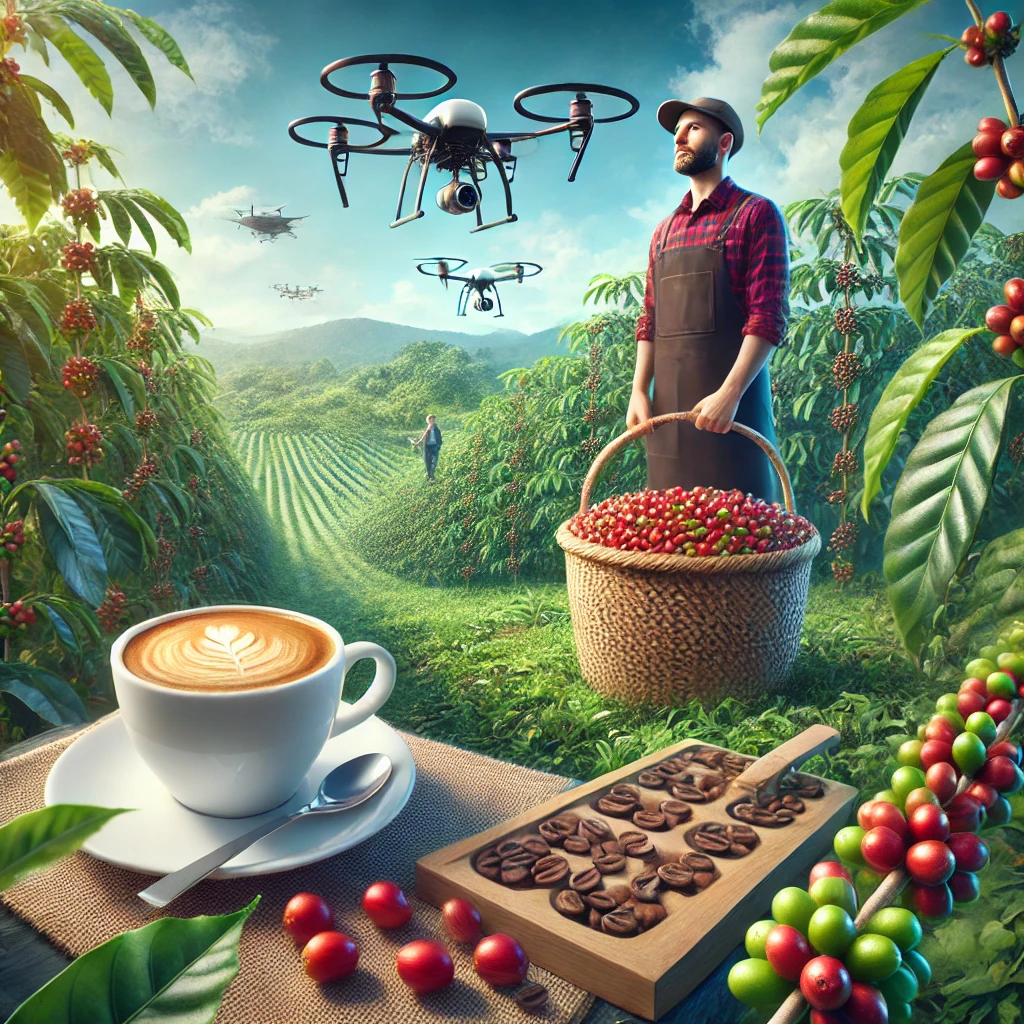
In 2024, coffee supply chains saw significant developments, including increased use of digital technology to improve transparency and product traceability, growth in the adoption of sustainable and organic farming practices, and improvements in transport and storage efficiency to reduce carbon footprints. Precision agriculture and blockchain technologies offer innovative solutions for enhancing production and increasing transparency in the supply chain. Using drones and artificial intelligence helps improve resource management and early disease detection, aiding farmers in boosting productivity and reducing waste.

Modern Trends in 2024

  1. Booming market for cold coffee and ready-to-drink beverages.
  2. Increased demand for single-origin and specialty coffee.
  3. Growth in the use of artificial intelligence to improve coffee quality and farm management.
  4. Expansion of sustainability and fair trade initiatives.

Future Challenges

  1. Addressing the impact of climate change on coffee production.
  2. Improving farmers’ incomes and ensuring supply chain sustainability.
  3. Adapting to changes in coffee consumption patterns post-COVID-19.
  4. Developing innovative solutions for eco-friendly packaging.

Future Outlook and Conclusions

Despite the significant challenges facing the coffee industry, there are promising opportunities for growth and innovation. The upcoming phase requires adopting new technologies, enhancing sustainability practices, and adapting to climatic and economic changes. Investing in technology and improving transparency are key to future success.

Recommendations for the Sector

  1. Invest in Technology: Enhance the use of modern technologies in agriculture and production to improve efficiency and increase productivity.
  2. Promote Sustainability: Adopt sustainable agricultural practices and provide support to farmers to ensure eco-friendly coffee production.
  3. Improve Transparency: Use blockchain technology to enhance trust and transparency in the supply chain, increasing consumer confidence and strengthening companies’ market positions.

Comprehensive Overview

Despite the significant challenges, the coffee industry holds opportunities for growth and innovation through the adoption of new technologies and the promotion of sustainability. The future demands a comprehensive vision and collaboration between producers, exporters, and consumers to ensure the sustainability of this vital industry.

EGSH Café Stirs Excitement at the UAE Government Services Center

In the heart of the “Art of Living” Mall, a new café named EGSH has opened. It is distinguished by its simple and elegant design and relies on the magnificent Arimede machine. This café does not just serve coffee; it promotes coffee culture within the UAE Government Services Center.

Last week, EGSH Café organized a unique event to introduce itself to the local coffee community and present its offerings to this evolving community. The event attracted leaders of the coffee industry in Dubai, famous baristas, well-known café owners, and representatives from Italian brands specializing in coffee machines and equipment. This event celebrated the arrival of this high-quality Russian brand to Dubai and the UAE, highlighting the growing support for innovative solutions in the coffee world in the region.

Emirati writer and journalist Hessa Al Mansouri, who attended the event, said, “The lemonade amazed me. I did not expect a place specializing in coffee to offer such high-quality and delicious caffeine-free drinks. The Yemeni coffee served by the café is fantastic. I’m excited to return to try the pastries and other types of coffee, especially the espresso.”

Journalist and content creator Salwa Al-Dhaibani added, “The opening of their new branch in Dubai made me very happy. They have excellent choices in coffee types and their unique preparation methods. What pleased me most is the type of Yemeni coffee they have, which is not available anywhere else.”

Famous coffee expert Mr. Naveed said, “Each café has its unique goal, and EGSH Café’s goal is to support the UAE Government Services Center and provide a distinguished experience for visitors. With the opening of the first location in the Art of Living Mall, there are plans to open more branches across the region. During last week’s opening event, the coffee community experienced what this aesthetically pleasing and simple café offers. The café is distinguished by the magnificent Arimede machine and an exciting range of specialty coffees roasted by Three Coffee, in addition to a selection of flaky pastries. And we must not forget the excellent lemonade, perfect for the summer season.”

Expanding Horizons, Expanding its horizons, the EGSH coffee shop is part of the same restaurant group gt. , as GT Coffee, a well-known brand of Galaktion and Elina Tabidze, based in Russia.

Under the supervision of Victoria Rovinskaya, a certified trainer from the Specialty Coffee Association, the café is preparing to expand across the UAE. Rovinskaya, known for her extensive expertise and skills in the coffee sector, adds great value to this ambitious project.

More Than Just Coffee, while EGSH Café prides itself on its coffee and artistic pastries, it also offers a unique range of lemonades suitable for the summer season in the UAE. There are plans to open more branches within the EGSH network, although the exact number of new cafés has not been disclosed.

With plans to expand through government service centers in the UAE, EGSH Café is set to become a prominent player in the region’s coffee scene, promising quality, innovation, and community engagement every step of the way.

EGSH Café is located on the third floor of the “Art of Living” Mall and supports the UAE Government Services Center, which provides all essential government services in one place, along with luxurious, stress-free concierge services. The “Art of Living” Mall is the first and largest home furnishing mall in the Middle East and North Africa, offering a luxurious and comprehensive destination for decorating luxury homes.