World of Coffee Introduces New Show Features in Copenhagen This Month

World of Coffee, Europe’s premier specialty coffee trade show, is set to take place from June 27 to 29, 2024, welcoming over 400 exhibitors and more than 10,000 attendees to the city of Copenhagen, Denmark. Alongside the return of choice show features such as Best New Product, recognizing new products judged on their quality and value to the specialty coffee and tea industry, and Coffee Design Awards, celebrating great design as an important function in distinguishing specialty coffee; this year, the Specialty Coffee Association (SCA) is thrilled to introduce new innovative features that promise to elevate the coffee trade show experience, making this a must-attend event for professionals across the specialty coffee sector.

Retail Buyers Lounge: For the first time, World of Coffee presents the Retail Buyers Lounge, a dedicated space tailored for coffee professionals with buying power in retail operations. This exclusive area, open to select attendees, offers an ideal environment for skill-sharing, learning, and networking among global coffee retail industry experts. The Retail Buyers Lounge provides a comfortable retreat off the show floor, where participants can catch up on emails, connect over a cup of coffee, and learn about the latest trends impacting the industry.

In addition to a relaxing space, the Retail Buyers Lounge will host a series of short talks and panel discussions featuring industry experts. These sessions are designed to offer invaluable access and insights, empowering retail buyers to make informed decisions and stay competitive in the fast-evolving coffee market.

Green Coffee Connect: Green Coffee Connect is another exciting addition to World of Coffee Copenhagen 2024. This event is dedicated to fostering an inclusive environment for the green coffee industry, offering participants a dynamic platform for learning and networking.

At Green Coffee Connect, attendees can engage in Green Coffee Conversations, where leading industry experts share their insights and expertise. Whether you’re a seasoned green coffee trader or new to this vibrant sector, Green Coffee Connect offers a unique opportunity to learn, grow, and forge valuable connections. Participation in Green Coffee Connect is completely free, ensuring that everyone has the opportunity to join us on this journey of growth and collaboration.

Sustainable World of Coffee: In Copenhagen, SCA is combining forces to take decisive action in supporting producers facing environmental challenges – directing financial support to coffee farmers in Latin America, who will plant native trees that contribute to soil health, reduce erosion, and sequester carbon. These initiatives are in partnership with Caravela Coffee, a Latin America green coffee exporter and importer and recognized leader in green coffee sustainability, and Barista Attitude. These organizations support the SCA Sustainable Specialty Coffee Agenda and are working together to create an innovative offset strategy for SCA’s trade shows, with impact closer to coffee farms and landscapes, and as an avenue for promoting equitable value distribution across the coffee supply chain.

Other sustainability activities at the event include a ceremony and panel discussion recognizing the 2024 Sustainability Award Winners in the For-Profit and Non-Profit category, happening Thursday, June 27.

In addition to the exciting new features on the show floor, there will be four World Coffee Championships taking place at World of Coffee. The 2024 World Latte Art Championship (WLAC), World Coffee in Good Spirits Championship (WCIGS), World Coffee Roasting Championship (WCRC), and the Cezve/Ibrik Championship will bring an unparalleled level of excitement to the event this year, showcasing the world’s top coffee professionals as they compete for the title of World Champion. The Copenhagen World Coffee Championships are supported by WLAC Qualified Espresso Machine sponsor, Thermoplan; WCIGS Qualified Espresso Machine & Grinder sponsor, Rocket Espresso; WCIGS Qualified Filter Grinder sponsor, Femobook; WCRC Official Production Roaster sponsor, Stronghold; WCRC Qualified Water Filtration sponsor, BRITA.

World of Coffee Copenhagen is made possible through the generous support of our 2024 Portrait Country, Peru. “We are very proud to be the Portrait Country at the World of Coffee 2024, which will allow us to showcase the quality of Peruvian specialty coffees to international buyers. Coffee has become one of Peru’s traditional agricultural export products, with its main markets in Europe, North America, and Asia. In 2023 alone, coffee exports totaled USD 829 million. Therefore, Peru’s participation in this fair represents a great opportunity for our producers to achieve greater commercial contacts and to finalize future coffee shipments,” said Claricia Tirado, Executive President of PROMPERÚ.

World of Coffee Copenhagen is also supported by Host Sponsor, BWT water+more, and our top sponsors, Alpro and Barista Attitude. Their commitment to excellence and innovation in the coffee industry helps us bring together an unforgettable event for coffee professionals around the globe.

Join us in Copenhagen from June 27-29, 2024, for three days of innovation, networking, and industry leadership within specialty coffee. With the addition of exciting new show features, World of Coffee Copenhagen 2024 promises to be an essential event for coffee professionals looking to network, learn, and lead in the industry.

For more information about the show features and to register, visit worldofcoffee.org.

NCA Report Highlights Growth and Trends in Specialty Coffee Consumption in 2024

The National Coffee Association (NCA) has released its comprehensive Specialty Coffee Report for 2024, showcasing significant insights into the evolving patterns of coffee consumption in the United States. The report, part of the 2024 National Coffee Data Trends (NCDT) series, emphasizes the growing popularity and changing dynamics of specialty coffee among American consumers.

Key Findings:

1. Record High Coffee Consumption: In 2024, daily coffee consumption in the United States reached a 20-year high. This surge is driven primarily by younger coffee drinkers, particularly those aged 25-39, who show a strong preference for specialty coffee beverages. According to the report, 67% of American adults consumed coffee in the past day, surpassing the consumption of any other beverage, including water.

2. Specialty Coffee’s Dominance: Specialty coffee has seen a remarkable increase in popularity, with 45% of American adults reporting they consumed a specialty coffee in the past day, marking an 80% rise since 2011. The report indicates that specialty coffee drinkers average 2.8 cups per day, compared to 1.8 cups for traditional coffee drinkers.

3. Demographic Insights:

  • Age: The mean age of specialty coffee drinkers is 42, slightly younger than the average age of traditional coffee drinkers, which is 52. The 25-39 age group is the most avid consumer of specialty coffee, with 66% reporting consumption in the past week.
  • Regional Differences: The highest past-week specialty coffee consumption was observed in the West (61%), followed closely by the South (60%).
  • Ethnicity: Hispanic-Americans lead in specialty coffee consumption, with 69% reporting they drank specialty coffee in the past week.

4. Types of Specialty Coffee: The report highlights the growing preference for both espresso-based and non-espresso-based specialty coffee beverages. The most popular espresso-based beverages include lattes, espressos, and cappuccinos. Among non-espresso-based beverages, cold brew coffee and frozen blended coffee are favorites, with 42% of past-week specialty coffee drinkers agreeing that drinking cold brew is trendy.

5. Coffee Preparation Methods: In terms of preparation, drip coffee makers and single-cup brewers remain the top methods among past-day specialty coffee drinkers. The report also notes a rise in the use of ready-to-drink coffee beverages and cold brewing methods, reflecting a shift towards convenience and innovative coffee experiences.

6. Financial and Social Trends: Despite financial concerns among many consumers, the demand for specialty coffee continues to grow. Specialty coffee drinkers, particularly younger ones, often view their coffee choices as a reflection of their lifestyle, driven by both taste and social factors. This trend is evident as three-quarters of past-week specialty coffee drinkers consider drinking cold brew coffee as “cool or trendy.”

7. Impact of Global Coffee Beverages: Specialty coffee drinkers are more adventurous in trying global coffee beverages. Arabic coffee and Irish coffee are the most commonly consumed international coffee types among American specialty coffee drinkers, indicating a potential market for introducing more global coffee experiences.

Conclusion: The 2024 NCA Specialty Coffee Report provides a detailed analysis of the current trends and future directions in the specialty coffee market. The sustained growth in specialty coffee consumption, driven by younger demographics and innovative beverage types, highlights the evolving preferences of American coffee drinkers. As the coffee industry continues to adapt to these changes, understanding these trends will be crucial for stakeholders aiming to cater to the diverse and sophisticated tastes of modern consumers.

For more detailed insights and data, the full report can be accessed through the National Coffee Association’s official website.

ICO Annual Review 2022/23: Sustainable Development and Overcoming Challenges through Partnerships

The International Coffee Organization (ICO) has released its Annual Review for the coffee year 2022/23, highlighting the pivotal role of stronger partnerships and innovative solutions in addressing regulatory and market challenges. The review, titled “Advancing Sustainability and Overcoming Challenges through Strong Partnerships,” provides an in-depth look at the organization’s efforts and achievements in fostering a more sustainable and resilient global coffee sector.

Key Insights from the Review:

1. Strengthening the Global Coffee Value Chain: The ICO continues to prioritize the enhancement of the coffee global value chain (C-GVC), focusing on sustainability and fairness. This involves addressing income disparities, gender inequalities, and promoting intergenerational well-being. The International Coffee Agreement (ICA) 2022 underpins these efforts, guiding the organization’s mission to transform the coffee sector into a model of sustainability.

2. Addressing Significant Challenges: The coffee year 2022/23 presented numerous challenges, including price volatility, exchange rate fluctuations, new regulatory frameworks, socio-political instability, and climate change. Despite these hurdles, the ICO successfully encouraged more countries to sign the ICA 2022, strengthened stakeholder engagement, and attracted funding and partnerships to support its initiatives.

3. Major Events and Collaborations:

  • The 5th World Coffee Conference (WCC) in Bengaluru, India, was a highlight, attracting over 2,000 delegates and more than 17,000 business visitors. The event facilitated discussions on sustainability, technology, and market trends.
  • The Coffee Public-Private Task Force (CPPTF) played a crucial role in fostering collaboration among various stakeholders. Key initiatives included promoting the circular coffee economy, improving access to finance, and addressing regulatory changes such as the European Union’s deforestation-free products regulation (EUDR) and corporate sustainability due diligence (CS3D).

4. Enhancing Market Transparency: The ICO’s statistical data collection and dissemination efforts provided valuable insights into market dynamics. For the coffee year 2022/23, global coffee consumption decreased by 2.0% to 173.1 million bags, while world coffee production increased slightly by 0.1% to 168.2 million bags.

5. Advocacy and Future Directions: The ICO remains dedicated to advocating for the coffee sector at international forums, promoting coffee diplomacy, and mobilizing resources to support sustainable growth. The organization plans to focus on closing living income gaps, advancing circular economy initiatives, and implementing the ICA 2022.

Conclusions and Next Steps: The ICO’s Annual Review for 2022/23 underscores the organization’s commitment to overcoming challenges through stronger partnerships and innovative solutions. By fostering collaboration, enhancing market transparency, and advocating for sustainability, the ICO aims to ensure a resilient and prosperous future for the global coffee sector.

For a comprehensive understanding of the ICO’s activities and achievements, the full Annual Review can be accessed here.

Coffee Prices Fall Amid Faster Brazilian Harvest and Global Supply Dynamics

On Tuesday, coffee prices took a hit, with July arabica coffee (KCN24) closing down -0.85 (-0.38%) and July ICE robusta coffee (RMN24) falling -40 (-0.94%). The dip saw arabica prices reach a two-week low and robusta prices a one-week low, influenced by Brazil’s accelerated coffee harvest.

Brazil’s 2024/25 coffee harvest, as reported by Safras & Mercado, is 29% completed as of June 4, surpassing last year’s 26% at the same time and the five-year average of 27%. This rapid pace is increasing coffee supplies, putting downward pressure on prices.

Adding to the pressure, the Brazilian real (^USDBRL) weakened to a 17-month low against the dollar on Monday, incentivizing export selling from Brazil’s coffee producers. Despite this, arabica coffee prices find some support due to the lack of rain in Brazil’s Minas Gerais region, which received no rainfall last week and is critical for about 30% of Brazil’s arabica production, according to Somar Meteorologia.

Globally, bearish export news is also influencing coffee prices. The International Coffee Organization (ICO) reported a 16.8% year-over-year increase in global coffee exports for April, amounting to 10.24 million bags. For the period from October to April, exports were up 11.1% year-over-year at 80.99 million bags. Additionally, Brazil’s green coffee exports surged by 61% year-over-year in April to 3.9 million bags, according to Cecafe.

ICE coffee inventories are rebounding from historically low levels, further pressuring prices. Robusta coffee inventories, which hit a record low of 1,958 lots on February 21, recovered to an 11-month high of 5,571 lots on Tuesday. Similarly, arabica coffee inventories, which fell to a 24-year low of 224,066 bags on November 30, recovered to a 15-month high of 799,038 bags last Friday.

Robusta coffee prices are supported by concerns over Vietnam’s coffee crop, which has been affected by excessive dryness. Volcafe, a coffee trader, reported that Vietnam’s 2024/25 robusta crop might be the lowest in 13 years at 24 million bags due to poor rainfall, causing “irreversible damage” to coffee blossoms. This year marks the fourth consecutive year of robusta bean deficits, with a projected deficit of 4.6 million bags for 2024/25.

Tight supplies from Vietnam, the world’s largest robusta producer, are a bullish factor. The country’s agriculture department projected a 20% drop in coffee production for the 2023/24 crop year due to drought. The Vietnam Coffee Association also anticipated a 20% year-over-year decline in coffee exports for 2023/24. Vietnam’s May coffee exports fell 47% year-over-year, the lowest for May since 2009, and Jan-May exports dropped 5.8% year-over-year. The USDA FAS projected a slight dip in Vietnam’s robusta production for 2024/25 to 27.9 million bags from 28 million bags in 2023/24.

The El Niño weather pattern has historically influenced coffee prices, bringing heavy rains to Brazil and drought to India, which negatively impacts coffee production. This year, El Niño has contributed to drought conditions in Vietnam’s coffee regions.

In contrast, the International Coffee Organization (ICO) projected a 5.8% year-over-year increase in global coffee production for 2023/24, reaching 178 million bags due to an exceptional off-biennial crop year. Global coffee consumption is expected to rise by 2.2% year-over-year to 177 million bags, resulting in a surplus of 1 million bags.

The USDA’s Foreign Agriculture Service (FAS) biannual report from December 21 projected a 4.2% year-over-year increase in world coffee production for 2023/24, totaling 171.4 million bags, with a 10.7% increase in arabica production to 97.3 million bags and a 3.3% decline in robusta production to 74.1 million bags. The USDA’s FAS also forecasts a 4% decrease in 2023/24 ending stocks to 26.5 million bags from 27.6 million bags in 2022-23. Brazil’s 2023/24 arabica production is expected to rise by 12.8% year-over-year to 44.9 million bags due to higher yields and increased acreage. Colombia, the world’s second-largest arabica producer, is projected to see a 7.5% year-over-year increase in 2023/24 coffee production, reaching 11.5 million bags.

These dynamics in coffee production, exports, and weather patterns continue to shape the global coffee market, influencing prices and supply chains.

Indonesia Signs International Coffee Agreement 2022, Strengthening Its Role in the Global Coffee Market

The International Coffee Organization (ICO) announced on its official Instagram account that Zulkifli Hasan, Indonesia’s Minister of Trade, signed the International Coffee Agreement (ICA) 2022 at the ICO headquarters in London last week.

This agreement, intensively discussed since 2019 and adopted on June 9, 2022, marks a significant milestone for Indonesia as the first Asian coffee-producing country to sign the ICA 2022.

The signing of the ICA 2022 by Indonesia aims to enhance national coffee exports and maintain global coffee price stability, ultimately improving the welfare of Indonesian coffee farmers.

The ICA is a multilateral agreement between governments representing coffee-producing and coffee-consuming countries.

The 2022 agreement is the seventh of its kind since 1962, continuing the legacy of stabilizing global coffee prices through export quotas.

With this signing, Indonesia becomes the tenth member country to sign the ICA 2022, joining nine other ICO members, including eight coffee-exporting countries: Brazil, Costa Rica, Nicaragua, Peru, Togo, Venezuela, Panama, and Colombia, as well as one coffee-importing country, Japan. The remaining ICO members are scheduled to sign the agreement by the end of April 2023.

The ICO highlighted Indonesia’s proactive role in the global coffee sector and its commitment to implementing the ICA 2022.

This step reflects Indonesia’s dedication to fostering a sustainable and economically prosperous coffee industry, benefiting millions of coffee farmers across the country.

As the world’s fourth-largest coffee producer, Indonesia’s involvement in the ICA 2022 is expected to have a significant impact on the global coffee market.

The agreement aims to ensure fair and stable coffee prices, supporting the livelihoods of coffee producers and contributing to the overall stability of the coffee industry.

The ICO’s announcement of Indonesia’s signing of the ICA 2022 underscores the country’s strategic importance in the global coffee market and its ongoing efforts to promote sustainability and economic growth in the sector.

India Signs International Coffee Agreement 2022, Strengthening Its Role in the Global Coffee Sector

The International Coffee Organization (ICO) announced on its official Instagram account that it was honored to welcome the High Commissioner of India to the United Kingdom for the signing of the International Coffee Agreement 2022.

This significant event underscores India’s pivotal role in the global coffee industry, as the country solidifies its commitment to fostering a sustainable and economically prosperous coffee sector.

India, recognized as the world’s 6th largest coffee producer, has been a key player in the activities of the ICO.

The country demonstrated its commitment to the global coffee community by hosting the 5th World Coffee Conference in September 2023.

The conference served as a platform for international stakeholders to engage in crucial intergovernmental dialogue aimed at advancing the coffee industry.

The International Coffee Agreement 2022 is a landmark accord that seeks to promote international cooperation and support the development of a sustainable coffee sector.

By signing this agreement, India reaffirms its commitment to contributing to the ICO’s objectives, which include enhancing the economic viability of coffee production and ensuring the welfare of millions of coffee farmers worldwide.

During the signing ceremony, the High Commissioner of India to the United Kingdom emphasized India’s continuous efforts to support and enhance the coffee value chain.

The High Commissioner highlighted the importance of sustainable practices and economic prosperity for all actors involved in the coffee industry, from farmers to exporters.

The ICO’s welcoming of India’s High Commissioner for this momentous occasion reflects the organization’s appreciation for India’s active participation and significant contributions.

India’s involvement in the ICO and its recent hosting of the World Coffee Conference demonstrate the nation’s leadership and proactive stance in addressing the challenges and opportunities within the coffee sector.

As India takes this strategic step forward, the global coffee community anticipates increased collaboration and innovation, driven by the shared goal of a sustainable and thriving coffee industry.

The signing of the International Coffee Agreement 2022 marks a new chapter in India’s engagement with the ICO, promising a future of enhanced cooperation and mutual benefit for coffee-producing and consuming countries alike.

New Report Unveils Challenges and Opportunities in the Global Coffee Market

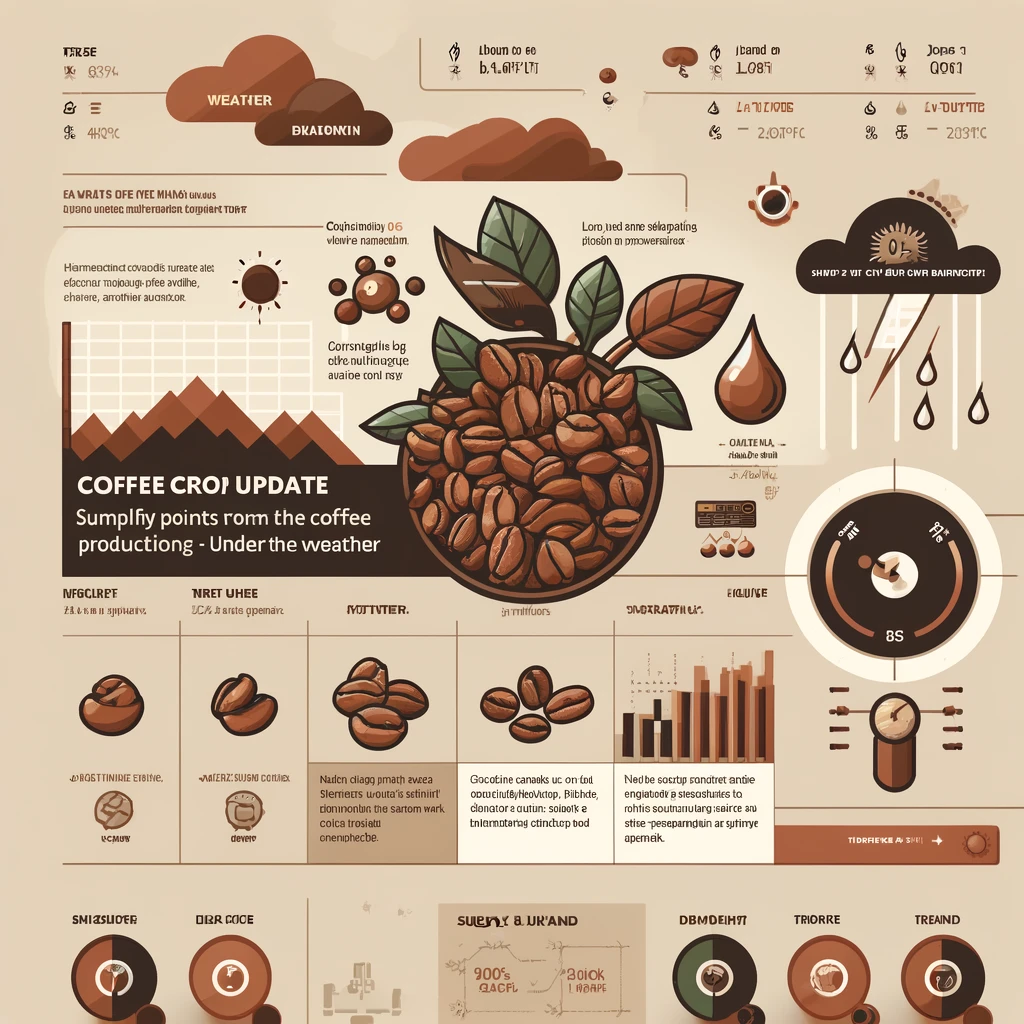
A recent report authored by Daria Efanova, Head of Research at Sucden Financial, titled “Coffee Crop Update – Under the Weather,” provides an in-depth analysis of the current state of the global coffee market. The report, published on June 10, 2024, outlines the significant factors affecting coffee production and pricing, with a particular focus on the impacts of adverse weather conditions and market dynamics in major coffee-producing regions.

Weather Woes and Crop Forecasts

Efanova’s report highlights the considerable impact of weather anomalies on coffee production, particularly in Brazil and Vietnam, which together account for 58% of the world’s coffee supply. The analysis indicates that while initial fears of a disastrous crop year have subsided, the lingering effects of unfavorable weather have nonetheless dampened expectations for a bumper harvest.

Brazil, the world’s largest coffee producer, faced severe weather disruptions, including frost and drought, which have collectively reduced the output of both Arabica and Robusta varieties. Similarly, Vietnam, a key producer of Robusta coffee, has experienced irregular weather patterns that have complicated harvesting and production processes.

Supply and Demand Dynamics

Despite these challenges, the report emphasizes that there is no overall shortage of coffee. However, supply inconsistencies across different regions have led to market volatility and uncertainty regarding coffee accessibility. Efanova notes that certified stocks have seen a significant decline, particularly in Brazil, which has strained the availability of high-quality beans and maintained upward pressure on prices.

The report provides a detailed supply and demand outlook, incorporating primary data from the coffee industry and applying fundamental models to predict future trends. These insights are crucial for market participants to navigate the complexities of the current coffee landscape.

Price Trends and Market Reactions

Coffee prices have experienced turbulent fluctuations over the past year, with significant impacts on both Arabica and Robusta contracts. The report documents that, while prices have remained relatively stable above 170 cents per pound, the market has not fully recovered from the disruptions caused by adverse weather.

The analysis also explores how futures markets have reacted to these conditions. Despite the substantial drawdown in certified stocks, futures prices have remained broadly unchanged, indicating a complex interplay between supply constraints and market sentiment.

Future Outlook and Strategic Recommendations

Looking ahead, the report suggests that the potential for a super crop is diminishing, with the focus shifting towards stabilizing production and mitigating further risks. Efanova recommends several strategic approaches for stakeholders in the coffee industry, including:

  1. Investment in Sustainable Practices: Emphasizing the need for sustainable agricultural practices to enhance resilience against climate change and weather variability.
  2. Diversification of Supply Sources: Encouraging diversification to reduce dependence on a few key producing regions and ensure a more stable global supply chain.
  3. Enhanced Market Intelligence: Utilizing advanced market intelligence and data analytics to better predict and respond to market shifts.

Technological and Market Innovations

The report also highlights the role of technological advancements and innovative practices in shaping the future of the coffee market. From precision agriculture techniques to advanced processing methods, these innovations are poised to enhance productivity and quality in the coffee sector.

Impact on Global Coffee Trade

Efanova’s analysis extends to the broader implications for global coffee trade, noting that the fluctuations in supply and pricing have significant ripple effects across the entire supply chain. Importers and exporters are advised to closely monitor these developments and adjust their strategies accordingly to remain competitive in an increasingly dynamic market.

Conclusion

In conclusion, the “Coffee Crop Update – Under the Weather” report by Daria Efanova provides a comprehensive overview of the current challenges and opportunities in the global coffee market. By addressing the critical issues of weather impacts, supply and demand dynamics, and market volatility, the report offers valuable insights and strategic recommendations for industry stakeholders. As the coffee market continues to evolve, staying informed and adaptable will be key to navigating the complexities of this essential global commodity.

For more detailed information, you can read the full report on Sucden Financial’s website here.

Saudi Aramco and the Saudi Coffee Company Launch Strategic Partnership to Enhance Local Coffee Industry and Propel It to Global Markets

Saudi Aramco and the Saudi Coffee Company, a subsidiary of the Public Investment Fund, have signed a memorandum of understanding to develop coffee production and the Saudi coffee industry, marking the beginning of a new phase of sustainable development for this vital national sector. This agreement aims to enhance Saudi coffee production and make Saudi coffee a competitive national brand.

The agreement was signed by Khalid Al-Zamel, Acting Vice President of Public Affairs at Saudi Aramco, and Fahad Al-Nahit, Chairman of the Saudi Coffee Company. The agreement includes expanding support for the coffee industry and training farmers in the Jazan and Asir regions, in addition to enhancing the initiatives previously launched by Saudi Aramco.

Under the memorandum, the Saudi Coffee Company will support the entire value chain of the coffee product and provide consultations necessary to operate the Coffee Development Center in Al-Dayer Governorate, which is being established in collaboration with the Authority for the Development and Reconstruction of Mountainous Regions in Jazan. This center will play a vital role in serving the farmers of the region and expanding the marketing of coffee locally and exporting it to international markets.

Khalid Al-Zamel emphasized that the cooperation with the Saudi Coffee Company represents an important step in Saudi Aramco’s citizenship initiatives, which continue to support small industries. He pointed to Saudi Aramco’s program launched in 2016 to train coffee farmers on sustainable farming methods in the Jazan region, focusing on improving production and marketing.

Saudi Aramco also supports small projects and sustainable initiatives that enhance national identity, such as supporting beekeepers, fishermen, date production, textile industries, and other crafts that contribute to preserving cultural heritage and providing a decent living for beneficiaries, thereby contributing to the community’s development.

The Saudi Coffee Company, launched by the Public Investment Fund in May 2022, aims to increase Saudi coffee production and establish Saudi Arabia as a major home for Arabica coffee, the most renowned globally, by enhancing local production technologies and providing necessary training for farmers. The company seeks to develop Saudi coffee production, market it globally, and support young entrepreneurs in the local coffee industry.

Recent Support for Saudi Arabia’s Coffee Sector:

The coffee sector in Saudi Arabia is experiencing significant growth, with sector investments increasing considerably in recent years. According to recent reports, the Saudi coffee market size is expected to reach 3.8 billion Saudi Riyals by 2025, with a compound annual growth rate of 6.2%. These investments include opening numerous specialty coffee shops and cafes, importing the best coffee beans from around the world, and enhancing local production of Saudi coffee.

New Initiatives:

Among the new initiatives, efforts are focused on organizing coffee festivals and exhibitions to raise awareness of the industry’s importance and promote local consumption. Farmers are also encouraged to improve crop quality and adopt sustainable farming practices, which contribute to increased productivity and enhanced quality.

Saudi Arabia’s Position in the Global Coffee Market:

Saudi Arabia aims to strengthen its position in the global coffee market by improving the quality of locally produced coffee and increasing its export to international markets. These steps will help make Saudi coffee a strong competitor in global markets, boosting the national economy and providing new job opportunities for Saudi youth.

Kingdom’s Interest in the Coffee Sector:

In 2023, Saudi Arabia announced the designation of that year as the “Year of Saudi Coffee,” a move aimed at highlighting the importance of this industry and supporting it nationally and globally. Additionally, the Kingdom renamed Arabic coffee to Saudi coffee, in an initiative aimed at enhancing national identity and promoting the Saudi product. These efforts reflect the great interest of the wise leadership in developing the coffee sector and making it a part of the Kingdom’s cultural and economic identity.

Thanks to these initiatives and strategic partnerships, the future of the coffee industry in Saudi Arabia looks bright and full of promising opportunities for sustainable development and growth.

Therapist Recommends Limiting Coffee Intake to Four Cups a Day

Elena Tikhomirova, a therapist and nutritionist at “SM-Clinic,” provided guidance on consuming coffee without harming one’s health. During an interview with Life.ru, she emphasized that moderation is key, suggesting that up to 400 mg of caffeine per day—equivalent to about four cups of coffee—is generally safe for most people.

Tikhomirova also noted that individuals with high sensitivity to caffeine might experience adverse effects such as increased heart rate and insomnia, and these individuals should limit their intake accordingly. They are usually aware of their sensitivity and either consume coffee rarely or not at all.

Recent studies support Tikhomirova’s recommendations, indicating that moderate coffee consumption is associated with various health benefits. A study conducted by researchers at the Semmelweis University found that light to moderate coffee consumption (up to three cups per day) is linked to a 12% lower risk of all-cause mortality and a 17% lower risk of death from cardiovascular diseases compared to non-coffee drinkers. Additionally, consuming coffee was associated with a 21% lower risk of stroke. The beneficial effects were most pronounced with ground coffee as opposed to instant coffee, likely due to differences in their production processes and additives (MedicalXpress, 2024).

Further supporting these findings, another study highlighted that moderate coffee intake could positively affect heart health, potentially reversing some of the adverse effects of aging on the heart. This study used cardiac magnetic resonance imaging to demonstrate healthier heart size and function among regular coffee drinkers compared to non-drinkers (MedicalXpress, 2024).

Moreover, coffee contains numerous bioactive compounds, including chlorogenic acids, polyphenolics, terpenoids, and alkaloids, which contribute to its health benefits. These compounds are involved in reducing oxidative stress and inflammation, enhancing metabolic functions, and potentially lowering the risk of several chronic diseases such as type 2 diabetes and certain cancers (Texas A&M University, 2023).

However, it is crucial to note that excessive coffee consumption can lead to negative health outcomes. For instance, some studies suggest that consuming more than three to four cups of coffee per day may not provide additional health benefits and could potentially increase the risk of adverse effects for some individuals.

Additionally, nutritionist and biochemist Ekaterina Novikova advised caution regarding coffee substitutes. For example, chicory should be avoided by children under three, individuals with varicose veins, asthma, gallbladder diseases, and hemorrhoids. Guarana is not recommended for pregnant or breastfeeding women, people with arthritis, chronic depression, and children under five (Gazeta.ru, 2024).

In summary, moderate coffee consumption—up to four cups per day—can be part of a healthy lifestyle, offering several health benefits, particularly for cardiovascular health. However, individuals should be mindful of their sensitivity to caffeine and avoid excessive intake to prevent potential health issues.

Brazil Plans to Boost Coffee Exports to Russia by 20%

Brazil is set to increase its coffee exports to Russia, as announced by Rodrigo de Lima Baena Soares, the Brazilian ambassador to Russia. He highlighted the fluctuating nature of supply prices, which are influenced by numerous factors, including climate changes.

“We are working on increasing (exports). There is a trend towards growing coffee exports to Russia. We hope it will grow by at least 20%,” said Soares at the St. Petersburg International Economic Forum.

Brazilian Coffee Production

Brazil remains a giant in the coffee production industry, with an annual output that significantly impacts the global market. For the marketing year 2023/24, Brazilian coffee production is projected to reach 66.4 million 60-kg bags, up by 3.8 million bags compared to the previous crop. This increase is largely driven by favorable weather conditions in key coffee-growing regions, which have boosted arabica production by 12% to 44.7 million bags. However, robusta production is expected to see a 5% decrease to 21.7 million bags due to adverse weather conditions in Espírito Santo, a major robusta-producing area​ (USDA Foreign Agricultural Service)​​ (Nasdaq)​.

Coffee Exports and Market Dynamics

In 2023, Brazil’s coffee exports generated approximately $7.35 billion. The revenue from coffee exports to Russia alone was valued at $131 million. The primary importers of Brazilian coffee include the United States, Germany, Italy, Belgium, and Japan. This robust export market underlines Brazil’s pivotal role in the global coffee supply chain​ (Nasdaq)​.

Moreover, the coffee trade between Brazil and Russia is part of a larger economic relationship. In 2023, the trade turnover between the two countries reached a record $11 billion. Besides coffee, Brazil exports soy products, beef, and poultry meat to Russia, while it imports 24% of its fertilizers and diesel fuel from Russia​ (Nasdaq)​.

Russian Coffee Consumption

Russia has been increasingly consuming coffee, with consumption patterns shifting significantly over the past decade. In recent years, the country’s coffee market has expanded, reflecting a growing demand among Russian consumers. This rise in coffee consumption is a key driver behind Brazil’s strategy to boost its coffee exports to Russia. As of 2023, Russia’s coffee market size is substantial, though specific figures for 2024 are still being compiled. The growing appetite for coffee in Russia aligns with global trends of increasing coffee consumption​ (Nasdaq)​.

Factors Influencing Coffee Prices

The price of coffee exports is highly volatile, affected by various factors including climatic changes and logistical challenges. For instance, Brazil has faced logistical bottlenecks at the Santos port, yet it managed to export a record 3.9 million bags of coffee in January 2024, marking a 39% year-on-year increase. Additionally, the demand for Brazilian conilon and robusta coffee surged by 504% year-on-year in January due to trade disruptions in the Red Sea and limited global supply​ (Rabobank)​.

The planned increase in Brazilian coffee exports to Russia is a strategic move aimed at capitalizing on the growing coffee consumption in Russia. This growth is expected to further solidify Brazil’s position as a leading coffee exporter while supporting Russia’s expanding coffee market. The dynamic nature of coffee prices, influenced by global logistical and climatic factors, underscores the complexity and interconnectivity of the global coffee trade. As Brazil continues to navigate these challenges, its robust coffee production and strategic export initiatives are set to enhance its economic ties with Russia and other major coffee-importing countries.


ChatGPT List: 10 Best Specialty Coffee Shops in Dubai to Kickstart Your Day

Looking for a superb cup of coffee that highlights both quality and sustainability? Dubai’s vibrant coffee scene offers you the perfect blend of flavor and ethical sourcing. These coffee shops not only serve exceptional brews but also emphasize fair-trade practices and community support. Join us as we explore the top coffee spots in Dubai that promise a guilt-free and delightful coffee experience. Let’s dive in and discover the best specialty coffee shops that Dubai has to offer, according to expert reviews.

1. Mokha 1450

Reputation and Heritage: Known for its rich heritage and premium Yemeni coffee, Mokha 1450 is a must-visit for any coffee aficionado. They offer a variety of specialty brews sourced from small farmers, ensuring both quality and fair-trade practices.

2. Nightjar Coffee Roasters

Commitment to Fair Trade and Sustainability: Located in Alserkal Avenue, Nightjar Coffee Roasters is celebrated for its in-house roasted beans and commitment to sustainable sourcing. Their extensive selection of single-origin coffees and innovative brewing methods make them a favorite among coffee enthusiasts.

3. RAW Coffee Company

Reputation and Heritage: As a pioneer in Dubai’s specialty coffee scene, RAW Coffee Company is dedicated to ethical sourcing and direct trade with farmers. Their transparent supply chain and commitment to sustainability ensure every cup supports fair practices.

4. The Espresso Lab

Innovation and Quality: Known for its innovative approach to coffee, The Espresso Lab emphasizes precision and sustainability. They source their beans from ethical farms, ensuring each cup is both delicious and responsibly produced.

5. Stomping Grounds

Community and Cultural Impact: This specialty café in Jumeirah focuses on direct trade and sustainability, offering a cozy space to enjoy high-quality coffee. Their commitment to supporting coffee farmers ensures every cup contributes to a fair-trade ecosystem.

6. Farmers Coffee

Geographical Location and Accessibility: Located in the Dubai International Financial Centre (DIFC), Farmers Coffee stands out for its focus on direct trade and relationships with coffee growers. They are known for their sustainable practices and excellent coffee quality.

7. Common Grounds

Customer Experience: Situated in Mall of the Emirates, Common Grounds is known for its specialty coffee and fresh, locally sourced ingredients. Their dedication to quality and sustainability makes them a standout in Dubai’s coffee scene.

8. One Life Kitchen and Café

Customer Experience: Located in Dubai Design District, One Life Kitchen and Café offers a blend of specialty coffee and wholesome food. They prioritize sustainable sourcing and maintain close relationships with coffee growers.

9. % Arabica

Innovation and Quality: With its sleek design and focus on high-quality beans, % Arabica offers a modern coffee experience. They source their beans from around the world, ensuring sustainability and fair-trade practices in their supply chain.

10. Juan Valdez Café

International Presence: This globally recognized brand brings the rich flavors of Colombian coffee to Dubai. Juan Valdez Café is known for its premium beans, ethical sourcing, and support for coffee-growing communities in Colombia, providing a taste of Latin American coffee culture.

These coffee shops not only provide exceptional coffee but also emphasize fair-trade and sustainable practices. Whether you’re a local or a visitor, these spots offer a perfect blend of taste and ethics.

Ethiopia Achieves Milestone with US$1 Billion in Coffee Exports Over Ten Months

Ethiopia has reached a remarkable milestone in its coffee export sector, achieving a revenue of US$1 billion in just ten months. The Director General of the Ethiopian Coffee and Tea Authority (ECTA), Adugna Debela, shared this significant achievement with the Ethiopian News Agency (ENA). Adugna highlighted that this success reflects a consistent upward trend in Ethiopia’s coffee exports, underscoring the country’s growing influence in the global coffee market.

Over the past ten months, Ethiopia has exported approximately 210,000 tonnes of coffee, marking a substantial increase compared to the same period last year. This surge in coffee exports not only highlights the increasing demand for Ethiopian coffee worldwide but also demonstrates the effectiveness of the strategies implemented by the Ethiopian Coffee and Tea Authority to enhance production and export capacities.

Ethiopian coffee, renowned for its rich flavor and diverse profiles, is exported to over 50 countries. Adugna emphasized the authority’s ongoing efforts to further expand the geographical reach of Ethiopian coffee exports. These efforts include targeted marketing campaigns, participation in international coffee exhibitions, and forging strategic partnerships with new markets. Notably, China, Sudan, and the United Arab Emirates have emerged as active buyers of Ethiopian coffee, contributing significantly to the export growth.

One of the critical factors contributing to this success is Ethiopia’s commitment to promoting its coffee through various channels. The ECTA has been actively organizing exhibitions and events in different countries to showcase the unique qualities of Ethiopian coffee. These promotional activities aim to enhance the global recognition of Ethiopian coffee and attract new buyers from diverse markets.

In addition to promotional efforts, the ECTA has implemented a modern system to prevent illegal transactions in the coffee trade. This system is designed to improve the efficiency and transparency of foreign trade in the sector, ensuring that Ethiopian coffee reaches international markets through legal and regulated channels. By curbing illegal trade practices, the ECTA aims to protect the interests of Ethiopian coffee farmers and exporters, thereby fostering a sustainable and fair trade environment.

The success of Ethiopia’s coffee export sector is not only a testament to the quality of Ethiopian coffee but also to the resilience and dedication of the country’s coffee farmers. Coffee farming in Ethiopia is deeply rooted in tradition, with many farmers employing age-old cultivation methods passed down through generations. These traditional practices, combined with modern techniques and innovations, have enabled Ethiopian coffee to maintain its distinctive characteristics and appeal to coffee enthusiasts worldwide.

The Ethiopian government has also played a pivotal role in supporting the coffee industry. Through various initiatives and policies, the government has provided farmers with access to essential resources, such as high-quality seeds, training programs, and financial assistance. These measures have empowered farmers to increase their productivity and improve the quality of their coffee beans, contributing to the overall growth of the sector.

Furthermore, the Ethiopian coffee industry has benefited from collaborations with international organizations and stakeholders. Partnerships with entities such as the Specialty Coffee Association (SCA) and other global coffee organizations have facilitated knowledge exchange, capacity-building, and market access for Ethiopian coffee producers. These collaborations have helped Ethiopian coffee gain recognition and credibility in the global market, attracting premium prices and driving export growth.

As Ethiopia continues to build on its successes in the coffee export sector, the future looks promising. The ECTA is committed to sustaining the momentum by exploring new markets, enhancing promotional activities, and implementing innovative strategies to further boost exports. With the support of the government, international partners, and the dedication of coffee farmers, Ethiopia is poised to solidify its position as a leading coffee exporter on the global stage.

In conclusion, Ethiopia’s achievement of US$1 billion in coffee exports over ten months is a significant milestone that reflects the country’s growing prominence in the global coffee industry. The combined efforts of the Ethiopian Coffee and Tea Authority, the government, and the coffee farmers have contributed to this success, paving the way for a bright future for Ethiopian coffee in the international market.