New Study Highlights Coffee’s Role in Preserving Muscle Mass and Mobility with Age

Aging often brings about a decline in muscle strength and mobility, a condition known as sarcopenia. While regular exercise remains the gold standard for combating this issue, a recent study suggests that something as simple as drinking coffee could also play a vital role in maintaining muscle mass and strength as we age.

The study, conducted by researchers from the Japan Geriatrics Society and published in Geriatrics and Gerontology International in August 2021, examined the coffee consumption habits of over 6,000 Japanese adults aged 45 to 74. The findings revealed a significant association between higher coffee intake and increased skeletal muscle mass, as well as stronger grip strength—both key indicators of muscle health. Specifically, women who consumed three or more cups of coffee daily had 0.5 percent more skeletal muscle mass compared to those who did not consume coffee. This is noteworthy given that women typically lose around 0.4 percent of their skeletal muscle mass annually.

Furthermore, another study published in the British Journal of Nutrition found similar results, emphasizing that habitual coffee consumption was linked to a lower prevalence of low muscle mass among middle-aged and older Japanese individuals. Interestingly, this association appeared to be independent of coffee’s anti-inflammatory effects, suggesting that other mechanisms might be at play.

However, the researchers caution that while these results are promising, they stem from just one study. Ryan Balmes, a board-certified orthopedic and sports physical therapist, emphasized that although the data suggests coffee may help prevent age-related muscle loss, more comprehensive studies are needed to confirm these findings.

Moreover, experts like Sarah C. Smith, a geriatric specialist, highlight that while coffee might contribute to muscle preservation, it should not replace other essential measures such as regular exercise and a balanced diet. Resistance exercises, in particular, are crucial for maintaining and even growing muscle mass throughout life.

In summary, while coffee alone isn’t a magic bullet for muscle health, it could serve as an additional tool in maintaining strength and mobility as we age. This aligns with an emerging body of research that points to coffee as a potentially valuable component in a holistic approach to preventing sarcopenia. However, it’s essential to remember that it should complement, not replace, other well-established practices like exercise and proper nutrition.


Starbucks Faces Lawsuit Over Alleged Theft of Coffee-Flavored Lip Balm Idea

Starbucks (SBUX.O) is facing a third lawsuit from Balmuccino, a Los Angeles-based company, accusing the coffee giant of stealing its idea for coffee-flavored lipstick and lip gloss. The lawsuit was filed on Friday in Manhattan federal court.

This legal action follows the dismissal of an earlier version of the lawsuit by a Seattle federal judge in July 2023, marking the second time the case was dismissed on procedural grounds.

Balmuccino, which had Dr. Mehmet Oz’s sister-in-law among its leadership, claims it began developing coffee-flavored lip balms in 2016 and presented the concept during an October 2018 meeting at Starbucks’ New York office. The company alleges that Dr. Oz facilitated this meeting by reaching out to Starbucks CEO Howard Schultz.

Balmuccino accuses Starbucks of launching its “S’mores Frappuccino Sip Kit” in April 2019, which included lipstick and lip gloss in four shades, based on the idea Balmuccino had pitched. The company claims it was not compensated for the concept and is seeking unspecified damages.

The lawsuit argues that it is not time-barred due to New York’s allowance for certain plaintiffs to pause statutes of limitation when suing in the wrong forum, as was the case here when a court found it lacked jurisdiction.

Balmuccino first sued Starbucks in Los Angeles in October 2019. The current case is filed in the U.S. District Court, Southern District of New York, under case number 24-06214.

Tim Hortons Expands Presence in UAE Through Partnership with Union Coop

The Canadian coffee chain Tim Hortons has entered into a strategic partnership with Dubai-based Union Coop to expand its presence across the UAE. The collaboration will see Tim Hortons opening new outlets within Union Coop’s shopping centre network.

According to Hesham Almekkawi, CEO of Tim Hortons Middle East, the coffee chain is set to launch stores in eight shopping centres this year, with plans to further expand across Union Coop’s 27 locations by 2025.

In a press release, Tim Hortons highlighted the importance of the UAE market to its growth strategy in the Middle East, noting that the country serves as a vital hub for cultural exchange. Currently, the chain operates 86 outlets within the UAE.

“We are excited to collaborate with Union Coop on this venture. Our shared values and commitment to serving the community make this partnership a natural fit. We look forward to bringing Tim Hortons’ unique experience to even more customers through Union Coop’s extensive retail network,” Almekkawi said.

Tim Hortons, founded in Ontario in 1964, now operates over 5,800 stores across 18 markets worldwide. The brand entered the Middle East in 2011 with its first store in Dubai, under the licensing of AG Café—a joint venture between UAE’s Apparel Group and investment company Gateway Partners.

AG Café now operates more than 300 stores across the GCC, including in the UAE, Saudi Arabia, Qatar, Kuwait, Bahrain, and Oman.

Coffee Prices Surge Across Russia: A Comprehensive Overview

In recent months, coffee prices have experienced a significant increase across various regions of Russia, reflecting broader economic trends and shifts in consumer preferences. Notably, in the Republic of Tatarstan, the price of popular coffee beverages has risen by 8% from July 2023 to July 2024. This trend is consistent with a nationwide increase, where prices have generally gone up by 9%.

Tatarstan: A Regional Snapshot

In Tatarstan, the most substantial price hikes were observed for Americano and Espresso, which saw increases of 15% and 11%, respectively. The trendy Raf coffee also saw an 8% rise, maintaining its position as the most expensive option in the region, averaging 228 rubles. The popularity of Cappuccino, Americano, Latte, Espresso, Flat White, and Raf continues to dominate the market, with alternative brewing methods gaining traction as well.

Nationwide Trends

Across Russia, the cost of a simple Espresso has surged by 14%, and a Cappuccino by 12%. Interestingly, the price of a 300 ml cup of Cappuccino has jumped by a striking 23%, reflecting a shift in consumer behavior. While more consumers opted for medium-sized Cappuccinos last year, there is now a noticeable preference for larger servings, likely due to value considerations amidst rising prices.

This trend, however, is not universal across all coffee types. For instance, the Americano, which saw its price increase by 13%, is now more commonly purchased in medium sizes, as customers adjust their buying habits to cope with the price hikes.

Factors Behind the Price Increase

The rise in coffee prices in Russia can be attributed to several factors. Global coffee bean prices have been volatile, influenced by climatic changes affecting harvests in key coffee-producing countries. Additionally, Russia’s economic situation, including inflation and fluctuations in the ruble, has also contributed to higher costs for imported coffee beans and related products.

The growing popularity of coffee culture in Russia, particularly in urban areas, has led to increased demand, further driving up prices. The shift towards specialty coffees and alternative brewing methods has also played a role in these price dynamics.

As coffee becomes an increasingly integral part of the daily routine for many Russians, these price increases are likely to influence consumer habits and the broader coffee market in the country. From Tatarstan to Moscow, the coffee price surge underscores broader economic trends and the evolving tastes of Russian coffee drinkers.

SCA Certificate Programs: A Gateway to a Successful Coffee Career

In the ever-evolving coffee industry, the Specialty Coffee Association (SCA) has positioned itself as a global leader in coffee education, offering certificate programs designed to equip learners with the knowledge and skills necessary for a thriving career. Built on decades of research, industry insights, and real-world experience, SCA’s certificate programs are highly recognized by employers around the world, making them a valuable asset for anyone looking to stand out in the coffee industry.

A Structured Pathway to Success

SCA’s certificate programs are meticulously developed to ensure learners gain a comprehensive understanding of the coffee industry. The learning objectives and exams for these courses are designed by SCA, with more than 1,800 Authorized SCA Trainers (ASTs) worldwide offering these courses. This global network allows learners to access top-tier education, tailored to their schedules and preferences.

Upon enrollment, learners engage with course materials through various teaching methods, designed to meet the specific learning objectives of each course. Following the completion of a course, students take an online written exam, available in 14 languages, and in many cases, an in-person practical exam. Successful candidates receive a digital certificate, marking their achievement and enhancing their resumé.

Specialized Programs for a Diverse Industry

The SCA offers several specialized certificate programs catering to different facets of the coffee industry:

  • Coffee Skills Program: This comprehensive program covers various specialties, including Introduction to Coffee, Barista Skills, Brewing, Green Coffee, Sensory Skills, and Roasting. Each module is available at three levels: Foundation, Intermediate, and Professional, allowing learners to build their expertise step by step.
  • Coffee Sustainability Program: As sustainability becomes increasingly crucial in the coffee industry, this program explores what sustainability means across the coffee value chain. Students learn to address sustainability challenges, lead discussions on these topics, and implement sustainable practices within their organizations.
  • Coffee Technicians Program: This program, the first of its kind, offers standardized education for those seeking to maintain or repair coffee equipment, a vital skill set as the industry continues to innovate technologically.

Global Accessibility and Flexibility

SCA courses are accessible to learners worldwide, with options for both in-person and distance learning. The program’s flexibility ensures that anyone, regardless of location, can take advantage of these educational opportunities. A detailed course calendar and contact information for ASTs are available, making it easy for prospective students to find the right course for their needs.

Whether you’re new to the coffee industry or looking to advance your career, SCA’s certificate programs provide the tools and credentials needed to succeed. With a focus on quality education and global recognition, these programs are the ideal starting point for anyone serious about a career in coffee.

For more information or to find a course near you, visit the SCA website and take the first step towards a rewarding career in coffee.

Global Coffee Platform Recognizes Four New Sustainability Schemes as Equivalent to Coffee SR Code

The Global Coffee Platform (GCP) has recognized four new sustainability schemes as equivalent to its Coffee Sustainability Reference Code (Coffee SR Code), furthering alignment within the coffee sector on sustainability standards. The schemes—Cooxupé’s Gerações, Comexim’s Green Trace, Perhusa’s ARTS, and Touton’s PACT—have been rigorously assessed and verified through GCP’s Equivalence Mechanism. This recognition emphasizes the importance of transparency, ethical practices, and long-term sustainability in coffee production.

The Coffee SR Code serves as a foundational reference for sustainable coffee practices, covering economic, social, and environmental dimensions. It aims to unify the coffee sector by providing a common language for sustainability, ensuring that all recognized schemes meet or exceed the standards set by GCP.

Mario Vega, Senior Manager of Sustainable Sourcing at GCP, highlighted the significance of this recognition, noting that it represents critical progress toward sector alignment on coffee sustainability. The addition of these four schemes brings the total number of recognized sustainability programs to 23, underscoring the growing commitment within the industry to responsible and sustainable coffee production.

Leaders from the recognized organizations, including Cooxupé, Comexim, Perhusa, and Touton, expressed their commitment to sustainability and the importance of aligning with GCP’s standards. Each organization emphasized the role of GCP’s recognition in reinforcing their dedication to transparent and ethical practices throughout their supply chains.

The GCP’s recognition process, developed in partnership with the International Trade Centre (ITC), ensures that all recognized schemes have credible and effective systems for implementing sustainability standards. This process includes rigorous assessment against operational criteria, including governance, standard-setting, assurance, and data requirements.

The Coffee SR Code, available in multiple languages, provides a simplified framework for advancing sustainable coffee production, addressing challenges such as climate change and promoting farmers’ prosperity, social well-being, and environmental conservation.

For more information on the Global Coffee Platform and its sustainability initiatives, visit GCP’s official website.

Frost Fears in Brazil Drive Coffee Prices to a Five-Week High

Coffee prices surged to a five-week high after Brazilian farmers reported frost in some arabica coffee-producing regions. According to local reports, an unusually cold front for this time of year moved from the south to central parts of the country, raising concerns about the frost’s impact on production.

The ICE exchange saw coffee prices rise by more than 6% on Monday as investors rushed to buy futures as a precaution against potential production issues caused by the frost. Farmers posted videos on social media showing frost effects in the Cerrado Mineiro region, the second most important coffee-producing area in Minas Gerais. No reports of frost have been received yet in South Minas Gerais, the primary coffee-producing area.

Reports from farmers and agricultural cooperatives indicated that municipalities such as Patrocínio and Tapira in the Cerrado Mineiro region were indeed affected by frost. The Expocacer coffee cooperative in Cerrado Mineiro stated, “Yes, we experienced frost in specific areas, but the extent of the impact is not yet clear. We have begun assessing the situation with associated farmers.”

Meteorologist Marco Antonio dos Santos from Rural Clima noted that the frost was light and did not reach the severity of the major frost event in 2021, which destroyed hundreds of hectares of plantations.

It is worth noting that frost can reduce agricultural yields in coffee crops if severe, as it causes leaves to fall, weakening the trees. Although the current harvest in Brazil is almost complete, any significant frost could negatively affect production potential for the next season in 2025.

According to meteorological data, the last major frost to hit coffee-growing areas in mid-August occurred in 1978. Brazil’s official meteorological center, CPTEC, predicts the possibility of additional frost in the early hours of August 13, particularly in the three southern states, as well as in São Paulo and Mato Grosso do Sul.

Yemeni Cafe Culture Flourishes in the US Amid Starbucks’ Challenges

A recent report by The National, a leading English-language newspaper based in the UAE, highlights a remarkable surge in Yemeni-themed cafes across the United States. These cafes are growing rapidly at a time when larger coffee chains like Starbucks are facing significant economic challenges.

As Starbucks grapples with declining sales and market value, Yemeni cafes are emerging as a key trend in American coffee culture. From the bustling streets of San Francisco to the quiet suburbs of Ohio, these cafes are quickly becoming popular destinations for coffee enthusiasts seeking unique flavors and cultural experiences.

Qahwah House, a franchise that has expanded to a dozen locations across the Midwest and Northeast, is leading this movement. In Dearborn, Michigan, where the franchise operates three branches, cafes are filled with customers of all ages from morning until late at night, offering spaces for studying, socializing, and relaxing.

Ibrahim Alhasbani, the owner of Qahwah House and an eighth-generation Yemeni coffee farmer, moved to Michigan in 2016. Observing the local passion for coffee, he recognized an opportunity to introduce high-quality Yemeni coffee to the American market. The first Qahwah House opened in 2017, and since then, the franchise has grown steadily, with further expansion plans in place.

The rise of Yemeni cafes comes as Starbucks faces mounting challenges, including public backlash over its perceived support for Israel and ongoing disputes with unions. These issues have contributed to an $11 billion loss in market value for the coffee giant in the US. Meanwhile, Yemeni cafes are capitalizing on this moment, offering an alternative that blends tradition with a modern coffeehouse experience.

Alhasbani’s journey into Yemeni coffee began in Dearborn, where he turned his dining room into a coffee lab, experimenting with various flavors and ingredients. Each Qahwah House branch in Dearborn caters to specific customer needs, from grab-and-go options to spaces designed for those who want to linger over a cup of coffee.

One of the most popular beverages at Qahwah House is Jubani coffee, named after the Yemeni city of Juban. This blend, featuring coffee bean husks, cardamom, ginger, and cinnamon, offers a distinctive taste that appeals to both Arab-American and broader American audiences.

As demand for Yemeni coffee grows, Qahwah House has expanded its operations to include a roastery, warehouse, and even a bakery. The franchise’s ambitious plans include increasing its number of locations to 25 by the end of the year and reaching 100 within the next five years. However, Alhasbani faces challenges in sourcing enough coffee beans from Yemen, where qat cultivation remains a more lucrative option for many farmers.

The National also highlights Delah Coffee, another Yemeni cafe chain that has established itself in the San Francisco Bay Area. Founded by Omar Jahamee and his uncle Majed, Delah Coffee opened its first branch two years ago and has since expanded to three locations, with further growth planned in Chicago.

Jahamee, originally from the Yemeni city of Rada’a, has been passionate about coffee since his teenage years and has worked to create a menu that balances traditional flavors with innovative offerings. The cafe’s beverages, which often include spices like nutmeg and cloves, have attracted a diverse customer base.

Despite the challenges of maintaining quality and navigating the complexities of the coffee market, Yemeni cafes in the US are poised for continued success. As demand for their unique offerings grows, these cafes are redefining the American coffee landscape, bringing the rich heritage of Yemeni coffee to a new audience.

A New Innovation in China.. Combining Coffee with Traditional Medicine

For centuries, China has been synonymous with innovation and discovery, especially in the field of traditional medicine. Chinese medicine has become a model to follow, thanks to its herbs and innovative treatments that have proven effective over time. In a recent development, China has emerged as a leading force in the global coffee market, with more coffee shops than any other country in the world. This reflects the rapid growth of the industry, which is expected to reach a value of 313.3 billion yuan by 2024, with an annual growth rate of 17.14% over the past three years.

Amid this coffee boom, some businesses in Hangzhou have introduced innovative touches to their coffee offerings. For example, the historic pharmaceutical company Hu Qing Yu Tang has opened a café called “Ruyi Ginseng,” where they serve unique coffee drinks such as Mandarin Peel and Red Bean Latte, Ginseng Latte, and many other beverages that incorporate ingredients from traditional Chinese medicine. Additionally, the café offers seasonal herbal teas, which are particularly popular among young people. Reports indicate that the café sells hundreds of cups daily.

According to the café’s staff, all herbs used in the drinks come directly from the pharmacy, and instead of using sugar, they rely on red bean syrup or mandarin peel extract, both of which are prepared on-site. This approach caters to customers seeking low-calorie beverage options.

The café’s interior design is a harmonious blend of Western and Eastern elements, providing visitors with a unique and memorable experience.

By combining traditional medicine with modern coffee culture, China continues its path of innovation, offering the world a unique experience that bridges the past and the present. Who knows, we might soon see these trends spreading to other parts of the world.

International Coffee Organization: Global Coffee Prices Soar in July

The International Coffee Organization (ICO) has released its Coffee Market Report for July 2024, revealing significant developments in global coffee prices and market dynamics.

Surge in Coffee Prices

The ICO Composite Indicator Price (I-CIP) for July 2024 reached an average of 236.54 US cents per pound, marking a 4.3% increase from June 2024. This rise in prices is evident across various coffee groups:

  • Colombian Milds: Increased by 3.0% to 257.82 US cents per pound.
  • Other Milds: Rose by 3.5% to 257.10 US cents per pound.
  • Robustas: Showed the strongest growth at 5.1%, averaging 214.72 US cents per pound.
  • Brazilian Naturals: Appreciated by 4.6% to 239.70 US cents per pound.

The report also noted a contraction in the Colombian Milds–Other Milds differential to 0.72 US cents per pound and a 6.7% reduction in the arbitrage between the London and New York futures markets, bringing it down to 40.69 US cents per pound.

Market Volatility and Stock Levels

The intra-day volatility of the I-CIP decreased by 0.9 percentage points, averaging 11.4% in July. Meanwhile, certified stocks showed modest growth:

  • London certified stocks: Expanded by 1.7%, reaching 0.99 million bags.
  • Arabica coffee certified stocks: Increased by 0.9% to 0.87 million 60-kg bags.

Export Trends by Coffee Groups

Global exports of green coffee beans presented mixed results:

  • Colombian Milds: Jumped by 26.0% to 1.04 million bags in June 2024.
  • Other Milds: Increased by 2.4% to 2.34 million bags.
  • Brazilian Naturals: Climbed by 22.3% to 3.1 million bags.
  • Robustas: Declined by 12.7% to 3.3 million bags.

Regional Export Performance

Export performance varied significantly across regions:

  • Asia & Oceania: Dropped by 33.0% to 2.43 million bags.
  • Africa: Rose by 31.6% to 1.75 million bags.
  • South America: Grew by 34.7% to 4.85 million bags.
  • Mexico & Central America: Fell by 4.2% to 1.76 million bags.

Coffee Forms Export Data

  • Soluble Coffee: Exports increased by 6.5% to 0.94 million bags.
  • Roasted Beans: Exports decreased by 24.4% to 59,467 bags.

Influencing Factors

The report highlighted key factors influencing the coffee market:

  • Price Trends: The I-CIP followed a bell curve pattern, peaking at 251.68 US cents per pound on July 9. A small surplus of 1 million bags and a decade-long negative production balance applied upward pressure on prices.
  • Interest Rates Impact: Prospective cuts in interest rates and dissipating frost in Brazil’s main coffee-producing regions helped ease the I-CIP towards the end of the month.
  • Stockholding Costs: High interest rates increased the cost of holding stocks, prompting traders and roasters to buy coffee on shorter-term contracts, thus boosting market activity and short-term demand.

Production and Consumption Outlook

The ICO estimates global coffee production for the 2023/24 coffee year at 178.0 million bags, a 5.8% increase from the previous year. Arabica production is projected to rise by 8.8% to 102.2 million bags, while Robusta production is expected to grow by 2.1% to 75.8 million bags. Global coffee consumption is anticipated to increase by 2.2% to 177.0 million bags in 2023/24.

The July 2024 Coffee Market Report by the International Coffee Organization underscores the robust growth in global coffee prices and highlights key market dynamics, offering valuable insights for stakeholders in the coffee industry.

Anticipate the Annual Yemeni Coffee Auction

Qima Coffee and the Alliance for Coffee Excellence have announced the sixth annual edition of their online private collection auction titled “Best of Yemen: Coffee and Climate”. This year’s auction, scheduled for October 8, 2024, celebrates Yemen’s unique climate and its profound impact on coffee production across various regions of Yemen.

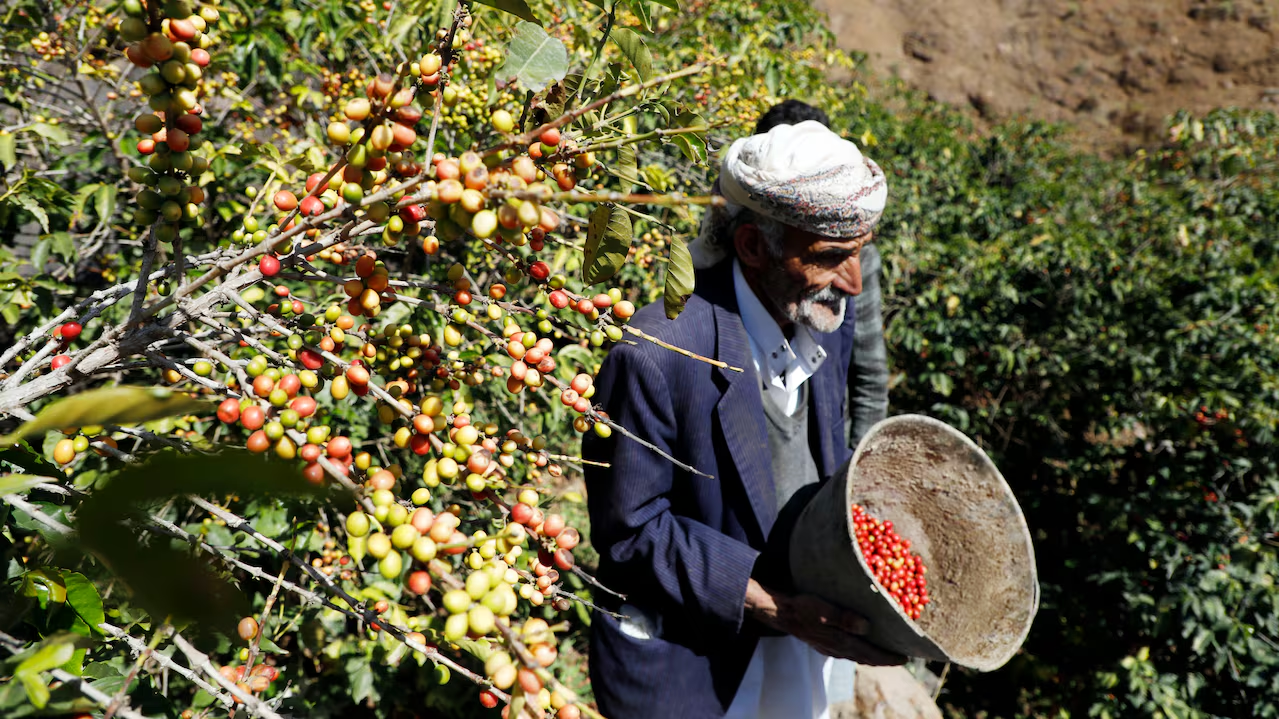
As is well-known, Yemen boasts a rich heritage in coffee, recognized as the driest and most extreme coffee-growing region in the world, with the broadest range of temperatures. Despite these challenging conditions, Yemeni coffee farmers have developed innovative cultivation techniques that balance economic sustainability with environmental conservation. These techniques have led to the development of cultivated coffee varieties that have become foundational to the world’s arabica varieties.

Yemen has played a significant and crucial role in the history of coffee; without it, the world would not have known this magical beverage. Yemen’s potential for the future is just as important as its historical significance. The ability of Yemeni farmers to grow coffee in seemingly impossible conditions provides valuable and inspiring lessons, especially as other coffee-growing regions face similar challenges due to climate change. The knowledge and techniques developed in Yemen may be essential for other coffee communities around the world as they contend with the threat of arabica extinction due to climatic stress.

Faris Sheibani, founder and CEO of Qima Coffee, said: “The delicate and complex relationship between coffee and climate remains unexplored in the context of Yemen; farmers here have been growing their crops in diverse conditions for generations and possess an intuitive ecological understanding of their fields. The incoming challenges from climate change will disproportionately impact their lives and livelihoods and will echo throughout the supply chain. Therefore, this year’s ‘Best of Yemen’ is more than just an event; it is a call for a more sustainable future supported by contemporary scientific research and equitable community action.”

Erwin Mierisch, executive director of the Alliance for Coffee Excellence, added: “Yemeni coffee stands as a remarkable testament to quality and resilience; despite the harsh climate and political environment, it continues to deliver a flavor as rich and enduring as its heritage.”

The “Best of Yemen” auction, a cornerstone event in the Yemeni specialty coffee calendar, brings together exceptional products from across the country and presents them to some of the world’s most discerning buyers through its innovative online platform. As part of Qima Coffee’s efforts to establish a fair and sustainable supply chain, the auction returns for its sixth edition with a vision of a sustainable future for thousands of its participants.

By highlighting Yemen’s unique contributions to coffee cultivation and the pressing challenges posed by climate change, this year’s auction underscores the importance of sustainable practices and global cooperation in preserving the rich heritage of Yemeni coffee.

The Breville Oracle Jet.. A $2,000 Marvel in Coffee and Espresso Technology

Breville is taking the home espresso experience to new heights with the introduction of the Oracle Jet, a machine that marries traditional coffee brewing with cutting-edge technology, all at a price tag of $1,999.95. This sophisticated espresso machine is designed for those who appreciate both the art and science of coffee, featuring a sleek touchscreen and the ability to connect to Wi-Fi for seamless software updates.

The Oracle Jet is an upgraded version of Breville’s well-regarded Oracle line and could be considered the high-tech “older sibling” to simpler machines like the Breville Barista Express. It aims to transform the user’s home into a quasi-professional café with its array of advanced features, without requiring the barista skills that traditional machines demand.

One of the standout features of the Oracle Jet is its automated process. The machine takes over the meticulous tasks of grinding coffee beans, dosing, and tamping the grounds with precision. This automation is complemented by an intuitive graphical user interface that guides the user through each step of making their preferred coffee drink, from an espresso shot to more complex beverages like Americanos and lattes.

Furthermore, the Oracle Jet pioneers a novel approach to crafting cold espresso. It doesn’t simply chill the water; instead, it adjusts the brewing temperature and pressure to extract coffee at room temperature, effectively reducing ice melt and ensuring a robust flavor profile for iced coffee drinks. This feature is especially appealing during hot weather, promising a full-flavored coffee experience that stands up to dilution from melting ice.

Despite its impressive capabilities, the Oracle Jet does introduce some potential drawbacks. The transition from manual to automated controls might not appeal to all coffee enthusiasts. Traditionalists may miss the hands-on aspects of coffee making, such as adjusting the grind size and tamping the grounds manually. The machine’s reliance on digital controls and updates also means that users are subject to the quirks and occasional frustrations of dealing with a “computerized” espresso machine.

Another significant consideration is the Oracle Jet’s maintenance and repair. The reviewer notes challenges in finding local repair services willing to work on Breville machines due to a perceived lack of available spare parts and technical documentation. This could lead to higher long-term costs and inconvenience, factors that prospective buyers must weigh against the machine’s upfront benefits.

In conclusion, the Breville Oracle Jet is more than just an espresso machine; it’s a testament to how far home coffee brewing technology has come. Offering a blend of convenience, technology, and quality, it appeals to those who embrace modernity and are willing to invest in a premium coffee experience at home. While it might not replace the tactile pleasure of traditional espresso making for some, it certainly opens up a new realm of possibilities for brewing exceptional coffee with ease and precision.