Coffee Price Crisis Deepens as Margin Calls Hit Exporters and Cooperatives

As global coffee prices soar to historic levels, another silent yet powerful force is putting unprecedented pressure on exporters and cooperatives in producing countries: margin calls.

While consumers celebrate favorable prices for roasters and retailers, many producers and ethical traders are facing financial distress due to the impact of financial mechanisms tied to futures contracts. The situation threatens to destabilize fragile coffee supply chains and erode years of progress in sustainable and fair trade.

Financial Shock Behind the Scenes

A margin call occurs when traders who hedge future coffee sales using commodity exchanges are asked to deposit additional funds after market prices move against their positions. These calls must be met within a short timeframe—typically 24 hours—or positions are liquidated at a loss.

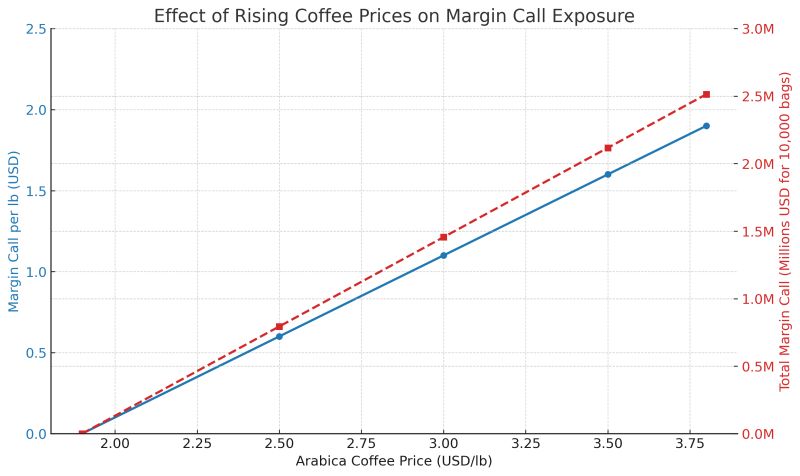
In 2024, Arabica prices on the Intercontinental Exchange (ICE) rose sharply, from $1.90 per pound to over $3.80 within 12 months. For many hedgers, this triggered massive cash demands.

One cooperative in Honduras, for example, had locked in export prices at $2.00/lb to secure predictable income for its producers. But as market prices doubled, its short futures positions became unsustainable. The cooperative received a margin call of $1.80/lb—amounting to over $2 million USD in immediate payments for 10,000 bags, or around 600 metric tons of coffee.

Lacking access to liquidity or emergency credit, the cooperative was forced to close its position at a loss and default on physical delivery contracts.

Small Players Bear the Brunt

The unfolding crisis is hitting smaller exporters, cooperatives, and ethically focused supply chains hardest:

  • Small and medium exporters face margin calls that exceed their cash reserves.

  • Producer cooperatives struggle to respond quickly to fast-moving financial obligations.

  • Ethical supply chains risk breakdowns in traceability and delivery commitments.

  • Local banks are growing increasingly reluctant to finance hedged contracts, citing volatility.

Despite record prices, many producers are not benefiting—either because they sold forward at lower prices, or because intermediaries have exited the market due to financial stress.

Winners in a Shifting Market

While small players falter, some market actors are gaining ground:

  • Large trading houses can absorb margin calls and expand their market share.

  • Speculators with long positions profit as prices rise.

  • Roasters holding pre-crisis forward contracts enjoy cost advantages.

  • Unhedged smallholders may see higher returns—if buyers agree to pay spot prices at origin. However, this is often inconsistent and unreliable.

A Broken Safety Net?

Hedging has traditionally served as a tool to manage price risk. But in the current climate, it’s becoming a double-edged sword. For many coffee sector actors in the Global South, hedging is no longer viable without strong financial backing.

“In today’s volatile market, the question is no longer how to hedge,” says Cantergiani, “but who can afford to hedge?”

Without reforms or new financial safety nets, the coffee trade could see a wave of defaults and consolidation—threatening diversity, sustainability, and the livelihoods of producers worldwide.

By Ennio Cantergiani, Owner and Managing Director of l’Académie du Café – Switzerland
Brewed to Perfection: 5 Classic Ways to Enjoy Espresso Coffee

Espresso is more than just a shot of coffee — it’s the heartbeat of coffee culture worldwide. For the true connoisseur, espresso offers a gateway into a world of aroma, body, and complexity, where every milliliter counts. Whether you’re a café regular or a home brewer with a portable espresso machine, like those from Aroama Coffee, mastering the five foundational ways to enjoy espresso can elevate your daily ritual into an art form.

This story was inspired by a recent post from Lauren O’Brien, Owner & Director of Aroama Coffee, whose passion for coffee and innovation continues to shape how we experience espresso today. Through her advocacy for portable brewing and love for tradition, Lauren celebrates both modern convenience and timeless methods — a balance that perfectly mirrors these five ways to enjoy espresso.

1. Espresso (30ml – Single Shot)

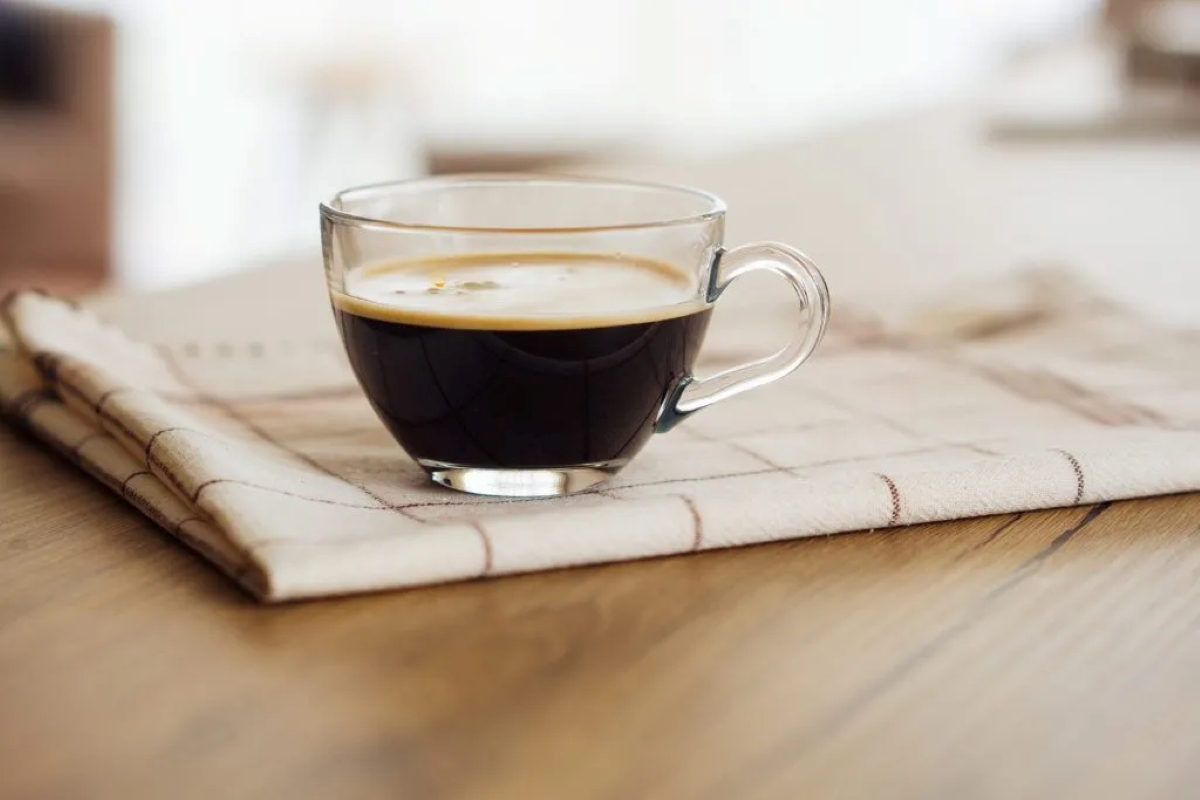
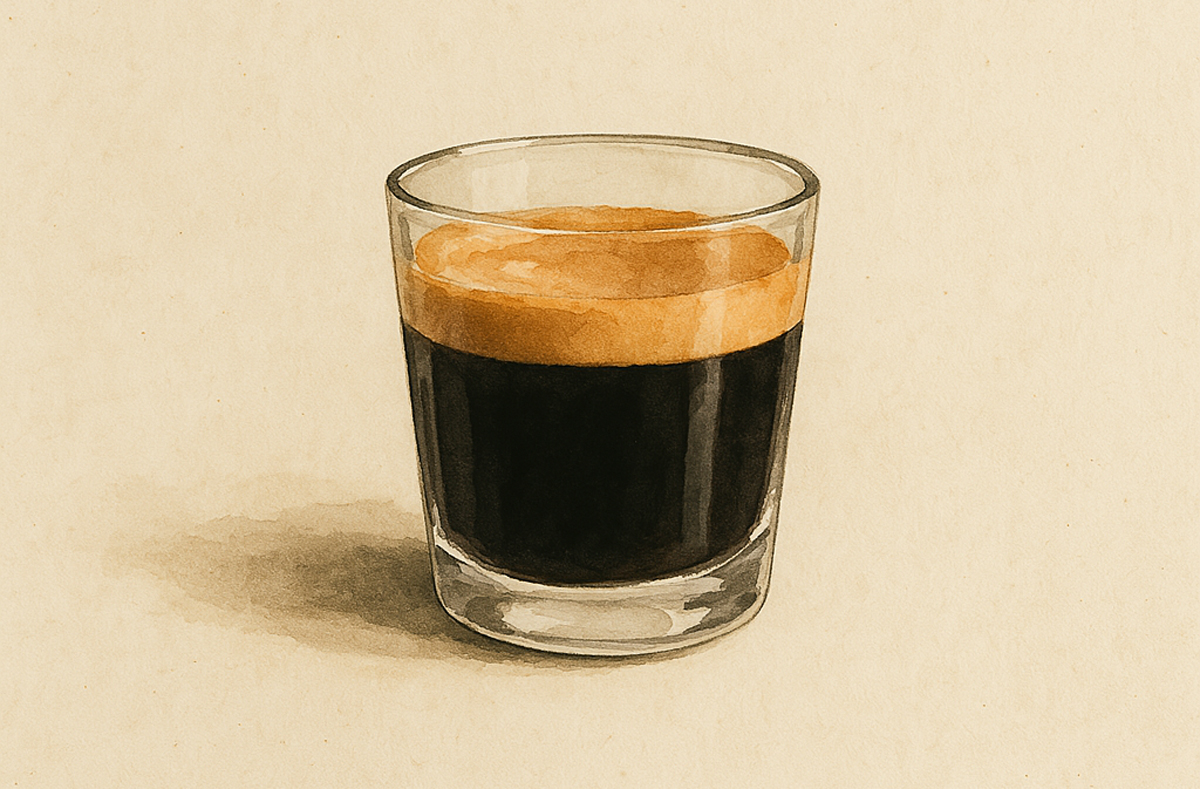
The cornerstone of modern coffee culture, the espresso shot is a 30ml pour of pure intensity. Brewed under high pressure using finely ground coffee, it delivers a bold, concentrated flavor with a balanced profile of acidity, sweetness, and bitterness. It’s topped with a silky layer of crema — a sign of a well-extracted shot. Whether enjoyed solo or as a base for other drinks, espresso embodies the essence of the bean.

Expert Tip: Use freshly ground beans with a precise grind size to ensure optimal extraction — around 25–30 seconds for a classic shot.

2. Espresso Doppio (60ml – Double Shot)

A “doppio” is simply double the espresso, offering twice the intensity. With 60ml of liquid gold, this is the go-to for those who crave a bolder caffeine kick without compromising on flavor. It’s also the standard shot used in most café beverages.

Did You Know? The term “doppio” is Italian for “double,” and it’s the standard in specialty coffee shops, replacing the single shot in most espresso-based drinks.

3. Ristretto (22ml – Concentrated Shot)

Italian for “restricted,” a ristretto is a shorter, more concentrated shot of espresso — typically only 22ml. Brewed with the same amount of coffee but less water, it produces a syrupy, sweeter profile with reduced bitterness. It’s the drink of choice for those seeking depth and complexity in a smaller sip.

Tasting Notes: Expect fruit-forward brightness and chocolate undertones, with a rich mouthfeel and lower perceived acidity.

4. Short Macchiato (30ml or 60ml Espresso with Foamed Milk)

“Macchiato” means “stained” or “marked” in Italian — in this case, espresso marked with a dollop of foamed milk. A short macchiato tempers the intensity of espresso without diluting its character, making it ideal for those who appreciate both strength and softness.

Variants: Use a single or double shot as the base. The milk is usually textured, not steamed flat, adding a luxurious touch to the finish.

5. Espresso Con Panna (30ml or 60ml Espresso with Cream)

A decadent twist on the classic shot, Espresso con Panna is topped with a generous layer of whipped cream. The contrast between the bitter espresso and the sweet, velvety cream creates a dessert-like indulgence, popular across Europe and the U.S.

Perfect For: Afternoon pick-me-ups or those exploring espresso but not quite ready for the full punch of a straight shot.

The Modern Espresso Movement

Today’s espresso experience goes beyond cafés and baristas. As Lauren O’Brien highlights, the coffee world is evolving through tech-driven brewing solutions — with portable espresso machines redefining how and where we enjoy our daily shots. Aroama Coffee’s commitment to making espresso accessible anywhere speaks to a growing global love affair with quality coffee and convenience.

From sustainably sourced beans to smart brewing tools, coffee lovers are now more empowered than ever to recreate café-quality espresso wherever their journey takes them.

Conclusion
Espresso is the foundation of coffee culture — versatile, expressive, and deeply personal. These five classic preparations offer something for every palate, whether you’re chasing complexity, intensity, balance, or indulgence. And with portable innovations like those from Aroama Coffee, that perfect shot is never out of reach.

Which style is your favorite — bold ristretto, creamy con panna, or the classic espresso? Explore them all, and let your taste buds lead the way.

JDE Peet’s Earns Fair Pay Leader Certification for Gender Pay Equity

DE Peet’s (EURONEXT: JDEP), the world’s leading pure-play coffee and tea company, has received the prestigious Fair Pay Leader certification from the Fair Pay Innovation Lab (FPI), marking a significant milestone in the company’s commitment to pay equity and workplace inclusion.

This gold standard certification is awarded to companies demonstrating no significant gender pay disparities across their global workforce. A comprehensive 2024 gender pay equity study, which analysed anonymised remuneration data from around 19,000 JDE Peet’s employees, revealed a minimal gender pay gap of just 0.52%. This figure falls well below the upcoming EU directive threshold of 5%, and is widely regarded as statistically insignificant.

JDE Peet’s CEO Rafael Oliveira emphasized the company’s ongoing commitment to equity, stating:
“At JDE Peet’s, we want to create a workplace where a diversity of ideas, perspectives, cultures and backgrounds are welcome. Our workforce reflects the people we serve—our consumers. The Fair Pay Leader certification is a wonderful recognition, but it’s not our endpoint. We will continue to assess and address equity gaps to ensure talent is fairly recognised and rewarded.”

The certification follows JDE Peet’s recent receipt of the 2025 Catalyst Award, further highlighting the company’s dedication to fostering an inclusive and equitable workplace culture.

Since launching its first pay equity study in 2022, JDE Peet’s has proactively monitored and refined its policies and practices to close equity gaps and promote equal opportunities across its global operations.

With a presence in over 100 markets and a portfolio of more than 50 brands—including L’OR, Peet’s, Jacobs, Senseo, Tassimo, Douwe Egberts, OldTown, Super, Pickwick and Moccona—JDE Peet’s serves approximately 4,400 cups of coffee or tea every second. In 2024, the company reported total sales of EUR 8.8 billion and employed over 21,000 people worldwide.

Explore JDE Peet’s commitment to equity and inclusion at www.jdepeets.com.

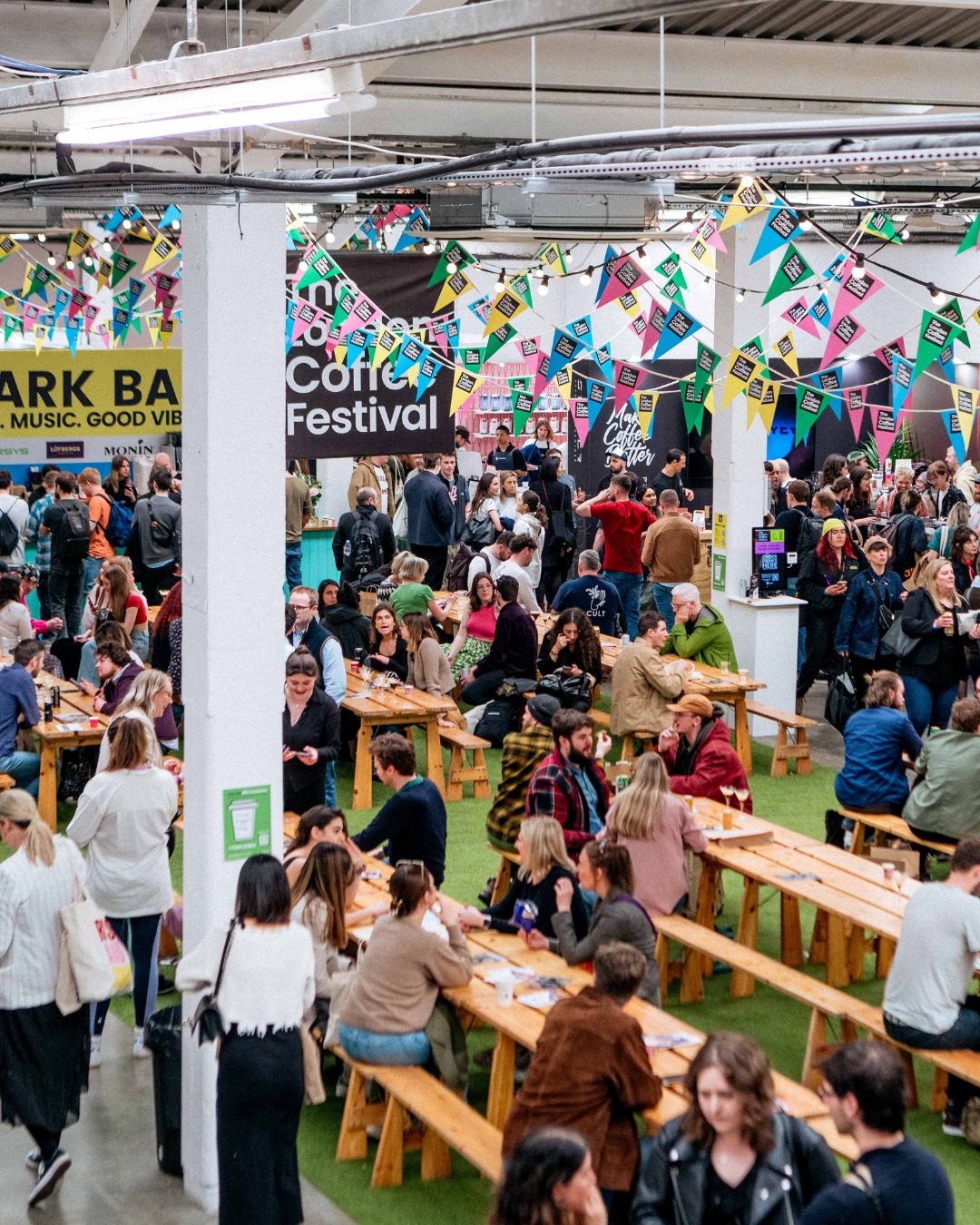
All You Need to Know About the London Coffee Festival 2025

The London Coffee Festival 2025 returns to its iconic venue — The Truman Brewery on Brick Lane. Scheduled to take place from 15 to 18 May 2025, the event brings together coffee lovers and professionals from across the globe for a celebration of taste, innovation, and culture in the heart of the British capital.

Dates and Venue

  • Venue: The Truman Brewery, 91 Brick Lane, London, E1 6QR

  • Industry Days:

    • Thursday 15 May & Friday 16 May, from 10:00 AM to 5:00 PM (last entry at 4:00 PM)

  • Public Sessions:

    • Saturday 17 May:

      • Morning Session: 09:00 AM – 1:15 PM

      • Afternoon Session: 1:30 PM – 6:00 PM (last entry at 5:00 PM)

    • Sunday 18 May:

      • All-day Session: 09:30 AM – 3:30 PM (last entry at 2:30 PM)

Main Zones and Activities

The festival offers a rich and diverse program, appealing to professionals and casual visitors alike:

  • The Lab:
    Educational talks, discussions, and workshops on current topics in the coffee industry.

  • Latte Art Live:
    Dazzling live performances by top baristas, plus interactive training sessions for visitors.

  • Coffee Masters:
    A thrilling competition where 16 elite baristas battle it out across multiple coffee disciplines.

  • Hyde Park Bar:
    A stylish bar serving signature coffee cocktails, with live DJ sets enhancing the atmosphere.

  • Brew School:
    A 45-minute educational session ideal for those looking to deepen their coffee knowledge.

  • True Artisan Café:
    A rotating café presented by La Marzocco, featuring unique creations by independent coffee shops.

  • Roasters Village:
    A marketplace where Europe’s best roasters present their coffee and connect with enthusiasts.

What’s New in 2025

  • Meet China Zone:
    A new dedicated area showcasing the rapidly growing coffee culture in China.

  • London Coffee Festival Awards:
    A new award system celebrating excellence across categories such as:

    • Best Independent Coffee Shop

    • Best Sustainable Initiative

    • Best Coffee Shop Design

    • Best Coffee Startup

Tickets and Access

Tickets are available through the festival’s official website, with various options tailored to different audiences:

  • Standard Tickets

  • Ultimate Access Tickets

  • Industry Passes

Early booking is strongly recommended, as the event attracts a large audience and regularly sells out.

Getting There

The venue is centrally located and easily accessible by public transport:

  • Tube and Rail Stations:

    • Shoreditch High Street – 5-minute walk

    • Liverpool Street – 10-minute walk

    • Aldgate East – 10-minute walk

  • Bus Routes:
    8, 26, 35, 47, 48, 55, 57, 78, 149, 242, 243, 388

Additional Information

  • The festival supports Farm Africa, a charity working to improve the livelihoods of farming communities across Africa.

  • The official website provides guidance for visitors from outside London, including accommodation and travel tips.

Conclusion

The London Coffee Festival 2025 is a unique opportunity to explore the global world of coffee, discover new tastes, and connect with key players in the industry. Whether you’re a professional seeking innovation or a passionate coffee drinker, the event promises inspiration, education, and enjoyment.

Ready for a coffee adventure?
🔗 Visit the official festival website here


Coffee’s “Wellness Wave” Is Underway After FDA Approval

After years of debate over its health effects, coffee has received official recognition from the U.S. Food and Drug Administration (FDA) as a healthy beverage. The decision, issued in December 2024, marks a major turning point for the coffee industry and aligns with a growing body of scientific evidence linking coffee to cognitive benefits and reduced risks of chronic conditions such as Parkinson’s disease and type 2 diabetes.

The FDA’s endorsement comes as the global wellness economy—valued at $4.5 trillion—continues to reshape consumer expectations. In this context, coffee is rapidly evolving from a source of caffeine into a functional beverage enriched with ingredients such as probiotics, antioxidants, and adaptogens. For producers and roasters, the recognition opens new opportunities for product development and brand positioning, particularly among health-conscious consumers. For younger generations, many of whom already associate coffee with positive health attributes, the FDA’s decision serves as a confirmation rather than a revelation.

Industry voices say the shift could have a lasting impact on how coffee is marketed and consumed. Ildi Revi, Chief Learning Officer at Purity Coffee, described the FDA’s decision as a “pivotal moment,” adding that it reinforces decades of research. She notes that this recognition may drive a broader understanding of coffee’s role in long-term wellness, moving it beyond its traditional image as a simple stimulant. Revi also points to recent data from the National Coffee Association indicating that younger drinkers are already factoring health benefits into their purchasing decisions.

Recent analysis from Euromonitor identifies wellness, luxury, and “permissible indulgence” as the key forces shaping the future of coffee. Brands across the sector are exploring health-driven innovations without compromising taste or quality. Organic beans rich in antioxidants, blends fortified with adaptogens, and cold brews containing probiotics or prebiotic fiber are becoming increasingly common. Some companies are even experimenting with CBD or psilocybin infusions. These offerings are gaining traction among consumers seeking more from their daily cup—whether for gut health, immune support, or mental clarity.

However, the surge in health-related innovation has also brought new challenges. A prominent example was the nationwide recall of Snapchill’s canned cold brew in 2024, prompted by concerns over botulism risk. The incident rattled the specialty coffee sector, underscoring the dangers of insufficient safety protocols in a fast-moving market. It echoed previous scares, such as Death Wish Coffee’s 2017 voluntary recall, and highlighted a broader pattern of vulnerabilities, from contaminated beans and poor sanitation to unsafe packaging.

Revi warns that the specialty coffee industry still harbors misconceptions about food safety. While some see regulatory compliance as an obstacle to creativity, she argues it should be viewed as a core component of product quality—particularly when health claims are involved. The danger posed by bacteria such as Listeria monocytogenes and Clostridium botulinum is real, especially in low-acid, anaerobic products like canned or nitrogen-infused cold brew. Although spores may remain dormant at low temperatures, any break in the cold chain—such as outdoor events or improper transport—can create ideal conditions for germination and contamination.

In response, more coffee companies are investing in quality control, third-party certification, and greater supply chain transparency. The National Coffee Association has issued safety guidance, including a green coffee food safety workbook and protocols for cold brew processing. According to Revi, measures such as pH monitoring, filtration, pasteurisation, and strict cold storage must be viewed not as burdens but as essential safeguards. She believes these standards can support—not stifle—industry innovation.

The financial consequences of safety failures are particularly severe for small and independent businesses. A single incident can erode consumer trust, result in significant financial loss, and permanently damage a brand’s reputation. This has led to growing calls for accountability and consistency in health claims. Revi urges the industry to move beyond self-regulation and to adopt practices such as publishing Certificates of Analysis (COAs) online, empowering consumers to assess whether a coffee aligns with their health goals. These documents could include compound levels, safe thresholds, and estimated extraction data, although Revi cautions against using COAs as tools for public criticism in a still-developing field.

The implications of the FDA’s decision extend beyond consumer trends. As the specialty coffee sector integrates wellness into its identity, it faces a future of increased oversight, including stricter labeling laws and limitations on additives. Yet the shift also creates space for new business models. Cafés are rebranding with hygiene-first messaging, while functional coffee products featuring collagen, nootropics, or adaptogenic herbs are entering mainstream retail.

Data from Euromonitor indicates that the health and wellness coffee market is expected to grow by 6.8% annually over the next five years, driven by demand for organic and functional beverages. Brands that embrace science-based standards, transparent sourcing, and product integrity are already seeing stronger consumer loyalty—and, in many cases, higher margins.

For Revi, the next chapter of coffee isn’t about competition but collaboration. She believes that industry players should work together to establish rigorous health benchmarks that benefit both public health and the coffee ecosystem. “There’s room for everyone in this space,” she says. “This isn’t just a trend—it’s a new frontier for coffee with the potential to improve the lives of millions.”

As the wellness wave reshapes the industry, coffee’s new designation as a healthy beverage brings with it both opportunity and obligation. From producers and roasters to cafés and retailers, every link in the supply chain will now be expected to meet rising standards for safety, transparency, and health impact. Whether the industry can maintain its momentum without compromising its credibility may define the next era of specialty coffee.

Amsterdam Coffee Festival Celebrates 10th Edition with New Experiences and Signature Competitions

The countdown has begun for the 10th edition of the Amsterdam Coffee Festival, returning to NDSM-Loods from April 3 to 5, 2025. With just one week to go, the organizers have revealed the full programme, offering a diverse mix of coffee innovation, competitions, and cultural experiences.

This year’s event brings together more than 175 brands and roasters, along with new interactive zones and fan-favorite activities. The all-new Cupping Exchange will feature expert-led tasting sessions, while the popular Roasters Village invites guests to sample a wide range of specialty coffees from around the world.

The festival will also host a series of competitive highlights, including:

  • Roast Masters – A multi-discipline contest for top-tier roasters.

  • Tea Tasting Championship – A showcase of sensory skills beyond coffee.

  • Matcha Latte Art Battle – A creative duel where tea meets barista art.

Attendees will also have the chance to learn directly from coffee professionals through 5THWAVE LIVE, and even try their hand at roasting with the Become a Roaster Experience, presented by Aillio.

In celebration of its 10th anniversary, the festival is launching SIP—a new afterparty concept held every afternoon until 8 PM. The event will feature a curated mix of cocktail culture, natural wine, and vinyl-only DJ sets, offering a relaxed space to network and unwind.

Final release tickets are now available, and VIP 2-Day passes are being offered for free upon registration. Accreditation closes on Monday, 31 March.

Apply now for your complimentary VIP pass
Venue: NDSM-Loods, Amsterdam
Dates: April 3–5, 2025


View this post on Instagram


A post shared by عالم القهوة (@qahwaworld)

Coffee Experts Agree: This Is the #1 Mistake People Make When Brewing at Home

In a recent feature published by EatingWell, six leading U.S. coffee experts unanimously identified one simple but critical mistake that undermines the flavor of home-brewed coffee: inaccurate measurements.

As specialty coffee continues to gain popularity and home brewing becomes more sophisticated, many consumers are still puzzled when their at-home cup doesn’t match the quality of their local café. The article sheds light on the most common brewing errors and how to correct them, with insights from roasters, baristas, and trainers across the country.

“We hear this all the time—customers love our coffee in-store, but they say it tastes different at home,” said Murilo Santos, co-founder and roastmaster at Boarding Pass Coffee in Georgia. “The issue usually comes down to technique.”

The Top Three Mistakes

According to the panel of coffee professionals, the three most common mistakes in home brewing are:

  1. Inaccurate coffee-to-water ratios

  2. Inconsistent grind size

  3. Using unfiltered tap water

Measurement Is Key

Lindsey Sozio, founder of Lavender Coffee Boutique in Denver, emphasized the importance of precision. “Coffee is a science. The wrong ratio throws off the balance—too much coffee results in bitterness, while too little leads to sour, weak flavor.”

To resolve this, experts recommend using a kitchen scale to weigh both coffee and water. Kat McCarthy, Specialty Coffee Association trainer and Lavazza’s training manager, noted that “even using the same scoop each time can yield different amounts. A scale guarantees accuracy.”

While brewing ratios may vary by method and taste, most experts recommend starting with a 1:16 or 1:17 coffee-to-water ratio—meaning 1 gram of coffee to 16–17 grams of water—and adjusting from there.

Invest in a Burr Grinder

Contrary to popular belief, a high-end coffeemaker isn’t the most important investment for home brewers. The experts stress that a quality burr grinder plays a more critical role.

“People often invest in brewers but ignore the grinder,” Sozio explained. “Grind consistency is essential for proper extraction and flavor.”

Adam Kelley of Leopard Forest Coffee Co. added that grind size should match brew method: coarse for French press, fine for espresso, and medium for drip coffee.

Amy Smith from EXO Coffee recommended burr grinders over blade grinders and suggested that consumers ask their local roasters to grind beans to suit their preferred method if a grinder is not available at home.

The Water Factor

Filtered water—not tap—is another non-negotiable for quality brewing. Tap water often contains minerals and additives that alter flavor, especially in areas with older infrastructure.

“Coffee is 98% water, so what you brew with matters,” said Tayler Jackson of The Grind in Virginia. “Using filtered water makes a huge difference.”

Temperature also plays a role. Experts recommend water temperatures between 195°F and 201°F for optimal extraction. Water below 195°F can lead to sour coffee, while water hotter than 205°F can burn the grounds, creating bitterness.

Conclusion

The consensus among coffee professionals is clear: perfecting technique is the secret to a great cup at home. By weighing ingredients, using a burr grinder, selecting the correct grind size, and brewing with filtered water at the right temperature, anyone can elevate their home coffee experience.


Rain Forecast in Brazil Halts Coffee Price Rally

Coffee prices retreated on Wednesday, erasing earlier gains, after updated weather forecasts predicted widespread rainfall across Brazil’s key coffee-growing regions later this week.

May arabica futures fell by 1.23% to close at a loss of 4.90 cents, while May robusta contracts declined 1.43%, or $80.

The session initially opened on a bullish note, with arabica reaching a two-and-a-half-week high. Market sentiment was driven by weather concerns in both Brazil and Vietnam, the world’s top producers of arabica and robusta, respectively. Brazil’s leading coffee cooperative, Cooxupé, warned that abnormally high temperatures and below-average rainfall in February could negatively affect this year’s arabica harvest. In Vietnam, authorities in the Dak Lak region — the country’s main coffee-producing area — forecast continued hot and dry conditions through the end of March.

Despite today’s pullback, fears of tightening global supply continue to support prices. According to Cecafé, Brazil’s green coffee exports fell by 12% year-on-year in February, totaling 3 million bags. The country’s crop forecasting agency, Conab, has also revised its outlook downward, expecting the 2025/26 harvest to fall 4.4% year-on-year to 51.81 million bags — the lowest in three years. The 2024 crop forecast was also reduced slightly to 54.2 million bags.

Inventory levels are providing mixed signals. Robusta stocks monitored by ICE climbed to a seven-week high of 4,414 lots, while arabica inventories dropped to a one-month low of 777,708 bags.

Adding to the bearish tone, a recent outlook by Marex Solutions projected a wider global coffee surplus in the 2025/26 season, reaching 1.2 million bags, up from 200,000 bags forecasted for the 2024/25 cycle.

In Brazil, recent rainfall has temporarily eased drought concerns. According to Somar Meteorologia, the Minas Gerais region — Brazil’s largest arabica-producing area — received 31.2 mm of rainfall in the week ending March 22, equivalent to 102% of the historical average.

Meanwhile, export data from Vietnam continues to weigh on robusta prices. The country’s General Statistics Office reported a 6.6% year-on-year increase in coffee exports for February, totaling 169,000 metric tons. Despite a severe drought that reduced Vietnam’s 2023/24 robusta crop by 20%, production in 2024/25 is expected to dip only slightly to 27.9 million bags, according to the USDA. However, the Vietnam Coffee and Cocoa Association has lowered its own estimate further to 26.5 million bags.

Global coffee trade figures show mixed performance. While Brazil’s 2024 coffee exports surged 28.8% to a record 50.5 million bags, the International Coffee Organization (ICO) reported a 12.4% decline in global coffee exports in December, and a 0.8% drop over the October–December period.

The USDA’s latest report, issued in December, forecasts global coffee production to rise by 4% in 2024/25 to 174.855 million bags. However, ending stocks are expected to fall 6.6% to 20.867 million bags, marking the lowest level in 25 years.

Separately, commodity trader Volcafe revised its outlook for Brazil’s arabica output in 2025/26 to 34.4 million bags, down by 11 million bags from its September estimate due to prolonged drought. The firm also projected a global arabica deficit of 8.5 million bags, extending the deficit trend for a fifth consecutive year.

ONE MONTH TO GO: The Countdown to the 2025 Specialty Coffee Expo Begins!

Houston, Texas – The Cultural Capital of the South – is getting ready to host the largest Specialty Coffee Expo in history, with over 645 confirmed exhibitors and more than 17,000 attendees expected from around the world.

From April 25–27, 2025, the Specialty Coffee Expo will transform the George R. Brown Convention Center into the global epicenter of specialty coffee. Organized by the Specialty Coffee Association (SCA), this is the ultimate destination for coffee professionals, enthusiasts, producers, and innovators to connect, learn, and experience the best the industry has to offer.

Why Attend?

The Expo offers unparalleled opportunities to grow professionally and connect with industry leaders:

  • SCA Lecture Series: Dive into key topics shaping the specialty coffee landscape.

  • Workshops: Hands-on learning with the best in the business.

  • Cupping Exchange: Explore a world of flavors through public cuppings.

  • Origin Journey Features: Discover coffee at the source.

  • World Coffee Roasting Championship: Witness top-tier roasting talent compete.

Registration & Badge Options

🔹 3-Day Expo Badge (April 25–27)

  • Regular: $399

  • SCA Paid Member: $340

🔹 1-Day Expo Badge (Friday or Saturday)

  • Regular: $220

  • SCA Paid Member: $185

🔹 Sunday-Only Badge (April 27)

  • Regular: $110

  • SCA Paid Member: $93

All badges include access to the Exhibit Hall, World Coffee Roasting Championship, SCA Lectures, and the Cupping Exchange (excluding ticketed events).

Ticketed Events

Workshops
Apply your knowledge in real-time problem-solving sessions.

  • Regular: $252

  • Member: $210

IWCA Breakfast – April 26, 8:00–9:30 AM
Support and celebrate the work of the International Women’s Coffee Alliance (IWCA), uniting women in coffee across 36+ countries.

  • Ticket: $150

Important Notes

  • The Expo is cashless; badges must be purchased online via credit or debit card.

  • Need a visa invitation letter? You can generate one during registration or request it here.

Don’t miss the most anticipated coffee event of the year — Join us in Houston and shape the future of specialty coffee!

Register now for the 2025 Specialty Coffee Expo

Soaring Coffee Prices Put Pressure on Starbucks and Indie Brands Alike

The global coffee industry is feeling the heat — and not just from the roasters.

According to a recent report by Modern Retail, rising prices for green coffee beans are forcing everyone from independent roasters to global chains like Starbucks to rethink their strategies, raise prices, and cut costs.

In January, Eva Hart, co-founder of Dallas-based Couple’s Coffee, received a letter from her roaster warning that arabica beans had surpassed $4 per pound — nearly a full dollar increase from just a month earlier. “We can no longer hold prices at current levels,” the letter read, announcing that new rates would take effect on April 1 to reflect market conditions.

For Hart, it was the second major price hike in under a year. In a previous attempt to stay afloat without passing costs onto customers, the company let go of its social media manager — a decision that came at the expense of visibility. “We’re kind of cornered,” she told Modern Retail. “This time, we have no choice but to raise prices.”

And the situation may only worsen. Hart’s supplier also flagged broader industry strains, including bankruptcies, defaults, and uncertainty surrounding potential tariffs that could hit coffee imports hard.

A Global Shortage Driving Prices Up

Arabica beans — the variety used by major coffee chains — have seen a dramatic spike over the past year. In February, futures peaked at more than $4.30 per pound. Robusta, typically used in instant coffee, has also risen sharply.

Behind the surge are supply disruptions caused by droughts in key producing countries like Brazil and Vietnam. Meanwhile, global demand remains strong — a combination that’s putting a financial strain on coffee companies of all sizes.

Caught in the middle, many small and mid-sized brands are facing tough decisions: raise prices, absorb losses, or reduce operations. Tariff uncertainty only adds another layer of risk.

Industry at a Tipping Point

Brandon Fishman, founder of vitamin-infused coffee brand VitaCup, told Modern Retail that 2025 may mark a breaking point for the industry. Many companies had been insulated from rising costs through long-term futures contracts — like Starbucks, which typically secures pricing 12–18 months in advance. But those contracts are now expiring, exposing companies to market volatility.

Even for brands that hedged early, the outlook is grim. VitaCup had locked in prices below $3 per pound — but future purchases are expected to cost around $4. The brand has already raised prices twice in the last six months and is looking at further cost-cutting, from software expenses to operational tweaks.

The numbers speak volumes. According to U.S. government data, the average price for ground roasted coffee reached a record $7.25 per pound in February 2025.

“We’re not talking about 10% price increases,” Fishman warned. “It could be 50% or more, especially for private-label brands at big-box retailers.”

Starbucks, too, is feeling the pressure. The company’s Chief Financial Officer, Rachel Ruggeri, told investors in January that rising coffee costs are weighing on profit margins, especially in the packaged goods division where price swings hit harder.

Tariffs and Trade Tensions

Further complicating the situation are trade policies and tariffs, particularly those related to decaffeinated coffee — most of which is processed in Canada and Mexico.

Samuel Klein, green coffee buyer at Partners Coffee in New York, expressed concern over the potential impact of Trump-era tariffs. “Swiss water decaf, in particular, has gotten very expensive,” added Craig Leslie, founder of The Bean Coffee Company, who said his brand has already raised prices multiple times both on Amazon and its website.

Although a 25% tariff on many Mexican and Canadian imports has been postponed until April 2, the lack of clarity around what will be implemented — and how coffee is classified by country of origin or processing — has left roasters in limbo.

“Decaf coffee is already expensive to produce and transport,” Klein said. “When you add trade complexity, it becomes even harder to manage.”

Adapting in Uncertain Times

Some companies, like the family-owned Café Aroma (founded in 1961), are trying to buy coffee opportunistically when prices dip, avoiding long-term contracts that might lock them into high costs.

Klein has taken a similarly cautious approach, scaling back on ordering volume. “The margin for error is a lot smaller than it was a year ago,” he said.

As the market continues to shift, consumer habits may change too. Leslie expects more people to brew their coffee at home rather than pay premium café prices. “I think people are going to stop spending $4 or $5 at a coffee shop and brew more at home,” he said.

Data from companies like J.M. Smucker — which owns Folgers and Café Bustelo — supports that trend. Despite multiple price hikes in 2024, Smucker’s U.S. coffee sales rose by 2% in the most recent quarter, thanks to strong demand and higher prices.

“At-home coffee remains a strong and resilient category,” said CEO Mark Smucker. “It provides value to consumers in all economic environments.”

Bracing for What’s Next

Across the board, coffee businesses are preparing for a period of prolonged uncertainty. Between climate shocks, price volatility, and political headwinds, the next six to twelve months could reshape how coffee is bought, sold, and consumed.

“I need to pay closer attention to the market,” Klein said, “and really understand what the future might look like.”

Pedro Pascal’s Coffee Order Shocks the Internet — CNN Reports

Pedro Pascal’s intense coffee habit is making waves online once again — and this time, he’s reacting with humor and a hint of embarrassment.

In a recent episode of Jimmy Kimmel Live!, reported by CNN, The Last of Us star addressed the viral photo that revealed his go-to caffeine fix: a cup labeled with six espresso shots.

“I cannot begin to tell you how violating this was,” Pascal said, laughing, as Kimmel teased him about the mega-dose of caffeine. “It was an incredibly private morning ritual that I never wanted anyone to know about.”

He explained that the routine began with four shots, but evolved over time. “The cups got bigger, the shots got weaker… eventually it became six.”

Trying to defend the habit, Pascal insisted, “I don’t have more coffee for the rest of the day, I swear!” But Kimmel jokingly renamed the drink a “methaccino,” to which Pascal laughed, adding that it actually helps him stay focused: “You sip it, you get really high, and you answer emails and stuff.”

CNN noted that Pascal has a packed schedule that might justify the espresso overload. He’s returning as the lead in HBO’s hit series The Last of Us, set to premiere its second season on April 13. He’s also joining the Marvel Cinematic Universe as Mr. Fantastic in Fantastic Four, and is set to appear in Avengers: Doomsday and Avengers: Secret Wars.

With that kind of workload, it’s no wonder his coffee order is making headlines.

CQI CEO Renews Call for Industry-Led ‘World Coffee Development’ Agency Amid USAID Cuts

Michael Sheridan, CEO of the Coffee Quality Institute (CQI), has reiterated his call for the creation of World Coffee Development, an industry-funded global agency aimed at strengthening local development in coffee-producing communities. His renewed appeal follows the recent announcement of a $40 billion disinvestment in U.S. overseas development assistance and the effective termination of USAID operations.

In a post published on CQI’s official website, Sheridan highlighted the long-standing governance gap in the global coffee sector, particularly in moments of crisis, and the need for an institutional response that mirrors the structure and success of World Coffee Research (WCR)—but focused on community-level investment and development rather than breeding and genetics.

The concept of World Coffee Development was first introduced by Sheridan more than a decade ago, prompted by the outbreak of coffee leaf rust (CLR) in Central America during the 2012/13 crop cycle. At the time, the absence of an industry-backed agency to coordinate an emergency response underscored a significant vulnerability in the sector’s structure.

In his article, Sheridan draws a comparison with Colombia, which responded effectively to its own coffee leaf rust outbreak in 2008. Thanks to decades of early investment in institutions like the Federación Nacional de Cafeteros and the Cenicafé research center, Colombia had already laid the foundation for a coordinated sectoral response. This allowed for the rapid replacement of susceptible coffee varieties with rust-resistant cultivars and support for farmers throughout the transition.

“Colombia began its response in 1927,” Sheridan wrote, emphasizing the need for long-term vision and infrastructure. “The best time to plant a tree was 30 years ago. The second-best time is right now.”

Sheridan warned that the recent USAID cuts could further expose the sector to future disruptions without a sustainable, coordinated funding mechanism in place. “No industry will be more impacted than coffee,” he noted, estimating that USAID invested hundreds of millions of dollars into coffee farms and farmer enterprises over the past 40 years.

“The giant sucking sound in Washington caused by a $40B disinvestment in overseas development assistance has served as a painful reminder that we still don’t have (and could still use) an industry-funded organization that can articulate sector-wide priorities, provide seed funding, and coordinate investment,” he said.

With USAID historically playing a key role in supporting coffee development, particularly during the 2012/13 leaf rust crisis, its withdrawal leaves a gap that, Sheridan argues, only an industry-wide mechanism can fill.

He concludes by asking whether the current moment — marked by rising global challenges, weakening development institutions, and increasing market volatility — is the right time to finally launch World Coffee Development.