Claudia Pagès Wins XVIII illy SustainArt Award at ARCOmadrid 2024

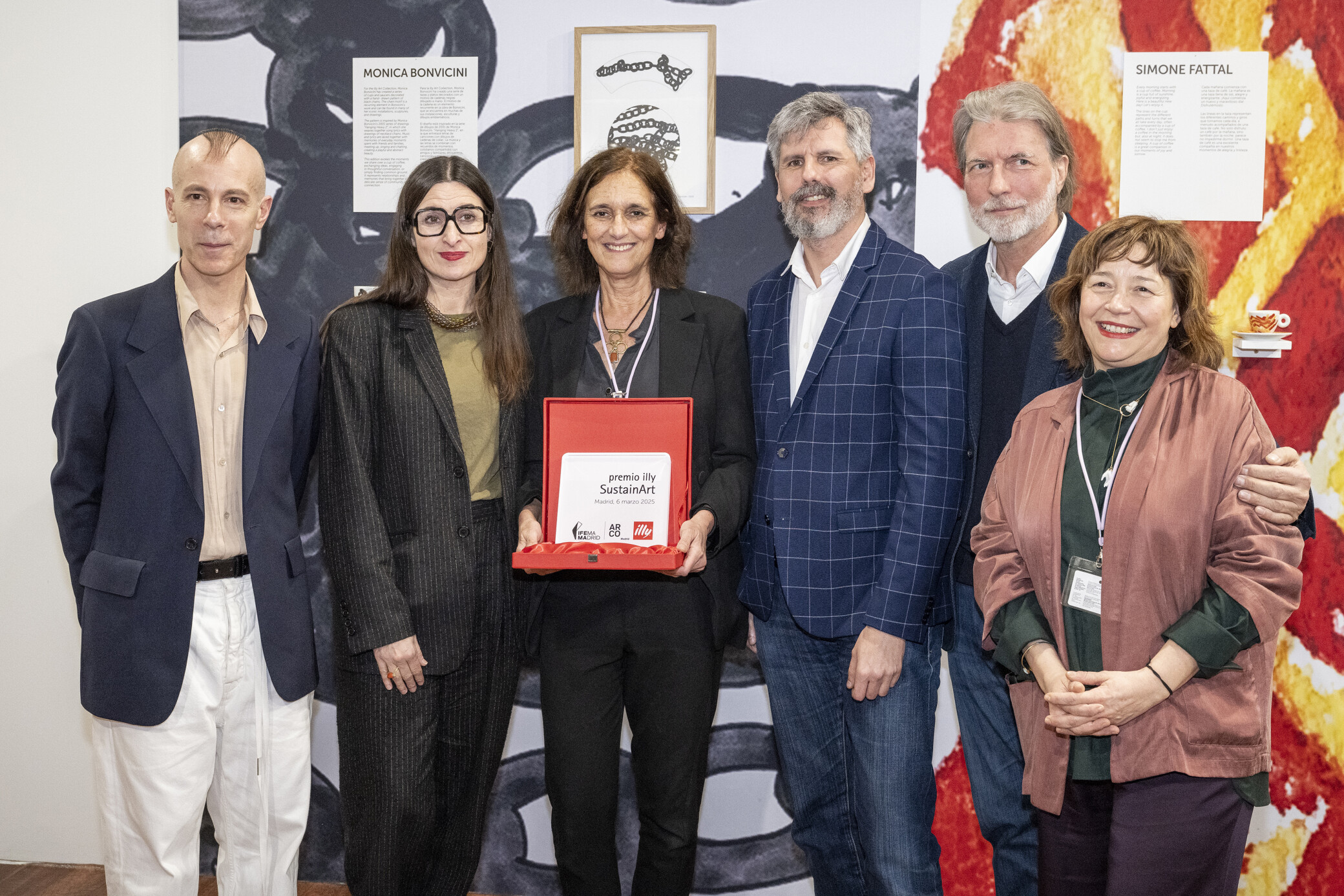
Barcelona-born artist Claudia Pagès has been awarded the XVIII illy SustainArt Prize at the 44th edition of ARCOmadrid, recognizing her innovative approach to contemporary art.

The prestigious award, dedicated to supporting young artists in contemporary art, was decided by a jury of art world experts after an intense deliberation process among 93 submitted works. Represented by Àngels Barcelona Gallery, the 35-year-old Catalan artist captivated the jury with her winning work, consisting of two pieces deeply inspired by history and memory.

Pagès’ creation is built upon the exploration of space, time, and historical inscriptions found on ancient walls. Inspired by the cisterns of Xàtiva, her work intertwines themes of water, memory, and protective structures like walls and castles. Her signature technique involves the use of handmade sheets of paper to form intricate constructions resembling historical filigree labyrinths. The two award-winning pieces, Muro de dos caras and Xàtiva, reflect this approach, utilizing historical references and architectural elements to narrate stories of the past.

Light plays a crucial role in her work, emanating from within a box to reveal hidden layers of memory, emphasizing the delicate balance between remembering and forgetting. Pagès views this interplay as a way to illuminate history and prevent it from fading into obscurity, symbolizing the fragility of both paper and memory itself.

A Rising Voice in Contemporary Art

Claudia Pagès holds a Fine Arts degree from the University of Barcelona and an MFA from the Sandberg Instituut in Amsterdam. Her works have been featured in prominent institutions and exhibitions worldwide, including:

  • Manifesta 15, Barcelona (2024)
  • IVAM, Valencia (2024)
  • Sculpture Center, New York (2024)
  • CA2M, Madrid (2023)
  • Fundació Joan Miró, Barcelona (2023)
  • Tabakalera, Donostia (2022)
  • MACBA, Barcelona (2022)
  • Sharjah Art Foundation, UAE (2018)

Additionally, Pagès has received multiple accolades, including the Ojo Crítico Visual Arts Award in 2022, and has participated in prestigious artist residency programs at Gasworks, London (2017) and Triangle France, Marseille (2020). In March and April 2025, she will embark on a residency at EMPAC in Troy, United States. Her upcoming exhibitions in 2025 will include Chisenhale Gallery (London), INDEX (Stockholm), and Mumok (Vienna), along with a group exhibition at Art Sonje Center in Seoul, curated by Chus Martínez.

The Jury and illy’s Commitment to Art

The illy SustainArt Prize jury included notable art and culture figures: Imma Prieto (Director of the Fundació Tàpies), Javier Díaz-Guardiola (art critic at ABC and coordinator of ABC Cultural‘s art section), and Mariano Mayer (independent art curator), alongside Carlo Bach, artistic director of illycaffè.

With this award, illycaffè reaffirms its commitment to fostering emerging contemporary artists, supporting creativity, and strengthening the link between art and coffee culture.

China’s Changing Appetite for Cup of Excellence Coffees

Coffee Intelligence recently published an article titled “Why China’s Demand for Cup of Excellence Coffees Has Shifted” by Sarah Charles, a digital editor at Coffee Intelligence. She is also the lead co-author of the fourth edition of the International Trade Centre’s Coffee Guide and manages communications for the Sustainable Agribusiness Programme.

In her in-depth article, Sarah highlights how the rapid expansion of China’s Luckin and Cotti Coffee has fueled mass-market coffee consumption, leaving ultra-premium lots for a niche audience. She also emphasizes that Japan, South Korea, and Taiwan are emerging as dominant buyers of Cup of Excellence (CoE) coffees as China’s market shifts toward hybrid and trend-driven beverages.

Given the significance of the article’s insights, we at Qahwa World are republishing it in full. However, this does not imply endorsement or agreement—whether in whole or in part—with its opinions or conclusions.

For years, China’s coffee market has been hailed as a rising force, with annual consumption growing at an impressive 15%—far exceeding the global average of 2.2%. International coffee chains such as Starbucks and Tim Hortons expanded aggressively into the country, while local brands like Luckin Coffee introduced ambitious strategies to make coffee more accessible to the masses.

During this rapid growth, China emerged as one of the world’s largest buyers of Cup of Excellence coffees, known for their high quality and exclusivity. However, recent trends indicate a shift—if not a decline—in demand for these premium lots. Countries such as Japan, South Korea, and Taiwan are now purchasing more CoE coffees, reflecting broader changes in consumer behavior and market dynamics.

The shift in CoE demand does not necessarily mean Chinese consumers are turning away from specialty coffee. Instead, it reflects a strategic realignment in purchasing habits.

According to Mau Perez, Purchasing Manager at Shanghai Cooway Trading: “What we’re seeing isn’t a retreat but rather a shift toward origins with the strongest consumer appeal—like Panama, Ethiopia, and Colombia. Chinese buyers are still competing for the most expensive lots, as we saw in the 2024 Best of Panama auction.”

Trade barriers have also played a role in reshaping China’s CoE market. Guatemala, for instance, was unable to export coffee to China for a period, while Honduras only regained access at the end of 2023. These restrictions have reduced competition from certain origins, leading Chinese buyers to prioritize coffees with stronger consumer recognition.

As China’s specialty coffee market becomes more saturated, brands are shifting their focus from prestige-driven purchases to innovation and accessibility. Luckin Coffee, for example, has embraced tea-infused coffee drinks, such as jasmine milk tea coffee, catering to a growing demand for fusion beverages. Meanwhile, popular tea chains like HeyTea and Chagee have intensified competition, emphasizing affordability and mass appeal over exclusivity.

Steve Wu, Marketing Manager at Melitta Professional in China, explains: “The coffee market is similar to the wine industry—there’s room for a broad range of products at different price points. As consumers become more educated, high-end coffee will continue to exist, just as premium wines have their niche.”

However, while specialty coffee consumption is not necessarily shrinking, brands must now work harder to differentiate themselves and engage consumers through multiple channels.

China’s growing preference for convenience is influencing demand. Ready-to-drink coffee options are booming, with convenience stores offering pre-packaged iced coffee solutions as a cheaper alternative to high-end café beverages. In response, Cotti Coffee has announced plans to integrate convenience stores into its expansion strategy.

Meanwhile, social media influencers have accelerated the shift away from high-end specialty coffee, promoting at-home brewing methods and cost-effective alternatives instead of expensive single-origin purchases.

Beyond changing preferences, economic factors have played a significant role in China’s declining demand for CoE coffees.

China’s economy, once booming, is now facing structural challenges—including slowing GDP growth, high government debt, demographic shifts, and rising youth unemployment. These pressures have made consumers more price-sensitive and cautious in their spending.

Major coffee chains are already feeling the effects—Starbucks China, for instance, recently reported a 14% drop in comparable store sales due to growing competition and reduced consumer spending.

In this uncertain economic climate, affordability has become a key priority for Chinese consumers. Unlike a decade ago, when young professionals actively sought out high-scoring, traceable single-origin coffees, today’s buyers are more pragmatic, opting for mid-range or budget-friendly options instead.

The Future of Specialty Coffee in China

Does the decline in CoE demand signal a downturn in China’s specialty coffee market? Not necessarily. Instead, it suggests a transformation in what premium coffee means to consumers.

Rather than focusing exclusively on traceability and exclusivity, the market is shifting toward new premium experiences—ones centered on convenience, customization, and hybrid flavors that resonate with evolving tastes.

According to Mau Perez: “China’s specialty coffee industry is constantly evolving. Buyers are always looking for the next big origin or processing method, especially from countries that have already built strong brand recognition in China.”

Even though CoE sales in China have slowed, other markets—such as Japan, South Korea, and Taiwan—continue to show strong demand for these exclusive coffees. This suggests that Chinese roasters specializing in high-end beans may shift their focus toward export markets rather than relying solely on domestic demand.

China’s specialty coffee landscape is evolving, and CoE coffees—once a symbol of status and connoisseurship—are no longer a dominant force in the market.

However, this does not mean that specialty coffee itself is in decline. Instead, the industry is adapting to new realities, where premium coffee experiences come in the form of espresso-based drinks, bottled cold brews, or hybrid beverages that better align with local consumption habits.

Steve Wu sums up the situation: “Striking a balance between affordability and quality is now the main challenge. Consumers are becoming more discerning, but the price gap between everyday coffee and ultra-premium beans has widened—9.9 RMB for Luckin or Cotti versus 60 RMB for a Panama Geisha.”

“As a coffee drinker, I’d be willing to pay twice the price of a regular cup for something exceptional. But with more affordable options available, the price difference feels even greater, making high-end beans seem less accessible—even though their actual prices haven’t skyrocketed. This perception gap is a significant barrier to specialty coffee’s growth, especially in today’s economic climate.”

Rather than black pour-over brews, the future of high-end coffee in China may come in espresso-based drinks, ready-to-drink options, or even tea-infused hybrids that better match consumer habits.

For now, one thing is certain: China’s coffee market is evolving, and Cup of Excellence coffees no longer fit the mainstream narrative.

Pu’er: China’s Coffee Capital Blends Agriculture and Tourism into a Unique Experience

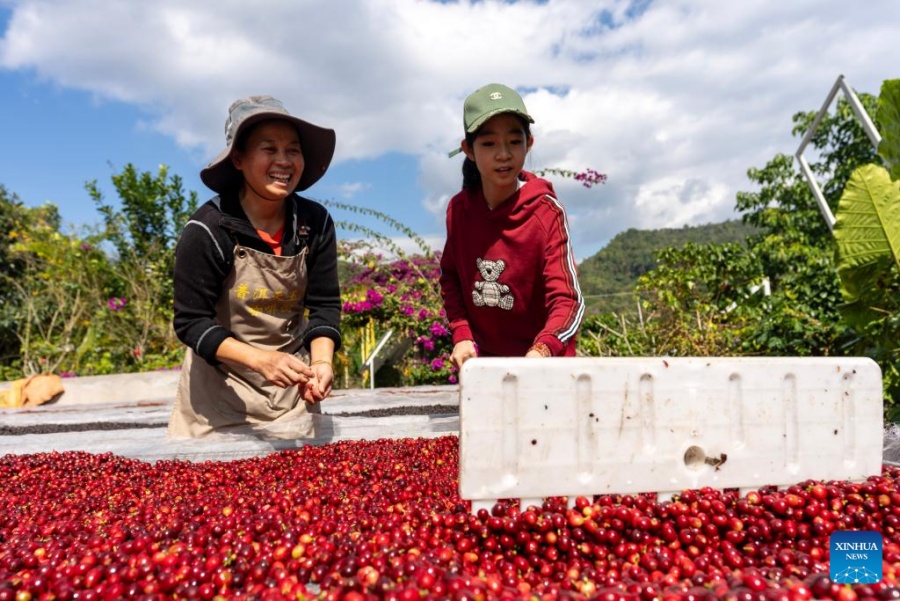
As the coffee harvest season begins, Pu’er City in Yunnan Province, known as China’s coffee capital, comes alive with the aroma of freshly brewed coffee. With its growing coffee farms, cultural exhibitions, and specialty cafés, the city has become a hotspot for both coffee enthusiasts and tourists.

According to China’s “Central Document No. 1” for 2025, released in late February, the country aims to enhance the integration of rural culture and tourism, launching pilot projects to revitalize rural areas through cultural industries.

Pu’er: Leading Coffee Production in China

Located along the Tropic of Cancer, a key coffee-growing belt, Pu’er is China’s top coffee-producing region, with a harvest of 58,000 tons of raw coffee beans in the 2023-2024 season. The city is actively expanding its coffee industry by blending it with tourism and cultural experiences, helping shape China’s growing coffee market.

Elephant Coffee Farm: A Unique Experience in Nature

Amid Pu’er’s lush green hills, “Elephant Coffee Farm” stands out as a remarkable attraction, offering visitors the rare opportunity to enjoy their coffee while watching wild Asian elephants roam freely in their natural habitat.

Huang Da Xiang, an investor and coffee lover, describes the experience:
“It’s amazing to sit here with a cup of coffee and see elephants foraging on the hillside. It’s truly unforgettable.”

The farm also provides interactive activities such as coffee picking, learning about the roasting process, making handcrafted coffee products, and even crafting coffee soap, offering visitors a deeper dive into coffee culture.

Coffee Tourism & Events: A New Dimension for Pu’er’s Coffee Industry

Pu’er is home to over 20 high-end coffee farms, including five officially recognized provincial-level coffee farms, where coffee culture is intertwined with tourism to create immersive visitor experiences. The city also hosts coffee-themed exhibitions and events, showcasing both local and national coffee brands while providing a platform for coffee enthusiasts worldwide to connect.

Tourist Zhang Xuan Yu attended a coffee exhibition held alongside an international coffee brewing competition in Menglian Dai, Lahu, and Wa Autonomous County.
“I got to taste different coffee flavors and meet coffee lovers from around the world. It was a fantastic educational experience,” he said.

The Rise of Coffee Tourism in Pu’er

During the 2025 Spring Festival holiday (January 28 – February 4), Pu’er welcomed 3.25 million tourists, marking a 13.71% year-on-year increase. The city’s tourism revenue also surged by 13.21%, reaching 3.44 billion yuan (approximately USD 480 million).

According to Zhang Qi Ying, Deputy Director of the City’s Culture and Tourism Office,
“The integration of coffee and tourism has become a defining feature of Pu’er’s tourism industry, making it an essential destination for coffee enthusiasts and experience-seekers alike.”

Pu’er: The Ultimate Destination for Coffee Lovers

As China’s coffee industry continues to evolve, Pu’er solidifies its status as a premier hub for coffee innovation and tourism, offering visitors an extraordinary blend of premium coffee, breathtaking nature, and rich cultural heritage.


4o

“Candiano”: From a Simple Joke to a National Debate on Identity and More

On February 6, 2025, Kicking Horse Coffee in British Columbia called for renaming the popular Americano coffee to Candiano. While some initially dismissed it as a joke, others saw it as an expression of national pride in response to new U.S. policies.

However, what started as a lighthearted suggestion soon gained momentum, and cafés across Canada began replacing “Americano” with “Candiano.” According to Forbes, this was not just a seasonal menu update or a marketing stunt—it was cultural. What began as an inside joke at one café quickly turned into a national conversation about identity.

From Idea to a Growing Movement

For 16 years, Kicking Horse Coffee had been quietly referring to Americanos as “Candianos”. But now, the brand has made it official, calling on cafés across Canada to adopt the name change, stating:

“Today, we’re making it official and asking cafés across the country to make the change. Join us. Call them Candianos.”

At first, it was a playful nod to national branding. But after Kicking Horse Coffee’s post, the term “Candiano” began trending online, sparking discussions about identity, food culture, and how something as simple as ordering a coffee can carry deeper meaning. Some cafés embraced the idea, while others saw it as a tongue-in-cheek critique of food trends.

Coffee as a Symbol of Identity and History

Renaming the Americano to Candiano is more than just a menu change—it fits into a long history of renaming foods during political tensions.

  • During World War I, the U.S. renamed sauerkraut to “liberty cabbage” to distance the dish from its German origins, according to a study published in PLoS One.
  • More recently, in 2003, some American restaurants rebranded French fries as “freedom fries” to protest France’s opposition to the Iraq War.

Now, Canada is flipping the script. By renaming the Americano—which originally got its name from American soldiers in Italy during World War II—Canadian cafés are transforming an everyday menu item into a quiet symbol of national identity.

“Candiano” in a Broader Context

What makes this change interesting is that it’s not just a marketing move—it reflects a larger cultural and political pattern:

  1. A national branding act – A small yet symbolic way to assert Canadian identity.
  2. Playful but pointed – Unlike economic retaliation, it’s a subtle, everyday gesture.
  3. Sparking conversation – Whether people see it as meaningful or just clever food marketing, it’s getting them talking.

Politics in a Coffee Cup

This phenomenon emerged amid rising tensions between the U.S. and Canada, particularly after a proposed 25% tariff on Canadian imports and renewed debates over economic relations. While the name change started as a lighthearted move, it soon became a reflection of a moment when national branding—and even a simple cup of coffee—became part of a broader conversation.

A Trend or a Quiet Protest?

Kicking Horse Coffee likely didn’t anticipate how quickly this would spread, as the original post has since been deleted. Some cafés have embraced the change, while others remain neutral. But one thing is clear: renaming the drink has turned into a national discussion about identity and culture.

Will people actually start ordering “Candiano”, or is this just another short-lived food trend?

Whether this is a genuine protest or a passing fad, one thing is certain: coffee is now political.

CQI Skills at Work: Assessing Lot Ripeness in Coffee Production

This year, the Coffee Quality Institute (CQI) is shining a light on the essential skills that drive coffee quality. Whether in Quality Evaluation or Post-Harvest Processing, expertise and hands-on techniques play a crucial role in ensuring that coffee meets the highest standards. One of the most critical competencies in this field is Assessing Lot Ripeness—a skill that goes far beyond simple visual inspections.

The Importance of Lot Ripeness

Assessing Lot Ripeness is a crucial step in post-harvest processing, where producers must make informed decisions about their coffee harvest. This process is far from straightforward, as it requires the integration of multiple assessment techniques to determine the optimal condition of the cherries. Proper ripeness assessment directly impacts the quality of the final coffee product, influencing taste, consistency, and market value.

How It Works: Key Assessment Techniques

Determining lot ripeness involves a combination of observational and scientific methods. Some of the most widely used techniques include:

  • Visual Cues: Producers assess the color and uniformity of cherries to distinguish ripe from underripe or overripe fruit.
  • Texture and Firmness: A gentle squeeze test helps determine the maturity of cherries, ensuring they have reached the right stage for processing.
  • Floating Tests: This method involves submerging cherries in water to separate underdeveloped, low-density cherries from the fully mature ones.
  • Brix Measurements: The sugar content of the cherry mucilage is measured using a refractometer to gauge the ripeness level accurately.

CQI in Action: A Field Perspective

CQI Q Processing Professional and Robusta Instructor Sunil Pinto from India takes this skill beyond the classroom into the field. By applying these techniques, farmers and processors can optimize their harvest, ensuring that only the best cherries make it to the next stages of production. This hands-on approach leads to higher-quality coffee and better financial returns for producers.

CQI Education Pathways: Building Expertise

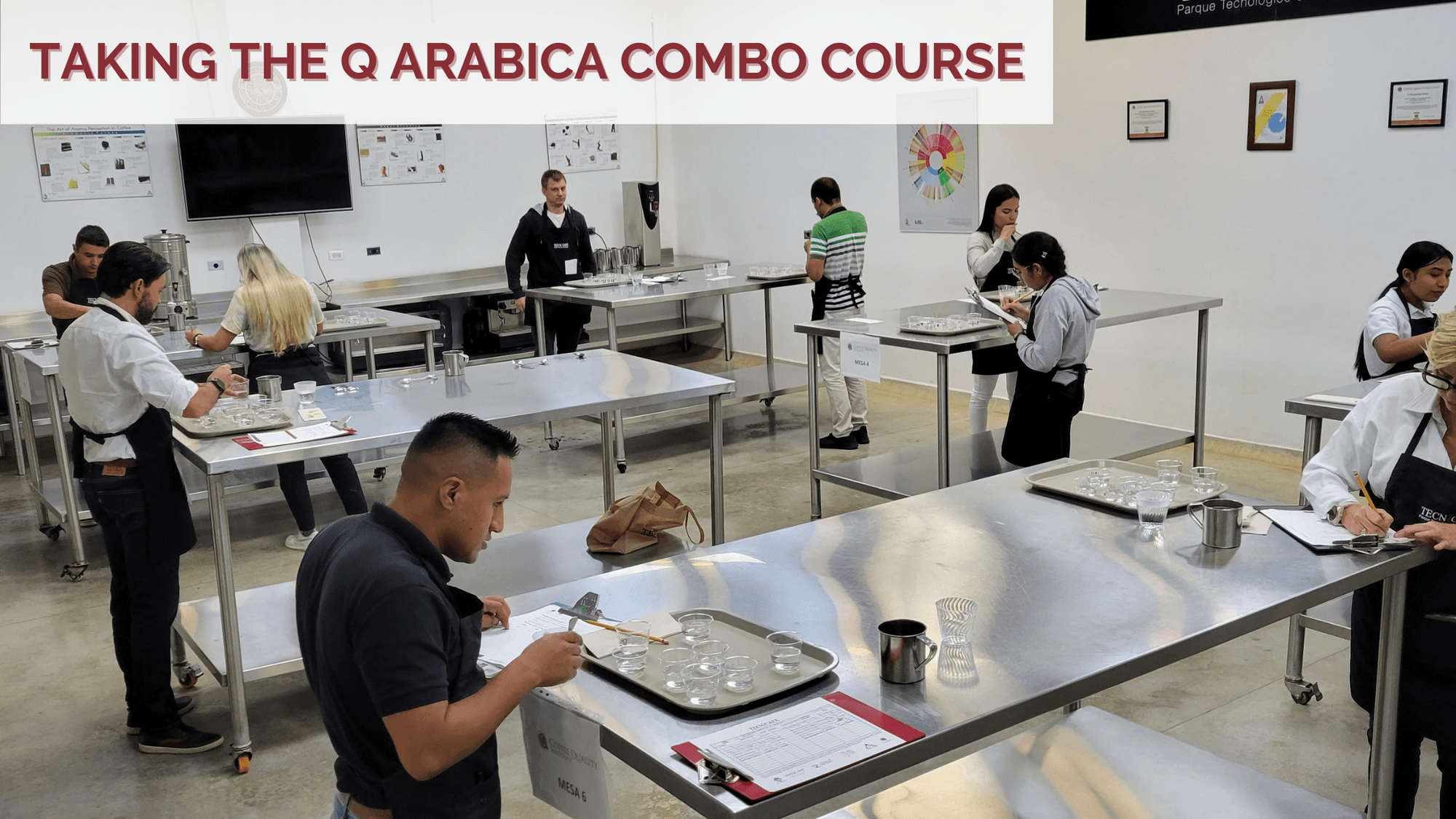
CQI offers two structured education programs designed to develop and validate coffee professionals’ skills:

  1. Quality Evaluation: This program enhances the ability to assess coffee quality at every stage of the supply chain. Through a shared language of quality, specialty coffee producers gain better access to premium markets and higher financial rewards.
  2. Post-Harvest Processing (PHP): PHP focuses on transforming the coffee fruit into a dry seed ready for roasting. This program equips coffee professionals with critical knowledge to improve processing techniques and enhance overall coffee quality.

Certification and Skill Progression

CQI education follows a structured progression, allowing learners to advance through different levels of expertise:

  • 100 Level – Novice
  • 200 Level – Practitioner
  • 300 Level – Experienced
  • 400 Level – Advanced

Both Quality Evaluation and Post-Harvest Processing programs offer internationally recognized certifications, ensuring that coffee professionals gain valuable, verifiable skills applicable from farm to consumer.

The Future of Coffee Quality

As the coffee industry evolves, skills like Assessing Lot Ripeness continue to play a pivotal role in maintaining quality and consistency. By equipping professionals with practical, data-driven methods, CQI is empowering producers to maximize the potential of every coffee harvest. With proper education and application, coffee professionals worldwide can enhance their processes, improve quality outcomes, and create a sustainable and profitable future for coffee production.

To learn more about CQI education and certification programs, visit CQI’s official website.


Ukraine’s Thriving Specialty Coffee Scene: A Journey Through Kyiv, Lviv, Odessa, and Kharkiv

An unrecoverable coffee addict, I’ve been traveling to Ukraine since 2009 when I moved to Kyiv for work with the European Commission

Anybody who’s been there once knows it’s unlikely to be a one-off trip, and I certainly got the bug to make it a regular destination for work and pleasure over the years. My last trip was specifically to look more closely into the specialty coffee movement and to visit what may be the heart of the Ukrainian specialty coffee movement from an entrepreneurial standpoint.

At least four cities have thriving specialty coffee communities: Odessa, in the southeast, has award-winning coffee entrepreneurs thriving in and around the beautiful and historic port city, but it’s Lviv, to the west, that’s known as the coffee and chocolate cultural capital. Lviv’s coffee history reaches further back than the others – a legend links Lviv nobleman Yuriy Frants Kulchytsky with the founding of one of Vienna’s first coffee houses, the Blue Bottle, playing an important role in the European history of coffee as a part of the Austro-Hungarian Empire. Kyiv, the capital, and where I’ve spent the most time, plays host to two major coffee events, each drawing suppliers from around Europe and Turkey. Attended by thousands, it’s certainly worth a trip to explore the dedicated roaster’s exhibition at Kyiv Coffee Fest. You’d be hard-pressed to keep track of the cafés and roasteries blossoming around Kyiv, so leave plenty of extra time to explore.

While Kyiv undoubtedly has the largest café and roastery offering available in Ukraine, I’d argue that Kharkov – a smaller but major city to the northeast – is the commercial heart of the specialty coffee movement in Ukraine, if not a very close second to Kyiv. It was on my most recent trip that I went there to meet Tatyana Paramzina, an incredible female entrepreneur who has built a specialty coffee empire of sorts under the brands of Dom Kofe (“House of Coffee”) and Coffee Laktika, both of which function as cafés as well as coffee equipment showrooms.

Her headquarters for both businesses are nothing short of a coffee ecosystem, housing an interactive coffee educational center for children, several roasting machines, a bakery, fondue bar, and corporate offices for their 200- plus ventures and franchises. The children’s area, located above the main entrance, is filled with interactive exhibits about coffee to promote sustainability and awareness of coffee as a special treat from nature not to be abused.This headquarters oversees nearly 200 locations, a full online e-commerce platform, proprietary software for managing specialty coffee shops, an import office for green and roasted coffees, and a large range (upwards of 50!) European and Asian coffee machines, which they service from three certified repair centers. To top it off, they even make a home roaster and their own cleaning products, given the large number of clients they service!

So, if you’re looking for a new coffee scene to explore, don’t leave Ukraine off your list! Kyiv, Lviv, Odessa, and Kharkov all have plenty to offer coffee lovers and – if you’re in Europe – they’re within easy reach for a weekend coffee getaway.

by TOM RUDDY is the CEO and Founder of Kava-Zone Ltd., a start-up focused on the development of new coffee micro-roasting equipment and services.

Ditta Artigianale Magenta Milano and Victoria Arduino: A Dialogue Between History, Design, and Innovation

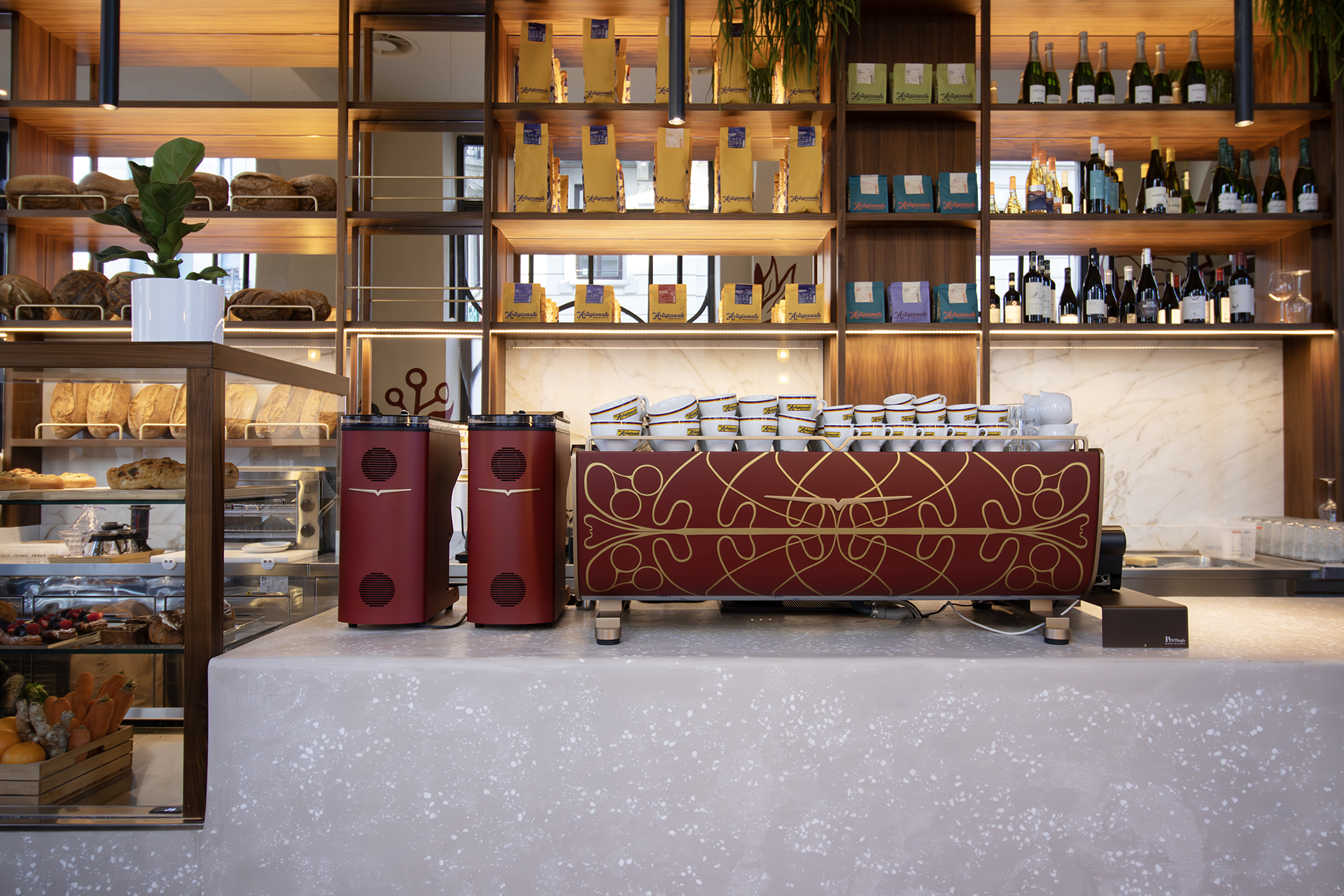
In the heart of Milan’s Corso Magenta, amid elegant Art Nouveau architecture featuring mosaic facades, ceramic decorations, and refined wrought iron, a new café concept is taking shape. Just steps away from the historic Bar Magenta, a symbol of the city’s social life, Ditta Artigianale Magenta Milano emerges as a Specialty Coffee Shop that seamlessly blends tradition with modernity, drawing inspiration from the convivial atmosphere of Italian cafés in the 1950s.

An Aesthetic Tribute to Art Nouveau Heritage

The design of the café harmonizes with the architectural essence of the neighborhood, paying homage to the Liberty style with floral decorations and fixtures inspired by the fluid geometries of wrought iron. Many original furnishing elements have been carefully restored, creating a dynamic dialogue between past and present. The result is a space meticulously crafted to evoke the ambiance of historic cafés while embracing contemporary sensibilities.

Materials and textures intertwine in a sophisticated balance: concrete merges with the warm elegance of walnut paneling, while Venetian granite countertops add depth and refinement. The presence of the Black Eagle Maverick espresso machine, the Mythos grinder, and Victoria Arduino’s PureBrew+ not only enhances the café’s functional design but also contributes to its visual narrative. These elements are customized with floral details and ironwork, reinforcing the specialty coffee shop’s identity as both a sensory and architectural experience. The goal is clear: to create a space that seamlessly integrates into the city’s fabric, with a strong yet historically respectful character.

A Perfect Balance Between History and Modernity

Ditta Artigianale, much like Victoria Arduino, is dedicated to blending heritage with innovation. Since 1905, Victoria Arduino has continuously evolved, transforming the demands of each era into cutting-edge technological solutions and refined material designs.

At Ditta Artigianale Magenta Milano, the Black Eagle Maverick, Mythos, and PureBrew+ machines embody the café’s commitment to excellence:

  • Superior Extraction Quality – Enabled by PBtech and Pure Brew technologies, enhancing the flavors of every coffee.
  • Sustainability – Featuring the advanced T3 Genius motor, which optimizes performance while minimizing energy consumption.
  • Distinctive Aesthetics – A seamless blend of essential shapes, floral embellishments, and premium materials that define a timeless visual language.

Milan: From the “Milan to Drink” Era to a Specialty Coffee City

Milan’s historic cafés—such as Bar Magenta on Corso Magenta, Jamaica in Via Brera, Camparino in Piazza Duomo, and Gattullo in Porta Lodovica—have long been at the heart of the city’s cultural fabric. In the 1950s and 1960s, these establishments served as gathering places for artists, writers, and intellectuals, even sparking early student movements. Today, they remain iconic meeting points, embodying the authentic spirit of Milanese life.

Ditta Artigianale Magenta Milano carries this legacy forward, reinterpreting it for the modern era. Its welcoming ambiance and thoughtfully designed interior serve as the perfect backdrop for a specialty coffee experience that bridges tradition and innovation. From expertly crafted espresso blends to single-origin selections from around the world, the café offers a diverse range of brewing methods—both classic, such as with the Black Eagle Maverick, and cutting-edge, like PureBrew Coffee, an innovative filter brewing system enabled by Victoria Arduino’s PureBrew+ technology.

In this way, Victoria Arduino continues to support pioneers in the coffee industry, enabling them to provide their customers with an immersive, deep, and authentic sensory journey.

Black Eagle Maverick, Mythos, and PureBrew+: Where Design Meets Technology

Victoria Arduino’s coffee machines are more than just tools—they are integral design elements that enhance the ambiance of any space.

  • Black Eagle Maverick – Defined by its sleek, bold lines and adorned with gold floral accents on a magenta top, this machine features Victoria Arduino’s iconic stylized eagle at its center.
  • Mythos Grinder – With its monolithic shape, the Mythos grinder exudes precision and reliability. Its matte magenta surface harmonizes with the Black Eagle Maverick, making it a striking feature on the bar counter.
  • PureBrew+ – Positioned at the back of the bar, this machine embodies minimalist sophistication, offering a versatile and innovative brewing experience. Its streamlined silhouette and balance of technological advancement and aesthetic purity establish it as an icon in the evolving café landscape.

With Ditta Artigianale Magenta Milano, Milan welcomes a new chapter in its storied café culture—one that respects the past while embracing the future, setting new standards in design, quality, and innovation.

EU Bans Caffeine as a Pesticide, Sparking Controversy and Political Backlash

The European Union has issued a new regulation banning the use of caffeine as a pesticide, citing concerns over its potential harm to human health. The decision, published in Commission Implementing Regulation (EU) 2024/2766, states that caffeine poses potential risks when swallowed and lacks sufficient safety data to be approved for agricultural use. However, this ruling has ignited a political and cultural debate, with critics arguing that it may be a step toward excessive regulation on coffee itself.

Why Ban Caffeine as a Pesticide?

The European Commission justified its decision by pointing to scientific research suggesting that caffeine, when ingested in high concentrations, could negatively impact human health. The report raised concerns over its effects on the heart, hydration, body temperature, and its potential to cause anxiety and sleep disturbances.

The ban primarily targets the agricultural use of caffeine-based pesticides, which have been employed as a natural method to control snails and slugs in crops like cabbage and potatoes. Farmers have used caffeine solutions to deter pests, arguing that it is a more environmentally friendly alternative to synthetic chemicals. However, EU regulators determined that the potential risks to human health and the environment outweigh the benefits.

The regulation states:

“There is scientific evidence that caffeine is harmful to humans if swallowed. The data is insufficient to assess the risks for individuals who work with caffeine or live near areas where it is processed.”

The Science Behind Caffeine’s Risks

Caffeine, a naturally occurring stimulant found in coffee, tea, and energy drinks, is one of the most widely consumed psychoactive substances in the world. While moderate consumption is generally considered safe, high doses can cause adverse effects, including:

  • Increased heart rate and blood pressure, potentially leading to cardiovascular issues.
  • Dehydration due to caffeine’s diuretic properties.
  • Disruptions in body temperature regulation.
  • Anxiety and sleep disturbances.

According to the U.S. Food and Drug Administration (FDA), consuming large quantities—around 1,200 mg in a short time—can cause severe side effects such as seizures and cardiac dysrhythmias. However, the amount typically found in coffee and other beverages is far lower than this threshold.

The EU’s ruling focuses on caffeine in concentrated agricultural applications, rather than in beverages. However, critics fear this could be the first step toward broader restrictions on caffeine use.

Political and Industry Backlash

The EU’s decision has sparked outrage among European politicians, coffee industry leaders, and consumers, who see it as unnecessary interference by regulators in Brussels.

Danish MEP Anders Vistisen, a prominent critic of EU overreach, condemned the ruling:

“More unwelcome and needless interference from meddling bureaucrats in Brussels! What is this all leading to? Are they seriously going to eventually force us to drink decaffeinated coffee? It’s becoming ridiculous.”

Vistisen also compared this to a past EU attempt to regulate cinnamon levels in Danish pastries, which nearly led to a ban on traditional cinnamon rolls before local bakers successfully lobbied for an exemption.

“A few years ago, the EU wished to ban cinnamon on Danish pastries, and the bakers union had to fight to keep our traditions alive. It would suit everyone much better if many of these matters were left to national competence and personal choice.”

This sentiment is echoed by farmers and agricultural researchers, who argue that caffeine-based pesticides provided an alternative to synthetic chemicals and that banning them could limit eco-friendly pest control options.

What Does This Mean for Coffee?

Despite fears that the regulation could eventually lead to stricter controls on coffee, the EU has not proposed banning caffeine in food or beverages. However, coffee industry leaders remain cautious, fearing that increased scrutiny on caffeine’s health effects could lead to further restrictions in the future.

For now, coffee drinkers can still enjoy their daily brew without concern. However, the debate highlights growing tensions between scientific regulation and cultural traditions, raising broader questions about how the EU balances public health, agricultural sustainability, and personal freedoms.

Conclusion

The EU’s decision to ban caffeine as a pesticide is framed as a precautionary move to protect human health. However, the ruling has fueled concerns about regulatory overreach, with critics warning that it could set a dangerous precedent for further restrictions on caffeine consumption.

As debates continue, coffee remains a staple of European life, but the question lingers: Could future regulations tighten control over how it is consumed? For now, coffee lovers can sip their espresso in peace—but the discussion over caffeine’s role in society is far from over.

The World’s 100 Best Coffee Shops of 2024: A Definitive Guide to Global Coffee Excellence

The global coffee community has its newest compass for exceptional brews: The World’s 100 Best Coffee Shops of 2024, unveiled recently  by The World’s 100 Best Coffee Shops. This prestigious ranking, the first of its kind, spotlights cafés redefining coffee culture through innovation, sustainability, and an unwavering commitment to quality. From Sydney’s specialty coffee pioneers to Kyoto’s minimalist masters, the list is a passport to the planet’s most extraordinary coffee experiences.

A Global Journey Through Coffee

The 2024 ranking spans six continents, celebrating cafés that excel in bean sourcing, roasting artistry, brewing precision, and customer-centric ethos. Judges evaluated over 1,000 nominees, weighing factors like sustainability practices, creative menus, and the ability to foster community. The result? A mosaic of coffee excellence that mirrors the diversity of the global coffee scene.

Toby’s Estate Claims the Crown

Topping this year’s list is Toby’s Estate Coffee Roasters (Sydney, Australia), a titan of the third-wave coffee movement. Praised for its farm-to-cup transparency and velvety flat whites, Toby’s Estate has long been a pilgrimage site for coffee connoisseurs. Founder Toby Smith attributes the win to “honoring the farmer’s craft while pushing boundaries in roasting technology.”

Close behind is Arkansas-based Onyx Coffee Lab (#2, USA), lauded for its experimental processing methods and seasonal single-origin offerings. Europe’s highest entry, Gota Coffee Experts (#3, Austria), wowed judges with its zero-waste ethos and avant-garde coffee cocktails.

Regional Standouts & Rising Stars

The list reveals fascinating trends:

  • Asia-Pacific dominance: Australia alone claims 10 spots, including Proud Mary Coffee (#4) and Calere Coffee (#28). Singapore’s Apartment Coffee (#6) shines with its intimate omakase-style tastings.
  • Latin America’s rise: Colombia’s Tropicalia Coffee (#10) and Peru’s Coffee Busters Roastery (#54) highlight the region’s shift from bean exporter to specialty coffee innovator.
  • Sustainability champions: Hola Coffee Lagasca (#12, Spain) and Connect Coffee Roasters (#68, Kenya) earned acclaim for empowering local farmers through direct trade.

Notable Entries & Hidden Gems

  • Tim Wendelboe (#5, Norway): The Oslo micro-roastery continues to set the gold standard for Nordic light roasts.
  • Koffee Mameya Kakeru (#24, Japan): Tokyo’s cult-favorite, where baristas prescribe bespoke blends like coffee sommeliers.
  • Endiro Coffee (#93, Uganda): A social enterprise uplifting women farmers while serving bold African single-origins.

The New Coffee Frontiers

Emerging markets made bold statements:

  • Africa: South Africa’s Espressolab (#11) and Ethiopia’s Galani Coffee (#46) spotlight the continent’s untapped potential.
  • Middle East: Dubai’s One Life Kitchen & Café (#23) blends specialty coffee with Levantine-inspired pairings.
  • Eastern Europe: Slovenia’s Crno Zrno (#31) and Romania’s Bob Coffee Lab (#47) prove innovation thrives beyond traditional hubs.

Sustainability & Social Impact

Nearly 40% of ranked cafés prioritize eco-conscious practices, from Seven Seeds (#80, Australia)’s carbon-neutral roasts to Café Nativo (#43, Honduras)’s reforestation initiatives. Guatemala’s Entre Volcanes (#77) even partners with volcanologists to grow beans in mineral-rich volcanic soil.

The Full List: A Call to Explore

While the top 10 dominate headlines, the ranking’s true value lies in its diversity. From the steampunk vibes of Stumptown Coffee Roasters (#53, USA) to the serene minimalism of Kawa (#7, France), each café tells a unique story.

Coffee lovers, take note: This list isn’t just about caffeine—it’s about connection. As judge and Q-grader María Fernández notes, “These shops are bridges between cultures, turning a daily ritual into a global dialogue.”

Full List of the Top 100 Coffee Shops in 2024

  1. Toby’s Estate Coffee Roasters – Australia
  2. Onyx Coffee LAB – USA
  3. Gota Coffee Experts – Austria
  4. Proud Mary Coffee – Australia
  5. Tim Wendelboe – Norway
  6. Apartment Coffee – Singapore
  7. Kawa – France
  8. Coffee Anthology – Australia
  9. Story of Ono – Malaysia
  10. Tropicalia Coffee – Colombia
  11. Espressolab – South Africa
  12. Hola Coffee Lagasca – Spain
  13. Casa Canela – Venezuela
  14. Alquimia Coffee – El Salvador
  15. Kross Coffee Roasters – Greece
  16. MOK Coffee – Belgium
  17. Prevail Coffee – USA
  18. Yardstick – The Philippines
  19. Veneziano Coffee Roasters – Australia
  20. Puku Puku – Peru
  21. Savaya Coffee Market – USA
  22. Three Monkeys Coffee – Peru
  23. One Life Kitchen & Café – United Arab Emirates
  24. Koffee Mameya Kakeru – Japan
  25. Nomad Frutas Selectas – Spain
  26. Faro – Italy
  27. Coffea Guatemala – Guatemala
  28. Calere Coffee – Australia
  29. 7g Roaster – Portugal
  30. Panther Coffee – USA
  31. Crno Zrno – Slovenia
  32. Workshop – UK
  33. La Cabra – Denmark
  34. Push x Pull – USA
  35. Meet LAB Coffee – Turkey
  36. Fuku – Netherlands
  37. Exchange Coffee – Australia
  38. Strut Coffee – Korea
  39. Coffeewerk + Press – Ireland
  40. The Miners Coffee – Czech Republic
  41. DeLafinca Specialty Coffee – Nicaragua
  42. Café Nativo – Honduras
  43. Espresso Alchemy – China
  44. Presta Coffee Roasters – USA
  45. 43.12 Coffee – Bulgaria
  46. Bob Coffee Lab – Romania
  47. Domestique – USA
  48. Bouche – Belgium
  49. The Golden Pig – Honduras
  50. Galani Coffee – Ethiopia
  51. El Terrible Juan Café – Mexico
  52. Stumptown Coffee Roasters – USA
  53. Thirty5ive Marrakech – Morocco
  54. Oh Martine – Switzerland
  55. D·Origen Coffee Roasters Barcelona – Spain
  56. Ome by Spacebar Coffee – Malaysia
  57. Café Grumpy – USA
  58. Barista Coffee House – Argentina
  59. Coffee Busters Roastery – Peru
  60. Holaste! Specialty Coffee – Chile
  61. El Unión Coffee – The Philippines
  62. Rocket Coffee – New Zealand
  63. The Dude Specialty Coffee – Macedonia
  64. Ninina – Argentina
  65. Café de Reyes – Guatemala
  66. Seeds Coffee Company – USA
  67. Silk City Coffee – USA
  68. Cafetano Coffee Roasters – Honduras
  69. Origen Tostadores de Café – Peru
  70. Fonzie Abbott – Australia
  71. Vacation Coffee – Australia
  72. Turbo Coffee – USA
  73. Sin See Tai – Malaysia
  74. The Folks – Portugal
  75. Yorks Café – UK
  76. Cafeoteca – Costa Rica
  77. Entre Volcanes – Guatemala
  78. Anomali Coffee – Indonesia
  79. Silo Coffee – Germany
  80. Kima Coffee – Spain
  81. Connect Coffee Roasters – Kenya
  82. Negro – Argentina
  83. Single Origin – The Philippines
  84. Café San Rafael – Honduras
  85. Rufous Coffee Roasters – Taiwan
  86. Crema & Cream Coffee Roasters – The Philippines
  87. Seven Seeds – Australia
  88. Story and Soil Coffee – USA
  89. The Whippet – South Africa
  90. Typica Café – Bolivia
  91. All Saints Café – Argentina
  92. Cupping Café – Brazil
  93. Populus Coffee – Germany
  94. Surry Hills Coffee – Argentina
  95. LAB – Argentina
  96. Camino a Comala – Mexico
  97. Amanecer Coffee Store – Venezuela
  98. Tinta y Café – USA
  99. Endiro Coffee – Uganda
  100. Florencia y Fortunata – Peru

The Alchemy of Coffee: Brewing Moments of Magic, Creativity, and Resilience

Ah, coffee—the magical elixir that transforms groggy “ughs” into triumphant “ahhs” with every sip.

Coffee It’s not just a beverage; it’s a lifeline, a ritual, and a universal language of comfort and connection. From the first whiff of its intoxicating aroma to the final drop that lingers on your tongue, coffee is a symphony of sensations that awakens the mind, soothes the soul, and fuels the spirit.

In a world that never stops moving, coffee offers a rare moment of stillness. It’s the quiet companion to your morning thoughts, the gentle nudge that says, “Take a breath. You’ve got this.” Whether you’re savoring a meticulously crafted pour-over or gulping down a quick espresso shot, coffee is more than caffeine—it’s a ritual that grounds you. It’s the act of brewing, the sound of beans grinding, the steam rising from your cup, and the warmth that spreads through your hands. These small, deliberate moments remind us to slow down and appreciate the present.

For writers, artists, thinkers, and dreamers, coffee is the ultimate muse. It’s the spark that ignites creativity, the silent partner in brainstorming sessions, and the steady hand that guides you through late-night projects. There’s something about the combination of caffeine and comfort that unlocks ideas and fuels innovation. It’s no wonder that some of history’s greatest minds—Voltaire, Beethoven, and Balzac, to name a few—were devout coffee enthusiasts. Coffee doesn’t just wake you up; it wakes up your imagination.

Life is unpredictable, but coffee is a constant. It’s there for you during early mornings, long commutes, and late-night deadlines. It’s the fuel that propels you forward when the world feels heavy. Each sip is a reminder that even the smallest moments can hold immense power. Coffee doesn’t just energize your body; it fortifies your spirit. It’s a warm embrace in a cup, a reminder that you’re capable of overcoming whatever challenges the day throws your way.

Coffee is more than a personal ritual—it’s a shared experience. It’s the centerpiece of conversations, the catalyst for friendships, and the glue that binds communities. From coffee dates to office coffee breaks, it’s a drink that brings people together. It transcends cultures, languages, and borders, uniting us in our love for its rich, complex flavors. Coffee is a reminder that, no matter how different we may seem, we’re all connected by the simple joys of life.

So, as you cradle your cup and take that first sip, remember this: coffee is more than a drink. It’s a celebration of the present, a catalyst for creativity, and a source of strength. Let its aroma awaken your senses, its warmth comfort your soul, and its caffeine energize your spirit. Today is yours to brew—make it bold, make it rich, and make it unforgettable.

Now go conquer your day, one sip at a time.

Hario V60: The History, Philosophy, and Secrets of Brewing the Perfect Coffee

Coffee culture is full of innovations, but few devices have made as significant an impact as the Hario V60 dripper. Today, it is an essential tool for filter coffee lovers worldwide, but its journey to recognition was long and challenging.

From Concept to Iconic Device: The History of Hario V60

In the 1980s, coffee brewing was dominated by immersion methods such as the French press. During this period, designers at the Japanese company Hario wondered: could a device be created that would provide a clean and rich coffee flavor while remaining easy to use?

The first version of the dripper appeared back then—a cone-shaped holder with a metal wire to secure the paper filter. However, it failed to gain popularity, as consumers were increasingly leaning toward the convenience of instant coffee. The project was shelved for nearly 20 years.

But in 2004, Hario released the dripper we know today. Its unique feature—a 60-degree cone angle—gave it the name V60. The secret to its success? Ease of use, accessibility, and the ability to highlight the complex flavor notes of coffee.

Meditation in a Cup: Why the Hario V60 Became a Symbol of Mindful Coffee Consumption

Brewing coffee with the Hario V60 is not just about making a drink—it is a philosophy. Slow living, minimalism, and the pleasure of the process are what modern pour-over enthusiasts appreciate. Bloggers and coffee lovers claim that the slow ritual of morning brewing replaces meditation and helps set the tone for a productive day.

The V60 is especially popular among black coffee, filter coffee, and even Americano lovers. It allows for experimentation with grind size, water temperature, brewing ratios, and extraction time, enabling coffee drinkers to craft a beverage tailored to their precise preferences.

How to Brew the Perfect Coffee with a Hario V60: A Step-by-Step Guide

If you want to master brewing coffee with a Hario V60, here is a simple yet effective recipe.

What You Need:

  • 15.5g freshly ground coffee (medium grind);
  • Hario V60 dripper;
  • Paper filter;
  • 250ml hot water (93–95°C);
  • Gooseneck kettle (preferably);
  • Scale for precise control.

Brewing Process:

  1. Place the filter in the dripper and rinse it with 100–200ml of hot water to remove any paper taste and preheat the vessel.
  2. Add the ground coffee to the filter and gently shake to distribute it evenly.
  3. Begin with pre-wetting: pour 45–50ml of water over 10 seconds, allowing the coffee to “bloom.”
  4. Continue pouring water in stages, monitoring the process with scales:
    • At 25 seconds, add another 50ml of water.
    • Repeat this process three more times, each time adding 50ml.
  5. The total brewing time should be between 2:30 and 3:30 minutes.

Which Coffee to Choose?

We recommend trying beans from Guatemala Santa Rosa or Colombia Supremo—they work exceptionally well in pour-over brewing. Experiment with different origins, brewing parameters, and enjoy the rich diversity of flavors!

Hario V60 is not just a brewing device; it is a symbol of the third wave coffee movement, combining aesthetics, precision, and a passion for high-quality coffee. What will your perfect recipe be?

Buon Ma Thuot Prepares for 9th Coffee Festival, Cementing Vietnam’s Status as the Global Robusta Capital

As March approaches, the Central Highlands city of Buon Ma Thuot is gearing up to welcome thousands of coffee professionals, enthusiasts, and global industry leaders for the 9th Buon Ma Thuot Coffee Festival. Scheduled from March 9 to March 13, this year’s festival carries the theme “Buon Ma Thuot – Destination of World Coffee,” reaffirming Vietnam’s standing as the world’s top producer of Robusta coffee.

The festival marks a historic milestone as the International Coffee Organization (ICO) officially recognizes Vietnam as the “Land of Robusta Coffee.” Speaking at a press conference in Hanoi, Mr. Nguyen Tuan Ha, Vice Chairman of the Dak Lak Provincial People’s Committee, confirmed that ICO Executive Director General Vanusia Nogueira will attend the opening ceremony to acknowledge Vietnam’s dominance in Robusta production and trade.

“Vietnam has long been the powerhouse of Robusta coffee, and this recognition from the International Coffee Organization is a testament to the hard work of our farmers, businesses, and communities,” Mr. Ha stated.

A Growing Festival with Global Influence

Over the years, the Buon Ma Thuot Coffee Festival has evolved into a flagship event for Vietnam’s coffee sector, attracting international attention and investment. The 9th edition will feature 15 official activities, alongside a series of local events that showcase the economic and cultural significance of coffee in Vietnam.

Among the festival’s new highlights:

  • A Digital Content Creation Contest, encouraging participants to promote Vietnamese coffee culture online.
  • The groundbreaking ceremony for the Trung Nguyen Legend Energy Coffee Factory, a major development for Vietnam’s coffee industry.
  • A coffee camp at the historic CADA Plantation, offering visitors a chance to engage with the region’s coffee heritage.

Visitors can also explore:

  • A specialized exhibition fair, featuring Vietnamese coffee brands and OCOP-certified products.
  • A coffee brewing competition and hands-on experience zones.
  • An international trade conference, bringing together coffee industry experts from around the world.
  • A scientific seminar, delving into the future of coffee production and sustainability.
  • A street festival, where coffee will be celebrated through art, music, and local traditions.

Beyond the core coffee-related events, the festival will also feature a Light Festival, a Rock Band Festival, and an International Off-Road Car Racing Competition titled “Challenge of the Great Forest – Buon Don 2025.”

A Celebration of Coffee and Culture

One of the festival’s signature elements is its free coffee initiative, allowing visitors to experience the best of Vietnamese Robusta at over 500 participating cafés across Dak Lak province. The festival will also introduce curated travel experiences, including:

  • The Coffee Journey – an exploration of Vietnam’s coffee origins, processing methods, and brewing techniques.
  • The Heritage Journey – an immersive tour into the traditions of Dak Lak’s ethnic minority communities.
  • Eco-tours and cultural excursions, offering a glimpse into sustainable coffee farming practices.

During the press conference, Mr. Lai Duc Dai, Deputy Director of the Dak Lak Department of Culture, Sports, and Tourism, addressed recent speculation about an Elephant Racing Festival. He clarified that there will be no races, but instead, an Elephant Festival focusing on cultural preservation and animal welfare. Activities will include:

  • Traditional ceremonies to honor elephants, including water wharf worship rituals.
  • Elephant bathing and dressing traditions, allowing visitors to learn about the animals’ role in local culture.
  • An elephant buffet, where the animals will be treated to a feast as part of conservation awareness efforts.

Vietnam’s Coffee Industry on the World Stage

Vietnam is the world’s second-largest coffee producer and the largest exporter of Robusta beans, a variety known for its bold flavor, high caffeine content, and key role in instant coffee and espresso blends. The Buon Ma Thuot Coffee Festival aims to strengthen Vietnam’s global coffee footprint, attracting new investments, trade partnerships, and cultural exchanges.

A major highlight of the festival is the return of Miss Universe Vietnam 2017 and Top 5 Miss Universe World 2018, H’Hen Niê, as the festival’s Media Ambassador. Born and raised in Dak Lak, H’Hen Niê has been an outspoken advocate for Vietnamese coffee on the international stage.

“I grew up surrounded by coffee plantations, and my mornings were filled with the rich aroma of freshly roasted beans prepared by my mother,” she shared. “As an ambassador, I want to share this love for Vietnamese coffee with the world.”

She also revealed that she personally brings Vietnamese coffee on her international travels, using every opportunity to introduce its unique qualities to global audiences.

The Rise of Vietnam’s “Black Gold”

One of the most anticipated moments of the festival is the grand opening event on March 10, set to take place at March 10 Square. The ceremony will feature a storytelling performance about Dak Lak’s journey from a coffee-growing region to the global leader in Robusta production.

Vice Chairman Nguyen Tuan Ha underscored the economic transformation that coffee has brought to the region:

“Coffee has played a major role in reducing poverty in Dak Lak. Decades ago, 80% of households in our province were living in poverty. Today, that number has dropped to just 6%. Notably, 80% of our coffee production comes from families that were once struggling financially.”

Buon Ma Thuot: The Heart of Vietnam’s Coffee Industry

This year’s festival also commemorates the 50th anniversary of Buon Ma Thuot Victory Day and the liberation of Dak Lak province (March 10, 1975 – March 10, 2025).

As Vietnam’s coffee capital, Buon Ma Thuot boasts:

  • 210,000 hectares of coffee plantations.
  • Over 520,000 tons of annual coffee production, contributing more than 30% of Vietnam’s total coffee output.
  • Exports reaching hundreds of countries worldwide.

With the festival continuing to attract international recognition, Buon Ma Thuot is strengthening its reputation as the “Coffee City of the World.”

A Landmark Event for the Coffee Industry

As coffee farmers, traders, and enthusiasts gather in Buon Ma Thuot, the festival will serve as both a celebration and a strategic platform for Vietnam’s coffee industry. With ICO’s official recognition of Vietnam as the Land of Robusta Coffee, the country is poised to expand its influence in the global coffee market like never before.

For visitors, it’s an opportunity to experience coffee at its source, discover new flavors, and immerse themselves in the vibrant coffee culture of the Central Highlands.

As the festival approaches, one thing is clear: Vietnamese coffee is more than a commodity—it’s a legacy, a culture, and a driving force behind the nation’s economic success.