The Burg Coffee Museum: A Historical Journey Through Coffee Culture in Hamburg

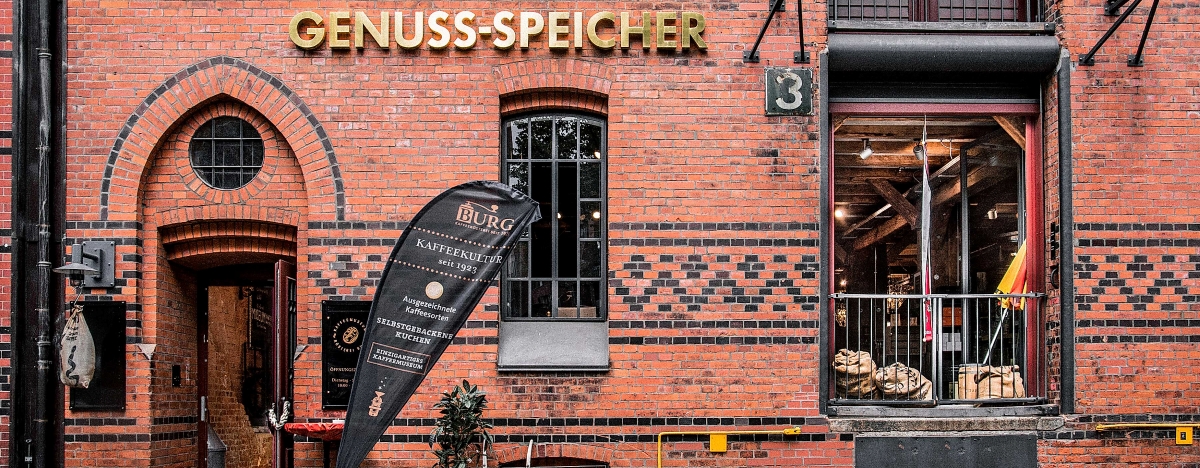
Nestled in the heart of Hamburg’s historic Speicherstadt district, The Burg Coffee Museum stands as a testament to Germany’s deep-rooted coffee culture. Originating from a family legacy dating back to 1923, this museum is more than a collection of artifacts—it is a journey through time, tracing coffee’s transformation from a coveted luxury item to an indispensable staple enjoyed worldwide.

An Insider’s Tip for Coffee Lovers

With its special history as well as its unique and comprehensive collection, the Hamburg Coffee Museum is an insider’s tip not only among coffee lovers. The museum provides a rare opportunity to explore the evolution of coffee culture in one of Europe’s most historically significant coffee hubs.

Concentrated Coffee Knowledge in Speicherstadt

The coffee museum’s history began in 1896, when coffee was first stored and processed in Hansen & Studt Kaffee’s coffee warehouse on St. Annenufer. In 1923, the Burg family took up their coffee business with their roastery and, over time, amassed an impressive coffee-related collection. In the heart of the Speicherstadt, where the history of Hamburg coffee trade flourished, hundreds of objects can be admired today. Visitors can also learn fascinating facts about coffee cultivation, the Hamburg coffee trade, and how coffee found its way into German mugs.

One of the most interesting parts of the exhibition is the replica of the country shop that has been run by the Burg family in Eppendorf since 1923. In addition to the exhibits, texts and films provide information about the long and exciting history of the coffee bean, ensuring that every visitor leaves with a deeper appreciation of coffee’s journey.

A Unique Experience in Speicherstadt’s Vaulted Cellar

As the only vaulted cellar in Speicherstadt, the museum immerses visitors in a world where coffee’s rich history comes to life. Hundreds of exhibits from the Burg Collection tell the story of coffee cultivation, processing, and consumption. From ancient tools and roasters to vintage advertisements and coffee cans, the museum presents an unparalleled narrative of the global coffee trade.

Visitors can explore a replica of the original Burg family shop, where coffee was sold in traditional settings, reminiscent of Hamburg’s golden era of coffee trade. Detailed exhibition texts, films, and specialized literature offer deeper insights, ensuring that even seasoned coffee connoisseurs discover new knowledge.

Tracing Coffee’s Journey

The museum begins its storytelling with the legendary discovery of coffee by Kaldi, the Ethiopian goatherd, whose lively goats led to the recognition of coffee’s invigorating effects. The exhibition then follows coffee’s journey through Africa, Yemen, and the Arab world, where it was first cultivated and closely guarded before making its way to Europe in the 1600s.

During this period, coffee remained an exclusive luxury, accessible only to society’s elite. However, as the drink became more widespread, coffee houses emerged as intellectual hubs where artists, scholars, and merchants gathered, solidifying coffee’s place in European culture.

After Theory Comes Practice

After the tour of the museum, the in-house roastery, shop, and café entice visitors. Here, you can experience on your own palate what you have previously learned in theory in the museum. The Burg Coffee Museum also invites visitors to tastings and seminars, where they can engage in hands-on experiences with coffee brewing, roasting techniques, and sensory evaluations.

Exploring the Coffee Museum: An Interactive Journey

The museum offers a range of immersive experiences to cater to coffee lovers, researchers, and casual visitors alike:

  • Self-Guided Tours with Audio Guides: Available in 14 languages, this tour allows visitors to explore the museum’s 20 stations at their own pace.
  • Guided Tours with Experts: Led by coffee specialists, these tours offer deeper insights into coffee’s journey through history.
  • Coffee Tasting & Seminars: Learn about traditional roasting methods using a 1930s drum roaster, discover different brewing techniques, and compare Arabica and Robusta varieties.
  • Home Barista Training: Hands-on workshops teach the art of espresso-making, milk frothing, and machine maintenance using professional barista equipment.
  • Sensory & Fragrance Experiences: Explore the aromatic world of coffee through guided olfactory sessions designed to enhance appreciation of different coffee notes.

A Living Coffee Culture: More Than Just a Museum

Beyond its historical exhibits, The Burg Coffee Museum is a living hub of coffee culture. Visitors can enjoy freshly roasted coffee at the on-site café and roastery, purchase premium beans, and even partake in gin and tea tastings, expanding the sensory journey beyond coffee alone.

The museum also hosts private and corporate events, making it a sought-after venue for birthdays, team-building activities, and cultural gatherings. Whether you are a researcher delving into coffee history, a barista honing your craft, or simply a coffee enthusiast, this museum offers an experience that transcends time and taste.

Plan Your Visit

Location: St. Annenufer 2, 20457 Hamburg
Opening Hours: Tuesday – Sunday, 10:00 – 18:00
Bookings & Inquiries: [email protected] | +49 40 55204258

For those passionate about the past, present, and future of coffee, The Burg Coffee Museum is a must-visit destination—a place where history is brewed and enjoyed, one cup at a time.

 

Vietnamese Coffee: A Bold Experience That Leaves Visitors Awestruck

Vietnamese coffee is famous for its rich, bold flavors and intense caffeine kick, often surprising first-time visitors. Many tourists describe their first sip as an unforgettable experience, with its strength catching them off guard.

British traveler Ben Maguire visited Ho Chi Minh City in February and was amazed by the powerful taste of Vietnamese coffee. He humorously remarked that after drinking it, he had enough energy to “power a small city.”

Maguire had heard about Vietnamese coffee’s intensity but wanted to experience it firsthand. On his first day, he ordered an iced black coffee, expecting a strong but manageable flavor. However, his reaction quickly went viral on social media, drawing nearly 400,000 views and 15,000 interactions.

In his post, he described the experience with humor:

  • The first sip was rich and flavorful.
  • The second sip felt like a jolt of energy.
  • By the third sip, he joked that he was ready to launch a business, run for office, and learn Vietnamese in ten minutes.

Many visitors shared similar experiences, laughing at their initial shock when trying Vietnamese coffee.

A Drink That Packs a Punch

Some tourists even compared the strength of Vietnamese coffee to a powerful energy boost.

  • French traveler Ingrid Baghag described it as “stronger than expected.”
  • Dickie Suzuki from Hong Kong found two cups of iced milk coffee so intense that he had to return to his hotel, spending hours trying to shake off the caffeine rush.
  • David Poppinga, an American visitor, recalled how drinking two cups of egg coffee in Hanoi left him feeling alert for an entire day.

Even experienced coffee drinkers find Vietnamese coffee surprisingly robust. Maguire admitted, “This is not your average cup of coffee—it’s rich, intense, and a wake-up call for first-timers.”

He also appreciated the phin brewing method, which he described as a slow, almost meditative process rather than a simple way to make coffee. During his week-long stay, he explored different varieties, including egg coffee, salt coffee, and iced milk coffee.

Sitting on small street-side stools, sipping coffee while watching the vibrant city life, Maguire felt that the atmosphere made the experience even more special.

A Lasting Impression on Visitors

Many travelers develop a deep appreciation for Vietnamese coffee after their trip. Hilary Hilton, an American tourist, admitted she missed the taste of iced milk coffee, joking that it was “not for the faint-hearted.”

Recently, Vietnamese coffee has gained global recognition, with several traditional varieties ranking among the world’s best coffees. Its unique preparation and rich flavors continue to impress coffee lovers worldwide.

What Makes Vietnamese Coffee So Unique?

According to Cuong Pham, a café owner in Hanoi, the secret behind Vietnamese coffee’s strength lies in its use of robusta beans, which contain nearly double the caffeine of arabica beans.

He explained that coffee plants naturally produce caffeine to protect themselves from pests. Since robusta is grown in low-altitude regions where pests are more common, it has a higher caffeine content for defense. In contrast, arabica, cultivated at higher elevations, contains less caffeine.

Because many foreign visitors are accustomed to milder arabica coffee from places like Ethiopia or Colombia, the bitterness and intensity of robusta-based Vietnamese coffee can come as a surprise.

To create a balanced flavor, many coffee shops mix robusta and arabica beans, adjusting the strength based on customer preferences. Robusta’s bold bitterness pairs well with condensed milk and whipped egg, whereas arabica’s acidity doesn’t complement these flavors as well.

A Must-Try Coffee Culture

For those looking to experience coffee in a new and exciting way, Vietnam offers a rich and unique coffee culture. Whether it’s the traditional phin-brewed coffee, the creamy egg coffee, or the refreshing iced milk coffee, the country’s coffee scene continues to captivate visitors from around the world.

The $635 Cup: Why Coffee Connoisseurs Are Willing to Pay Premium Prices

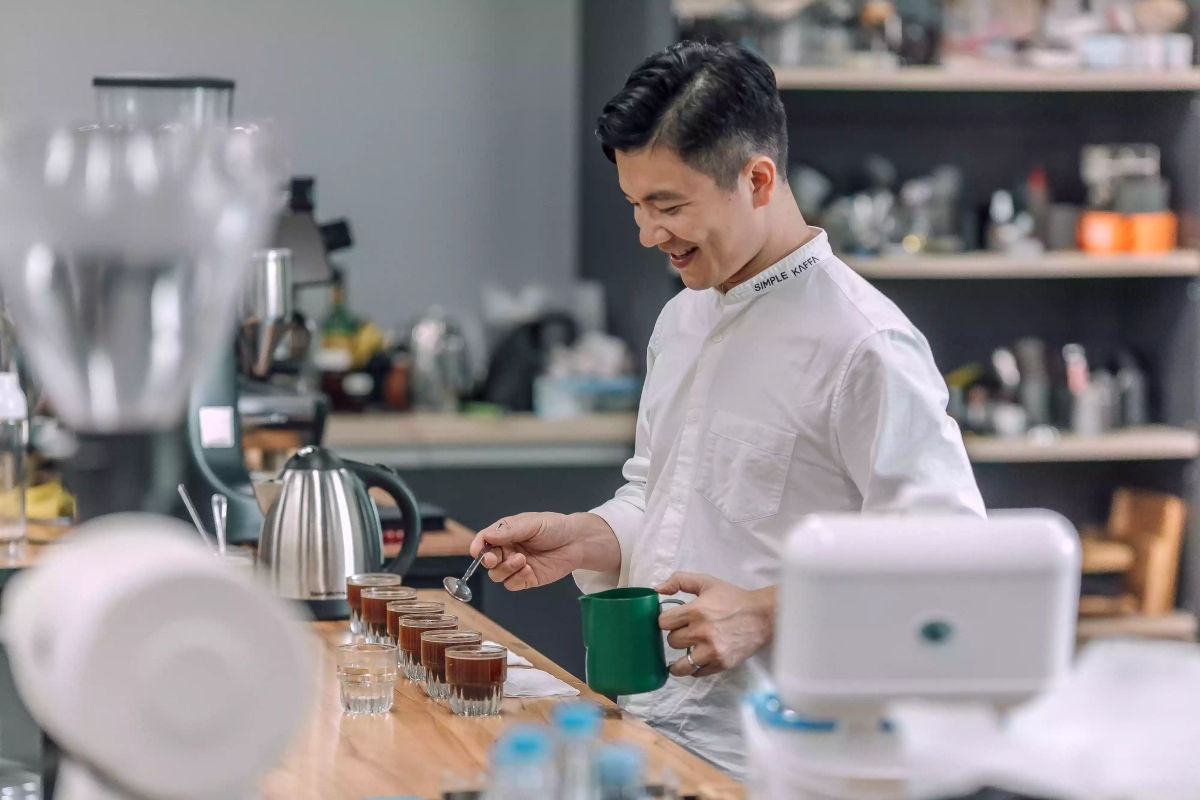
In Taipei, a remarkable coffee experience is drawing enthusiasts willing to pay an astonishing $635 for a single cup. Simple Kaffa, a renowned café founded by Berg Wu, Taiwan’s first World Barista Champion (2016), offers an exclusive coffee tasting experience that has captured global attention.

Located in the Huashan district, Simple Kaffa’s flagship café operates on a reservation system but welcomes walk-ins when space permits. With a design reminiscent of a fine wine-tasting venue, the two-story establishment offers a curated coffee experience. Guests are given a dedicated 90-minute session to explore rare brews, accompanied by delicacies like pandan-infused cakes and cookies.

Among the extensive menu options, the standout is the Best of Panama coffee from Elida Estate, priced at 20,700 TWD ($635). This high price tag stems from its auctioned origins—an elite batch that fetched an extraordinary $10,013 per kilogram at the prestigious Best of Panama auction in August 2024.

The pricing of this coffee extends beyond the beans themselves. Wilford Lamastus Jr., the owner of Lamastus Family Estates, confirms that each 20-gram serving of Elida Geisha Natural Torre beans alone costs $250 before factoring in roasting, preparation, service, and operational expenses. Similar pricing trends have been observed in Korea and China, where exclusive cups range from $350 to $900, often influenced by the reputation of the barista preparing them.

For Wu, coffee is more than a beverage—it’s an intricate craft akin to fine wine. His establishment, Simple Kaffa, encompasses multiple locations, but one concept stands out: The Coffee One. This specialized tasting bar is dedicated to showcasing rare, auctioned coffees. Wu, alongside his co-founder and wife, Chee Lu, meticulously curates beans from elite auctions such as the Best of Panama and Cup of Excellence.

Each batch of these prized beans undergoes a rigorous process. Wu roasts them in small 100-gram quantities using a ROEST sample roaster, ensuring optimal freshness. The coffee is then aged briefly and sealed in 12-gram nitrogen-flushed bags to preserve its flavor complexity.

The clientele for such exclusive brews consists of two main groups: seasoned coffee collectors who only drink premium selections and curious enthusiasts eager to experience a world-class cup at least once. According to Wu, demand initially peaked with two to four cups sold weekly, though now sales have stabilized at about one cup per week.

While some debate the ethics of such high-priced coffee, Wu remains firm: as long as there’s demand, the market will continue to thrive. In the world of specialty coffee, exclusivity and quality come at a price—one that some are more than willing to pay.


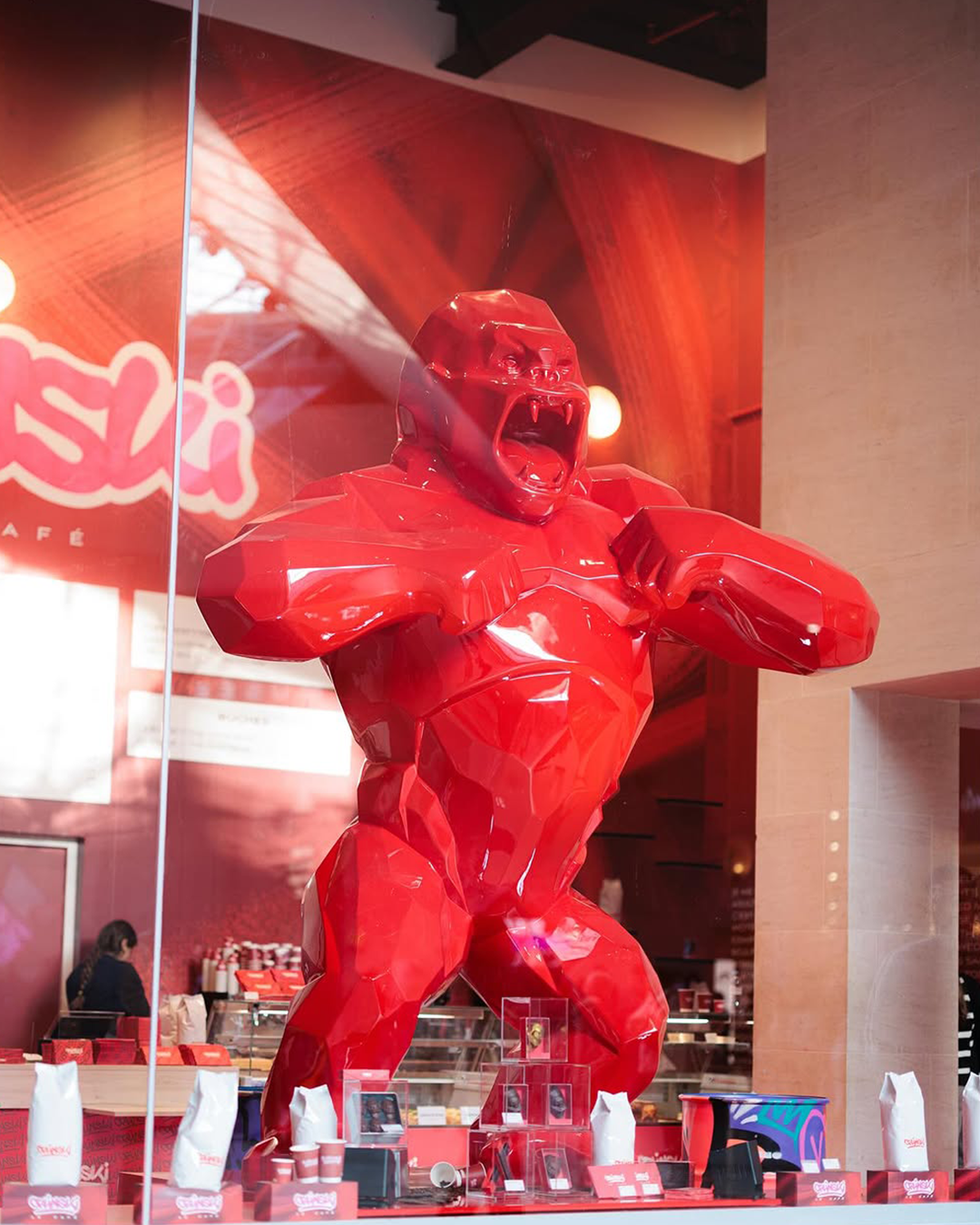
Orlinski – Le Café: Where Art and Coffee Collide at the Carrousel du Louvre

In the heart of Paris, within the prestigious Carrousel du Louvre, a unique fusion of art and exceptional coffee has been unveiled: Orlinski – Le Café. This exclusive pop-up café, crafted by world-renowned contemporary artist Richard Orlinski, is more than just a place to enjoy coffee—it’s an immersive experience where every cup tells a story of artistry and craftsmanship.

Orlinski, famous for his striking sculptures that blend boldness and iconoclasm, has integrated his artistic vision not only into the displayed works of art but also into the design and preparation of the coffee itself. The café offers visitors an opportunity to experience coffee as a multi-sensory creation, transforming a simple cup of espresso into a work of art.

Innovative Design and Coffee Excellence: The Eagle One by Victoria Arduino

To ensure an extraordinary coffee experience, Orlinski chose to feature the Eagle One two-group espresso machine from Victoria Arduino, a brand known for its cutting-edge coffee technology. The Eagle One was specially customized for Orlinski – Le Café, aligning the machine’s design with the artist’s iconic vision.

The Eagle One espresso machine is not only a design marvel but also a leader in coffee technology, offering:

  • NEO (New Engine Optimization) technology: Ensures energy efficiency by reducing waste and delivering consistent, high-quality espresso with each shot.
  • Sustainable materials: The machine is crafted from eco-friendly materials, reflecting the café’s commitment to reducing its environmental footprint.
  • Compact design: Perfectly suited for modern, dynamic spaces, the machine’s efficient design doesn’t compromise the quality of coffee.
  • Iconic customisation: The Orlinski edition of the Eagle One integrates the artist’s bold aesthetic, turning the machine into a true collector’s item.

Orlinski – Le Café is more than just a place to enjoy coffee. It’s a living, breathing gallery where each dish served is a masterpiece to be savoured. The café blends art and gastronomy, offering patrons a unique sensory experience, enhanced by Orlinski’s artistic creations and paired with expertly brewed coffee.

Every cup of coffee, thanks to the Eagle One, becomes an invitation to explore the senses, bringing together the high-end artistry of coffee with Orlinski’s avant-garde, pop culture-inspired designs.

Orlinski’s Artistic Vision

Richard Orlinski is known for his bold and multifaceted sculptures, often inspired by animals that symbolize freedom, power, and passion. His work, animated by vibrant pop colours, has captivated audiences around the world. Orlinski – Le Café offers a taste of his signature style, where everyday objects and dynamic sculptures meet to inspire both the coffee world and art lovers alike.

Stay updated on the latest news from Victoria Arduino by visiting victoriaarduino.com and following them on Instagram at @victoriaarduinoofficial.

The New York Times Yemeni Cafes Grow in Popularity During Ramadan

The New York Times published an extensive report written by Luke Fortney on March 10, 2025, in which he reviews the rise of Yemeni coffeehouses across the U.S., particularly their booming appeal during Ramadan as vibrant, alcohol-free spaces for late-night gatherings.

On a bustling Saturday night in Brooklyn, Qahwah House—a Yemeni cafe chain with 26 locations nationwide—was overflowing with customers well past 11 p.m. Students huddled over spiced coffee, friends toasted with tea after dinner, and staff scrambled to manage crowds at its newly opened Bay Ridge branch. During Ramadan, such cafes extend hours until 3 a.m., catering to patrons breaking their fasts and seeking community long after sunset.

“It’s not just coffee—it’s an experience,” said Ibrahim Alhasbani, founder of Qahwah House, whose family has cultivated Yemeni coffee for centuries. His cafes, along with chains like Haraz Coffee House and Delah Coffee, reflect a cultural shift: immigrants are reshaping U.S. cafe culture by prioritizing inclusive, late-night spaces that bypass alcohol.

The trend began in cities like Dearborn, Michigan, home to a large Arab-American population, and has since spread to New York, Texas, and California. Mokhtar Alkhanshali, a coffee historian, likened the movement to Vietnamese nail salons or Cambodian doughnut shops—immigrant-driven niches that evolve into national phenomena.

During Ramadan, the demand peaks. “If we say 3 a.m., that means 4,” Alhasbani joked, noting patrons linger over cardamom-infused brews and honey-drenched pastries. For many Muslims, these cafes fill a void. “Where else could we go?” said Mariam Elhabashy, a Qahwah House regular.

While initially catering to Muslim communities, the cafes now attract diverse crowds. In San Francisco, Delah Coffee’s late hours surprised non-Muslim patrons. “We opened a whole new world,” said co-owner Omar Jahamee. Similarly, Arwa Yemeni Coffee in Texas draws mixed crowds sipping Adeni chai past midnight.

As Yemeni cafes expand, they offer more than caffeine—a testament to tradition, resilience, and the universal need for connection. “This isn’t a moment,” Alkhanshali said. “It’s a movement.”

The Ever-Changing Coffee Market: A Call for Continuous Adaptation

In the ever-evolving world of coffee, Glenio Caetano, a risk management consultant and coffee trader, made a thought-provoking statement: “No one can claim full mastery of all aspects of this industry. From cultivation to export, from climate challenges to shifts in consumer behavior, continuous adaptation has become an indispensable necessity.” We fully agree with his perspective, as we believe that success in this sector relies on swift responsiveness and continuous learning.

Challenges and Complexities

As Caetano pointed out, some believe they understand every detail of the coffee industry, from farm to cup. However, reality proves otherwise. The market is more complex than it seems, with external factors such as climate fluctuations, economic crises, and geopolitical developments constantly reshaping the landscape. The coffee world is not governed by fixed rules; rather, it operates within a dynamic system that requires every market player to remain flexible and prepared for change.

The coffee industry has become more intricate than ever due to climate changes affecting production, economic fluctuations reshaping the market, and continuous shifts in consumer preferences that force producers and traders to rethink their strategies. Added to this are logistical disruptions and rising shipping costs, making it increasingly difficult to maintain supply chain stability.

Why Must We Adapt?

Market research alone is not enough. Success in coffee trading requires the ability to adapt to new developments and respond swiftly to changes. Data-driven decision-making, adopting flexible risk management strategies, investing in sustainable practices, and fostering collaboration among industry players are all crucial factors for ensuring resilience in a challenging environment.

As Caetano stated, “The market does not forgive absolute certainties,” and we completely agree. The coffee industry is not just about trade; it is a constantly shifting world where no one can claim complete knowledge. Continuous adaptation, openness to learning, and the ability to stay ahead of market shifts remain the key factors distinguishing successful players in this industry.

Caffeine Lovers in Trouble: Coffee Prices Soar to Record Highs!

Global coffee prices have soared to record levels, raising concerns among consumers and industry experts as supply shortages and rising demand push costs higher.

Arabica coffee, the world’s most widely used coffee variety, surged 70% in 2024 and has already increased by 20% in 2025, reaching a historic high of $4.30 per pound on February 11. Robusta, commonly used in instant coffee, also spiked 72% last year, peaking at $5,847 per metric ton on February 12.

The sharp increase in wholesale prices is expected to filter down to consumers, with café and supermarket prices likely to rise in the coming months.

Weather Disruptions and Supply Constraints

The global coffee market is heavily dependent on Brazil and Vietnam, which together account for over 50% of global coffee production. However, extreme weather conditions—including prolonged droughts and higher temperatures—have significantly impacted yields over the past three years.

According to industry analysts, Brazil’s average rainfall has been consistently below historical levels, potentially indicating a structural climate shift. Vietnam, another key producer, has also faced weather-related challenges, further tightening global supply chains.

Data from Reuters shows that in the past four years, global coffee consumption has exceeded production by 13 million bags, the equivalent of 500,000 tons of coffee beans. The depletion of coffee stockpiles has exacerbated price volatility, leaving little buffer for supply shocks.

Demand Remains Strong Despite Higher Costs

Despite rising prices, global coffee demand remains robust. Traditionally considered an inelastic product, coffee has retained its appeal even during economic downturns. However, some shifts in consumer behavior are emerging:

  • Consumers are opting for budget-friendly brands. J.M. Smucker, the maker of Folgers, reported a 3% rise in coffee sales between August and October 2024, even as it raised prices.
  • Premium coffee chains are seeing weaker sales. Starbucks and other high-end brands have reported a decline in consumer spending as customers seek more affordable alternatives.
  • China’s coffee consumption is rising rapidly. Once a predominantly tea-drinking nation, China’s coffee consumption has been growing by 10-20% annually, adding further pressure on global supply.

Financial Markets and Speculation Intensify Price Swings

Beyond supply and demand, market dynamics have also played a role in the recent price surge. Many commodity traders hedge coffee purchases through futures contracts, but soaring prices have triggered margin calls, forcing some traders to exit the market.

Additionally, some farmers have defaulted on contracts signed months earlier when prices were lower, preferring to sell at today’s higher rates. This has further reduced available supply, pushing prices even higher.

“The coffee market is experiencing an unprecedented rally,” said Marcelo Teixeira, Reuters’ commodities correspondent, in a recent Econ World podcast. “The rapid price increases have left traders scrambling to manage risks, and with fewer sellers in the market, speculation has amplified volatility.”

Outlook: Higher Prices for Consumers in 2025

While some analysts predict a potential easing of prices by late 2025, industry experts warn that relief is still months away. Brazil’s 2025 crop is expected to be below average, meaning supply constraints could persist into 2026.

Even if production rebounds, coffee prices are unlikely to return to pre-2024 levels, similar to the long-term trends seen in the cocoa market after its recent price surge.

How Consumers Are Adapting

With higher prices expected to continue, many coffee drinkers are adjusting their habits:

  • More consumers are brewing coffee at home instead of purchasing from cafés.
  • Retailers may introduce more blended coffee options to keep costs down, using a mix of Robusta and Arabica beans.
  • Some companies are exploring synthetic coffee alternatives, made from vegetable-based substitutes.

The Bottom Line

As supply shortages persist and financial speculation drives prices higher, coffee consumers should prepare for further price hikes in 2025. While some adjustments in production could ease market pressures by 2026, experts caution that the days of cheap coffee may be over.

Are you changing your coffee habits due to rising prices? How much do you spend on coffee each week? Share your thoughts at [email protected] .

Espresso Extraction: Has Modern Technology Eliminated Variability?

Coffee experts and scientists have long wondered why every espresso shot is different, even when all brewing variables—such as grind size, dose, water pressure, and temperature—are precisely controlled. Previous research, most notably a study published in 2019, revealed that thermodynamic factors, such as fluctuations in water temperature, extraction pressure, and gas dissolution, significantly impact the final result. But the key question remains: Has the espresso machine industry effectively addressed these challenges?

To gain insight from within the industry, we reached out to Antonio Orria, a coffee and beverage expert at Simonelli Group – Middle East, who explained how manufacturers are leveraging cutting-edge technology to enhance extraction consistency.

According to Antonio Orria, leading espresso machine manufacturers are fully aware of the challenges associated with water-coffee interaction during extraction and are continuously developing technologies to minimize inconsistencies. Among the most notable innovations:

  • Soft Infusion System: Simonelli Group has developed a system that increases the resistance of the coffee puck, resulting in a more stable flow rate across multiple shots, thereby reducing cup-to-cup variability.
  • Advancements in Hydraulic Systems: Recent innovations primarily focus on achieving greater stability in water temperature and pressure, both of which are critical for consistent extraction.
  • Precision with T3 Genius Technology: The Black Eagle Maverick from Simonelli Group represents the pinnacle of modern espresso technology, offering full control over the entire water circuit, from the pump and boiler to the shower screens. This ensures highly stable temperature and pressure levels throughout the brewing process.

These advancements suggest that modern espresso machines are more precise and stable than ever before. But do these improvements translate into noticeable differences in coffee shops?

While scientific research and technological advancements continue, Antonio highlights an important distinction: “There is a difference between laboratory-level precision and real-world café environments… In research labs, we can measure extremely fine variations in espresso extraction, but these differences may not be noticeable to baristas or customers.”

In busy cafés, modern espresso machines—such as the Eagle One—can already produce highly consistent shots, with minimal variation. For the average consumer, these differences are barely perceptible, especially in milk-based drinks like cappuccinos and lattes.

Antonio also emphasizes that today’s espresso machines perform significantly better than those available just a decade ago, underscoring the remarkable progress the industry has made.

Despite these impressive advancements, Antonio acknowledges that the journey is far from over. Manufacturers will continue to develop more precise, efficient, and sustainable technologies in the coming years, further pushing the boundaries of espresso machine innovation.

While eliminating all extraction inconsistencies may never be entirely possible, modern technology is bringing us closer than ever to achieving the perfect, repeatable espresso shot.

What do you think about espresso extraction variability? Do you believe today’s machines have solved the issue, or is there still more to be done? Share your thoughts!

The Most Common Coffee Brewing Mistakes and How to Fix Them

Making great coffee at home doesn’t have to be complicated. A few small changes can elevate your daily brew from just fine to fantastic.

To uncover the most common mistakes home brewers make, we spoke with Sarina Prabasi, founder of Buunni Coffee in New York City. As a micro-roaster and board member of the Specialty Coffee Association, she shared practical tips for refining your brewing routine.

7 Common Coffee Mistakes and How to Fix Them

1. Overwashing Your Coffee Maker with Detergent

It may seem counterintuitive, but excessive washing with dish soap can ruin your coffee. Even a trace of soap residue can alter the flavor.

Fix: For daily cleaning, simply rinse your coffee equipment with hot water. If oils build up over time, use a fragrance-free dish soap for an occasional deep clean.

2. Buying More Coffee Than You Can Use Fresh

Stocking up on beans might seem convenient, but it often leads to stale, lackluster coffee.

Fix: Buy smaller quantities and check the roast date (not the “best by” date). Coffee is freshest within two weeks to a month after roasting. Store beans in an airtight container away from moisture, heat, and odors.

3. Changing Too Many Factors at Once

Adjusting grind size, water temperature, brew time, and coffee-to-water ratio all at once makes it hard to pinpoint what’s affecting the flavor.

Fix: Modify one variable at a time. Start by adjusting your coffee-to-water ratio: Use two tablespoons of coffee per cup of water as a baseline, then tweak from there.

4. Using Tap Water

Tap water can introduce unwanted flavors, especially if it contains chlorine or other chemicals.

Fix: Use filtered water to improve clarity and taste. If you’re serious about brewing, investing in a home filtration system can make a noticeable difference.

5. Ignoring the Aroma Test

Stale coffee lacks the rich aroma that fresh beans should have. If your coffee smells dull or flat, it’s likely past its prime.

Fix: Always smell your coffee beans before brewing. If the aroma is weak, try using them for cold brew or immersion brewing to extract more flavor.

6. Overlooking Organic Coffee

Many commercial coffee farms use heavy pesticides that can remain on the beans. Unlike fruits, coffee can’t be washed before consumption.

Fix: Opt for organic coffee when possible. It doesn’t have to be expensive—just look for reputable brands that prioritize ethical sourcing and quality roasting.

7. Treating Coffee as Just a Caffeine Fix

Many of us drink coffee on the go without taking a moment to enjoy it.

Fix: Slow down. Whether you’re at home or at a café, take time to savor the ritual of brewing and drinking coffee. In Ethiopia, coffee is a shared experience—something to be enjoyed, not rushed.

finally Making better coffee at home doesn’t require fancy equipment—just thoughtful adjustments. Whether it’s using fresh beans, filtered water, or simply taking time to enjoy your cup, small changes can make a big difference.

The UK Coffee Market Under Pressure: How Do Climate, Politics, and Economics Impact the Market?

The UK coffee market is expected to undergo significant changes in the coming months, with prices continuing to rise due to climate challenges, geopolitical disruptions, and global inflation. As the UK market heavily relies on coffee imports, any fluctuations in global production or import costs directly affect prices in both the hospitality and retail sectors.

With rising costs, consumption patterns in the UK are changing, as both consumers and businesses face new challenges that require innovative strategies to adapt to current conditions.

Changing Coffee Consumption Patterns:

  • Some consumers are turning to premium brands in search of quality and excellence.
  • Others prefer more economical options to balance their budgets.
  • Interest is growing in sustainable and environmentally responsible products, such as biodegradable coffee pods and ethically sourced coffee.

Business Strategies to Address the Crisis:

  • Expanding promotional offers and loyalty programs to retain customers.
  • Strengthening sustainability efforts through supply chain transparency and highlighting ethical coffee sources.
  • Investing in technology and smart packaging to reduce costs and improve efficiency.

As these shifts continue, rising prices will have a noticeable impact on coffee shops and retail chains, which will need to reassess their pricing and purchasing strategies to maintain competitiveness.

Causes of the Coffee Crisis

Climate Change

Climate change is the most significant factor affecting coffee prices. Droughts, floods, and frost have led to reduced coffee production in Brazil, the world’s largest coffee producer, and Colombia, the third-largest producer. Additionally, the El Niño phenomenon has further intensified climate fluctuations, negatively impacting coffee yields, reducing supply, and driving prices higher.

Geopolitical Tensions

While natural factors have disrupted production, geopolitical tensions have introduced further challenges. Trade disputes between the United States and Colombia have resulted in additional tariffs on imported coffee, increasing import costs and driving global coffee prices higher. Given that the US relies on Colombia for 30% of its coffee supply, any disruption in production or exports has direct consequences for the global market.

Conflicts in the Middle East and disruptions in key maritime trade routes have further complicated coffee transportation from production regions to consumer markets, directly impacting final costs in the UK and across Europe.

Inflation and Supply Chain Disruptions

In addition to climate and geopolitical challenges, the global economy plays a crucial role in the coffee crisis. Global inflation, which worsened after the COVID-19 pandemic, has driven up production and transportation costs, leading to increased coffee prices. Furthermore, the global supply chain crisis, exacerbated by geopolitical tensions in the Middle East, has made it more difficult to transport coffee from farms to markets, causing shipping delays and raising costs.

The Future of the UK Coffee Market

As global coffee prices continue to rise, UK businesses will need to reassess their strategies to ensure stable sales and maintain customer loyalty. Transparency in supply chains and investments in sustainability are expected to be key factors in the success of brands in the coming period. Additionally, purchasing patterns may shift, with consumers either reducing the quantities they buy or seeking more sustainable alternatives.

Aida Batlle: A Trailblazer Brewing a Coffee Revolution and Inspiring Women Worldwide

On International Women’s Day, we celebrate the visionaries who redefine industries, break barriers, and empower communities. In the world of coffee—a space traditionally dominated by men—one woman has reshaped the landscape, proving that resilience, innovation, and passion can transform not only a farm but an entire industry.

On a misty morning in the volcanic highlands of El Salvador, Aida Batlle walks through rows of coffee trees, her hands brushing against ripe cherries. She is not merely tending crops—she is rewriting history. This fifth-generation coffee farmer has not only revived her family’s legacy but has also become a global force in the specialty coffee movement, inspiring women across continents to take ownership of their craft, their businesses, and their futures.

From Ruin to Revival: A Journey Against the Odds

Aida’s story begins with adversity. During El Salvador’s brutal civil war in the 1980s, her family was forced to abandon their farms, losing not just land but generations of hard-earned heritage. For years, she lived away from coffee, disconnected from the very roots that had nourished her ancestors. But fate had other plans.

When she returned to El Salvador as an adult, she found the once-thriving coffee industry in crisis—farms were neglected, yields were low, and farmers were struggling against an unstable market. While many saw decay, Aida saw possibility. With no formal agronomic training but an unshakable determination, she took charge of her family’s neglected land in Santa Ana, driven by an instinct to heal the soil, elevate quality, and reclaim her legacy.

The Artisan of Coffee: A Pioneer in Processing and Quality

Most viewed coffee as a mere commodity, but Aida treated it as an art form. She was among the first in Central America to embrace terroir, studying soil composition, elevation, and microclimates with the precision of a winemaker. Experimenting with natural and honey processing methods, she coaxed out complex, vibrant flavors—notes of florals, red fruit, and chocolate—that had rarely been associated with Salvadoran coffee.

Her gamble paid off. In 2003, she made history by becoming the first woman to win El Salvador’s prestigious Cup of Excellence competition, an achievement that placed Salvadoran coffee on the global map. She didn’t stop there—she won the title four more times, cementing her reputation as a coffee innovator.

Empowering Women, One Bean at a Time

But success wasn’t immediate. In an industry where men made most of the decisions, Aida faced resistance. Many workers hesitated to take orders from a woman. Rather than backing down, she proved herself through knowledge, skill, and leadership—earning respect not just as a boss but as a mentor.

Today, she’s doing for others what no one did for her—mentoring female farmers, teaching them to see coffee not just as a crop, but as a craft. She believes in direct trade, ensuring that farmers—especially women—earn fair wages and gain financial independence.

“When women control income from coffee,” she explains, “they invest in education, health, and community growth. It’s not just about selling beans; it’s about breaking cycles of poverty and rewriting futures.”

Her efforts extend beyond her own farm. She collaborates with smallholder farmers across El Salvador, equipping them with knowledge and connections to specialty roasters like Intelligentsia, Stumptown, and Counter Culture. By doing so, she helps them secure better prices, sustainable growth, and financial stability.

Global Recognition and Lasting Influence

Aida’s influence has spread far beyond El Salvador. She has been profiled in The New York Times, featured in Netflix’s Coffee for All, and invited to speak at global coffee summits. But her true pride lies in the transformations she’s catalyzing in her homeland.

“Coffee is in my blood,” she says. “But seeing a woman farmer stand tall, negotiate her own price, and say, ‘This is my harvest’—that’s my victory.”

A Symbol of Resilience and Change

Aida Batlle’s journey mirrors the complexity of the coffee she cultivates—rich, bold, layered with struggle and triumph. She turned personal loss into a movement, proving that coffee isn’t just about trade—it’s about identity, resilience, and opportunity.

On International Women’s Day, her story reminds us that the most profound revolutions often begin quietly—in the hands of women who refuse to accept limits.

She often says:

“The soil doesn’t care if you’re a man or a woman. It only cares if you’re willing to learn.”

And today, in every cup brewed from her beans, her legacy blooms—not just in El Salvador but in every woman who dares to dream bigger, bolder, and beyond tradition.

Secrets to Winning Roasting Championships: Common Mistakes to Avoid

Roasting competitions are a prestigious platform where coffee professionals showcase their skills in precision and consistency. However, even experienced competitors often make critical mistakes that can impact their final scores. As a judge of multiple Roasting Championships worldwide, I have observed several recurring missteps that competitors should avoid.

1. Skipping the Judges’ Debriefing

One of the most surprising missteps is that not all competitors take advantage of the debriefing session after results are announced. This session provides access to scoresheets, allowing competitors to review their performance, seek clarifications, and even challenge potential calculation errors. While misjudgments are rare due to double-blind cuppings and rigorous verification processes, human error is always a possibility. Engaging in this session is crucial for learning and ensuring transparency in scoring.

2. First Place Doesn’t Guarantee the Best-Tasting Cup

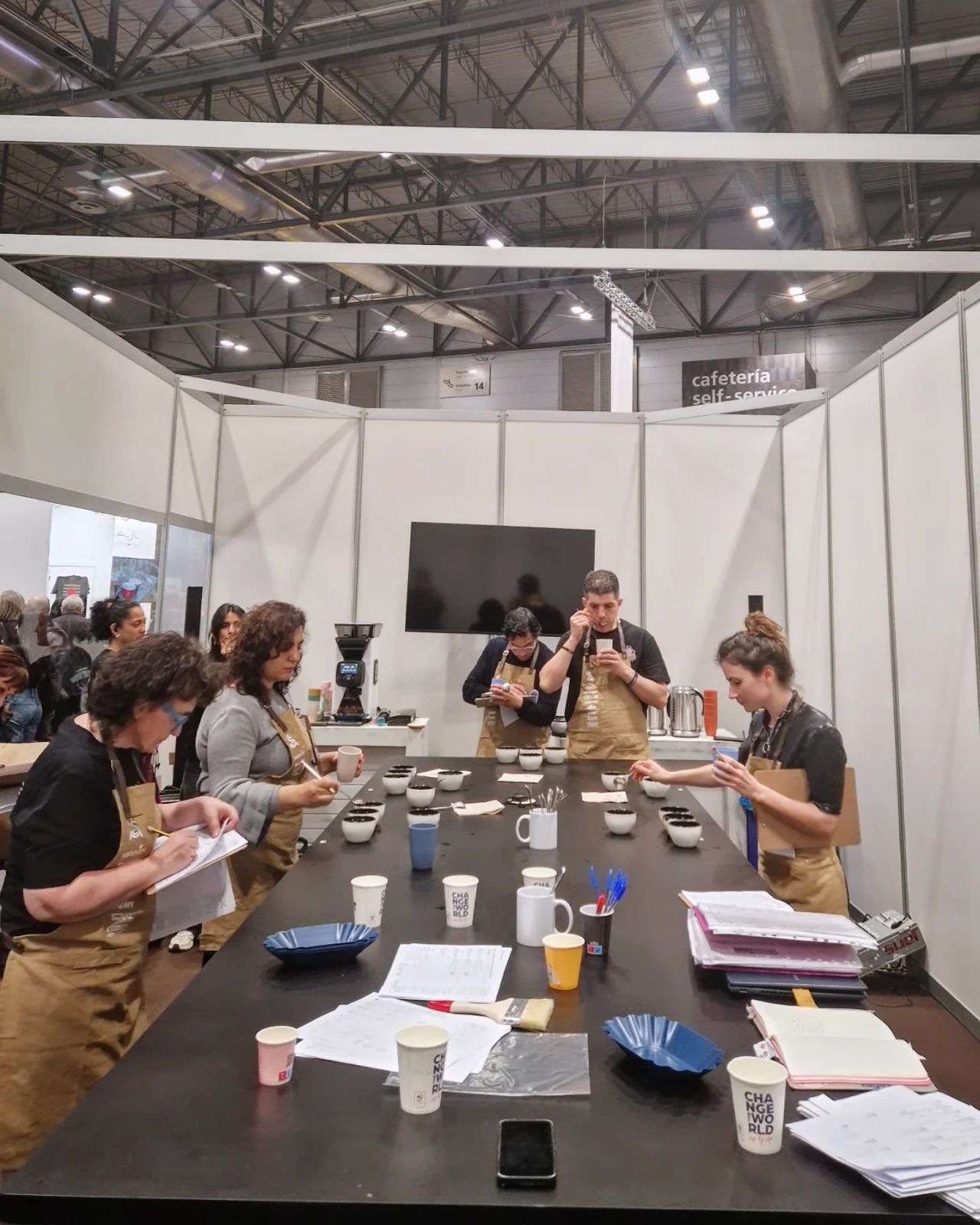
A common misconception is that winning the competition means producing the best-tasting coffee. In reality, roasting competitions prioritize accuracy over taste alone. The final score is a combination of multiple factors, with the accuracy of the roast profile and cup description carrying significant weight. The scoring structure includes two columns: one reflecting judges’ evaluation of aroma, flavor, aftertaste, acidity, sweetness, and mouthfeel, and another measuring the competitor’s accuracy in describing these attributes. Accuracy scores are multiplied by three, making them a decisive factor in determining the winner.

3. Overlooking Green Coffee Grading

Despite being one of the more straightforward aspects of the competition, green coffee grading is often poorly executed. As a roaster, having access to green coffee and defect identification resources, such as the Arabica Green Coffee Defect Handbook, provides a solid foundation for preparation. Seeking guidance from Q graders and dedicating time to hands-on practice can significantly improve this portion of the competition.

4. Missing the Organizational Meeting

Each competition includes a mandatory organizational meeting before the event, where key details and rules are explained. This is the only opportunity for competitors to ask questions, as inquiries are not permitted once the competition begins. Attending this meeting fully prepared and engaged can help prevent misunderstandings and missteps during the event.

Final Thoughts

Roasting competitions are as much about precision and preparation as they are about skill. Avoiding these common mistakes can significantly enhance a competitor’s performance and overall experience. Whether it’s taking full advantage of the debriefing, understanding the scoring system, improving green grading skills, or actively participating in pre-competition meetings, attention to these details can make the difference between an average performance and a winning one.

By Julia (Kvitkakavy) Dziadevych
Q Grader, Coffee Sourcing Expert, and Origin Trips Leader