DE Peet’s recognised for Diversity Excellence with 2025 Catalyst Award

JDE Peet’s (EURONEXT: JDEP) is proud to have received the 2025 Catalyst Award, which recognises organisations that excel in advancing workplace inclusion and gender equity. This prestigious honour celebrates JDE Peet’s’ innovative approach to Diversity, Equity and Inclusion (DE&I), fostering a workplace where employees are empowered to thrive.

According to Catalyst, JDE Peet’s’ strategic approach, supported by innovative tools such as its DE&I Maturity Model and Activation Toolkit, has led to significant progress. This includes an increase from 25% to 36.4% in women’s representation on the Executive Committee, from 37.2% to 41.5% on the Global Leadership team, and from 23.1% to 38.5% on the Board of Directors since 2021. The Maturity Model provides structured guidance for embedding DE&I practices at all levels, while the Activation Toolkit offers actionable resources, including case studies and best practices, to equip local teams to implement and sustain meaningful DE&I initiatives. The Catalyst Award highlights JDE Peet’s’ overarching mission to unleash the possibilities of coffee and tea for a better future.

“At JDE Peet’s, we’re creating a future that authentically serves, reflects, and embraces everyone,” said Rafa Oliveira, CEO of JDE Peet’s. “Our commitment to diversity, equity and inclusion — guided by our value of Solidarity and belief in ‘standing together in our differences’ — has fostered a workplace where everyone can bring their true selves to work. We are honoured to see our progress recognised by Catalyst, and it is a powerful reminder that while we celebrate milestones, our journey continues, and when we unleash our full potential, we succeed as a team.”

Catalyst is a leading global nonprofit dedicated to building workplaces that work for women. Since 1962, Catalyst’s preeminent thought leadership – including unparalleled workplace expertise and actionable research – has accelerated progress for women through workplace inclusion. The organisation is supported by 500 leading companies.

What Makes Coffee Different from Other Beverages?


Coffee is more than just a drink—it’s a sensory experience, a cultural icon, and a global phenomenon that sets it apart from other beverages consumed by people daily. From its stimulating properties to its rich traditions, coffee has carved a unique place in the lives of billions. Here’s why coffee stands out as a truly exceptional beverage:

1. Caffeine Boost

At the heart of coffee’s appeal is its caffeine content—a natural stimulant that enhances alertness, improves concentration, and combats fatigue. Unlike other beverages, coffee delivers this boost in a way that has become an essential part of many people’s daily routines, from morning cups to midday pick-me-ups.

2. Rich Flavor Profile

Coffee offers a sensory explosion of flavors and aromas. Its complexity stems from over 800 aromatic compounds that create profiles ranging from nutty and chocolaty to fruity and floral. These flavors can vary significantly based on bean type, roast level, and brewing method, making every cup a potential new discovery.

3. Cultural Rituals

Coffee has a way of bringing people together. It plays a central role in rituals like morning routines, coffee breaks, and social gatherings. Across the globe, coffee shops have become spaces for connection, conversation, and creativity, reinforcing coffee’s cultural importance.

4. Health Benefits

Beyond its energizing effects, coffee is linked to several health benefits. Studies suggest moderate consumption may reduce the risk of certain diseases, improve cognitive function, and provide antioxidants that combat cellular damage. These health perks elevate coffee from a treat to a functional beverage.

5. Versatility

Few beverages offer the versatility of coffee. It can be enjoyed black, with milk or cream, iced, blended, or flavored, giving consumers the ability to tailor their experience. This adaptability has fueled its popularity across cultures and generations.

6. Aromatherapy and Comfort

The aroma of freshly brewed coffee is comforting and invigorating. The scent alone can evoke feelings of warmth, relaxation, and energy, adding to the sensory experience that coffee uniquely offers.

7. Tradition and Craft

For many, coffee is more than a drink; it’s a craft. From sourcing beans to roasting and brewing, the process is an art form. Whether prepared with the precision of a barista or the ritualistic methods of traditional cultures, the journey from bean to cup is an experience to savor.

8. Sensory Complexity and Terroir

Coffee’s flavor profile is deeply influenced by its terroir—the environmental factors of the region where it’s grown. Variables like altitude, soil composition, and climate shape the bean’s character, similar to wine. This makes coffee a sophisticated beverage that invites exploration.

9. Global Legacy

Coffee’s influence extends far beyond the cup. It has shaped economies, fueled trade routes, and even inspired revolutions. From its Ethiopian origins to its proliferation through the Arab world and beyond, coffee has played a pivotal role in history and continues to connect cultures today.

10. A Catalyst for Creativity and Focus

Historically, coffee has been the drink of thinkers and creators, fueling the works of writers, artists, and philosophers. Its role in fostering focus and creativity has made it a staple in intellectual circles and cultural movements.

11. Economic Impact and Sustainability

As one of the world’s most traded commodities, coffee supports millions of farmers and workers globally. Efforts to address sustainability challenges, such as fair trade practices and eco-friendly farming, highlight coffee’s potential for driving social and environmental change.

12. Social Equity and Empowerment

Coffee has become a symbol of empowerment in many regions. Women-led cooperatives in Africa and Latin America, for example, use coffee production as a means to achieve economic independence and social equity.

13. Accessibility Meets Luxury

Coffee straddles the line between accessibility and luxury. Whether enjoyed as an affordable instant blend or as a high-end single-origin brew, coffee caters to a broad spectrum of tastes, making it a universally beloved beverage.

14. Health Science Beyond Antioxidants

Research continues to uncover coffee’s benefits, such as its neuroprotective properties and potential in reducing the risks of diseases like Parkinson’s and Alzheimer’s. These discoveries add to its allure as a drink that supports well-being.

15. Ethical Connection

In an era of conscious consumption, coffee offers opportunities to engage with ethical practices. Direct trade and sustainable sourcing provide consumers with a deeper connection to the origins of their coffee, aligning their values with their purchases.

16. A Drink That Evolves

Coffee has remained relevant by evolving with societal trends. From the third-wave coffee movement that emphasizes transparency and craftsmanship to innovations like nitro cold brew and instant specialty coffee, coffee continually reinvents itself to meet the demands of a changing world.

Global Coffee Prices Expected to Drop by 20-30% After February 2025


The head of the “Roschaikofe” association, Ramaz Chanturia, told TASS News Agency that global coffee prices are expected to decrease by 20-30% after February 2025. This anticipated drop is linked to clearer results of coffee harvests in Vietnam and more accurate forecasts for production in Brazil, which could stabilize the volatile coffee markets currently impacted by challenging climatic conditions.

Bloomberg previously reported that coffee prices had reached unprecedented levels due to a potential global supply shortage. According to the report, futures contracts for Arabica coffee in New York are currently trading at $3.44 per pound, the highest level since 1977. This surge is attributed to severe drought in Brazil, which threatens to reduce supplies, as well as weather-related issues affecting Vietnam’s production of Robusta coffee, the less expensive variety.

Ramaz Chanturia highlighted that Brazil, which accounts for approximately 40% of global coffee production, and Vietnam, contributing around 20%, are the two largest coffee producers globally. Any changes in coffee production in these countries directly influence global market prices. He noted that by February 2025, the picture would become clearer regarding harvests in these key regions, enabling more precise projections for the upcoming season. Chanturia predicted that prices might begin to decline gradually after this period or stabilize at lower levels, with an expected drop of up to 30%.

He further emphasized that the simultaneous and significant increase in prices for both Arabica and Robusta coffee is unprecedented. Previously, price hikes in Arabica were often balanced by the affordability of Robusta. However, due to weak harvests in Vietnam, Robusta prices have more than doubled over the past year, reaching record highs. Chanturia pointed out that this situation poses challenges for both companies and consumers.

The expert also explained that companies with expiring fixed-price supply contracts are now facing the challenge of signing new contracts at significantly higher rates, inevitably leading to increased production costs and higher retail prices. However, Chanturia reassured that there would not be a significant global coffee shortage despite the ongoing pressures expected to persist until February.

He also highlighted potential changes in consumer behavior due to rising coffee prices. Consumers may shift toward more affordable alternatives, such as blended coffee or lower-quality beans, potentially impacting the demand for specialty coffee. Additionally, Chanturia stressed that companies might need to innovate and enhance production efficiency to mitigate the effects of rising costs on consumers. With climate conditions continuing to affect crops, he predicted increased investment in sustainable agricultural practices to improve crop resilience to environmental changes.

Despite these challenges, Chanturia emphasized that coffee demand in Russia would remain strong, with consumption levels staying high. He noted that the current year and the next may see either stagnation or a slight decline in coffee consumption, but it is expected to remain relatively robust despite price-related difficulties.

Mondrik Alpas Crowned Champion of the “Barista Brew Down” Year-End Competition in Dubai


In a night filled with excitement and creativity, barista extraordinaire Mondrik Alpas claimed the title of champion at the “Barista Brew Down” Year-End Competition, held in Dubai. The fierce competition, which lasted over seven hours, saw Shankar Nepal take second place, while Kevin Nduati secured third.

Organized by Nomads Roastery, in partnership with Victoria Arduino, the event was hosted at the Victoria Arduino Experience Lab in Al Quoz 3, Dubai. This state-of-the-art venue has become a hub for coffee competitions and events throughout the year, showcasing Dubai’s pivotal role in fostering a vibrant coffee community in the UAE and beyond.

The competition featured three thrilling challenges, each designed to test the participants’ skill and creativity. The first challenge, The Espresso Battle, showcased precision and expertise in crafting the perfect espresso. Next came The Plant-Based Beverage Battle, which highlighted innovation in preparing coffee-based drinks with plant-based ingredients. Finally, the competition concluded with The Latte Art Battle, where participants displayed their artistry through intricate and captivating latte designs.

Despite the short preparation time for the competition, the event was a resounding success, attracting a large audience of coffee enthusiasts eager to witness the intensity and artistry on display. Abdullah Al Rasasi, CEO of Nomads Roastery, expressed his pride in the event’s success and promised that next year’s competition would be even grander, with enhanced activities, larger scale, and more valuable prizes. Meanwhile, Federico Orteli, General Manager of Simonelli Group Middle East, reaffirmed Victoria Arduino’s commitment to supporting initiatives that nurture the coffee community in Dubai, the UAE, and the region.

In a statement to Qahwa World after his victory, Mondrik Alpas expressed his joy at achieving this significant win, which adds to his illustrious record of achievements. His previous accolades include titles such as UAE National Latte Art Champion in 2024, 2021, and 2019, as well as the UAE National Latte Art Battle Champion in 2021. Albas emphasized his passion for continuing this rewarding journey in the coffee world and wished success to everyone in the field.

This event underscored Dubai’s status not only as a global economic hub but also as a center for innovation and excellence in the coffee industry. By attracting talent and expertise from around the world, Dubai continues to provide platforms that empower the coffee community and inspire creativity and passion.

Coffee Prices Hit Record Highs Amid Global Supply Crisis


Coffee prices surged to new peaks in 2024, reflecting a tumultuous year for the industry. On Tuesday, prices jumped by 5%, reaching $347 per contract—equivalent to 100 pounds—marking an all-time high. Over the course of the year, prices have soared by an astonishing 83%, surpassing the records set in 1975 during Brazil’s catastrophic “Black Frost” that decimated coffee plantations.

The current surge stems from mounting concerns over a global supply crisis, which could elevate coffee from an everyday staple to a luxury item. Global food prices have risen by over 25% since 2020, driven by inflation and recurring supply shocks, placing coffee among the hardest-hit commodities.

Severe drought in Brazil throughout 2024 has heightened fears about the country’s coffee production, while Vietnam—the world’s second-largest coffee producer—has faced its own challenges. A brutal dry spell in Vietnam’s main coffee-growing region exacerbated supply concerns, highlighting the fragility of global coffee production. Together, Brazil and Vietnam account for over half of the world’s coffee supply, making these disruptions particularly alarming.

The International Coffee Organization (ICO), an intergovernmental body supported by the United Nations, reported in July 2024 that its composite coffee price index hit its highest level in 13 years, averaging $2.27 per pound. The scarcity of robusta beans, a cost-effective option, has intensified demand for arabica coffee—a premium variety favored by specialty coffee chains.

Experts like Ryan Delaney, founder and chief analyst at the Coffee Trading Academy, have warned of an acute supply shortage. “There simply isn’t enough coffee in the world,” Delaney noted. Nestlé, the world’s largest coffee producer, announced price hikes in November 2024, along with smaller package sizes to mitigate the impact of soaring bean costs on its profit margins.

According to Ole Hansen, Head of Commodity Strategy at Saxo, coffee has emerged as one of 2024’s top-performing commodities, driven by extreme weather conditions and global reliance on a few key suppliers. Arabica coffee futures in New York soared to a 47-year high this year, rising 83% year-to-date. Brazil experienced its worst drought in 70 years during August and September, followed by heavy rains in October, raising fears that the flowering crops could fail.

In December, Volcafe—a leading global coffee trader—slashed its 2025/26 production forecast by nearly 25%, projecting global arabica coffee output at 34.4 million 60-kilogram bags, down 11 million from earlier estimates. This significant reduction could result in a global production deficit of 8.5 million bags in 2025/26, marking the fifth consecutive year of supply shortages.

Coffee remains one of the most traded commodities worldwide, often ranked second only to crude oil in terms of volume. Billions of people rely on it daily for energy and focus. However, climate change and economic challenges are transforming this essential beverage into a potential luxury. Increasing demand from emerging markets, particularly China, has further intensified pressure on global supply chains.

As the coffee industry braces for continued volatility, the question looms: will coffee remain accessible to the average consumer, or will it transform into an indulgence reserved for the few?

How Coffee Prices and Consumer Preferences Changed in Russia During the First 10 Months of 2024/2023?

The website “Kitch” recently published an article titled: “Coffee: How Prices and Consumer Preferences for Different Types Changed During the First 10 Months of 2024/2023.”

The article, written by Leonid Simakov, Director of the “Check Index” Analytics Center at “Platform OFD,” is based on data from the “Check Index” Center at “Platform OFD,” Russia’s largest operator of fiscal data, which relies on analytical models powered by artificial intelligence trained over eight years using a system containing 130 billion receipts from 1.25 million cash registers across the country:

According to the article, the analytics center compared data from January to October in both 2024 and 2023, with the following results:

• Coffee Overall: The average price was 468 rubles, up 12% compared to 2023. The number of purchases increased by 6% compared to 2023, and by 39% compared to 2019.

o Online Coffee: The average price was 714 rubles, up 13% compared to 2023. The number of purchases increased by 16% compared to 2023, and by 258% compared to 2019.

o Share of Online Sales: Accounted for 11% in 2024, compared to 9% in 2023, and less than 1% in 2019.

• Top Coffee Brands: Included MacCoffee, Nescafe, Jacobs, Bridge, Torabika, Jardin, Jockey, and Carte Noire.

Consumer interest in different types of coffee

Period: January to October 2024 compared to 2023:

• Instant Coffee:

o Average price: 379 rubles, up 11%.

o Number of purchases: Increased by 9%, but decreased online by 1%.

• Ground Coffee:

o Average price: 406 rubles, up 7%.

o Number of purchases: Decreased by 9%, and by 12% online.

• Whole Bean Coffee:

o Average price: 859 rubles, up 11%.

o Number of purchases: Increased by 7%, and by 19% online.

• Coffee Capsules:

o Average price: 634 rubles, up 12%.

o Number of purchases: Increased by 11%, and by 22% online.

Commenting on the analysis results, Dmitry Batyushenkov, General Director of “Platform OFD,” said: “For many Russians, drinking coffee has become a daily ritual. As a result, the habit of consumption often overrides the importance of price. Despite rising production costs due to higher raw material prices (such as Arabica and Robusta), coffee continues to expand its reach to households and retail outlets. Sales of home coffee machines, for instance, grew by 26% during the first 10 months of 2024 compared to the previous year.”

He added: “While competition in the market is intensifying, sales in Moscow are stagnating, with growth primarily driven by regional distribution. Online channels now represent 11% of the market, compared to less than 1% five years ago.”

He also noted that whole bean and capsule coffee have shown the strongest growth rates over the past five years, supported by the convenience of online purchasing and the expansion of retail points across the country.

“Check Index” relies on aggregated and anonymized data from fiscal receipts processed by “Platform OFD.” The company processes approximately 65 million receipts daily from 1.25 million cash registers, leveraging eight years of expertise and a Big Data system containing 130 billion receipts.

Coffee from Date Seeds: A Sustainable Solution for the Future of Coffee?

Could coffee made from date seeds and other recycled ingredients be the alternative that saves the coffee industry from mounting environmental challenges by 2050?

Innovative Ingredients Redefining Coffee

Date seeds, fenugreek, ramon seeds, lemon, guava, carob, and millet—these aren’t just natural ingredients, but the foundation of an ambitious American project aiming to create “the most sustainable coffee on the planet.”

With two billion cups of coffee consumed globally every day, the industry faces a dire challenge: agricultural land suitable for coffee cultivation is expected to shrink by half by 2050. Meanwhile, extreme weather conditions have already disrupted supply chains, causing a sharp rise in coffee prices in 2024.

A New Model Changing Standards

While many in the coffee sector focus on improving farming and processing to make them more eco-friendly, a company based in Seattle has chosen a radically different path. The COO explains:
“Our project wasn’t established to replace coffee but to offer a better, more sustainable option for the planet. Using scientific research, we’ve developed a product that reduces carbon emissions and requires less land compared to traditional coffee.”

Challenges of Innovation and Research

Building on their expertise in microbiology, the company’s team analyzed the 28 essential compounds found in traditional coffee and successfully extracted them from natural, recycled ingredients, primarily date seeds. However, achieving the ideal formula was no easy task, requiring over 400 trials to perfect the taste and texture.

“Date seeds are an underutilized resource, with millions of pounds discarded annually. This prompted us to establish a facility in California’s Coachella Valley to process approximately 10,000 pounds daily into usable product,” the COO explains.

How is Coffee Made from Date Seeds?

In their roasting facility, date seeds are soaked and mixed with other natural ingredients, such as fenugreek, ramon seeds, fruit peels, and carob. They are then roasted using traditional coffee equipment, producing a product that resembles ground coffee in appearance and color.

“Our goal was not only to create a coffee-like product but to ensure it works seamlessly with existing preparation and manufacturing processes,” says the COO.

Market Reception

Randomized blind taste tests showed that the alternative coffee outperformed major traditional brands, with participants favoring it three to one. Since its initial launch in late 2023, the product range has expanded to cater to a variety of tastes.

“We aim to be partners in this industry’s evolution by offering sustainable alternatives to ensure coffee’s future,” adds the COO.

Environmental Impact

The new product boasts an impressive environmental footprint:

  • 83% reduction in carbon emissions compared to traditional coffee.
  • 70% less land usage, saving the equivalent of 2,700 football fields of agricultural land.

A Vision for the Future

The company plans to expand its offerings to include components that allow for more creativity in coffee production, such as “alternative green beans” that roasters can customize to develop unique flavors.

“Our goal is to support the sustainability of coffee while respecting its traditions. This innovation holds great potential, and we aspire for it to become a mainstream option in the future,” concludes the COO.

Ali Thahlek: A Passion for Coffee Produces 4 Tons Monthly

In May 2020, Emirati entrepreneur Ali Thahlek launched his ambitious project “Falcon Coffee Roasters” from the heart of Dubai, aiming to establish a distinctive brand in the field of specialty coffee and deliver it to homes and cafes. Thahlek, who holds a bachelor’s degree in business administration, explained that his passion for coffee and his experiences traveling around the world were the main drivers behind the launch of this project, which aligns with the rapid growth of the specialty coffee market in the UAE.

In an interview with “Al Bayan,” Thahlek noted that his passion for different types of coffee and his growing expertise in the field led him to establish a project that meets the increasing demand for “Arabica” specialty coffee, which has gained significant popularity in the local market. He confirmed that the project received support from the Mohammed Bin Rashid Establishment for SME Development, which provided him with several facilities, including issuing a commercial license at reduced costs, guidance, training courses, and a database of local suppliers.

Thahlek chose Nad Al Hamar in Dubai as the location for the company’s headquarters and its primary roastery, which currently produces between 3 and 4 tons of roasted coffee monthly. He also plans to expand production through a larger roastery in the future while continuing to focus on product quality to meet growing demand.

Thahlek pointed out that the company offers more than 16 different types of coffee with various flavors and styles, in addition to accessories and equipment for coffee preparation, such as manual roasters, coffee scales, and heating tools. The company’s services reach all Emirates, with demand split equally between homes and cafes.

Despite the challenges of launching the project during the exceptional circumstances of the COVID-19 pandemic, Thahlek succeeded in turning these challenges into growth opportunities. The increased interest in high-quality coffee for home preparation during the lockdown fueled the company’s growth. He now aims to expand within the UAE and into Gulf countries, focusing on delivering high-quality products that meet the expectations of increasingly knowledgeable coffee enthusiasts.

In conclusion, Thahlek encouraged new entrepreneurs to be bold in transforming their ideas into real-world projects, highlighting the importance of learning from experiences and mistakes to achieve growth and success.

“QahwaWorld” Launches Exclusive Survey to Crown Dubai’s Top 10 Cafés


In the heart of the bustling city of Dubai, renowned for its dynamic lifestyle and thriving business scene, “QahwaWorld” is embarking on a mission to unveil the list of the ten best cafes in the city. Recognizing Dubai’s position as a global hub, our quest for the finest coffee establishments took us on a journey that involved collaboration with industry experts and discerning coffee enthusiasts from across Dubai and the Emirates.

While some local café owners initially hesitated to participate, we received valuable insights from a select group of experts and connoisseurs who shared their lists of the top ten cafes in Dubai based on carefully defined criteria. In an effort to ensure a comprehensive and unbiased evaluation, our team decided to involve the public through a unique and inclusive approach.

To make this survey a true reflection of the public’s sentiments, we have opened the floor for nominations from residents and coffee enthusiasts alike. By allowing participants to suggest any café they believe deserves a spot among the top ten, we aim to capture the diverse and authentic opinions of Dubai’s vibrant community.

Criteria for Nominations:

Quality of Coffee: Participants are encouraged to consider the taste, aroma, and overall quality of the coffee served at their favorite cafes.

Ambiance: The survey takes into account the atmosphere, decor, and overall vibe of the coffee shops, providing a holistic view of the customer experience.

Service: Participants are asked to evaluate the friendliness and efficiency of the staff, as well as the staff’s knowledge about coffee, adding a crucial element to the assessment.

Menu Variety: The diversity of coffee options and other beverages available will be a key factor in determining the top cafes.

Location: Accessibility and the surrounding area are considered, recognizing the impact of location on the overall café experience.

This survey marks a significant milestone as the first list compiled on sound professional foundations

“We invite the public to actively participate in shaping this prestigious list and celebrating the rich coffee culture that Dubai has to offer.”

Join us in this exciting journey to identify and crown Dubai’s top 10 cafes. Your opinion matters, and together, we’ll create a list that truly reflects the best of the city’s coffee scene. Cast your votes and stay tuned as we unveil the final results, setting the standard for excellence in Dubai’s coffee culture.

The Rising Popularity of Yemeni Coffee Shops: What It Says About Third Places


CNN recently published a report highlighting a growing phenomenon in the United States: the rise of Yemeni coffee shops as popular social hubs in major cities. The report focuses on Yemeni coffee chains such as Qahwah House, which attract visitors late at night in Manhattan’s West Village, and Haraz, which recently opened in the upscale SoHo neighborhood.

Yemeni Coffee: A Blend of Tradition and Culture

These coffee shops offer a unique and rich experience, combining the aroma of cardamom and Arabic music with a welcoming social atmosphere. Chains like Qahwah House showcase Yemeni traditions by serving coffee in traditional pots that encourage communal sharing and storytelling, reviving the concept of coffeehouses as spaces for connection and interaction.

Rapid Expansion and Cultural Roots

According to the report, these coffee shops trace their origins to Dearborn, Michigan, home to one of the largest Arab-American communities in the U.S. Ibrahim Alhasbani, founder of Qahwah House, emphasized that his mission is to bring people together and share Yemeni history and culture.

Sally Howell, professor of Arab American Studies at the University of Michigan, highlighted that these coffeehouses are a continuation of a social tradition started by early Yemeni immigrants in the 20th century.

A Social Space for All

These coffee shops provide a haven for young people, particularly Muslims, seeking alcohol-free spaces for social gatherings. They have become hotspots for students, families, and even those looking to meet potential partners, offering a blend of cultural exchange and modern social interaction.

Ambitions and Challenges

The expansion of Yemeni coffee chains is significant. Qahwah House plans to open 20 to 30 new locations within the next year across the U.S. and Canada. Meanwhile, Haraz faces logistical challenges in sourcing coffee from Yemen but has overcome them by stockpiling beans to maintain quality and consistency.

Bridging Authenticity and Innovation

These coffeehouses focus on delivering an authentic experience, with coffee sourced from Yemeni farms and served in spaces inspired by Arab and Islamic heritage.

This phenomenon is more than a commercial expansion; it serves as a cultural bridge, reflecting Yemeni identity and strengthening social connections in diverse communities.

Preserving Yemeni Coffee: How Climate Resilience Initiatives Are Securing a National Legacy


In the heart of Yemen, coffee farming is more than an economic activity; it’s a cultural legacy that ties generations together. For Saeeda, a coffee farmer from Sabr Al-Mawadem, her family’s coffee trees symbolize resilience and heritage, nurtured through love and dedication despite the challenges posed by climate change. Saeeda’s story is a reflection of Yemen’s historic coffee culture and its battle for survival amidst worsening climate conditions.

Climate Resilience and Innovative Solutions

Yemen’s coffee farmers face an uphill battle against decreased rainfall, rising temperatures, and soil degradation. To combat these challenges, the United Nations Development Programme (UNDP), in collaboration with the Public Works Project (PWP) under the Food Security Response and Resilience Project (FSRRP), has introduced rainwater harvesting tanks funded by the World Bank’s International Development Association (IDA). These tanks provide a lifeline for farmers like Saeeda during Yemen’s increasingly dry seasons.

In Sabr Al-Mawadem, the installation of two 400-cubic-meter tanks has already shown tangible results. Farmers who had access to this water resource reported improved coffee yields this season. However, Saeeda highlights the need for more infrastructure to support the broader farming community, ensuring that all farmers in the valley can benefit.

The Community Spirit of Yemeni Coffee

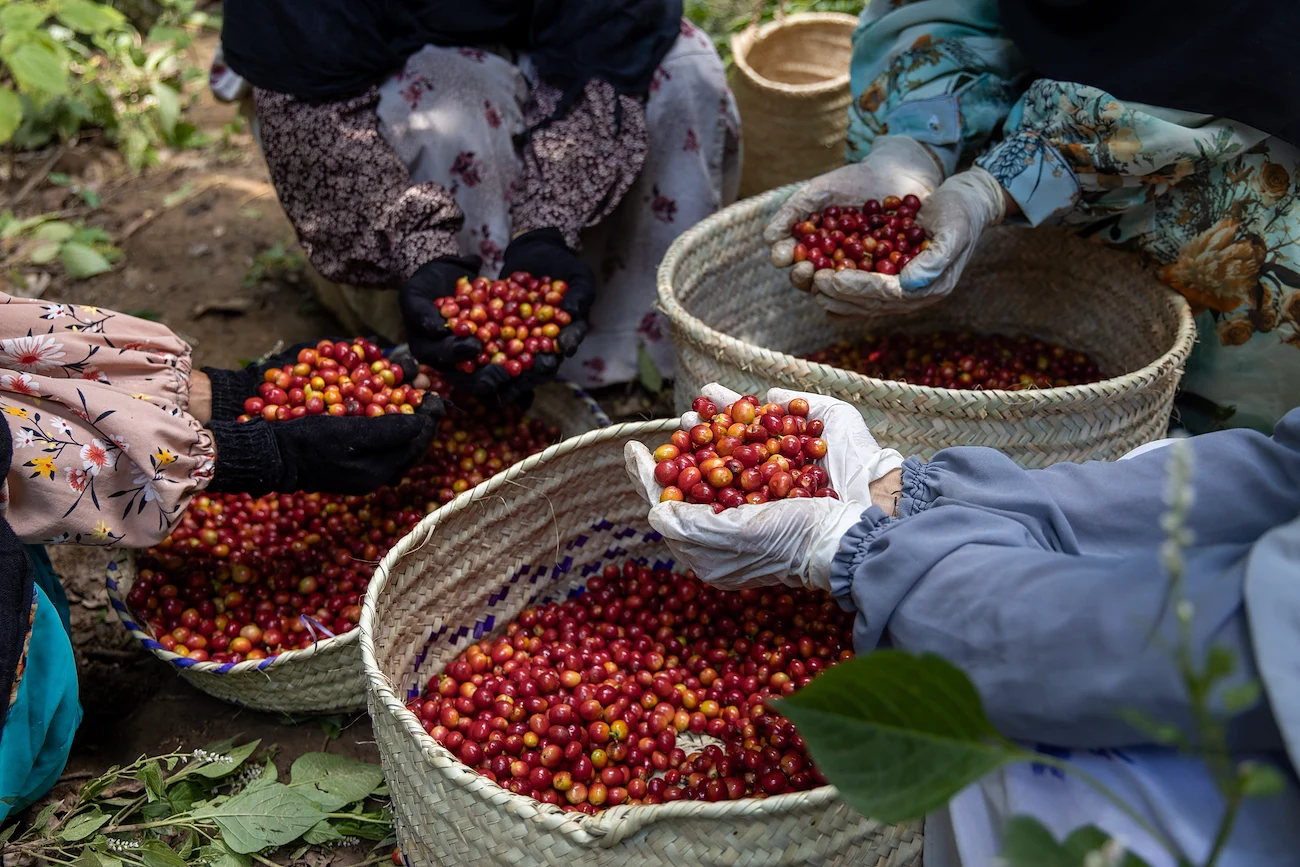
Harvesting coffee cherries in Yemen is a deeply communal activity, blending cultural traditions with labor. For Saeeda, the harvest season is a time for family and community to come together, share stories, and celebrate their connection to the land. Coffee cherries are meticulously dried on rooftops—a labor-intensive process that requires vigilance to maintain quality.

“This work is not just about income; it’s about preserving our ancestors’ culture and passing it on,” says Saeeda.

Challenges Beyond Climate: Pests and Knowledge Gaps

In addition to water scarcity, Yemeni coffee farmers struggle with agricultural pests and limited access to modern pest control methods. Relying on generational knowledge, farmers like Saeeda hope for increased support and training from organizations to tackle these persistent issues.

Inspiring the Next Generation

Despite the challenges, Saeeda is optimistic about the future of Yemeni coffee. She dreams of inspiring young farmers to see the economic and cultural value of coffee farming. “The youth can benefit from coffee’s returns while preserving our heritage,” she says, urging for more investment in agricultural tools and educational resources to secure the next generation of Yemeni coffee farmers.

A Legacy Worth Preserving

Saeeda’s unwavering dedication to her farm and her heritage embodies the resilience of Yemen’s coffee sector. Each cup of Yemeni coffee carries the story of a farmer’s struggle and triumph. Through initiatives like the FSRRP, Yemeni farmers are receiving the support they need to overcome adversity, sustain their communities, and preserve their cultural legacy.

As Saeeda aptly puts it, “Preserving this tree and our heritage is more important than just the economic value.” Her story is a reminder of the critical importance of supporting Yemen’s coffee farmers in safeguarding a legacy that has shaped the nation’s identity for centuries.


Read the Full Story:

Preserving coffee cultivation amidst climate change in Yemen: A legacy in every bean
How climate resilience and community support are helping Yemeni farmers to overcome challenges and sustain a cultural legacy

TAIZ, YEMEN – For Saeeda, coffee farming in Taiz, Yemen, is more than a livelihood; it’s a legacy. Growing up on her father’s farm in Sabr Al-Mawadem, Saeeda learned to care for coffee trees alongside her parents, who taught her to prune, harvest, and respect the land. Today, as she cultivates her family’s 8,400-square-metre plot, her love for the land and dedication to Yemen’s coffee heritage guide her through both the trials and triumphs that go into every cup.

“Agriculture is like a mother to her child,” she says, explaining the emotional connection she feels toward her work. “It improves our family’s income, but it also allows us to pass on our ancestors’ culture.”

Rainwater harvesting builds resilience
As climate change intensifies across Yemen, farmers like Saeeda face mounting challenges. Rainfall has decreased dramatically, leaving coffee trees – and the families who depend on them – vulnerable.

In response, the United Nations Development Programme (UNDP), in partnership with the Public Works Project (PWP), has constructed rainwater harvesting tanks across the region as part of the Food Security Response and Resilience Project (FSRRP), funded and supported by the World Bank. These tanks provide crucial water reserves for coffee farming during Yemen’s dry months.

In Sabr Al-Mawadem, two 400-cubic-metre tanks have already made a difference; they’ve allowed Saeeda and a handful of other farmers to maintain their crops through recent droughts. “Only the farmers who used water from the Public Works Project tanks saw their production improve this season,” Saeeda shares. Still, she notes the pressing need for more tanks to support the entire valley.

A tradition preserved through family and community
Harvest season is a time of unity and tradition in Sabr Al-Mawadem. Each morning, Saeeda gathers her family to pick the ripened cherries before sunrise. As they work, they share stories, sing folk songs, and reminisce about past seasons and elders who came before them. “It’s a time to come together, not just as a family, but as a community,” she says with pride.

The harvested cherries are carefully spread on rooftops to dry – a process that takes several months and requires constant attention to protect quality. “Getting to the point of having a cup of coffee to drink isn’t easy,” Saeeda explains. “It takes nearly nine months of dedication to grow coffee.”

Overcoming climate challenges
Beyond water scarcity, Saeeda and other farmers in Sabr Al-Mawadem face challenges including rising temperatures, soil degradation, and the spread of agricultural pests, like coffee and stem borers. Without clear guidance on pest control, Saeeda relies on traditional knowledge passed down through generations and hopes that support organizations will provide more training and resources.

Despite the challenges, Saeeda’s pride in her work and her heritage remains unwavering. “Our connection to the coffee tree runs deep. When we drink a cup of our coffee, we feel the value of our effort and the months we spent caring for the tree.”

Empowering the next generation
While Saeeda tends to her fields with dedication, she dreams of a future where Yemeni youth will carry forward the country’s coffee legacy. As the head of her family’s farm, she encourages younger farmers to value coffee for its economic potential and cultural importance. “The youth can benefit from coffee’s returns while preserving our heritage,” she says, urging local leaders to invest in agricultural tools and resources that will empower the next generation.

Saeeda’s farm isn’t the only one transformed by FSRRP’s interventions. Across Yemen, farmers who’ve been supported by the project are achieving improved yields and resilience. In the coming years, UNDP and its partners aim to expand these resources to reach thousands more, strengthening food security, and stabilizing livelihoods in Yemen’s agricultural communities.

A legacy in every cup
Saeeda’s story reflects the enduring strength of Yemen’s farmers, who continue to nurture the land despite formidable challenges. With each cup of coffee harvested, dried, and shared, she celebrates not only the fruits of her labor but also a legacy rooted in tradition and strengthened by a hope for the future.

Through projects like FSRRP, Yemeni farmers are gaining the support they need to overcome adversity and sustain their communities. Yet, as Saeeda reminds us, “Preserving this tree and our heritage is more important than just the economic value.” In a land where every drop of water counts, and every bean carries a story, Saeeda’s resilience is a testament to the promise that even in the face of hardship, traditions will endure.

Supply Concerns Drive Coffee Prices to New Highs

Coffee prices surged sharply on Friday, continuing a two-day rally driven by concerns over tight future supplies. March arabica coffee rose by 5.34%, while January robusta climbed 5.27%.

Vietnam, the world’s largest robusta producer, reported a steep drop in coffee exports, with November exports plunging 49.1% year-on-year to 60,000 MT and January-November shipments down 14.3% to 1.2 MMT. Heavy rains and flooding delayed Vietnam’s coffee harvest, compounding supply concerns.

Arabica coffee prices reached a 47-year high last Friday, while robusta hit a 2-1/2-month high, as adverse weather in Brazil and Vietnam—two leading coffee producers—heightened fears of production shortfalls. Dry El Niño conditions earlier this year have significantly impacted coffee crops in South and Central America. Brazil, facing its driest weather since 1981, recorded below-average rainfall during the critical flowering stage, raising doubts about its 2025/26 arabica crop. Colombia, the second-largest arabica producer, is recovering slowly from drought conditions earlier this year.

Robusta production has also been hit hard. Vietnam’s 2023/24 crop year output fell 20%, marking a four-year low. The USDA projects Vietnam’s 2024/25 robusta production at 27.9 million bags, down slightly from 28 million bags in the previous season. Meanwhile, Brazil’s 2024/25 coffee production forecast was revised down to 66.4 MMT by the USDA, with inventories expected to decline 26% year-on-year.

Mixed signals about global supply continue to shape market dynamics. The International Coffee Organization (ICO) reported a 15.1% year-on-year increase in October global coffee exports, while total exports for the 2023/24 season rose 11.7% to 137.27 million bags. However, ICE-monitored inventories show tightness, with robusta inventories hitting a 7-1/2-month low.

Brazilian coffee exports present a bearish factor, with October green coffee exports up 11% year-on-year and the 2023/24 season seeing a record 33% increase. Additionally, the ICO projects a 2023/24 global coffee production surplus of 1 million bags due to a record output of 178 million bags against consumption of 177 million bags.

Despite bearish forecasts, the impact of weather disruptions and tight inventory levels continue to drive volatility in the coffee market, with prices likely to remain sensitive to evolving supply-demand dynamics.